Archive | Four Stars **** RSS feed for this section

Children of a Lesser God (1986)

14 Feb

6a00d8341c5d8753ef0120a8ac9371970b-800wi

Smith’s Verdict: ****

Reviewed by Tanner Smith

When someone going to the movies sees a title like “Children of a Lesser God” on the marquee, I imagine just looking at the title turns them off, not knowing at all what the movie is about. And I’d be lying if I said I wouldn’t feel the same way—I did feel the same way having heard the title a few times, not knowing what the film was about. Thankfully, after watching a vintage 1986 “Siskel & Ebert” two-thumbs-up review of the film, I was interested in what they were saying about the film so I was actually interested in the film itself.

“Children of a Lesser God”—how pretentious of a title could you get? That may seem like a downer title for a film, but the truth is, the actual film itself is a true delight.

“Children of a Lesser God” is a love story, and a wonderful one at that. It’s the story of a relationship that develops between a young woman who is deaf and a teacher determined to bring her out of her shell. Along the way, the teacher learns about love and about accepting his lover’s needs.

William Hurt plays the teacher, named James Leeds. He has an impressive resume and is welcome to teach at a school for the deaf, where he’ll teach his students to read lips and speak without using sign language. His methods are somewhat unusual but very effective, like, for example, when he stands on his head and can’t use his hands for sign language so he must speak, or when he uses timing and rhythms to teach music to the students.

On his first day at the school, a beautiful woman Sarah (Marlee Matlin) catches his eye. Sarah works at the school as a janitor, is very bright but also very stubborn, and is completely deaf. He wants to know more about her, and arranges for her to meet with him so he can teach her to speak. But Sarah couldn’t be less interested—she doesn’t believe she needs to learn how to speak. She’s accustomed to being deaf and using sign language all her life and doesn’t feel like she needs to belong in a hearing world. This brings more determination from James to bring Sarah out of her shell, but he also finds himself more and more attracted to her. “You’re the most mysterious, beautiful, angry woman I’ve ever met,” he finally tells her.

James and Sarah do go out on a date together and that leads to trust and respect for each other’s company, but the tension and determination is still there for James and he knows that Sarah will never break. But if she could have a meaningful relationship, would it matter?

A love story, especially one as complicated as this one, wouldn’t work unless there was chemistry amongst the leads. William Hurt and Marlee Matlin play characters who are constantly in a battle of wits, but mostly attracted to each other because of their own qualities. Hurt and Matlin work great together—they’re comfortable with each other and you can feel their chemistry on screen as their relationship continues.

The writing of “Children of a Lesser God” is just fabulous. There are many great moments in the story—not just with the relationship between James and Sarah, but with James and his students. The first scenes in which he teaches them to speak are freshly well-handled. There’s also a scene midway through the film in which they dance and sing to a pop song on Parent’s Day.

My favorite scene in the film comes after a loud party at James’ apartment with James’ students. When everything is finally quiet, James tells Sarah that he’s going to rest his hands and his eyes and just listen to 20 minutes of Bach. He says he hasn’t been able to listen to Bach since Sarah moved into his home, Sarah thinks he blames her, James says otherwise, Sarah says to go ahead, James turns on the music and listens for a moment…he can’t enjoy it. He sees Sarah sitting at a table, staring off into space and waiting. That’s when James thinks, how can he enjoy it if Sarah can’t enjoy it? And then Sarah asks him to “show” him the music like she “shows” him the sound of the ocean waves. He can’t do it. That’s a beautifully-written, wonderfully-acted scene that pretty much states the purpose of the entire relationship—if he truly loves her, he must welcome himself into her world of silence.

William Hurt has been good in movies before, mainly because he acts in roles that are written within his limitations—he’s not terribly exciting or expressive, but he’s mostly charismatic. This is his first role after his flamboyant Oscar-winning performance in “Kiss of the Spider Woman” and in an arguably more demanding role, he’s just fine. Marlee Matlin, who really is deaf, has the more complicated role—using facial expressions, body language, and sign language to get her point across. In a silent role, she owns the screen. She’s beautiful, forceful, haunting, and all-around brilliant as Sarah—it’s an excellent performance. And like I said, both Hurt and Matlin have great chemistry together, and I cared very much about their characters. Another good performance comes from Piper Laurie as Sarah’s mother, who hasn’t seen her daughter in quite a long time and regrets that.

When all is said and done, James realizes that he should become part of Sarah’s world if they are together in love and learns a thing or two about respect for deafness and about respect for his lover. “Children of a Lesser God” is a wonderful love story with clever storytelling, great acting, and a subject that really should be taken into consideration. And don’t let that downer title fool you—“Children of a Lesser God” is great.

(500) Days of Summer (2009)

14 Feb

500_days_of_summer_2

Smith’s Verdict: ****

Reviewed by Tanner Smith

“(500) Days of Summer” is the best romantic comedy to come around in a long, long time. There were many terrible ones and a few mediocre ones, though there have been a few fair ones, but none as fantastic as this one. I’d even put this in a class with Woody Allen’s “Annie Hall” and that’s a pretty highly-regarded class indeed. It’s a romantic comedy for those who normally don’t go to romantic comedies because there were so many bad ones. You know it’s different from the hilarious disclaimer at the beginning, which states it isn’t based on anybody in particular. (“Especially you Jenny Beckman. Bitch.”)

But the situations that ensue in this story of boy-meets-girl feel like they’ve happened to you. Even if they haven’t, you still feel the reality of the situation. This is a romantic comedy that doesn’t result to cheap ploys such as sappy overhanded drama or ineffective, unfunny gross-out gags. The comedy comes from the realism, which is portrayed in a pleasant but unforced fashion.

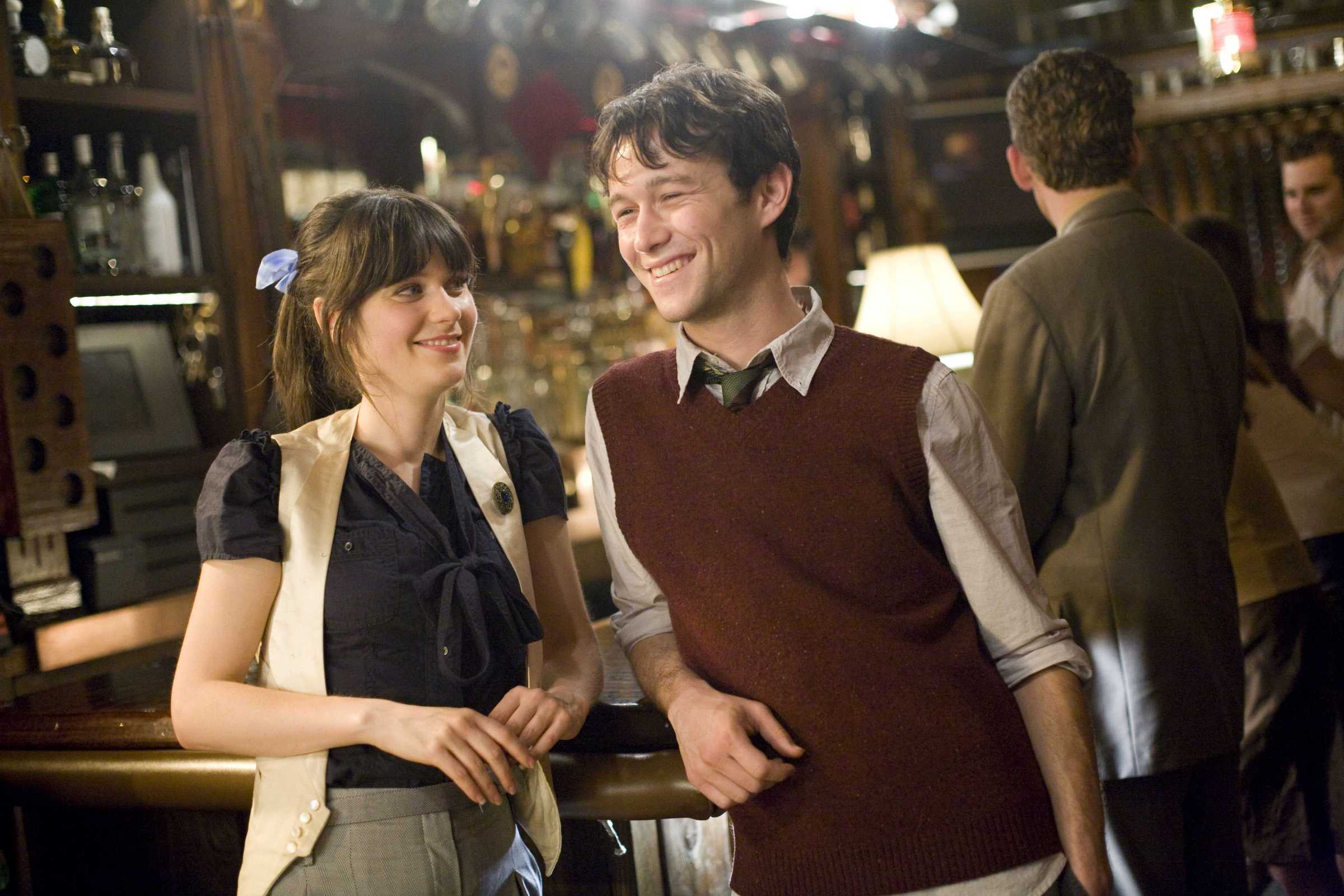
The film chronicles the 500 days surrounding the romance between Tom (Joseph Gordon-Levitt) and Summer (Zooey Deschanel)—from their first glances to their final goodbyes. Everything in between is complicated enough, that Tom would rather remember the good times of the relationship than the bad. Wouldn’t we all, though? The story is told in a non-linear fashion, with a segue that ensures us of which day we’re in. Now, we already know that things aren’t going to turn out well between Tom and Summer, but it’s fun to see the events play themselves out.

Tom is a hopeless romantic who believes he’ll never find true love until he meets “the one.” Who is “the one?” Tom believes it is Summer, a realist who doesn’t necessarily believe in the idea of love. Despite this, Summer likes Tom and wants them to be friends. They hang out together, fool around together, and eventually, they start a potential boyfriend/girlfriend relationship. But will it last? Reality takes its toll, unfortunately.

“(500) Days of Summer” doesn’t result in ridiculous clichés to tell the story of this relationship. There are no silly misunderstandings where the characters think they hate each other and they mope until they realize they do. There are no stupid bullies—like an ex-boyfriend—trying to keep the lovebirds apart. Heck, Tom and Summer aren’t even necessarily “lovebirds.” Tom is the one head-over-heels in love with Summer, and it’s Summer that isn’t so sure about the idea of being someone’s romantic partner.

Instead, we have genuine chemistry between Joseph Gordon-Levitt and Zooey Deschanel, who are both excellent in their roles. Gordon-Levitt, in particular, has the same starmaking ability that made Tom Hanks a household name. I really think he’s that good. It’s his character’s story that’s being told throughout “(500) Days of Summer”—he’s likeable and convincing all the way through. And Deschanel is the kind of fun, free-spirited, attractive woman that we all wish we could meet.

Supporting roles consist of Tom’s wisecracking buddies played by the appealing Matthew Gray Gubler and Geoffrey Arend who have a lot of fun with these obligatory roles; Tom’s surprisingly-insightful younger sister, nicely played by Chloe Grace Moretz; and Tom’s boss, played by Clark Gregg. They all have their fine, funny moments here.

There’s a lot of offbeat humor throughout “(500) Days of Summer,” most of which comes from Tom as the unreliable narrator—we get many sequences that play with whimsy and perception. For example, after Tom and Summer finally have intercourse, we get a bright musical number—a song-and-dance sequence set to Hall and Oates’ “You Make My Dreams Come True.” Everyone is politely nodding/greeting and then they all join Tom as he dances with joy. This is complete with a marching band and an animated bird.

And how about the sequence shown in split-screen, differing “expectations” from “reality?” How often have we been down this road? We expect one thing—one great thing to occur the whole evening—when we wind up with something totally different than we wanted. This is my favorite scene because I can relate to it. It’s a very satisfying scene.

This humor shows that this isn’t one of those gritty indie films that try to make it feel like we’re eavesdropping on the characters. We know we’re seeing a story unfold.

“(500) Days of Summer” is as far from formulaic as you can get, and that’s one of the many reasons I loved it so much. There’s a lot to love in this movie. Aside from the perfect casting, authentic chemistry between the two leads, and a great deal of funny offbeat comedy, there are little things to acknowledge as well—the soundtrack (particularly the Smiths, which Tom likes to listen to), the whole deal with the greeting card company’s creativity or lack thereof, Tom and Summer’s attempt at copying a porno film, the satire of a sad French film when things start to go wrong for Tom and Summer, I could go on and on. Many pleasantries can be found in this wonderful, wonderful movie.

The Secret World of Arrietty (2012)

13 Feb

The-Secret-World-of-Arrietty-image-6

Smith’s Verdict: ****

Reviewed by Tanner Smith

Ever since I was a child, I was a fan of the stories involving the Borrowers—the little people who live in the walls or under the floors of your house. There was a series of books written by Mary Norton that made them popular, as well as a few film adaptations—including two 3-hour British TV specials and an entertaining 1998 update on the story. And I just love the idea of this secret world that would be In jeopardy if it was found out by human beings (or as the Borrowers call them, “beans”), so when I heard that Studio Ghibli was making a new adaptation (yes, with the great Hayao Miyazaki one of the people behind the production), I was hyped. The child in me was curious and the critic in me was interested in how this new version would turn out. I can now say that this film—entitled “The Secret World of Arrietty”—is the best representation of the Borrowers that I’ve ever seen.

Miyazaki’s company Studio Ghibli has delivered some of the best-looking animated features anybody has ever seen. The visuals stand out as mesmerizing and serve the stories well—see “Princess Mononoke,” for example. There’s such a distinct look and feel to the animation in each of these films and each detail is given special attention. I’ve said the same thing about PIXAR’s computer animation, but that doesn’t make this any less of a compliment, except that the animation is hand-drawn (with occasionally computer help) and thus more complicated than you might think.

One great example of this look in “The Secret World of Arrietty” is the scene in which the three-inch adult Borrower named Pod (voiced by Will Arnett for the US dubbing) takes his 14-year-old daughter Arrietty (Bridgit Mendler) on her first trip into the house they live under. Their first stop is the kitchen—with the kitchen being so huge from their point of view, it makes for a threatening environment. Another example is the outside yard of the house, where Arrietty spends a lot of her time. Look at the leaves and the plants next to her as she walks/runs. It looks like another world when it’s really our own.

The story of “The Secret World of Arrietty” is mostly the same as the first “Borrowers” book and has the same basic idea. There is a family of three Borrowers secretly living within a house in the middle of the forest—Pod, his wife Homily (Amy Poehler), and their daughter Arrietty. They have their own home underneath the floorboards and when the “beans” aren’t around, they sneak into the house to “borrow” the essential needs of survival—mind you, it’s never borrowing; it’s stealing, but it wouldn’t make them look good if they were known as the Thieves, right? This family is seemingly the only family of Borrowers in the house. In the old days, there used to be more families until they were discovered by beans and had to move away (it’s also hinted at that others were squashed by the beans). Life is a danger for Borrowers and there’s always a high risk, which is why they have to be extra-careful not to be discovered while they go on their occasional “borrowings.”

The characterizations are direct. Arrietty, just turning 14 years old, is tenacious and courageous. She uses her size as an adventure and delights in discovering more about the world outside her own. Her father Pod, kind of a three-inch Indiana Jones type, is more surly with age. He has had too much adventure in his life and is probably getting too old to borrow. But that doesn’t stop him from smiling when Arrietty fights off a bug (to her, it’s about the size of a canine)—“That’s my girl,” he declares to himself. Homily, however, is a nervous wreck, all the time—always worrying, screaming, shrieking, trembling, nervously rambling on and on, etc.

On Arrietty’s first borrowing in which she “borrows” a sugar cube, she is seen by a sickly human boy named Shawn (David Henrie) and drops the cube. But Shawn doesn’t pose as a threat and kindly leaves the sugar cube next to where he thinks these little people live, with a note saying, “You forgot something.” This increases Arrietty’s curiosity of the outside world and starts to wonder if not all beans are dangerous. But Pod makes it very clear that once Borrowers are seen, they must move away to make sure it doesn’t happen again and that their world is never discovered. Despite this, Arrietty and Shawn do meet each other and form a friendship. However, once the housekeeper Hara (Carol Burnett) notices strange things happening around the house lately, that’s when the Borrowers’ secret does indeed turn to jeopardy.

The elements that made the Borrowers special are present here—the Borrowers sneaking around avoiding being caught, the interaction and friendship between a Borrower and a bean, and the world that the Borrowers created. There’s a lot of tension in the scenes where they go outside, hoping they aren’t seen by beans. There’s a great, tense scene in the middle in which a crow attacks little Arrietty and Shawn must rescue her. And of course, there’s the cat that sometimes chases her around (you can tell Arrietty is faster and used to it—the cat just misses her and she smiles and waves while taunting, “Nice try”). There are a lot of things that are updated from the original story. For one thing, we see more detail in how these Borrowers move around, instead of just climbing or rappelling down a rope tied to a fishhook. Early on, for example, we see that in order to climb something like a cabinet, they use double-sided tape on their hands and feet to scale it. That’s a very clever bit. There’s also a neat invention with sewing thread and a weight that works as an elevator. The biggest difference from the original book to this film is that there is no climax involving the exterminators threatening to destroy the Borrowers’ home, but I didn’t miss it. What they went with, with Hara capturing Homily and Arrietty and Shawn having to find a way to rescue her, is good enough. I was actually glad that they didn’t have to succumb to a basic action climax, and very surprised too, considering that studios love to end family films in that way. But instead, we have a thoughtful climax and a moving ending that opens more for curiosity. Also, the complex issues present in the book like friendship, bravery, and settling are all present and very effective.

The growing friendship between Arrietty and Shawn is well-handled. It takes a while for Arrietty to finally trust Shawn and go visit him, adding more to the discovery of the outside world and the new curiosity that she has surrounded herself with. When it gets there, though, it’s very touching and she even gives this boy who’s twelve times her size helpful advice about being brave when he reveals that he needs an operation for his heart.

Each character is memorable. In particular, Arrietty is a fun character, Pod is an interesting figure, and there’s another Borrower that they meet later in the movie—a wild-boy Borrower named Spiller (Moises Arias) who tells the family of more Borrowers out in the forest. The voiceover work is nicely done. Bridgit Mendler, of Disney Channel’s “Good Luck Charlie,” brings a fresh friendliness to the role of Arrietty. Will Arnett is suitably rogue as Pod. David Henrie is just OK as the boy—sometimes a line of dialogue rings false, but his speech about the character’s illness is actually heartbreaking. Amy Poehler, voicing Homily, is an absolute hoot—she’s very funny in the way she quickly delivers the nervousness in the scenes in which she’s panicking for her family and especially when she is seen and trapped by the housekeeper. Speaking of which, Carol Burnett as the housekeeper Hara is a lot of fun as well. The way she’s drawn is funny enough (looking more like E.T.’s grandmother), but with Carol Burnett adding several “Hmm’s” to each confused facial expression, it’s downright hilarious.

“The Secret World of Arrietty” is a wonderful movie for people of all ages. It’s obviously marketed at children, but adults will most likely enjoy it as well. Even if some children won’t appreciate the complexity of many of the moments in this movie, they at least deserve to choose whether or not they’ll accept them, especially considering the fast-moving, action-packed movies that they watch. Should they decide to watch something a little quieter, “The Secret World of Arrietty” is the movie for them.

Star Trek II: The Wrath of Khan (1982)

13 Feb

images

Smith’s Verdict: ****

Reviewed by Tanner Smith

When “Star Trek: The Motion Picture” was released in cinemas in 1979, audiences—particularly fans of the original TV series “Star Trek”—were either glad to see the familiar characters again or upset that the movie tried to pass off a sci-fi “experience” rather than an adventure. “Star Trek” was never intended to be an out-of-body experience, like “2001: A Space Odyssey” was, but “Star Trek: The Motion Picture” seemed to forget that “Star Trek” was mainly about ideas, characters, and creativity—not stunning visuals.

Luckily, the following “Star Trek” movie, subtitled “The Wrath of Khan,” put “Star Trek” back to the status quo. The result is not just a satisfying “Star Trek” movie, but in my opinion, one of the best science-fiction films. Period.

“Star Trek II: The Wrath of Khan” gave “Star Trek” the certain gusto it needed after the slow pacing of the first movie. The elements that made “Star Trek” special are back, and they’re even updated—the Enterprise looks great this time around, the special effects are better, and the occasional drama is even somewhat heavier. The result is a strong piece of work. And of course, the “Star Trek” characters—the crew of the Starship USS Enterprise—are back and still as likable as they were on the show. We have the egotistical but likable Capt. James T. Kirk (now promoted to “Admiral”), his loyal half-Vulcan (and half-human) friend Spock (Leonard Nimoy), skeptical and arrogant Dr. Bones McCoy (DeForest Kelley), and the four memorable flight crew members—Uhura (Nichelle Nichols), Chekov (Walter Goenig), Sulu (George Takei), and Scott (James Doohan).

I understand that “Star Trek II: The Wrath of Khan” is necessarily a sequel to a first season episode of the show (“Space Seed,” unseen by me). It features the villainous Khan (Ricardo Montalban), who long ago was marooned on a desert planet by Kirk. Since then, his brilliant mind has crossed with insanity. He and his leftover crew members/followers have found a way to escape, and all that’s on his mind is revenge. He hijacks a Federation starship, tortures newly appointed crew member Chekov and his captain Terrell (Paul Winfield), and steals a new project called Genesis, created by Kirk’s ex-lover Carol (Bibi Besch) and David (Merritt Butrick), the son Kirk hasn’t met yet. Genesis was created as a way of creating new life on barren planets, though if proven wrong, it could be used as a doomsday weapon. With Khan in possession of it, it’s up to the Enterprise crew to save the day.

There’s a lot of creativity flowing through the storyline of “Star Trek II: The Wrath of Khan.” In particular, the Genesis device is quite intriguing in the way it can be used for either regeneration or Armageddon, there’s a frightening subplot involving parasitic creatures that Khan uses to torture Chekov and Terrell, and there’s an epic space battle near the end that’s very enjoyable.

Ricardo Montalban creates a terrific villain as Khan—an intelligent person driven to madness and crime by isolation and betrayal. He wants to kill Kirk, but more terrifyingly, he realizes that when Kirk and his crew may be stranded somewhere, it’s actually better to make them suffer as he and his own crew did. Characterization aside, Montalban has a unique, slimy delivery that helps make Khan a strong and chilling villain.

The conversations/bantering between the Enterprise crew is fun, and leads to some nice character development, such as how Spock is becoming more human and how Kirk goes through a middle-age crisis. William Shatner is strong in the role of Kirk, mixing gallantry with vulnerability. DeForest Kelley as McCoy still has winning sardonic one-liners, and Leonard Nimoy is comfortable in the role of Spock—Nimoy really sells an important scene near the end, and the less said about that, the better. A surprise in the cast of heroes for this movie—Kirstie Alley, of TV’s “Cheers,” acquits herself nicely in the new role of Vulcan recruit Saavik. She has a handful of scenes to steal.

“Star Trek II: The Wrath of Khan” is a well-executed, wonderful adventure that not only would delight fans of the original series, but also people who aren’t affiliated and would just appreciate an entertaining sci-fi film. The heroes are appealing, the villain is intriguing, the imagination is existent, the story moves quickly, and we’re met with real tension along the way.

The Perks of Being a Wallflower (2012)

12 Feb

the-perk-of-being-wallflower101

Smith’s Verdict: ****

Reviewed by Tanner Smith

People will say that they hated high school. I think they’re only thinking of the bad occurrences (lost opportunities, broken hearts, feeling left out of the crowd, etc.), rather than the warm, nostalgic, refreshing moments that changed their lives forever (friendships, accomplishments, even quirkiness in classrooms). High school may have had its negative moments, but its positive points were always present. It can be weird and crazy, but also warm and funny. That statement alone can be used to describe “The Perks of Being a Wallflower.”

“The Perks of Being a Wallflower” is a true delight and it understands what it was like to be an outsider during high school. People looking back will notice that they all went through the motions of high school—awkwardness, loneliness, confusion, and the unexpected camaraderie that came with—and then they’ll realize that they all felt like outsiders, even the popular crowd. “The Perks of Being a Wallflower” doesn’t present these elements as a bad thing. It’s a moving coming-of-age story about such a high school kid who begins his freshman year miserably, but finishes it by embracing who he really is.

Based on a popular young adult novel, the film takes place in the early 1990s as a teenager named Charlie (Logan Lerman) begins his first year of high school. Charlie is a shy, quiet kid who has trouble making friends, and his old friends are too busy with their new crowd to pay attention to him. (And he also has a troubled past, which is revealed later.) The only connection he makes so far is with his English teacher (Paul Rudd).

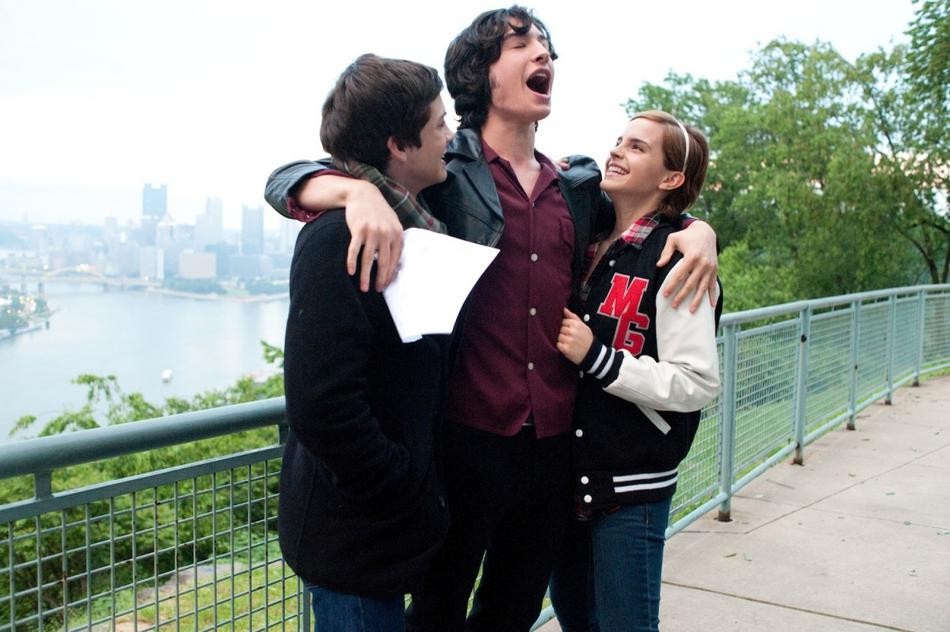
Soon enough, Charlie meets two seniors—Sam (Emma Watson) and her stepbrother Patrick (Ezra Miller), who aren’t conformists in the slightest and revel in knowing so. When they learn that Charlie doesn’t have any friends, they welcome him into their crowd. They enjoy each other’s company.

For Charlie, this is a way of stepping out of his dork-status and his despair. It’s a despair that runs deeper than one might expect that comes with clues such as his constant writings to a certain “friend” about certain updates, and his late aunt (Melanie Lynskey) who had a certain bond with the boy, and possibly something a little more suspicious (things are left vaguely). His parents (Kate Walsh and Dylan McDermott) are in their own world, and his usually reliable older sister (Nina Dobrev) is in a somewhat odd relationship with an idiot named Ponytail Derek (Nicholas Braun). Bottom line is, this is a kid who needs friends in his life. Who better to be his friends than Sam, friendly and appealing, and Patrick, witty and high-spirited (and openly gay).

Charlie isn’t the only one with problems, of course. Patrick and the football jock Brad (Johnny Simmons) are seeing each other secretly, as Brad isn’t ready to come out of the closet yet. But the tension is getting to be too much for him. And Sam is trying to live down a reputation, which began during her freshman year. She regrets the past, and dates someone else—a nice college guy named Craig (Reece Thompson). Charlie develops a quick crush on Sam, but still supports their friendship. But Sam, not knowing that Charlie is hopelessly in love with her, keeps finding ways for Charlie to like her even more, which makes things very difficult. Life may be sweet, but also very complicated, and it gets even more so when Charlie finds himself in a weird relationship with punk-Buddhist Mary Elizabeth (Mae Whitman).

If any of this sounds familiar, it should. We’ve not only seen this in many high-school coming-of-age movies, but I think most of us have known what this felt like when we were in high school. We can’t deny it—we have all felt the confusion, the awkwardness, the loneliness, and the unusual developed friendships that come with high school. And this movie knows what high school felt like. What surprised me is how this film separated itself from the “mainstream” aspects by really tapping into its subject matter, as well as developing into a rather dark final act (which I will not give away). The screenplay by Stephen Chbosky (based upon his own novel!) is warmer than I expected it to be. It’s insightful, sincere, and very effective.

What also makes “The Perks of Being a Wallflower” special are the performances. Logan Lerman is likable and effective as Charlie. Emma Watson, in her first attempt to distance herself from the Hermione Granger image that made her noticeable in the first place, does great work as Sam. She has more of a display of range and ability than the “Harry Potter” movies ever permitted her to show. (Both Watson and Lerman share convincing chemistry together.) But the real surprise was Ezra Miller as Patrick. Miller plays the exact opposite of his psychopathic-teenager role in last year’s “We Need to Talk About Kevin,” and he delivers a performance equally strong. Miller is enthusiastic, energetic, likable, credible, and engaging.

If you feel alone, then remember that good things can happen in ways you don’t expect them to. That’s the overall moral, you could say, for “The Perks of Being a Wallflower.” With a smart script, good acting, and an overall feel for what it’s like to be a high school outcast, this movie is observant, fun, amusing, sweet, sad, nostalgic, and very effective.

Pleasantville (1998)

12 Feb

images

Smith’s Verdict: ****

Reviewed by Tanner Smith

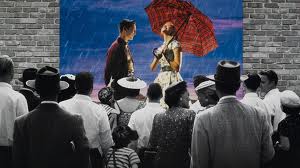
“Pleasantville” is a wonderful fantasy that is funny, great-looking, effective, well-acted, and very clever. First, it parodies those old TV black-and-white sitcoms, such as “Father Knows Best” and “Leave it to Beaver,” then it gets even better as it continues with its own sitcom plot and transforms into a strong story with a message of the power of change.

“Pleasantville” is the name of a TV black-and-white sitcom that features the same happy family we’ve seen in those other old sitcoms. They live in a small town called “Pleasantville.” Every day is the same—father comes home from work and yells in a pleasant tone, “Honey, I’m home!” Dinner is always on the table when Father comes home. (Making dinner is all Mother does, apparently.) The kids are pleasant too. In fact, everyone around them is pleasant and happy.

‘90s teenager David (Tobey Maguire) watches the reruns of “Pleasantville” and knows the show very well. We’d think that teenagers wouldn’t be interested in a show like that, but David feels left out of place in the 1990s and is more at home in the dream world of “Pleasantville.” His sister Jennifer (Reese Witherspoon), however, is right at home here—she’s popular and has experience with sex. One night, while their mother squabbles with their divorced father, David and Jennifer fight over the remote control for the TV, which breaks. To the “rescue” is a mysterious, friendly TV repairman (Don Knotts), who supplies them with a new remote that will “put you through the screen.” They click it and find themselves magically transported into the black-and-white world of Pleasantville. Horrified by her complexion, Jennifer exclaims, “Look at me! I’m pasty!”

So far so good—the idea of having modern-day teenagers in a wholesome, pleasant 1950s TV world is clever. The script has fun with the kids learning about this new world—everyone sticks to the script; no one does anything different; every breakfast is no choice of pancakes, eggs, sausage, bacon, and a ham steak; the basketball team never misses a single shot, no matter where they aim; the books in the library are blank; nothing burns (the firemen only rescue cats from trees); everyone sleeps in twin beds; and there is nothing outside of Pleasantville (the school history class is only about Main Street and Elm Street and it begins where it ended again). No one has ever even heard of sex. David has seen all of the episodes, and so he knows this world well. Jennifer, on the other hand, finds this world mysterious and creepy. “We’re stuck in Nerdville!,“ she exclaims.

David and Jennifer attempt to cope with this world until the TV repairman feels pleasant enough to send them back home. Their names are now Bud and Mary Sue, their parents’ names are Betty and George Parker (Joan Allen and William H. Macy), and Bud works at the soda shop with Mr. Johnson (Jeff Daniels). But any change can alter this universe and who knows what’ll happen? And there are changes, starting when Jennifer goes on a date with the cool guy in school and gives him his first sexual experience. That’s when things start to spread around town, and things and people slowly turn into Technicolor.

I mentioned at the beginning of this review that “Pleasantville” is great-looking and I wasn’t exaggerating. Almost every shot from that point on is amazing to look at because writer/producer/director Gary Ross and his cinematographer John Lindley use special effects to show a black-and-white world mixed with characters in color. Some of them are still in black-and-white so they interact with the ones in color. How does it happen? As it turns out, whenever anyone in this pleasant world experiences any change of any kind, they turn color and the world becomes more like ours. One of the very best scenes involving this technique is the scene in which Betty, now turned color, is assisted by David to put grey makeup on her face. That scene is very well done. Also, there are bits where things in color are reflected onto the black-and-white characters, like a fire and the moonlight over a river. I was absolutely bedazzled by the effects in this film.

People are ready for change, and the more serious subject of the film are the questions they ask of who they are, what is their purpose, what will happen next—questions they’ve never thought about before. Mr. Johnson becomes interested in art and Betty does something for herself for once. But George is distraught—he’s used to getting dinner on the table when he comes home and distraught when he comes home and the house is empty. His routine is ruined. Finally, the Mayor (the late J.T. Walsh, in his last performance) announces to the remaining “true” citizens of Pleasantville, “Something is happening to our town.” He’s right.

Even David and Jennifer have the ability to change. For example, Jennifer is less interested in keeping her sexual reputation, and wondering what else there is to do. She even starts to take up reading (although, she has to wait until the words appear back in the library books).

The writing is fantastic. The directing is great. Credit Gary Ross for making this movie like it is. In lesser hands, the movie would’ve been as bland as the show it lampoons. Ross delivers the goods here.

The performances are terrific. Tobey Maguire and Reese Witherspoon are good and convincing as the bewildered teenagers. William H. Macy is delightfully deadpan as the father, Joan Allen is fantastic as the mother, and Jeff Daniels is also good and funny as Mr. Johnson.

“Pleasantville” is also thought-provoking. It’s a magical piece of work that allows us to think about who we are and why we’re here. Can we, as individuals, make differences? I loved every moment of “Pleasantville”—it’s a clever, well-written, great-looking, solidly-acted, fantastic, satirical, fun feel-good movie. (Good Lord, is that enough adjectives?)

The Incredible Shrinking Man (1957)

10 Feb

images

Smith’s Verdict: ****

Reviewed by Tanner Smith

The 1957 science-fiction film “The Incredible Shrinking Man,” written by Richard Matheson (based on his novel), takes the idea of an ordinary person exploring an alien planet, and brings it closer to home. This is a story in which a man is continuing to shrink with each passing day until he is so small that his own home becomes a whole new, treacherous world for him. It’s a clever idea, executed wonderfully (and effectively) in “The Incredible Shrinking Man,” with a great sense of danger and adventure, as well as some nicely-done special effects.

It begins as Scott Carey (Grant Williams) and his wife Louise (Randy Stuart) are on vacation at sea when Scott is enveloped in a radioactive mist. Since then, his clothes don’t fit, he’s losing weight, and worst of all, he’s losing height. Every day, he keeps getting smaller. Several weeks later, he is the size of a small boy as he becomes famous (and known as the Incredible Shrinking Man), while the doctors are searching for a cure.

The first half is mainly about how Scott and Louise deal with this strange phenomenon surrounding Scott, and it’s exceedingly well-done. You really feel the pain that each of them are going through, with Scott being regarded as a freak and Louise feeling helpless to him. It’s acted with a great deal of conviction, given the material—the best example is when the camera is focused on the back of an armchair while Louise and Scott’s brother Charlie (Paul Langton) are talking; the revealing shot of the diminutive Scott, sitting in the armchair, is most effective not because of the effect, but because of the blank expression of Grant Williams’ face. The melancholic situation becomes even clearer.

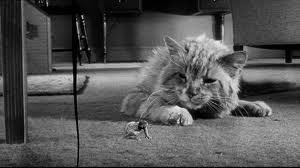
Then, we reach the second half of “The Incredible Shrinking Man,” which transforms the film into an adventure story. Scott is now small enough to live in a dollhouse and Louise walking about the house becomes too much for him to handle. Then, when Louise leaves the house for a little while, something unexpected happens. The family housecat comes into the house and attacks Scott, chasing him about the house until he reaches the cellar, where he is accidentally and ultimately trapped. Louise comes back to believe that the cat has eaten Scott and so no one is going to come down to the cellar looking for him, leaving Scott to endure the new world he has brought himself into.

The film is advertised with the tagline, “A Fascinating Adventure Into the Unknown!” I would have to agree. Scott is inside the cellar, he can’t climb the stairs, he calls for help but no one can hear him, and the floor expands like a vast wasteland. He gets water from a leaking boiler (drops are the sizes of golf balls), he now lives in a matchbox, he has to get food from a mouse trap and high atop a cabinet that towers over him, and he is menaced by a tarantula loose in the cellar. It’s a treacherous new world that is of course Scott’s from a different scale.

The giant sets are (forgive the pun) largely convincing and really make you believe that there is a tiny man in a giant world. And the suspense of the second half, as Scott braves this unknown land, really comes through. The adventure keeps building and building as it goes along, with Scott scaling the walls, crossing a Grand Canyon-type of pit, and eventually doing battle with the spider.

Throughout the movie, we get a close look at Scott’s psyche, so that we understand his plight and sympathize with him. Much of this element is further improved in the final few minutes, as Scott is coming to terms with the idea that he will shrink into nothing…or will he? The film ends with an inner monologue (one of the best acting monologues, in my opinion), in which Scott now accepts his fate and looks forward to an adventure in an even smaller realm and beyond. He believes that no matter how small he will get, he will never become nothing and will still matter in the universe, thus ending his fears of future shrinking. This is not, nor has it ever been, a standard miniature-adventure story. There’s a psychological element to it that makes it special—exploring power and acceptance. That ending is just fantastic. I’m pleasantly surprised that the writers really had it in them to do this instead of taking the easy way out.

Let Me In (2010)

10 Feb

LET ME IN

Smith’s Verdict: ****

Reviewed by Tanner Smith

This was not supposed to happen—I was not supposed to receive much from a remake of a great movie that came out almost two years after the original. I was a big fan of the original Swedish film “Let the Right One In” and so, I had my doubts about this American remake entitled “Let Me In,” directed by Matt Reeves, whose previous directorial effort was 2008’s “Cloverfield.” This new movie is faithful to the original, but a few changes have been made to make it even more effective. Those who saw the original film and see this new one will know the changes I’m talking about. But I was far from offended. I think these changes helped the story a lot. For example, the motives of the adult “father” to the vampire girl (for those who haven’t seen or heard of the original, I’ll get to the vampire part soon) are explained more clearly…but also in a subtle way. In the original film, I didn’t quite understand the relationship of the little vampire girl and her adult guardian who could be her father but then again could not be. There are a couple of scenes in this remake that explain it a bit more and then there is one shot that sums everything up—it involves a picture, that’s all I will say. I was satisfied by this subtle explanation—in fact, I was satisfied by a lot of elements in “Let Me In.”

The storyline remains the same in “Let Me In.” Owen (Kodi Smit-McPhee, the talented young actor from “The Road”) is a twelve-year-old, lonely boy who is severely bullied by sadistic bullies at school. When he is alone, he repeats the bullies’ dialogue as he stabs a tree multiple times. This brings the attention of a mysterious girl that just moved in the apartment next door to him—her name is Abby (played by Chloe Grace Moretz, “Kick-Ass”) and she is a vampire. She lives with a middle-aged man (reliable character actor Richard Jenkins) who is believed to be her “father” but maybe something more, as we see in a few key scenes. Owen and Abby become great friends and their relationship is dangerous because Owen doesn’t know that Abby is a vampire—he doesn’t know that The Father kills for blood in order to feed Abby. But Abby would never let anything happen to Owen and she gives him the strength that he needs.

I was intrigued by the relationship of these two twelve-year-old kids in the original film and I am just as intrigued here. Unlike the relationship between Bella and Edward Cullen in the Twilight Saga, this is a relationship that actually feels real and risky—there is no sex in this movie, but there are sensuous moments in which Abby goes into Owen’s bed while naked (no nudity is shown) and other moments when Owen and Abby share warm hugs when they realize they need each other. This relationship never states that dating a vampire is fun and games—it could be dangerous.

These two kids live in a dangerous world where bad things can and will happen. I mentioned the bullies’ sadistic behavior. These kids are more brutal than the kids in the original film and that’s quite an accomplishment indeed—we get many nasty scenes of the bullies’ terrible behavior. They pull his underwear up so tight that he wets himself, the leader of the bullies strikes him hard across the face with a pointer stick, and they try to push him into a hole in an icy pond. But that’s Owen’s problem. Abby’s problem is that she needs blood to eat in order to survive. This leaves opportunity for horror elements—The Father is killing innocent people and draining them of their blood to put it into a jug. There’s one scene that is absolutely incredible—I’m not going to give much away, but it involves The Father’s latest victim of murder in a car. The outcome of this scene is the best movie car wreck I’ve seen in a long, long time, seen through an unmoving POV shot inside the car! This is an absolutely fantastic shot. There are many other shots that are great, but that’s because director Matt Reeves drops his “Cloverfield” style of directing (camera shaking for intensity) and focuses on what is most important in the shots. He even goes as far as keeping Owen’s stressed, divorced mother (Cara Buono) out of focus throughout her scenes. He knows it’s more important to capture Owen’s expressions in these scenes, and we can hear Mom’s suffering in her voice when she talks to Dad on the phone. This is one of the best-looking movies of 2010; wonderfully well-made.

This movie is set in 1983, which leaves many Reagan-era touches, such as Ms. Pac Man and songs by Blue Oyster Cult. Most notably are the haunting references to the candy Now and Later, as well as Reagan’s television speeches about good and evil. Suitably, there is a character known only as The Detective (Elias Koteas) who goes through town investigating the murders, believing it to be the work of “Satanists.” A word about the new character of The Detective—I do admit that the town-adult subplots in the original film seemed unnecessary with a somewhat weak payoff. If you recall the original, you recall the woman who is turned into a vampire and the husband who is investigating what is happening when his friends are murdered. The latter is transformed into The Detective for “Let Me In” and we only see him (and the woman, of course) when we absolutely need to.

Aside from how great-looking and well-developed the story is in “Let Me In,” what will really draw the most attention are the excellent performances from the actors. Kodi Smit-McPhee, who was very effective as the little boy in a damaged world in “The Road,” is a boy in a world that may as well be damaged. We believe in Owen, we care for him, and we want things to go well for him. This is a kid we definitely don’t want bad things to happen to. Even more effective about his performance is his reaction shots—when he’s not talking, he listens and learns important things about this situation. In the first most effective terrifying moment in the final half, we feel his fear. Also very strong is Chloe Grace Moretz as Abby. Moretz gave “Kick-Ass” its energy (and controversy, I know) and in “Let Me In,” she plays an even more complicated character and pulls it off. Richard Jenkins, who doesn’t have much dialogue, lets us know what he’s thinking with just his expressions and the intensity in his murders.

To me, “Let Me In” is one of the best movies of 2010. It’s definitely the best remake of the year—a step or two above the remake of “The Karate Kid,” which I liked. Yes, we’ve seen vampire romance many times before and we have the original film, but “Let Me In” is a lot better than you might expect. For one thing, it doesn’t treat this relationship with sexuality but with the loneliness of childhood as these kids are on the brink of adolescence. Don’t be expecting a “vampire movie” if you see this movie. Expect something a lot more.

NOTE: I should also mention that there are some genuinely terrifying moments in “Let Me In,” the two most effective come in the film’s final half. I won’t go into the first one, but I will say this about the second one—if you’ve seen the original film, you know there is a swimming pool scene. If you were terrified of that scene in the original, there is a chance you will breathe heavily and recoil in your seat in the theater…I did.

20,000 Leagues Under the Sea (1954)

10 Feb

images

Smith’s Verdict: ****

Reviewed by Tanner Smith

One of the great things about the late Walt Disney’s movies is that they’re suitable for all audiences. Disney has a reputation of being an important member of the family-movie circuit, as well as the richest. But that’s just it—they key word in that phrase is “family” movie, not “kid’s” movie. These are good-hearted movies for children and adults. If Disney’s animated movies, such as “Pinocchio,” can show that, then his live-action films certainly could. One that comes to mind is the 1954 film adaptation of Jules Verne’s “20,000 Leagues Under the Sea.”

“20,000 Leagues Under the Sea” is a delightful adventure movie—exciting, mysterious, thrilling, and when it needs to be, insightful. It’s great for kids, but also for adults, who I think arguably, might enjoy it more. It knows how to tell a story, it’s thought provoking, and visually thrilling.

It begins as something unknown continues to sink ships all over the ocean. Professor Arronax (Paul Lukas) has been invited to board an expedition to search for the supposed “monster.” But after an encounter with the thing, the Professor, his meek but loyal assistant Conseil (Peter Lorre), and sailor Ned Land (Kirk Douglas) are left shipwrecked, and they swim to find that the monster is not a monster at all. It is, in fact, a fully functional submarine.

The submarine is an amazing discovery for its time, and is captained by the megalomaniacal Captain Nemo (James Mason), a genius with a skill for invention, a hunger for freedom, and a grudge against humanity. Because he has read the Professor’s work and feels there’s more he can show him, he agrees to take him and his two companions aboard. The Professor is fascinated by Nemo’s invention(s) and free world, and unnerved by his resentment for society. Ned, however, would like nothing more than to escape.

Everything around the submarine is a visual treat. Showing how the contraption works and all of the neat little gadgets around it makes it interesting to watch. I feel that everything in this movie’s budget went into this submarine and it shows. And it’s captained by a particularly interesting character—Captain Nemo is one of the great villains in literature and is no exception in the movies, based on the performance by James Mason. Nemo is constantly wavering between insanity and intelligence, and has his own views of society that forces him to create a deadly crusade across the seven seas. James Mason is brilliant as Nemo—he makes us hate him one minute, and then care for him the next.

There are plenty of fun action sequences. Three come to mind—the first is, the shark attack underwater, as Ned and Conseil go hunting underwater (sporting diving suits and helmets) and attempt to steal buried treasure when they come across trouble; the second is, a chase by a cannibal tribe on a remote island which ends with another clever invention by Nemo; and last but definitely least is, a battle with a giant squid. Great creature effects are put into that last sequence, like giant tentacles wrapping around the crew, and the pacing is perfect as Ned attempts to break out of his prison room in order to save the day, making this a brilliantly formed action sequence.

Kirk Douglas is likable as the rambunctious scalawag Ned Land, who becomes the unlikely hero only after trying multiple times to escape. Paul Lukas does a nice job as the intellectual who is slowly descending to Nemo’s level, and Peter Lorre is fun as the meek one caught in the middle of all this.

There are also some nice light-hearted moments to go with the dark material, such as when Ned plays a catchy fun tune called “Whale of a Tale” on guitar, or when Nemo’s pet seal who apparently prefers cigars over seafood—though to be fair, I think those cigars were made of seaweed, since the food on that ship is entirely made of creatures from the sea. Would you believe that the supposed “cream” is actually milk from a giant sperm whale?

“20,000 Leagues Under the Sea” is a timeless classic in not only the Disney live-action group, but also the action-adventure genre. It provides characters to root for, a villain that can be both sympathetic and intimidating, great visual sets, sensational sequences, and a well-moving story.

A Hero Ain’t Nothin’ but a Sandwich (1978)

9 Feb

741952659693

Smith’s Verdict: ****

Reviewed by Tanner Smith

What’s more disturbing about drug use is that some people are the ones we least suspect of using. Take Benjie: He’s 13 years old. He lives in the Watts ghetto with his caring mother, stepfather, and grandmother. He’s a bright junior high school student. He’s happy just hanging out with his friends.

Now he’s a heroin addict. He was introduced to the stuff by one of his buddies, and loves the high so much that he frequently buys from the local drug dealer.

Benjie is the focus of “A Hero Ain’t Nothin’ but a Sandwich,” a tough, well-acted, gritty family drama about a confused boy caught in a world of drug addiction. He keeps saying he isn’t hooked—he is.

The situation gets worse, and Benjie is eventually sent to a drug rehabilitation center when everyone finds out about him. In one of the most bizarre sequences in the movie, we see in photo slides Benjie coping with rehab—in between is a painfully effective scene in which Benjie is confronted by an encounter group and tearfully opens up to them.

That leads to the second half of the movie, as Benjie deals with rehabilitation, starting over, deeper temptation, and his relationship with his stepfather.

The most interesting part of “A Hero Ain’t Nothin’ but a Sandwich” is the relationship between Benjie and his stepfather. The stepfather is not written as a monster to act as reason for Benjie to use drugs in the first place. Instead, he tries to be the best father Benjie can be, but Benjie constantly shuts him out when he’s there for him. Benjie tells his best friend that he does this because he’s afraid that if he winds up loving him like a father, then he’ll be sad if this new father leaves, like his old father. When the stepfather—named Butler—finds out about Benjie’s new hobby, he’s very strict and sometimes goes out of line, but tries to do the right thing by him. And when things get really nasty, he seems to be the only person Benjie can depend on. But the problem is, he can get to his wit’s end with the kid.

Those scenes make “A Hero Ain’t Nothin’ but a Sandwich” more of a movie about family values and trust rather than merely a story of tragedy involving young people and drugs (though it is that, as well).

The acting is great, especially seen in the scenes involving Paul Winfield as Butler and Larry B. Scott as Benjie. Paul Winfield is excellent as Butler—he creates a character that is tough and persuasive as he tries to be a hero figure as a surrogate father for a disillusioned teenager. Larry B. Scott turns in a believable performance as a kid who has high spirits but whose ambitions turn low. Cicely Tyson as Benjie’s mother, Helen Martin as Benjie’s grandmother, and Kevin Hooks as the drug dealer named “Tiger” are also solid.

What surprised me about “A Hero Ain’t Nothin’ but a Sandwich” was how honest it was. In fact, at times, it’s hard to watch. But that means it’s working. Just about every scene in this movie is so authentic that at times it is frightening. It’s an effective tale about how pride, trust, and respect can be taken away by drugs, and about how coping and willing with withdrawal can gain them back.