Archive | Four Stars **** RSS feed for this section

Speed (1994)

22 Apr

images

Smith’s Verdict: ****

Reviewed by Tanner Smith

“Speed” has exactly what every action movie should have—a strong, likable hero, a threatening villain, and of course, gripping action sequences that deliver some fantastic special effects. This is the Ideal Summer Blockbuster that doesn’t disappoint in the slightest. It’s a compelling rollercoaster of a movie that doesn’t slow down once it speeds up, if you’ll forgive the pun. Now, of course, there are more than a dozen other action films that feature a lot of action, but not a lot of them are interesting in their characters or even their stunts or effects in their action sequences. “Speed” manages to fix the problem(s).

First, I should say that “Speed” has an extremely clever premise. Imagine if you will: a bomb set under a city bus is armed when the bus speeds up to fifty miles per hour. If the bus drives under fifty, the whole darn thing explodes. What can you do about this situation in Los Angeles traffic? At rush hour? And with a fifty-foot gap in the unfinished freeway?

The bomber is a mysterious psychotic who has everything planned out in his every plot. He’s played by Dennis Hopper, and while it seems like a cliché to cast him as a villain, Hopper is naturally threatening and delivers a great performance.

The bomber wants revenge on reckless LAPD police officer Jack Traven (Keanu Reeves) after he and his partner (Jeff Daniels) foiled one of his plots in an opening scene. They mistook him for dead—they’re wrong. So now there’s a bomb on a bus and Jack is the one who has to get on board and save the hostages…without slowing down or stopping the bus. Of course, Jack makes it onboard the bus and after a passenger shoots the driver of the bus, a female passenger named Annie (Sandra Bullock) is forced to drive.

I love this exchange:

JACK: Ma’am, can you handle this bus?

ANNIE: Oh sure, it’s like driving a really big Pinto.

And so the bus goes through wrong lanes, construction sites, airport runways, and of course, that unfinished freeway. Through all of this madness, Jack thinks fast and comes up with ways of getting out of every sticky situation that comes around. Of course a lot of it is preposterous (I mean, a bus that size can’t really jump a fifty-foot gap in the street). But what’s important is that a lot of it is a ton of fun. There isn’t a dull moment to be found here. “Speed” is kept alive by the charisma of the actors and the intensity of those extraordinary action sequences.

I suppose I should also mention that “Speed” is sort of like a three-act play. In between the bus story are bookends (an opening scene involves an elevator and a closing scene involves a subway train). Why is this necessary? Because we know that we want more in a film like this.

Keanu Reeves shows a great deal of charisma and plays a credible action hero while also displaying recklessness and bravery. He’s a likable guy for us to root for. And who wouldn’t root for him when, after all that’s happened, he puts himself under the bus, trying to dismantle the bomb? Sandra Bullock shows a lot of spunk as the woman who has to save all the other passengers, as well as become Jack’s possible love interest—she and Reeves have good chemistry together. And then you have Dennis Hopper, whose character issues ultimatums and is very sinister. He’s one of the creepiest and most charismatic villains you’ll find in an action film.

“Speed” is a blockbuster through and through and it looks like Reeves, Hopper, and Bullock had a good time making it and I bet director Jan de Bont had a blast making it. He and the rest of the crew spent a lot of money on this film—they’ll get it back. “Speed” is a wonderful action film—one of the best action films I’ve ever seen.

Terminator 2: Judgment Day (1991)

21 Apr

Arnie

Smith’s Verdict: ****

Reviewed by Tanner Smith

In 1984, we had “The Terminator,” a violent yet effective sci-fi/action thriller which featured Arnold Schwarzenegger as a killer cyborg from the future sent back in time to kill the mother of the future leader of America who will lead the human race in a fight against the machines that learned to overrule us and take over the world. That film was a huge hit critically and commercially so a sequel was expected. So, in 1991, there is “Terminator 2: Judgment Day,” a sequel just as thrilling as the original and somewhat better, thanks to solid acting, excellent special effects, and gripping action sequences.

In “Terminator 2: Judgment Day,” the future is out to kill young John Connor again while he is still a child. The kid is ten years old (the movie is probably set in 1995) and separated from his mother Sarah (Linda Hamilton), now confined in a mental institution because of her accurate warnings of a nuclear holocaust in 1997 which will follow in the machines ruling the world. Sarah was chased by the Terminator in the original film, when John wasn’t even born yet. Not even John believes his mother’s warnings.

But two Terminators have traveled back from the future—one to protect young John from the other. The twist here is that Schwarzenegger plays a good Terminator this time. He has been reprogrammed by John of the future to be the protector of John of the past. Out to kill the kid is a T-1000 (Robert Patrick), a Terminator even more advanced than Schwarzenegger.

The Terminator and John save Sarah from the mental hospital and together, they race to prevent the nuclear war from ever occurring and therefore will stop the machines from taking over. This is where tension really mounts and director/writer/producer James Cameron dares us to relax during all of this. There is a fresh father-and-son relationship between John and the Terminator—sometimes, John plays the father. He orders him not to kill people and the Terminator doesn’t. Amazingly enough, having this Terminator to not kill people works.

This movie is jam-packed with action sequences, all of them very impressive. The opening chase scene in which the T-1000 tries to run down the kid with a semi (the kid is on his dirt bike through the alleys of Los Angeles) is done skillfully. I know it’s a cheap move to show a kid in peril but the scene is so well-made that throughout the whole movie, we fear for this kid, well-played with convincing energy by Edward Furlong. There are many scenes like that; the stuntwork is impressive, the chase scene near the end is handled well, and the special effects are just plain excellent. You really have to see this movie to understand that this T-1000 is really one of the best movie villains in any action movie. Played by Robert Patrick, he just looks like an out-of-town tourist who took the bus instead of a taxi. But underneath that human body is liquid metal, which causes him to change shape. He becomes liquid to fit through small spaces, his arms transform into knives and stabbing weapons, and he is very hard to kill. Very impressive special effects here—you shoot him, it leaves a hole which closes back up; you slice him apart, he comes back together again; you blow him to pieces, the pieces form back together like mercury. No matter how many times you try to kill this thing, he is repaired and ready for more action.

The acting is strong here. Arnold Schwarzenegger seems to find the right balance between humor and tension. His lack of emotions—he doesn’t understand why humans cry—make him an interesting case for an action hero. He plays it almost like a straight man in a human drama. I like how he reacts to the kid telling him how people talk. Then when the action occurs, Schwarzenegger is convincing as a heroic machine doing what he was programmed to do. Naturally, there must be a showdown between the Terminator and the T-1000. With these two machines squaring off against each other, Schwarzenegger still has that balance. He’s enjoyable to watch in this movie. Linda Hamilton has a strong presence as Sarah. She’s a strong action heroine to go along with Schwarzenegger’s lack of emotions and the kid’s energy. They become an unusual but effective family unit.

I can see a lot of money spent into this project, all of it put to good use. “Terminator 2: Judgment Day” is an extraordinary action movie, complete with actual character development, a splendid villain, spectacular visual effects, and well-executed action. 

The Exorcist (1973)

19 Apr

exorcist-1973-linda-blair-pic-1

Smith’s Verdict: ****

Reviewed by Tanner Smith

“The Exorcist” is regarded as a classic in the horror film genre. People always remember the shocking moments—the projectile vomiting, the spinning head, the floating-above-the-bed, and especially the horrifying appearance of a demon-possessed little girl whose image is still being used to frighten people. Yes, “The Exorcist” has its freaky scenes and real effective scares, but that’s not the main reason it’s hailed as a classic. It’s because it’s so grounded in reality and initiated on characters and story, so that the horror elements take great effect. It was shocking in 1973 and it’s still shocking now.

“The Exorcist” presents a story about a girl being possessed by a demon, and the fight to relieve her from it, in a surprisingly plausible way. It features realistic characters we can sympathize with and root for. It’s directed and lit in such a way that the atmosphere allows the movie to suck you in. And also, it’s as if it doesn’t try to be horrifying. It tells its story in the way that a demon possession, and an exorcism, possibly could happen. The horror mainly comes from what the characters go through; they all have issues and preoccupations. There are two in particular that we focus on. Actress Chris MacNeil (Ellen Burstyn) is busy keeping her career going and raising her only daughter Regan (Linda Blair), but now has to struggle with Regan’s new illness (more on that later) that just seems to get worse and worse; and Father Damien Karras (Jason Miller) seems to have lost his faith recently and is constantly tending to his sick mother. Throughout the movie, Karras has to struggle with his faith—whether or not he can gain it back.

Regan is not well, to say the least. At first it just seems like she’s slightly ill—she swears up a storm and acts a little funny. It only seems like stages of puberty at first, but doctors suspect something a little more serious than that, and give her all sorts of medical tests. But while they show nothing out of the ordinary, there is definitely something wrong not only with her, but around her. Her bed is shaking violently with her on it, there are strange noises in the attic, and other little strange things start to happen, including unexplained movements and even deaths that are possible murders.

Regan’s personality changes (as does her voice, for which actress Mercedes McCambridge takes over), and she even states that she is the Devil taking control of Regan’s body. There’s no doubt that Regan is possessed, and when things get even worse, the situation calls for an exorcism to save Regan and be rid of whatever is controlling her. Chris consults Karras, who agrees to look into it with psychiatry, though he doesn’t believe in exorcism necessarily. But despite his doubts, he calls for help from an experienced exorcist, Father Merrin (Max von Sydow), to perform the exorcism.

The setup is extremely well-done, as it slowly but surely sucks you into the tension of the story. Take the early scene in which Chris hosts a party at her house. The guests are gathered around the piano, singing off-key and unrehearsed to the tune being played. That’s as normal as you can get, and then it eases you into the unsettling moment in which Regan comes in and interrupts by saying in a deadpan tone, “You’re going to die up there,” and then urinates on the floor. What I’m getting at here is that “The Exorcist” eases you into the shock elements by taking relatively normal situations and transforming them into sure unsettlement, so that when the real terror comes, it feels like we’re there and that makes the film more terrifying.

I like that “The Exorcist” keeps this grounded to just here and now. Instead of the whole world and mankind that Merrin and Karras have to fight for, it’s the mind, body, and spirit of this poor little girl that must be won. This leads to the climax, in which Merrin and Karras carry through the exorcism. You’d think this would be the low point of the movie—just a special-effects extravaganza with no real thought or tension. But you’d be wrong. While there are neat effects (the head-spinning and the mystic floating, as everyone knows of), the sequence keeps the edge of everything that has occurred before by adding elements such as the temperature of the room, the intensity of the situation, and no music score to tell us to be on edge. The best part—we’re not sure of the outcome.

Also, have you noticed that it’s not quite clear exactly who or what is inside with Regan? Is it the Devil? Is it one of his followers? Who knows for sure? We only know what the characters know, and it adds to the brilliance of the screenplay.

The acting is excellent all around. Ellen Burstyn turns in a great performance as a mother whose sole concern is the welfare of her child. Max von Sydow is great as Merrin; very solid work here. If I had to pick the best acting job, it wouldn’t be Linda Blair (who, don’t get me wrong, is more than convincing as Regan—in fact, she stands out, even before she’s possessed). It instead would have to be Jason Miller as Karras. He struggles with knowing that he is a man of God who has lost his faith, and keeps most of his pain inside. Miller is utterly convincing in this role. My favorite scene of his is when he meets Regan for the first time, while she is strapped to the bed. He casually introduces himself, in a way a psychiatrist would, to which Regan responds in the demonic voice, “And I’m the Devil! Now kindly undo these straps!” Karras just keeps his cool and plays along, “If you’re the Devil, why don’t you make the straps disappear?” It’s more of a battle of wits between him and Regan (or Regan’s demon) before the exorcism.

“The Exorcist” is without a doubt one of the best horror films I’ve ever seen. It’s right up there with “Psycho” and “Halloween”—movies that scare me, but also make me think and admire its craftsmanship. With great acting, a realistic atmosphere, and memorable images (my favorite, of course, being the shot in which Merrin stands in silhouette, under a street lamp, looking up at the house where he will perform the exorcism), “The Exorcist” is a brilliant and more-than-effective horror film. Something wicked is inside Regan…and we believe it.

Shaun of the Dead (2004)

18 Apr

shaun-of-the-dead-trio

Smith’s Verdict: ****

Reviewed by Tanner Smith

There are many moments in zombie horror movies in which I have to stifle laughter. That is why “Shaun of the Dead” is such a pleasurable film, because I can laugh as loud as I want. Why? Because “Shaun of the Dead” is a British zombie comedy—it is supposed to make you laugh out loud because it’s intentionally funny. It’s obvious that the director Edgar Wright has studied the old great zombie movies, as well as the bad ones, to create a spoof, while at the same time producing a semi-serious horror film.

“Shaun of the Dead” is one of the funniest and brightest comedies I have ever seen. This is one of those great comedies where the film stops once in a while to give us a few chuckles after a big laugh, then starting over again with a big laugh and then a few chuckles so we can get hold of ourselves. I love the energy and wit that was put into this film. I’m even going to give it a four-star rating—I think it deserves it.

Simon Pegg is brilliantly cast as the main character Shaun, a lazy twenty-something whose best friend Ed (Nick Frost) lives with him, much to the discomfort of Shaun’s girlfriend Liz (Kate Ashfield). He likes his life just fine, as does Ed, who is probably lazier than Shaun. But Liz wants to do something different. Shaun doesn’t see it her way and the two break up. Darn. If only there was a way for Shaun to redeem his self-esteem…

Shaun and Ed wouldn’t know a zombie if she popped up in their backyard. A female zombie does appear in their backyard, but they think she’s drunk, realizing later what’s really going on. But as it turns out, the whole town is flooded with the slowly-moving flesh-eaters who can only be killed by “removing the head or destroying the brain.” Of course, you have to believe what you hear on the news in a desperate situation. Which album would you throw at a zombie’s head?

“Purple Rain.” “No.” “Sign o’ the Times” “Definitely not!” “The ‘Batman’ soundtrack.” “Throw it.”

Shaun and Ed pick up Liz and her roommates—David (Dylan Moran) and Dianne (Lucy Davis). They also take along Shaun’s mother Barbara (Penelope Wilton) and stepfather Phil (Bill Nighy). (Hmm…Barbara? I wonder if Ed will make a “Night of the Living Dead” reference anytime soon, using that name.) Anyway, Phil has a zombie bite but it’s OK because he “ran it under a cold tap.” The deadpan manner in which Bill Nighy delivers that line is one of many pleasures in this movie.

The movie has fun with its premise. If you think about it, zombies are not effective villains anymore. They move too slowly to be menacing and are too dumb to be diabolical. “Shaun of the Dead” sees them as targets for British humor and also overshadows them with actors who have fun with the goofiness of the premise and their characters. Also, the zombies are seen as metaphors for those who “sleepwalk through life.” One of the joys of this film is that the movie basically starts out as a sitcom and midway through the film changes tone. The zombies invade and the sitcom characters must escape their same, dull, boring routine and learn to survive the invasion. If the zombies hadn’t invaded, Shaun would have still been a lazy slacker, playing video games with Ed.

The movie isn’t just biting satire. There are plenty of other big laughs, as well as smiles, as when Dianne teaches the rest of the group how to act like zombies in order to blend in. Other great scenes: Shaun and Ed look through old LPs and decide which ones to use to decapitate a zombie; the group fights a zombie at the pub while a cheesy Queen song is played; Ed’s “Barbara” line (you’ll see). There is also a large amount of gore, but not enough to make you queasy.

And taking us through it all is Shaun, played with a solid, straight-man performance by Simon Pegg, who also co-wrote the film. We’re supposed to like Shaun and identify with him and we do. Pegg’s great. Nick Frost, as Ed, is a great supporting actor—goofy yet sincere at the same time.

You’d get what you’d expect in “Shaun of the Dead” but you’d also get more. The movie never steers wrong. It’s hilarious, good-looking, and well-acted—did you ever think a zombie movie could contain all three of those adjectives?

The Beaver (2011)

18 Apr

beaver011-640x420

Smith’s Verdict: ****

Reviewed by Tanner Smith

With an odd title, a bizarre premise for a screenplay, and a lead actor that, given the news spread about his personal life, wouldn’t seem like a comfortable choice, “The Beaver” wouldn’t seem like anything special or even worth watching, for that matter. But I was pleasantly surprised to find myself loving this endearingly earnest drama about a man who uses a beaver puppet as a way of coping with his rock-bottom life and rising to make everything better.

Mel Gibson plays the man, named Walter Black, who is described via opening narration as a man who was a decent family man and a successful businessman working with toys, but has lately found himself to be so bored that he would just neglect everything in his life, including his wife and two sons.

Walter leaves the house. On his first night away, he stops at a hotel and contemplates suicide. But then, he stops himself and realizes that the only one that can save him now is himself. Although, instead of him revealing this to himself, he uses an old beaver hand puppet to speak for him, and to him, strangely. Who is “he?” The Beaver.

As the Cockney-accented Beaver, Walter attempts to get his life back on track. He spends time with his youngest son, makes his wife happy again, and even regains proper control of his toy company. But while this Beaver stuff is cute for a while, his wife starts to question her husband’s sanity and gets more concerned about him.

This is very well-handled and Jodie Foster, as director, has a nice visual style in the way she intersects certain sequences with everyday things to keep scenes interesting. She handles the characters with respect and intelligence and doesn’t talk down on them. Even her own character doesn’t go through all of the usual stuff we’re accustomed to seeing the reactive wife character go through. She’s actually a three-dimensional character, and she does have her limits.

Mel Gibson turns in an admirable performance as Walter Black. With everything that seems to be going on with him, you could say that his Walter is just a reflection of his own lifestyle. If you think that way, it could be unsettling and I can understand that. But separate the art from the artist and you have a deeply effective portrayal of a possible mental case of a man who has hit rock bottom and realizes he’s the only one who get his life back together again.

There’s a subplot involving Walter’s troubled teenage son Porter (Anton Yelchin) and his relationship with the popular cheerleader/class valedictorian Norah (Jennifer Lawrence). Norah hires Porter to write her graduation speech for her, and they develop a nice friendship together as they learn more about themselves. You could argue that this has little to no significance to the story involving Walter and the Beaver getting his life back together. But there are two reasons to tolerate it. The first is, there is some significance in that Porter doesn’t want to be like his father and yet his relationship with Norah sort of helps him realize that he can be who he wants to be, and that his father isn’t so bad after all. And the second is, even without the first, Yelchin and Lawrence share nice chemistry. Their scenes together are very sweet—as sweet as the “teenage-relationship subplots” (it should be its own obligatory element) in dramas like “The Ice Storm” and “Snow Angels.” Jennifer Lawrence turns in an excellent performance (when have you ever seen her do a bad job?) as making us feel for Norah, as she has her own skeletons in her closet.

“The Beaver” is a very effective drama, despite the expectations that I’m sure everybody has of it. If you can buy everything in this screenplay and respect the accomplishment that it was given, you’ll be just as pleased as I was.

School of Rock (2003)

17 Apr

images

Smith’s Verdict: ****

Reviewed by Tanner Smith

“School of Rock” is a fun family movie that actually rocks! This is a terrific entertainment for people of all ages—but why is the movie rated PG-13? The MPAA (Motion Picture Association of America) gave the movie that rating for “rude humor and drug references.” This is harmless enough for kids and adults all around, and there probably isn’t a kid in the world who wouldn’t be entertained and delighted by this entertaining and delightful rock-fest. I mean it—it’s that good.

The key to the film’s success is in the film’s star Jack Black, who knows just what to do to get some big laughs. He’d already made his mark with memorable parts in “High Fidelity” and “Shallow Hal.” He is so hilarious with his sweaty charisma and loud but talented comic timing. Here, he delivers an exuberant and gleeful performance that helps make “School of Rock” wildly entertaining.

Black plays Dewey Finn, an energetic, 30-year-old slacker with a passion for rock n roll. Dewey is kicked out of his rock band for being too showy. He shares an apartment with a nerdy substitute teacher (Mike White, who also wrote the film), who has the strange name “Schneebly.” Dewey needs to come up with some money to pay his rent so when a prestigious prep school calls for his roommate to be a sub for a few weeks, Dewey goes to the school and masquerades as a teacher for a fifth grade class that is rewarded for following the rules. Dewey can’t believe how stiff these kids are.

When he hears them practice in band class, he realizes that they can really play. So he comes with a half-baked idea—turn the kids into a rock band and enter them in a “Battle of the Bands” contest to win the prize. Dewey turns the school days into lessons of rock music and culture and they practice music. The kids have fun with their Peter Pan teacher as they “create rock fusion.”

The kids transform from ten-year-old robots to ten-year-old rockers—Zack (Joey Gaydos, Jr.) plays the electric guitar, Freddy (Kevin Clark) bangs it out on the drums, and preppie Summer (Miranda Cosgrove) is assigned as band manager.

The whole movie, from start to finish, is a lot of fun. I can’t think of another comic actor to carry this movie better than Jack Black. He has this sweaty but charismatic personality that makes us laugh but also makes us like and root for him. I liked that the movie didn’t go for the basic stereotype—even the strict principal of the school, played by Joan Cusack, likes to party. I like how Dewey takes her out for a drink (he has to have a relationship somewhere in this movie) and she does a Stevie Nicks impersonation. The kids are all good comic actors—they’re not condescended upon, which is a good thing. Writer Mike White is suitably wimpy as Dewey’s roommate, and Sarah Silverman is funny as Mike White’s girlfriend who knows a slobbish loser when she sees one. But overall, Jack Black is this movie.

Also, this movie takes music seriously. We truly believe that Dewey knows a lot about rock music and truly the best scenes in the movie are the ones in which Dewey teaches these kids how to rock. They talk about music and it seems very real. These kids are played by actual musicians so they know how to play already. But they’re also good actors in which they act like this is the first time they picked up an electric guitar, keyboard, or bass. I also should point out that they really create some memorable tunes in this movie. I liked the songs they performed, even the bad one Dewey writes midway through the film. The best song comes in a heartwarming ending in which the School of Rock performs at the Battle of the Bands competition.

“School of Rock” is just a great entertainment for people of all ages. It’s a showcase of fun led by the lovable Jack Black who brings us in on all the music and all the fun. His Dewey Finn is an original character and Black makes it his own. I love “School of Rock” because of the performances, the music, and the clever script. It just rocks!

The Antagonist (Short Film) (2010)

17 Apr

178675534_640

Smith’s Verdict: ****

Reviewed by Tanner Smith

Even though I’m aware that the same filmmakers don’t make all the short films by Spy Hop Productions, I always have high expectations for the newest films every time I go to the yearly T Tauri Film Festival, an Arkansas film festival for young people. I’ve seen a lot of films presented by Spy Hop Productions and they all had intriguing filmmaking styles and a surprising amount of intelligence that comes when bright teenagers, such as the ones who make the films, work together to make a short film. It really feels like the films have real production value.

My favorite Spy Hop production is a documentary called “Touching Sound” (a documentary featuring a deaf boy getting a Cochlear implant), but my second favorite is a narrative film called “The Antagonist.”

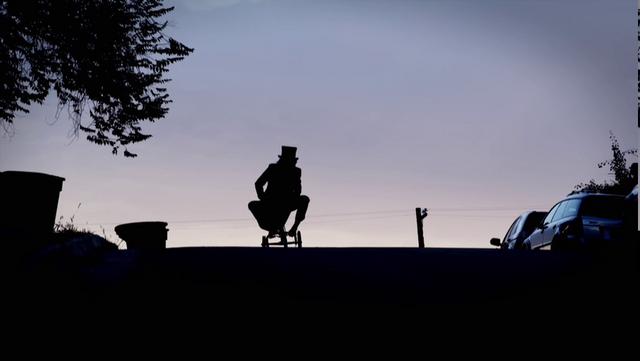
“The Antagonist” is a postmodern fantasy in which the “antagonist” is actually the protagonist. You see, the story features a creepy man with a burlap sack over his head, a top hat, a tricycle, and a wooden board with a long nail sticking out of it. He’s like a character in a slasher film. But the twist here is that he really is a character in a slasher film. He’s being manipulated by a young screenwriter who doesn’t know (at least, I don’t think he knows) that his antagonist exists in his world and is being controlled by whatever his writer types for him.

That’s a wonderful premise and the film features the “Hat Man” as he rides his tricycle through town, finding more victims. Meanwhile, the screenwriter takes breaks to ask other people (including a little girl) what they think of what he’s just written. It works for comedic purposes. But then, “The Antagonist” becomes even more special when it goes deeper into drama. The Hat Man meets a woman at a Laundromat and they strike up an interesting relationship. This is even more remarkable, considering what the filmmakers had to work with because the Hat Man has no dialogue. The scenes involving the Hat Man and the woman are handled delicately. And, as you can tell, it gets even more complicated when the writer goes back to manipulating the Hat Man to create his idea of an artful thriller.

For a twenty-minute film, “The Antagonist” has plenty of surprises. It starts as a quirky comedy and ends up being an even more compelling piece of work. I named it one of the best films I’ve seen in 2010, and I don’t care how short it is; don’t ignore it if it works, no matter what the length.

You can see the film at https://vimeo.com/49177543

Jaws (1975)

16 Apr

images

Smith’s Verdict: ****

Reviewed by Tanner Smith

You would think that a movie like “Jaws” is an easy film to make. All a filmmaker needs (or “wants”) is a mechanical shark, then to arrange for a bigger mechanical shark, and then to make a b-movie about a giant shark that attacks unlucky swimmers in a lake in which cardboard-stiff characters are the ones who stand against it. Oh yeah, and it would also come from outer space. Don’t ask me how I came up with this horrible idea for a movie, but I can imagine what “Jaws” would have been like if it followed that arrangement, and I would cringe if that really happened. But “Jaws” is a superior movie that features a regular great white shark that attacks near an island and three truly interesting characters that must set out to kill it.

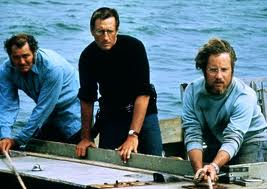
Adapted from Peter Benchley’s popular novel, “Jaws” lets us know right at the beginning just what we’re in for—a shark is on the attack and in a terrifying opening scene, it tears apart a swimming woman—but then it becomes something more and isn’t merely a shark-attack movie but a character piece as well. The scares are all there, as the shark continues to kill, but there is plenty of running time for character development. It kind of reminds me of “The Exorcist”—just as frightening and also with real characters that we care about. First in “Jaws,” we meet Martin Brody (Roy Scheider), the police chief of Amity who comes from New York and moved to the island with his wife and children to get away from city life. Then we meet Matt Hooper (Richard Dreyfuss), a rich kid who became an oceanographer simply because he loves sharks. And at last we meet Quint (Robert Shaw), a Capt. Ahab type of crusty person—he’s a caricature but he has his own dark past as well.

The first half of this movie is mostly about the attacks and the investigation behind them. I mentioned “The Exorcist” above, but with “Jaws,” which is as frightening, is also more fun because we’re not being frightened on the devil but more of that feeling of “something” in the water. When Brody and Hooper are fully convinced that a great white shark is behind this, they hire Quint to take them out on his boat called “The Orca” to set out to find it and kill it. That brings us the second half of the film, which is an hour of “man versus beast.” This is really exciting to watch because we watch these characters go to many lengths to try and capture this thing, which turns out to be bigger than they thought (“You’re going to need a bigger boat,” Brody nervously declares). How these three main characters are developed makes “Jaws” an all the more effective thriller and action picture. These are people we feel that we know and therefore, we care for them and fear for their lives as they try to outwit this horrible creature of the sea.

Director Steven Spielberg does a sensational job at bringing the movie its realism and fright. For one thing, he shows the characters as they truly could be. And for another thing, he borrows from Alfred Hitchcock in bringing in more suspense by keeping the monster/villain out of sight for a whole hour and a half into the movie (when the shark attacks, we only see glimpses of it). And another nice touch is how the real villain (in the first half, anyway) is not the shark but the mayor of the island (Murray Hamilton). He knows that something is wrong in the water. But he doesn’t want to lose his summer tourists, so he says it’s OK for everyone to go into the water.

The performances are all excellent—Roy Scheider’s character in particular is the character that most of us identify with because he just feels like somebody we know and he’s just sort of the everyman. And we believe him when he becomes nervous out on the water after we all knew from the start that he was afraid of water and not exactly thrilled about going after a shark. Robert Shaw is cheerfully wild as the old man who walks around like the “man at sea” and then gives a compelling monologue about how he was aboard the Indianapolis. Richard Dreyfuss is an inspired casting choice to play the oceanographer and brings some comic timing with his subtle wit.

As for the shark, I believed the illusion that a great white shark was on the attack, though I’m not quite sure I believe that’s a real shark that attempts to destroy the ship and attack the men on board near the end. But for the most part, it feels like a real shark. “Jaws” is a sensational adventure directed with masterful standing attention by Steven Spielberg, well-acted by the three main characters, and genuinely frightening.

A Christmas Story (1983)

15 Apr

ralphieonslide

Smith’s Verdict: ****

Reviewed by Tanner Smith

“A Christmas Story” is a delightful holiday movie that recaptures something that is so rarely done well in movies like this—childhood. This movie knows exactly what it’s like to be a child and how the world around the child is imagined. It brings innocence, fantasy, and humor to the screen. In treating the whole film with all three of those elements in a delicate way, it turns out as a modern-day classic. Today, it’s considered one of the most beloved holiday movies, if not the most beloved holiday movie. On Christmas Day, the TV channel TBS even shows it nonstop for the whole 24 hours.

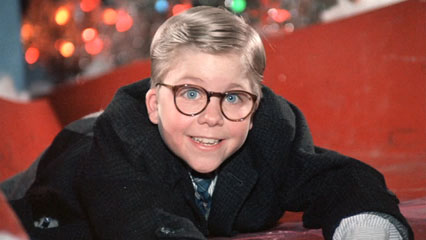
The movie is told as a childhood memory as the old narrator looks back on his ninth Christmas season with joy. In the early 1940s, he was a young boy named Ralphie Parker, who knows the one Christmas gift he wants to find under the Christmas tree on Christmas morning—an Official Red Ryder Carbine Action 200 Shot Range Model Air Rifle (or in other words, a Red Ryder BB gun). His mother is not going to get him one, as she warns, “You’ll shoot your eye out.” So Ralphie continues his crusade, dropping hints on his father and writing a school theme about what he wants for Christmas.

We get a great deal of Ralphie’s family life as we view their comfortable routines around Christmastime. We have the father—or as he’s known, the Old Man—fighting a faulty furnace. We have the mother using subtle tactics to get her youngest son Randy to eat. We also see her trying to fit the kid into a winter coat that he has outgrown. We see them all go out to buy a decent Christmas tree at a…just-decent price.

The narrator, Jean Shepherd, who wrote the source material for this film—a collection of short story memoirs entitled “In God We Trust, All Others Pay Cash”, tells everything with a satirical reflection. Also, “A Christmas Story” is very funny because it remembers many events in childhood and slightly exaggerates them for comedic effect. Some are basic but taken further, like when the mother has Ralphie’s mouth washed out with Lifebuoy soap after he says a swear word. First of all, that moment when he cusses is censored with “fudge” and there’s no doubt that he heard the real word from his father. Second of all, following the scene where Ralphie’s mouth is blocked with soap is when the mother tries it herself out of curiosity and gags on it. That’s a great moment, but third of all, there’s Ralphie’s daydream in which he has become blind from “soap poisoning” and his parents feel guilty about objecting him to that punishment in the first place. Wonderful.

Then there are scenes that show something that a kid shouldn’t do but is curious about. Most particular is an early scene in which one of Ralphie’s school chums puts his tongue on a flagpole for a dare. Of course, it sticks. It’s painful to watch, but show it to any kid and they’ll get the idea never to do something like that. But there’s something all too familiar that brings us to what is arguably the funniest scene in the movie. It’s a trip to see a mall Santa Claus. It may seem like a delightful visit, but in truth, it can be unnerving and sometimes downright disturbing. That’s how Ralphie’s visit to Santa to ask for the BB gun goes—a complete nightmare. Santa looks all too red in the face, and his “ho-ho-ho’s” need toning down, while the “elves” are complete jerks. And when a kid goes up to see Santa before Ralphie and his brother, he screams in terror.

Peter Billingsley is perfect as the little protagonist Ralphie. He’s an energetic, adorable kid who tries desperately to get what he wants and thinks he can outwit the adults around him. Billingsley, with his smile, glasses, and wide eyes, is an absolute natural—he doesn’t seem to be acting at all. The parents are very well-drawn-out and wonderfully portrayed by Melinda Dillon as the mother and Darren McGavin as the Old Man. Dillon’s mother character may be overly controlling, but she’s also loving and caring. Her best moment, in my opinion, is how she cares for little Ralphie after he beats the school bully Scut Farkas in a fit of rage. She knows he’s hurting because of the bully’s verbal abuse and his rage was out of his control, so she nurtures him rather than scolds him. McGavin’s father character is an absolute hoot while his performance is flawless. He’s a gruff middle-class businessman, but he loves his family and finds joy in the small things that he feels are important. I love the scenes that show his desire for a leg-lamp he won in a contest, and how the mother uneasily reacts to it. When she unplugs the lamp as the family goes out, she tells the Old Man it’s to save electricity. We all know the real reason.

The movie’s time range is from a couple weeks to Christmas to the Big Day itself. And who would have thought that a story about a kid wanting a BB gun for Christmas could be suspenseful? With the spirit of this movie, it’s hard not to wonder whether or not he gets the gun on Christmas Day. However, it is hard to believe that the director of “A Christmas Story” was Bob Clark, the director of the previous year’s sleazy, smarmy, unpleasant comedy “Porky’s.” Then I came across this piece of information—apparently, the box-office success of “Porky’s” (which is a surprise to me) gave Clark permission to direct whatever movie he wanted to make. So he made “A Christmas Story,” a treasure of a movie that is so loveable and wonderful that it’s easy to forgive Clark for “Porky’s” (and even “Porky’s II: The Next Day,” released the same year as “A Christmas Story”). In my eyes, “A Christmas Story” is a perfect movie.

The Accountant (Short Film) (2001)

15 Apr

MV5BMTMwMzM2OTMzMl5BMl5BanBnXkFtZTcwNjgyNTg2Mw@@._V1._SX640_SY512_

Smith’s Verdict: ****

Reviewed by Tanner Smith

One of the best ideas from the Academy of Motion Picture Arts and Sciences was to create an awards category for short films, because any good or great film at any length—long or short—can tell a story and create effectiveness all the same. This is especially true of “The Accountant,” a short film (about 35 minutes) that won the Academy Award for Best Live Action Short Film. Watching the film on DVD, it’s easy to see why.

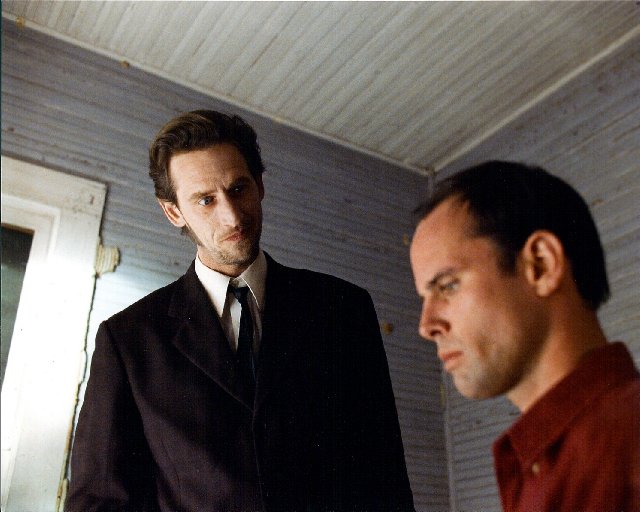
“The Accountant” takes place mainly on the O’Dell family farm in the South. Walton Goggins and Eddie King play brothers Tommy and David O’Dell, who call in an accountant (Ray McKinnon) to help save the farm. They get more than they bargained for, as the Accountant (whose name is never revealed) is a walking calculator who finds an amount in just about everything. He doesn’t even use a calculator—he figures numbers with his hands and feet. He also smokes chain and swigs beer like it’s no one’s business (he drinks a lot in this film and for those who are wondering when he has to take a leak, you’ll have a big laugh midway through the film).

The Accountant is a tall, well-dressed man who constantly leers at those around him, is intelligent, and also smokes, eats, and drinks a lot. He also has his own conspiracy theory about how things work in the South. Is he right? The strange thing is that he could be. I bought this character completely, and Ray McKinnon portrays the role excellently.

The other actors—Goggins and King—have good, convincing chemistry together. You really buy them as brothers.

Another great thing about “The Accountant” is the writing. This is an intelligently written film—not only does every line reading sound like the opposite of a line reading, but when these guys talk, we’re interested in what they have to say. Whether it’s listening to the Accountant’s unheard-of solution to the brothers’ problem (funny at first but shocking toward the end), the Accountant figuring the odds of David’s wife cheating on him (very funny), picking on Southern stereotypes (love the references to “Sling Blade” and “In the Heat of the Night”—by the way, all three actors guest-starred on an episode or two of that show, so that’s a neat in-joke), or ranting about the conspiracy that the South losing touch with its heritage, I loved listening to what these people had to say.

“The Accountant” was written and directed by McKinnon (that would definitely explain how he played the lead role so well); it was also produced by Goggins and McKinnon’s wife Lisa Blount. You can tell that they put their hearts into this film. It’s well-made, superbly written, and well-acted with a great blend of humor, quirkiness, and an effective message. It deserved the Oscar win.