Archive | Four Stars **** RSS feed for this section

LRFF2015 Review: “Made In Arkansas” Shorts Block 4

21 May

Reviewed by Tanner Smith
10687073_1626404404253145_4287237630273644389_n

The Tricycle

Smith’s Verdict: ****

I’ve seen some of Arkansas writer-director David Bogard’s work before; I particularly liked last year’s LRFF selection, A Matter of Honor. I think “The Tricycle” is his best work. It’s a marvelous 6-minute short film that successfully mixes the harsh realism of a quarreling couple with the innocence of a child’s fantasy.

It begins in the home of a 6-year-old girl, named Ava (played by Ava St. Ana), who is drawing some pictures and trying to stay happy while her parents (Quinn Gasaway and Caroline Brooks) are in the midst of an unpleasant argument. This scene is written, shot, and portrayed perfectly. It’s also kind of hard to watch; that’s a credit to the realism the scene creates. What’s more heartbreaking is that when the girl tries to show her father what she drew, he ignores her, causing her to go outside. That was just painful.

After the toughest of family-drama scenarios, the film gives Ava a much-needed escape, as she passes a neighbor’s house and notices an old tricycle left out in front. The tricycle seems to have a mind of its own and it follows the girl along the sidewalk. There’s a truly magical (forgive the pun) faraway shot that shows the girl and the tricycle reluctantly trying to unite together. That shot is as charming as the food-luring scene from “The Black Stallion.” I never thought I would see a tricycle as a living, delightful creature, but that’s the effect the film had on me.

Is the tricycle really magic or just part of the girl’s imagination? The film ends with a certain possibility that it hardly matters whether or not it’s real, but rather, it’s a diversion from the cruel reality she knows too well and into a wonderful place she can always turn to briefly until things get better. That’s generally what kids do—when things in life get so rough, they create in their minds their own worlds to escape into, where things can be better and more fun. That’s what Ava is trying to do. And of course, kids have to come back and still deal with real-life issues, but for the moment, those issues don’t exist. Bogard understands this, and he has created a great short film that I will not forget anytime soon.

hqdefault

What Was Lost

Smith’s Verdict: ***1/2

Sometimes it takes a really good actor or a really good script (or of course, both) to make what could be an overwrought melodrama something special. And while the script and direction by Romello Williams are sound and successful, what really makes his 25-minute JBU-produced drama, titled “What Was Lost,” stand out is the performance from his main actor, Tres Wilson. I’ve seen Wilson’s work in UCA films such as Thien Ngo’s “The Paperboy” (which I’ll get to later), Adam Crain’s “Henchmen,” and Brock Isbell’s “Whiz Quiz”—he’s a good comic actor, playing with a sincere, straight face during some bizarre settings. In “What Was Lost,” however, he truly shows his range in a remarkable performance as Wayne, a young father who loses everything he holds dear and tries to find a way to move on. Also good is Anthony Waits as his friend, James, who comes to town to be there for him and delivers just what the film needs: comic relief. Will Wayne let James help him? It’s not an easy question to answer, especially for Wayne, who has a lost a lot. And the film doesn’t shy away from his plight. What makes the latter half of “What Was Lost” all the more heartbreaking is the sheer realism that is felt within the former half, which effectively shows Wayne interacting and playing with his young son. Not once do I see Tres Wilson and a little actor playing father and son; I see a father and his son. It’s because I felt so much for these two that I didn’t want to see anything bad happen to either of them. And when something does, I feel bad for Wayne, and that’s how I know the film is working. When film was over, I actually turned to the person next to me, and whispered, “Damn.”

Overgrown

Smith’s Verdict: ***1/2

Bruce Hutchinson’s 3-minute short “Overgrown” is less of a narrative short and more of a visual poem. With the aid of an omnipresent narrator, giving what can be best described as a short story, we’re introduced to a young woman, described as “an otherworldly being named Bindy” (played by Kristy Hutchinson), whose practical home is the woods and who apparently lives off mankind’s hopes and dreams and collecting the ones that are unfulfilled. “Overgrown” could be seen as visual storytelling, except that it’s not just the visuals telling the story. Maybe with the narration, there’s a little more clarity than the film needed to succeed, but the descriptive idea of a manifestation of dreams and wishes is a fascinating one and that angle probably wouldn’t gotten across completely without it. The film is also nice to look at, with the right locations and a top-notch cinematographer (Chris Churchill, who also shot Hutchinson’s previous film, Sidearoadia) to bring it to life.

cover_story4-1

Pyro

Smith’s Verdict: ***

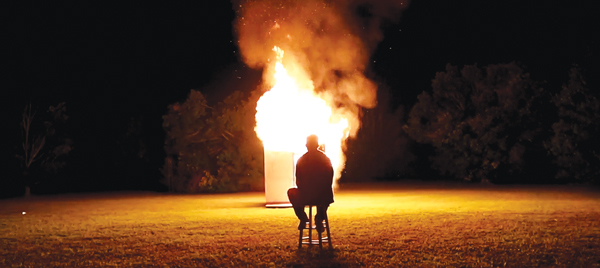
I said in one of the reviews above that one of the important steps to recovery is to take grace where it can be found. It can be found in your friends, your family, your hobbies, your work, whatever. For kids, especially teenagers, it’s even more difficult. They search for ways to express themselves and some of those ways can rub people the wrong way, especially when they develop certain habits that can get them hurt. Take Graham, the 17-year-old pyromaniac of Cole Borgstadt’s 10-minute short, “Pyro,” for example. After his parents’ death, there’s nothing he likes better than to light random matches and drop them in the sink, set off fireworks, and enflame whatever he can find. (A line of dialogue indicates he and his late father used to do stuff like that together—or at least, shoot off fireworks together.) That’s his way of expressing himself. He thinks it’s all he has and he doesn’t care for anything else. He’s also trying his older brother’s patience. His brother is more responsible and having to care for both himself and his brother who will most likely set the house on fire, accidentally or not. He’s also trying to lead his own life as not just a surrogate parent. The film opens with his announcement to his brother that he will propose to his girlfriend…with their late mother’s engagement ring. “You’re already taking Dad’s place. You have to take Mom’s ring too?” Graham asks in a scene that is perhaps composed of forced exposition but what can you do in a 10-minute drama? (And at least the characters are addressing what’s bugging them to each other.) The film ends with a selfish, primitive act, which surprisingly doesn’t result in a shouting match but a surprising (refreshingly) calm discussion between the two brothers about the way things are, who they are, who they thought they were, and some probabilities for the future, before ending on an ambiguous note, as well as on a haunting image (haunting because of the character and the symbol). It’s a powerful moment that subtly states that things just happen, people change for better or worse, and it’s important to attempt to accept what you can get and know how to properly use it. As a whole, “Pyro” is a good short film, but that ending is great. The film is very well-crafted with clear direction from Borgstadt, decent acting from Ross Thompson and Zach Stoltz as the brothers, and good cinematography from Emily Field.

Oh, and someone anonymous told me to mention the writer-director Cole Borgstadt was a student at Fayetteville High School when he made this film. I responded to the seemingly condescending comment by saying, “Yes, because apparently, high-school students aren’t capable of making good films, right?” That quickly shut him up.

1507934_820277801382758_9152192932144814110_n

The Space Station

Smith’s Verdict: **

Michael Sutterfield’s half-hour sci-fi film “The Space Station” is about a young woman (Amber Erdley) living a somewhat-empty life in the city and seeking excitement elsewhere. And boy, does she find it. After she meets an older man (Stephen Perry) who claims to be an astronaut, he invites her to his “home away from home”: a space station. She says yes, he sedates her, and she awakens in a room where Earth is seen in plain sight outside her window. She and the astronaut are now in outer space and he shows her the pleasures she wouldn’t have known if she hadn’t met him.

This is yet another short film for which I cannot give a proper full review without going into the resolution. It’s also the one LRFF2015 Made In Arkansas short I was least looking forward to reviewing. Because I can’t recommend the film, I shouldn’t care how much I could reveal even with an attached link to the film online. But I still like to think I have at least some critiquing principles, so I’m going to tread lightly while writing about this one. The first 10 minutes of the film are interesting, the next 10 (or less) minutes are intriguing, and the final 10 minutes made me care less and less after a twist is revealed. As soon as that twist came along, I lost hope for the film. I feel like it tried to redeem itself by the end with a message about appreciating what you have and where you are rather than what you don’t have and where you aren’t. There’s a reason I couldn’t accept that message, but to talk about it would be to give away the twist. That’s why I wasn’t looking forward to writing this review.

That’s enough I’ll say about that. It’s a real shame too, because I was really getting into this story. Curious, bewildered Amber Erdley and calm, confident, suave Stephen Perry play their roles well; writer-director Michael Sutterfield establishes situations and characters well; the visual effects are great to look at; the editing is well-done; and Gabe Mayhan’s cinematography is stunning. A lot of effort was put into this short film (apparently, it took five years to complete) and I hate to give a negative review to a film with such a good setup. But once that twist came along, it became tough for me to recommend. And again, that’s all I’ll say about it.

NOTE: I heard this was based on a short story by Bernard Reed. Perhaps the twist translates better on paper and doesn’t work well in this film, but I’m not reviewing the original story the film is based on.

LRFF2015 Review: “Made In Arkansas” Shorts Block 3

20 May

Reviewed by Tanner Smith

1471805_504736106301203_1137726880_n

Undefeated

Smith’s Verdict: ****

Nathan Willis’ 20-minute film, “Undefeated,” is one of my favorite Arkansas shorts in the entire festival. It’s a documentary with a clear portrait of a man who lost a lot but also gained a lot. It’s a documentary also done well as a dramatic narrative—we see a real person becoming a dramatic character, following his life like everyone’s life as a drama, in a way. The man is Terrance “Tank” Dumas. He’s an undefeated heavyweight boxer who used to be a New Orleans gang leader and drug dealer before he lost everything in Hurricane Katrina. Since then, he’s been training to fight, while also cleaning up his act as he works and cares for his family. The hardest part for him is finding worthy opponents who won’t back down and leave him with hard work gone to waste. “Undefeated” is a wonderful documentary that shows Dumas’ struggles both in and out of the ring. It’s an extraordinary film I can’t wait to see again sometime. I heard director Willis spent months documenting Dumas’ triumphs and failures. Firstly, I admire his dedication. Secondly, I’m sure he has enough for a feature-length documentary that I’d be interested in seeing. I didn’t know who Terrance “Tank” Dumas was before I saw this film; I’m glad to be introduced to him this way.

Little-Brother

Little Brother

Smith’s Verdict: ***1/2

Uh…pardon me a moment.

Okay, I’m back. Sorry, I saw Eric White’s 5-minute short, “Little Brother,” twice now, and I’m still trying to comprehend what I saw. I think it’s good…ish. It’s certainly not a happy short to watch; it’s a deranged, messed-up, odd (did I just use three synonyms in a row?) film that left me with my mouth open…and oddly fascinated. Completed with a mixture of 2D & 3D animation with handdrawn characters (oh and it’s also in black-and-white), “Little Brother” is…weird. But I mean that in the best possible way. It takes sibling jealousy a bit too far, as a boy is annoyed by his baby brother who gets the most attention and hardly ever stops crying…so he tries to…get rid of him. Yep. Dark and unusual, “Little Brother” isn’t quite what I expected from the director of Homefront and the oil-spill documentary “An Uncertain Bill of Health” (both of which were LRFF2014 selections), but it is as effective as it is disturbing. That’s enough for a recommendation in my book…er, blog. Okay, I need another moment…

Okay, moving on! What’s the next one?

1002693_586734404760540_5909615366746225396_n

Spoonin’ the Devil

Smith’s Verdict: ***

“Spoonin’ the Devil” is an awkward title, but the film, which is UCA graduate Michael Carpenter’s 20-minute thesis film, is actually an engaging, well-acted drama about saying goodbye to a lost one and moving forward. It stars the always-appealing Arkansas actress Natalie Canerday (best known for her motherly roles in Sling Blade and October Sky) as a middle-aged woman, named Victoria, who heads off on a road trip to her late husband’s final resting place, while dropping spoonfuls of his ashes along the way. Her car isn’t in great condition and her niece, Samantha (Kayla Esmond), doesn’t think she can get there on her own (nor does she, or we, understand exactly what Victoria has in mind), so she decides to drive her. Along the way, Victoria reveals truths about why she’s really taking this trip while also stating some positives about being alone despite mourning for her husband (kind of a way of self-healing). They also meet a nice traveler named James, played by Keith Hudson, and they go to an empty bar together, where, in a wonderful scene, Victoria fulfills a lifelong dream of singing live. My only problem with the film is that the character of James, despite a nice performance from Hudson, seems superfluous; he doesn’t add much other than a role of a goofy, good-natured side character who comes and goes. But the film is more about the lead character of Victoria, who is compelling, empathetic, and wonderfully portrayed by Natalie Canerday in a marvelous performance; it’s difficult to dislike her in the slightest. Also terrific is Kayla Esmond as the niece, Samantha, who questions her aunt’s judgments and thoughts but still attempts to keep an open mind and is willing to understand. Something else to praise is Carpenter’s script, which is littered with realistic dialogue. Add a moving final scene in which Victoria ultimately says goodbye to her husband at his resting place and “Spoonin’ the Devil” is a winning short film.


Meredith

Smith’s Verdict: ***

The full review can be found here.

11014644_926476367397535_7350708502669868085_n

The Town Where Nobody Lives

No Verdict rating

BRIEF SUMMARY: An older couple who has fallen out of love find their way to a mysterious town. That forces them to confront their true emotions, and therefore, each other.”

I shall not review Al Topich’s 20-minute supernatural-psychological thriller, “The Town Where Nobody Lives,” because I was actually part of production as BTS Videographer. If I reviewed it, it’d be a biased opinion. But since I believe it earns some kind of response in this post, I reached out to a few people (Arkansas actors & filmmakers who weren’t involved in the production process) personally. This is what they said about the film:

Johnnie Brannon (director, Stranger Than Paradise)—“I loved the mood of the film. The acting was top-notch, the production design was great. I loved that the film made me think—is this heaven or hell? And if so…for who? I can’t think of anything I didn’t like about it.”

Pammi Fabert (actress, Rites)—“I thought it was beautifully shot. I loved the location and the acting was on point!”

Jordan Mears (director, Vampire-Killing Prostitute)—“I like it. It’s very bleak and ‘Twilight Zone-y.’ […] The story is fun, but there are a lot of unexplained things that irk me. Some of it is too vague. And I think that is what Al [Topich] might have been going for; very David Lynch. […] The film has some strong observations that it makes about relationships and what it takes to make them work and why some eventually crumble. And it’s done in a very sci-fi, arthouse way. It’s fun.”

Krystal Berry (script supervisor, Vampire-Killing Prostitute)—“I really enjoyed the film! Wonderful execution in storytelling. For me, films tend to exaggerate domestic issues to the point where acting comes across as hokey or unrealistic, but I didn’t feel that way in ‘The Town Where Nobody Lives.’ Karen [Clark] and Duane [Jackson’s] performances are very natural and not at all forced, which helped me build a connection to the characters and their plight. The story itself was relatable—relationships fall apart, sometimes at a painfully slow pace. It unfolded in this strange, dreamy (or nightmarish) way, that I thought was very entertaining. Easily one of my favorite films made in Arkansas this year.”

Rachel Van (actress, Monotony Broken) & Ben Gibson (actor, The Pop N’ Lock)—“The concept is simple on the surface but strong in its execution. The town can almost be considered a character itself, transforming at a moment’s notice to prompt [the characters] to face their issues head-on and preventing them from leaving until they each accept the truth that’s been in front of them all along. The fantastical elements the town displays are not necessarily explained, but they do not have to be. The story is so well-constructed that the viewer doesn’t question what’s happening or why, because we know what the town is trying to achieve. Along with Jackson and Clark, Kayla Esmond rounds out a talented, well-chosen cast as the Girl in the Bar. Each actor plays his or her part perfectly, and looks great doing it, as the cinematography is stunning and always sets the mood with purpose. The only weak spot is the climactic dialogue between Richard and Elizabeth near the end of the film, which feels slightly forced and unnatural. That, along with a couple of minor ADR issues, took me out of the moment in an otherwise seamless film. ‘The Town Where Nobody Lives’ is a very enjoyable film. From the location, to the lighting, down to the costumes, it illustrates what can be accomplished through the collaborative efforts of a strong cast and even stronger crew.”

For the record, my short documentary about the making of the film can be seen here:

Join me later for Block 4!

LRFF2015 Review: “Made In Arkansas” Shorts Block 2

19 May

Reviewed by Tanner Smith

1000204_10152016249577223_1315388335_n

MatchMaker

Smith’s Verdict: ***1/2

The full review of Robin Sparks’ “MatchMaker” can be found here.

10686715_728394807237055_2754205764893534628_n

Hush

Smith’s Verdict: ****

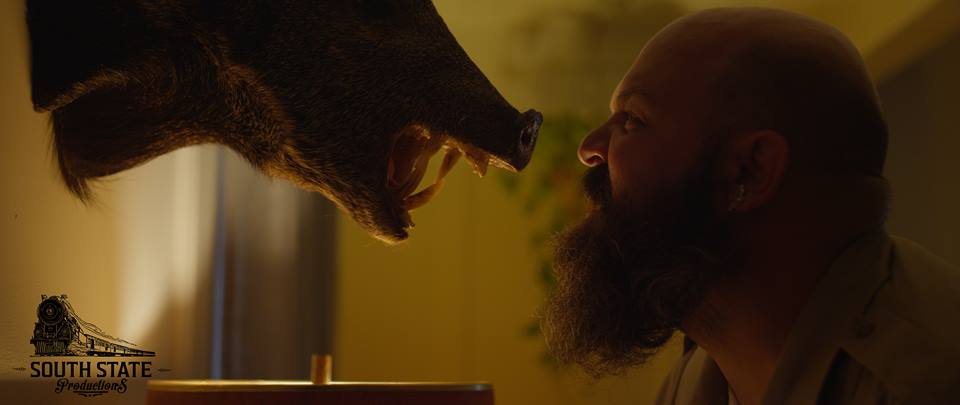
Kenn Woodard’s 20-minute film, “Hush,” is a strange, fascinating thriller-drama that is both hard to watch and fun to watch at the same time. It takes place in a small Southern town and begins with a news report of the arrival of a new Sheriff, Elkins (Billy Chase Goforth) before we are introduced to a couple (Warren McCullough and Cassie Self) in a remote rural area, as they reluctantly take in McCullough’s ne’er-do-well brother (Houston Nutt III). But that night, these two elements come together in surprising, dangerous ways. And unfortunately, that’s about all I can say about “Hush,” lest I give something away (a recurring problem I notice in reviewing some of these shorts, if not most of them). I will say that the film is brutal and effectively so, and the tone and spirit sucked me into a world gone mad. It feels like an efficiently exaggerated tale of how only the position of power (such as in politics) matters when greed is on the line. And I will also say this: the ending, in my opinion, is nothing short of brilliant. With a hint of commentary, an arresting look, an eerie calm, a despicable bad guy, and a good deal of violence, “Hush” is not a short I’ll forget anytime soon. And I certainly won’t forget the image of Elkins staring down an equally horrific trophy; that’s a brilliant shot. Shout-out to cinematographer Blake Elder.)

107595

Dim the Lights

Smith’s Verdict: ***

There’s usually at least one experimental film at every film festival, and Dwight Chalmers’ 10-minute short “Dim the Lights” is the one for LRFF2015. Shot with a Super 8 camera and presumably with hardly any editing whatsoever, “Dim the Lights” is a series of shots of locations that is the equivalent of videography for a nice road trip; it’s like one of those family vacation videos where what you shoot is what you have, with no editing. Minus the family. What we have instead is a feeling of nostalgia as we get numerous images of some of the most forgotten places on Route 66. Surprisingly, it works. It’s almost like a memorial to the Mother Road. Yes, the film can frustrate some by seeming a few minutes too long, but if you get into the spirit of it (like I did), it can turn out to be a nice experience.

11081195_821358944623010_384108672216536778_n

The Pop N’ Lock

Smith’s Verdict: ****

Ohh boy. There’s not much I can say about this one. “The Pop N’ Lock” is Jadon Barnes’ 2-minute short that is computer-animated in the same style as “Lego Movie” with CGI crossed with stop-motion animation…and featuring Lego characters. A Lego couple arrives home after a time of apparently hard partying and drinking, and the man wants to show his girlfriend he still has good dance moves. So he shows them off in comedic over-the-top fashion. That’s pretty much it—just like an awesome YouTube video you want to show your friends. There’s hardly another way to review it. The animation is fabulous, it’s fun to watch, it’s funny…and moving on!

Oh the film is online? Sweet! Check it out!

11174879_773244552794123_170114144763506389_n

Rapture Us

Smith’s Verdict: ***1/2

It’s a terrific premise: when a devout Christian is mistakenly left behind after the Rapture, he attempts to gain God’s attention by breaking the 10 Commandments. Even though I feel there could’ve been more done with it than what is delivered in Levi Agee’s 20-minute short film, “Rapture Us,” it’s still a very entertaining comedy with enough clever twists to keep it interesting. When you get past the notion that “God made a mistake” (it’s not supposed to be taken seriously), it’s an enjoyable romp.

It begins as a young man (played by Quinn Gasaway, Sacred Hearts, Holy Souls) awakens at night as he is levitated from his bed and stopped by the bedroom ceiling. When he is brought back down to the ground, he finds he is alone, with his family members and neighbors seemingly “raptured” into heaven. Further proof that he is now living in the End Times is the appearance of a new friend: an undead wisecracker (played by writer-director Agee) who appears from under Gasaway’s bed. He has a plan for them both to get God’s attention and be raptured, which is, of course, to break all the 10 Commandments.

A feature film could be crafted from this idea. But as is, “Rapture Us” is definitely worth recommending for its ambition, skill, and talent. It’s well-made, with sharp direction by Agee and striking cinematography by Bryan Stafford (The Dealer’s Tale), and also well-acted. Quinn Gasaway is a likable actor and a good lead here, and Levi Agee, as a performer, is freaking hilarious. I loved him as Bo in Cotton County Boys which played at the festival four years ago, and after meeting him since then and watching his interviews at this year’s festival, Agee himself is pretty much exactly like the characters he plays and that’s fine—no one can play Levi Agee like Levi Agee. And with “Rapture Us,” he also proves to be a good filmmaker.

the-ask

The Ask

Smith’s Verdict: ***1/2

In Ed Lowry’s 5-minute short, “The Ask,” a teenage girl (played by Lowry’s daughter) practicing a speech she plans to present to her parents, leading to the question in point. It’s a very well-edited piece, as her pitch is told to us in order but from different locations at different times, as if she’s been preparing to ask this for a long time. It’s well-handled and also quite funny. My only problem with the film is a slight nitpick: I feel the punchline could’ve been stronger. But it’s cute; I’ll let it slide. I like Ed Lowry’s work as an actor (he also received the Best Arkansas Performance award for his role in David Bogard’s “A Matter of Honor” at last year’s LRFF Awards), but like Levi Agee (and also Kenn Woodard, for that matter, for “Hush”), he also proves to be a capable filmmaker.

Contact

Smith’s Verdict: ***1/2

“We help people see the world more clearly.” A perfect slogan for the eye doctor if ever I heard one. Alexander Jeffrey’s 10-minute short film, “Contact,” centers on an eye doctor who believes he can not only make people see more clearly with eyeglasses and contact lenses but also literally give them fresh new outlooks on life and the world around them. Can he? He claims he truly can when he meets an old friend from high school, who is nearsighted. The doctor says his old friend could use some contacts, but after a falling-out due to a betrayal, the friend isn’t sure he can trust him. What he learns is something he won’t forget. The way the resolution comes along is very cleverly handled in an unpredictable way. And it also delivers a positive, powerful message of not taking things for granted and considering what you have rather than what you don’t. “Contact” is a well-done short.

Join me later for Block 3!

LRFF2015 Review: “Made In Arkansas” Shorts Block 1

18 May

Reviewed by Tanner Smith

Last week, the 2015 Little Rock Film Festival was underway and I attended six Made In Arkansas shorts blocks, for short films made in Arkansas (of course). Usually after the festival, I’ll write individual reviews for a select few. But this year, I decided to review all of them. And because a good deal of them are so short that they don’t give me enough material to work with unless I analyze each film as a whole (thus spoiling the entire film), I decided to write posts of each block, as I write short reviews describing what I thought of each short. The catch? I cannot review my own two short films (yes, I had two in the festival; I’ll point those out in later posts), nor can I review two shorts I worked on (even if it was documenting behind-the-scenes; it’s still being part of production). With that said, let’s start off with Block 1!

 Loser

Loser

Smith’s Verdict: ***

When I first saw one of the two central teenage characters in Andrew Lisle’s 8-minute short film, “Loser,” wearing a brown paper bag over his head (with two eye-holes and a smiley-face drawn on it), I thought it’d be one of those quirky indie comedy-dramas that do strange things for no reason other than to be “quirky,” with little to no development. And while it is a strange sight for one typical high-school boy to have a conversation with a boy with a bag over his head, I let it slide as the film went on. This is a bullied kid looking for ways to express himself, like almost every high-schooler. Yes, it’s a ridiculous sight, but I understood it as a trait that isn’t as uncommon as one might think. Director Andrew Lisle was in high school when he made this short (Har-ber High School to be exact); he gets the emotions of these kids down and thankfully understands the effects of not just bullying but also vengeance. This is something that has been addressed before, but it’s just as effective. And I think this may have to with Lisle’s limited resources and not trying to exaggerate anything (strange, given the bag), but its small scale adds on to it. “Loser” is an impressive short.


Forsaken

Smith’s Verdict: **1/2

“Forsaken” is a half-hour film written and directed by recent John Brown University graduate Krisha Mason. It’s about a young woman, named Janessa, who is suffering a tragic loss and trying to move on. And thanks to a controlling mother who is less helpful than she thinks she is, Janessa feels even more miserable. She meets a young man in her apartment building. With his help, she can keep her hope alive. There are sure signs of talent at work here. Mason’s direction is solid, I admire her for trying to tackle a difficult subject such as coping with loss, and the film looks nice, thanks to striking cinematography by Lauren Addington. But the script needed work in order for the film to be truly effective for me. While there were some strong scenes, such as a conversation between Janessa (well-played by Victoria Fox) and her friend, Tanner (Derek Duncan), and a moment in which she breaks down in a church, others, especially those involving Janessa’s appalling mother, feel artificial and forced. The film also brings forth a new plot twist that descends the film more melodramatic than it should be and what’s worse is that it seems all too convenient for the dramatic payoff. “Forsaken” isn’t a bad short film, but it could’ve been better.

10982236_10152944555799611_3913822612409342329_n

Monotony Broken

Smith’s Verdict: ****

J.C. Cocker’s 5-minute short “Monotony Broken” is about a young woman who is depressed at this point in her life and has a blissful fling with a stranger she meets in a laundromat. There isn’t a lot I can say about it without discussing the film in its entirety, which wouldn’t be fair unless the film was online (which it currently isn’t). So, for now, I’ll say that this is a beautiful short that works as art as well as film. There isn’t any dialogue said/heard in any of the five minutes of running time; it’s just simply mood. Thanks to Cocker’s direction, Matt Bates’ gloomy cinematography, and outstanding acting from Rachel Van Hampton as the woman and Kristof Waltermire as the stranger she meets, “Monotony Broken” is quite astounding.

11149241_10152713318661447_3823539604759372715_n

Stranger Than Paradise

Smith’s Verdict: ****

The full review can be found here. Excerpt: “[…] a beautiful film, proving that you can tell a moving story with just one minute of running time.”

11071746_1555888894700012_9056767350489994572_n

Rites

Smith’s Verdict: ***

At its surface, UCA student Cody Harris’ 15-minute film, “Rites,” is about a teenage girl who notices her father’s strange evening behavior and makes a shocking discovery. But at its core…

It’s hard to write a full review of “Rites” without analyzing the ending (or at least, attempting to analyze the ending) because it delivers a shocking revelation that goes into the question (I believe) the film was asking itself, which is, “Does anyone have a right to impose their will on anyone due to their religious beliefs?” How far does that go? Thinking more about the ending, which I won’t give away here, it’s a very chilling thought that raises quite a few questions and makes you ponder what it was really about. The more I thought about it, the more disturbing the whole film seemed.

When the film is posted online, I’ll publish a new, analytical review of the film with spoilers and the attached film. But for now, I’ll say that it is an effective, powerful short; probably more powerful than the “Verdict” makes it out to be. The setup is a little clumsy in its execution, but the acting from Kimberlyn Fiits, Tom Kagy, Johnnie Brannon, and Pammi Fabert is consistently good, the cinematography by Jake Lurvey is well-done, and the film’s ultimate payoff is unsettling and thought-provoking.

10696417_1569825666581038_4661510087930428255_n

The Dealer’s Tale

Smith’s Verdict: ****

Justin Nickels’ 15-minute film, “The Dealer’s Tale,” is a modern retelling of Geoffrey Chaucer’s “The Pardoner’s Tale,” which was about men searching for Death before they are led to treasure by a mysterious old man who claims to know where he is. They stay with it, as things go wrong. It’s one of the great moral tales in literature. In “The Dealer’s Tale,” quite possibly one of the best short films in Arkansas, two hit men, Miller (Jason Thompson) and Reeve (Jason Willey) are searching for Death after performing a new hit, encounter a mysterious little boy (Taj Van Tassel, effectively low-key) who witnesses them dumping the body, and the boy leads them to a hidden treasure (in this case, cocaine) which the men decide to guard for a while until, of course, something goes horribly wrong as tension amongst the men gets the better of them. The settings of both the story and this short film are different, but the structure, spirit and tone are the same. They both display how greed is “the root of all evil” and can turn supposed-friends against each other.

“The Dealer’s Tale” starts off amusing with Tarantino-esque dialogue exchanges between the two men driving down city streets, grisly hints as to their deeds, the introduction of this strange, innocent child walking through quiet alleyways and under bridges, and then the inevitable betrayal leading to an incredible final act. The last few minutes of “The Dealer’s Tale” is quiet and haunting and so well-done that I’ll never forget it. Without giving it away (though, really, it’s an old story), it captures the feeling of contemplation not just with words but with mood in ways that some films can’t or won’t take the risk at attempting. Justin Nickels is a hell of a filmmaker.

Now I’ll take a moment to discuss the acting from the two principal actors. Jason Thompson (who was excellent in the Arkansas feature “45 RPM” and shorts such as “Antiquities”) and Jason Willey (funny and sincere in shorts such as “Diamond John” and “Stranger Than Paradise”) are perfect together. With Thompson’s hotheadedness and Willey’s more reserved manner, these two make a great, efficient comic duo. They worked together in Nickels’ previous short, “Strangers” (screened at last year’s LRFF), and shared a hilarious scene together in “Antiquities” (albeit portraying very different personalities in that one); they’re fun to watch together. They exhibit appealing chemistry and their timing is spot-on. By themselves, they’re good too, particularly Thompson who is part of the reason the final act works so well.

“The Dealer’s Tale” is very well-made, well-acted, and gloriously-shot (by Bryan Stafford of “45 RPM” and the previously-reviewed “The Sowers”). I look forward to seeing Justin Nickels’ next project (and I’d be lying if I said I didn’t wish Thompson and Willey teamed up again).

Join me later for Block 2!

Sounder (1972)

23 Mar

Sounder

Smith’s Verdict: ****
Reviewed by Tanner Smith

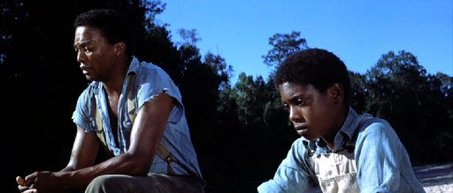
As I begin my review of this wonderful film called “Sounder,” I would like to talk about my favorite scene. It’s late in the film, as its pre-teenage hero, David Lee (Kevin Hooks), visits a school where one of the class tells a story about how he saved his sister from drowning in a creek. The other students think he’s lying; they know he can’t swim. The boy insists the story is true. But David Lee believes, and he speaks for him. He believes the boy had to jump into the water even though he couldn’t swim was because he had to, in order to save his sister from drowning. It’s just like how he, his mother (Cicely Tyson), and his two younger, smaller siblings had to look after the crops after his father (Paul Winfield) has been sent away to serve a one-year hard labor sentence. No one believed they could do it, but they did. Why? Because they had to; otherwise, they wouldn’t survive. After putting it that way, the rest of the class applauds him.

The film is set in the mid-1930s, during the Great Depression, filled with ordinary people doing what they could with what they had. And for a family of poor black sharecroppers in Louisiana, who are the central characters in “Sounder,” they had to work harder, even in the midst of family crises. This is the ethical center of the film: ordinary people faced with needs and rising to the occasion. It’s somewhat easy to root for heroes who have superpowers, lead armies, give big speeches, etc. But it’s so much easier to root for central characters who are not meant for great purposes other than looking out for each other and doing what they can to make their situations better, while also searching for and finding that special feeling within themselves to keep going.

“Sounder” is a slice-of-life film that focuses on such characters. In rural Louisiana, a family of black sharecroppers go through a crisis they have to push themselves out of somehow, and the film shows how they all grow in the process. The oldest son, David Lee, comes of age; his mother is more determined than before; and his father, having served a jail sentence (this is for stealing food for the family early in the film), has valuable advice for David Lee after his return home. The film is about truth and development, centered on real, fully-realized characters who love and try to help each other. As a result, it becomes one of the most moving, effective family films I’ve ever seen—I take it back; maybe not just “family” films, but films in general.

The film is episodic in its storytelling, showing us time after time in a series of events that make up the ethical center. The closest thing that happens on an action level is a sequence in which David Lee and his hunting dog, Sounder, set off on a journey to find the prison camp his father was sent to. He doesn’t have any luck when he gets there, but he does come across a black school where he attends a class and is taken in for a couple of nights by the friendly schoolteacher, who invites him to live with her while he attends her school. It’s here where that scene I mentioned in the first paragraph comes into place.

Another favorite scene comes near the end. The payoff is very effective in a simply moving way. David Lee’s father finally comes home, and David Lee never wants to be without him again, so he doesn’t want to leave to go to the school. But his father insists that he should. Angry and sad, David Lee runs away. But his father catches up to him and gives him a speech about how he shouldn’t get too used to this place; otherwise, he won’t leave and his future will be aimless. It’s a very realistic moment between father and son, and the father’s words are perfectly chosen.

Simply put, “Sounder” is an excellent film with a simple yet affectionate story of growth, love, and hope. The acting is great, especially from Paul Winfield and Cicely Tyson (she brings a lot of subtlety to her role as a nervous but determined mother); the emotions and themes are mature and well-presented; and it’s a film for the whole family to see. Kids can get much out of it, adults can get even more, and all will see that this is a truly wonderful piece of work.

The Last Detail (1973)

11 Feb

the-last-detail-1-1

Smith’s Verdict: ****
Reviewed by Tanner Smith

WARNING: The last paragraph heavily discusses the film’s ending.

Jack Nicholson. What can you say about this iconic, highly charismatic actor (scratch that—“star,” not “actor”) that hasn’t been said already? He’s one of those actors who could read the dictionary or the phone book and be, for lack of a better word, awesome. There are a lot of movie buffs out there who will argue over which is his best performance. Some say it’s the pissed-off working-class man in “Five Easy Pieces,” some say it’s the slimily charming astronaut in “Terms of Endearment,” and so on. For me personally, it’s no question, although I’d say it’s more my “favorite” rather than “the best.” That distinction goes to his performance in 1973’s “The Last Detail,” as Naval Officer Buddusky, played with the Nicholson charm, the Nicholson attitude, and the Nicholson smirk. His nickname? “Bad Ass.” I get the feeling the screenplay was written with Nicholson in mind as this character because, to me, this completely defines everything this star stands for and is best known for.

Buddusky and his fellow officer “Mule” Mulhall (Otis Young) are called upon for a “sh*t detail,” but this is one that seems fairly simple: transport a young sailor, Larry Meadows (Randy Quaid), from his Virginia Navy base to the brig in Portsmouth, New Hampshire, where he will be imprisoned for eight years (“six years for good behavior,” Buddusky assures Meadows). Meadows’ crime was an attempt to lift $40 from a charity box belonging to the base commander’s wife’s favorite charity—a semi-petty crime from a budding kleptomaniac (though he never actually managed to get the money out of the box). Before Buddusky and Mulhall even get to know the kid, they agree that serving an eight-year prison sentence because of this isn’t the least bit fair. But along the way to the brig, by bus and train, they make small talk and get to know each other. The two officers escorting the prisoner find that he’s a sad-sack kid who’s as unlucky as they come. When he has a mental breakdown on the train, they take him off to relax, and Buddusky gets an idea to make this trip worthwhile by stretching it out as much as possible so he can show Meadows how to have a good time (or rather, Buddusky’s idea of a good time). Their two-day trip becomes a five-day journey of beer, ladies, and badass conduct before they inevitably must take Meadows to his destination.

One of the notable assets that works in the film’s favor is Robert Towne’s script (who also wrote another Nicholson vehicle, “Chinatown”), which doesn’t pull punches or go for the easiest task of sentiment. It’s mostly a series of scenes that are either funny, endearing, insightful, or even all three, mostly told through dialogue. The conversations between these three men are mostly natural exchanges and it’s always refreshing to hear characters just be regular people instead of pawns in a screenplay’s game. Credit should also go to director Hal Ashby and cinematographer Michael Chapman—they help what could be formless scenes into something more; something meaningful; something potent. Even in a scene where they’re just sitting around in a motel room, drinking beer, watching a movie, and talking about life and the future, it works because you get into these guys’ heads even more.

But I don’t want to make “The Last Detail” seem so deep that it’s not entertaining and it would chase people away, because it also is very funny, especially when Buddusky comes up with a new way of teaching Meadows how to have fun. There are also many sharp and witty lines of dialogue that makes the conversations between the characters fun to listen to. There’s a sense of underlying bleakness, but it only truly makes its way as a good balance. This way, when something humorous occurs, it’s well-deserved. Some of my favorite bits include a scene at a bar where Buddusky tries to get underage Meadows a drink and snaps at an uptight bartender and a scene in which he tries to hit on a pretty young woman by talking about romance or life on the sea while all she wants to talk about is politics.

Jack Nicholson was tailor-made for this role—profane, vulgar, charismatic, carrying a suitable devil-may-care attitude all throughout the film, and even kind of sentimental, which is notable in scenes such as when he tells Meadows to take back his order at a restaurant because he should “have it the way you want it.” His presence practically makes the film, and “Bad Ass” is the perfect nickname for his character (you were thinking the same thing). The other two actors, Otis Young and Randy Quaid, are solid support. Young is more controlled than Nicholson and a good counterpoint when Nicholson has another idea that may get them in more potential trouble while also (possibly) subtly respecting him in a way that he might actually wish he could be more like him. Quaid is perfect as their charge who is naïve, goofy, and likable; you could even say he’s so pathetic that it’s hard not to care for this poor guy.

At this point, I’m going to discuss the film’s ending in heavy detail. If you haven’t seen the film, please do and come back and read the rest of this review.

The ending of “The Last Detail” is one of the most intriguing and talked-about aspects of the film. It doesn’t end the way movie audiences, especially today’s, would expect. A more conventional film would have ended with Meadows’ escape from his escorts or any kind of decision that would have resulted in him not going to prison. It almost seems as if they were going to go in that direction, in a scene in which Meadows has his chance to escape while Buddusky and Mulhall are discussing bitterly what they have to do in the end. What happens? He bolts, causing them to chase him. They catch him (and not only that; Buddusky pistol-whips him). In the end, Buddusky and Mulhall do their duty and take Meadows to the prison where he is taken away without a word. A lot of people must be thinking, “Why did they do this? Why didn’t they let him escape? How could they let this happen to their new friend after all they’ve done together?” There’s no doubt that both Buddusky and Mulhall are heartsick about the inevitable, but they decide that it is their duty they set out to do and, being honorable men of their position, there’s no other final route. What may throw people off is the hidden irony, which is this—Buddusky pistol-whips Meadows when he catches him and the officer in command at the prison berates him for it…and Buddusky has already mentioned the probable brutality Meadows should expect in the prison. What does that say about the situation? (To be fair, Buddusky does lie when asked if Meadows tried to escape, just to save him any more trouble.) Something else conventional movie audiences would expect is Buddusky and Mulhall would become great friends after this. Do they? It’s hard to tell—as the two men leave, they talk about what they’re going to do next, one of them hoping his Navy orders came through. They just walk away, uncertain of their futures. Fade out. The end. Roll credits. This is what the late film critic Gene Siskel used to call the “life-goes-on” ending, a rarity in films. It’s a resolution in which no matter what we would like to happen to get a “happy ending” out of the film we’re watching, it ends in a way that both surprises and unsettles the audience. (“Terms of Endearment” is another example of this.) It doesn’t end the way we expect it to, or even the way we would like it to, but that’s what you can say for just about any situation in real life. As a plus, by ending movies this way, the audience remembers the movie and can think about what it all amounted to in the end. Discussions among friends can also come about. The ending of “The Last Detail” is hard, realistic, and also ambiguous. It’s a great ending to an already terrific film. The more times I watch it, the more I get out the setup, the journey, and the resolution

Invasion of the Body Snatchers (1978)

9 Feb

invasion_of_the_body_snatchers_1978_image

Smith’s Verdict: ****
Reviewed by Tanner Smith

Don Siegel’s 1956 cult classic “Invasion of the Body Snatchers” is a consistently creepy sci-fi thriller with a clever idea and a chilling subtext for its time, about (presumably) McCarthyism and the paranoia it caused. When you think about it, it’s a premise that would suit any time period and act as a metaphor for whatever issue is at hand in society. That’s what made the idea welcome to be reinterpreted for a remake in 1978. If the ‘50s version is a metaphor for McCarthyism, this ‘70s version could be about the beginning of a new generation that is all about themselves, ending the era of the flower people. But it could also work as a parable for faceless city life, having moved the original setting of a small suburban town to a big city.

But even when that aside (and it’s not a thought that’s dwelled upon in the actual film to begin with), Philip Kaufman’s 1978 retelling of “Invasion of the Body Snatchers” not only matches the original in tone but also surpasses it in execution, concept, and even effect. This is a horror film that frightened, delighted, and captivated me all at the same time.

Strange-looking flowers have bloomed in San Francisco. A health department employee, Elizabeth (Brooke Adams), picks it and decides to inspect it. She brings it home. The next morning, her selfish, slobbish boyfriend seems like a different person—more cold and distant. This is not her boyfriend, she argues, even if it still physically looks like him. Other people in the city have this problem as well, claiming that members of their family and friends are not the same people they used to be. Her colleague, health inspector Matthew Bennell (Donald Sutherland), is ignorant of any change until his writer friend, Jack (Jeff Goldblum), and his wife, Nancy (Veronica Cartwright), discover a deformed body in the bathhouse they both run. The body has an adult figure but no distinguishing characteristics…and it slightly resembles Jack.

The body is missing when Matthew brings his psychiatrist friend, Dr. Kibner (Leonard Nimoy), in on the discovery, and he dismisses everyone’s paranoia as excuses to get out of relationships or not accepting change in their lives. But when Elizabeth falls asleep and Matthew discovers a forming double of her, things get stranger and even more unnerving as it seems the flowers and their pods are the cause of the phenomenon. It seems people are being duplicated and replaced as emotionless beings, and before long, it’s becoming harder for our main characters to know who to trust.

About what I wrote above about how the film works as a parable for city life, that theme of individual isolation is present throughout, especially when more of the city’s residents become converted by the growing population of “pod people” and our main characters are easily outnumbered against many. How do you trust your fellow neighbor when you don’t know who he really is? It’s a scary notion that is played very effectively, as the invasion expands slowly but surely. The tone laced within the film’s atmosphere is perfect—there’s a great sense of quiet foreboding that makes small actions almost seductive. Even in the final half-hour, when the climax should be loud and bombastic, is still quietly creepy and succeeds at being suspenseful in moments of betrayal, fear, and shock. This isn’t a case of the “it’s-good-but-it-could’ve-been-great” syndrome that countless resolutions cause; this film is riveting from the beginning to the middle to the end. (And speaking of endings, I won’t spoil it, but it ranks among the best shockers in horror-film history.)

Most of the credit has to go to Kaufman, whose direction constantly fills the audience with uneasiness. And it looks and feels like he thought up every shot and decided to throw in a little extra something here or there for every frame of the film. He has a disturbing shadowy look that works with the material; he has extras stand still in windows and walls for unnerving effect; reflections cast oddities such as rays of light; and so on. I’ve seen this film about ten times so far—I’m not sure I caught everything as of now.

But more importantly, with a unique gritty style of filming, it feels real, which is one of the main reasons this film still continues to scare me.

This may not seem like an actor’s film, but all the actors do great, believable jobs. Donald Sutherland is excellent what could’ve been a thankless role; this actor knows how to grab your attention with his voice, his poise, and his attitude. Brooke Adams is suitably vulnerable and easily sympathetic. Leonard Nimoy gives us the same deadpan wit that his Mr. Spock character on “Star Trek” is known for, and it rings true for the character and for the situation at hand. Jeff Goldblum is good comic relief. Veronica Cartwright is the least impressive of the bunch, but she’s not bad; her terrified reactions seem a little over-the-top sometimes. While we’re on the subject of casting, Kevin McCarthy, from the original 1956 film, makes a terrific cameo appearance.

To sum up, I love this film. It’s a brilliantly unsettling remake that, in my opinion, even better than the original. I know someone out there is thinking of redoing this idea for a new version in a new era (as well they should, because a good allegory remains a good allegory); one can only hope it’ll be as solid as this version.

Rashomon (1950)

4 Feb

rashomon

Smith’s Verdict: ****
Reviewed by Tanner Smith

Akira Kurosawa’s 1950 Japanese classic “Rashomon” is a mixture of simple storytelling and psychological complexity. Just when you think you may have a handle as to what the film is truly about, it raises questions, offers subtle symbolism, and has some things to say about human nature.

Labeled the film that put Kurosawa’s name on the map and had him declared one of the best film directors of all time with his further-coming films (“Seven Samurai,” “The Hidden Fortress,” and so forth), “Rashomon” has a great story idea that is very effectively handled here and has gone on to be copied in other films and TV shows, such as the 1996 war drama “Courage Under Fire.” The central story is about the murder of a man (Masayuki Mori) in a remote wooded area, most likely by a bandit named Tajomaru (Toshiro Mifune, who would go on to appear in other Kurosawa’s films) who wanted the man’s wife (Machiko Kyo) for himself. But the story is told through four different perspectives. The strange thing is neither of the four stories told by the witnesses match up. We see from each perspective presented in flashback as each person tells the story. The characters and the details are roughly the same, more or less, but the accounts of the incident are presented differently.

The film begins as a woodcutter (Takashi Shimura) and a priest (Minoru Chiaki) stay dry from a rainstorm, beneath the Rashomon city gate. A commoner (Kichijiro Ueda) joins them as he wonders what’s troubling them, as they are upset about something not making sense to them. They tell him they witnessed a disturbing story, which they begin to describe to him. The woodcutter claims to have found the man’s dead body and reported it to the police. At the courthouse garden, he and the priest listened in to three different testimonies, describing what happened. The bandit Tajomaru was brought in to tell his part of the story; he accepts the responsibility that he did commit the murder but states the rape of the woman was of mutual consent. The woman’s story follows, as she claims Tajomaru attacked her. Then comes the story of the dead man, told through a medium, which states that there was betrayal from his wife and he committed suicide. It makes very little sense to anybody, since so many details are changed in each story, but then the woodcutter reveals that he not only found the body but saw the event first-hand. His story intertwines elements from the other stories so everything makes more sense.

But did he really see anything at all? Whose story is the more accurate one? What really happened in those woods? What does it say about human nature when you consider all the perspectives about the horrific event in the first place? These questions are all raised, especially by people who try to comprehend the chronology of the incident, and those people aren’t going to find real answers except for those they come up with in their heads. What just about everyone will find in “Rashomon” is what they can learn on the news, when another horrific crime with very few witnesses comes up—that we have hardly a way of knowing the truth unless we were really there ourselves. And even if we did see anything, how will the people we tell our story to interpret it? Perspective is different from reality; it’s how things are seen in retrospect than what happens in the moment that lives within us as time goes on. Therefore, when someone thinks he remembers things clearly, is it really as clear as it seems? We also know people lie, and we know some of these people in this film are lying, but we don’t know who and therefore we don’t know which side to take here. What really happens in “Rashomon” is unsure and not absolute; what do we know for sure? This is why ‘Rashomon” works so well and still holds up after all these years—its themes of unknowable truths, perceptions of innocence & guilt, and variations of human nature are evident and very profound.

Kurosawa’s script is wise and intelligent, but his filmmaking is also very sharp, tightly focused, and quite thrilling and riveting, especially when each of the four stories are told. By the time the fourth story comes about, something happens in the storytelling that makes the visuals and the emotions even grander than before. It makes for a riveting climax that left me on-edge the first time I saw it and still gets to me today. The cinematography (by Kazuo Miyagawa) is gorgeous and really captures the feel of that semi-tropical forest the action occurs in, and there are moments in this film that owe more to silent film than to the Westerns that Kurosawa’s work associated with in the future, particularly in the swordfight sequences between the bandit and the man and also in the first flashback which shows the woodcutter’s journey through the woods before he comes across the body.

The actors must be given due credit as well, since they are asked to play four different variations of the same character. The actor who pulls it off the most is Toshiro Mifune as the bandit Tajomaru; whether playing it dirty or violent or even frightened, he gives an excellent performance, riveting throughout. I can also say the same for Machiko Kyo as the woman in question, who probably has the most difficult challenge of playing the damsel in distress, a fierce, manipulative siren, or a spiteful, sexy vixen.

It’s a brilliant move on Kurosawa’s part not to reveal what really happened in the woods. Every time I watch “Rashomon,” I find myself having a different opinion as to how everything played out. Surely, everyone else who watches the film will have their own opinions, each of them different, but that’s what makes film a great art form; the secret, subtle resolutions can be the way you want it to be, especially with films like “Rashomon.” It’s a great film, it’s still a classic today, it only gets better each time I see it, and I find myself thinking about it a lot more afterwards.

The 400 Blows (Les quatres cent coups) (1959)

3 Feb

400blows_beach

Smith’s Verdict: ****
Reviewed by Tanner Smith

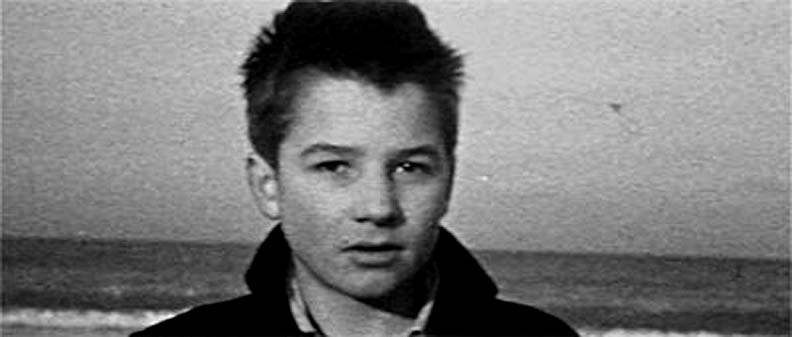
The title of the 1959 French drama, “The 400 Blows,” refers to an idiom that roughly means, “to raise hell.” It’s actually a somewhat-misinterpretation of its French title, “Les quatre cent coups,” derived from the French expression “Faire les quatre cent coups,” meaning, “to live a wild life.” (The literal translation is “400 practical jokes.”) I didn’t know that until I looked it up after I saw the film. Up to then, I didn’t understand what “The 400 Blows” meant and its literal translation didn’t make much sense to me either. But when the phrase “to live a wild life” came into place, I started to think about it and it made more sense.

The film’s central focus is a resourceful, misunderstood adolescent who is unlucky—he doesn’t necessarily go looking for trouble but it always seems to find him. Adults see him as a troublemaker—his insensitive teacher finds it easy to describe him as a troublemaker, his mother sometimes loves him while doesn’t know how to feel about him at other times, his stepfather tries to be his friend but even he sort of the same as everyone else does toward him, and by the end of the film, he’s labeled as a juvenile delinquent. Even before then, when he gets into trouble, he finds it best to run away and live on his own rather than go home. This kid lives in a world he didn’t make, he doesn’t understand, isn’t understood by, and would rather be left to his own resources, or to put it bluntly, “to live a wild life,” which the film’s title indicates.

“The 400 Blows” is a brilliant film—one that gives us a hard-edged, open-minded portrait as to how this boy, Antoine Doinel (played perfectly by Jean-Pierre Leaud), slowly but surely turns to crime because of how everything and everyone around him seems to judge him. We see events in his life that help shape his present while raising questions about his future. This material could have been treated as light as a feather, but through the vision of French filmmaker Francois Truffaut, it becomes as real as the feelings many kids like Antoine feel.

“The 400 Blows” was Truffaut’s debut feature and it came at a time when filmmakers took advantage of the French “New Wave” cinema by making unique choices through personal stories. This film was one of the most influential at the time because you could tell it was personal and even semiautobiographical (I’ve read reviews that state how the movies saved Truffaut from crime, and there are times when Antoine’s mood is softened by a trip to the cinema). Add solid filmmaking to that and it’s easy to tell why this film was so well-regarded from the start and even still holds up today.

Antoine is a real kid, not much different from other kids his age or from his own classmates for that matter. It’s just he’s usually the one that’s caught and he’s unlucky enough to get punished. At the start, the students are passing around a pinup; the teacher punishes him once it’s in his hands. Antoine fails to turn in homework, skips school, and even makes up a lie about his mother dying to cover for both. Once the lie is revealed, that puts him in a worse spot. For Antoine, it seems he can’t do anything right in his teacher’s eyes. At one point, he writes an essay about his grandfather’s death in homage to Balzac, whom he has a shrine dedicated to in his bedroom. But his teacher gives him a failing grade and suspends him, accusing him of plagiarism.

At home, things aren’t much better, especially when his parents immediately take things from the teacher’s perspective instead of Antoine’s. The only time there seems to be an attempt at understanding Antoine comes when he tells his mother he has trouble concentrating, and even then, it’s hard for Antoine to get across what he wants to say (like real people in general, not just children). Antoine lives in a tiny apartment with his mother (Claire Maurier) and stepfather (Albert Remy). It’s revealed that Antoine was the product of an unwanted pregnancy and his mother wasn’t ready for parenthood. It’s clear that she still doesn’t quite know how to handle issues with her son and grows impatient with him when something new comes up. She has her own problems as well, such as poverty and attempting to cover up an affair; she seems to want to spend as much time out of the house as possible. The stepfather seems friendly sometimes but also has his short-tempered moments due to work. The moments when the family is even remotely happy seem sporadic. For example, the happiest moment in the film comes after Antoine accidentally starts a fire. First, the parents are infuriated but then they decide to forgive him, and the whole family has a pleasant night going to the movies. But most of the time, they just see their son as a bother. This is why, when he gets into real trouble, he’d rather live on the streets than in his own home.

He does live on the streets for a while, with the aid of his school chum Rene (Patrick Auffay), who sometimes instigates Antoine’s troublesome activities. He slowly but surely stoops to petty crime, stealing milk, theater lobby cards, and eventually a typewriter from his own father’s office so he can sell it for money. But when he has a change of heart and decides to return it, he gets caught and arrested by the police. From that point on, he’s labeled as a juvenile delinquent and sent to reform school. His parents won’t help him anymore because they believe he’ll just run away again if he comes home. No one will help him because they have no interest in doing so. He’s left at the mercy of social services and is simply a victim of circumstance. The saddest moment in the film is when he is treated like a criminal and put in a police holding cell and a police wagon in the company of prostitutes and thieves. His look through the bars is heartbreaking.

Author Stephen King once said, “In all our lives, there’s a fall from innocence, a time after which we are never the same.” “The 400 Blows” is a film that illustrates that viewpoint very effectively. Nowhere is that clearer in this film than the scene in which Antoine and his friend discuss a way to make more money through petty crime…during a puppet show. While dozens of children are laughing and enjoying the show, these two older kids are in the middle of scheming. By the end of the film, Antoine is no longer innocent and his future is uncertain. The final shot, following a half-grim/half-satisfying final scene, is a freeze-frame with an optical zoom on his face—this closing image has been copied long since this film’s release, but this one has a purpose: for us to interpret Antoine’s predicament for ourselves.

“The 400 Blows” is a subtle, well-acted, great-looking, and emotionally deep character-study that I can’t recommend enough. Today, it still holds up wonderfully as a remarkable film and a classic. Truffaut’s style is direct and truthful so that his film is far from a traditional melodrama, like a good chunk of teenage “coming-of-age” dramas. It’s moving, effective, and causes us to reflect on our own youths. Where will Antoine end up? How did we get here?

NOTE: Truffaut would bring back actor Jean-Pierre Leaud to reprise his role of Antoine Doinel in four other films: the short film “Antoine and Collette” and the features “Stolen Kisses,” “Bed and Board,” and “Love on the Run.” This could show that “The 400 Blows” really was from a chapter in Truffaut’s life and wants to show how he became the kind of person he is now, but I haven’t seen these films…yet.

Magnolia (1999)

28 Jan

magnolia_1999_9

Smith’s Verdict: ****
Reviewed by Tanner Smith

“We may be through with the past, but the past is never through with us.” The meaning of that quote in Paul Thomas Anderson’s “Magnolia” is at the core of the film, which is a series of tales that involve grief, regrets, resentment, and sadness among their central characters. Yes, “Magnolia” is an ensemble piece (and a three-hour long one at that) with many different storylines surrounding different characters (only some of whom interconnect) while maintaining a consistent theme to make the characters’ stories parallel. This is a risky move for any filmmaker to make, but Anderson not only manages to pull it off; he really manages to pull it off. The three-hour running time is enough time to allow each character to develop and have their full story told; the characters’ stories are interesting enough to keep us invested; the filmmaking is riveting; and here’s the true test of how effective it was for me—I was so empowered by each story being told in this three-hour epic that I rarely even noticed what time it was. This is an example of a wildly ambitious project that works wonderfully.

“Magnolia” takes place in one day in rainy Los Angeles and presents a slice-of-life look at many different people. I suppose it’s best to begin by describing each character. Stanley Spector (Jeremy Blackman) is a child genius and a star contestant on a popular TV game show, “What Do Kids Know?” He’s a very smart kid who has every answer and the potential to win the ultimate money prize on the show, and his father couldn’t be prouder; in fact, winning the money seems to be the only thing to get his dad’s attention. The show’s host, Jimmy Gator (Philip Baker Hall), has terminal cancer and learned he has two months to live. He wants to try and reconnect with his daughter, a cocaine addict named Claudia (Melora Walters), but she believes (though he doesn’t remember) he molested her as a child. Meanwhile, Claudia meets a friendly but incompetent police officer, Jim Kurring (John C. Reilly), who looks past the fact that she’s strung out on drugs and just wants to date her and possibly start a relationship.

We also meet a former champion on the show, Donnie Smith (William H. Macy), who has grown up and is unhappy with how his life turned out. He seeks to gain attention from someone he loves—a bartender with braces—by getting money for “corrective oral surgery” so he himself can get braces on his teeth. At the same time, we have the producer of the show, Earl Partridge (Jason Robards), stricken with cancer and on his deathbed. His second wife, Linda (Julianne Moore), is a young woman trying to deal with her imminent loss, and she even admits that she never really loved him and only married him for his money; this self-revelation causes her to think suicidal thoughts. Earl has a dying wish to see his estranged son. His nurse, Phil (Phillip Seymour Hoffman), tries to fulfill that, discovering that the son is actually Frank Mackey (Tom Cruise), a magnetic guru who aids men in the conquering of women—his mission statement: “Seduce and Destroy.” (Aaron Eckhart’s character in “In the Company of Men” would envy this guy.) Earl abandoned Frank when he was a boy and Frank has never forgiven him, and Frank had to take care of his mother who died of cancer.

All these characters are different but also kind of similar too. The central theme of “Magnolia” could be either parental cruelty and its lasting effect on both the parents and their children or the effects of spiritual and physical cancer and looking back on life in sorrow and guilt. Two of these people, Earl and Jimmy, are dying physically, and maybe even more, such as self-destructive Claudia and depressed Linda, are not too far behind. Along with Claudia, the rest are hiding some deep mental scars brought on by the sins of the parents and have their own defenses—Frank uses his misogynistic self-help to mask his insecurities; Donnie is loving and surely losing; and the boy genius, Stanley, is being pushed by his father to keep answering correctly and go on to win the grand prize. It starts to become too much pressure for him. There are so few who try to help, the two in particular being Jim and Phil. A policeman and a nurse—the only figures who represent care and hope in these people’s lives. But they’re only available for about two or three of the people in question; the others could benefit from their help. (What makes it more upsetting is that the connections Jim and Phil make with the people they come across probably won’t last long.)

For a three-hour ensemble drama, “Magnolia” is perfectly-paced. As strange as that sounds, it was enough to keep me involved in each one of these characters’ stories. There’s a lot that happens in this film (obviously, given its running time), so I can’t say too much about the plot in this review. Even the least interesting storyline (to me, it’s the subplot involving Donnie) has something worthwhile to keep me watching. It not only helps to establish these characters in a strongly realistic portrait of how real people with similar problems behave and interact. It also helps to have a top-notch cinematographer (Robert Elswit, Anderson’s usual DP) to photograph the film beautifully; to edit it energetically; and to add a few eccentric moments, such as when all “dying” characters sing along to an Aimee Mann song playing on the soundtrack (“It’s Not Going to Stop”). But there’s also something that happens near the end…but I’ll get to that later.

Every actor/actress in this terrific ensemble cast does a spectacular job. Newcomer Jeremy Blackman is terrific as a kid under tremendous pressure; I felt for this kid at a crucial point when he realizes this game isn’t fun anymore. Julianne Moore does a great job at making Linda into someone who is always sympathetic even in times when she can be unlikable. Jason Robards delivers arguably his best scene in any film he’s been in: a heartbreaking bedridden monologue about how many regrets he has in his life now he’s at death’s door. John C. Reilly radiates a soft gentleness to his policeman character, and he and Melora Walters share a nice, offbeat relationship together. Philip Baker Hall, Phillip Seymour Hoffman, and William H. Macy are equally effective. And then there’s Tom Cruise—this may just be the best performance I’ve ever seen from this top-notch star, playing Frank with much charisma with much sadness hiding underneath. It’s a spellbinding portrayal.

It’s hard to pick my favorite scene—is it the prologue involving urban legends?; is it Stanley’s breakdown on the air?; is it Earl’s monologue about regret and guilt?; is it Frank’s tearful reunion with his dying father?; is it the beautiful sequence in which all “dying” characters (figuratively and literally) share a musical number?; is it the extraordinary, completely out-of-nowhere occurrence near the end of the film? How about the whole thing?

If you’ve seen the film, you’re probably wondering what I make of said-“extraordinary, completely out-of-nowhere occurrence.” This was a sequence that took everyone by surprise in its original release, caused many debates, and even split many audiences and critics in their overall opinion of the film (some say it was a work of genius while others say it was an unbelievable copout; if you haven’t guessed, I belong to the former group). If you don’t know what it is, I won’t reveal it here, but I will say this—nothing in the first 2 hours and 40 minutes of this film will prepare you for it. I certainly wasn’t prepared for it. It may be a copout for some people who thought it ruined a perfectly good setup of effective human conduct and communication, but to me, it only raised the film to a new level that I was fascinated by it. I found myself thinking more about it the second time I watched the film. (I also realize that without the prologue that indicates that even the most improbable things can happen in life, this ending would have made no sense at all.)

P.T. Anderson’s “Magnolia” is simply a wonderful piece of work—a very well-put-together ensemble drama that quite frankly, I would even rank higher than Robert Altman’s best works. I cared about each character, I felt like I knew each of them rather than just some of them, and again, I was engaged by all their storylines, which to me is its biggest accomplishment. Maybe I understand it or I was in the right mood for it when I first watched it, but “Magnolia” was a tremendous film for me to experience.