Archive | Four Stars **** RSS feed for this section

Finding Joy

15 Nov

Smith’s Verdict: ****
Reviewed by Tanner Smith

Full disclosure: I’m an associate producer on this film. But if I can review 45RPM, a film I acted in, I can surely tell you how much I enjoy a film I helped fund.

“Finding Joy” is a film that is equal parts eerie, mysterious, moving, insightful, and inspiring. Some scenes are chilling and disturbing; others are heartfelt and emotional; and overall, it’s here for a good purpose.

Don’t go into it expecting one thing. Stay with it, and you will probably appreciate and love it even more.

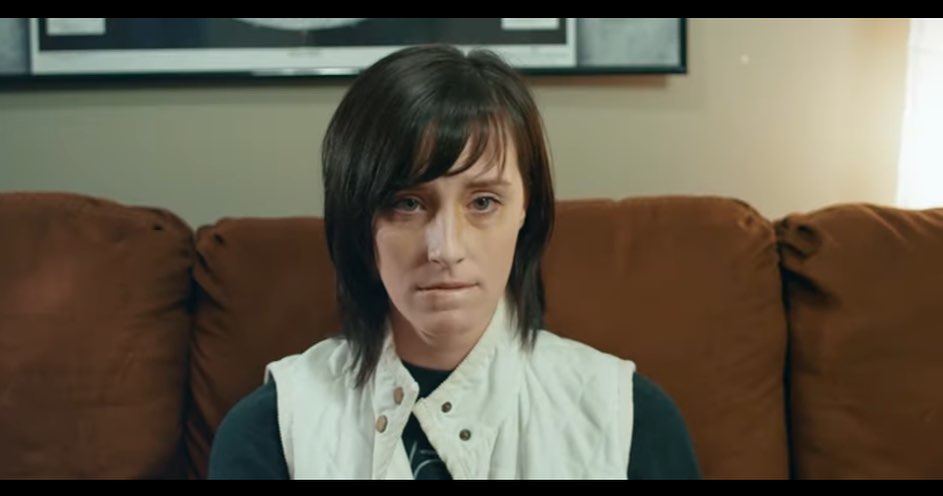
“Finding Joy” is the feature filmmaking debut of Valeri Bates, who put her heart and soul into this film. Bates (who recently shined as an actor in The Night is Young, coming soon) wrote and directed and also starred in the film as Roni, an artist who suffers sleep paralysis, as we see in horrific opening moments that involve…something…in the dark…watching her…

Yeah, I wouldn’t want to be Roni in these moments.

As the occurrences worsen, Roni attempts to do something about it. She puts herself in a sleep study, sees a therapist, confides in her childhood best friend Trish (Heather Elaine), and so on. And the more she learns from all of it, the more she also learns about herself…and that’s all I’ll say about it except that it raises interesting questions and more importantly sticks the landing.

Side-note: Valeri’s lead performance makes the film (more on that in a bit), but the supporting cast is also terrific–Heather Elaine (“Millennial with a Cane,” a film I will not review because I actually made it–see the difference now?) is excellent as Trish, Davis DeRock (The Stylist) is relaxed and likable as a helpful sleep technologist, Deborah Madick is wonderful as Roni’s therapist, Kurt Hanover is damn scary as a questionable figure from Roni’s past, and other memorable actors, many of whom are based in Kansas City (where the film was made), include Tangela Welch, Ashley Moreland, Jennifer Seward, and Angie Heck. This ensemble cast is worthy of recognition wherever it can be found.

In a way, “Finding Joy” is a psychological thriller, especially when you find yourself wondering what is truly at stake for many of the heavier moments. But it’s also a uniquely brilliant character study and haunting story. What also truly makes the film, aside from the stunning cinematography by David Watson (which includes arresting visuals, whether we’re in dark, claustrophobic spaces or even in open broad daylight) and the co-directing help from the extremely talented duo of Patrick Poe & Lolo Loren (Almost, Sorta, Maybe), is Valeri Bates herself. It’s not only because of the material she delivered from the start (and it’s a good screenplay)–it’s because of her lead performance as Roni. It has numerous layers and levels to it; it’s a brilliant performance. And I believe what is really going to keep people invested in this story is the Roni character and everything around her.

“Finding Joy” has an eerie, unsettling feel to it that makes Roni’s journey of self-discovery all the more captivating. We have questions such as: “What is that shadowy figure that stalks Roni in these sleep paralysis episodes?” “What is real and what isn’t?” “Is this film going to give us answers, tease us with no answers, or worse, tease us with answers?” Well, we do get answers, and thankfully, they don’t undercut everything that transpired to these moments (nor do they overload you with exposition to make sure you get the point). It all fits together beautifully. And that’s what Roni needs during all of this: she’s such a compelling and charismatic character that we want her to find the answers.

“Finding Joy” is a beautiful film. Valeri Bates and crew did splendid work and have a lot to be proud of here. It’s currently submitted into festivals, and I’m excited for many of them to give it the spotlight. And I only hope I’m there to add more support.

Follow “Finding Joy” on social media for updates on future screenings: @findingjoyfilm on Instagram and “findingjoyfilm” on Facebook.

Saturday Night (2024)

11 Nov

Smith’s Verdict: ****
Reviewed by Tanner Smith

A lot of people (myself included) have trash-talked “Saturday Night Live” many times–but, considering how many people find themselves nostalgic for each previous SNL decade run (plus its recent season-50 premiere is really popular), maybe we should just shut up and appreciate that it’s still going.

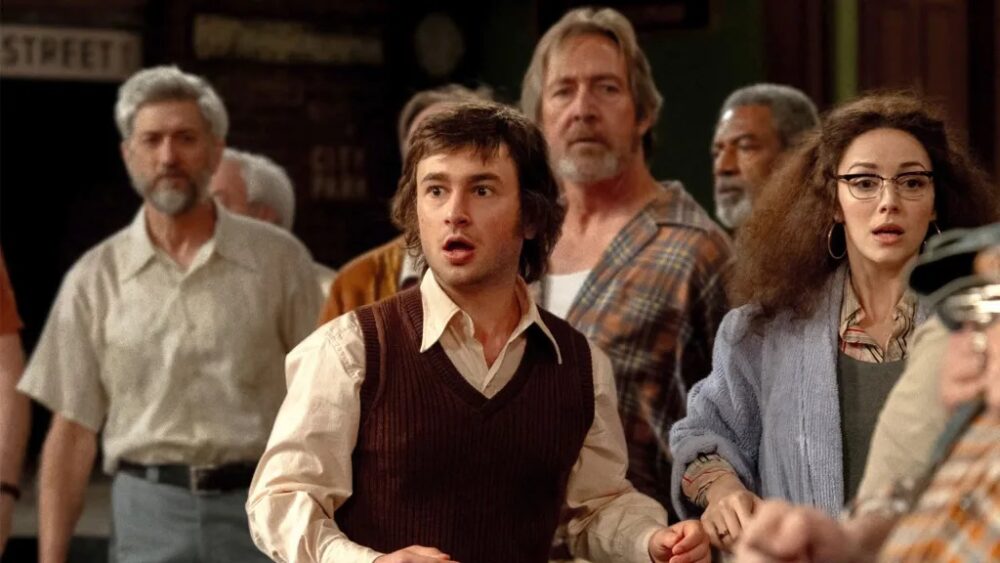
Jason Reitman’s “Saturday Night” is a dramatization about the taping of the first “SNL” (back when it was just called “Saturday Night,” hence the title of the movie) and all the anxiety and chaos that went into it when it seemed doomed to fail.

Taking place in real time, we follow the young pioneering producer/creator Lorne Michaels (Gabriel LaBelle, from “The Fabelmans”) in the hour-and-a-half leading up to the live recording of what would be the start of a game-changing sketch-comedy show that would feel like the best kind of Saturday night party on TV. The camera whips us all around to the sets, dressing rooms, and backstage hallways of Studio 8H, as Lorne tries his best to work a three-hour rehearsal in a 90-minute show, control his colorful cast of up-and-coming comedians, bump heads with producers, writers, and other creatives (like Jim Henson, who worries about the presentation of his Muppets), and just try to put on a good show.

It’s easy to compare this anxiety-induced backstage story to Birdman (hard to believe that film came out nearly a decade ago). But there’s one very important factor to consider in the comparison–“Saturday Night” actually captures the joy that goes into a passion project such as this. Yes, we see Lorne be stressed out, angry, and bitter at times, much like Riggan Thomson in “Birdman”–but those moments wouldn’t work as well if we didn’t feel Lorne’s passion for this project or see the immense pride and delight in his face when things go well. They help us see what’s on his mind, why he’s so eager to entertain and pull it off, and especially why we want to see “Saturday Night” succeed (which we know it will).

“Saturday Night” was directed by Jason Reitman, who makes very interesting choices with each film. (Thank You For Smoking and Juno are my favorites of his, and I also admire “Young Adult,” “Tully,” and “Ghostbusters: Afterlife.” Maybe I should revisit Men, Women & Children–I hated it when I first saw it; but, since I’m not a critic anymore, maybe I can see something more to it now.) Reitman co-wrote the script with Gil Kenan, and I can’t say how much I appreciate Reitman & Kenan’s partnership. Kenan was the director of the awesome and successful “Monster House” in 2006 and it’s like Hollywood just spat him back out after the failure of City of Ember (which I happen to really like, btw; my family and I were among the rare few who saw that in a theater). I’m glad that with the new “Ghostbusters” movies and now “Saturday Night,” Reitman is giving Kenan another career uprise.

Now…where do I even begin in talking about the large ensemble cast at work here? It’s largely LaBelle’s star vehicle, as the film is seen through Lorne’s experience of events, and he’s great here. But there are so many other actors who deserve credit for their excellent work in respective roles, so…I’m just list off the ones that impressed me the most:

Dylan O’Brien as Dan Aykroyd. Cory Michael Smith (Gotham) as Chevy Chase. J.K. Simmons as Milton Berle. Matt Wood as John Belushi. Lamorne Morris as Garret Morris. Rachel Sennott (impressing me more with each film) as writer Rosie Shuster. Nicholas Podany as Billy Crystal (I swear, it’s like they went back in time and brought back the actual young Billy Crystal for this part). Cooper Hoffman as network suit Dick Ebersol. Matthew Rhys as George Carlin. Andrew Barth Feldman (“No Hard Feelings”) as Lorne’s cousin and assistant. Tommy Dewey as Michael O’Donaghue. And on and on and on, and I haven’t even mentioned the great Willem Dafoe as network suit David Tebet yet!!

My personal favorite was Nicholas Braun, who has a dual role as the eccentric Jim Henson and (of course) even more eccentric Andy Kaufman. I have seen this actor in many films in nearly two decades, from “Sky High” to “Red State” to The Perks of Being a Wallflower to The Stanford Prison Experiment to last year’s “Cat Person” (just to name a few–and of course, he’s great in “Succession”), and I applaud wholeheartedly his great efforts in both roles here.

I believe “Saturday Night” will stand the test of time not as a cynical by-the-numbers biopic but as a wickedly entertaining, very funny, and even sentimental (without being cloying) portrait of the craziness that goes into game-changing entertainment.

And I’m eager to see it again very soon.

My Old Ass (2024)

11 Nov

Smith’s Verdict: ****
Reviewed by Tanner Smith

Well, this was a beautiful film!

For the remainder of 2024, I might see objectively better films. But I don’t know if I’ll like them as much as this one.

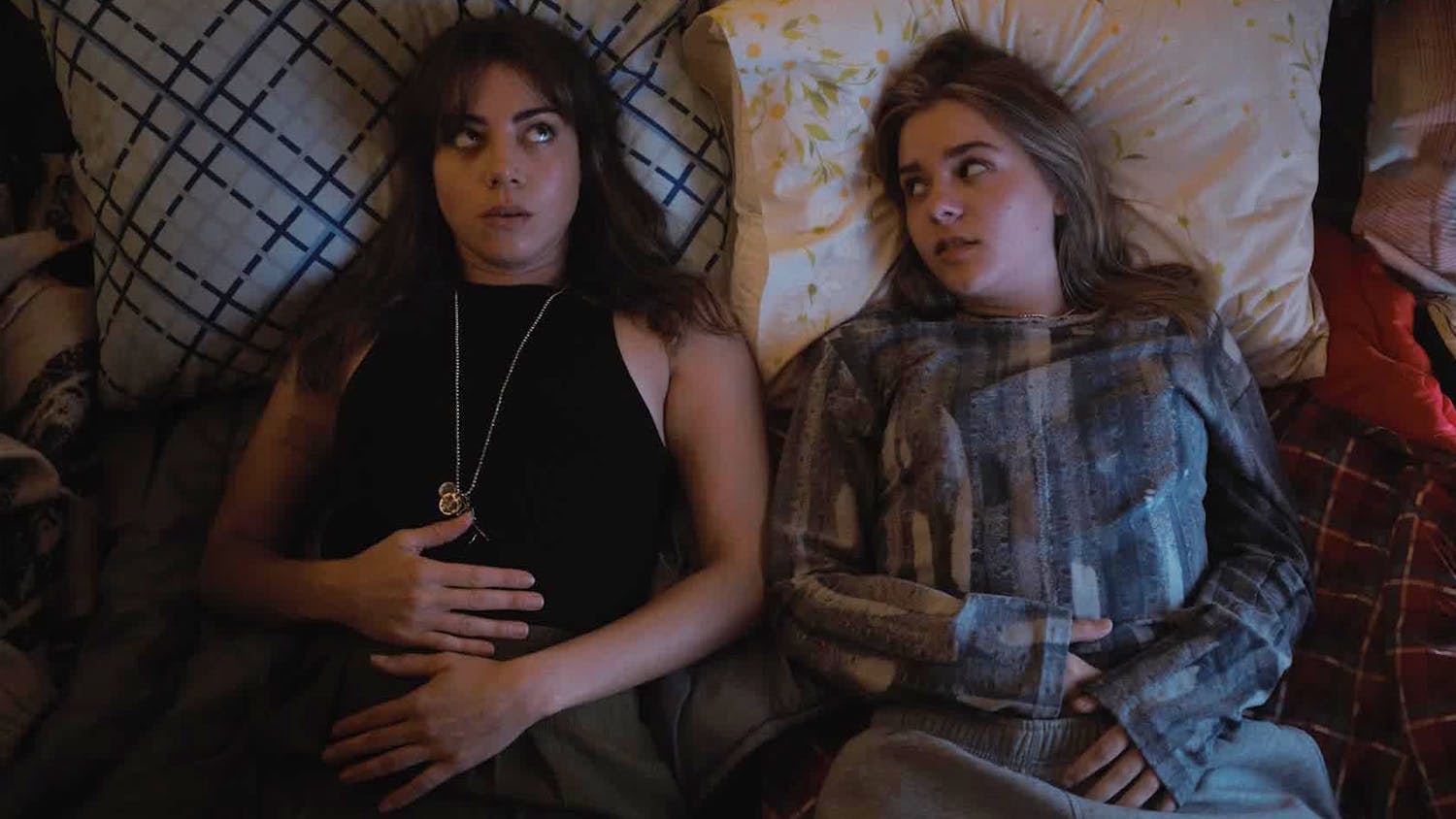
“My Old Ass” is about 18-year-old Elliott (Maisy Stella), who enjoys her last summer days in small-town Canada and her family’s cranberry farm before she leaves it all to go to college in Toronto…by basically just doing what most kids at that age do: hang out with friends, do drugs, have passionate affairs, and just not take anything seriously. It’s at her campout birthday celebration with her friends (while she doesn’t know her family is waiting to surprise her with a cake back home–knowing what the rest of the film has in store, this bit hits harder in hindsight) when…her 39-year-old self (played by Aubrey Plaza) appears out of nowhere and connects with her.

Side-note: I love that it’s never explained how the time-travel element works–it’s more Groundhog Day magic than Back to the Future science (fiction). Whatever the case, that encounter was real (and not a shroom trip). Elliott is able to communicate with her older self via smartphone, and Older-Elliott advises her to spend more time with her family and DEFINITELY stay away from anyone named “Chad.”

Cue the arrival of the cute new summer worker on the family farm…Chad. When Chad (Percy Hynes White), a charismatic, quirky, charming lad, has a meet-cute with Elliott, she keeps him at a distance, knowing SOMETHING must be wrong with this guy if Older-Elliott is insistent that she stay away from him. But it’s just not easy because Chad is just so…NICE. She can’t help but be attracted to him. She might even be in love with him…

“My Old Ass” plays like a heartwarming, grounded summer-that-changed-everything story with a sci-fi/fantasy edge. Elliott is in the last stages of youth and about to embark on the road to adulthood, and because of this experience with her adult self giving her advice (appreciate her mother, spend more time with her brothers, etc.), her eyes open up, she realizes what truly matters in life, and she slowly develops from a narrow-minded, immature child to an adult (er, a real good start to being an adult).

In addition, Elliott’s attraction to Chad causes Elliott, who identifies as gay, to question her sexuality–and one of my favorite scenes in the film is a wonderfully written and tender moment between her and a friend (Kerrice Brooks), in which they discuss Elliott’s feelings, contemplate the point of labels (“Am I bi…am I pan…”), and have a genuine heart-to-heart together. There are other scenes like that, including a lovely moment between Elliott and her mother (Maria Dizzia) and one of the early instances of first-love between Elliott and Chad (who bestows deep insight about moments in time we don’t realize are going to be treasured memories), that you realize what the story is doing (and doing well).

And I won’t give it away, but there is another face-to-face encounter with Older-Elliott late in the film–and it hits HARD. That was the moment that made me truly LOVE this film.

“My Old Ass” is the second film written and directed by Megan Park, whose first film was the terrific The Fallout. What I love about Park’s work, evidenced by these two films, is that she can balance broad comedy and tender drama while having them both belong in the same movie. (It’s not as easy as you think–often when filmmakers try this, either the comedy doesn’t hit or the drama isn’t moving enough; but I still applaud the efforts. Park knocks it out of the…ball field.)

This is one of my favorite films of 2024. I can’t recommend it enough.

“My Old Ass” is available on Prime.

Creed III (2023)

27 Nov

Smith’s Verdict: ****
Reviewed by Tanner Smith

I’m a big fan of the “Rocky” franchise and I really liked the first two films in the spinoff (“Creed”) franchise–hell, I’ll even say Creed II is now my second-favorite in the overall franchise (behind Rocky). So I was really looking forward to seeing “Creed III,” especially since Adonis Creed himself, Michael B. Jordan, was directing this time!

It didn’t disappoint at all. I loved this film.

“Creed III” continues going for the emotional depth of the previous films. Creed was about going your own way and managing your temper. “Creed II” was about maintaining and defending a legacy. And “Creed III” is about battling demons you thought would be kept in the closet forever.

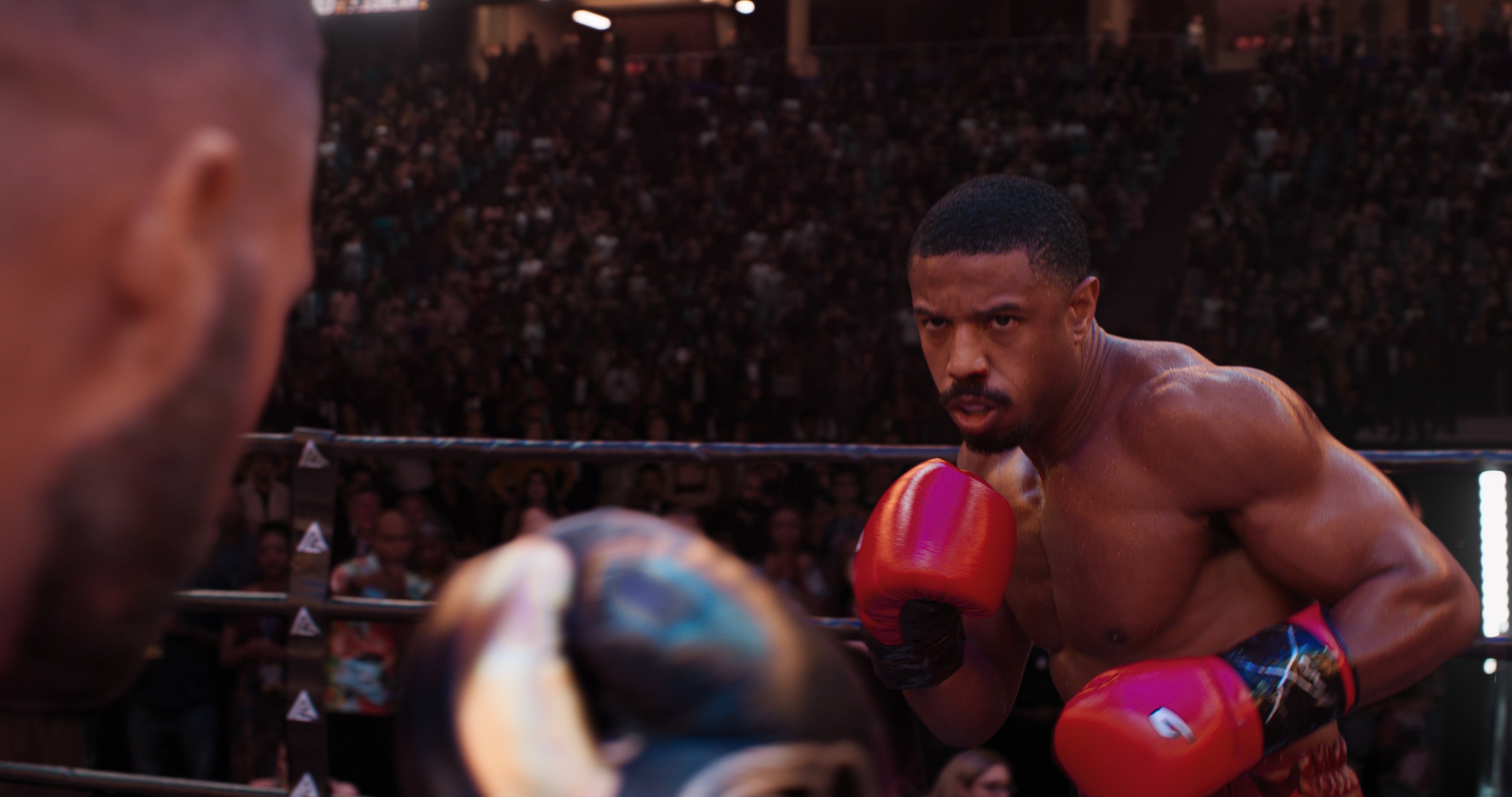
In this case, Adonis Creed (played again by Michael B. Jordan), who is now retired from boxing and oversees the careers of up-and-coming fighters, reunites with an old friend, Damian “Dame” Anderson (Jonathan Majors). Damian and Adonis grew up together in the group home from where Adonis was rescued by Mary Anne Creed (Phylicia Rashad), and Damian, who would become a Golden Gloves champion with a solid career ahead of him, was still a big-brother figure to Adonis, who would often accompany him to matches. That all changed when a violent incident in 2002 caused Damian to be arrested (while Adonis escaped) and the two to break away.

(Side-note: the opening prologue, which shows only PART of the violent backstory, is very gripping. The actors playing the younger versions of the characters are great, and Jordan’s direction is reminiscent of a Scorsese flick.)

Well, now, Damian makes his way back into Adonis’ life and tells him he wants a shot at the title–even though, as Adonis tries to tell him, Damian has been out of the ring for two decades and has no professional boxing experience. But Damian has a lot of unbridled rage and isn’t afraid of any challenges, and he feels he deserves everything that Adonis has, since everything he was promised was taken away from him when he went to prison. Soon enough, an opportunity strikes when Adonis needs to assure a rival for an upcoming match with his new client, Felix Chavez (Jose Benavidez). Remembering how his old mentor Rocky Balboa got his big break, he decides to give Damian a shot…

I won’t go into how this proves to be a big mistake or how the events lead to what the advertising promises (a match between Adonis and Damian)–but I will remind you that Rocky was remembered for giving it all he had and taking it from the heavyweight champion, whereas Damian just wants attention and doesn’t give a damn about how to get it.

There’s a lot of gripping drama in the tense dynamic between the two friends turned rivals, but there’s also room for emotional love and affection in the scenes with Adonis and his mother, Adonis and his deaf daughter (who wants to fight), and Adonis and his wife Bianca (Tessa Thompson). It reminds us that Adonis still has more anger to overcome and most importantly a loving force to fight for.

And even the boxing scenes, which I’m normally tired of by now, had me invested–though, that might be because the final fight has some stylistic touches added to it. (That’s all I’ll say about that.)

I’m not sure where Rocky Balboa is during all this, but I’m sure he’s out there somewhere (maybe with his son, who “lives in some place called Vancouver with his girlfriend”) and rooting for Adonis to know when to say when and join him in retirement–if for no other reason than to just look back on the good times they shared together, just as Rocky did with Adonis’ father Apollo Creed way back when.

And honestly, I’d like to see that in “Creed IV.” But we’ll see…

BlackBerry (2023)

27 Nov

Smith’s Verdict: ****
Reviewed by Tanner Smith

One of the most entertaining films I’ve seen in 2023…is a film about the invention of the first smartphone.

Doesn’t sound so interesting or entertaining, but…

I was hooked on seeing “BlackBerry” simply because it’s the latest film from auteur filmmaker Matt Johnson. His first feature The Dirties is one of my personal favorite films, I also really liked his second film Operation Avalanche, and I also admired his Viceland series Nirvanna the Band the Show–I will see ANYTHING that he does, even if it’s about the creation of the BlackBerry.

This isn’t another film about what corporate greed and hubris do to a creative, idealistic person, nor is it a film that encourages us to demand to take back the BlackBerry phone. (And you wouldn’t want to give up your iPhone, would you?) It’s a film about someone who has a great idea that changes the way we communicate in the world…until someone else (let’s call him Steve Jobs) comes up with a better idea. And it can be taken any way you want it, whether it’s about how the characters went about it, or the little things they overlooked in making it, or even WHY they wanted to do it in the first place, or whatever.

Johnson avoids his trademark faux-documentary approach and instead gives us a fly-on-the-wall technique, with his usual cinematographer Jared Raab shooting the proceedings like a docudrama. But he’s such a movie buff, I wouldn’t doubt he simply wanted to make his own biopic along the lines as “The Social Network” or “All the President’s Men.” And because he’s so good at grabbing an audience with his vision, “BlackBerry” hooked me and wouldn’t let me go until the end…actually, not even the end, because I’ve seen this film at least five other times since.

Jay Baruchel stars as Mike Lazaridis, the awkward but brilliant co-founder of the Canadian software company Research In Motion. (Johnson, who always appears in his own films, co-stars as Doug Fregin, the goofy man-child co-founder of the company.) RIM (as it’s abbreviated) is going out of business, but in comes Jim Balsillie (Glenn Howerton), a ruthless businessman. He was fired from another tech company for stealing a coworker’s presentation–at that point, the moviegoer sitting next to me muttered, “Dick!”–and is willing to take Mike’s idea of a BlackBerry mobile device seriously if it means big money.

Well, it DOES mean big money…but for how long? And I was expecting “BlackBerry” to be a cautionary tale about what greed and pride do to people–instead, it’s more about a great idea that stays a great idea…until someone comes up with a better idea. And how it affects these characters was what kept me engaged throughout the back half of the film.

Jay Baruchel and Matt Johnson are both great as the hopeful entrepreneurs who find themselves in over their heads and in danger of losing their souls in the process. But it’s Glenn Howerton who practically steals the film from everyone he shares the screen with. This guy has so much fun showing the ruthless and reckless natures of this character, who is such a jerk and pretty much a megalomaniac–and he’s never boring; I always looked forward to seeing what he would do next!

“BlackBerry” has a great amount of energy to it, from the documentary-like camerawork to moments that show how the geek-culture unwinds (such as playing/dancing to “Return of the Mack” to celebrate a victory or having “emergency movie night” in the office when things don’t go as planned).

There’s just such a great energy and ambition to this film (from a filmmaker whose last two films were already energetic and ambitious) that I embrace wholeheartedly. I loved “BlackBerry” from beginning to end.

Shudderbugs

24 May

Smith’s Verdict: ****
Reviewed by Tanner Smith

“Ms. Cole…do you know where you’re going?”

As Sam Cole’s story in “Shudderbugs” begins, she arrives at a secluded farmhouse in Upstate New York. This is a place that feels familiar yet alien at the same time to her: her childhood home, which she hasn’t visited in so long. She was supposed to be here to celebrate an upcoming birthday with her mother. But her mother has died, due to unclear circumstances. Sam looks around the house, soaks in all the familiar surroundings and memories (her bedroom is also decorated with childhood mementos, like drawings and a broken dollhouse), and yet feels uneasy because her mother is not here, she’s not sure what to do next, she doesn’t even know what’s changed around here and what hasn’t, and she doesn’t know how long it will take to get to that particular place of certainty and comfort.

Sam Cole may know where she’s going–but she doesn’t know when she’ll be there.

“Shudderbugs” puts us in Sam’s current place of uneasiness and confusion right from the start (we don’t learn much about where she’s visiting from–we can only speculate from nightly phone calls to someone back home), and it feels so much like a thriller in that sense. Because of that, when new aspects relating to the mother’s death start to pile up (such as Sam’s shady neighbor being the one who discovered the body and Sam not knowing the cause of death while continually calling for a medical examination), I think I know where it’s going.

But as the film continues, I’m more interested in what Sam is feeling throughout all of this than what traditional thriller elements I feared would come along and, while not necessarily “ruin” the proceedings, possibly sour a very interesting character study. While seeing “Shudderbugs” at the Bare Bones International Film & Music Festival in Muskogee, Oklahoma, I’m sitting with intrigue and putting my trust in the filmmaking team behind it that they had created something better than that.

I couldn’t be happier that I did stay with it, because “Shudderbugs” is a remarkably moving and wonderfully made meditation of grief, remorse, and recovery. This is the type of film I would watch even if I was going through grief myself.

I won’t go into further plot details of why Sam is here, what she uncovers, or what that mysterious neighbor Noah (Brennan Brooks) is or was up to–instead, I’ll just say how mesmerized I was by the filmmakers’ ability to balance out thriller and drama so effectively that it feels like a disservice to refer to “Shudderbugs” by either genre. It is that impressive.

Now, about “the filmmakers,” as I keep vaguely referring to them. They are writer-director/co-producer Johanna Putnam, who also stars in a brilliant performance as Sam, and co-producer/cinematographer Brennan Brooks, who plays Noah (and also quite well, I should add). They, along with a skeleton film crew, utilized every bit of their resources to make this film in a farmhouse they had easy access to, made great use of their isolated environment, and crafted a film that is purely from the heart.

I also appreciated that they included levity to even out the story’s grim subject matter. There’s a running gag involving a VA (called Brenda) that doesn’t feel forced and a subplot involving aggravating phone calls with a prying insurance agent, the punchline of which had me applauding in the theater. But there’s also a beautiful scene that begins as a lighthearted moment of frolic and ends as probably the most touching part of the film. (I won’t give it away here, but it involves a butterfly.)

We see Sam Cole struggle with so many emotions, modify so many scenarios as a result, and rise up after continuing to struggle, modify, and learn about herself and her environment. The way the story progresses and the way Johanna Putnam plays the character, I felt like I would follow her anywhere. I was pleased to follow her in “Shudderbugs” and felt grateful to be in her company, to the point to where when she left (i.e., the end credits rolled), I wished her the absolute best–wherever “Ms. Cole” may go.

I loved, loved this film, and I embrace it wholeheartedly. And as soon as it’s released via streaming, I’ll update this article so you can enjoy it too. (And you can keep track of its progress here.)

Personal History

29 Mar

Smith’s Verdict: ****
Reviewed by Tanner Smith

What a special gem this was to behold at the 2023 Kansas City FilmFest International—a wholly original film that made me grin, ponder, and ultimately feel. With a deft and delicate touch given by director/writer/co-star/cinematographer (among other credits to this film alone) Tyler W. Moore, “Personal History” manages to deliver a nicely-observed gentle comedy along the same lines as a Christopher Guest mockumentary crossed into the territory of an existential parable. And I promise to you, I am not making this up…

It even brought a tear to my eye.

Yes, “Personal History” went places that I didn’t expect. And it fooled me, delighted me in doing so, and made me feel things.

“Personal History” is a faux-documentary feature, in which the story is crafted by filmmaker Josh Harmon (Moore). His primary focus is his friend Monica (Samantha Montero), a history major who is researching for a grant and comes across an interesting discovery within a home-building business. Upon close inspection of the business’ photographs from decades past, there seems to be one constant: a man named Arthur D. Perkins (Patrick Poe), who looks exactly the same despite appearing in photos ranging from the 1950s to the modern day.

It’s true, Arthur D. Perkins has not physically aged in over 100 years. As Monica interviews people involved with the business (as documented by Josh, who makes sure to capture on camera everything he feels is important to a certain narrative—the faux-documentary approach really works well here), it’s only by luck that Monica is able to conduct a sit-down interview with Arthur himself.

The initial interview doesn’t quite go as she expected. Despite Arthur having experience serving in both World Wars (WWII was when he started to notice he wasn’t aging), Arthur doesn’t have much to say that is of interest to Monica. But Josh, still documenting the progress, pushes her to dig deeper and capture the true essence of what it means to be immortal.

Where “Personal History” goes from there, I won’t give away. But I will say that where the film goes, once Monica and Josh interview Arthur again and find themselves more into his life, takes the audience along on an emotional journey. We find ourselves questioning the concept of immortality and how we perceive it. We think about how hard it must be to outgrow our loved ones—the best scene in the film illustrates how tough it was for Arthur’s “gift” of immortality to take its toll in his marriage with loving wife Judith (Lolo Loren). (That’s where the aforementioned tear came from.) And when Monica and Josh learn more about what Arthur has done with his long life and how he lives today, they find themselves asking those very questions.

There’s a subplot involving Josh’s sister Mae (Bryna Vogel), with whom he seems to interview with his camera often, that seems ineffectual at first—but then it becomes one of the most emotionally gripping parts of the film. That’s all I’ll say about it.

There are not enough words to describe just how good Patrick Poe is in the role of Arthur. In playing a person who has lived for about 120 years or so, he has the body language down (he moves sort of slowly as if the youth left his looks years or decades ago), he portrays the mix of pain and wisdom in his voice, he makes subtle glances when he’s asked difficult questions, and maintains a calm manner throughout, making me constantly wonder what the character is thinking in this particular moment. I admired Poe’s work in Almost, Sorta, Maybe (which he co-directed with Loren), in which he played a completely different type of character—with “Personal History,” he shows more of his versatility as an actor. He’s great here.

The ending to “Personal History” pulled the rug out from under me (and also a friend who was in the same theater as me). As soon as it was over, I had to approach this talented filmmaker, Tyler W. Moore, and the star, Patrick Poe, both of whom were at the screening I attended, and congratulate them both on a job well done. “Personal History” is a beautiful film.

TÁR (2022)

20 Dec

Smith’s Verdict: ****
Reviewed by Tanner Smith

In the exceptional 2015 Steve Jobs biopic “Steve Jobs,” the most impactful line of dialogue aimed at the titular egomaniacal genius is as follows: “You can be decent and gifted at the same time.”

While that film ended with Jobs becoming a little more decent towards his family, friends, and colleagues, I believe the central character of “TÁR” would scoff and laugh at that very insight.

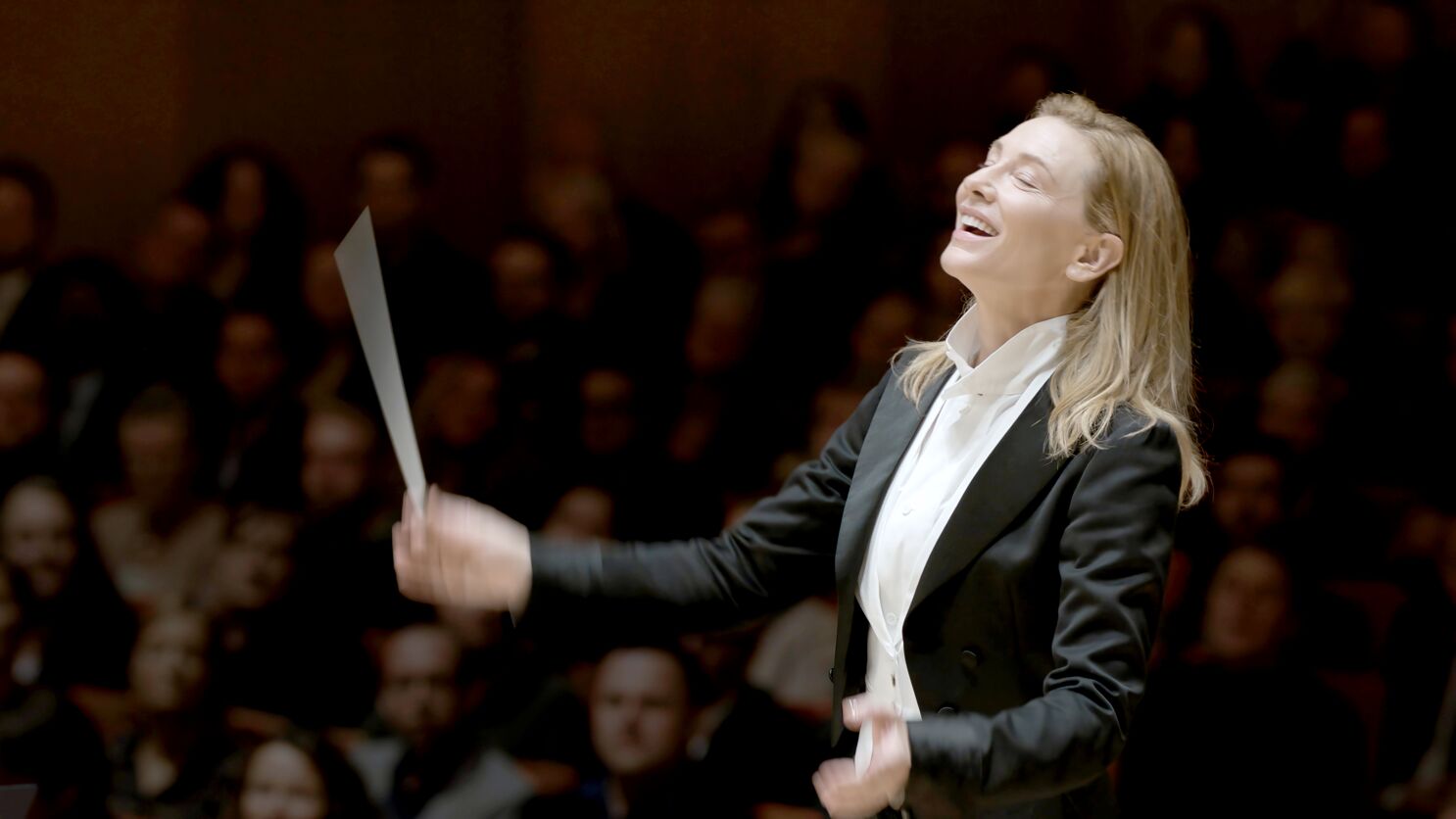
Meet Lydia Tár. She’s an amazingly gifted, wildly tenacious, world renowned classical music conductor. She’s also a caring (and very protective) mother, a passionate partner, a giver, and a major influence for many.

She is also a master manipulator, toxic, and extremely narcissistic–and a sexual predator.

Not that all of that is thrown at us at once. While the film opens with an extended sequence in which Tár is interviewed in front of a large audience in New York City, not everything is revealed to us. She tells New Yorker’s Adam Gopnik (played by actual New Yorker journalist Adam Gopnik) simply what you would find on a Wikipedia article or an autobiography. (And indeed, Tár has one coming out soon–in the movie, not in real life.)

Side-note: We do get a hint of how superior and self-satisfied people like Tár and her fans feel about themselves when Gopnik, in his introduction about Tár, mentions that she is one of five “EGOT” (Emmy, Grammy, Oscar, Tony) winners and everyone laughs at the mention of Mel Brooks as another.

Cate Blanchett stars as Lydia Tár, who is also about Lydia Tár and only Lydia Tár. Everyone else is a supporting character in her own personal story and she isn’t self-aware enough to realize her methods in the Berlin Philharmonic where she rehearses, in the home with her violinist wife Sharon (Nina Hoss) and adopted daughter (Mila Bogojevic), and in a Juilliard classroom where she teaches are questionable. Lydia is hiding things from Sharon, fiercely protective of her daughter to the point where she threatens a little girl for bullying her, and in one very impressive unbroken 10-15 minute take, she ridicules a Juilliard student for not taking an interest in Bach’s music because of his identity politics. She also seems to be grooming a Russian cellist named Olga (Sophie Kauer) perhaps the same way in which she took interest in another protégé Krista before it advanced to something more that didn’t work out, leading to Lydia blacklisting her and ruining her musical career.

Even when Lydia asks her assistant Francesca (Noémie Merlant) to remove any and all emails that mention Krista, it’s quite clear this is going to come back to get her. Her inability to handle certain things around her (which also include insomnia, sensitivity to sounds, and a neighbor who cares for a dying mother) only makes things worse, and when she doesn’t acknowledge flaws that could harm others, she digs herself a deeper hole.

I would have thought “TÁR” was based on a real person if you had told me, and I would have believed you. But no, this character is an original creation from writer-director Todd Field’s original screenplay, and it’s a remarkable character study made even more effectively disturbing in this post-#MeToo world, in which powerful people cannot get away with hurtful methods anymore. And without giving too much away, that is essentially what “TÁR” is about.

Cate Blanchett is nothing short of amazing in this role. She lives and breathes Lydia Tár. I don’t know if Blanchett trusted Field or if Field trusted Blanchett or if they had a great understanding together–but I can tell, in many of these long sequences in which Blanchett has to hold our attention in a single shot that goes on for several minutes at a time (such as the aforementioned 10-15 minute unbroken take), that Blanchett knows this character inside and out and both Field and his cinematographer Florian Hoffmeister are showing her (and in effect, showing us) the world of Lydia Tár.

And upon further research, apparently Cate Blanchett had to learn German and conduct an orchestra as well as re-learn to play the piano for the film. Her hard work has certainly paid off in this reviewer’s eyes, and I’d give her the Oscar and Indie Spirit right away.

Where this fascinating yet terrible individual’s life goes is intriguing and engrossing. (And as someone who doesn’t especially care for movies over 2.5 hours, and this one is two hours and 37 minutes, it should say something that I was never bored by this material.) “TÁR” both a character piece and a cautionary tale with an intelligent screenplay from Todd Field and a remarkably excellent leading performance from Cate Blanchett. The result is like a fine concerto of many and all emotions.

Bodies Bodies Bodies (2022)

5 Dec

Smith’s Verdict: ****
Reviewed by Tanner Smith

A special kind of ending can affect the overall impact of a film. It can make you look at the film in a whole new way, making subsequent viewings all the more special. This is especially true of a “whodunnit” mystery-thriller story. When the “who” in “whodunnit” is revealed, it can do one of three things: seem totally obvious and very much like a copout, make you feel nothing at all because it’s still unsatisfying, or immediately make you want to think about what you just saw (and then see it again and/or maybe discuss it with friends).

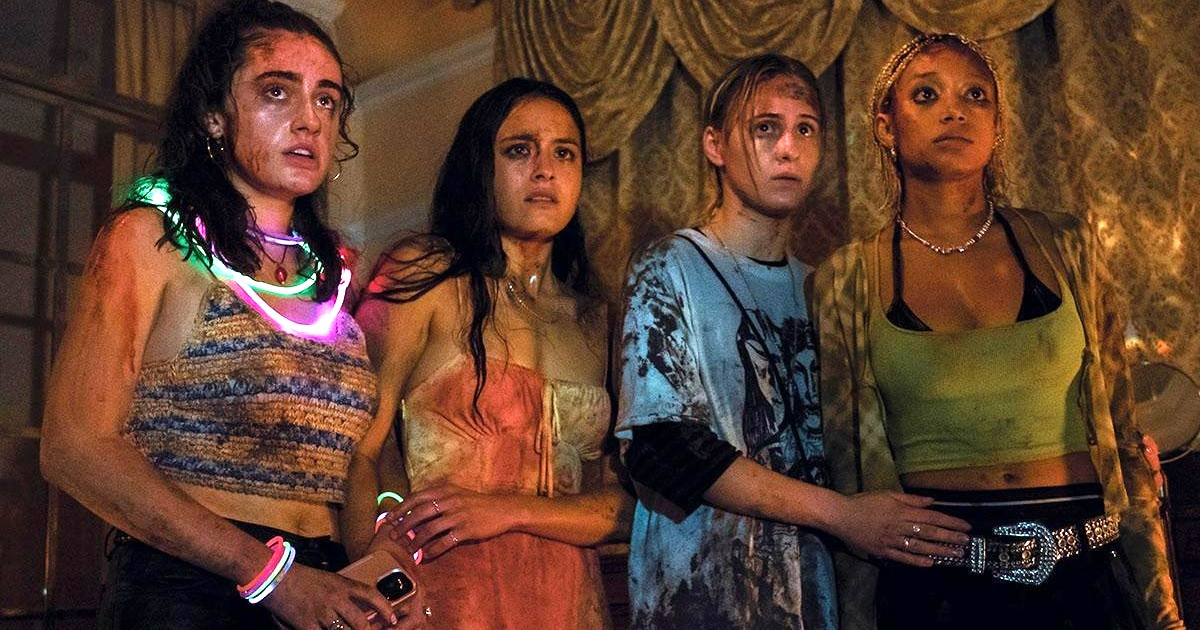
To say the whodunnit-styled horror-comedy “Bodies Bodies Bodies” succeeds in the third aspect would be understating it. The way it was going leading up to the resolution, I thought it would end one way and I maybe would have been fine with it–but I also would have wanted something more or less fitting. But, and I wouldn’t dare give away the big secret, “Bodies Bodies Bodies” managed to fool me and both enthrall and entertain me in doing so.

Picture “Scream” mixed with an Agatha Christie mystery, and you pretty much have “Bodies Bodies Bodies,” a sharply satirical horror-comedy about a group of young people (in this case, Gen-Zers) who band together for a good time in a big house–only to turn against each other when they get killed one by one. In a time when so many young people live in the moment, cling to their smartphones for comfort and guidance, and completely miss what’s happening around them, this example of social commentary couldn’t be more effective if Zoey Deutch’s narcissistic character from “Not Okay” (released around the same time as this film) suddenly entered the picture.

That’s the agenda that director Halina Reijn and screenwriter Sarah DeLappe went into with this film–not only does it truly work, but it could also speak to Gen-Zers. (This is not to say Reijn, a filmmaker in her 40s, is attacking or looking down on the characters in this story–I give her massive credit for sympathizing with them and treating them like real characters instead of archetypes.)

The film begins as former drug addict Sophie (Amandla Stenberg), fresh out of rehab, brings her new girlfriend Bee (Maria Bakalova) to meet her longtime best friends: jackass David (Pete Davidson), self-obsessed model Emma (Chase Sui Wonders), arrogant (and Sophie’s ex) Jordan (Myha’la Herrold), and hella fragile and ultimately indecisive podcaster Alice (Rachel Sennott, hilarious). Oh, and there’s also middle-aged hippie beefcake Greg (Lee Pace), who Alice brought along as her new boyfriend–watching him be the mature one among this crowd gets a huge laugh each time. They’re all here at David’s rich-ass parents’ mansion to party-hardy and ride out a hurricane. (An example of how they could care less about what’s happening around them: they turn off the news of the hurricane because it’s “depressing.”) David’s parents are gone, so they’re here to drink, smoke weed, and pretty much be terrible to each other each chance they get because they’re all rich and privileged–poor Bee, who seems the most empathetic and sincere, tries to fit in, but I just want to pull her aside and tell her it’s not worth it to get the respect of these idiots. After a murder-mystery game of “Bodies Bodies Bodies” (some call it “Werewolf” or “Mafia”), actual bodies start piling up for real as it seems someone is actually killing them off…

Who is the killer? What is their motivation? Does it matter? Not to me–I kinda want to see the would-be victims fend for their lives at this point, as the plot goes from “Mean Girls” to “Lord of the Flies.” The power goes out, they have no cell service, everyone turns against each other, secrets are revealed, harsh words are said, and of course, the bodies continue to mount. It’s as funny as it is suspenseful, especially when the characters are so clueless to their own lack of self-awareness that it’s not only pathetic but also fatal.

The actors are excellent, the commentary is brilliantly witty and observant, the production design within this big house is clever, both the direction and screenplay are extremely sharp and intelligent, and again, that ending makes it all well worth it. It made a good film a great film and a three-and-a-half star film into a four-star film. (And I’ve seen it four times as of now.)

Pearl (2022)

3 Dec

Smith’s Verdict: ****
Reviewed by Tanner Smith

I wasn’t even that frightened of Mia Goth as Pearl in X because she was a frail old woman (who killed people)–and honestly, if I didn’t know that was her underneath all that old-person makeup in “X,” I would never have guessed. But here in this origin story, called “Pearl,” in which we see Mia Goth as a younger version of Pearl…yikes is she scary! I don’t think I’m ever gonna look at her smile the same way again (especially after that last shot…I’m gonna have nightmares about this film’s last shot!!).

It’s a performance that is determined to give a casual moviegoer chills and even the biggest fan of “X” shivers–and Mia Goth is giving it her all; I see her winning numerous awards for this complicated, multilayered role that she must’ve had a ton of fun playing at the same time.

I’m not kidding–Pearl is the most memorable and frightening horror-film psychopath since Najarra Townsend’s Claire from last year’s The Stylist.

Set in 1918 on the same secluded Texas farm from “X,” Pearl is a lonely young woman who is sick of being kept on the farm with an overbearing mother (Tandi Wright) and disabled father (Matthew Sunderland). Instead, she escapes into the movies and takes bicycle trips to the local cinema in town where she is enamored by the idea of being a dancer for the big movie screen.

Before you can call her Dorothy from “The Wizard of Oz,” however, it’s very clear early on that there’s already something wrong with Pearl, who kills small animals and feeds them to a nearby alligator in a swamp just for amusement.

Oh, and what she does with a local scarecrow…let’s just say Dorothy would NEVER do that.

Pearl is resentful of what little she has, especially since her husband Howard has gone off to fight in WWI. She feels that she deserves better and her stern mother will see to it that she makes the most of what she has. Well, THIS isn’t going to end well, is it.

I can now see why the older Pearl in “X” felt the adult-film star Maxine (Mia Goth again) reminded her of herself at a younger age, as the film “Pearl” feels like an alternate-universe look at what might have happened to Maxine under different circumstances. It makes me even more curious to see the new film in this series, called “Maxxxine.”

“Pearl” is a character study about a budding serial killer–even if you hadn’t seen “X” and wouldn’t know where it went, you still expect this unstable, tortured, young farm girl to inevitably snap and it still doesn’t disappoint for the same reasons certain films of this sort are remembered for years/decades to come. It has its own unique style and structure to it.

That leads to another element to praise about the film: Ti West’s work as a director. It would have been so easy to make this film in the same vein as “X,” with the same story/execution–however, not only is “Pearl” its own film (with the same locations from “X” and other neat little Easter eggs) but the style is different too. While “X” looked and felt more like a ’70s slasher film with unique newer touches, “Pearl” feels like an old-fashioned Technicolor family film of an early age. (We also get fantasy dream sequences that aren’t unlike any you’d see in a Hollywood musical. I half-expected Pearl to break out into song.) Both “Pearl” and “X” display Ti West’s versatility as a director.

“Pearl” also kind of reminded me of a 2000s thriller called “May,” in which people around the quiet shy girl are intrigued and fascinated by her…until they get to know her better and are suddenly scared for their own safety. This feeling happens at least twice in Pearl. There’s one scene in particular, in which she is asked by a supportive friend to spill her secrets and say why she’s so unnerved lately…you SURE you want to know?

What results is a truly well-written and well-performed monologue from Pearl that will even give Mia Goth some serious awards consideration. I’m terrified and yet I’m clinging onto her every word in that scene. Pearl may not be the “star” that she dreamed of being, but at least Mia Goth has achieved that status by now.

Both “X” and “Pearl” are terrific contenders for my year-end list this winter. They both disturbed me for different reasons and provided further evidence that this is a good time for good horror films.