Archive | 2017 RSS feed for this section

Jumanji: Welcome to the Jungle (2017)

12 Apr

poster-for-5718072425001-720x720.jpg

Smith’s Verdict: ***1/2

Reviewed by Tanner Smith

It’s the movie that nobody expected to like and yet totally surprised them! (And seeing as how it was the fifth highest-grossing film of 2017, I’m assuming audiences originally went to see it to hate on it?…And then they got so surprised they told their friends to see it too?) “Jumanji: Welcome to the Jungle” is a quasi-sequel to the 1995 film “Jumanji,” based on the children’s book by Chris Van Allsburg. In the book and the ’95 movie (starring the late Robin Williams), a mystical board game unleashed an array of ruthless, unearthly jungle animals onto a small town to wreak havoc.

The players of the game had to continue until they finished so that all could return to normal, and in the meantime, they had to run from a stampede of rhinos & elephants and fend off gigantic mosquitoes & spiders, a man-eating flower pod, and even horrific CGI monkeys, among others. The fun of the movie was discovering what could appear next for the characters to defend themselves against (and having a likable Robin Williams guide the audience through the madness added onto the fun).

And now, we have “Jumanji: Welcome to the Jungle,” in which the evil game is given an upgrade. Not only does it transform from board to video, but it also sucks players into the game for them to play in the otherworldly jungle. It also might be a little tamer, considering the scarier creatures of the ’95 movie are nowhere to be found here. (But there’s still a ruthless villain and some vicious hippos, rhinos, and other jungle animals to fight off.) That’s because this is more of a lighthearted adventure film whereas the first movie was more like a horror film disguised as a family-adventure. It’s fun, funny, playful, and doesn’t take itself too seriously.

“Jumanji: Welcome to the Jungle,” from director Jake Kasdan, has more in common with “Honey, I Shrunk the Kids” than “Jumanji” (funnily enough, both “Honey” and “Jumanji” shared the same director, Joe Johnston), with four kids braving a treacherous jungle in order to find their way back home and learning something about themselves in the process. In this case, our trekking young heroes are nerdy Spencer, gigantic jock Fridge, stuck-up popular girl Bethany, and shy Martha. During a day of detention together, they come across the Jumanji game console and decide to play it. Big mistake…

Suddenly, they’re transported into the game and not played by young actors Alex Wolff, Ser’Darius Blain, Madison Iseman, and Morgan Turner anymore. Instead, they’re switched into the bodies of their video-game avatars—Spencer is now dashing, strong Dwayne Johnson; tall Fridge is now short Kevin Hart; Martha is now tall, striking Lara Croft-like Karen Gillan (complete with tiny top & shorts not fit for a jungle trek); and Bethany is now…Jack Black (uh-oh!). This is where the movie really shines, as these popular actors poke fun at their images. It’s a lot of fun watching Johnson play a scrawny teen trapped in a giant muscular body and taking note of his physical appearance, and it’s especially fun watching Jack Black play a self-absorbed mean-girl trapped in the body of “an overweight middle-aged man” to her absolute horror. The gimmick is they get to play opposite their usual personalities, and it doesn’t wear out its welcome.

Our heroes have to go along the game’s journey through a world they didn’t make, while adjusting to new sets of skills and fending off the monstrous jungle obstacles, in order to finish the game and return home. Another fun element of the film is the video-game logic that they often come across, such as non-player characters that repeat programmed responses, cut-scenes that reveal backstory, and ominous music that lets them know trouble is afoot (in this case, it’s the sinister drumming sounds that Jumanji is famous for).

Something I didn’t quite understand, though, is why we often cut back to the game’s villain, Van Pelt (Bobby Cannavale), in scenes that could have easily been treated like cut-scenes. Wouldn’t it have been more interesting if our heroes didn’t know what to do next and then they found themselves observing another cut-scene in which Van Pelt unintentionally reveals an answer to a clue, and then they realize “Oh yeah we should try that”? Cannavale is wasted in the role anyway, without much juicy material to handle, but it would’ve helped fix what I saw as an annoying plot hole.

Before the film’s release, people were worried that this movie would disrespect the memory of Robin Williams by “rebooting” the film. (Those same people also forget that the original movie was based on another source material, so another adaptation isn’t completely hard to understand.) Thankfully, they were relaxed when they realized it wasn’t so much a “reboot” as a “sequel,” which becomes clear as the main characters come across the old dwelling place of the Robin Williams character. The new inhabitant (played by Nick Jonas) states, “It’s his place; I’m just living in it.” It’s the little things that fix bigger things.

Overall, “Jumanji: Welcome to the Jungle” is a lot of fun. And much of the fun comes from watching these four actors play these roles with the greatest of ease. Dwayne Johnson is at his least Dwayne Johnson-est, Kevin Hart has his share of great Kevin Hart freakout moments (such as when he exclaims he doesn’t have the “top two feet of [his] body,” Karen Gillan gets to play kick-ass female action hero perfectly (and also partakes in a very funny scene in which she tries “flirting”), and Jack Black, in a role that easily could’ve terribly wrong, is hilarious and even surprisingly brilliant in a gender-swapping role. The movie is two hours long, but I could easily watch these four for another two hours. Guess that’s all the more reason to see the movie again.

2017 Review

9 Jan

2017 Review

by Tanner Smith

10252155_1380318422236906_3277720921365404052_n-2.jpg

It’s the most wonderful time of the year—the critics’ year-end reviews! Some reviewers do it at the end of the year, while others (like me) wait until the year is over and the New Year has begun. I’ve had this blog since 2013, and I’ve done these year-end reviews since 2014…and I’m still not paid to do this sort of thing yet. (But hey, it could still happen…maybe.) Nonetheless, this is the time when I look back at the films I saw and pat myself on the back for acting like a true film critic.

This was a very surprising year for cinema, particularly mass-market entertainment. I think I enjoyed more blockbusters this past year than any other year—and I’m not kidding, wait until you see what’s on my list if you don’t believe me…or haven’t seen many movies in your local multiplex.

BUT before we get to the pleasant surprises, I of course have to begin this review with my least favorite films of the year. And because I’m still not getting paid to review movies yet, I wasn’t obligated to see the new Transformers movie or “The Mummy” or “The Emoji Movie” or insert-popularly-bad-movie-here. (Side-note: it’s not my intention to undermine those who do get paid to see every movie possible and review them, whether they be good or bad. I appreciate your devotion to your work.)

So, what DID I see that underwhelmed me severely?
rings.jpg

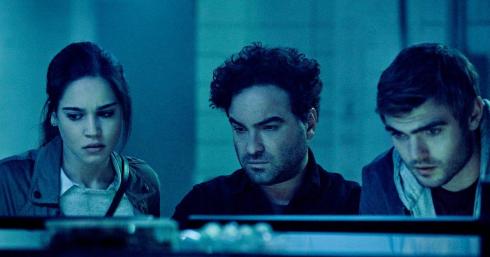
Rings—I had a little bit of hope for this unnecessary, late sequel to “The Ring,” a 2002 horror film I genuinely like. It acted like the dreadful “The Ring Two” didn’t exist; I’m hooked already. And it had a neat idea within the “story”: a college professor and his students find the cursed videotape and attempt to study it. But what’s done with it? Nada. A boring young couple watch the tape, try to find out about it, and find out stuff that…we already learned from “The Ring Two!” Well, isn’t that nice. The scares are weak, the conflict is uninteresting, and the ending—what the hell?
Friend-Request-7.jpg

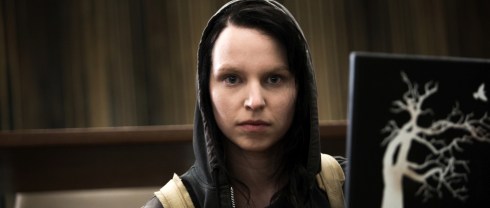
Friend Request—I like “Unfriended.” This is not “Unfriended.” This is a supernatural cyber-thriller that is so unaware of itself that its “commentary” is made superficial when our main character’s Facebook Friend count drops in between scenes. I’m not even kidding; the Friend count pops up every now and then, to show that she’s being Unfriended. Because as we all know, that’s what’s important…right?

gregg_sulkin_as_sam_fuller_in_dont_hang_up-h_2016.jpg

Don’t Hang Up—The premise sounds fun; some dumb teens delight in prank-calling people, only to end up in a deadly game of cat-and-mouse with a devious caller that wants revenge for one of their pranks. But come on—there must have been a better way to handle it than with simple “scare” techniques, seemingly-magical killer’s intuition, and some of the more boring teenage characters you can find in a boring teen horror film.

I only truly disliked those three movies. But there are three other movies that made me feel…um, indifferent.

Beauty and the Beast—If you saw my “Top 100 Favorite Movies” post, you know I truly adore the Disney animated film “Beauty and the Beast.” This live-action version just seemed pointless, and while it certainly looked good, all I kept wondering is why I didn’t just watch the animated film again.

Cult of Chucky—Well, I will say that I enjoyed this Chucky movie more than many of the previous Chucky movies. But truth be told, I don’t find Chucky that interesting anymore. He’s just kind of a bore. He likes killing and he has an attitude…OK. At least he encounters some of his more interesting previous victims.

A Ghost Story—I just didn’t get it. I know many critics are praising this film as one of the best of the year, and I admire what director David Lowery attempted to do with this untraditional “ghost story.” But it just didn’t do anything for me, except cause me to wonder, “I hope Rooney Mara truly enjoyed that pie.” But I dunno, maybe I need to see it again…

Goodbye, Christopher Robin—The story of the creation of Winnie the Pooh is an interesting one, and to be fair, this film gets some aspects right. But due to some awkward performances and an unsteady tone, “Goodbye. Christopher Robin” just didn’t grab me overall.

In Dubious Battle—I forgot I even watched this one, directed by James Franco. Thank God Franco delivered a much better film this year that made people take him seriously as a director.

Moonlight-Little_Homepage_170327_175717

As with every year-end review on Smith’s Verdict, I’m going to mention the well-received films that I missed in 2017. But before I do that, I’m going to take a look at the films I missed in 2016 that I caught up with in 2017. They are: The Edge of Seventeen, A Monster Calls, Moonlight, and Pete’s Dragon. (Unfortunately, there are still about 8 other relevant 2016 films I still need to see, including the Oscar-nominated “Fences” and “Hidden Figures.” And for the record, both Moonlight and A Monster Calls would’ve made my Top-15-of-2016 list, as would have 20th Century Women and Southside With You, which just slipped by me until way later. Oops.)

But what films did I miss in 2017 that I will see sometime soon in 2018? I’m not including The Post or Phantom Thread, as those haven’t even been released near me yet. Instead, I’ll mention Battle of the Sexes, Blade Runner 2049, Brad’s Status, Call Me By Your Name, Detroit, Downsizing, The Florida Project, Gifted, Good Time, Molly’s Game, mother!, The Shape of Water, Thor: Ragnarok, Wind River.

As I’m writing this, half of these are already available on DVD and Blu-Ray, so I’ll make sure I check them out sooner or later.

Last year, I had two TV/VOD miniseries to talk about and give mentions as special as my favorite films of the year. This year, I’m glad to say that I’ve seen 5 miniseries/series-seasons that I believe deserve mention. So, here is my list of my Top 5 Favorite TV Series of 2017!

5db16efdb30f9cd831a2484f3af36cad6cb97ee7.jpg

5. A Series of Unfortunate Events—This 8-episode Netflix series based on the first four books of Lemony Snicket’s “A Series of Unfortunate Events” children’s book series was just a ton of fun. Neil Patrick Harris made for an entertaining Count Olaf, I enjoyed watching the young actors, and I especially laughed at how much it kidded itself with its style and humor even more so than the 2004 film adaptation starring Jim Carrey.

marvel-defenders-tv-show-images.jpg

4. Marvel’s The Defenders—It’s the Netflix answer to “The Avengers!” With Daredevil, Jessica Jones, Luke Cage and Iron Fist teaming up to put a stop to something twisted, “Marvel’s The Defenders” is a sometimes messy but overall entertaining action-adventure with likable characters. I’d even say I enjoyed Iron Fist more in this series than I did his own series.
lead_960.jpg

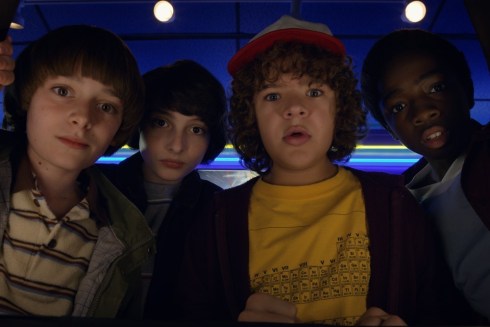
3. Stranger Things 2—One of the most anticipated entertainments of the year, and for me, it had only one disappointment: the much-berated Episode 7. It still had intriguing mystery, our favorite characters were back with some fresh, developing relationships, and once again, it had a neat callback to the ‘80s. I just hope that “Stranger Things 3” takes it easy on poor Will; he’s suffered more than enough already.

17MRM_lair_brady-1_1379_sRGB_M6.jpg

2. Mr. Mercedes—Surprise! A show that isn’t on Netflix! I caught this 10-episode-long Stephen King adaptation on The Audience Channel and it riveted me from one episode to the other. It’s based on the first of a trilogy of King’s works surrounding a detective character named Bill Hodges, brilliantly played in the series by Brendan Gleeson. We also get a nice chilling turn from Harry Treadaway as the psychotic Brady Hartsfield, who challenges Hodges to figure out the clues to his sick games. Maybe someday, I’ll write a review for this by itself, because the more I write about it, the more I look forward to the sequel series (based on the continuing King book “Finders Keepers”).

And my favorite TV season of 2017 is…

nirvannathebandtheshow_01.jpg

  1. Nirvanna the Band the Show—I already reviewed this hilarious Viceland series in detail, so you can read about my thoughts if you want to know more about it. Matt Johnson is one of my favorite filmmakers working today, and I can’t wait to see what he comes up with next. He seems to have found his niche with this and his movies, and it’s a trademark that will do him well for future projects as well.

Review: https://smithsverdict.com/2017/05/26/nirvanna-the-band-the-show-viceland-series/

And now, we come to my personal favorite films of 2017. But first, here are some honorable mentions: Guardians of the Galaxy Vol. 2, The Lego Batman Movie, Gerald’s Game, Super Dark Times, Jim & Andy: The Great Beyond, Psych: The Movie

Might As Well Mention These Too: The Devil’s Candy, Sleight, The Babysitter, Different Flowers, I Don’t Feel At Home In This World Anymore, Power Rangers, Alien: Covenant, Ridge Runners, Creep 2, Kong: Skull Island

Oh, and I Liked These Too: Okja, Jumanji: Welcome to the Jungle, To the Bone, Burning Sands, 1922, Annabelle: Creation, XX

Q0A2768cc-copy.jpg

One more mention I want to give is to a film called Big Sonia. This is a documentary about one of the last remaining Nazi Holocaust survivors, named Sonia, who goes to schools, radio stations and even prisons to tell the story of her imprisonment, her survival and the lessons it taught her in order to go through the rest of her life. It’s a heartwarming film that moved me deeply. (And because I saw it just recently, I’m not so sure where to place in the Top 20.)

And now, without any more ado, here are My Top 20 Favorite Films of 2017!

 Movies-Gallery_JusticeLeague2017_WW_59f8be1fcea248.19685240.jpg

  1. Wonder Woman—I mentioned that 2017 was a great year for mass-market entertainment, and “Wonder Woman” was definitely smarter and more amusing than I ever would have expected. I think DC finally understands that they don’t have to imitate Marvel in order to make a fun movie. They just needed to make a fun movie.

meyerowitz-stories-2

  1. The Meyerowitz Stories (New and Selected)—No one makes dysfunctional family comedy-dramas quite like Noah Baumbach, and this one, available on Netflix, is on par with his most well-known film “The Squid and the Whale.” Adam Sandler deserves Best Supporting Actor consideration for his role in this film.

Review: https://smithsverdict.com/2017/11/20/the-meyerowitz-stories-new-and-selected-2017/

wonder-cur

  1. Wonder—This movie pleasantly surprised me. I thought it would be a standard, feel-good, after-school-special type of film that preaches to kids that they should look on the inside rather than judge by appearance. “Wonder” found a way to teach that lesson very effectively, by showing what nearly all of the characters go through instead of focus on one particular child. By doing that, the message is clearer than ever: there is no “ordinary.”

Review: https://smithsverdict.com/2017/11/20/wonder-2017/

fmc_mc_Coco.jpg

  1. Coco—Not a great year for animation, but Disney/PIXAR has given us another winner the equally funny/heartfelt “Coco,” an enjoyable look at the Land of the Dead. The emotional climax of this film got me a little teary-eyed.
logan-review-759.jpg

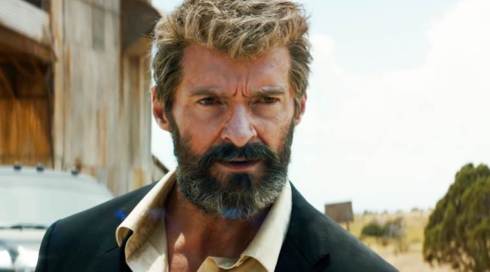
  1. Logan—The Wolverine movie I was waiting for! This gritty, nasty, R-rated journey involving Hugh Jackman as the aging Wolverine and Patrick Stewart as the ailing Xavier had me riveted from beginning to end, for its action and for its drama. This is supposedly Hugh Jackman’s final appearance as the Marvel anti-hero; I’d say it’s a great swan song.

dunkirk-teaser900.jpg

  1. Dunkirk—Seeing this brutally intense WWII film on the biggest screen with the best surround-sound was quite an unforgettable experience. Director Christopher Nolan takes a step away from analytical dialogue for once and just proves with a powerful visual storyteller he can be.

stronger-movie-trailer-jake-gyllenhaal-00.jpg

  1. Stronger—One of the most pleasant surprises of the year was David Gordon Green’s “Stronger,” a film starring Jake Gyllenhaal as a Boston Marathon Bombing victim that loses his legs and is hailed as a hero for identifying one of the bombers. The newfound fame overwhelms him, making it difficult for him to live his life. Gyllenhaal deserves Oscar consideration, as does Tatiana Maslany as his girlfriend that is hurting inside just seeing him hurt.

1504656895860_248105_cops_5.jpg

  1. Three Billboards Outside Ebbing, Missouri—A few critics are already hailing this as the best film of the year. I admire it, I like it…I don’t like it as much as they do. But I see where the praise is coming from—the comedy and drama are very well-connected (when the characters aren’t merely spouting trigger words), the conflicts are strong and heavy, the character arcs are surprisingly complex, there are no easy answers, and Frances McDormand gives one of the best performances of her career.
james-mcavoy-split-image

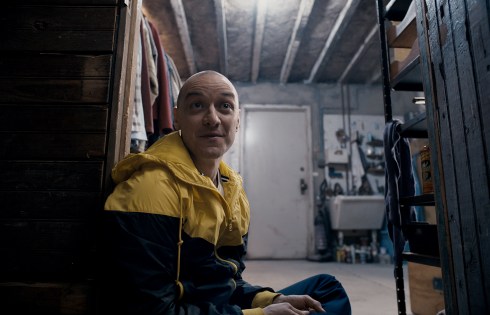
  1. Split—M. Night Shyamalan is back, baby! It’s the twist ending that kept me coming back to this film, made me look at the film in a whole new way, and made me like the film more and more with each viewing (and I’ve seen it about five times now). I’m still not going to give away the twist for those who still don’t know…but I will say I am excited to see Shyamalan’s next film. “Split” is scary, intriguing, chilling, well-made, and with a tremendous performance from James McAvoy, who sadly will be forgotten by the Academy this month.

Review: https://smithsverdict.com/2017/01/20/split-2017/

Baby-Driver-still2017313122705.jpg

  1. Baby Driver—Director Edgar Wright continues to do what he does best with “Baby Driver”: have fun with conventions, mix comedy and action together, and give us a hell of a good time. His trademarks continued with “Baby Driver,” a compelling, amusing action-adventure with a kick-ass soundtrack, a series of thrilling car chases, and probably one of the best (and most-deserved) death scenes I’ve seen in a long time.
last-flag-flying-slice-600x200.jpg

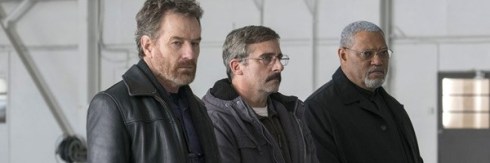
  1. Last Flag Flying—This one caught me totally off-guard. I didn’t know Richard Linklater, one of my favorite directors, even made a “spiritual sequel” to “The Last Detail,” one of my favorite films. But I saw it in a theater, and it is wonderful. It’s not a direct sequel to “The Last Detail” (though you can see similarities in characters from each film); it’s just more like a nice little road-trip with interesting people (in this case, they’re played by Bryan Cranston, Laurence Fishburne and Steve Carell as Vietnam War vets questioning the Iraq conflict in 2003 while burying Carell’s son who died in battle) talking about interesting topics. As a film on its own, it’s gripping.

bg_spiderman

  1. Spider-Man: Homecoming—While most critics consider “Logan,” “Wonder Woman,” or “Thor: Ragnarok” as the best superhero film of 2017 (see, I told you 2017 was a great year for blockbusters), I immensely enjoyed the new “Spider-Man” reboot as part of the Marvel Cinematic Universe. Tom Holland is an immensely likable Peter Parker/Spider-Man, he’s given funny quips and situations to partake in, and the film is like the Spider-Man movie I was waiting for: a superhero movie about a boy struggling to maintain a social life while thinking he can handle bigger things outside of school. And if you read my review, you also know that I think this presents a great development for Iron Man too, as he becomes mentor to a kid who would otherwise be like him.

Review: https://smithsverdict.com/2017/11/20/spider-man-homecoming-2017/

104896124-Tempt-Trailer_1.jpg

  1. Star Wars Episode VIII: The Last Jedi—Fans are hating on it, and let them hate all they want; they’re not gonna get the movie they play in their heads. Instead, they’re gonna get something that’s as challenging as it is entertaining, and I admire this film for being just that. It’s this “Star Wars” movie that reminds me of why we need “Star Wars.”

w4ZYFLJbiqZyvCcGHgvaHD6lTqQ.jpg

  1. War for the Planet of the Apes—Talk about a film I didn’t expect to like so much! As much as I admired “Dawn of the Planet of the Apes,” I was somewhat cynical about “War for the Planet of the Apes,” because I didn’t think it would go anywhere I wouldn’t see coming. But man, was I wrong. This is a great movie! It’s a powerful, emotional, gripping action-drama that denied conventions and provided plenty more substance than I would’ve ever expected. This “Planet of the Apes” prequel/reboot saved the best for last. And will somebody give Andy Serkis the Oscar recognition he deserves already?!
024a_tbs_sg_30719-h_2017

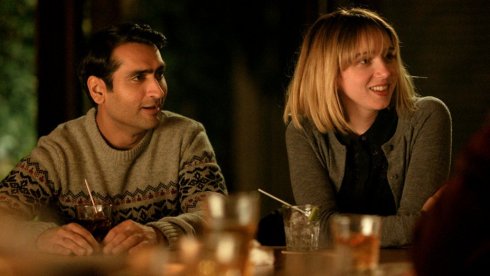
  1. The Big Sick—My favorite romantic comedy to come out in a long time. I’ve often said in this blog that something more important than a comedy that can make you laugh is a comedy that can make you feel. “The Big Sick” both made me laugh and gave the feels, and the balance of comedy and drama works perfectly. This may be a career breakthrough for Kumail Nanjiani as well.

Review: https://smithsverdict.com/2017/11/20/the-big-sick-2017/
MV5BMjQ5ODM5OGUtNzZmNi00MWVlLWFkOTctYzljYzYxY2QwYzU3XkEyXkFqcGdeQXVyNTAzMTY4MDA@._V1_

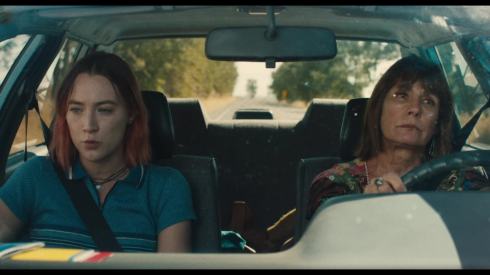
  1. Lady Bird—If I were to make a list of the Best films of 2017, Greta Gerwig’s excellent directorial debut “Lady Bird” would’ve made the #2 slot. As my favorites, I put it at #5. But my appreciation for the film still exists, as a coming-of-age comedy-drama involving a Catholic schoolgirl just going through the ups and downs of senior year while dealing with a stressful home life… You know, I tried to explain this film to a friend soon after I saw it, and it sounded nothing like the film I saw. That’s because, while the film does have certain conventional elements in it, they’re treated in a way that seems like we haven’t seen them before. And I highly applaud Gerwig for that. A great performance by lead actress Saoirse Ronan deserves Oscar recognition, as does the editing, which is the best I’ve seen in any film all year.

Review: https://smithsverdict.com/2017/11/20/lady-bird-2017/
Movie-Cast-2017-1024x549

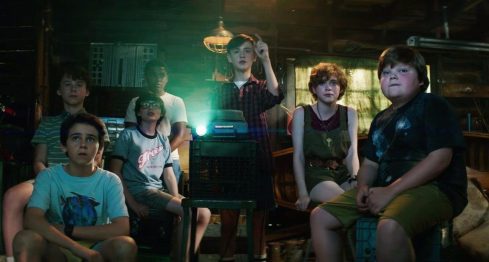
  1. It—Stephen King had a banner year for his film adaptations (“Mr. Mercedes,” “Gerald’s Game,” “1922,” the much-maligned “Dark Tower” movie), and his most successful (in terms of critics and box-office numbers) is my favorite of the year, “It.” Very rarely do the scares work as effectively as the coming-of-age aspects in the same movie. Additionally, the young actors are all excellent as a group of kids terrorized by a shapeshifting clown that knows their deepest fears. This was labeled as “Chapter One”; I can’t wait for “Chapter Two.”

Review: https://smithsverdict.com/2017/09/08/it-2017/
spielberg-hbo-documentary-duel

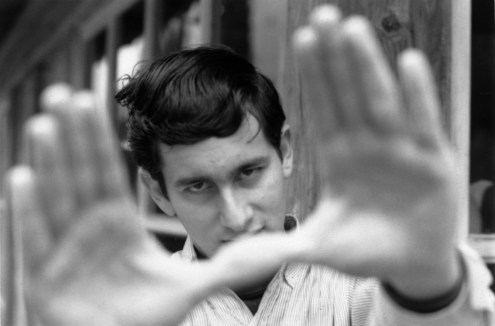
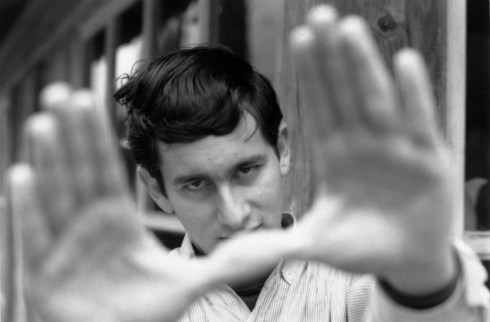
  1. Spielberg—This HBO-released documentary about the life and career of my favorite filmmaker Steven Spielberg. I learned more about this man in a two-and-a-half-hour movie than I ever expected to after being a fan of his for years. This is the second year in a row in which I included a documentary about a filmmaker in my best-of list (the other being 2016’s “De Palma”); I wonder if there will be a “Scorsese” or a “Lucas” or a “Coppola” coming in 2018…

Review: https://smithsverdict.com/2017/12/26/spielberg-2017/

DISASTER-ARTIST.jpg

  1. The Disaster Artist—One of the best movies about moviemaking I’ve ever seen, and coming from an unlikely source: the making of one of the most laughably bad movies ever made, Tommy Wiseau’s “The Room.” James Franco directs the film and stars as Wiseau in a brilliant performance that shows us an enigmatic man with feelings and passion, even if some people just don’t get what he’s thinking (actually, a lot of people don’t know what he’s thinking). I had a blast watching this passionate, hilarious and even moving portrait about an attempt to make a name in show business.

And my favorite film of 2017 is…

la-et-hc-get-out-horror-peele-20161004-snap

  1. Get Out—Most of you probably already knew this was coming, as I already included it in my “Top 100 Favorite Movies” post. I saw this in February, when it was released, and no other film came close to topping my list of 2017. I love “Get Out.” I love the mystery, I love the suspense, I love the comedy, I love the commentary, I love the drama, I love the script, I love the story, I love Jordan Peele’s direction, I love that I can learn something new each time I watch it (and I’ve watched it numerous times this year). If I thought 2016 was a great year for horror, I hadn’t seen anything yet. “Get Out” is better than every solid 2016 horror film combined (and there were some pretty great ones!). You get it already—I love “Get Out.” It’s everything I look for in suspenseful entertainment, and more. Nothing was going to come close to the experience I had watching it in a theater for the first time. And no other film made me more excited to learn more about it with subsequent viewings. And for all those reasons, “Get Out” was my favorite film of 2017 and is one of my top 100 favorite movies, period.

Review: https://smithsverdict.com/2017/02/24/get-out-2017/

Man, I love movies. I look forward to seeing what surprises come to theaters (or on Netflix) in 2018! Will there be a film I like more than “Get Out?” We shall see…

Spielberg (2017)

26 Dec

spielberg-hbo-documentary-duel.jpg

Smith’s Verdict: ****

Reviewed by Tanner Smith

Steven Spielberg is one of the most influential (and one of my personal favorite) filmmakers of all time. The impact he left on the world (and on me) with over four decades of classic films such as “Jaws,” “E.T.,” “Schindler’s List,” “Jurassic Park,” the “Indiana Jones” movies, and “Saving Private Ryan,” among many more, will never be forgotten. No other mainstream director is as successful as he is, and when he leaves this world, his legacy will be remembered for years to come. That’s why when I heard there was a two-and-a-half-hour HBO documentary about his life & career, I had to check it out, if only to see if there was something about Steven Spielberg that I didn’t know before.

And it turned out there was. For example, that scene in “Close Encounters of the Third Kind,” where Roy Neary (Richard Dreyfuss) breaks down at the dinner table and his oldest son shouts repeatedly, “Crybaby!”—it turns out that was something young Steven did as a child when his own father cried at the dinner table. It’s no secret that Steven had some father issues (and it shows in his work, with father figures being either absent or distant). His parents’ divorce had an intense effect on him, which then led to a theme in his movies. To hear him talk in an extended interview about what he went through as a child when the divorce happened, how it affected his life since then, and so forth, is something special. Even though I had some idea of how deeply it affected him, it turns out that idea was nothing like I thought.

Throughout the documentary “Spielberg,” created by documentarian Susan Lacy (of PBS’ “American Masters”), Spielberg goes into detail about various things in an extended interview (split up with clips of his films and interviews with critics, film historians, actors, colleagues and family members). He speaks honestly about personal interests, feelings and misfortunes, and opens up in a way that lets us know the man behind the camera like we never have before. The film goes on for two-and-a-half hours; I easily could’ve stayed for another hour. (Actually, I think there could be more material to make another documentary, from what was deleted from interviews of Martin Scorsese, George Lucas, Harrison Ford, Leonardo DiCaprio, among many other major talents.)

Now I’ll take a little detour here to talk about something else. In 2016, there was a terrific documentary about director Brian De Palma’s career (titled “De Palma”). One of the highlights of that film was the old home-movie footage showing evidence of De Palma’s friendship with Spielberg (and De Palma is interviewed in “Spielberg” too); it made me wish I could see more of that. Well, in “Spielberg,” I get my wish, with even more home-movie footage of young 1970s versions of Spielberg, Scorsese, Lucas, Coppola and De Palma hanging out and shooting pool together, as they were members of the “New Hollywood club”—young filmmakers that exploded with big hits at the box-office and often consulted with one another as colleagues and as close friends. (Spielberg and De Palma’s advice/criticisms of Lucas’ “Star Wars” are priceless.) I would love to see a whole documentary about the friendship these guys had back in the day.

But back to “Spielberg.” It’s just wonderful to hear Spielberg talk about what brought him to the movies (“Lawrence of Arabia” was the one that influenced him the most), what themes he continued in his works (personal fear, family deterioration/reunification, fight for freedom & justice), and how they reflect on his own life (he even states at one point that his movies are like his therapy). I doubt I could ever watch a Spielberg film the same way again.

The documentary goes the extra mile by giving us something even more special: interviews with Spielberg’s mother Leah Adler (who died before the film’s release, at age 97) and father Arnold Spielberg. Steven had spent years resenting his father for ending the marriage between him and his mother (Arnold even told Steven and his three sisters that it was he that ended things with Leah) and has used the theme of the absent/distant father again and again in his movies. And it’s here that we find that the healing process has already begun, as we are treated to Arnold’s interview in which he, at age 100, talks about how he himself was affected. This story of the Spielberg family could make for its own Spielberg movie by itself.

There’s plenty more treats in “Spielberg” to admire, such as how Spielberg treated the child actors in “E.T.,” how he got the job at Universal Studios in his early 20s, how he came to grips with his own Judaism (and how the creation of “Schindler’s List” helped him even more), reacted to his failures (“1941”) and embarrassments (omitting certain parts of the source material for “The Color Purple”), the times he traumatized his younger sisters as children, and his marriage/divorce with Amy Irving, which is sad, considering his own experience with divorce (and now having put his firstborn son Max through the same experience he went through as a child). With “Spielberg,” we’re given numerous insights into the director’s life & career, how the artist’s life is reflected onto his work. Getting an understanding of Spielberg’s craft is not merely one of many reasons I give “Spielberg” my highest rating; it’s the most important one.

Lady Bird (2017)

20 Nov

MV5BMjQ5ODM5OGUtNzZmNi00MWVlLWFkOTctYzljYzYxY2QwYzU3XkEyXkFqcGdeQXVyNTAzMTY4MDA@._V1_.jpg

Smith’s Verdict: ****

Reviewed by Tanner Smith

How in the world am I going to describe “Lady Bird” in a way that makes it sound even a little like the film I saw and admired?

Well, I can try… let’s see… “Lady Bird” is an independent film about a rebellious Catholic schoolgirl going through her senior year. As she looks for colleges far away from home, she goes in and out of relationships with her peers, struggles with her mother who is hard on her, and has experiences that readies her for the roughest experience of all: life.

See? The way I described it makes it sound dissimilar to the same film I want to write about, which is about all of those things. But they’re handled in a way that makes it feel fresh and original, like a coming-of-age film unlike any other I’ve seen before. Even the depressing, similarly-unusual “Welcome to the Dollhouse” is nothing like this film.

“Lady Bird” is the directorial debut of Greta Gerwig, who also wrote the film and has established herself as a fresh female voice in independent film while collaborating with Noah Baumbach for films such as “Frances Ha” and “Mistress America” (both of which she shares a writing credit). She is able to pull off everything in “Lady Bird” in such a way that while we’ve seen elements of the story before, what she does with them feels totally new. It’s an independent film that doesn’t fall into the typical indie traps. It’s not self-assured in how bright it is. It’s not talking down to us with its many insights. And it can be harsh while not being terribly so and funny while also being moving. Gerwig knows what she’s doing here, and you wouldn’t guess this was her first time directing.

The film is semi-autobiographical, set in the early 2000s and inspired by Gerwig’s experiences in growing up in Sacramento, California. The always-wonderful actress Saoirse Ronan portrays the young-Gerwig counterpart, Christine McPherson, who prefers to be labeled “Lady Bird” because she hates her given name and prefers a name that’s deeper. She hates life in Sacramento and wants to go somewhere less boring, and so she tries applying for colleges “out East,” even though no one, not even the guidance counselor and especially not her mother (Laurie Metcalf), sees that actually happening, as she’s not the best student.

Lady Bird has one friend, Julie (Beanie Feldstein), with whom she shares a true bond, as both of them are on the lower end of the high-school spectrum (but not the lowest end). And she has a neverending feud with her mother, who is having a hard-enough time working double-shifts as a nurse without dealing with her difficult daughter. Her father (Tracy Letts) shows more care and affection towards her, but he’s going through a tough time of his own, having lost his job, battling depression, trying to keep the family financially stable, and even applying for the same new job as his adopted son Miguel. She thinks things are going to get easier and gentler when she meets Danny (Lucas Hedges), a cute, “perfect” boy who becomes her boyfriend. But even that sweetness doesn’t last long. Then, Lady Bird finds herself breaking away from Julie, falling in with mean-girl Jenna (Odeya Rush), finding a new boyfriend, having her first sexual encounter, discovering harsh truths about herself and those around her, and finding herself on the very edge of adulthood.

I tried, but I don’t think I fully related how unique “Lady Bird” is with that basic plot, even though it sounds similar to other movies (movies like “The Edge of Seventeen,” which came out last year, come to mind when I try and describe what happens in “Lady Bird”).

I admire the editing of “Lady Bird.” It’s tightly edited at 90 minutes, despite so much happening in this year of the life of this 17-year-old girl. That’s because Gerwig knows not to give us filler. If a scene is straying for too long, it cuts immediately to the next scene. If there’s a misunderstanding occurring, we suddenly cut away to later, when the misunderstanding is being discussed realistically instead of awkwardly drawn out. When there’s a betrayal, it immediately cuts to quiet contemplation of said-betrayal before the tears come up. Then it’s on to the next situation. This is how it is throughout the entire film, and I greatly appreciated the trimming of the fat.

What helps is that every situation is handled just right, with Gerwig’s screenplay being smart enough to know what’s realistic, what’s memorable, and what’s just right for the material. Whether it’s the comedy (such as when Lady Bird and Julie are discussing masturbation while eating communion wafers), the drama (such as the brutal confrontations between daughter and mother), or the quiet, sweeter moments (such as when Lady Bird and Danny are looking at the stars and even naming one of them to call their own), all of it is as brilliant as it is straightforward.

I loved Ronan’s work in this film. She plays a character that feels so real you could reach out and touch her. And it also helps that she’s written well, to the point where I could practically see Gerwig coming out through her. But I can’t neglect to say how I loved the supporting cast, which is across-the-board terrific. Laurie Metcalf, Tracy Letts, Lucas Hedges, Beanie Feldstein, even the smaller roles such as Stephen Henderson who gets a laugh with almost every scene he’s in as a drama teacher (who gets a little too into the dramatic exercises at one point)—they’re all worthy of their own movie.

Many details of “Lady Bird” may seem familiar at first glance, but look closer when you see the film and you’ll see the power in said-details. We see this girl grow up, and even at times when she’s a little too rough, she’s still empathetic. And by the end of the film, she still has some growing up to do. The only difference is she comes to realize that. And with that said, not only do I want Gerwig to make another film (hell, another 10 films, she’s that good), but I also want a sequel to “Lady Bird.” I want to see where Lady Bird and the other characters end up.

Spider-Man: Homecoming (2017)

20 Nov

bg_spiderman.png

Smith’s Verdict: ***1/2

Reviewed by Tanner Smith

Before I review the latest movie about Spider-Man, I want to talk about a certain side element to it that really surprised and impressed me: Iron Man.

As you know, “Spider-Man: Homecoming” is part of the Marvel Cinematic Universe and a sequel to “Captain America: Civil War.” (Though, that was a sequel to “Captain America: The Winter Soldier”…which was a sequel to—you know what, forget it, most of you know the MCU’s continuity by now; I only meant “Civil War” was the introduction to Spider-Man.) If you recall, in that movie, Tony Stark aka Iron Man (Robert Downey Jr.) recruited a high-school boy, Peter Parker (Tom Holland), to assist in an emergency Avengers situation because the kid is secretly Spider-Man, a masked vigilante that is super-strong and has spider-like reflexes. In “Spider-Man: Homecoming,” Peter is excited for possible new opportunities to prove himself as an up-and-coming Avenger. But being a kid with huge ambitions, which only grow the longer he waits for a call back into action with the Avengers, can lead to him going in over his head on an ego trip. So who has to be his mentor and set him straight?

That’s right—Tony Stark. Why am I impressed by this? Because between “Iron Man” and “Civil War,” Stark has proved himself to be irresponsible, egotistical, unlikable, and even straight-up dumb in his decisions (telling a terrorist where he lives with no back-up plan, creating a device that could doom humanity while thinking it could save it, etc.). In “Civil War,” he felt the weight of what his deeds led to and wanted to assume responsibility for them. And he still makes mistakes and doesn’t always think straight, but you can tell he’s trying to be better—after all, the reason he became Iron Man in the first place was to do good! And now that this kid is reminding him of himself, he has an opportunity to teach him to be better. He even warns Peter at one crucial point, “Don’t do anything I would do.” This is a great development for Iron Man; one I’ve been waiting a long time for.

Oh right, I have a Spider-Man movie to review, don’t I? Don’t misunderstand; the Iron Man element is not the biggest thing to take away from it. It’s just a welcome addition to the MCU, a neat continuation of a sideplot in “Civil War,” and all-around awesome for a would-be Avenger getting advice from Iron Man! (Among Iron Man’s advice to Spider-Man, yet again bringing down Peter’s expectations to be an Avenger: “Couldn’t you just be a friendly, neighborhood Spider-Man?” Ouch.)

Now let’s talk about “Spider-Man: Homecoming.” As I said, in “Civil War,” 16-year-old Peter Parker was discovered by Tony Stark and brought on board as Spider-Man to assist in a fight between squabbling Avengers. (And this is recapped in a wonderful video-diary montage, with footage recorded by Peter, chronicling what we didn’t see leading up to the fight, his point of view of the fight, and what happened after the fight. I’m not gonna lie—if I was in that situation, I would document it too.) Since then, he can’t help but wonder when will be the next time he’ll get a call to fly around with Iron Man and hang out with Captain America and so on. Time goes on, and he’s stuck just performing good deeds around his neighborhood. But how much can he do and how long can he wait before he’s called to leave the city and save the universe? Well, he can try to balance out his ambitions and his classwork for a start, which is even harder than it sounds.

We get as much of Peter Parker’s high-school comedy/drama that we do of Spider-Man’s neighborhood crusades. So while Spidey is thwarting criminal deeds downtown and uncovering a sinister plot to use alien technology (left over from fragments of the infamous battle in “The Avengers”), Peter is preparing for the Academic Decathlon, letting his best friend Ned (Jacob Batalon) in on his secret, and working up the guts to ask his crush Liz (Laura Harrier) out to the Homecoming Dance. It sounds like a lot to juggle for a mainstream superhero film, but director Jon Watts (who also made the terrific “Cop Car”) and his team of screenwriters manage to intertwine the storylines well enough that we can believe Peter’s struggles in trying to maintain both identities as high-schooler Peter Parker and “your friendly neighborhood Spider-Man.”

And it’s also funny too. Peter and Ned have great chemistry and are a goofy duo to laugh at and with. Spider-Man has winning quips due to Peter’s chippy personality. And there’s also humor in how Spider-Man is in over his head—at one point, he catches a guy trying to break into his own car (oops).

“Spider-Man: Homecoming” also deserves credit for giving us a compelling, complicated, NOT-forgettable antagonist (thank God, I thought Loki was the best the MCU could offer). This is The Vulture (Michael Keaton), a criminal mastermind with a bone to pick with the government after his working-class duties were taken over, leading to him wanting to exact revenge. And thanks to leftover bits of alien tech (and some little gizmos from Avengers Headquarters as well), he’s able to create some deadly weapons and even a suit that allows him to fly, hence the name The Vulture. Spider-Man catches wind of some of these strange devices and meets The Vulture face-to-face, leading to him going on a desperate raid that’s more of a job for The Avengers to handle. It’s actually more complicated than what I just described, but to say any more would be spoiling certain details. But Michael Keaton is great in the role, charming and sinister when the occasion calls for either.

Overall, “Spider-Man: Homecoming” is more of a coming-of-age story, as it starts with Spider-Boy wanting to become Spider-Man. He may call himself Spider-Man already, but he’s still a kid with much growing up to do; something Iron Man tries to teach him. He has his abilities, but he also has impatience, doubt, awkwardness, and overwhelming desire, all of which he has to overcome in order to be the man he’s meant to be. This is something that I think is handled better in this version of “Spider-Man” than the other cinematic versions of the superhero. And Tom Holland does an excellent job at portraying the character going through all these changes—I enjoyed his likable performance in “Civil War,” and here, he’s even better.

Sony is back to teaming up with Marvel to gain co-possession of the Spider-Man character, and that makes me very nervous because of how quickly they’ve given up after major blunders such as “Spider-Man 3” and “The Amazing Spider-Man 2.” (I hope they have enough sense not to quit and reboot the film franchise yet again.) But “Spider-Man: Homecoming” is a very enjoyable movie. It works as a continuation of the MCU, it works as a Spider-Man movie, and overall, it works as a coming-of-age film, with just the right man to mentor the boy.

The Big Sick (2017)

20 Nov

024a_tbs_sg_30719-h_2017.jpg

Smith’s Verdict: ****

Reviewed by Tanner Smith

What’s more challenging than a comedy that can truly make you laugh? A comedy that can truly make you feel.

(That wasn’t a joke…unless you consider comedies that try for drama and fail or dramas that become unintentional comedies.)

And for me, there are but a handful of comedies that make me equally laugh and feel—“City Lights,” “Planes, Trains & Automobiles,” “50/50,” “The 40-Year-Old Virgin,” among a few others. Thankfully, I feel the need to make room in that hand for “The Big Sick,” a romantic comedy with good laughs, winning characters, and moments of drama that make us want everything to turn out alright for them.

“The Big Sick” is semi-autobiographical, and I’ll get to that after I describe the basic plot. Comedian Kumail Nanjiani stars as himself as a young, Pakistani, aspiring stand-up comic who wants to live the American Dream while his parents (Anupam Kher and Zenobia Shroff) are more traditional in their Pakistani culture. They’re fine with him doing stand-up comedy and not being a lawyer or a doctor, and all they ask is that he marry a Pakistani Muslim woman. Every time Kumail comes over for dinner, there’s always a young, single Pakistani-American woman who just “happens to be in the neighborhood” and comes in to join, invited by Kumail’s parents as a way of pressuring him to marry. (As Kumail explains, “In Pakistan, arranged marriage is just marriage.”) During one of his gigs, a pretty, young white woman named Emily (Zoe Kazan) heckles him (well, actually, she just yells “whoo-hoo!” but as Kumail explains, any sort of audience reaction other than laughter is considered “heckling” because it can throw a comic off his game). After the show, he chats her up, and this starts a complicated love affair.

Kumail and Emily get along lovely, but before long, Emily realizes how complicated Kumail’s deal is. He won’t take her to meet his parents, who would disapprove of this interracial relationship. This causes them to break up, and this is when things get even worse. Emily falls ill shortly after the breakup, and Kumail is there to sign for her to be put into a medically induced coma in the hospital so that doctors can find out what’s wrong with her. To make matters more awkward, Emily’s parents, Beth (Holly Hunter) and Terry (Ray Romano), are in town to be there when Emily wakes up…and while they wait with Kumail, who hasn’t met them before, they already know he ended things with her and that he’s kind of a jerk. Awkward levels rising! But the situation allows the three of them to bond as Kumail realizes how much he does care for Emily and how difficult it’s going to be to make his own parents understand what he wants.

And so here we have a “romcom” that’s beyond your regular “romcom,” as the girl is unconscious for most of the movie and the boy hopes she comes out of this alright so he can admit his true feelings for her. That Kumail and Emily are so cute together for the first half-hour or so of the film makes us want them to stay together, even when the truth about Kumail’s insecurities and family are revealed, leading to the breakup (which then leads to the coma—bad timing). It’s also important that we feel the growth and change within Kumail as his world comes crashing down on him in this confusing time in his life, and he just has to admit to himself and his parents about his feelings, even if it means the possibility of being disowned.

But the most interesting part about “The Big Sick” is its inspiration. The film is based on a true story that actually happened to the film’s two screenwriters, who turn out to be Kumail Nanjiani and the real-life Emily (Emily V. Gordon), who went through this unusual courtship 10 years ago and are now married.

Yeah, I know—spoiler alert, I guess; Emily turns out OK and she and Kumail live happily ever after. And they ended up writing one of the best romantic comedies I’ve seen in a long time.

Everything about the film works. The romance is fun to watch, as Kumail and Emily deliver great chemistry with witty, cutesy banter (and one very funny moment involving Emily trying to sneak out at night for reasons I’ll leave you to discover). The scenes with Kumail and his family at dinner are convincing and effective, with light comedy (such as Kumail’s mother acting surprised by every new visitor/potential-bride) and some quiet pathos. The scenes with Kumail and his stand-up colleagues (both talented and untalented) on and off stage are very funny and true, with convincing dialogue that establishes Kumail’s American ambitions. The stuff involving Kumail and Emily’s parents waiting worriedly while finding common ground with each other is very well-done. The film makes me feel and laugh. It does exactly what “50/50” did just as well as that one did, which is take real, complicated, difficult issues, show them for what they are, find the humor that can be found wherever it is, bring the convincing amount of levity, and there you have the makings of a sleeper hit. When the characters feel real and you understand what they’re going through, you’ll stay with them, feel with them, and laugh with them.

But the film is a comedy, and the Judd Apatow producer credit makes note of that, and the laughs aren’t forced; they just come naturally so that you’re not confused by what kind of movie you’re watching when it comes to the more serious moments. My favorite funny moment is when Emily’s parents come to see Kumail do his stand-up, and Beth has the perfect reaction to a heckler who shouts a racist remark. (That’s all I’ll say about that, but let’s just say Holly Hunter shines in that moment.)

I’m not too familiar with Kumail Nanjiani’s work as an actor, so I’m not sure of the limits of his range. But seeing him play a fictional version of himself, he does a solid job. He’s likable, a bit narcissistic, and believable, making for a lead we can root for. And he’s acting as himself based on a true-life experience involving him, so of course he’s going to put his all into it.

Ever since her brilliant work in 2012’s “Ruby Sparks,” one of my favorite romance films, I can’t help but admire Zoe Kazan in everything she’s done since. And as Emily, she’s wonderful. She lights up the screen with her presence, and even when she’s in a coma for much of the movie, I don’t feel that she’s entirely left us.

Anumpam Kher and Zenobia Shroff are both terrific in their roles, trying to make their roles more than one-dimensional strict parents and show how upset they can be because of their love for their son mixed with their own traditions. Holly Hunter is great as Emily’s feisty, tough mother, while Ray Romano, as Emily’s pushover father, shows dimensions I never would’ve expected.

There is just so much for me to admire about “The Big Sick” that I embrace it wholeheartedly. And I almost forgot to mention the director, Michael Showalter, which might be forgiven seeing as how the script might be the thing that truly makes the movie. But Showalter deserves credit for bringing the vision to life. In fact, everyone deserves credit for how well this film turned out. The director. The writers. The cast. Apatow. The whole crew. And it’s one of the best films of the year.

The Meyerowitz Stories (New and Selected) (2017)

20 Nov

meyerowitz-stories-2.jpg

Smith’s Verdict: ***1/2

Reviewed by Tanner Smith

In my review of Noah Baumbach’s “Margot at the Wedding,” I praised the film but I concluded by saying “I’m just glad I’m not Margot’s son.” I can say something similar about the Meyerowitzes in this review of Baumbach’s latest film “The Meyerowitz Stories,” subtitled “New and Selected”—something like, “I’m just glad these guys aren’t my problem.”

But my review of “The Meyerowitz Stories” is still positive. I don’t know how Baumbach is able to find the craft out of creating stories with such shallow, neurotic, sometimes despicable people, such as with “The Squid and the Whale,” “Greenberg,” and of course “Margot at the Wedding,” but I was getting used to his more simple, (mostly) gentler approaches with “Frances Ha,” “While We’re Young,” and “Mistress America.” But here he is back to form with the Netflix comedy-drama “The Meyerowitz Stories,” a film that takes the “fun” out of “dysfunctional family.”

Showing in a chronological series of vignettes featuring the same set of characters (hence, the titular “stories”), we have the Meyerowitzes, a family now in instability (actually, I think they’ve always been in instability). Retired-sculptor-turned-art-professor Harold Meyerowitz (Dustin Hoffman) and his fourth wife Maureen (Emma Thompson) want to sell the old New York apartment and move upstate. This is news to Harold’s oldest son Danny (Adam Sandler), who had hoped to crash at the apartment for a while after his 18-year-old daughter Eliza (Grace Van Patten) goes off to college. He’s recently divorced and his stay-at-home-dad status is changing, and to add more salt in the wound that can only be described as “underachieving dissatisfaction,” he’s a failed musician too. Danny and his clinically-depressed sister Jean (Elizabeth Marvel), who is even more pathetic than Danny in ways that are at the same time explained and unexplained as the film continues, were often in the shadow of their half-brother Matthew (Ben Stiller), Harold’s son from his second marriage. Matthew is the one with all the accomplishments, having gone into finance in LA rather than art in NY. That was probably a good move, because Harold and Danny often complain about their failures in art. Harold particularly, when he’s not boasting about Matthew’s successes, is not afraid to let everyone know about his own self-pity, going on about how he felt his sculptures deserved a wider audience.

Needless to say, these people need some serious help. Harold is an obsessive boor who lets out his arrogance on his family, Danny is pathetically seeking his affection, Matthew seems fine but has his own demons as well, and Jean, well…no comment. We gradually find out more about these people with each passing vignette (all of which are labeled by the character we switch focus to), and it’s mostly done with dialogue. And this is where Baumbach’s skill really shines: as an expert wordsmith who creates biting dialogue out of every uncomfortable situation he can find for his unstable characters. Sometimes it’s sharp and funny, sometimes it’s dark and deep, and mostly, it’s both, showing us there’s more beneath the surface. And he’s also effective in showing the dynamics of this family, particularly in the envy one member feels for another (from another generation) and how the oldest son is slowly but surely becoming like his father, whether he likes it or shouldn’t like it.

By the end of the film, we don’t know where these people are going, but we hope they’re going somewhere far better (and healthier) than they’ve been before.

But “The Meyerowitz Stories” isn’t so serious that you can’t get a laugh, because sometimes, the film is very funny. Dialogue aside, Baumbach finds ways to bitingly satirize both the modern-art and film-school scenes, with Harold’s lackluster art and Eliza’s amateur film projects that are so outrageous that I won’t even explain them in this review; they’re really funny.

Nearly every review is surprised by Adam Sandler’s excellent dramatic turn as Danny in this film, and while they’re not wrong, I never doubted Sandler’s skilled work as an actor…especially since he’s been able to show that in more than a few movies in between his Happy Madison productions. But whatever—Sandler’s great here, doing what he does best as an actor. Dustin Hoffman isn’t afraid to show just how insufferable Harold can be, as well as how feared and respected he can be. Ben Stiller, in his third Baumbach film, is solid as usual. Elizabeth Marvel is impressively messy. And young actress Grace Van Patten brings a new spark and much-needed energy to the proceedings.

I can enjoy “Margot at the Wedding” while thanking God that I don’t have to deal with miserable, excruciating Margot in real life, because the misery and humor made for tender insights and snappy comedy. And I can say the same thing about “The Meyerowitz Stories” and the Meyerowitzes. Baumbach’s material can be a little alienating in some of his films (which is probably why I’ve preferred his Greta Gerwig collaborations a little more), but I can’t deny the power he can deliver when treading through uncomfortable waters. “The Meyerowitz Stories” is effective without having us hate the characters too much.

Wonder (2017)

20 Nov

wonder-cur.png

Smith’s Verdict: ***1/2

Reviewed by Tanner Smith

When I saw “Wonder,” a film featuring a boy with a facial deformity, it was in a theater packed with parents and children. Seated in the row behind me were a mother and her children, who were probably around 7 or 8 years of age. The film had barely started when I overheard the children whisper loudly and repeatedly to their mother, “I don’t want to see what he looks like!” They were referring to the boy with the facial deformity whose face hadn’t been revealed yet. (I’m guessing they didn’t see any promos for the film…?)

Those kids are the exact group of children that need to see “Wonder.”

Stephen Chbosky’s “Wonder,” based on the novel of the same name by R.J. Palacio, does feature a troubled but brave 10-year-old boy with a genetic facial deformity as he attempts to tough it out in public school after being homeschooled for so many years. And some readers have probably stopped right there, because they think they know what kind of film this is—a manipulative, cloying melodrama that uses a physical handicap for exploitation and forced sentiment. But they’d be wrong, because not only is “Wonder” full of familiar elements now done fresh and original, but it also does something else very important that elevates it from the afterschool special that it could’ve been: it shows all that the boy affects around him. That makes the overall lesson we’re supposed to take from the film (that nobody is “ordinary”) all the more stronger. Everyone has their own issues, no matter what their physical differences.

August “Auggie” Pullman (Jacob Tremblay) has undergone 17 operations in his 10 years of life, and his face still alarms everyone around him. His mother (Julia Roberts) decides it’s finally time for him to attend public school, while his father (Owen Wilson) isn’t so sure. They both love their son and want what’s best for him—he’s afraid the other kids will mock or be feared by him; she feels he has to adjust to the outside world more regularly; they’re both understandable in their reasoning. Nonetheless, Auggie begins the fifth grade and is given the looks and the mocking by his fellow classmates, until he slowly but surely starts to adjust and make friends.

Typical, yes. But “Wonder” switches focus from time to time, giving us insight into other characters. We see what goes through the mind of Auggie’s older sister Via (Izabela Vidovic), as she wishes just once that her parents would ask about her day. She loves her brother but silently resents the spotlight that’s always been given to him. And their parents are loving and trying their hardest to be there for both of them; they just don’t always notice when their daughter needs them.

And then we wonder (forgive the pun) about Via’s former best friend Miranda (Danielle Rose Russell), who neglects her after a summer away. We see why there’s this change in her, and suddenly we’re feeling for her.

And then there’s Auggie’s friend at school, Jack Will (Noah Jupe). When something unexpected comes up, we see his point of view and feel for him too.

All of these detours help make “Wonder” even stronger when we realize the full story surrounding Auggie, who at one point has to be reminded that not everything is about him and everyone else is going through hard stuff as well. It’s more than welcome to see the perspectives of those surrounding Auggie as well as Auggie. It’s a very effective way of presenting to the audience that no one person is just “ordinary.”

Appealing characters is only aided by solid acting, and the cast as a whole is terrific. Little Jacob Tremblay continues his string of winning performances, showing that his breakthrough role in 2015’s “Room” was no fluke. And once you see past the odd disfigurement (done with convincing makeup work), you see the genuine sweetness within this character. Julia Roberts delivers her best work in years, playing a genuinely sweet (and thankfully knowing, unlike most naïve parental characters in movies of this sort) mother who tries to be there for both her children. Owen Wilson plays an endearing dad. Other adult actors such as Daveed Diggs as a teacher and Mandy Patinkin as the principal are solid. And all the other young actors, particularly Izabela Vidovic, are very impressive.

My only problems with the film come near the final half. The big final moment is handled well, with of course a big speech and a standing ovation (it earns it), but a couple moments leading up to it feel forced. One involves a meeting between the principal and a bully’s parents (painful), and the other involves a fight followed by a silent moment on a beach (overly whimsical). Also, there are a few lines of dialogue that spell out all the lessons we’re supposed to take from the film, way before the final speech already does it well enough and we get the point by then. “Don’t blend in when you’re made to stand out.” “Between what’s right and what’s kind, do what’s kind.” And a couple more I noticed.

But overall, “Wonder” works “wonders.” (Forgive that pun also—or use it as an article headline.) By the time it ends, you feel that Auggie is going through a positive change in his life and will continue with it through junior high, high school, college, and ultimately adulthood. And you also feel that his friends and his family are going through the same change. Maybe the film will be powerful enough to teach it to the aforementioned children in the audience who saw it along with me.

It (2017)

8 Sep

Movie-Cast-2017-1024x549

Smith’s Verdict: ****

Reviewed by Tanner Smith

It can be anything. It can be the very thing you fear most. It sleeps for years and then resurfaces to feed on children. It feeds on their fears. In order to do that, it becomes what they’re afraid of. It can be anywhere. It knows what scares you. It uses that to get to you. That is what makes It one of the most terrifying abstract figures in literature.

Best known as its favorite and primary form as Pennywise the Dancing Clown, It comes from the 1986 1000+-page novel by Stephen King, titled “It.” In the novel, it’s a mysterious, frightening entity that can’t be explained (well, technically, it is kind of explained in King’s “Dark Tower” series) and can be vanquished by its would-be victims by one thing: overcoming fear. The lesson here is, in conquering fear, you gain power, which is something the characters learn in King’s novel, the 1990 two-part TV miniseries, and now this 2017 cinematic upgrade, all of which are titled “It.”

However, until you get to that point, there’s a whole lot going bump in the night…

The basic idea of all three platforms of “It” is something that’s fascinated me since I first watched the miniseries at age 10: fears coming to life, terrorizing children and only being defeated by facing them head-on. The miniseries doesn’t entirely work, but there are elements from King’s original novel that still do, and I wondered what could be done with a current theatrical reboot. And how did this 2017 upgrade turn out, directed by “Mama” director Andy Muschietti?

Well, if you saw the Verdict above, you’re not surprised when I say “It” is a blast!

After spending a half-decade in development hell, it’s nice to see that the final product of “It” is very well-made and effective at capturing the essence of the book while also becoming more or less its own thing. The novel and the miniseries told two stories—one involved a group of seven outcast children facing off against It, the other involved those same kids grown up and facing It again upon its return. This film only tells one: the kids’ story. That’s right—this is only “Chapter One,” and it makes way for a “Chapter Two,” in which 27 years later (or in our movie world, 2 or 3 years), both It and our heroes (grown up) will return.

(I would issue a SPOILER ALERT, but who doesn’t know by now that this is part of a two-story…story?)

Thankfully, this “Chapter One” of “It” doesn’t feel like it needs a “Chapter Two.” “It” has the power to stand on its own feet with just enough buildup and payoff to the stories of these characters and does not necessarily rely on a future installment to answer important questions. It’s a strong narrative that satisfies, intrigues, and yes, frightens.

Our protagonists are a group of 11-12-year-old outcasts that form together because they’re bullied, they come from unhappy homes, and their friendship is the best thing they can ask for in an otherwise boring summer. They call themselves The Losers Club and are constantly harassed by adults who don’t understand them and a sadistic bully and his cohorts. They also have each seen It in many different forms (followed by the clown form)—for stuttering Bill (Jaeden Lieberher), it’s his little brother Georgie, who is missing and presumed dead despite Bill’s persistent search for him; for hypochondriac Eddie (Jack Dylan Grazer), it’s a leper; for Jewish Stanley (Wyatt Oleff), it’s a horrifying painting in his rabbi father’s office; for home-schooled and lone black kid Mike (Chosen Jacobs), it’s his parents being burned alive; for the club’s lone girl Beverly (Sophia Lillis), it’s her demented father and possibly menstruation (…you’ll see in the movie); for overweight new kid Ben (Jeremy Ray Taylor), it’s the morbid history of his new town (of Derry, Maine); and for cut-up Richie (Finn Wolfhard), it’s…clowns. (Tough break there, Richie.) They come to each other about their own experiences with Pennywise (Bill Skarsgard) and learn more about It. Bill, desperate to get his brother back in the hopes that he’s still alive, rallies his friends together to fight back.

The main strengths of “It” come from the development of these young characters, what they go through in this town, and what they’re most afraid of that they must overcome in order to survive. At 2 hours and 10 minutes, “It” takes the proper time necessary to flesh out all seven of these kids and give the audience a good sense of who they are, what they’ve gone through, and what kind of people they’ll become. When they’re together, it’s gripping material (it’s, I dare even say, of of “Stand By Me” quality, to quote another King adaptation). All of these young actors are excellent and easily watchable, and you really buy them as friends. When they’re alone, it’s unnerving—whenever each of these characters goes through something unsettling, you fear for them because they are terrified. From the opening scene, which pulls a big no-no in modern horror movies (disposing of a young child), you know this thing is powerful, terrifying, and out there. And it’s targeting these poor kids, who have enough to go through already.

Those scenes put a chill down my spine, but that’s not to say Pennywise the Clown isn’t scary. On the contrary. Portrayed by Skarsgard in a nice mixture of performance and CGI, Pennywise is not to be ignored in this film. You don’t see as much of him as you would expect from the trailer, but when he does show up, I’ll just say it’s pretty unnerving. Skarsgard doesn’t imitate Tim Curry’s popular portrayal of the character from the miniseries; instead, he makes the role his own.

I admired “It” for taking the time to carefully establish the horrors faced by the characters instead of simply making it a freak show with a demented killer clown at the center. While there is some gore and some jump-scares, this is a horror film that relies heavily on tension and psychological terror. By the time the film reached its inevitable hard-hitting horror-movie traditional climax, it’s hard not to root for the kids to succeed in both conquering their fears and beating It as harshly as possible. (You could practically call the film a “superhero movie” in how it goes about its final act.) “It” stays true to the essence of King’s scary novel (while making some notable changes and omitting certain questionable aspects from the novel), and it’s a great thrill ride as a result.

Super Dark Times (2017)

30 May

tumblr_o0ngblW4Rb1rwvbbio1_1280-1024x409

Smith’s Verdict: ***1/2

Reviewed by Tanner Smith

I remember growing up in the country and hanging out at a friend’s house in the middle of nowhere. When there were no parents around, he would play with some weapons in the house—act like we were soldiers/warriors or something like that. Other friends would often be there and get involved too. Nothing bad ever happened and we felt we were being careful. But when I saw Kevin Phillips’ “Super Dark Times” at this year’s annual Fantastic Cinema & Craft Beer Festival, it made me look back on those memories and consider myself (and my old friends) lucky that we didn’t get hurt doing some really stupid things.

“Super Dark Times” is a coming-of-age psychological drama about the aftermath of a deadly incident between a few high-school teens. It’s a film that reminded me a lot of “Mean Creek,” an independent film from 13 years ago about how actions & consequences can have a lasting impact on young people. Both films are effective in reminding their audiences how dangerous and scary teenage life can be.

Set in the mid-1990s, “Super Dark Times” centers on best friends Zach (Owen Campbell) and Josh (Charlie Tahan); ordinary teens who engage in typical teen conversation, perform gross-out dares, and hang out with others who aren’t exactly their “buddies” but need other people to pass the time with. Two of them are a younger boy, Charlie (Sawyer Barth), and an obnoxious peer, Daryl (Max Talisman). The four find Josh’s older brother’s samurai sword and take it out to the woods to slice some milk cartons. But when Daryl’s harsh attitude leads to a confrontation, an accidental result of panic becomes fatal. Panicked even further, Zach, Josh, and Charlie feel they have no choice but to hide Daryl’s body and cover everything up.

Covering up the accident is easier said than done. While Charlie is relatively quiet about everything, Zach and Josh act differently from then on. Josh is having strange urges, mouthing off in class, and taking more risks such as stealing his brother’s weed and sharing it with peers. Zach gets much of the film’s attention as he attempts to make sure everything is OK, when it becomes clear that nothing about this is quite alright with him, as the guilt is starting to overtake him. Phillips does a very good job showing just how much this plight is affecting Zach, as he becomes more worried and paranoid, and even presenting a couple dream sequences for a more uncomfortable, nightmarish setting.

Things get even darker when it comes to how Josh is handling the aftereffects of what he’s done. And the less I say about that, the better…

The most heartbreaking scene in the film for me was when Zach’s secret crash, a classmate named Alison (Elizabeth Cappucino), is suddenly in Zach’s bedroom and makes a seductive advance towards him. This should be a happy moment, as Zach is realizing his feelings toward her are mutual and she’s IN HIS ROOM, but he can’t help but cry on her shoulder about the tragedy that unfolded. It’s a confusing time for him (a “super dark time,” if you will) and he feels nothing can be normal for him anymore. And he can’t tell anyone about what he’s feeling—not Alison, not his unsuspecting mother (Amy Hargreaves), not Charlie (who’d rather not talk about the incident), not even Josh (who copes with it his own way, alienating Zach). It’s a powerful moment.

“Super Dark Times” is more effective when it explores the theme of “loss of innocence” than when it delves deep into horror in the final act, as Josh’s mental state goes from questionable to dangerous. This is an unfortunate move on the part of writers Ben Collins and Luke Piotrowski, but thankfully, by that point, the central characterizations are strong enough (and the actors are solid too) that it doesn’t really damage the film. It’s a gripping film with a “super dark” viewpoint.