Archive | 2016 RSS feed for this section

2016 Review

8 Jan

10151537_10100316206882202_966228584_n

2016 Review

By Tanner Smith

Happy New Year, everybody! It’s that time of year that makes me look back on the previous movie year and consider the films I liked the most and the ones I liked the least. The time I feel like a true film critic!

And as with my 2014 Review and my 2015 Review, I am going to start off my 2016 Review with my least favorites before I get into my true favorites. Just like last year, I have very few films for this category, because I try to save my money for good movies, since I don’t get paid for reviewing films and so I’m not obligated to see some films that people and critics consider bad or trashy. For example, I did not see Nine Lives, Norm of the North, or Why Him? because I had more sense than to think they would do anything for me.

cabin-fever-image-via-ifc-midnight

However, I have no explanation or excuse as to why I rented the dreadful remake of a 2002 film I didn’t even like to begin with. (Maybe a part of me was curious, I don’t know…) Cabin Fever was the worst film of this or any year. There is not a single thing I can think of that was better than the original film by Eli Roth. If anything, this ghastly remake made me appreciate the original just a little bit more. That’s not saying much, but Roth at least had ambition when he made the original—this one just feels dead, dead, dead in the water. And thankfully, I’m not alone in this—last time I checked Rotten Tomatoes, the film has received a rare 0% rating. I don’t even want to waste more time writing about it.

mv5bmje1njk0njk3nv5bml5banbnxkftztgwodcwmdq3ode-_v1_cr059640360_al_ux477_cr00477268_al_

There was another horrible film I saw this year—one that was a tremendous disappointment to me, because I was sort of anticipating this film ever since I heard about it. It’s Cell, based on a novel by Stephen King and starring John Cusack and Samuel L. Jackson (both of whom starred in another King adaptation, “1408”). This movie was so badly made that it made me wonder how it got a release (not a big release, but still). The dialogue is godawful, the “social commentary” is not subtle in the slightest, it’s near incomprehensible, the effects are average at best, and it takes one bizarre turn after another. But come to think of it…it was actually kind of hilarious. This movie was so laughably bad, embarrassingly awful, and pretty much “The Happening with cellphones.” When the first moment of “panic” hits in this movie, I was laughing my ass off! I had to pause the DVD to let it all out…and it took 20 minutes to calm myself down. Cell is one of the worst apocalyptic thrillers I’ve ever seen, one of the worst movies I’ve seen all year, and one of the most entertainingly terrible films I’ve seen in a long time.

The reason I was looking forward to seeing Cell was because the central premise (that being, our mobile technology turns us into zombies) was very similar to a short film I helped make with YouTube’s Andrew “Nukazooka” McMurry, called “Reboot,” in 2012. Take a look at this film made by some kids for the 48-Hour Film Project and tell me whether or not you think it’s better than anything in Cell.

And then there were three other films I saw in 2016 that I didn’t hate but I didn’t particularly care for that much either. They were:

Batman: The Killing Joke—Another film I anticipated seeing and another one that disappointed me. You’ve heard what everyone says about the film’s opening half-hour—it’s unnecessary, it’s awkward, and it has nothing to do with “The Killing Joke.” I agree. But the actual “Killing Joke” part is pretty good, in my opinion. As an overall film, however, it’s a mixed result.

Ghostbusters—The film that spawned a nonsensical, unnecessary controversy—if you liked it, you were disrespecting the original 1984 classic; if you didn’t like it, you were sexist, apparently just because the leads were female…yeah this was a weird time. I liked parts of this movie, and I thought Kate McKinnon and Leslie Jones were very funny and appealing. But the script really needed work. The film was directed by Paul Feig, who directed the very funny “Bridesmaids.” Does anyone else think this movie could’ve been better if actress Kristen Wiig and her “Bridesmaids” collaborator Annie Mumulo co-wrote the script instead? (I mean, come on—their script for “Bridesmaids” was nominated for an Oscar! You had Kristen Wiig already. I assume she’s a Ghostbusters fan…)

Review: https://smithsverdict.com/2016/07/19/ghostbusters-2016/

Greater—I didn’t want to dislike this movie. I have some friends who worked on the film’s crew. But my problem with “Greater” is the same problem I have with most recent faith-based films; its message is too heavy-handed that it loses sense of realism and causes the film to go off-track. The intentions were great, but the results just didn’t affect me.


Before I stray away from negativity, I should list some films I have not seen that I pretty much want to kick myself for not seeing. They are: The Boy and the Beast, The Edge of Seventeen, Fences, The Handmaiden, Hidden Figures, Hunt for the Wilderpeople, A Monster Calls, Moonlight, Nocturnal Animals, OJ Simpson: Made in America, Paterson, Pete’s Dragon

OW! I just kicked myself. I’ll check these films out sometime in the future.

OK, enough negativity. Let’s move on to the films I did see and I did like!

But wait! Why limit myself to films? I saw the Hulu miniseries 11.22.63 (a far more superior Stephen King adaptation than Cell, to say the least!) as well as the popular Netflix Original series Stranger Things. I think those two shows deserve some Special Mentions!
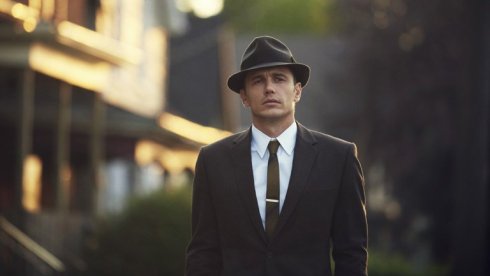
112263_franco_russ_martin

11.22.63 was a gripping eight-part miniseries that had me hooked from start to finish. Based on the Stephen King novel, “11/22/63,” the story features an English teacher (played by James Franco) who discovers a time tunnel that leads to the early 1960s, which he uses to gather intelligence in an attempt to prevent the assassination of John F. Kennedy. But something in time doesn’t want him to succeed… As someone who loves the idea of time-travel and is fascinated by conspiracy thrillers, this miniseries intrigued me and had me on the edge of my seat.

strangerthings_promotionalstill-0-0

Watching Stranger Things: Season 1 on Netflix probably provided me with the most entertaining thing all year for me. A loving mix of Spielbergian elements and Stephen King elements, this eight-episode contained season gave us a compelling mystery, a good sense of suspense and horror, a large group of appealing characters to follow, and a madly entertaining adventure from beginning to end. Viewers love it, and it’s easy to see why. If this wasn’t a series, I’d call it my favorite film of the year. (But to be fair, my favorite “film” of the year is pretty damn good too.) I can’t wait for Season 2 this coming year…

Review: https://smithsverdict.com/2016/11/01/stranger-things-season-1-2016/

OK, enough stalling! Let’s get to some good films now!

Honorable Mentions (films that could’ve made the list, in alphabetical order): 10 Cloverfield Lane, Audrie & Daisy, Don’t Breathe, Eye in the Sky, Finding Dory, Hacksaw Ridge, The Little Prince, Manchester by the Sea, Raiders! The Story of the Greatest Fan Film Ever Made, Sully, Swiss Army Man

Might As Well Mention These Too, Since 2016 Was A Good Year For Movies: The Accountant, Batman: Return of the Caped Crusaders, The Conjuring 2, Doctor Strange, Fantastic Beasts and Where To Find Them, Green Room, Hail Caesar!, The Invitation, The Jungle Book, Lights Out, Midnight Special, Moana, Ouija: Origin of Evil, Popstar: Never Stop Never Stopping, Rogue One, Sausage Party, Storks, Tallulah

Oh, and I Liked These Too: Blair Witch, The Fundamentals of Caring, King Jack, In a Valley of Violence, Pee-Wee’s Big Holiday, Risen, Star Trek Beyond, Suicide Squad, The Wave

And finally, before I get to the main Top-15 list of my Favorite Films of 2016, I have another Special Mention:
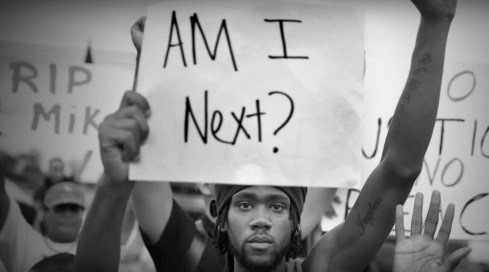
13th-image-5

13THAva DuVernay’s powerful Netflix Original documentary feature about the US prison system simply doesn’t belong on a list that also includes more-mainstream fare such as Deadpool and Captain America: Civil War. But I do think it is a special film that deserves the high praise it has been getting, and so I put it in a separate category by itself. It’s available on Netflix, so check it out when you get the chance.

And now…my Top 15 Favorite Films of 2016!

9_kung_fu_panda_3

  1. Kung Fu Panda 3—2016 was a very good year for animation, and its streak began with the unexpected surprise that was “Kung Fu Panda 3,” the third entry in a series of animated family films that only gets better with each chapter, in my opinion. I’m serious—“Kung Fu Panda” is to DreamWorks Animation what “Toy Story” is to Disney/PIXAR. These films have worked surprisingly well—they’re funny without resorting to pop cultural references, they’re lots of fun while also telling a touching story in each film, they evolve the characters without having them learn the same lesson over and over again, and they’re all visually incredible. And KFP3 is definitely no exception.
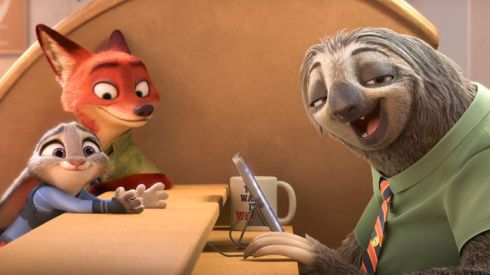
zootopia

  1. Zootopia—And speaking of outstanding animated works, Disney has had some delightful ones: “Finding Dory,” “Moana,” “The Jungle Book” (well, that one’s mostly animated), and “Zootopia,” the best of the bunch. Strangely enough, I only thought the film was “fine” at first. After a couple more viewings, I appreciated it more and more. It’s an inspiring, gorgeously animated fable that has a valuable message to deliver and delivers it in the most entertaining way it can with its animal cast of characters. The comedy works, the action works, even the drama works surprisingly well. I have but one thing to say that not many people are addressing—shame on the people in charge of marketing for showing the entirety of the film’s funniest scene (the sloth/DMV scene) in one of the trailers. But at least they didn’t spoil the dramatic aspects of the movie.
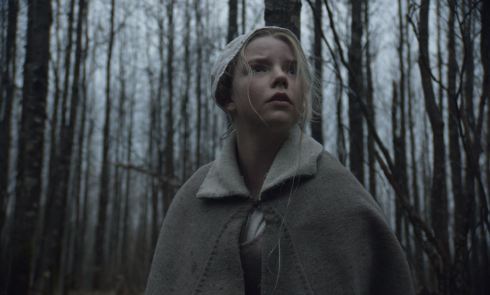
thewitch2

  1. The Witch—This was not only a very good year for animation, but also for horror as well. And no film felt as creepy and unsettling to me as “The Witch,” a madly atmospheric and intensely executed thriller that kept me awake the very night I saw it. There are no standard horror-movie tropes to be found in this film. It’s heavy on the chilling atmosphere and the tragedies that surround a family in 1630s Massachusetts who come to fear themselves. It’s a terrible situation brought on by a supernatural entity that becomes even worse as it escalates. It’s both suspenseful and tragically dramatic. It’s quiet, it’s slow, it takes its time developing the issues at hand, it’s grounded in its situation, and that ending…THAT ENDING…you’ll just have to see for yourself.

Review: https://smithsverdict.com/2016/12/10/the-witch-2016/
HUSH16REV

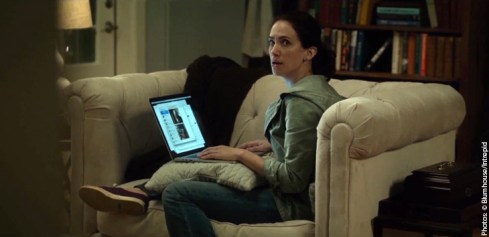
  1. Hush—As noted, this is a list of my “favorites” of the year. So, even though I think “The Witch” is the “best” horror film of the year, “Hush” is my personal favorite (and the one I’ve seen about six or seven times now). This is a Netflix Original horror film in which a psychopath stalks a deaf-mute woman alone in a secluded house, and it’s masterfully handled by director Mike Flanagan (who had another winning horror film this year with “Ouija: Origin of Evil,” a prequel that was better than it deserved to be). It’s a entertainingly chilling thriller that impressed me the whole way through. Don’t just take my word for it—Stephen King even Tweeted about it, comparing it to both “Halloween” and “Wait Until Dark.”

Review: https://smithsverdict.com/2016/05/11/hush-2016/

mv5bmtq3njiwmzk5mv5bml5banbnxkftztgwmjy0mjy1ode-_v1_cr060640360_al_ux477_cr00477268_al_

  1. Captain America: Civil War—I could easily call this one “Avengers 2.5: Civil War,” because that’s what it feels like. All these Avengers fighting against each other for reasons that…honestly, are very understandable. The advertising may have had people choose if they were either Team Iron Man or Team Captain America, but the reality is it isn’t that easy to choose. I always admired “superhero movies” that ask the right questions and raise discussion amongst the audience, and the Marvel Cinematic Universe has turned in yet another entry that gave the audience what they wanted and much more. And Spider-Man? Awesome!

Review: https://smithsverdict.com/2016/12/10/captain-america-civil-war-2016/
everybody_wants_some

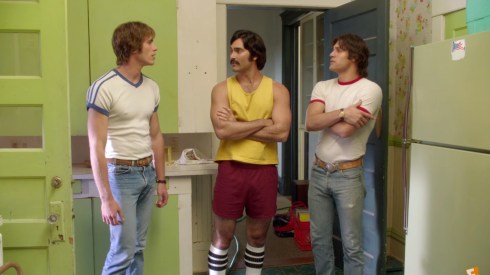
  1. Everybody Wants Some!!—In the same vein as director Richard Linklater’s 1993 film “Dazed and Confused,” his “spiritual sequel” “Everybody Wants Some!!” perfectly captured the feel and nostalgia of being away from home for the first time and enjoying those days leading up to your first day of college. As is expected of a Linklater film, the writing is outstanding, capturing that certain essence of the human element that reminds me of Eric Rohmer.

la-1473773494-snap-photo

  1. Operation Avalanche—I originally gave Matt Johnson’s “The Dirties” three stars in my review, but it became one of my personal favorite films of recent years as time went on and I found myself admiring it more and more with more viewings. So, I was excited to see what Johnson’s next film was going to be. And when I heard the premise for said-film, “Operation Avalanche,” I was immediately hooked. It goes like this: Set in the late-1960s, a group of CIA agents/film buffs go undercover as a documentary film crew to find a mole inside NASA, and instead, they find a shocking truth…and decide to make a film that stages the moon landing. Conceived as a fake-documentary (much like “The Dirties,” but a little more grounded), this film has fun with documentary conventions, government conspiracy theories, old-style filmmaking, and even Kubrick films (Stanley Kubrick himself even makes a cameo appearance, fascinatingly). Matt Johnson is one of my favorite filmmakers working today; I admire this guy’s ambition. I can’t wait to see what he comes with next.

deadpool-movie-poster-2016

hero_the-nice-guys-2016

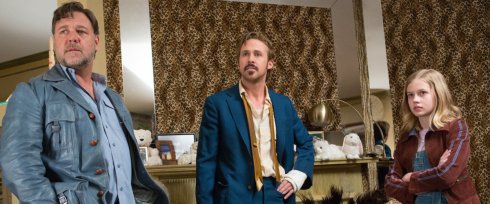
  1. TIE—Deadpool and The Nice Guys—I know it’s a cheat, but I had trouble choosing between these two R-rated action-comedies. They’re both crudely smart, they’re both relentlessly thrilling and entertaining, and most important, they’re both funny as hell.

Review of Deadpool: https://smithsverdict.com/2016/05/18/deadpool-2016/
hell-or-high-water-poster-1280jpg-5bb653_1280w

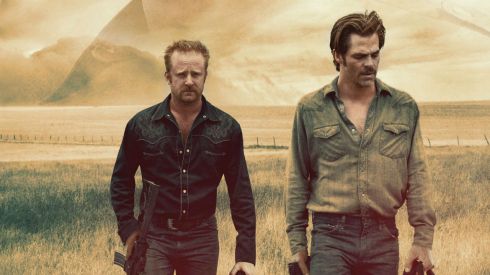
  1. Hell or High Water—I wasn’t sure where the this quiet Southern-Gothic-like dramatic thriller was going at first. I was getting kind of a Coen Brothers vibe from the feel of the production. But as it went on, I found myself becoming more and more engrossed by it. Brilliant performances by Jeff Bridges, Chris Pine, and Ben Foster (who I barely even recognized here) aided by incredible cinematography that made the Texas atmosphere shine (…even though it wasn’t really shot in Texas) helped make this a film I won’t forget anytime soon.
lead_960

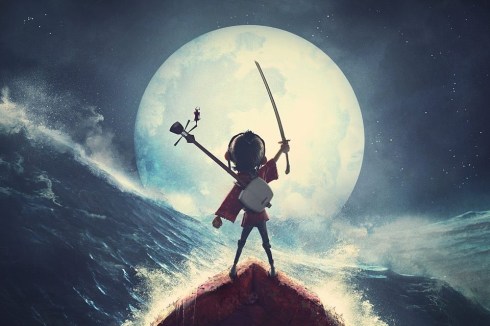
  1. Kubo and the Two Strings—My favorite animated film of the year. This movie is constantly entertaining with hardly a dull moment at all, but it’s also very thoughtful and mature—maybe the kids won’t get as much of the themes as the adults do, but then again, maybe as they get older, these things will stick with them as time goes on. Much like the best family films we grew up watching—we went into them for the entertainment, but the meaning grows on us the more we watch them. That’s what I think “Kubo and the Two Strings” is like. And watching it as an adult, I can already tell you it’s both delightful and meaningful, and it works on so many levels. Keep going, LAIKA—your animated works (including “Coraline” and “ParaNorman”) impress us more and more.
brian-de-palma-in-de-palma-documentary

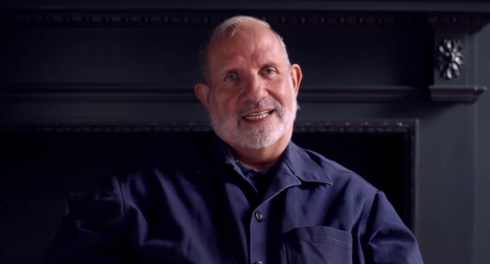
  1. De Palma—I was surprised by how much I enjoyed this documentary from Noah Baumbach & Jake Paltrow about the career of filmmaker Brian De Palma, because even though I like some of De Palma’s work (such as The Untouchables, Blow Out, and the underrated Casualties of War), I’m not a big fan of his overwhelming style of filmmaking. And when you get down to it, it’s just a well-known director sitting in front of a camera, telling stories (with clips of his work shown). But the stories he tells are fascinating—I was never bored by what he was saying; even when he’s talking about his movies I don’t particularly care for, I’m still intrigued in what he recollects from those experiences in making them.
loving2_h_2016

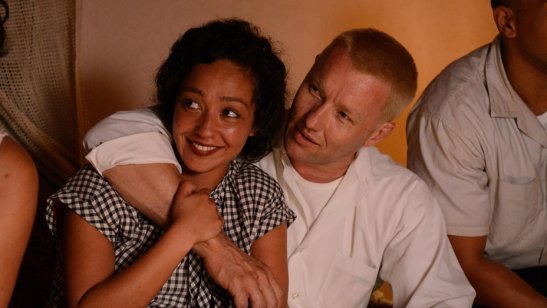
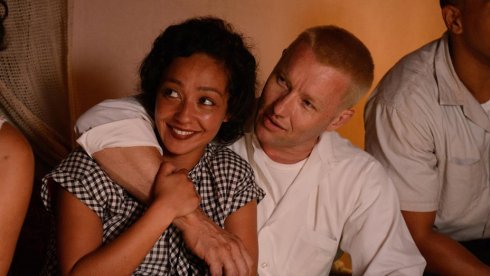
  1. Loving—Jeff Nichols is one of my favorite filmmakers working today, and he had two films released in 2016. One was “Midnight Special,” which I thought was good. The other was “Loving,” which I thought was very good. It’s based on a true story from the late-‘50s-mid-‘60s about a Virginia married couple that was arrested and exiled before they brought their plight to the Supreme Court. Their crime…was being an interracial couple (at the wrong place at a very wrong time). We’ve seen many movies that remind us of how nasty things were back in the day, with racism, segregation, anti-miscegenation, whatever and so on. But “Loving” tells this particular story in a simple, straightforward way that works very effectively without hitting the audience on the head with the message. Powerful performances from Joel Edgerton and Ruth Negga also help a lot.

Review: https://smithsverdict.com/2016/12/13/loving-2016/

arrival-trailer1-screen2

  1. Arrival—Honestly, I didn’t have much expectations going into this film; all I could think was what this alien-arrival movie could do that hasn’t been done so well already. Then I saw it again, and I thought to myself, “I gotta see that again.” This thought-provoking film surprised me, delighted me in doing so, and even resulted in a discussion between me and my father who saw it with me—what did everything mean, why was this the resolution, and so on. That’s a sign of a great film: when it can get people talking about it for hours after seeing it. I can’t wait to see this movie again.

Review: https://smithsverdict.com/2016/11/13/arrival-2016/
la-la-land-ryan-gosling-emma-stone.jpg

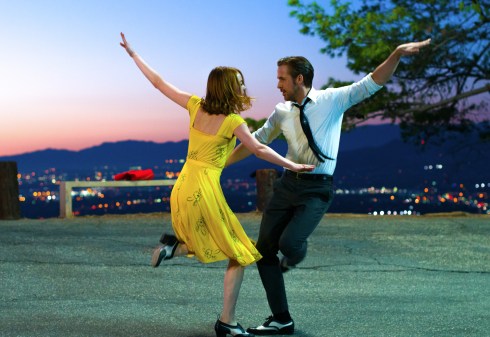
  1. La La Land—One of the best musicals I’ve ever seen. No lie. No doubt. Maybe not even hyperbole. This is a brilliantly done film with beautiful execution, cinematography (and choreography), and story, paying homage to old-style Hollywood musicals while also bringing it to the modern time and showing the dark side of dreams and passion. What happens after the traditional “Hollywood musical” ends? That’s where “La La Land” really cements its status as one of the truly best films of recent years: its second act is honest, truthful, and challenging. Critics love it, audiences love it, I love it. I rarely predict the Oscars, but…I think this is a sure bet for Best Picture.

And my personal favorite film of 2016 is…

singstreetband15

  1. Sing Street—Without a doubt, this is my favorite film of 2016. (Or maybe I’m saying that because it’s the film I’ve seen the most in 2016.) It made me smile, it moved me in a way I didn’t expect, it delighted me in each direction it took, and there was hardly a moment when I wasn’t invested or didn’t have a smile on my face. Shaded with sheer optimism, this film could’ve been just a simple film about a boy who starts his own rock band to impress a girl he likes, and in some way, it is that simple. But that’s what I love about it—there’s a genuine passion thrown into the making of this delightful film that is felt all throughout, like director John Carney (who also made the great musical-drama, “Once”) had this story in his head and wanted to get it out any way he could. His ambition shows in the way he tells the story of this kid growing up in Dublin, falling in love for the first time, relating to his older brother, writing music with his friends, and dealing with the hardships of his life the only way he can (through art). I could easily relate to and sympathize with this kid, Conor (played very well by Ferdia Walsh-Peelo), and the things he goes through. On top of that, the songs are very good, especially “Up” and “Drive It Like You Stole It” (at least one of those songs needs a Best Original Song nomination). It makes me happy watching this movie again and again; that is why it is my favorite film of 2016.

Review: https://smithsverdict.com/2016/11/18/sing-street-2016/

See you next year!

Rogue One (2016)

24 Dec

static1-squarespace

Smith’s Verdict: ***1/2

Reviewed by Tanner Smith

With the arrival of last year’s smash hit, “Star Wars Episode VII: The Force Awakens,” the “Star Wars” franchise was back, and Lucasfilm/Disney was going to prove it. Not only were there going to be two further “episodes,” but there was also going to be a series of “Star Wars anthology” films in between said-episodes. To every “Star Wars” fan, this was great news, and while they would wait for “Episode VIII” in 2017, they were definitely going to see the first entry in the anthology: “Rogue One.”

(By the way, I know “Rogue One” is marketed as “A Star Wars Story.” That’s not how I’m going to label it. It sounds too run-of-the-mill.)

If you thought “The Empire Strikes Back” (Episode V) and/or “Revenge of the Sith” (Episode III) was dark, you haven’t seen anything yet. “Rogue One,” set just before Episode IV (which spawned the franchise in the first place), is darker, grittier, and more of a war film than we would expect from the franchise (funny, seeing how it’s called “Star WARS”). It still has its share of spectacular, rousing moments of sci-fi adventure and lighthearted, witty one-liners, but when it takes its dark turns, it gets pretty heavy. When characters are in battle, you have to be able to accept that there probably won’t be any turning back.

“Rogue One” works fine as a stand-alone film, but it’s even better when associated with the other films. Actually, those who don’t appreciate the silly turns taken in the prequels (Episodes I-III) will appreciate this film more as “the prequel we’ve been waiting for.”

The film’s heroine is Jyn Erso (Felicity Jones), a bright, spunky, heated soldier and criminal. She’s also the daughter of scientist Galen Erso (Mads Mikkelson), who tried to escape the ruthless Empire before he was forced back in to design the planet-destroying Death Star. At first, Jyn wants nothing to do with the Empire or the terrorists that follow, but when she receives a message from Galen that includes crucial information about the Death Star, she joins a group of Rebels on a mission to retrieve the original structural plans and bring them to the attention of the Alliance. (It should probably come as a surprise to no one that they succeed. But like any good movie, what really matters is how they succeed.)

Among the band of would-be heroes are badass pilot Cassian Andor (Diego Luna), extremist Rebel Saw Gerrera (Forest Whittaker), defective Empire pilot Bodhi Rook (Riz Ahmed), blind monk warrior Chirrut Imwe (Donnie Yen), Chirrut’s friend & fellow warrior Baze Malbus (Jiang Wen), and comic-relief robot K-2SO (voiced by Alan Tudyk)—a wonderfully diverse cast of characters.

Director Gareth Edwards (“Monsters,” “Godzilla”) was given some difficult tasks to perform in making this “Star Wars anthology” film—neatly tie it in to Episode IV, pay respect to George Lucas’ original vision, and make a war movie in the “Star Wars” universe. He succeeds in all three tasks. “Rogue One” is still set in the “Star Wars” universe, but it doesn’t feel entirely like what we’re used to. There’s something new and something old. It has to do with the execution, the feel of the piece, and also the way the war aspects in particular seem grounded and realistic. For example, when those giant mechanical-elephant things (and I’m sorry for forgetting what they’re called) are attacking, they’re seen from the ground perspective of the soldiers fighting them. This makes us feel the size and impending danger of these oncoming obstacles. You can feel the stakes are higher in this one.

Darth Vader returns in this one (and is again voiced by James Earl Jones), as many people were wondering before the film’s release. He’s only on screen for about five minutes total, but when he shows up…let’s just say there’s an action that reinforces the reason we were afraid of this guy.

And speaking of returning “Star Wars” characters, I can’t neglect to mention the reappearance of Grand Moff Tarkin, played in Episode IV by the late Peter Cushing. Using high-quality CGI effects, this character was brought back for somewhat of a supporting role. This easily could’ve been a downfall for the film, and yet, even though I’m distracted by the fact that this isn’t really Peter Cushing but a recreation of the deceased actor (with the aid of computers, a stand-in, and possibly a voice imitation), I have to say they did an impressive job “reviving” him and giving him a new performance. To my surprise, I buy it.

Also in terms of tying in to Episode IV, “Rogue One” managed to ingeniously resolve a flaw that has plagued many fans for decades. I won’t give it away here, but you’ll know it when you see it.

My only real problem with “Rogue One” is the villain. It’s not that Ben Mendelsohn doesn’t do fine work as Orson Krennic, the Empire’s Director of Advanced Weapons Research. But when you put him next to previous “Star Wars” villains like Darth Vader and Kylo Ren, he simply isn’t as memorable.

But the heroes are an appealing bunch. Even though Jyn is the one we grow closer to, due to knowing much of her background, the others are still fun to follow. Cassian is a dashing pilot, which would inspire shades of Han Solo, but actor Diego Luna makes the role his own. (Plus, I like how he represents a side of the Rebel Alliance that not many would expect. This guy isn’t to be messed with.) Chirrut Imwe provides many of the more awesome moments of action plus some appreciated deadpan humor. And K-2SO is a great addition—this droid doesn’t whine as much as C-3PO, and he provides the film’s biggest laughs with his snarky manner.

Oh, and a friend of mine (who is a “Star Wars” fan) says I should mention the use of composer Michael Giacchino’s replacement of John Williams’ iconic “Star Wars” score. It’s fine. It’s a bit distracting, but it still feels very “Star Wars”-ish.

Simply put, “Rogue One” is a compelling “Star Wars” entry, with riveting action, a more grounded feel, and a perfect splice of this “anthology piece” and Episode IV. This can only be the start of something great for “Star Wars”; I look forward to the next “Star Wars anthology” film in addition to Episode VIII.

Green Room (2016)

18 Dec

960

Smith’s Verdict: ***1/2

Reviewed by Tanner Smith

Just read the premise for writer-director Jeremy Saulnier’s “Green Room”: a punk-rock band must fight to survive a night in a bar run by ruthless neo-Nazis run by Patrick Stewart. Admit it—you want to see this film on the basis of that concept alone.

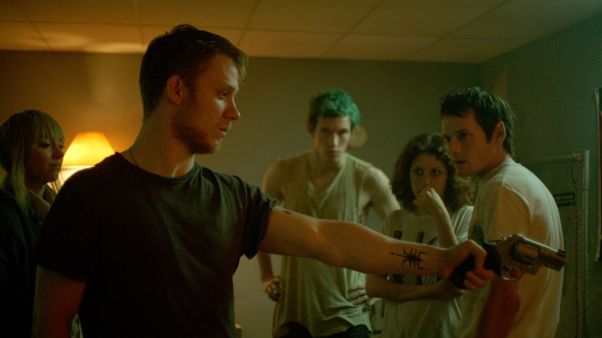
I’ll be honest and say I was expecting a more conventional (albeit fun and thrilling) film than the one I actually saw (thrilling but definitely not “fun” in the “conventional” sense). It’s a brutally realistic chiller that had my stomach knotted up and got under my skin. And it confused me; but it only confused me because nothing was happening the way I expected it to happen. Then I realize, that’s a good thing! Let me give an example—in this film, someone comes in to help and you expect him to save the day, but what happens instead? Out of the blue, he gets a shotgun blast to the face! No buildup, no tense music—it just happens. And I’m not even going to mention what someone does with an ultra-sharp razor blade.

This simple, straightforward thriller that begins with the introduction of our soon-to-be-in-jeopardy protagonists—a four-member punk-rock band called the Ain’t Rights. They don’t partake in social media, they siphon gas for their van in which they all live/sleep, and they’re not as “hardcore” as they like to think they are but they try. They go from gig to gig collecting as much money as they can, but their next gig is one they’ll wish they avoided. It’s a bar in a part of the Pacific Northwest populated by rednecks and neo-Nazis. After playing their set, all they have to do is collect their payment and leave. But oops—bassist Sam (Alia Shawkat) left her phone in the green room backstage and guitarist Pat (Anton Yelchin) has to retrieve it…only to discover a dead body in the green room. A murder has occurred, and before Pat can call the police, he and the band, including two other members Reece (Joe Cole) and Tiger (Callum Turner), are kept inside the green room while the bar’s owner, Darcy Banker (Patrick Stewart), tries to think of what to do. His plan: close the bar early so the patrons can leave, call in his band of brutes and thugs (as well as man-eating attack dogs), somehow lure the band outside, and murder them, thus eliminating all witnesses. Knowing the danger they’re in, the band, as well as a bystander named Amber (Imogen Poots), realize they must fight to survive if they are even going to consider leaving the room.

The film is an exercise in realistic violence in response to the question of what people can do to other people when facing against each other. I mentioned the shotgun to the face and the razor blade, but there’s also a hand that’s nearly chopped off, a machete to the neck, and even a dog after someone’s throat. This isn’t a film for anyone who’s easily squeamish. The violence is handled in an unpredictable way so that anyone invested in the material will be on-edge wondering what will happen next. As expected from a film like this, you wonder how the characters are going to get out of one situation before they get into another one. But this is a film that disposes of a few of these characters quicker than anyone would have expected.

Who is the right audience for “Green Room”? That’s a difficult question to answer. Certainly not people looking for a b-movie thriller where you whoop and cheer for the bad guys to get their comeuppance. This isn’t a gutsy, go-for-it thrill ride; it’s more of a nightmare, as one character proclaims by the end of the story. Nothing feels overwritten or exaggerated—it’s just a matter of saying, “This is what happens when this happens, so save your popcorn for a different movie.” In that sense, maybe “Green Room” is only for people who just want to see “what happens when this happens,” based on the premise I opened the review with.

“Green Room” is a well-executed thriller with an intriguing hook and a fascinatingly original take on the situation. The actors are terrific (especially Stewart, who is more subtle than a frothing-at-the-mouth bad guy), the cinematography is top-notch, and as was Saulnier’s intent, it left an impact on me that might have actually been better than what I expected.

Loving (2016)

13 Dec

loving2_h_2016

Smith’s Verdict: ****

Reviewed by Tanner Smith

“You shouldn’t have done what you did.” “You should’ve known better.” Those are only some of the remarks thrown at Richard Loving in the 1960s, whose deeds have put him and his wife in trouble with the law. If you don’t know who Richard Loving is, you may be wondering what he did to warrant these statements. Well…he married a woman and got her pregnant.

You may be thinking, “So what?” Well his wife, Mildred, was black and they lived in Virginia at a time when interracial marriage was prohibited by law. They were forced to leave the state and leave their family behind as well in order to start raising a family. Otherwise, they were going to spend time in prison.

You’ve heard many history stories about how horrible racism, prejudice, and anti-miscegenation were back in the day. It’s hard to think that’s what it was really like in that time, but it was true. Richard and Mildred Loving were exiled from their home simply because they were an interracial couple and there was a law that forbade them to be. After years of raising children and living a new life as a family, they were finally able to bring their case to the US Supreme Court. Due to “Loving v. Virginia,” the state laws prohibiting interracial marriage were invalidated.

That story is told in “Loving,” a new film by one of my favorite modern filmmakers, Jeff Nichols. He tells it in his usual low-key, underplayed style of filmmaking, which definitely works to the film’s advantage. It’s one of the best films I’ve seen in 2016, which came as a surprise for me because I usually try to brush off movies that remind us of how horrid many white people back in those days unless they have something else to say about how things affect society nowadays. But this film found a way to tell its story about its dated situation by not preaching to the audience (save for a speech at the end, but it’s earned by that point) and simply showing us how everything affects the key characters by keeping it solely focused on them. It’s a straightforward “based-on-a-true-story” film, and a very strong, effective one at that.

Joel Edgerton and Ruth Negga star as Richard and Mildred Loving, and they deliver two of the best performances of the year. If one or both of these actors don’t receive Oscar recognition, I will be very upset. They’re both very subtle in the ways they get their emotions across. Their characters don’t proclaim everything on their mind and at their strongest moments comes minimal dialogue, meaning they have to act to the best of their ability. They pull it off greatly.

And that’s another strength to “Loving.” It avoids melodramatic traps. The way Nichols approaches this material smoothly delivers something that feels real and something that deserves to be acknowledged and considered. The film looks right, feels right, and is done right.

Midnight Special (2016)

13 Dec

MIDNIGHT SPECIAL

Smith’s Verdict: ***1/2

Reviewed by Tanner Smith

A lot goes into raising and protecting a child…and to say no one does a bang-up job doing it in “Midnight Special” is an understatement. When characters aren’t holding this kid captive, others are on the run with him from the government. You see, the child is special…meaning he has special supernatural abilities, and he needs to be protected. By the end, the people who have his best interests at heart aren’t even entirely sure they made the right decision. (No spoilers here, btw.)

“Midnight Special” is a science-fiction drama brought to us by writer-director Jeff Nichols, one of my favorite filmmakers working today. While this film isn’t quite up there with his previous films (“Shotgun Stories,” “Take Shelter,” and “Mud”—all three I hold in very high regard), I still think it has a lot to offer, particularly in terms of its themes of parenting and guidance.

The film is also in the same vein as something like Disney’s “Escape to Witch Mountain” and John Carpenter’s “Starman,” as people go on the road on the run from other people who are out to get this person who could be from another world and brought here to bring a message to humanity.

As the film opens, two men—Roy (Nichols regular Michael Shannon) and Lucas (Joel Edgerton)—are in a motel room, watching a news story about a manhunt for a kidnapped 8-year-old boy named Alton (Jaeden Lieberher). Alton is in the room with him, meaning they’re the ones who have taken him. Alton doesn’t seem nervous or scared by them at all; in fact, Roy is the boy’s father. But it’s back on the road again, as authorities are hot on their trail, and we see the people who have looked after Alton before. It’s a religious cult run a welcome Sam Shepard cameo who believes something is coming soon and that Alton is their savior. Things get more complicated when it turns out this cult has worshipped numeric sequences brought to them by Alton, and these numbers mean something to the government, who now want to find Alton to know how he knew about them. The numbers also lead to a specific location, which Roy and Lucas try to get to.

For much of the movie, we’re not sure of who (or what) exactly Alton is. Why does he wear protective goggles? Why does he know what no one else knows? Is he from another planet? Is he the Second Coming? What all can he do with his abilities?

And with whom does he truly belong? We’re rooting for Roy to keep this boy safe, and he tries his best to protect him, but he’s not quite as well-equipped as he thinks he is and sometimes makes sloppy decisions. Lucas (not a family member but an old friend of Roy’s) does too, but again, he wants to look out for him too. Soon, Roy’s estranged wife, Sarah (Kirsten Dunst), is brought into the mix, and she loves the boy too. As they eventually get some kind of answer as to what Alton’s true purpose is, both parents have to make an important decision about what’s best for him. I’m entertained by the road-trip aspect of “Midnight Special,” but it’s the parental aspect that’s the most fascinating and could cause discussion about what it means to be responsible for someone.

The truth reveals itself at the end of their journey, and while it doesn’t answer every question people might have about what has unfolded, it doesn’t choose not to say certain things. I’ll admit I was unsure about the resolution upon the first viewing, but watching it again made me reconsider something else that was on my mind about it. (Besides, it’s not like I wanted Nichols to have the conflicted NSA specialist character played by Adam Driver to come out and spell out to us what everything meant.)

“Midnight Special” is very well-made with gripping cinematography by Adam Stone and with Nichols showing his strengths in his first studio film. It’s also wonderfully acted, with great performances by everyone in the cast, especially Michael Shannon who turns in some of his most subtle work. And more importantly, it reminds us of the power of visual storytelling. It’s an enthralling film that delighted me, shocked me, and kept me engrossed even after I left the theater.

Captain America: Civil War (2016)

10 Dec

mv5bmtq3njiwmzk5mv5bml5banbnxkftztgwmjy0mjy1ode-_v1_cr060640360_al_ux477_cr00477268_al_

Smith’s Verdict: ***1/2

Reviewed by Tanner Smith

2014’s “Captain America: The Winter Soldier” was one of the best entries in the Marvel Cinematic Universe. Since its release, we’ve had another origin story with “Ant-Man” and the next “Avengers” sequel (and “Guardians of the Galaxy,” but none of those characters make an appearance until “Vol. 2”). We still have a while to wait for the ultimate two-part “Avengers” story involving something called “the Infinity Stones”—you know, the things that were only hinted upon in previous MCU films since “Thor: The Dark World” but every comic-book reader seems to know everything about? So, while we’re waiting for that, we have “Avengers 2.5: Civil War.” Er…no, I’m sorry, it’s “Captain America: Civil War,” featuring many of the Avengers in action (excluding Hulk and Thor). But we have something close enough, plus new Avengers. The result is the most exciting superhero movie I’ve seen this year.

The events of “Avengers: Age of Ultron” aren’t ignored. In fact, that film’s climax set up the issues in “Captain America: Civil War.” If you recall (and if you don’t, don’t worry—you’ll catch on), there were many casualties in the devastation of Sokovia at the hands of the Avengers. Because of this, the United Nations wants to oversee and control the Avengers. Steve Rogers aka Captain America (Chris Evans) doesn’t trust the government over his own judgment, but Tony Stark aka Iron Man (Robert Downey, Jr.) feels immense guilt over his part in the incident and agrees to oversight. On Stark’s side are Black Widow (Scarlett Johansen), War Machine (Don Cheadle), and Vision (Paul Bettany), and on Cap’s side are Falcon (Anthony Mackie), Hawkeye (Jeremy Renner), Scarlet Witch (Elizabeth Olsen), and Ant-Man (Paul Rudd). Things get even more complicated when Cap’s childhood-friend-turned-enemy-weapon Bucky Barnes (Sebastian Stan) aka The Winter Soldier returns from obscurity and is reprogrammed by the bad guys to kill. Cap breaks many rules in protecting him in order to find more answers in order to help him. His allies on the UN issue follow him, leading to battle lines being drawn between them and Stark’s followers.

There’s a lot that happens in this film, including the introduction of two new recruits: Black Panther and Spider-Man. T’Challa aka Black Panther (Chadwick Boseman) is the prince of the African nation of Wakanda whose father has fallen victim to an attack brought on by The Winter Soldier. Out for vengeance, he joins Stark’s side, as Stark is after Cap to get to Bucky. Then, there’s Spider-Man, who also joins Stark and is the hero about whom I was both excited and nervous. I’m a Spider-Man fan, and seeing what Sony continued to do with the character after good starts and bad finishes made me cross my fingers that Disney/Marvel would finally serve him well. And what did I get? The best version of Spider-Man I’ve ever seen on film. Played brilliantly by Tom Holland, Peter Parker aka Spider-Man is charismatic and energetic as well as quippy and resourceful. I watch this kid, and I’m not thinking of Tobey Maguire or Andrew Garfield—this is Spider-Man! I can’t wait to see him in this summer’s “Spider-Man: Homecoming.”

The villain isn’t very memorable, but his motivations, which are revealed later, are. That brings me to one of the movie’s biggest strengths: nothing is black and white. Sure, there are other ways of doing things than what some of the characters do here, but that adds to the moral complexities that are scattered all over the movie. The advertising makes a big thing out of “Team Captain America” and “Team Iron Man” and “whose side are you on” and so forth, but the thing about this movie is that the decision of who to side with is not an easy one. This can cause audiences to discuss many of the moral/ethical obligations sure to be brought up.

While I’m on the subject of seeing where Iron Man comes from, I have to commend this movie for making me care about Tony Stark/Iron Man again. Lately, I’ve been on the fence about this guy, after he’s made dumb decision after dumb decision—telling a terrorist where he lives, building a machine that could do good or bad even after he’s had a vision telling him he’s responsible for destruction, and so on. These things made me want to smack him in the face after he said another witty remark, because this guy wasn’t claiming responsibility for anything that was his fault. But thankfully, he does claim responsibility here. He feels a lot of responsibility over what happened in “Age of Ultron” and you can tell he wants to make up for it. This is the side of Tony Stark I’ve been waiting to see for a long time.

Blah, blah, blah. What about the action? Well, it’s there and it’s done well. But it’s nothing too special…until it gets to an extended action sequence midway through, in which the Avengers are fighting each other. This is an amazing sequence and the one people have come to see. To see the heroes we’re all familiar with suddenly facing each other is a fascinating concept by itself, but to see them use their skills on each other is even more entertaining to watch. While a part of you wants them to listen to reason and talk about why they’re fighting, another part of you can’t help but enjoy the battle. The effects are well-done, the pacing is fast as lightning, and there is room for surprises, particularly with a new development in Ant-Man’s technology.

“Captain America: Civil War” is an enormously entertaining MCU entry, though a part of me is admittedly afraid that the MCU can only go down from here. But then again, another part of me is excited to see what is to come anyway. Especially “Spider-Man: Homecoming.” We have a few months until we get to see that one—I’m crossing my fingers (and my toes as well) that it gives us what we want/need from the web-slinging superhero.

The Witch (2016)

10 Dec

thewitch2

Smith’s Verdict: ****

Reviewed by Tanner Smith

2016—a surprising good year for horror. Among the titles I enjoyed watching: “Hush,” “10 Cloverfield Lane,” “Don’t Breathe,” “The Conjuring 2,” “Lights Out,” “Ouija: Origin of Evil,” “The Invitation,” “Green Room,” and of course, the popular Netflix series “Stranger Things.” But for some reason, I didn’t see a film called “The Witch,” which people have labeled the best horror film of the year. But I recently rented the DVD and gave it a watch…

And then something strange happened: I had trouble sleeping that night.

Then, on the next day, I thought back to the other titles I mentioned in the above paragraph and I realized: as much as I enjoyed the thrills and suspense those movies had to offer, none of them really got under my skin. Don’t get me wrong—they were fun to watch and had me on-edge during crucial tense moments. But I can watch them again with no problem at all. I get the feeling that if I watched “The Witch” again, I would need to brace myself, even though I would know what’s coming. That’s the effect this film had on me. It’s a deeply unsettling, heavily atmospheric, incredibly disturbing, exquisitely made film that gave me the chills.

“The Witch” is a mix of a horror film and a period drama. (In fact, I think this film may be what I looked for and missed in M. Night Shyamalan’s “The Village.”) Set on a small farm in the middle of some woods in 1630s Massachusetts, it’s centered solely on one small set of characters: a Puritan family who recently arrived from England after being banished from their church for vague reasons, which I think have to do with their interpretation of the New Testament. The parents are farmer William (Ralph Ineson, chillingly good here) and his wife Katherine (Kate Dickie) and the children are teenage Thomasin (Anya Taylor-Joy), pre-teenage Caleb (Harvey Scrimshaw), twins Mercy and Jonas (Ellie Grainger and Lucas Dawson), and infant Samuel. They live in the woods, far from the Puritan settlement.

When I write a review about how things slowly but surely go wrong for a group of characters in a horror film, you would expect the occurrences to start small, like disappearing pets or farming animals, objects becoming lost, or even a strange sight in the woods. But no—the horror truly begins early on, as the little baby Samuel disappears. That is a truly unsettling scene, when Thomasin is watching him and playing peekaboo, and suddenly, he just vanishes. Already, this causes grief and fear for the family, who pray endlessly. It begins a terrible time of paranoia, dread, uncertainty, ideals heading south, condemning, and more disturbances.

The film doesn’t throw everything at us, like a typical supernatural thriller would do. It gradually shows the situation getting worse and worse, with a slow build and very few details (shades of Stanley Kubrick’s “The Shining” are merited). We’re not even sure of everything happening around this family. Is there a witch living in the woods causing all the trouble? Is there another explanation? Whatever is happening escalates to darker, deeper areas, and the family is surely doomed.

The horror is found in small, simple chilling moments. I already mentioned the disappearance of the baby, but there’s another bit that truly got me. I won’t give it away, but it involves the milking of a cow. Above all, there’s something I’ve always found chilling about people imposing their will on other people because of their religious beliefs; that’s why, when the family starts to see each other as being associated with the evil outside, I was held in suspense, terrified of what might happen. And the less I say about the ending, the better…

But the best aspect of “The Witch” by far is its execution. This film is heavy on its chilling atmosphere. It’s painted in bleak colors. You can practically feel the environment, which also means you can feel the immense tension. The attention to detail delivered to us by writer-director Robert Eggers (who worked mostly as a production designer before he made this film) is brilliantly done. Execution is key to the film.

I often use the phrase “a film I won’t forget anytime soon” to describe the effect a good film has on me. I use it again for “The Witch,” because any film that can keep me awake at night definitely qualifies as…a film I won’t forget anytime soon. It truly is the best horror film of the year.

Sing Street (2016)

18 Nov

singstreetband15

Smith’s Verdict: ****

Reviewed by Tanner Smith

I’ve always been a fan of coming-of-age movies, especially when they succeed at balancing comedy and drama so well. That’s not an easy task to pull off, and it could result in an uneven mess. But when you do it right, you can expand your audience. It’s like this—you have a gritty, realistic story you want to tell, but you also have lighthearted elements that work within the context; that lightheartedness keeps audiences in; the audiences laugh and smile; then they notice what else the film has to offer and get sucked in even further; they talk about it afterwards; they tell their friends; their friends check it out; and there you go.

Then again, maybe that only happened to me. Basically, I heard the buzz about this film, “Sing Street,” and so I watched it on Netflix—now I’m practically imploring other people (including readers of this review) to see it.

I love “Sing Street.” This may be the film I’ve been waiting to see for a long time—a very charming, fun film that also tells a gripping story about growing up, brotherhood, and turning your personal turmoil into art. It was brought to us to the very talented Irish writer/director John Carney, whose 2007 musical “Once” stole many people’s hearts by stating what music can do to its characters and to the audience, much like this film does.

“Sing Street” takes place in Dublin, 1985. 15-year-old Conor (Ferdia Walsh-Peelo) is caught in the middle of an unpleasant home life, in which his parents (Aidan Gillen and Maria Doyle Kennedy) won’t stop squabbling. His older brother Brendan (Jack Reynor) escapes the household tension by smoking weed, while Conor ventures outward. After his parents transfer him from a prestigious private school to a rowdy Catholic school, he finds himself going from an unpleasant home life to an unpleasant school life—or just an unpleasant life overall, which is helped a little bit by watching new music videos with Brendan. Everything changes when he sees a pretty girl across the street from school and decides to walk over and talk to her.

This is Raphina (Lucy Boynton), and she’s everything Conor only dreams about—tall, beautiful, cool (in a very ‘80s sort of way—remember this film is set in 1985), and a model. But he asks her to be a video for his band, which she shockingly agrees to do. There’s only one problem—he doesn’t have a band! But soon enough, he puts one together out of some classmates who have musical talent and promotes himself as lead singer. Calling themselves “Sing Street,” they start off gaining inspiration from popular bands at the time, such as Duran Duran, but they soon come up with their own material and continuously create song after song after song, as they get better and better. For Conor, this is his way of escaping reality. His parents won’t stop fighting and his personal bully, as well as the school’s principal, won’t stop tormenting him. But if he can bring his music to London with dreams of making it big, he has something to aim for in a new journey. After all, in this bleak time when there are hardly any jobs to be found and many Dubliners are emigrating to London, why shouldn’t he go to London and be a rock star?

This film not only speaks to teenage garage bands who make their own love songs instead of play them on stereo for possible love interests, but it also speaks to many others. It’s easy for people to see themselves in one or two of these characters. Many of them are people who aspire for something greater than what they have, and this film represents “the dreamer” in various ways—for example, there’s the dreamer that awaits the dream to come true, the dreamer that regrets not chasing the dream at first, the dreamer that lives through art, and even the dreamer that actually does go to London to seek the dream. We all have ambitions and dreams in real life and things always get in the way. “Sing Street” speaks to all of us.

It even gets the fantasies right. There’s a scene in which Sing Street is making another amateur music video and trying to make it a ‘50s American prom setting (based on what they saw in “Back to the Future”). They have very little production design and very few extras who don’t get the concept of what dancing was like in that era, but what Conor imagines, in a very well-done fantasy sequence, is greater than they could possibly pull off.

And the film is also a touching tale about brotherhood. I love the realistic brotherly relationship between Conor and Brendan. Brendan isn’t the typical jerk of an older sibling you see in many coming-of-age movies—he’s more helpful than he is condescending, his criticisms of Conor’s band help him along the way, and he wants his little brother to succeed where he hasn’t. Sometimes, he loses his temper, but as you get to know more about him, you understand why he does this.

But of course, I can’t neglect to talk about the music. It’s unfair to say the music in a musical is “unmemorable” after only seeing it once—I mean, Roger Ebert even thought the songs in “The Lion King” would be forgotten back when that movie was released. There is one song from “Sing Street” that I can hum to myself as I write this review (“Drive it Like You Stole It,” a very catchy tune), but I can’t forget how good the other music-video sequences made me feel as I was watching them. And maybe after I see this film a few more times (which I surely will), the songs will stay with me over time.

If there is a line of dialogue I will take from this movie (and not from a song lyric), it’s this one: “I’m going to try and accept it and get on with it and make some art.” Conor says this in reference to how he’s going to deal with being a world full of “morons and rapists and bullies” because that’s just how life is. The artist in me appreciated that moment, just as the critic in me appreciated “Sing Street.” It’s wonderfully executed, brilliantly acted, charming to the max, and one of the best films of the year.

Arrival (2016)

13 Nov

arrival-trailer1-screen2

Smith’s Verdict: ****

Reviewed by Tanner Smith

First contact. It’s a subject explored in many science-fiction stories. If extra-terrestrial life came to Earth, what would it mean? Why would the aliens come here? How would we react? Etc. It’s a fascinating concept to think about—what if we are not alone in the universe? It seems we’ve covered everything that could be done with this scenario—either the aliens are hostile (“Independence Day,” “War of the Worlds,” “Signs”) or they’re friendly (“Close Encounters of the Third Kind,” “Superman”) or they’re here to warn us (“The Day The Earth Stood Still,” “The Abyss”) or they’re stranded here until humans assist them to get home (“E.T.,” “Starman”). Bottom line is, we’ve been through this many times before in movies. So, when French-Canadian “Prisoners”/”Sicario” director Denis Villeneuve’s alien-arrival drama/thriller “Arrival” came to light, I had to wonder—what could this film do that countless other films haven’t already?

“Arrival” beings with the “arrival” of 12 huge quadrilateral ships that hover above the ground at random locations all around the world. Because it’s difficult to communicate with whatever is inside them, no one knows what to make of them—are they dangerous or just visiting or what? Colonel Weber (Forrest Whitaker) of the US government calls upon Dr. Louise Banks (Amy Adams), a professional linguist, to see if she can make anything of the symbols the aliens use to attempt to communicate. She’s reluctant at first to join the first contact team near one of the ships, but she leads kind of an empty life, so she decides to join because she feels she has nothing to lose. Paired with physicist Ian Donnelly (Jeremy Renner), she boards the ship, sees the aliens in their true form (giant seven-legged creatures), and begins to decipher the alien language. She also teaches the aliens human vocabulary so that eventually the team can get an answer to the big question: “What is your purpose on Earth?”

To start off, the film’s tone is set just right, to make it feel like this is really happening; that otherworldly ships have landed on Earth and it’s unknown why the beings inside them are here. The focus is kept on one set of characters in one location near one of the 12 ships scattered all over the world. All we know that’s happening elsewhere is what they see/hear through webcam chats and television media. By using this simple method of storytelling, it not only makes the unknown more unnerving but it also makes the audience more anxious.

But whatever—that’s a given in alien-arrival films, to make the unknown more mysterious until the aliens’ intention is revealed later. What is the film really about? Communication. I won’t give away how, but the communication this film investigates isn’t merely between humans and aliens; it shows the importance of it in a way I can’t explain without talking about spoilers. It’s best I just get across in this review how this film affected me as a critic and a filmgoer and let you go in with a virgin experience.

All I can say about the last half-hour is this: I didn’t see it coming, and I surely didn’t expect to be as fascinated by it as I was. It even raised a discussion with my father, whom I saw it with. I was surprised how much this film left us with more to talk about than I expected it to.

In an outstanding career consisting of 5 Oscar nominations (in 10 years!), Amy Adams turns in one of her best roles here. It’s one of her more serious and psychologically challenging roles, and she is nothing short of perfect in performing it. The more I got to learn about her character, the more I felt for her. And then when I learn something critical about her, it makes her all the more fascinating. But again, I can’t explain why here.

I don’t know how I can continue reviewing this film without giving away some important elements, because “Arrival” really is more than I’m letting on. It’s a powerful, intriguing and thought-provoking drama/thriller that surprised me, delighted me in doing so, and was a wonderful experience all the way through. I really wish I could go into it some more, but maybe someday, after a second viewing, I’ll come back with an analytical review in which I talk about the mysteries’ answers that fascinated me.

Stranger Things: Season 1 (2016)

1 Nov

strangerthings_promotionalstill-0-0

Smith’s Verdict: ****

Reviewed by Tanner Smith

Rarely do I review TV shows on Smith’s Verdict (and no, my Top 15 Favorite “How I Met Your Mother” Episodes post doesn’t count), but in the case of “Stranger Things” Season 1, I simply couldn’t resist.

“Stranger Things” is a Netflix Original series that took the world by storm within the first few days it premiered. Viewers go crazy for it, and I completely understand why. This eight-episode-long story within this first season provides an answer to the question, “What would happen if Steven Spielberg directed a Stephen King story?” There are callbacks to Spielberg’s earlier work (such as “E.T.,” “Close Encounters of the Third Kind,” “Jaws,” “The Goonies,” “Poltergeist,” among others) as well as King’s earlier work (“It,” “Carrie,” “Stand by Me,” “Firestarter,” “Salem’s Lot,” among others), so it’s easy to tell products by Spielberg and King gave creators known as The Duffer Brothers (Matt and Ross Duffer) some inspiration to tell a story in tradition to them. The Duffer Brothers pay homage to these stories while making one of their own. Let me put it this way—I’m not blind to certain things that are reminiscent of this or that Spielberg or King story, but at the same time, I’m not thinking to myself, “Maybe I should watch that instead.” That’s a major strength of the series itself.

I’m going to review the first season overall as if it were one long movie, because that’s pretty much how I saw it anyway—a 6-7 hour long movie that I never got tired of watching. (Each episode runs about 45-55 minutes.) This is going to be roughly spoiler-free—any story details going past episode 2 will not be written about here.

Set in a small Indiana town in November 1983, “Stranger Things” begins with the mysterious disappearance of a young boy. While police chief Hopper (David Harbour) starts to investigate and the boy’s mother Joyce (Winona Ryder) and brother Jonathan (Charlie Heaton) put up “missing” posters while frantically looking for him, the boy’s friends—Mike (Finn Wolfhard), Dustin (Gaten Matarazzo), and Lucas (Caleb McLaughlin)—begin their own search. The boys come across a strange girl named Eleven (Millie Bobby Brown) with a limited vocabulary…and psychokinetic abilities. They find that there might be a connection between her and the boy’s disappearance. Meanwhile, something is out there, collecting people in town. The closer the boys, Joyce, and Hopper, along with Jonathan and Mike’s older sister Nancy (Natalia Dyer), get to learning the truth, the more they attract the attention of an ominous government agency…and something even more threatening.

As soon as I was done with the first episode, I knew I had to keep watching to see what was going to happen. The mystery is built up beautifully. Who is this girl? Where did she come from? What’s the story behind this government agency? What happened to the boy? What’s that thing out there? And so on. It shocked me how beautifully woven together many parts of the story were. We get many different stories that eventually connect together by Episode 7—we have the boys learning as much about Eleven (whom they dub “El”) as they can; we have Joyce discovering ways of otherworldly contact with her missing son (such as using Christmas lights to communicate); we have Hopper learning something suspicious about the agency; and we have the sexually intrigued Nancy whose priorities change when her friend Barbara (Shannon Purser) goes missing, leading to working with Jonathan to investigate. There are many characters to follow, but funnily enough, I never dreaded the moment one set of characters returned. I was interested in these characters and their stories, wanting to know what was going to happen.

And the touches of ‘80s pop-culture are fun too, with a Carpenter-like techno score and a soundtrack consisting of hits including an effective running use of The Clash’s “Should I Stay Or Should I Go?” This may not be the exact style we come to expect from a typical ‘80s product, but that’s because it was made in the mid-2010s (duh). That means we’re not afraid to go more outward in writing when we have something we feel passion for. (Look at today’s TV—it’s a great time for storytelling in TV.)

The acting is across-the-board solid. Winona Ryder is brilliant as the frantic mother who is desperately seeking answers and will not brush off the oddities she discovers as side-effects of grief. Harbour is pretty good too—his character, who is a drug addict on top of being a horrible cop, grew on me as the season went on; Harbour nails the dramatic scenes that are called for when we learn more about his past. The kids are all fantastic actors—not a single false note is found in either of them; what makes their team effort work is their ability to act like real friends. Heaton is excellent as well, as a shy high-school outcast who steps up as a hero. And then there’s Matthew Modine as the man behind most of the madness—let’s just say I wanted to punch this guy right in the jaw after I kick him in the groin.

Millie Bobby Brown gives the series’ best performance as Eleven. She had to convey emotions using just her eyes and body language and she is easily sympathetic while pulling them off. I hope she returns in Season 2.

“Stranger Things” is madly entertaining from the beginning to the end. It leaves room for a sequel season (Season 2, which comes out next year), and I’m excited to see it. What’s left to do? What’s left to see? What’s left to investigate? I’m excited to find out.