Archive | 2015 RSS feed for this section

The Stanford Prison Experiment (2015)

10 Oct

the-stanford-prison-experiment-640x321

Smith’s Verdict: ***1/2

Reviewed by Tanner Smith

SPOILER WARNING (but this is based on a real study)

Imagine if you were placed in a situation where it was “you” versus “them.” What would you do? What would you say? What would you feel?

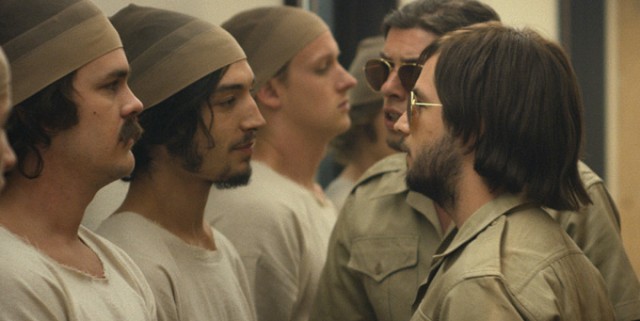
Some high-school or college psychology classes tend to teach about the Stanford Prison Experiment, which was an experiment ran by Dr. Philip Zimbardo in the early 1970s to investigate the cause of conflict between prisoners and guards by hiring 18 male Stanford students and dividing them up into one group or the other. A campus building basement was transformed into a makeshift prison and the guards took turns as three at a time kept the prisoners in order. It was supposed to last for two weeks, but due to the constant bullying to the point of psychological pain brought on by the guards, Zimbardo pulled the plug on the experiment after only six days. What did he want to prove? That the personalities of the guards and the prisoners tied with the brutality within prison settings? That people can and will change under pressure, given similar circumstances such as environment? Maybe both? Either way, it shouldn’t have happened in the first place, and he must’ve known it shouldn’t go on for another week. After only six days, it had already become violent and unpredictable; who knows what could’ve happened later?

The experiment has been the subject of many documentaries and a few narrative films (as well as term papers, for that matter), and with “The Stanford Prison Experiment,” director Kyle Patrick Alvarez and writer Tim Talbott’s fictional interpretation, based on Zimbardo’s book, “The Lucifer Effect,” may be the definitive narrative film about the subject, eyeing conflicts from both sides, the watchers (Zimbardo and his staff) and the watched (not just the prisoners but the guards as well), with a cold, objective tone. As a result, it’s chilling, shocking, and thought-provoking; one of the most disturbing films of the year.

It’s helped not only by the skillful filmmaking but also by the acting. Billy Crudup makes Zimbardo less than noble as an observer oddly compelled to keep going, despite himself becoming part of the experiment as well. Nelsan Ellis is strong in a role as an actual former prisoner who has some advice about the experiment and backs out when he becomes the very thing he hated for a long time. Olivia Thirlby shines in a brief but pivotal role as Zimbaro’s girlfriend who is appalled at what she sees. That leaves very impressive ensemble work from the many young actors playing prisoners and guards. Since they are not there to have characters of their own, only a few stand out—Michael Angarano, who is very chilling as a sadistic guard who takes influence from Strother Martin in “Cool Hand Luke”; Ezra Miller, who is heartbreaking as a prisoner who cracks as he realizes the authenticity of the experiment; Tye Sheridan, a rebellious prisoner; and Thomas Mann, a replacement prisoner who tries to cut through the “experiment.”

Alvarez and Talbott must have followed the source material closely, as we see almost exactly how the experiment gradually fell apart. There aren’t many clear answers, but the best thing about the film is how many questions it raises about human nature, as we ourselves interpret how the guards and prisoners acted certain ways because we can imagine how we would act in a similar situation. When I left the theater after I saw this film, I had a forty-minute drive home. The whole time I was driving, I kept imagining how I would behave if I was a guard or a prisoner. If I were a prisoner, would I be passive and take it or stand up for myself and fight back? If I were a guard, would I just do my duty or would I lose my head and get rough? I had to look deep within myself. That’s the effect “The Stanford Prison Experiment” had on me. It’s a film I won’t forget anytime soon. I hope to see it a second time with someone I could discuss it with to see what we both come up with in our conclusions.

Escobar: Paradise Lost (2015)

10 Oct

foto_escobar-paradise-lost-74297

Smith’s Verdict: ***

Reviewed by Tanner Smith

I guess I should start this review by saying that the title, “Escobar: Paradise Lost,” makes it seem like Pablo Escobar is the central focus of the film. That is not the case. Like “The Last Kind of Scotland,” “Me and Orson Welles,” and “My Week With Marilyn,” “Escobar: Paradise Lost” is less about the historical figure and more about how a young person sees him or her during a life-changing experience. I think “Me and Escobar” or “Escobar and Me” or even “The Escobar Supremacy Ruined My Life” would’ve been better (just kidding).

Because the performance by Benicio Del Toro as Escobar is so brilliant, people have complained that this film fell back on its potential by having its main character be a less-than-interesting young man trapped in Escobar’s world. But for what it is, I think “Escobar: Paradise Lost” is still a riveting drama with a lead that is unfairly evaluated. At its core is the story of a young man who realizes too late what he’s gotten himself into, leading to confusion and betrayal. This story’s been done before, but if done right, it can still work effectively, which I believe is the case here.

Josh Hutcherson stars as Nick Brady, a young Canadian surfer who lives in a surf shack on a beach with his brother (Brady Corbet) and his family. When Nick meets and becomes involved with a young beauty named Maria (Claudia Traisac), she invites him to meet her family, including her uncle, Pablo Escobar. Nick is naïve enough to believe that Escobar’s cocaine trade is for medicinal purposes and he’s only exporting “the national product,” so he falls in with the family. But as time goes by, little does he know that Escobar has been gradually luring him into his circle of influence, and by the time he understands the danger he’s in and is about to leave town with Maria, he’s called in to hide the “goods” to a secret location, where he must shoot and kill a local who will take him there.

This leads to a very well-done, extended, suspenseful sequence after which Nick meets the guide he is supposed to kill…and it’s a kid. The tension mounts over a long period of time, as horrified Nick is nervously trying to think of what to do. The back half of the film is the most powerful portion, with action, suspense, and even drama.

Benicio Del Toro is only on screen for I’d say about half of the film, but his presence dominates the entire film with a creepy blend of allure and malice, as he orders death with straightforwardness while holding family and God close to heart. Del Toro plays a monster in human form.

Josh Hutcherson, one of my favorite young actors working today, is quite believable in a role that may not have been written well but is surpassed by his credibility. There’s a scene late in the film where he comes to a hasty decision in order to attempt to save someone, and he plays it very effectively. Because of his performance, I didn’t mind that this was our lead and Escobar was merely second-billing.

My only problems with the film involve the supporting cast. There aren’t many memorable characters in either Nick’s family or Escobar’s circle, and this can welcome criticism with an obvious comparison (“The Godfather”), but then again, this isn’t that film, though it would’ve been nice to meet someone else on the same level as Del Toro. As for the relationship involving Nick and Maria, it falters because Maria starts out interesting but then becomes less of a character as the film moves along.

And something else people complain about with this film is that it’s two movies at once—a true story of the notorious Colombian drug lord of the early 1990s and an action-thriller about an innocent trapped in a web of violence. I would agree with that, but I’m not going to judge too harshly on it, because the film begins with Escobar telling Nick what he needs him to do while hiding the drugs and then flashes back to Nick’s surfing days before he even met Maria. So it keeps the tension level up by telling us something important, showing how it came to this, and then catching back up to where it left off. So I didn’t mind.

Maybe a biopic starring Del Toro as Pablo Escobar would’ve been intriguing because Del Toro does such a good job in the role, but for what it is, I recommend “Escobar: Paradise Lost,” due to Del Toro’s powerful performance, Hutcherson’s charisma, and a skillfully crafted second half.

Me and Earl and the Dying Girl (2015)

10 Oct

me-and-earl-and-the-dying-girl

Smith’s Verdict: ***

Reviewed by Tanner Smith

I might use this review as an opportunity to write about two pet peeves I have with some recent quirky, independent comedy-dramas. One is what I like to call Kind of Aware But Not Quite; that’s when a film is so self-aware of itself that it has a character point out the clichés, thinking that commenting on it will make it less of a cliché. The other is Excessive Comic Relief: desperate side characters thrown in by screenwriters who don’t think the comic relief they have already isn’t funny enough—these people tend to A) appear as if they’ve come from another planet of social skills, B) distract away from the plot & leads, as if they should have a movie of their own, and C) are not very funny. (There’s also D) all of the above.)

It may seem a little odd that I’m going into these pet peeves in a review of a movie I like rather than a movie I dislike, but I decided to because…I came close to disliking “Me and Earl and the Dying Girl.” This film has its heart in the right place, is visually interesting, and has a fresh, engaging trio of young people to focus on. It’s also a little too self-indulgent and features some strange, off-putting side characters that I’m sure are funny to some but just strange to me. (But hey, it apparently worked for everyone at Sundance, seeing as how it received the Grand Jury Prize and the Audience Award.) But honestly, after watching this film twice, the material I like, I find I really like. It makes up for some of the things I find off-putting in this film.

Based on the novel by Jesse Andrews (who also wrote the screenplay), “Me and Earl and the Dying Girl” centers on a high-school senior named Greg (Thomas Mann). He’s narcissistic, socially awkward, has little to no ambition in life, is very neutral on school grounds (so he doesn’t make any friends or enemies), and is a classic-film lover. He also makes bad home movies, which are parodies of classics (for example, “Brew Vervet” for “Blue Velvet”), with his only friend, Earl (R.J. Cyler), whom he doesn’t label as his “friend” even though they’ve known each other since kindergarten.

Greg’s classmate, Rachel (Olivia Cooke), is diagnosed with leukemia. Greg hardly knows her, but his overbearing mother (Connie Britton) insists that he pay her a visit. With his honest, offbeat, oddly charming manner, he manages to get through Rachel’s defenses and soon enough, they become close friends. One of the best things about this film is the relationship between Greg and Rachel. It’s not romantic; it’s platonic and very sincere. It starts out awkward (though believably so) and gets better for them along the way. You could argue that maybe they do love each other, but their interaction and bond is stronger than that in terms of friendship, and we never even see them kiss. What makes it all the more interesting and tragic is that Rachel needs a close friend or some kind of emotional asset now that her mortality is more seeming than ever. Greg doesn’t know it, but he needs one too.

The underlying drama is the best part of the film, but some of the comedy works well too. I laughed at a few lines of dialogue and some situations (such as when Greg and Earl are accidentally stoned at school). What don’t work so well for me are the captions that tell us which scene we’re in (for example, “The Part I Meet a Dying Girl”) and how deep we are into the “Doomed Friendship,” as Greg (our narrator) labels it. The film borders on being too cute for its own good; using voiceover narration, Greg also winks at clichés the film inevitably uses—it doesn’t really work, especially when it tries to make something predictable unpredictable. And then there are the “characters” of Greg’s weird father (Nick Offerman, often a victim of the Excessive Comic Relief—when will he find a good movie role?) who moseys about the house in his robe, cooking up strange meals; Greg’s mother who is so overbearing that it’s kind of humorous (which I guess is the point); and Rachel’s mother (Molly Shannon), who would be more interesting if we got more of a sense of how she feels about her daughter dying but is instead a strange woman who’s often with a drink in her hand and lusts over Greg at first sight, calling him “delicious” and “yummy.”

What does work in “Me and Earl and the Dying Girl” is the interaction between Greg and Rachel, Greg and Earl, and Greg, Rachel, and Earl (though all three don’t get that much screen time together as a unit). Their dialogue sounds natural, their offbeat personalities are appealing, and their performances are very strong. Thomas Mann plays Greg almost like the complete opposite of who John Hughes was looking for in a high-school teen; the “anti-Ferris-Bueller” who doesn’t want to be noticed and wants to live in his own world without any worries or fears or even ambitions. When he gets an awakening, it feels less than artificial and forced, and it’s to Mann’s credit that he’s able to make us feel when he realizes something unique. Also, He’s not afraid to make Greg even unlikable at times, but he never loses sympathy and he’s always believable. “Believable” is also too big of an understatement to describe Olivia Cooke’s performance as “the dying girl.” She’s more credible than many cancer patients I’ve seen in movies and is very charming as well. The terrific newcomer R.J. Cyler starts out as central comic relief (comic relief that is essential to the movement of the plot and the growth of the lead character) and develops into something more as the story continues. God bless Nick Offerman and Molly Shannon, but they never felt believable to me, especially in comparison to these three fine young actors.

The look and feel of this film reminds me of a Wes Anderson production in the way the camera moves or where it is placed, and that really works, especially when the film is being “cute.” It’s a good balance that makes the overall film charming. It’s when I mention the look that I realize it’s a film that really wants me to like it and tries everything to win me over, and I just can’t help myself.

Without giving the ending away (though you probably know the inevitable result), it hammers in effectively the importance of friendship and ambition, and it delivers a true wakeup call for Greg (and without dialogue too). It’s sad, but the film really earned its sadness by this point.

Oh, and of course, I can’t forget to talk about the home movies made by Greg and Earl. Glimpses of them are seen here and there, and they are brilliant! That’s all I’ll say about it.

“Me and Earl and the Dying Girl” may suffer from Kind of Aware But Not Quite and Excessive Comic Relief, but it has strengths apart from them. It’s charming, has winning lead characters, is well-directed by Alfonso Romez-Rejon, is well-constructed, and has more than enough for me to recommend despite my pet peeves.

Unfriended (2015)

11 Aug

fullwidth.39024229

Smith’s Verdict: ***

Reviewed by Tanner Smith

If you’re going to make a teen slasher film (a la Friday the 13th) without well-developed or even likable main characters, you have to have A) good commentary with an underlying theme & message, B) a clever gimmick, or C) both. “Unfriended” is a horror film that has both. The characters in distress are mostly terrible people and even those who are seen in the beginning as somewhat-decent human beings have had their unforgivable sins exposed by the time the film is over.

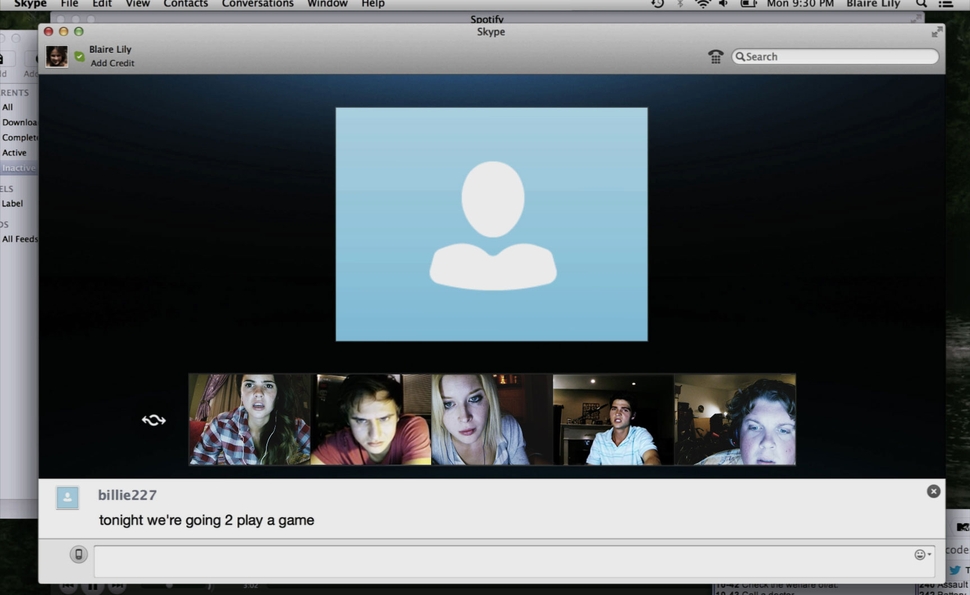
“Unfriended” has received some scathing reviews from critics because the film leans us toward anticipating these characters’ deaths, and they’ve also criticized the film’s central gimmick, which is that the whole thing takes place from the laptop screen of one of our main characters, Blaire (Shelley Hennig), who converses with her friends on Skype. We see her video-chat as well as multitask online. The film is presented in real time and the story is told from her laptop screen, and I can understand if you can’t get past this gimmick, which at times does get distracting. I was able to get past it and accept what the story would throw at me, which, as it turns out, was more than I expected. But before I get into that, let’s talk about the setup:

A high-school student named Laura Barns (Heather Sossaman) killed herself after a humiliating video of which she was the subject went viral. (Someone recorded the suicide and THAT video also went viral.) One year later, six of her classmates, including Blaire, are chatting together on Skype. But there seems to be someone joining them whose identity isn’t revealed. They can’t delete or hang up on the anonymous visitor and they assume it’s a glitch at first…until it starts messaging them. And not only that…but it’s using Laura’s account. Things get even stranger before they get dangerous, as the visitor claims to be Laura and wants to play a deadly game while also exposing dark secrets. It becomes clear that this is not a normal hacker and it may very well be the ghost of Laura seeking revenge on those who bullied her.

I saw “Unfriended” not only as a horror film, though it is very good at that by playing with found-footage gimmicks and cabin-in-the-woods story clichés, but also as a big punch in the face to bullies, especially cyberbullies. Many people, especially teens sadly, want attention and the Internet is the best way to do that and also to anonymously (though fake accounts) spread hatred and taunts. Even when there’s an anti-cyberbullying video online, which usually features a sad person expressing himself or herself, there are always going to be trolls commenting harshly and taunting the subject even more. But acting that way can lead to consequences on both the bully and the victim. It’s established early in the film that Laura killed herself because of the hurtful comments she received after the humiliating video was posted, and it becomes revealed more and more throughout the film that our six main characters have hurt her one way or another. Many of them die by suicidal acts (possibly caused by the malevolent spirit’s possession) and about half of their sins are revealed online for everyone to see. For example, early on, it’s discovered that Laura reached out to one of them for help soon after the video was posted—the person responded, “KILL URSELF.” That proof is exposed to everyone on Instagram.

What I really like about this film is its original, clever way of depicting teenage lifestyle and peer pressure and delivering in a subtle way the message that there are consequences for everything and if you confess your deeds, things might be a little easier. Some of these kids are not entirely bad (after all, no one is just born bad); actually, before the madness begins, we see Blaire and her boyfriend (Moses Jacob Storm) share a playful talk with each other and you can see and feel a genuine human relationship happening on video chat and it can be indicated that when they’re with the group, they can say or do such harsh things. It’s like the film is saying to teens: If you want to try and fit in with people like this to gain popularity in school, you have to really think about what they’re doing and what you might do.

But with that message aside, “Unfriended” is still a horror film, which means each of the characters must die in gruesome ways. If you’re a horror fan and want to see these people get their comeuppances, there are some suitably ridiculous and grisly ways each of these kids get it. (Though, the foreshadowing involving props is a little too obvious to me.) The buildup and tension are well-done in that it’s not clear what is exactly going to happen and when it will happen. And it leads to a brilliant sequence in which the characters are forced to play a deadly game of “Never Have I Ever,” in which the loser dies rather than drinks, in which truths are revealed about each of the players, the kids turn on each other, and the tension level is raised highly. And I like how it’s done in a minimalist way (all told online); director Levan Gabriadze keeps things contained and plays with the cyber reality in a well-handled way.

“Unfriended” will most likely not end cyberbullying because any kind of bullying will always be around. But I admire the way in which this film tried to speak to its audience about how this behavior simply should not continue and the truth will set you free. All the actors are decent, the pacing is strong, the twists and turns within the terror are well-done, and it’s nice to see a horror film tackle a modern issue as a fun but also moralistic cautionary tale. I recommend it but only if you didn’t mind the film’s trailer—if you see the trailer and don’t want to subject yourself to the central gimmick, you won’t enjoy this movie. I looked past it and enjoyed “Unfriended.”

It Follows (2015)

26 Jul

it-follows

Smith’s Verdict: ***1/2

Reviewed by Tanner Smith

How do I begin writing this review? There are three different ways I can think of in writing an introductory paragraph, so I think I’ll go with all of them. Here goes:

Intro Paragraph #1 (The Description of the “It”): It is a curse that can passed along from person to person through sexual intercourse. It is an entity visible only to those who possess the curse. It moves slowly. It will follow you. It can look like other people, even people you know. It will kill you and it will never stop until it does. If it does kill you, it moves back toward the previous holder of the curse. To be rid of it is to have sex with somebody else and pass it on.

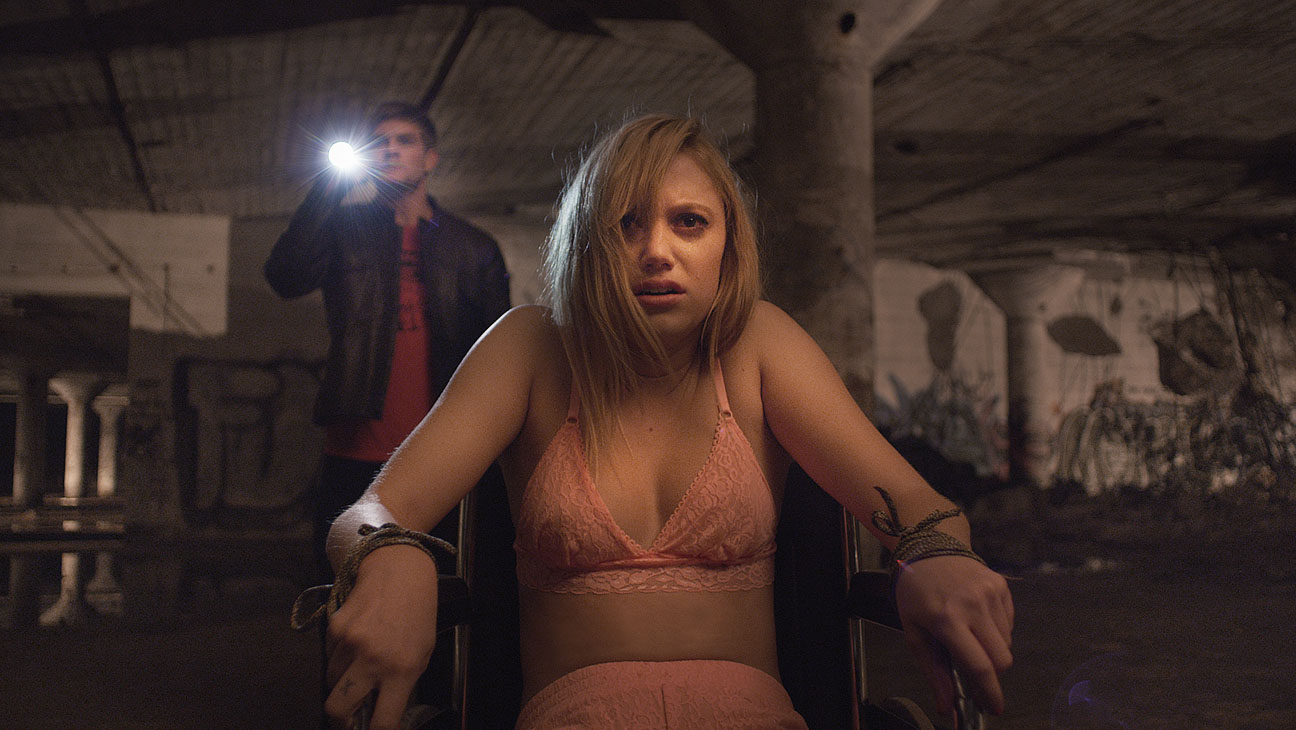
Intro Paragraph #2 (The Daydream): Carefree college student Jay Height has just had sex in the car of her date. She can’t help but express herself by stating a daydream she used to have when she was younger and wishing she was old enough to go out on dates and have the perfect guy by her side. She feels like she’s finally an adult and still feels like her whole life is ahead of her. But her date interrupts her by chloroforming her, tying her to a wheelchair, and scaring her by telling the truth about a horrific curse that will follow her until she sleeps with someone else.

(Each of these two Intro Paragraphs would have continued with explanations of allegorical statement. For example, the “It” could obviously symbolize a sexually-transmitted disease, death, sexual anxieties, or all of the above. And Jay could be learning the hard way that with being an adult comes accepting responsibility, no matter how scary it might be.)

Intro Paragraph #3 (The Negatives): I like this film so much that I’ll get the negatives out of the way first (or in this case, third). There are times early into the film that fake us out too much—the music will build up in one shot and then cut off in the next shot, showing that everything is fine. The film risks losing the suspense by doing that. While the symbolism is mostly well-handled and fascinating, some of it can be a little too obvious. For example, one of the main character’s friends does nothing except quote “The Idiot” from her…compact Kindle case (what was that thing anyway?). I get it already—it’s about the imminence of death. And midway through the film, when the heroine and her friends find the guy responsible for the deadly curse that’s stalking her, they calmly sit down and talk. I should be glad that there are no shouting matches and he lets them know rationally what’s going on and what can be done, but wouldn’t acting accordingly be justified here? And the young characters make about three trips to the hospital—where the hell are their parents?!

OK, now that that’s all out of the way, let’s talk about “It Follows.”

Written and directed by David Robert Mitchell (whose previous film was the wonderful, underrated indie gem, “The Myth of the American Sleepover”), “It Follows” is the best horror film I’ve seen in a long time, recalling what truly makes an effective scary movie scary—slow buildup with suspense; a creepy, unknown monster; moody cinematography; likable characters you want to see live; and an eerie (dare I say, memorable) soundtrack. The film it reminds me of most, in terms of tone rather than narrative, is John Carpenter’s “Halloween.” There are echoes of Carpenter all through “It Follows,” and in this day and age with first-person/found-footage gimmicks and jump-scares and such, that’s welcome in my theater.

Mitchell slowly but surely eases us into something truly scary, as his lead character, carefree college student Jay Height (Maika Monroe), has sex with a seemingly nice guy and then is suddenly in possession of “It.” He lets her know how relentless (and invisible) it is while also explaining the rules of how to avoid it and get rid of it. Surely enough, there is a supernatural stalker following her, and though her friends, including a nice boy named Paul (Keir Gilchrist) who has a crush on her, don’t necessarily believe her at first, they can tell she’s freaked out about something and oblige her by helping fight off whatever’s coming her way.

Mitchell clearly remembers that sex in horror films doesn’t end well for anyone unless they’re fully aware of the danger outside. The film doesn’t dwell too much on that notion of sex equaling death, because it’s not that kind of movie. It’s a movie that wants to scare us and relies on scary imagery and building tension to take us on a rollercoaster ride, and thankfully, he remembers that he can allow to relax at times instead of trying to jump-scare us every couple minutes or less. Mitchell also remembers how unnerving it can be for an oncoming, relentless entity to move slowly. It can be very chilling when someone or something isn’t very fast but surely isn’t giving up. The sense of approaching terror is apparent all throughout this film.

Another smart move is not to explain the origins of “It.” The film establishes rules and takes it from there so that the most important thing for our characters is to survive it. That’s much more effective than knowing where this thing comes from or even what can kill it. And while we’re on the subject, readers who have seen this movie will wonder what I think of the climax involving a naïve plan to destroy “It.” People complain about how the characters should have known better, seeing as how they shoot it in the head at one point and it only mildly affects it. But I say this: at least they tried something, okay? Besides, the climax is fun.

Maika Monroe is wonderful as Jay. She creates a horror-movie heroine worthy of “following,” if you will. You can feel her fear and misery. Her friends are mostly unknowns, though I recognize Keir Gilchrist from “It’s Kind of a Funny Story,” and that also works in the film’s favor. They portray likable characters we hope to see get through one situation after another. Even the character of Greg, played by Daniel Zovatto, would seem like an unlikable jackass in another horror movie, but even he feels likable and real. I won’t go as far as to say they’re all complex characters, but compared to the one-dimensional detestable pawns we see in most modern horror movies, they’re delightful to watch.

“It Follows” is not what I would call a standard horror film. There are far too many symbolic elements, hidden meanings, and even scenes that are quiet (remember those?) for it to be labeled as “standard.” I saw it as a fun, visceral thrill ride the first time I saw it. The second time, I started to notice something deeper within the subtext, whether that was what Mitchell was intentionally going for or not; of that I’m not sure, but his restrained tone would leave me to believe anything.

In fact, just as I’m writing this review and I’m thinking about my question about the kids’ parents, I have to wonder if Mitchell’s intention was to show how the world of youth is dangerous and facing it makes you more of an adult. I wonder…

The main thing to take from this movie is that death is around us and won’t stop. It can be slowed down for a while, but eventually, it will grab hold of us and won’t let go. That’s what I get from the film’s ambiguous ending, which is so low-key and downbeat that it managed to get under my skin and stay there, leading me to believe “It Follows” was something more than just a horror film. It scared me, delighted me in doing so, and even got me thinking, which is more than I can say for most modern horror films.

Inside Out (2015)

8 Jul

Inside-Out

Smith’s Verdict: ****

Reviewed by Tanner Smith

The new collaboration between Disney and Pixar Animation Studios, Inside Out, is an endearing, intelligently-written comedy-drama with candy-colored imagination. While Disney-Pixar has been stuck in a bit of a rut in the past few years with mediocre films such as Cars 2, Brave, and Monsters University, Inside Out reminds us of the collaborative strengths that made their earlier films, such as the Toy Story movies and Up, special. These are films children love because of their fun, memorable characters, colors, and engaging stories with themes complex enough to keep adults interested. Inside Out belongs in that same category.

Brilliant. Bright. Funny. Imaginative. Profound. Moving. Sometimes sad. All of these adjectives can be used to describe the power of Inside Out, which is easily one of the best films of 2015.

Despite the bright colors, artistic settings, and delightfully varied characters, Inside Out may be somewhat of a hard sell for the smallest of children. This is arguably a more meaningful film than any of Disney-Pixar’s previous works, heading deep into psychological regions. The adventure takes place in the human mind and the central characters are emotions—by making it this way, the film explores complex themes of personality.

Riley (voiced by Kaitlyn Dias) is an ordinary 11-year-old girl who is forced to move with her parents (Diane Lane and Kyle MacLachlan) from Minnesota to California because of a new job opportunity. She wants to make the best out of this situation, but it only gets worse as the moving truck is lost, the house is a dirty mess, the nearby pizzeria has only one topping (broccoli), and she has trouble fitting in at her new school. It’s difficult for her to be cheerful and upbeat as she misses her friends, her old house, and her hockey team. We see Riley’s world through the emotions in her head, which is where much of the film’s story is told. We meet Joy (Amy Poehler), our green-colored (each emotion has a different color) narrator and Riley’s chief emotion who keeps the other emotions in check so that Riley is consistently happy. The other primary emotions are blue Sadness (Phyllis Smith), purple Fear (Bill Hader), red Anger (Lewis Black), and green Disgust (Mindy Kaling). They run the Control Room inside Riley’s mind, which allows them to see what she sees and for her to feel what they feel. Memories are created and stored in collections of glass spheres, whether they’re short-term, long-term, or forgotten entirely. And there are also theme parks connected with one another, with the themes being dreams, nightmares, her favorite sport (hockey), imagination, and so on. It’s amazing to see how this “world” inside a person’s head works. There’s a dark abyss where forgotten memories are stored and eventually fade away, a dream-land that resembles a Hollywood studio where actors act out Riley’s dreams and nightmares, and all sorts of inventive components.

Something goes wrong, as Joy and Sadness are accidentally ejected from the Control Room. With Fear, Anger, and Disgust in charge, Riley, on the outside, snaps at her parents, fears attempts at making new friends, and even considers running away, while Joy and Sadness go on a quest through the craziness of Riley’s subconscious in order for Joy to regain control. They encounter many strange things along the way, including abstractness, fears, daydreams, and even a forgotten imaginary friend, named Bing Bong (Richard Kind).

The film shows complication and difficulty in adjusting and other psychological issues in a way that’s basic but also important and relatable. Some little kids may wonder why some of Riley’s worlds such as Hockey Land or Friendship Land are deteriorating, but adults will understand what Riley is going through and what everything on this journey means. With Joy and Sadness gone, Riley’s personality is shutting down, causing her to lose sense of the bright side of life and what it means to express herself. Even her associated memories are fading, adding more depth to the situation. But even if it all goes over kids’ heads, and they’ll understand it more as they get older, they’ll at least get a kick out of the film’s overall visuals.

There’s a fascinating dynamic between Joy and Sadness. Joy wants nothing more than for Riley to be happy. Sadness knows nothing but sadness and also has a Midas-like touch, so that every one of Riley’s memories she touches turns blue and sad. But in order to get back to the Control Room, they have to work together. I wouldn’t dare give away how, but something occurs to Joy later in the film about how much Sadness is needed. This leads to a wonderful conclusion that delivers a message about how we can’t always have our happy ending and we just have to deal with what we have rather than what we don’t and it’s important to express yourself. That’s a message you rarely find in especially family films. I applaud this movie for not taking the easy way out.

But the film isn’t so dark that its target audience won’t be turned off (after all, films don’t always have to be dark to be deep). There are some laughs to be had as well, such as long-term memories being trashed (such as piano lessons, with the exception of “Chopsticks” and “Heart and Soul,” of course) and brief visits inside the minds of others, including Riley’s parents. (By the way, the biggest laugh I got from this movie is when Riley encounters a boy near the end, and we see what goes on inside his head.)

With the perfect balance of comedy and drama, wonderful computer animation, amazing visuals, and a script that knows more about the subconscious than one might expect from seeing the film’s trailer, Inside Out is an instant classic, the best animated film to come around in a long time, and one of Disney-Pixar’s absolute finest.

Jurassic World (2015)

22 Jun

114

Smith’s Verdict: ***

Reviewed by Tanner Smith

22 years since the events of “Jurassic Park,” the theme park with real dinosaurs as its major attractions is finally opened. To talk about why that’s probably the worst idea imaginable, considering everything that happened before, would take too long, so let’s just move on. The park looks great! The visitors’ center has holographic, life-size dinosaurs, children can ride little Triceratops, the dinosaurs are seen by traveling via monorail and giant glass spheres, there’s an underwater dinosaur that eats sharks and splashes a viewing audience, and so on. If I didn’t see the first movie (and even today, I pretend not to see its first two sequels; I think the creators of this movie pretend that too), I’d want to visit this place in the hope that these things don’t suddenly break free and attack me! And of course, in a “Jurassic Park” movie, things must go wrong on the particular day this movie is set.

One of the more brilliant touches added to the story is that people today are so used to seeing a Tyrannosaurus Rex or a Brachiosaur that they’re just sort of bored by it. Even when tourists are near a T-Rex, some of them are just on their phones and ignoring it. Claire (Bryce Dallas Howard) compares them to elephants and wonders if there’s something bigger and scarier for today’s generation. Thanks to the gene-splicing done by a research team done by the only remaining cast member in this sequel, Dr. Wu (B.D. Wong, from the first movie), a new creation is awaiting approval to be released to the public—the 50-foot Indominus Rex, who apparently ate its only sibling.

Well, there’s only one way this can turn out, right?

Enter Owen Grady (Chris Pratt), a former Navy man who now works as a Raptor Wrangler & Whisperer. No, seriously—he can communicate with Velociraptors using a clicking device and a stern voice. This gets the attention of the obvious villain, the unlikable military-type (Vincent D’Onofrio), who wants to use the Raptors as weapons. But enough about that, Owen says. I gotta check out this Indominus Rex thing!

Claire brings Owen in on the new dino, and of course, he thinks this was a very bad idea. Further proving his point too late is when the creature manages to break out of its paddock, heading toward the park, where thousands of people are! So now it’s up to Owen, Claire, Claire’s assistants at the electronic monitors (including Lowery, played with Jeff Goldblum-style cockiness by Jake Johnson), and even the military to bring this beast down before it causes any more damage. On top of that, Claire’s nephews, teenage Zach (Nick Robinson) and his precocious little brother Gray (Ty Simpkins), are in the park, have escaped from Claire’s assistant, and have separated from everyone else to have some fun. After a T-Rex attacks them, they lose their way in the park.

This is a much better “Jurassic Park” sequel than 1997’s “The Lost World: Jurassic Park” and 2001’s “Jurassic Park III.” It captures the feel of the original while knowing that it’s not enough to give us what made it popular but to add its own inventive elements as well. What do we come to expect? Fun action scenes with some scary dinosaurs. What else do we come to expect? Something new to add on to them. Setting the film in the fully functional park was a good way to start, and even making this new vision of a dinosaur theme park better than what Richard Attenborough’s John Hammond would’ve imagined was a good idea too. There are so many things that can be done with this version, and director Colin Trevorrow and his team of writers take advantage of most of them (if not all of them). They also give the central characters (Owen, Claire, Zach, Gray, Lowery) enough appeal and personality to make us care for them, even if they’re more two-dimensional rather than three-dimensional. This is especially notable since I couldn’t give a damn about most of the characters in the other sequels.

The action scenes are a lot of fun and even almost rival the best in the original. I have two particular favorites—one is a sequence in which escaped Pterodactyls attack the visitors’ center, picking people up, eating them, dropping them, etc., and the other is the intense climactic battle between beast and…beast. (That’s all I’ll say about that.) And of course, being a monster-movie, there’s also room for social commentary and satire—is it worth it to amp up the thrills in an amusement park? And let’s not forget D’Onofrio’s logic in using dinosaurs as weapons: technology will fail, so nature will continue to help us. Maybe this guy should watch “Aliens” and learn something about military-industrial complexes. Oh, and how are the effects? The film uses both CGI and animatronics—while it’s more effective when the animatronics are used (such as a rare tender moments when Owen and Claire comfort a dying Brachiosaur), the CGI dinosaurs are fine. (Just don’t see this movie in 3-D—they look more fake in that process.)

“Jurassic World” is the “Jurassic Park” sequel I was waiting for. It’s fun, inventive, and even works well as a stand-alone thrill ride. This may inspire more sequels to be made, though I don’t think they’re needed. I think the filmmakers have already done for this film what’s left to do with its concept (unless the sequel wants to go for the R rating and do things audiences wouldn’t expect). But for now, be glad there’s fresh, new life brought to a cherished franchise.

How to Dance in Ohio (2015)

28 May

how_to_dance_in_ohio_header-620x347

Smith’s Verdict: ***1/2

Reviewed by Tanner Smith

“How to Dance in Ohio,” which will air on HBO later this year, is a moving, refreshingly cheerful documentary about autistic teenagers in Columbus, Ohio, as they prepare for their first spring formal. Over the course of 12 weeks, they practice their social skills and dance moves. After having seen “King Jack” and a few other gritty indie films about how depressing life can be for young people, it’s refreshing to see a film about young people that’s actually uplifting. Of course, it would be dishonest not to show how these people and their families deal with their condition, and that’s why they do show it; it’s just not as entirely downbeat as you might expect. There’s no oppression; just positive vibes all throughout. And I don’t mind that.

And for that matter, it’s also refreshing, in this day and age, not to hear any part of the “vaccine” debate.

Now, of course, there might be some people who see this as a bad thing, as the film hardly touches upon what it’s like for these autistic young people participating in society. But for others, such as me, they’ll most likely get a clear understanding nonetheless and empathize with the central subjects because of director Alexandra Shiva’s sheer engagement with them.

“How to Dance in Ohio” focuses on three young women in particular: Marideth (16) who loves looking up facts on her computer; Caroline (19), an outgoing college student who has a boyfriend who goes to the same counseling center as she; and Jessica (22), a baker who lives in a shared home. We see how they live, how they work, etc. as they prepare for the dance with much expected anxiety along the way.

“How to Dance in Ohio” is a well-made, nicely edited, balanced look at autistic teenagers that couldn’t be any better handled in the hands of a narrative filmmaker and a script (no matter how accurate that script might be). It’s also funny in certain spots; there were some nice laughs at a scene in which Marideth discusses the career of Miley Cyrus with her sister. When the big day comes when they all participate in the dance, it goes swimmingly and ends on a positive note that made me smile. I cared about the people I was watching, I thought it was well-made, and I admired how the doc focused more on rich, individual stories than making some sort of social-issue tale. I really liked “How to Dance in Ohio.”

King Jack (2015)

25 May

king_jack_1-620x340

Smith’s Verdict: ***

Reviewed by Tanner Smith

For faithful readers of my blog, it should come as no surprise that I’m a fan of the Coming Of Age Tale. Among my favorite films are War Eagle, Arkansas, Stand by Me, and Tex…and Sacred Hearts, Holy Souls, still the best Made In Arkansas short film I’ve seen. When Coming Of Age Tales are done right, they can capture something special, real, and effective. And for the most part, Felix Thompson’s debut feature, “King Jack,” does capture something unique when it’s not delivering a certain distracting element. But I’ll get to that shortly.

Set in upstate New York, “King Jack” shows a couple days in the life of a 15-year-old kid named Jack (Charlie Plummer) who is heading down a dangerous road in life. He’s attending summer school, his brother’s a violent punk who works at a gas station, and he often gets into trouble; in the film’s opening scene, he’s seen spray painting (arguably) the most offensive word in the English language on the garage door of the house owned by his bully’s family. His bully is an older kid named Shane (Danny Flaherty) who constantly tortures Jack whenever he gets a chance. One day, Jack is left to care for the younger cousin, Ben (Cory Nichols), for a while after his mother has had a recent breakdown. Ben is quiet and shy and hasn’t got a prayer when Shane targets both Jack and Ben, and he and his friends go after them. The bullies manage to nab Ben and torment him in one of many shockingly realistic brutal scenes. Now, Jack must learn a hard lesson in standing up for other people, while Ben also learns to roll up his sleeves at a crucial point.

I must confess: I was ready to give “King Jack” a mixed review right after I saw it at the 2015 Little Rock Film Festival (screened soon after the Tribeca Film Festival, where it received an Audience Award) because so much time was spent with this character of Shane, who I felt was a one-dimensional cardboard-cutout bully not unlike the knife-wielding greaser in Stephen King’s “It.” I felt he was horrendous for no other purpose than…to be horrendous. This isn’t a knock against Danny Flaherty who plays the role well, but I was bored by the role, I wanted him to go away, and when I knew the film was going to be more about Jack’s struggles with his bullying, I was hoping there’d be a reasonable explanation as to why he’s acting this way. I never like bullies in movies unless there’s a reason for their behavior (or unless they’re funny; see Biff in Back to the Future).

But then, I thought more about it during a long drive home. I thought about when I was a kid and I was getting beat up in a schoolyard or humiliated at a dance. Some of the time, I actually provoked my bullies for stupid reasons, some of which had to do with the previous beating. Then I thought about Jack’s introduction in the movie; he’s defacing his bully’s family’s garage! He’s asking for it. And what does he do when he and Ben encounter the bullies? He throws a rock at his head! He put himself and his younger, smaller cousin in peril against a kid who should be picking on someone his own size but clearly won’t. And that’s when I realized this film knows more about young people than I thought. (And I could be wrong, but I think I recall some lines of dialogue that vaguely explain how this began.)

The stuff with the bullies makes “King Jack” feel like a thriller, but the film does take time out to show other adventures for Jack and Ben, such as a truly terrific scene involving truth or dare between the boys and two neighborhood girls and a scene that shows Jack thinking he’s getting lucky with a girl he likes more but in for a dangerous surprise. The film also captures the way most of today’s teenagers talk (though, I have to wonder if kids today still really use the word “doofus,” which I heard twice in the film)—standoffish at some, mockingly to groups of friends, honest to one friend, cussing out everyone they dislike/hate, and so forth. Writer-director Felix Thompson’s dialogue is well-chosen, and cinematographer Brandon Roots shoots it like a documentary, adding realism to the film. I know the shaking camera is a gimmick that has worn out its welcome, but sometimes it’s needed to further the effect. By the time the inevitable climax comes around, in which Jack must face Shane yet again and make an important choice, you feel the film’s intensity. And the violence doesn’t back down either; whenever someone gets punched, you can always feel like it hurts.

At the center of it all is newcomer Charlie Plummer as Jack. Plummer is excellent in the role of a complex kid trying to survive in a cruel world. You can practically feel the emotional baggage he carries with him at all times. Plummer is also successful at showing us an effectively subtle character arc—by the beginning of the film, he’s self-centered, but by the end of the film, he’s standing up for his cousin, well-played by Cory Nichols.

It’s hardly fair to argue against the bully character anymore. But something I will argue against is the purpose of Ben having a mentally unstable mother. That never goes anywhere, and I feel like his character arc of bravery after apprehension could’ve been set up in a simpler way. Another problem I have with the film is the ending. It seemed like it stopped rather than resolved itself. But…perhaps “King Jack” was just meant to portray a day in the life of this kid, his family and his friends, and telling it straightforward (while avoiding allegory or commentary) may have worked in its favor after all. It got me to think, especially about the bully’s behavior, and the more I thought about it, the more I liked it.

Ah hell, watch me change my rating after I see “King Jack” a second time. And chances are I will.

Furious Seven (2015)

4 Apr

Furious_7_Reparto

Smith’s Verdict: **1/2
Reviewed by Tanner Smith

“Furious Seven” is the seventh entry in the highly successful series of “The Fast and the Furious” films that basically represent the equivalent of what they feature much of: street racing. Both street racing and these films are made up of speed, adrenaline, and a divergent lack of intelligence. “Furious Seven” is mostly on that level. But this time around, there’s a sense of poignancy surrounding the film’s fun measure, and it has to do with the untimely death of star Paul Walker. Walker died midway through filming and because we’re aware of that, that kind of takes away from the fun whenever he’s on screen.

If you can get past that (which isn’t easy, seeing as how the fourth wall is nearly broken when it brings up this matter near the end), this seventh entry in a film series that is all about stunts, effects, energy, and quick editing is…pretty much the same thing. It’s a relentless series of exciting action sequences that don’t generate any real tension because everyone in the audience knows that everything will turn out okay. But they look great and provide us with a great deal of trailer-fodder. My favorite scene involves Vin Diesel’s Dom and his allies (Walker, Michelle Rodriguez, Tyrese Gibson, and Ludacris) parachuting out of the back of a plane…with cars. It’s tremendously insane and fun to watch, and it’s followed by a similarly insane moment as Walker attempts to flee from the back of a truck that is about to hurdle off a cliff.

Does the story even matter? Does it matter that Jason Stathum’s character is a Special Ops assassin out to avenge his brother’s death by killing Diesel and company, thus making it your typical hunter-vs-hunted tale? And does it even matter that Kurt Russell joins the cast as a government agent who enjoys watching these guys work? Does it matter that there’s a mercenary played by Djimon Hounsou using surveillance technology to track them down? Nope. Not at all. It’s just an excuse to give us awesome action scenes; nothing more, nothing less. I feel that it tries to be a James Bond movie (complete with a beautiful woman, played by Nathalie Emmanuel, who knows a thing or two about computer hacking), but when you have as much high-speed energy as this, you don’t care much about anything else.

Give the filmmakers some credit for attempts at character building, such as when Walker’s character, Brian O’Connor, is struggling to choose between the adrenaline-junkie life he’d gotten used to or a quiet, responsible family life he’s getting used to. But other moments such as Rodriguez’s amnesiac character trying to regain her memories as Diesel’s wife aren’t as successful.

The film ends with a tribute to Paul Walker, which thankfully isn’t done with merely a “For Paul” dedication but with a montage of shots of him from earlier in the series. It also has a nice reflective moment that works with the message I think was trying to get across all along: it’s all about family. I won’t say any more about it, but it’s actually a well-done moment.

I’m giving the film a mixed review but admittedly with some affection. I did enjoy it, and I would probably see it again on DVD or on demand to see those glorious action scenes again. Bottom line here is that it either works for you or it doesn’t. If you like energized, adrenaline-fueled set pieces, this is the movie for you. Just expect a little bit of pathos near the end.