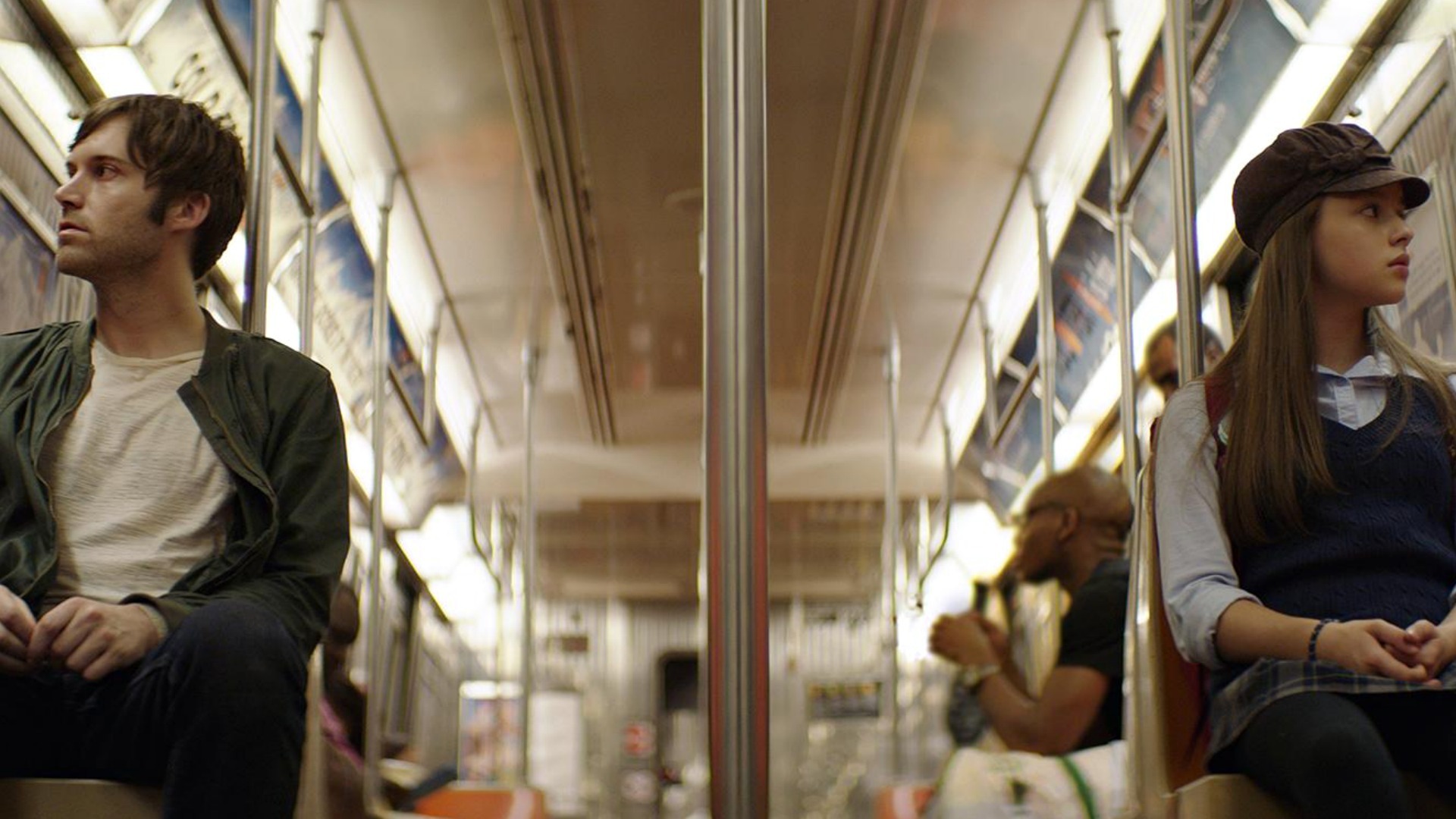
Archive | 2014 RSS feed for this section

Man Shot Dead (2014)

28 May

1488182_681277818586835_3910100358730003304_n

Smith’s Verdict: ****

Reviewed by Tanner Smith

Filmmaker Taylor Feltner, the oldest of four boys in a big family, left his small Arkansas town of Morrilton at age 17 while everyone else stayed. “So I always felt a bit like an outsider,” he says. “When I come home with a stranger’s curiosity, I look at the family that raised me and I wonder what their lives were like before I came along.”

That’s part of his opening narration in his 74-minute documentary, “Man Shot Dead,” which premiered recently at the Little Rock Film Festival. He states that he will talk to certain members of his family and ask them about a certain incident that resulted in the murder of his grandfather. In some way, it has affected everyone in the family, and he is going to find out how. He comes home to Morrilton, AR, with his documentary crew and equipment, and aspires to gain insight about what happened, why it happened, and what happened after.

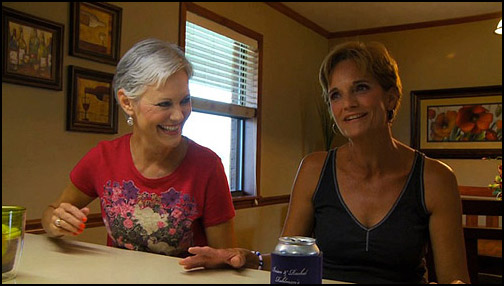
The main focus of “Man Shot Dead” is not the subjected incident itself but the reactions to it in present-day, as we learn through the dialogues of Feltner’s grandmother (Bernie), mother (Karen), and aunts (Glenna and Wanda). We’re first introduced to Bernie, who talks about how she first met her husband, Glen Dickson, and what he was like and how they related with each other through marriage. (“We never called each other by our first name,” she says at one point. “It was just ‘Honey.’”) Their daughters, Glenna, Wanda, and Karen, loved him and have fond memories of him.

It’s after that nostalgic opening that the documentary steadily decides to talk about the incident that cost Glen’s life on the night of July 25, 1966. Feltner and his brother, Grant (who we see often in the film), haven’t been told much about it; Grant has only heard little things about it. Feltner wants to know the full story, but because there are no reliable witnesses available and an inconsistent police report, he asks Karen, Bernie, Glenna, and Wanda to tell what they know about it. The only things that are most absolutely certain are that he was on another person’s property and he was shot with a rifle. It was ruled as justifiable homicide.

Why Glen was there to begin with is anyone’s guess. No one knows for sure, save for the only living witness, whose father was the one that shot him. Unfortunately, it seems she is unreliable. Later on, we see Feltner send her a handwritten letter, only to receive a response from presumably her lawyer. He sends another; no response. There are no clear answers to the reasoning behind Glen Dickson’s death, and to Karen, Bernie, Glenna, and Wanda, it seems that while there’s hardly a way to forget about it, it doesn’t hurt to at least try and let it be after all this time.

The main story being told in “Man Shot Dead” is how this family, the surviving mother and three daughters, continued on with their lives after Glen, the sole provider for the family, was killed. Understandably, they were all devastated at first (though Karen was probably better at hiding it, since according to Glenna, she didn’t cry the night they all heard the news). They stayed at a relative’s house for a while in Morrilton before Bernie knew they had to have a home of their own and bought a house. Bernie admits that raising and providing for three kids was rough at first, but through time they all managed to get by. They’ve grown very close together, always taking care of each other.
stills_ManShotDead

Now, some things may be kept inside that neither person wants to talk about, and they even joke about counseling and how they all might need it, particularly Karen who says she has more to say about herself that she won’t on film. Midway through, she sums up her life, and her family’s life: “Whether it just be that one night or things that happened before that, it set the stage for our lives. Our life has been great. We have a wonderful mother that took care of us. But it also robbed us of the things that we’ll never know about.” All the more heartbreaking is that she hardly had a chance to know her father, as she was only eight years old when he died. In probably the most poignant moment of the film, she states while holding back a tear, “I think every girl needs her daddy.”

The film is also a story of a man really getting to know his family in ways he hadn’t before. With his family’s history and the important event that changed their lives suddenly revealed to him, through this documentary project, Feltner can see these people not just as his mother, his grandmother, and his aunts; he understands what they’ve been through, knows what kind of people they were and how they became who they are now, and now sees them, particularly his mother, as stronger than he may have originally conceived.

And we do too, as a result of the finished product. I felt like I knew these people while I was watching this documentary and listening to them talk about what they knew, what they discover, how things were then, how they are now, and how they’ll go on living. And I understood them and was interested in everything they had to say. Karen Feltner, in particular, is one of the most fascinating people I’ve come across in a documentary—you don’t see characters in narrative fiction as compeling as this woman.

I should also praise “Man Shot Dead” on a technical level as well. Using old photographs, written documents, home-video footage, and even sound effects in the chilling sequence in which we’re told, according to the police report, what happened that fateful night, the film’s editing, by Jessica Schilling, is top-notch and makes the film even more captivating. It’s also shot gorgeously, by Feltner, Jennifer Braddock, Gabe Mayhan, and Andy Featherston—the sequence I think of in particular is where we see the brother, Grant, walking through a rural countryside and fishing in a nearby river.

“Man Shot Dead” is one of the very best films I’ve seen so far this year. I hope that after its world premiere at the Little Rock festival, it receives more audiences and recognition any way it can. It’s worth seeing to meet this family.

Manny (2014)

28 May

manny-1024x576

Smith’s Verdict: ***1/2

Reviewed by Tanner Smith

I must confess that I didn’t even know the name Manny Pacquiao before I watched this documentary about him, “Manny.” I knew nothing about him—that he was a boxer, that he was also involved in politics, where he came from, or even that he liked to sing and has even performed a duet with Will Ferrell on “Jimmy Kimmel” once. But after seeing this film, I doubt I’ll forget him.

Co-directed by Leon Gast (who also directed Oscar-winning “When We Were Kings”) and Ryan Moore (a first-time director who first imagined the project), and narrated by Liam Neeson, “Manny” delivers a clear portrait of the Filipino professional boxer who also had other ambitions in mind that he managed to succeed. His story is a familiar one (the rags-to-riches tale) but it’s still inspiring to see how Pacquiao has risen from a time of poverty in an obscure Philippine village to international stardom. We’re told interesting tales, from Pacquiao and other interviewees, about his early life in the Philippines, including how Pacquiao credits his physical strength to working with fisherman as a boy.

Most of the documentary tells about his boxing career. We meet the people who helped train him and supported him, including his uncle Sardo Mejia, his friend Buboy Fernandez, managers, promoters, boxer Freddie Roach, and others, as well as celebrities such as Mark Wahlberg. Arguably most importantly, we also get highlights from his most memorable fights, each of which represent how much his fame heightens through time, from the mid-90s to 2013 at least (as far as I know, he’s still fighting). Now it seems as if everyone who follows boxing knows who Manny Pacquiao is. In this documentary, he’s even mentioned along with Muhammad Ali at one point.

We also get into Manny’s other ambitions, as we see how he gets into entertainment. He acts in cheesy movies with titles such as “Wapak-Man” and “Anak ng Kumander,” plugs products in TV commercials, and, yes, even has a brief singing career, which includes a duet of the song “Imagine” with Will Ferrell on “Jimmy Kimmel Live” and a session recording “Sometimes When We Touch” while being coached by Dan Hill at Capitol Records. That’s the funniest sequence in the film, as Hill tries to give Manny voice lessons while treading lightly in possible fear that he will get brutally punched.

Manny is also involved in politics, as he becomes a congressman in the Filipino House of Representatives. But something that is considered later in the film, and it’s something I was waiting to be addressed, is the question of how Manny’s other activities affect his boxing career. Does he truly have his priorities in check? Does he need to quit one thing or another?

This documentary is gorgeously shot and very well-edited. The best sequences are the latest fighting sequences; it was like I could feel the knockouts being given from Pacquiao to Miguel Cotto, Pacquiao to Ricky Hatton, and Juan Manuel Marquez to Pacquiao (in one of only very few losses for him). These punches are very brutal, and the way they’re shot and edited make it seem almost as if we’re there at these boxing matches (that’s how I felt when I saw this film on the big screen at the Little Rock Film Festival).

I have a few complaints about this film, however. One is that the final 15-20 minutes seemed to me like one too many false endings. Another is kind of a personal preference, but I would have liked to see more of Manny’s mother Dionisia, who is only seen briefly as she talks about raising Manny and what he was like as a child. And I wouldn’t have minded an interview with Manny’s kids either (how is he as a father? Would he like them to fight as well? Etc.), though we have some input from Manny’s wife, Jinkee. To be fair, I think it was hard enough to edit this film with all the interview footage, documenting footage, and media coverage; what they have is good enough, I’d say.

“Manny” is a good documentary, showing that arguably the best, most interesting documentaries are the ones that serve as character-studies. It tells the story of Manny Pacquiao effectively and gives us an appealing, fascinating guy that I’m glad I could be introduced to this way. And I’ll just say I’ll never listen to “Sometimes When We Touch” the same way again.

Little Accidents (2014)

23 May

14063-4

Smith’s Verdict: **1/2

Reviewed by Tanner Smith

Sara Corlangelo’s “Little Accidents” is an ensemble drama that tries to intersect many character stories around not just one tragedy but two at least. As the title suggests, these tragic events are caused by little accidents. While some individual traits work well on their own, and it’s well-acted and suitably atmospheric, the film as a whole lacks focus. There are three particular characters that are given the most attention, but there are also side characters that apparently have much more purpose than is being shown so that when something important is said to them or when something tragic happens to one of them, it’s hard to feel for or even understand them when you hardly got a chance to know them. This is a problem I notice in most ensemble films that try to connect a few character stories into one film: it leaves little room for development on certain aspects.

One of the central tragedies in the film is a fatal mining accident in the small coal town of Beckley, West Virginia. Possibly due to managerial negligence, 10 miners lost their lives, and a lot of Beckley locals are wondering who’s to blame for it. Reserved, quiet Amos Jenkins (Boyd Holbrook) is the lone survivor, which means he’s the perfect subject for interrogation in the investigation. And he also gets unwanted attention from everyone in town, not just because he’s the lone survivor of this incident but also because half of them are afraid he’ll say something against the mine which will cause it to shut down. What he knows could ruin the livelihoods of everyone who works there.

Meanwhile, another tragedy occurs as teenage Owen (Jacob Lofland), whose father died in the mine accident, in involved in the accidental death of one of his schoolmates, J.T. (Travis Tope). Feeling responsible, he hides the body and doesn’t tell anyone about what happened. The only witness was his Down-syndrome-afflicted little brother (Beau Wright), whom he makes promise not to tell anyone, even their mother (Chloe Sevigny).

J.T.’s father, Bill Doyle (Josh Lucas), is one of the corporate executives for the mine and is also under investigation for the mine accident. When J.T. disappears, he and his wife, Diana (Elizabeth Banks), start a public search for him. As time goes on, they come to expect the worst, as they grieve their son’s loss. At the same time, Owen tries to carry on with his life with his silent guilt. Feeling sorry, he gets himself a job doing yard work for Diana and Bill. But when they befriend each other, Owen is even more unsure about whether or not he should tell them what happened to J.T.

Somewhere in all this, Amos gets back into the picture, as Diana, who isn’t very close with Bill anymore and seeks comfort elsewhere, meets Amos at a Bible study and begins an affair with him. But something I have to wonder is what was the clear motivation for Diana in this affair. I mean, I know she’s grief-stricken over the loss of her son and needs someone to be with when Bill isn’t always there for her when he has the investigation to deal with; but is it possible that she’s just cozying up to Amos to keep him from testifying against the mine and its executives, including Bill? I recently asked a friend who saw this with me what he made of this relationship; a possible conclusion is that maybe she started out genuinely liking him and feeling comfortable around him in this distressing situation but then she realized that she does indeed care for her husband when it’s possible that Amos may actually testify against him. Either way you look at it, it still gets Amos to realize what he has to do.

Not that it’s at all implausible, but it’s always interesting in films such as this how people from different classes in a small town are brought together and able to talk to each other like this. I think the most touching friendship is the one that develops between Owen and Diana; the best scene in the film is one in which Diana helps Owen with yard work and they talk about J.T., and Owen tells her what J.T. was like the last time he saw him (because she knows he was there around the time he disappeared). The dialogue and acting in this scene is just perfect and captures the pain and guilt that both of them are going through with one not realizing the full truth about the other.

The film contains a lot of atmosphere as it presents this town and picks just the right locations to show us. The film’s director of photography, Rachel Morrison, captures the setting really well with the aid of natural-light 35mm photography. The actors are solid too—this is some of Elizabeth Banks’ best work as a distraught woman dealing with loss and also feeling guilty about benefit; Boyd Holbrook is suitably subdued as soft-spoken Amos who eventually must face corruption; and Jacob Lofland (in his first film since “Mud”), as a guilt-ridden kid who tries to consider the penalties of his actions, is emerging as a most promising young actor with great range.

But unfortunately, other good actors are left with unwritten, underdeveloped roles that they try to pull off. I guess Josh Lucas gets a fair amount of screen time, but Chloe Sevigny is wasted as Owen’s mother; we know nothing about her except she lost her husband in the accident and she’s able to buy her sons the latest technologies with settlement cash. That’s about it—there’s no character here. I can say the same about Amos’ father whom Amos lives with after recovery. They get only two brief scenes together before something inevitable (at least, if you’ve seen enough movies) happens, and by that time, when you should feel bad for him and for Amos, I feel like I didn’t know a damn thing about him.

By the main aspects of “Little Accidents,” I should like this film. And I do, at least a little. At the end of the film, when characters must reveal their hidden truths, it does have a certain emotional power to it. I think what bothers me about it is that while it spends time with emotional connections with these characters from different classes, there are hardly any room for connections in their own. Because of that, in my opinion, it doesn’t make the new relationships seem entirely special or noteworthy.

Maybe I’m focusing too much on the little things in this film and a second viewing might change that. As I’m writing this review, I come to think that maybe I should give “Little Accidents” a pass, since I think its main intention was to show how people are brought together during tragedy. In that respect, it does work well. I don’t know; if I see the film again and it changes the way I look at it, I’ll revise the review. For now, I give it a mixed review.

Valley Inn (2014)

22 May

1544603_263786480460163_9040261442275233140_n

Smith’s Verdict: ***

Reviewed by Tanner Smith

I’m just going to say right up front that I was a little uncertain about writing this review. I thought maybe I should see it a second time just to make sure I wouldn’t neglect to mention something important (non-spoilers, mind you). With that said, there’s a lot that happens in “Valley Inn,” with many side characters and subplots. And if I get to see it again later, I’ll revise my review unless it’s not anything important I forgot to comment on the first time.

“Valley Inn,” which recently premiered at the Little Rock Film Festival, is a two-hour comedy-drama, shot in Northwest Arkansas, and takes place mostly in Hindsville, a small community in Madison County. This is one of those films that show a pleasant portrait of a small Southern town and its residents, and while sometimes it can be a little overly drawn, it manages to present itself as a cute, enjoyable film that didn’t bore me or make me wish I was somewhere other than this town.

“Valley Inn,” directed by Kim Swink and Chris Spencer (and written by Swink and Nelsie Spencer), begins as New Jersey college student Emily (Jordan Scott) is assigned by a Christian book company to travel to Hindsville, Arkansas, to sell books door-to-door for the summer. She brings along one friend, Maddy (Whitney Masters), and stays one night in a secluded rural home. But one day and one night in this change of scenery with some odd folks is too much for Maddy, as she takes the car and leaves Emily alone in town for the summer. (Sheesh, that’s pretty low.)

Emily finds a room to sleep in above the Valley Inn, the local café & hangout where all local gossip is spread. And from here on in, it’s an episodic series of events involving Emily trying to fit into the town, make a good quota on her book sales, and even finding herself in a relationship with the local preacher’s handsome son, Lee (Colley Bailey). Oh, and there’s also a brief subplot involving “Sunday/Fun Day” with other members of her “bookfield,” where everyone is perky and happy, and the leader doesn’t allow tardiness, even for church reasons.

But that’s just the tip of the iceberg. There are also many side characters and subplots in “Valley Inn,” and every now and then, the film cuts back to these people for us to catch up. There’s the nice woman who runs the Valley Inn (Natalie Canerday); there’s the “cowboy” with a reputation (David Lansbury); the waitress he constantly tries to woo (Joey Lauren Adams); there’s the high-class couple (Kenn Woodard, Mandy Fason), one of which may have a secret deceitful plan in mind, and their pretty daughter (Jaclyn Marlan); there’s the elderly woman (Candyce Hinkle) who refers to Jesus by the nickname “Jerry”; good God, there are a lot are a lot of quirky characters she comes across. Some of them are caricatures, and not much time is used to develop anything other than one trait; but to be fair, isn’t there one thing you know about people you only meet once in a while in a strange place? That’s what the film basically is—a vacation from one place to another (in this case, from a New Jersey town to a small Southern town) and the many people they come across. In that respect, I liked these people and was curious as to what would happen each time we cut back to them. There’s a scene later on that begins as people walk out of a church, apparently for a funeral—I actually kind of gasped because I was concerned about knowing which one of them died. That scene comes way late in the film, and that’s how I knew “Valley Inn” worked for me. I cared about these people. And also to the film’s credit, I can see some of these people in my own small hometown. Oh, and there’s also a brief subplot involving “Sunday/Fun Day” with other members of her “bookfield,” where everyone is perky and happy, and the leader doesn’t allow tardiness, even for church reasons.

(Oh, and I forgot to mention the small part of a little boy who makes his own home war movie with his friends and other, older locals. I not only feel like I knew this kid; I feel like I was this kid when I was making random home movies in my hometown!)

We get a good feel of the town. Aside from the Valley Inn, we see rural-area homes, urban houses, annual rodeo events, cattle auction yards, a country-music jamboree, a low-water bridge, a beautiful swimming hole, and even a brief moment at the home of a shotgun-packing meth-cooker (whom Lee must rescue Emily from)—hey, when someone goes door-to-door for a full summer, you expect to come across at least one psycho.

Now I have to make a confession. I went into this movie not knowing exactly what it was about. I knew about some of the cast members and that it was labeled as “a love-letter to small town America,” but not much else. When I was introduced to Emily and Maddy, and it shows Maddy reacting to their place of assignment, the population number of the town, a dead critter on the side of the road, and trying her best not to laugh at the behavior of her house hosts (even when Hinkle refers to Jesus as Jerry), I kept paying attention. I expected the story would be about Maddy as this stubborn New Jersey girl who comes across these people, learns about tolerance and patience, and manages to befriend the locals. Granted, that’s probably predictable, but the way Whitney Masters was playing Maddy, I would have looked forward to it! She has a natural, appealing screen presence that Jordan Scott by comparison seemed kind of bland, even with her perky morning mantra, “I feel happy! I feel healthy! I feel terrific!” (By the way, doesn’t she wake people every time she shouts it in the early morning? Does anyone even mention it to her?)

But no—Maddy is gone from the movie after 15 minutes, and she never returns. So instead, we have a character arc for Emily as she goes from being repressed to a free-spirit. There’s nothing wrong with that, as Emily does seem like the type of person who needs a change in her life, and the people she comes across, particularly Lee who manages to kidnap her from one of her door-to-door business days (by the way, guys, don’t try that at home), are just the people to help her break free. And Jordan Scott did manage to make me care for her.

Yes, “Valley Inn” does go all over the place (actually, you could call this five or six LRFF Arkansas Shorts thrown into one). Yes, some of it is corny and predictable. Yes, some of it is over-the-top (I won’t go into “Fun Day” and its crazy leader). But I can’t hate this movie or even give it a mixed review; there’s just so much that I like in this—the actors, the overall atmosphere, the smart writing (some good dialogue here), and little details that amount to the big picture. Something else I like about “Valley Inn” is that it’s very chill. It has a laid-back tone that strangely works in the film’s favor. A lot of it is just watching these people interact with each other and go about their days and make a living in this town. And I don’t mind that in the slightest. I enjoyed “Valley Inn”—it’s cute, it’s funny, and it contains a great deal of atmosphere.

Before I Disappear (2014)

21 May

before-i-disappear

Smith’s Verdict: ***1/2

Reviewed by Tanner Smith

“Before I Disappear” is Shawn Christensen’s premiere feature-length film based on his Academy Award winning short film, “Curfew,” and it’s a dark, riveting, successful portrait of a man who’s hit rock-bottom and may be able to find a way out again.

Christensen wrote, directed, edited, and co-stars in this film as Richie, who has found nothing to live for after the death of his girlfriend. Severely depressed, constantly threatened by moneylenders, and even discovering a grisly sight in one of the bathroom stalls at the place he works as a janitor, he contemplates suicide. One day, he cuts his wrist and lays in the bathtub for a while. Not dead, he answers a phone call from his sister, Maggie (Emmy Rossum). Maggie needs him to pick up her pre-teenage daughter, Sophia (Fatima Ptacek), whom he has never met. After bandaging his wrist, he picks her up and drops her off at her apartment until he’s called again to babysit her. The problem is she’s a spoiled brat and he has enough on his plate already. The only reason he’s here is because Maggie, whom he has spoken to in years, is relying on him, which is enough for him to carry on living for a while longer.

A mysterious circumstance (though actually, it’s one of many) causes Richie to Sophia to leave the apartment and walk across the dark side of the city through the night. Richie introduces Sophia to a few places and people he knows well, though they’re not right for a girl her age and he’s not even sure if it’s right for him anymore. As the night grows longer, Richie discovers new harsh truths about some already-harsh people in his life and also comes across unfortunate discoveries related what he saw in the bathroom stall. All while he awaits reuniting Sophia with her mother, Richie must consider the rest of his possibly-short life in order to know if he truly has something to live for.

“Before I Disappear” is a carefully-constructed character piece that is skillfully acted. Shawn Christensen has many hats to wear behind the camera, but he must also act center-stage. As what can probably be expected of someone who must direct his own acting and carry out his own written character, Christensen is nothing short of brilliant, delivering the perfect amount of staggering coldness and genuine emotion that is just right for the character. But he also knows his character and script inside and out, and because of that, he is able to deliver subtleties about the character that tell about his past and his current feelings. Watch this film again, and you might notice something about his performance that you haven’t before. He’s perfect here.

The character of Sophia is not easy to like at first. She’s cold towards her uncle (though to be fair, she’s never met him before) and kind of annoying. And I thought her transition to caring wasn’t entirely convincing to me. I thought it was going to cause a problem for the relationship that develops between her and Richie as the film went on. But surprisingly, the script doesn’t let her down either nor does it let down the character of Maggie, her mother. I won’t say exactly how or why, but you can see full dimensions in these characters as you can see what they’re going through and come to feel for them.

I’ll admit I at first thought the story was overstuffed when it introduced grim subplots including Richie’s drug-addicted, bad-tempered friend (Paul Wesley) and his intimidating mafia-type boss (Ron Perlman), both of whom have connections in one way or another. But as the film went on, there wasn’t a moment when I was bored or thought I’d rather spend running time with another story. And there are many ways to keep it interesting, including a strange but fun sequence in which people in a bowling alley randomly dance to Goodnight Radio’s “Sophia So Far.”

I haven’t seen “Curfew,” Christensen’s short film this is based on, but after seeing “Before I Disappear,” I am curious to seek it out and even more curious to see what this extremely talented filmmaker has in store next.

A Night in Old Mexico (2014)

20 May

680x478

Smith’s Verdict: ***1/2

Reviewed by Tanner Smith

The premise for “A Night in Old Mexico” goes like this—an ex-rancher who’s lost his South Texas land to the banks is about to live in a trailer park when he, along with his visiting grandson, takes off for a fun, exciting night across the border, where he runs into a series of mishaps involving crooks, a bounty hunter, and a bag of money that winds up in his possession. If that sounds a bit old-fashioned, it was originally written by “Lonesome Dove” alum Bill Wittliff as a “Lonesome Dove” episode more than 30 years ago. Now that it’s finally made in the 2010s, I’m not sure I could tell you which parts were updated in the final draft of the script. But in the spirit of things, I don’t think I care very much.

“A Night in Old Mexico” is a gritty, well-made thriller made even better by the leading performance of Robert Duvall. Duvall has always been one of those actors who puts his all into everything he’s in and clearly has fun doing whatever he has to do. The story itself is fine and fairly timeless, but it’s Duvall who gives the movie its backbone. He turns in a strong performance as Red Bovie. He’s an ex-rancher whose South Texas spread has been set up for foreclosure, since the cattle has died and his son ran off years ago, leaving him with nothing and no one to help him. Along comes his grandson, Gally (Jeremy Irvine), whom he hasn’t met before and who shows up for a visit. He shows up the day Red is supposed to move into a tiny trailer park.

When Red and Gally show up at the trailer park, Red quickly realizes it’s not for him and hurriedly speeds away, with Gally in the front seat. They head down to Mexico for a long night of drinking and partying. Along the way, they pick up a couple of rowdy hitchhikers, who, as we saw in a prologue, have already committed murder and have taken a bag of money. Red kicks them out when they drink too much of his beer, which means they now unknowingly possess the bag.

In Mexico, Red roams the village and streets, looking for some action, with Gally reluctantly in tow. As the night continues, they befriend a down-on-her-luck singer (Angie Cepeda) but eventually realize what they’ve been holding onto and that there are people out there who want it back. And wouldn’t you know it—they happen to be nearby.

Something I really liked about “A Night in Old Mexico” was that I couldn’t predict from one situation to the next what would happen. There are many twists and turns the story takes, especially with the villains because there’s surprisingly more than the two hitchhikers. When the thriller aspects kicked in, I was curious to see where it was going, especially if this Red Bovie character was involved. He is an interesting character, and Robert Duvall does a great job at bringing him to life. He’s gruff but sensitive too. He has a heart of gold but also a knack for finding excitement and trouble. Sometimes he’s not entirely likable but you can see why he acts one way or another.

The scene that lets you know right away that Duvall still has that quality that made him a star. It’s a scene early on in which he sits alone in a barn and contemplates suicide. He talks to God while he struggles to pull the trigger on his revolver. You can see he’s a man who feels like he’s hit rock-bottom and that God has abandoned him. You can also see why he would need a good night out.

I enjoyed “A Night in Old Mexico” for what it did with its premise and for turning out a neat thrill ride. But more importantly, I enjoyed the film for Robert Duvall. Without the character and Duvall playing him, the film would’ve been merely okay. There are probably too many villains, only half of which are interesting; we don’t get to know the singer very well, except that she’s standoffish and presumably downtrodden; and come on—what did Red do for her that was different from every other guy that leers at her? Was it because of his age? Was it because he was Robert Duvall? But those are just nitpicks. I recommend “A Night in Old Mexico.”

Devil’s Knot (2014)

20 May

Colin-Firth-in-movie-Devils-Knot-2013

Smith’s Verdict: *1/2

Reviewed by Tanner Smith

I can probably see why filmmaker Atom Egoyan agreed to direct this film. It is a compelling subject matter that he touched upon in one of his earlier films, “The Sweet Hereafter.” That 1997 film was about how a community struggles to come to grips with an unspeakable tragedy while expressing anger and grief. Egoyan probably thought he could make something as strong if he created a fictionalized version of the 1993-1994 “West Memphis Three” trials. But Egoyan is in a no-win situation with this material. A fictional film based on this material would be extremely difficult to pull off, and I’m afraid that Egoyan’s attempt, titled “Devil’s Knot,” is an okay-try but hopelessly redundant.

I can’t think of anyone seeing this movie who won’t know about the West Memphis Three or the child murders at Robin Hood woods in West Memphis, Arkansas. That’s one of the biggest problems with this film. The WM3 trials have been big world news and the subject of a trilogy of documentaries called “Paradise Lost.” Those documentarians went into the courtrooms, caught the trials and testimonies from the defendants and witnesses on camera, and also captured how the town reacted to the murders and to the trials, as well as the possibility the defendants were in fact innocent. They were three teenage boys who dressed in black, listened to heavy metal, and research the Wicca religion, and so the townspeople and the police linked the boys to the grisly murders of three little boys, claiming they performed devil-worshipping sacrificial rituals. They were found guilty and spent 18 years in prison. It was one of the most documented and publicized crime stories in our history, and we all know about it thanks to the news, sponsors representing the three prisoners and demanding their freedom, and the “Paradise Lost” documentaries.

And there was even a documentary released in 2012 (“West of Memphis”) that had the advantage of telling the whole story in hindsight. What we know is that these three kids were punished for crimes they didn’t commit and lost 18 years of their lives in prison. What we don’t know is who killed those three little boys.

Everything we know about the West Memphis Three is in “Devil’s Knot,” which tells a fictionalized version of the original 1993-1994 trials of Damien Echols, Jason Baldwin, and Jessie Miskelley Jr. There is nothing new to be said here. We’ve seen this all before, we all know how it goes, and there is no new true insight to be found in this pointless film.

The strange thing is, I would have given the film a slight pass if it wanted to tell about how the victims’ families try to go about their day after their little children were taken away from them. Egoyan can capture this well (again, see “Sweet Hereafter” for example), and he does have a few scenes that focus on the mother of one of the murdered boys, Pam Hobbs (Reese Witherspoon), and her husband, Terry Hobbs (Alessandro Nivola). But they’re so few and cast aside for scenes involving a private investigator, Ron Lax (Colin Firth), trying to put some pieces together. And just when you think Egoyan and the film’s writers, Paul Harris Boardman and Scott Derrickson, are going to try and come up with new insights for these characters, they’re cast aside for everything we’ve seen before. The smartass behavior of Damien Echols. Jessie Miskelley’s recanted confession. The ranting of John Mark Byers (Kevin Durand), the adoptive father of one of the victims. The false witnesses. The dumb police. The modern-day Salem Witch Trials parallels. The tedious police interrogations. Been there, done that. I’m not saying new theories as to who would’ve murdered Christopher Byers, Stevie Branch, and Michael Moore would’ve been necessarily acceptable; I’m just saying that, in my opinion, there is no reason this film should exist since it’s telling us what we already know.

The actors do their best to play familiar characters (er, people). Reese Witherspoon acquits herself nicely as a grieving mother, though her main role is to look on with grief and then concern; the actors playing the three suspects (James Hamrick as Damien, Seth Meriwether as Jason, Kristopher Higgins as Jessie) are just right for the roles; Mirelle Enos is fine as the mother of a little boy who testifies with a possibly false story; and Dane DeHaan does a nice job as Chris Morgan, another possible suspect. But Colin Firth is wasted in the role of the private investigator; he has nothing to work with here, even when the film tries to give him a superfluous back story with an ex-wife living in the town.

The courtroom scenes offer no surprises; elements we’ve heard about are introduced and then dropped, such as a man covered in blood and mud; and again, we’ve been through this before. And then at the end, when the film decides to wrap itself up quickly, it gives us text upon text upon text reminding us what happened since the suspects were found guilty.

Mainly, what it comes down to is no matter how hard any filmmaker could try, a fictional retelling of the West Memphis Three story cannot give us anything more compelling than what we already know. If you want to see a film that goes into great detail and depth about this story, the answer is obvious: watch the documentary “West of Memphis” instead.

The Heart Machine (2014)

17 May

heart-machine-579x360

Smith’s Verdict: ***1/2

Reviewed by Tanner Smith

Long-distance relationships are always risky, no matter what some people may say. They may sound good enough at first for two people who can’t see each other, because talking on the phone, chatting on Skype, and just hearing each other’s voices will seem like enough. But eventually, there will be a point in which one person (or both people) in the relationship will feel the lack of physical intimacy and want to actually be with the other. Zachary Wigon’s “The Heart Machine” presents that concept with a psychological spin, as it brings us a narrative with two people in an online-dating relationship. Surely enough, one of them becomes paranoid.

The two people in the relationship are Cody (John Gallagher Jr.) and Virginia (Kate Lyn Sheil). Cody is a fairly average New Yorker with a lot of time on his hands during the day and every night to look forward to. Every night, he chats with his girlfriend, Virginia, via webcam. Cody has fallen in love with Virginia and waits impatiently for the day when he can actually touch her. Cody and Virginia have never actually met in person, as Virginia is in Berlin…or is she? Cody swears he sees her double on a train, but then starts to be convinced that he actually saw her and that she may live somewhere in the city. So he checks her social-network page to find some evidence to prove his theory and decides to subtly interrogate those in the city who might know her.

It turns out he’s right. Virginia lives in Greenwich Village. And not only that—she’s a sleep-around. She picks up guys from Craigslist and a hook-up app called Blendr. But every night, she still chats with Cody and still tries to make him believe that she’s in Berlin and the relationship is still going strong.

the_heart_machine_-_h_-_2014.jpg

Eventually, the relationship is strained due to the distance between Cody and Virginia, and it only gets worse when Cody becomes more paranoid and convinced that he’s being conned and cheated, while Virginia feels more and more isolated when she realizes what she’s doing.

Online dating has been touched upon before but not quite like this. Wigon, who wrote and directed the film, sees this long-distance relationship in a lenient way, not judging the relationship while having a bit of doubt about how it will turn out. He’s presenting the relationship between his characters as a cautionary subject, and we, as an audience, can simply observe and notice the pain and difficulties of such. And I’m glad he used webcam dating to present the topic, so we can see both sides of a long-distance conversation (though mostly we see Virginia talking through the screen of Cody’s laptop to Cody). I mean, let’s face it—would “The Heart Machine” be as strong if these two were just Facebook friends or email buddies and just messaging each other back and forth? Granted, that would be more frustrating for one, waiting for a response from the other. But it would be hard to show that on a film and make it interesting. (Though, if a skilled filmmaker wants to try, I’m interested.) in the scenes involving the video chats, you get a sense of the affection between the two characters and even feel the intimacy through the medium.

John Gallagher Jr. has proven in films like “Short Term 12” that he’s a capable, likable actor. In a starring role, he holds his own quite nicely, capturing Cody’s paranoia and loneliness effectively without a single false note. Even when Cody does a few things that would render him unlikable, such as sneak his way into a guy’s apartment to look at his phone for evidence that he knows Virginia (even when he suspects he doesn’t really know her), Gallagher manages to at least make us understand why he does it.

Kate Lyn Sheil has the film’s most complicated role, as a woman who constantly puts herself in unhappy situations when she fails to acknowledge the possibility of a good thing between her and her boyfriend. That quality makes her character quite unlikable, but it also makes her more real in the way she’s flawed. Though honestly, because of this, it’s a little hard to feel for her near the end of the film, when we’re supposed to buy how hurt she is when she realizes her mistakes. But I’ll let it slide because as I said, she’s flawed, which makes her more realistic.

“The Heart Machine” is an effective untraditional romance, though by no means is it condoning online dating or long-distance relationships. It ends on a note that would even make those who are involved in such a relationship think twice before continuing on. if a film like this can make a reaction like that, I’d say it’s worth checking out.

Rich Hill (2014)

17 May

A007_C067_0929FV

Smith’s Verdict: ****

Reviewed by Tanner Smith

“Rich Hill,” a Sundance-Grand-Prize-winning documentary about three disadvantaged Missouri teenagers, is one of the finest films I’ve seen this year. It’s only midway through the year of 2014, as I recently saw this film at the Little Rock Film Festival, and so I expect some films will come along later to be even more impressive. But this film is simply the best I’ve seen so far this year; any film I see in the next couple weeks, or even in the next month, is going to be given the difficult task of topping this film. If it did, it’d be great, but I don’t see it happening anytime soon; I love this film that much.

I’ve seen films try and truly capture what it’s like to live in the South, especially for a kid. Some of them have been successful; others have proven embarrassing; but this one, being a documentary, shows the real deal in a hard but sensitive journey into the lives of three teenage boys who live in Rich Hill, Missouri.

Produced and directed by Tracy Droz Tragos and Andrew Droz Palermo, “Rich Hill” follows and observes its three subjects, Andrew, Harley, and Appachey, as they go about their daily lives. Sometimes the camera will be like a fly on the wall, showing events in a cinematic fashion, while other times the kids will have fun with the fact that they’re being documented for a film, and sometimes talk to the lens. But while they will make jokes to the camera at times, they will have the courage to express themselves with dark secrets from the past when they feel comfortable enough, so that you know how things have been for them in the past. And when the camera is simply observing, you see even more of what they go through.

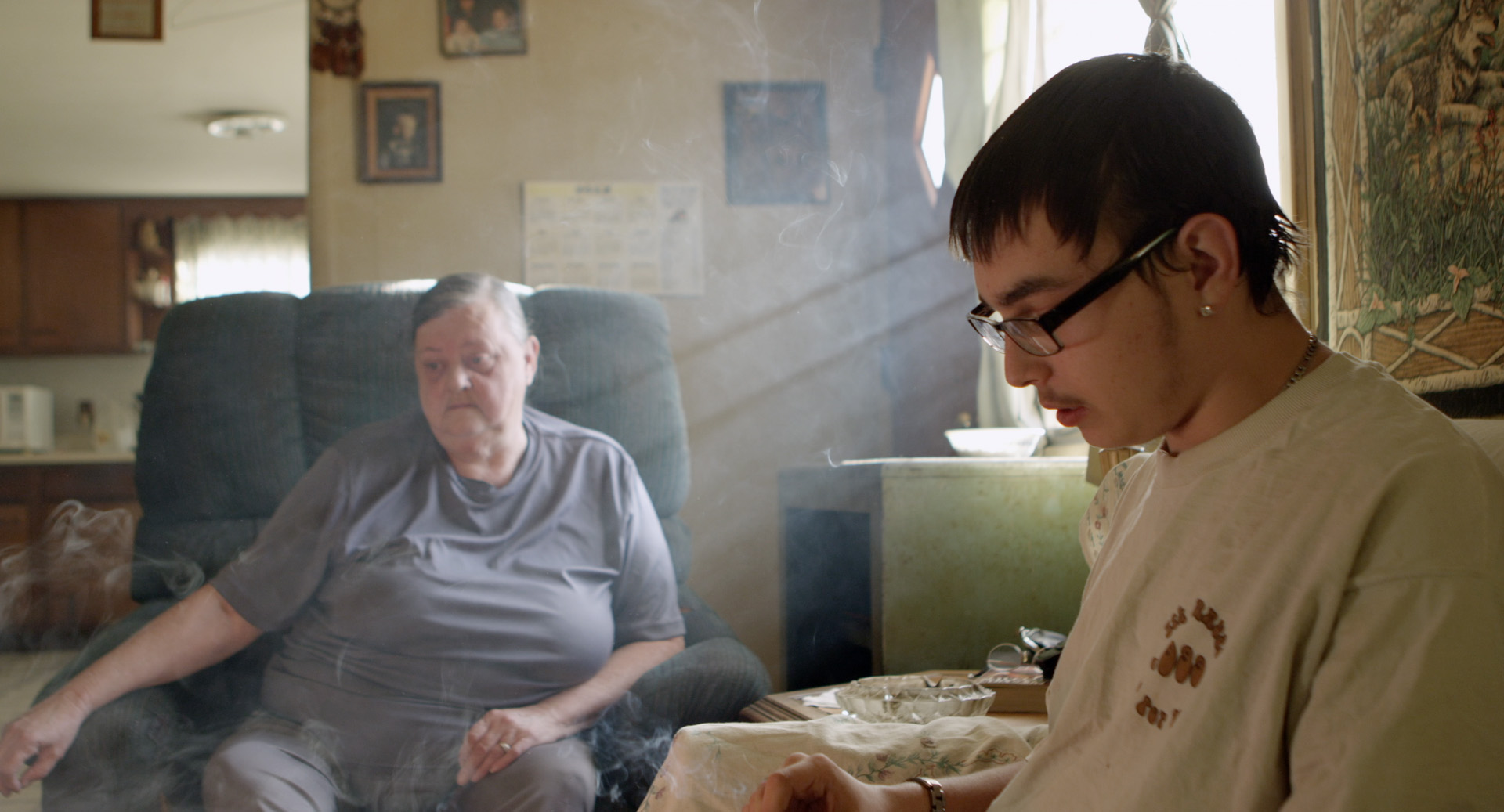
Appachey is a portly, unpleasant 12-year-old who comes from a broken home, often acts out when he’s angry, and lives with his multiple siblings and widowed mother, who is tough, bright, and often irritated by her son’s behavior (though it is a relief to find later, in a touching moment where he awaits a juvenile court hearing, that she does love her son). It’s clear in scenes where he wanders off alone and does things like break puddle ice that this kid doesn’t care about much in this world—not school, not home, nothing. He likes to think he’s old enough to know what he wants to be like, as he smokes a cigarette and mouths off to people. But it’s apparent that he won’t live out his limited dreams, such as “moving to China” to be an art teacher and “get to draw dragons all day,” as he keeps getting into trouble.

images

15-year-old Harley is the most disturbing and yet the most interesting of the three subjects. He hasn’t had a normal childhood and won’t get a chance at one before adulthood, but he has a good sense of humor and is good-natured, though he is doing poorly in school. He lives with his grandmother after his mother has been incarcerated for attempting to kill his stepfather. Later, we discover what drove that to happen and worst of all, why the mother is imprisoned and the stepfather is not. Harley talks to his mother on the phone once a week and they still remind each other they love and think about each other.

006

14-year-old Andrew is more optimistic and one to adapt to his surroundings. He has two things to remember in life—one is, “We’re not trash; we’re good people”; the other is, “God is busy with everyone else” while he believes that God’s plan for his family will come into motion eventually. He and his family move around a lot because his handyman father, who is also a Hank Williams Sr. tribute artist, can’t keep a steady job and often keeps the family in a state of isolation. Andrew knows more about how it all works, as he has grown quickly into manhood, while he also wants to continue to be his mother’s baby boy. Even when it seems he might be a little ticked as the family moves from house to house, he still keeps an optimistic point of view because he still relies on his Christian faith.

These are real teenagers with real problems. It’s how they deal with it that speaks volumes about what the future can hold in store for them, whether they like it or not. In that sense, especially in the case of Appachey, it’s kind of sad and tragic that after he’ll have spent some time in juvenile hall, he may still resort to what brought him there in the first place. We might be catching glimpses of these three kids before they become the violent, addicted Southerners that small Southern towns are often typecast by. And it’s all real; it’s all being documented. That’s why I hope that they choose the right paths in life down the road—I hope Andrew still keeps the faith; I hope Harley can be reunited with his mother; I hope Appachey is reformed. Do you know what I would like? I would like a sequel to this documentary, some time later (like Michael Apted’s “7-Up” series) so we can see how these kids turn out.

Even if you don’t live in the South, you can notice some familiarities from when you were that age—struggling with class grades, making friends, thinking about the future, and so on. What makes them different from most teenagers is their lifestyles. Sometimes, Harley’s grandmother can’t afford energy drinks and can’t always rely on food stamps. Andrew’s family doesn’t have gas for heating water, let alone a good home. Appachey’s home is too crowded, too messy, and too unstable. They’re all used to it by now and they just learn to survive whatever comes.

Sometimes there is room for fun, such as when Harley and his friends go out for Halloween and one beautifully-photographed sequence in which Andrew and his family and friends shoot off fireworks and light sparklers on the 4th of July. And sometimes there is possibility that the American Dream is hidden within this realm of shakiness. That makes the whole film melancholy and yet somewhat hopeful at the same time.

And I like that the film’s producers/directors chose their three subjects carefully by choosing a nice kid, a not-so-nice kid, and another kid in between the other two. And neither of these kids are portrayed as bad kids, like Andrew says in the beginning (“We’re not trash; we’re good people”); they just have their misfortunes and bad moments. The documentary does a great job at presenting these kids in a rural setting.

I’ve seen films that try to feature real life in the South, but “Rich Hill” is as real as it gets. You don’t find scenes quite like the ones in this film in other films. It’s authentic, it’s crafty, it’s riveting, it has characters as compelling as any fictional movie character, and it’s one of the best films of the year. I can’t recommend “Rich Hill” enough.

Andrew+Jewell+Rich+Hill+Portraits+2014+Sundance+Dm7RPbsmUoAl

To Kill a Man (2014)

16 May

14036-1

Smith’s Verdict: ****

Reviewed by Tanner Smith

The Chilean film “To Kill a Man” is one of the most rare of revenge films: a type that is morally uncertain. This film, based on a true story, sets up a conflict that drives its protagonist to kill the antagonist and then the resolution causes the protagonist, and the audience for that matter, to wonder what has been resolved. On the one hand, some people are safe again. On the other hand, the protagonist is left wondering what vengeance solved, and with his usually emotionally-insecure inner life even worse than before. By trying to change things for the better, the worse has risen as an effect.

That’s not a mark against the film, necessarily. In my opinion, it leaves a stronger impact and causes you to think about what you’ve seen after you leave the theater.

The film, written and directed by Alejandro Fernandez Almendras, sets up the conflict as we’re introduced to our main character named Jorge (Daniel Candia). Jorge is a caretaker at a nature reserve and lives with his wife, Marta (Alejandra Yanez), and two children. He’s also somewhat emotionally timid. He can’t stand up for himself and tries to avoid confrontation. When he encounters a gang of thugs from the projects, the gang picks up on this right away and decides to mock and humiliate him before actually mugging him. His teenage son is anxious to stand up to the leader of the thugs, Kalule (Daniel Antivilo), since Jorge won’t, and sneaks out in the middle of the night. By the time Jorge catches up with him, Kalule shoots the son and is sent to prison for 18 months.

Two years later, Jorge is not living with the family anymore, as Marta has kicked him out of the house for not standing up for himself in the first place, thus putting their son in that situation. Kalule is released from prison and seeking revenge. He harasses the family with threatening phone calls and vandalism on their property. He even sexually assaults Jorge’s young daughter. Jorge and Marta try to get Kalule arrested for terrorizing the family but are unsuccessful. That leaves Jorge with the choice to man up and decide to take the matter into his own hands.

“To Kill a Man” uses long, interrupting tracking shots and static shots to give a documentary-like/voyeuristic feel. It’s both disturbing and fascinating to watch events unfold; and as the inevitable creeps around the corner, it gave me tension waiting to see how it would play out. The two most memorable scenes occur halfway through the film, as Jorge sets out on his crusade. One is a tracking shot involving a car alarm as a lure. The other is a long-running static shot where more is heard rather than seen.

It’s easy to see what’s coming; even the title renders it expected. But what makes “To Kill a Man” more memorable is what happens afterwards. The pride that Jorge expected from performing his deed is instead replaced with guilt and more apprehension. He can’t even bring himself to tell his family not to worry about Kalule coming after them anymore. This turns the film not only into a well-crafted revenge tale but also an effective character study. Jorge is an outcast and will remain so for the rest of the life. There’s not a clear answer as to how long he’s been the way he is or how it originated; there are just subtle emotions from his family that state they’ve put up with it for so long.

That Jorge spends most of his time in an empty forest is symbolic in the isolation that he feels. There’s also a scene in which he tries to tell a vagrant to move from the forest, as part of his job, but then he returns to chase him away with a shotgun. I could be reading too much into this, but I took it as a way of saying that Jorge prefers to be alone and possibly doesn’t want change in his life after all.

Something else that can represent this is the camerawork that leaves plenty of headroom for the character. This originally annoyed me (and I even felt like I wanted to grab the camera and tilt it down a little bit), but shortly after my friend saw the film, he had a comment that changed my view for the better—that the headroom was further emphasizing Jorge’s seclusion from everyone and everything. Looking back with that in mind, I let it pass.

Even if we’re not sure exactly what to take from “To Kill a Man,” from a moral stance, it’s hard to deny the sheer power it delivers with the way it presents a dilemma, a possible resolution, and how a flawed protagonist can act and feel throughout such an ominous situation. It’s a dark, compelling film that I won’t forget anytime soon.