Archive | 2013 RSS feed for this section

The Hunger Games: Catching Fire (2013)

24 Nov

images

Smith’s Verdict: ***1/2

Reviewed by Tanner Smith

There have been many stories in categories of science-fiction, action, drama, or all of the above that a similar element—the future sucks. There’s usually a dystopian society that runs under more strict, controlling, even violent procedures, and there’s usually a main character, or main characters, that have figured out the answer and use it to bring down this society that has turned the future into a hellhole. We’ve seen it all before. And it’s also used in quite a few young-adult novels, so it’s becoming more and more popular with each generation.

But “The Hunger Games,” Susanne Collins’ book series, finds many twists and turns with the sort of “dystopian future” tale that can either compel or bore audiences. In this case, Collins found a way to appeal to beyond the books’ supposed target demographic by giving her stories original ways to bend around the familiarities and give us some effective political and social commentary as well.

And it helps that with each book in this series of three stories, the themes deepen, the commentary is more active, the emotional conflict is more compelling, and you have something special with this series. That’s essentially a way to describe the film adaptation of the second book, “Catching Fire.”

“The Hunger Games: Catching Fire” picks up about a year after the original “Hunger Games” left off, as Katniss Everdeen (Jennifer Lawrence) and Peeta Mellark (Josh Hutcherson) prepare to go on a victory tour after winning the Hunger Games, which if you recall required them to be the last two of 24 young people to survive. But just because they won doesn’t mean there aren’t any ramifications for their futures. For one thing, they haven’t left the arena without any deep emotional scars that can come from killing in order to survive (and win). Katniss in particular has trouble coping and even functioning half the time. And also, President Snow (Donald Sutherland) is angry and wants Katniss dead. Why? Because Katniss’ actions in the Hunger Games, including her idea of both her and Peeta winning, has made her into a symbol of hope and rebellion. Some of the 12 districts have begun to rise against the system, bringing it to a halt. In order to maintain his power and put an end to revolt, Snow believes Katniss should die.

As Katniss and Peeta embark on their tour and witness the rebellion of these districts, Snow is even more angry and decides to bring their district to the ground slowly but surely. Armed forces come in (dressed as…Stormtroopers?) and attack the villagers, including Katniss’ best male friend, Gale (Liam Hemsworth). Worse yet, in order to ensure her doom, Snow arranges for a new game in which Hunger Game victors are forced to face each other. Katniss and Peeta end up in an arena yet again to fight for their lives, and for their freedom. This time, Katniss and Peeta have allies, such as athletic Finnick (Sam Claflin), angry rebel Johanna (Jena Malone), and intelligent Beetee (Jeffrey Wright).

The final hour of this two-hour-25-minute film occurs in the dome in which the game takes place. But these games are rather different from the original story in two ways. One is, there’s a lot more at stake than Katniss’ own life. She has to question the loyalty of her allies, before they may or may not become each other’s enemies later; she has to question what awaits her and her loved ones if she does survive; she has to wonder if she will put her life down to save those closest to her, such as Peeta. What will come out of this if either Katniss or Peeta live? Will it further raise the rebellion? If so, what will come from it?

And unfortunately, for those who haven’t read the books, those answers won’t be revealed until the last two films in the film series, each based on the third book “Mockingjay.” The film ends with a cliffhanger that may anger some, but keep most anxious to see what’s going to happen on November 21, 2014.

The other reason these games are different, at least on an entertainment level rather than an emotional level, is the series of adventures that these characters come across. More obstacles chase after them, each more dangerous than the last. These sequences are very exciting and tense (even the scenes with the gigantic baboons are thrilling to watch)—even more so than the tricks in the original film. “The Hunger Games: Catching Fire” is a rousing action film in that sense.

It’s also an intriguing film to look at. The visual style of the film, from the poor districts to the Presidential palace, is consistently brilliant and fun to watch, with all sorts of colors and visual effects that really stand out.

And it works with its drama as well. The stress disorder that Katniss feels is legitimately effective, and it not only causes her to think about what she had to do to survive the Hunger Games, but also causes the audience to consider what they were watching as entertainment! You understand Katniss’ plight and you wish for the comeuppance of those who want to strike her down because she already has too much to deal with, including keeping her family and friends safe. Even the smaller elements work well, including (surprisingly) a love-triangle involving Katniss, Peeta, and Gale, who is also in love with Katniss and watches with disdain and Katniss and Peeta continue a charade of romance in order to keep their fans happy. (Hopefully, it stays that way in the next film.)

Once again, this “Hunger Games” film is graced with a top-notch cast. Jennifer Lawrence is excellent as Katniss; even more so than in the original film because of the emotional complexity she has to bring to her character. Josh Hutcherson is again likable as Peeta; Woody Harrelson is great, reprising his earlier role as the drunk but helpful Haymitch; Liam Hemsworth’s Gale has more screen time than before and has room for more development; and Donald Sutherland plays President Snow like a despicable villain we desperately want to see comeuppance brought onto. Of the new additions to the cast in this story, I’d say Jena Malone is the strongest (let’s face it—you would like to say what she says about her situation when she’s interviewed for TV), but let’s not rule out Phillip Seymour Hoffman, who is terrific in the role of the new gamemaker.

“The Hunger Games: Catching Fire” is a terrific film and I hope that this film-franchise continues strong so that the next two films can further deepen the elements that made it not only entertaining but also thought-provoking. As far as young-adult-novel film adaptations go, “The Hunger Games” is by far the strongest in a long time. I eagerly await the next entry.

Short Term 12 (2013)

15 Oct

Short Term 12 Brie Larson and Keith Stanfield

Smith’s Verdict: ***1/2

Reviewed by Tanner Smith

OK, so you have this setup: foster care, the people involved, emotional attachments proceed. Describing the independent film “Short Term 12” like that would make it sound like a overly sappy and sentimental melodrama with enough manipulation to make you puke when you realize you’re not crying (and not going to either). But “Short Term 12” is a lot better than that. It’s a well-written, deeply effective film that takes a close, realistic look at the lives of those who live in a children’s group home and those who work there as caretakers. These are complicated people that are brought to life with good writing and convincing acting.

“Short Term 12” is mostly centered around the character of Grace, who works as a caretaker at a foster-care “short term” institution, acting as a surrogate big-sister to troubled kids who live there. She’s played in a star-making performance by Brie Larson. Larson has been good in supporting roles before (and has appeared in two indie films recently: “The Spectacular Now” and “Don Jon”); in this leading role, she owns it with her best work that is sure to gain a lot of attention. She delivers an honest, successful portrayal of a person who seems to have everything under control on the outside and is insecure and unsure on the inside. And that’s what Grace is like—she seems to have it together when she’s around people at work and has a no-nonsense personality to assist, but life outside work is a confusing mess as things in her life spiral out of control in ways she didn’t expect.

“Short Term 12” is an intriguing character-study in that we know very little about Grace to begin with, and then events from her past are revealed as the story continues. Events happen and we know more about her through these events, in the way she responds to them. We understand why she behaves certain ways (and at one point, it’s revealed that she may actually be mentally unstable) and grow more and more interested in her story as it’s revealed in small doses, not with overwrought exposition but with realistic talk. Credit for that not only goes to Larson, but also to writer/director Destin Cretton, who remade (and expanded) this feature film from his earlier short film in 2008. And I should also give credit for the crafting of the film too. It’s done in handheld camera footage, which I usually can’t stand in films anymore, but it works here because it gives the film a more “you-are-there” feel. This way, we feel like we know these people and are with them throughout the film, like any great character-driven film.

And something else “Short Term 12” gets right is that it’s one of the truest portrayals of troubled teenagers you’ll ever come across. Their issues are as serious as the issues the caretakers are going through—and while we’re on that subject, it’s also interesting in how a standoffish newcomer to the home, Jayden (well-played by Kaitlyn Dever), has problems that mirror that of Grace’s. That gives Grace all the more reason to ultimately break down as well as try to help her. It gives a very interesting dynamic in that sense.

I don’t want to make “Short Term 12” sound entirely depressing, because it does have its comic-relief moments, such as the amiable stories that Grace’s lover/co-worker Mason (John Gallagher Jr.) loves to tell to his co-workers, including newcomer therapist Nate (Rami Malek). And the friendship that the workers share is convincing and easygoing. Other amusing moments come from the kids, particularly wisecracking Luis (Kevin Hernandez) and odd Sammy (Alex Calloway). Sometimes, you need to laugh or hassle your fellow “inmates” and supervisors in order to further go along the road to recovery, given these kids’ pasts.

Even when there are some rough character choices in the final act, and Grace does perform a most extreme action that really makes you question her mental state, “Short Term 12” finds a way to recover. This is a film that I will not forget anytime soon. The performances are on-target, the script is solid, the execution is well-handled, and hopefully, this will turn out to be a deserving career breakthrough for Brie Larson, for her brilliant performance. I look forward to seeing her in more leading roles. And I also look forward to Destin Cretton’s next film.

The Way, Way Back (2013)

13 Sep

THE WAY, WAY BACK

Smith’s Verdict: ****

Reviewed by Tanner Smith

You ever have that experience when you’re there with what seems like the wrong people at the wrong place and time, and you can’t leave because you don’t know where else to go? And during those times, were you ever picked on for being so awkward by simply being there and not contributing to the conversation everyone else is having? Has this happened many times in your life? Chances are this has happened to us numerous times, and most often when we were young and attending family reunions or other social events.

It’s always a most uncomfortable situation because not only are you not relevant to the conversation these people are having, and don’t have much input (if any at all), but you barely know these people to feel like you want to be part of it. You’re just sort of stuck there, not knowing what to do.

“The Way, Way Back” knows what that feels like, as its young protagonist, an awkward, shy, nerdy 14-year-old named Duncan (Liam James), is dragged to the beach house of his divorced mom’s new boyfriend, Trent (Steve Carell), and is the butt of humiliation when he isn’t bored of being stuck in the middle of uncomfortable get-togethers with Trent and his neighbors and friends. It’s one thing to be stuck on vacation with your family, because most teenagers don’t enjoy that very much; it’s quite another to be stuck there particularly with someone you don’t like very well.

While Trent sometimes seems like an okay guy, Duncan has legitimate reasons to hate him. In an opening scene, on the drive to the beach house, Trent asks Duncan to rate himself on a 1-to-10 scale; when Duncan nervously answers “6,” Trent says he sees him as a “3.” Trent has his own ways of “tough love” that show that he surely doesn’t know the full meaning of “sensitivity,” which also puts a bit of a strain on his relationship with Pam (Toni Collette), Duncan’s mother.

By the way, that opening scene is great at setting up the story because it makes us easily sympathize with Duncan and establishes that people can see you how they want and it wouldn’t be very true. We only see Trent in this scene through the rearview mirror so that we see his eyes looking back at Duncan—nicely-done move on the filmmaker’s part.

Anyway, Duncan is trapped at this beach house with nothing to do and no one to hang out with, until he discovers the local water park, called “Water Wizz.” There, he meets the park’s offbeat manager, Owen (Sam Rockwell), who takes a liking to the kid and decides to give him a job at the park. So, while Duncan has to endure the behavior of Trent, his mother, and the next-door neighbor, Betty (Allison Janney), (who is always drunk and knows even less about tact than Trent does, and sometimes points out what should never be pointed out in public, even when it has something with her own children) by night, he works the park by day and finds he fits in with the other employees and has fun working the pools and slides. He even learns to be cool, or at least “cool” by Owen’s eyes. It’s a safe haven for him, and he tells no one back at the house about it—the only one who finds out is Betty’s rebellious but sweet teenage daughter, Susanna (AnnaSophia Robb), who also takes a liking to Duncan, if only Duncan can find the right words to say to her.

“The Way, Way Back” is an effective coming-of-age movie in how it presents this gawky, socially weird boy and how he can stand up for himself, talk some sense into his somewhat-meek mother who should know better than to date a jerk like Trent, form a friendship with some unlikely fellows, and even work up the courage to talk to a girl he likes. Duncan is able to do all of this by the time the vacation (and the film) is over. And the transitions are presented in a credible way with intelligent writing and believable characters who don’t like types in the slightest, but real people. Even Trent, who could have been written as a villainous type, is not entirely evil; he’s mainly a flawed individual who isn’t fit for certain situations that require parenthood or reliability. He tries, though. But it doesn’t quite work.

The character of Pam surprised me as the film went on, because early in the film, I wasn’t so sure what this mother figure was going through when socializing with these bizarre characters (including Rob Corddry and Amanda Peet as an offbeat couple) and doing something she shouldn’t be doing, like getting high (as she’s led on by Trent and company). As the movie progresses, you do get to see more of the character and that she is a complete person and not simply a dopey “mom” role. You see that this is a woman who clearly wants as much time with her son as she does fulfilling her own interests, and before the film ends, the relationship between her and her son is mended too.

A lot of nicely-formed characters are put into this screenplay by Nat Faxon and Jim Rash (who also co-directed the film and each have supporting roles as two of the water park workers), and they’re played very well by the actors. Steve Carell is a convincing jerk, which is a surprise considering he’s one of the nicest guys to see on screen or on TV; Toni Collette is very good as Pam; AnnaSophia Robb delivers her best, most sincere performance since “Sleepwalking” five years ago; Allison Janney is freaking hilarious as Betty, and she gets some of the funniest moments in the film; the actor who gets the rest of the film’s funniest moments is definitely Sam Rockwell, who is just excellent as the park owner Owen (I mean it—this performance needs to be seen to be believed; writing about it doesn’t do it well); and last but definitely not least, Liam James is perfectly natural in playing the awkward teenager who comes of age and becomes more comfortable with his life.

“The Way, Way Back” is a very charming film that also has a seamless blend of humor and drama, mainly because the comedy plays from the awkwardness and unpredictability of most of these events. Aside from character moments from Betty and Owen and some of the park workers (including Maya Rudolph as Owen’s potential girlfriend who can’t take any more of his antics), there are laughs that just come from simple things, like a legend on one of the waterslides, for example. They add to the charm and appeal of this film.

The Spectacular Now (2013)

8 Sep

130729_MOV_TheSpectacularNow.jpg.CROP.rectangle3-large

Smith’s Verdict: ****

Reviewed by Tanner Smith

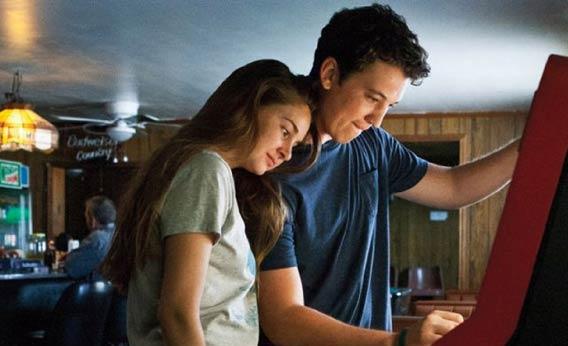
When a film truly captures what it’s like to be a teenager in high school, or in a high school romance, it’s something special. Generally, most of us come of age in a major way in our high school days and so, a film that captures certain dilemmas or relationships (either platonic or romantic) can make for a great, effective coming-of-age story, given the right amount of detail in writing and characterization. I can think of many such films that are great examples of such, including “Tex,” “Lucas,” and last year’s “The Perks of Being a Wallflower” among others; another to add to the list is “The Spectacular Now,” a truthful, incredible film about forming a high school senior forming a new relationship with someone he’d never met before, and learning to fully prepare for his own future.

His name is Sutter Keely (played by Miles Teller). He’s a semi-popular 18-year-old who lives in the “now” mainly because he doesn’t look forward to growing up and dealing with life the way adults in his life do. He has an amusing, likable personality that compensates for somewhat of a sad existence, having been without a father for a while and with not much of a relationship with his mother (Jennifer Jason Leigh). He also drinks a lot, carrying around a whiskey flask to spike his soda cups, even at his part-time job. He would probably be best referred to as an “alcoholic Lloyd Dobler,” in reference to the John Cusack character in “Say Anything,” but that probably wouldn’t be fair.

One morning, Sutter is found lying flat on the front lawn of a house he doesn’t recognize, having drank heavily the night his girlfriend, Cassidy (Brie Larson), broke up with him. The person who finds Sutter is Aimee Finnicky (Shailene Woodley), who goes to the same school as Sutter (though he doesn’t recognize her). Aimee is in the neighborhood covering for her mother’s paper route, and Sutter decides to help her with the rest of it, having nothing else to do. Sutter decides he wants to spend some more time with her, and wallflower Aimee is glad to be accepted by someone like him. So they share conversation after conversation as Aimee tutors Sutter in geometry, Sutter invites her to a lake party, and their relationship is mostly consisting of talks and meetings that simply don’t need any reason to be—they enjoy each other’s company, talk to and listen to one another, and their relationship flows naturally as it becomes something more.

Then comes the time when Sutter can’t deny his true feelings for Aimee, despite what he tells his friend who thinks Sutter is using Aimee as a clumsy rebound for Cassidy. Then comes the prom, to which they go together and see the good time that everybody has, despite being a somewhat pointless tradition. Then comes a sex scene, which I have to say completely surprised me in how it was handled. This could have been a low point of the film, in that it would have been sloppy and in a mean-spirited way. But instead, with the careful direction of James Ponsoldt, it’s handled in such a careful and delicate way that at no point does it seem embarrassing or a cheat. Sutter and Aimee don’t merely have sex; they make love. And as a plus, it knows just when to fade away from it.

Sutter and Aimee look, act, and feel like real high-schoolers. Their conversations, their world around them, their misadventures, etc. feel like the real deal, and with enough conflicts in their lives to make them even more interesting, these two are a high-school-film romance that is undoubtedly worth paying attention to. I loved watching these two together; they’re sincere, appealing, and well-rounded characters that feel like people we knew, or even people we were. The film goes even further with them as the film continues. As the first hour or so creates a unique spin on high-school-film territories, as the relationship and their situations are played with a great natural realism, the rest of the film, in my opinion, is surprisingly even better. This is the point in the film in which Sutter and Aimee are willing to help each other out—after Aimee has taken Sutter’s advice and stood up to her overbearing mother, Sutter then decides to take Aimee’s advice and get his deadbeat dad’s phone number from his mother or his older sister (Mary Elizabeth Winstead). And what happens? Sutter, bringing Aimee along, goes to visit Dad (Kyle Chandler) and he realizes how clear things are becoming. Not only does he see why he’s better off without his dad, but he also realizes the kind of person he himself might become if he keeps living life the way he does. And he truly realizes that he must somehow create his own future. But how? And does he want to? Can he change?

The final half-hour of “The Spectacular Now” is what truly pays off about the film. It’s all about coming of age and things coming into full perspective for the subject of that concept (in this case, Sutter). It’s not predictable and it’s as realistic and natural as what was set up before. It’s played with a sense of harsh reality and a possibility of learning to deal with it. I felt for the characters all throughout the film, and this final act made me care even more about them.

“The Spectacular Now” is a wonderful film—a film that is smart and knows how teenagers talk and act; the characters are three-dimensional and always appealing; the director and writer(s) don’t go for the easy ways out of a situation because they’re too respectful to their audience for that; and all in all, a rich, deep, meaningful, effective drama about growing up, forming a relationship, and facing your own future. This is one of the best films of 2013.

Blue Jasmine (2013)

8 Sep

680x478

Smith’s Verdict: ***1/2

Reviewed by Tanner Smith

I’m not sure I can necessarily write about Woody Allen’s latest film, “Blue Jasmine,” without even mentioning a similar type of film released just a couple months ago (not Tennessee Williams’ “A Streetcar Named Desire,” of course, though the story of “Blue Jasmine” is probably more closely similar to that)—Noah Baumbach’s “Frances Ha.” That film was about a neurotic young woman trying to find a secure hold on life while practically on the verge of a nervous breakdown. I mentioned in my favorable review of that film that it reminded me in dialogue, acting, style, and tone of a Woody Allen screenplay and film. That’s not too far off here, because…well, “Blue Jasmine” is a Woody Allen film. Imagine Frances “Ha” Halloway aged a decade or two and having found a success in life, becoming materialistic and pampered and married to a Wall Street wizard…and is now having to face reality yet again, after everything has just hit rock bottom along with her.

How odd is it that I compare Baumbach favorably to Woody Allen when I would find that Allen has crafted a slice-of-life/character-study similar to Baumbach’s film…which in itself is similar to some of Allen’s best dramatic work? I don’t know, but I do know that I feel these two films are terrific, and they’d make a great double-bill with each other.

Nearing the age of 78, Allen’s styles haven’t changed much—neurotic characters, the old-school title font, the sharp dialogue, the music he likes, etc. But he shows he still has game in the art of filmmaking. As long as this guy continues to make films (and he has for several decades now), we know there are some truly original artists still at work here. And with “Blue Jasmine,” he has crafted one of the most thoughtful, effective films released this year.

The film stars Cate Blanchett in an Oscar-caliber performance, reminding us that she is still one of the very best actresses we have, as Jasmine, a disillusioned, indigent woman who is learning to face reality the hard way. Seen in flashbacks, we get an idea of what her original life was like, when she was married to wealthy Hal (Alec Baldwin) and living a great, acquisitive life in New York. We also learn in this present-day setting that Hal has been caught for illegal activities (and apparently not just cheating on his wife numerously, either) and has also committed suicide in his cell because he couldn’t handle facing a life sentence. The FBI has taken everything away, leaving Jasmine penniless and homeless.

Now, Jasmine has moved in with her sister, Ginger (Sally Hawkins, wonderful here), in her San Francisco apartment. Ginger has never had anyone depend on her before, and Jasmine never needed her for anything until now. But Jasmine is not the greatest houseguest—in fact, she’s rather critical and doesn’t quite know when to keep her mouth shut. This is especially true when she judges Ginger’s apartment and constantly puts down Ginger’s current boyfriend, Chili (Bobby Cannavale). Though Chili may have his moments of rage, he is somewhat of an improvement over Ginger’s ex-husband, Augie (Andrew Dice Clay—yes, Andrew Dice Clay), and doesn’t necessarily deserve to be the butt of Jasmine’s unfavorable remarks.

Life goes on for Jasmine, and it’s something she isn’t prepared for. She has to go find a job, which she isn’t used to at all, and finding one is not easy. She does, however, get a job working as a receptionist for a dentist, but that doesn’t seem to last very long, as she’s an incompetent employee (and it also doesn’t help that the dentist she works for likes to hit on her until it’s the last straw for her—at least she knows the meaning of “sexual harassment”). Also, she’s not very good in social situations like she used to be—due to the events in her life, she has developed a habit of talking to herself without even being aware of it as she gets confused looks from passersby. That, and she’s still as ignorant and selfish as she was when she was rich, making her just a shallow, almost-unbearable woman to be around.

Now, don’t get me wrong—Jasmine is not a one-dimensional bitch, by any means. Because of the flashbacks and a few moments when she’s alone and trying to figure things out for herself, we see how and why she has become who she is and why her life is tragic. We can understand why she acts the way she does. That’s what makes “Blue Jasmine” an effective character-study and a convincing drama.

Cate Blanchett’s performance helps a great deal—she understands this character inside and out and is just excellent here. I hope she gets an Oscar nomination for this performance; she’s that good. And so is Sally Hawkins, who adds a great amount of depth to her role of Jasmine’s sister Ginger, who has her own experiences in life and love, not only with Chili, but also with a sound man she meets at a party, played well by Louis C.K. It’s a credit to Allen that he is still able to use familiar faces for surprising effect, and that’s especially true of the casting of Andrew Dice Clay, who is truly rock-solid here (especially near the end, when he gives a key speech to Jasmine about what’s going on).

Allen still has it. People may not believe it that much anymore, but Allen still has it. And I don’t even know what “it” is, but whatever “it” is, Allen has used it to good effect in “Blue Jasmine,” a nicely-done character piece.

The Conjuring (2013)

22 Jul

images-1

Smith’s Verdict: ***

Reviewed by Tanner Smith

You know, I can believe that if there are spirits or demonic presences that haunt or lurk about certain surroundings, then they would prefer to just joke around with the human inhabitants because these things have nothing else to do except cause misery to counterbalance their own woes. Then maybe they’ll attack or wait a long while until they either give up or someone who has experience in exorcism or disposing of these sort of supernatural means will finally come along and make things peaceful for the people again. These spirits, they never really get to the point quick enough, do they? Well, if they did, I guess everyone who has said to be in contact with such entities wouldn’t last very long (and to be sure, reportedly, a lot of them didn’t). Maybe it’s a notion of the more terrified you are, the more vulnerable you are and therefore the easier you are to ultimately be taken over by those same spirits until you are lost entirely, physically or mentally.

When going to see a “demon movie” or “ghost story” or “haunted-house movie,” it’s probably best to have a good idea of what you can gather from the (mostly-) invisible presence of darkness or evil, because while the film characters can give their interpretation, they’re usually not too sure or their arguments don’t make much sense. I bring this up because James Wan’s new horror film “The Conjuring” features protagonists who actually do know more or less what they’re dealing with when it comes to the “haunted” aspect. They are “demonologists” who have explored and searched many different places for any traces of supernatural elements, and they know quite a few things from experience, but they’re not quite sure of much of everything they’ve encountered. And I found that to be a refreshing move, because while these paranormal investigators are experienced, they don’t pretend like they know everything; they just go with what they’ve gone through with past occurrences. And that’s something you can also bring for yourself when seeing another one of these supernatural-horror movies (not knowing exactly what’s going on, but keeping an open mind if it’s interesting enough).

These people are Ed and Lorraine Warren (played by Patrick Wilson and Vera Farmiga), an infamous demonologist couple, and “The Conjuring” is more or less an interpretation on one of their more interesting and disturbing cases from decades past. For those who don’t know, Ed and Lorraine Warren were real-life people who did study and investigate the paranormal (one of their more infamous cases is the controversial “Amityville” haunting). “The Conjuring” tells about their investigation in a farmhouse in rural Harrisville, Rhode Island in 1971, and the film does go the “based-on-true-events” angle, which I’m not sure is going to fool anybody because when it comes to these types of films, cynics love to snicker at that tag on the poster. And just to get this out of the way, “The Conjuring” is not a perfect horror film. Maybe it’s because I’ve seen quite a few of these supernatural-horror elements before in many other movies, but when I saw them appear on screen, I was constantly taken out of that “based-on-true-events” concept. I know that this is based on real people and I know there really was a paranormal investigation and a supposed exorcism, but it’s kind of easy to tell what’s fact and what’s fiction…for the most part.

But I shouldn’t really nitpick on that little detail because after all, “The Conjuring” is an interpretation on the story and of course is on hand for an effective horror film. I liked “The Conjuring”; I can be honest and say that it’s my favorite horror film since “Sinister” about eight months ago. This is one that relies on atmosphere, characterization, and execution to build suspense and tension and terror rather than just going for the blood and gore, unlike, say, something as junky as the “Evil Dead” remake. “The Conjuring” is creepy and tense without having to result to gross, visceral visuals to scare people. It’s smarter than that. No slicing. No dicing. No “torture porn.” Not even a high body count. And even when a character will do something ill-advised just once in a long while, you’re still on edge because you’re not entirely sure what exactly is going to happen. That alone makes “The Conjuring” worth watching and a nicely-done chiller.

A good chunk of the credit for why “The Conjuring” works has to go to the director James Wan, who has made himself known for starting the “Saw” franchise and 2011’s haunted-house film “Insidious” (whose sequel “Chapter 2” is coming soon). Wan clearly loves the horror genre so much that he has studied what can make a film like this work, and he’s more than competent in crafting a suspenseful, scary production. I’m not sure how Wan does it, but he manages to even make an overdone “video-camera point-of-view” moment, midway through the movie, unnerving.

But we can also get into “The Conjuring” because the people in this movie are likable and feel like real people (which, of course, is a given, since these were based on actual people), so that we care for them while also finding ourselves wrapped in this bizarre situation along with them. I like these two demonologists, who keep a certain level of rationality despite what they deal with, and also the family that they’re assigned to help. This is the Perron family—father Roger (Ron Livingston), mother Carolyn (Lili Taylor), and their five young daughters—who are victim to many, many strange things happening in a rural farmhouse. You name it—bumps in the night, skin bruises, unusual noises, suicidal birds, a dead pet, and a twist to a family game called “hide-and-clap.” When it gets to be too much, the family turns to Ed and Lorraine for help and hope that they can protect them from this demonic presence before it’s too late, and before someone even more serious grabs ahold of them and never lets go. There are some quality character moments, particularly in how Lorraine and Carolyn are able to connect with each other in a certain scene where their similar love for their children (Ed and Lorraine have one daughter) by sharing a pleasant family memory. Good acting is an important asset to the reason we accept the characters in “The Conjuring.”

The camera movement is precise and wonderful, in how it moves from one side of an interior to another and especially how it sometimes tracks the characters to (maybe) something eerie coming their way. The music score is just right. The tension is existent. Effects are not overused. There are some neat scares. That and more make “The Conjuring” a worthy supernatural-horror film, and it satisfied me to where I was hoping that it wouldn’t become a franchise that will become a brand that is damaged by constant profiting. Well, even if it does, I still have a decent scary flick to turn to and remember the “good old days.” Time will tell. Who knows for sure?

Frances Ha (2013)

30 Jun

images-1

Smith’s Verdict: ***1/2

Reviewed by Tanner Smith

Independent writer-director Noah Baumbach is usually not one for conventional or even entirely-pleasant elements when it comes to his stories—his films “The Squid and the Whale,” “Margot at the Wedding,” and “Greenberg” are certainly proof of that. Somehow, he manages to take what sounds like a simple story (parents get a divorce, squabbling sisters reunite at a wedding, etc.) and make it his own. Sometimes, you don’t know how to feel, and the laughs come from certain originality that comes with an odd sense to it, I called his “Margot at the Wedding” an “acquired-taste” film in that you either get into the appeal (or lack thereof) of the material and execution, or you don’t.

With “Frances Ha,” Baumbach has learned to relax with his filmmaking and the film, as a result, is gentler and fairly easier to watch that his previous films. The tone is a bit lighter, but with that same sense of gritty documentary-style camerawork and interaction so you know that it’s still a Baumbach film (except that this one is presented in black-and-white for some reason). And it actually has a charming leading character instead of the usual intentionally unlikable “protagonists” we usually find in his films (see Margot, for example). That character is the excitable, quirky Frances Halloway, played the ever-charming Greta Gerwig, who also co-wrote the screenplay for the film with Baumbach.

Gerwig is generally known as a “mumblecore queen,” but she has gained notice in more mainstream projects (and hopefully will continue to do so, if she wants people to forget she was in the “Arthur” remake). And playing the lead role in “Frances Ha,” she follows a trend I notice a lot recently in indie films—that trend being that actors/actresses write their own leading roles and they wind up showcasing their true talent that was evident but not fully realized in supporting roles they were saddled with previously. That was the case with Zoe Kazan in writing and acting in “Ruby Sparks” and Rashida Jones co-writing and acting in “Celeste and Jesse Forever.” Now, Greta Gerwig co-writes “Frances Ha” with Baumbach and delivers her best performance as an actress, showing further cases of immense appeal and range. Her Frances “Ha” Halloway is a cheerful, high-spirited 27-year-old dancer who has a bit of trouble growing up and can’t seem to deal with the real world of adulthood. She gets excited over the simplest things, such as taking the check on a restaurant date…but having to run all over the city to get money because her credit card is maxed out. (That was the moment early in the film when I realized I loved this woman.) As things get deeper into impending adulthood, she finds she can’t quite deal with it regularly and does/says things out of the ordinary that make her seem…well, “crazy.” But you love her anyway.

So what’s the “simple” story that Baumbach has to put original touches into for this one, and for this character to go through? Frances is a dancing-company apprentice who works in New York and wants to be a real dancer. So she tries to fulfill her dream, even though the road to that fulfillment is a bumpy one. Blah blah blah, right? Wrong. Frances is among thousands in a big city that is seeking an artistic life, but doesn’t have the financial consistencies or the attention or time for her own life to reach her goals. Meanwhile, her best friend from college, Sophie (Mickey Sumner), with whom she does everything together (they even at one point acknowledge themselves as a “lesbian couple that doesn’t have sex”), suddenly moves out of their apartment to a new place in Tribeca. Frances can’t quite pay the rent (nor does she believe she can live alone), so she moves in with two rich, likable schmucks, Lev (Adam Driver) and Benji (Michael Zegen), at their apartment. They’re not the only new ones to come into her life, though, as she meets other interesting people who come into her life and then abruptly leave her life. Even when Sophie returns into Frances’ life, she brings the news that she’s moving to Tokyo with her new fiancé, Patch (Patrick Heusinger), whom the two used to mock before.

Can Frances continue through life with each new change coming her way? Maybe so, but it’s kind of a rough movement. This is not the kind of life she and Sophie used to imagine themselves living in the future. And as the future appears to be the present, it’s harder for even them to understand. Reality takes its course, and maybe there’s hope for them, but it’s a long way down the road.

I’ll be honest—I don’t see the purpose of “Frances Ha” being presented in black-and-white. It’s not set in a past time, and somehow, seeing a MacBook and an iPhone in a black-and-white movie has an odd effect on me…and I’m not sure how I feel about that. Is “Frances Ha” supposed to come off as a new version of Woody Allen’s “Manhattan?”

Huh. Actually, given the tone and structure of this film, that would actually make sense.

The screenplay for “Frances Ha” is quite appealing. The conversations these people have are worthy of “Seinfeld,” as well as Woody Allen, in that the littlest things lead to some interesting conversations. And there are certain oddities in phrases and terms, such as a lame text that is supposed to be a come-on (and it becomes Frances’ playful greeting to Sophie when they meet again) and the description that Benji constantly uses for Frances when she describes the direction her life is going—“undateable.”

Not a lot happens in “Frances Ha.” It’s more of a series of events surrounding this woman—some brief in a montage, others stretched out to get the point. But its emotional aspects, as well as its stellar central character, really make “Frances Ha” a memorable experience. It’s small, but it works very well.

The Iceman (2013)

27 Jun

the-iceman-01_THE-ICEMAN_Courtesy-of-Mille.JPG

Smith’s Verdict: ***

Reviewed by Tanner Smith

It seemed somewhat inevitable that the story of notorious serial killer/mob enforcer Richard Kuklinski, known for killing over 100 people in the ‘70s and ‘80s, be told in a feature film. Based on the book “The Iceman: The True Story of a Cold-Blooded Killer” by Anthony Bruno, director Ariel Vromen’s film “The Iceman” tells this story chronologically and the results are quite effective, if somewhat underdone.

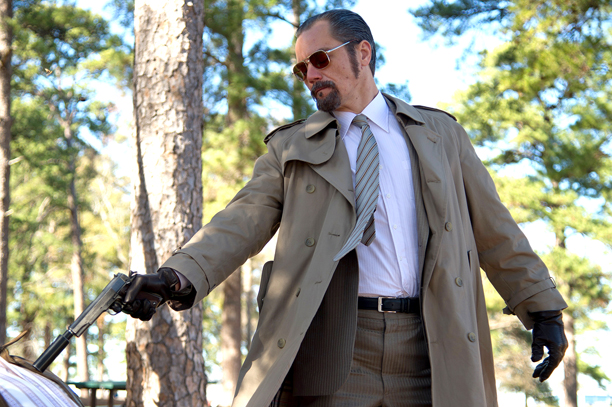
Richard Kuklinski (Michael Shannon) is presented as a man of two personalities—loving husband and father with a wife and two daughters, and dangerous killer with hardly a hint of remorse. Neither his wife, Deborah (Winona Ryder), nor his two daughters suspect his murderous deeds, although Deborah at one point is convinced that something is not quite right with her husband, because sometimes he comes off as emotionally distant. (“Richard!” “What happened to ‘Rich’?” “I don’t know!” A great exchange.)

Even while first meeting Deborah, whom we see him woo in an opening scene set in the early ‘70s, Kuklinski is a vile killer. Soon after his date, he’s mocked at a bar, which causes him to slit the scorner’s throat. Now, I must admit, at first I thought that was too unneccesary in showing that Kuklinski was to be a killer, but it is hinted that Kuklinski has already killed before that moment, so it makes a little sense that a simple thing could set him off.

Years later, Kuklinski has gone from dubbing porn films for the mob to executing hits for Roy De Meo (Ray Liotta) of the Gambino Family. (And I’m guessing Deborah doesn’t ask many questions about his job as long as he pays the bills and gives her and the kids a nice suburban house in Jersey.) But due to the escape of a witness to one of Kuklinski’s hits, Kuklinski is laid off, leading to him working with another hitman, Mr. “Freezy” (Chris Evans, hardly recognizable). But it turns out this partnership causes trouble with the mob, and so the lives of Kuklinski and his family are in jeopardy.

What helps make the portrayal of Kuklinski so chilling is that it seems that anything can cause him to turn to a new kill. And you already know how much this guy sickly enjoys doing what he does, so it’s quite uncomfortable when seeing him in a calm mood with his family. Granted, he’s never violent towards his family, but it’s still unnerving when you know what he does. How much does he enjoy killing? When assigned to kill a sleazebag who begs and prays for mercy, Kuklinski uses this for his own entertainment, allowing him a minute to pray and see if God will stop him. What an…iceman.

Michael Shannon is this movie. With the wrong actor giving the wrong type of performance this role requires, “The Iceman” would have been a much lesser product. I can’t think of any other actor doing a better job at playing the role than Shannon. This guy is freaking excellent. His portrayal of a homicidal killer is never sympathetic, but it comes across as deeper and more insightful than you might imagine. It’s emotion versus habit with him, only the “habit” happens to be constant murder. This may be the closest thing we get to a three-dimensional killer (go ahead—insert “Dexter” joke here), and Shannon nails it with this performance.

“The Iceman” has its flaws, though. Winona Ryder, despite trying, can’t seem to do much with the clichéd role of a hitman’s concerned wife. The mob aspects aren’t fully realized, so there were times when I was wondering which connections were consistent with whom or what. And I sort of wanted a few more scenes that got into the backstory of Kuklinski’s incarcerated brother (Stephen Dorff).

Oh, and by the way, was anyone else wondering why Jimmy Hoffa is never mentioned?

“The Iceman” presents the tale of Richard “The iceman” Kuklinski in a chilling, effective way with a great leading performance by Michael Shannon. It’s straightforward, doesn’t cheat in presenting past-and-future events (the story is told in order), and suitably unsettling. Even if I may forget certain other aspects about it, there’s no doubt that by the end of this year, I’ll still remember Michael Shannon’s performance and his portrayal of a real-life bloodthirsty killer.

Before Midnight (2013)

16 Jun

images

Smith’s Verdict: ****

Reviewed by Tanner Smith

Eighteen years ago, in “Before Sunrise,” Jesse (Ethan Hawke) and Celine (Julie Delpy) met in their early-20s and were only able to spend one night of conversation and romance. Nine years later, in “Before Sunset,” they were reunited, realizing their mistake of never sharing ways of contact, and thinking this is a second chance for them to be together. That film ended with a delightfully ambiguous ending, though with most of us leaning towards the possibility that they do ultimately end up together. These were two nice, likable people who liked each other and we, while watching them, enjoy their chemistry and could listen to them for another hour-and-a-half. And granted, that extra hour-and-a-half is given to us…nine years later, but still it’s nice to catch up with these two people.

So, nine years since “Before Sunset,” we meet yet again with Jesse and Celine in “Before Midnight.” There’s an indication that every nine years, director Richard Linklater and co-writers Hawke and Delpy will create another “Before” story that will catch up with these two characters in their relationship. We could see them grow old together and it’d be fine because they’re both so appealing together.

However, in “Before Midnight,” that appeal is not entirely seen anymore. This is especially true if this third film is your introduction to the series. To be honest, I think that if you watch this film as a stand-alone story, you’d appreciate more of the craftsmanship and acting than the characters themselves and their relationship. Let me explain—Jesse and Celine are still together and have been for nine years (and they have two daughters and live in Paris, France), and so, instead of the usual nonsense they love to talk about, they instead bicker about issues involving certain things in their lives. And when that happens, and it does get very, very rough as the film reaches its final half-hour, you start to wonder whether or not you want to listen to them anymore—the appeal that was present between the two in the previous films is now gone at this point, as their argument gets more and more ugly. They’re like a married couple—problems that they don’t know how to deal with that they have to talk about, which make them almost seem to hate each other while continuing to talk about them. Will something bring an end to it, will one be able to make amends with the other, is the spark between them still present or is it gone—how will this argument end?

I’m getting ahead of myself here. “Before Sunset” had Jesse and Celine reconnected with each other after nine years of separation. In “Before Midnight,” they’ve spent the past nine years together. Like any long-term committed couple, they have much difficulty coping with life with each other. They’ll sometimes talk a little nonsense every now and then, but there’s a hint that the relationship is harsher than they thought it would be. Happy days, for the most part, are behind them.

Much like the previous films, everything seems very natural in a film that is mostly composed of dialogue. All of these are driven with dialogue throughout very long takes, giving more of the illusion of eavesdropping than arguably any other movie that attempts to be very truthful. It helps that Hawke and Delpy themselves co-write the screenplay along with Linklater, and because they know their characters so well, they’re able to improvise in their conversations onscreen. Linklater simply lets the camera follow them as they interact naturally—a simple yet effective move.

The issues they deal with seem very real. With Jesse, in particular, it’s the feeling of resentment after divorcing his ex-wife to be with Celine, thus not seeing his 14-year-old son from the previous marriage as much as he wants to. He wants to move to Chicago to be closer to him and not miss any important moments that a father should live for; Celine has a new job to think about, and also is not particularly fond of moving away from her home. This leads to the centerpiece conversation, which is essentially a heated argument between Jesse and Celine in a hotel room. It’s quite ugly and not entirely appealing, but it is all too real. This is a couple’s conflict with a very natural feel that can’t be denied. You get the feeling every couple has been through this. And here, having known Jesse and Celine from this “Before” series, there is a real tension of whether or not this argument will be the end of this relationship.

Yes, “Before Midnight” is certainly the darkest tone of this film-series. It’s as realistic as the previous film, but for different reasons. Jesse and Celine may have met in a pleasant chat, but long since then, their relationship has been reduced to bitterness that can come with real life. Sometimes the truth hurts, and in films, it can be told in a powerful way. As a result, “Before Midnight” may not be the most appealing of the series in that sense, but it is all too effective.

Will there be another “Before” chapter in 2022? I wonder.

This is the End (2013)

12 Jun

1170481 - The End Of The World

Smith’s Verdict: ***1/2

Reviewed by Tanner Smith

When I heard about “This is the End,” a comedy about Seth Rogen, James Franco, Danny McBride, Jay Baruchel, Craig Robinson, and Jonah Hill surviving the end of the world, and then I heard that these great comic actors were playing themselves (or rather, exaggerated versions of themselves), I wasn’t sure how to respond. But I was thinking—if done right, it would be absolutely fantastic in how wild it all sounds; if done wrong, it would be the most self-indulgent, painfully-obvious, obnoxious piece of crap to come to the big screen in a long time. But just by this concept alone, I realized I had to see this movie! And thankfully, “This is the End” turned out to be as brilliant as it sounds.

It is also, don’t get me wrong, the wildest, most outrageous comedy to come around in a long, long time. I dare you to find another comedy released in the past few years with as much ambition, outrageous aspects, energy, and as a result, as much hilarity to come from such. Practically every scene, as I can recall, has something to laugh at—even moments when I was laughing in spite of myself. I’m not entirely sure what all I get away with revealing among the vulgarities in this movie, but if three or four scenes didn’t earn the film an NC-17 rating, I think the R rating will be stuck to just about anything mainstream. There are so many moments that are very much “out there,” to say the least, and on top of that, there are overly-done sexual sight gags—not the best film to see on a first date, that’s for sure.

Even co-writers/co-directors Rogen & Evan Goldberg (yes, “Superbad”/”Pineapple Express” co-writers Rogen and Goldberg direct their script this time—another reason I was looking forward to seeing this movie) were reportedly surprised to find that they got away with an R instead of an NC-17. If there was no issue with the ratings board about most of the gags seen here, then there’s pretty much anything than can get away with an R rating. No doubt about it.

But I digress. The movie opens with old friends Seth Rogen and Jay Baruchel reuniting in Los Angeles. They catch up on current events, spend time together eating fast-food and getting stoned, and then Rogen brings Baruchel to James Franco’s house-warming party at his new mansion in the Hills. Who else should be there but Craig Robinson, Jonah Hill, and Danny McBride, and also there’s Michael Cera, Emma Watson, Jason Segel, Rihanna, Aziz Ansari, Kevin Hart, David Krumholtz, Mindy Kaling, Christopher MIntz-Plasse…Am I missing somebody? I believe I am. There were so many celebrity appearances at this party, all playing themselves, that I have to wonder if maybe I missed Leslie Mann or even Judd Apatow somewhere. But anyway, they’re all playing pretend versions of themselves here and it’s a wonderful comic move in how they can poke fun at their careers, highlights, memorable qualities, etc. And there’s also room for major contrast—not with Jay Baruchel, who is just about as awkward as in a lot of films he’s acted in; but mainly with Michael Cera. Cera has about five minutes of screen time, and he’s freaking hilarious. Why? Because the nice kid from “Superbad” and “Juno” is now playing an ass-grabbing, coke-sniffing, obnoxious jerk (or seven-letter word for “jerk”) that is supposed to be the “real Michael Cera.” His exit in this movie is also hilarious and also manages the Cera-esque awkwardness, though it’s all the more hilarious in how it was set up with him (or rather, his character).

And speaking of exits, or rather the end, the Rapture is here! In the middle of the party, Rogen and Baruchel stop by a nearby gas station, only to witness the beginning of insanity of apocalyptic proportions—explosions are heard, booming is felt, people are absorbed by blue light up into Heaven, and everyone else is left to endure (gulp!) the apocalypse. And get this—no one at Franco’s house noticed anything because nobody there was apparently worthy enough for Heaven. Things get more extreme when earthquakes arrive and a large sinkhole swallows a good majority of the party until Rogen, Baruchel, Franco, Robinson, McBride, and Hill are left to hole up inside the mansion and figure out how to survive together. They spent most of their time figuring eating/drinking plans while also trying to agree with one another, getting stoned, reading (and abusing) porn magazines, and—I’m not even kidding—they even make a trailer for an unofficial “Pineapple Express 2.” (When I saw that scene, I laughed and laughed and laughed!) But when demons rise from the pits of Hell, they find that they can only survive for so long before they realize they must find a way to get to Heaven.

Remember when Bill Murray played himself in “Zombieland” or when Neil Patrick Harris played an incredibly vulgar version of himself in the “Harold & Kumar” movies? Remember how much laughs you can get from a comic actor exaggerating with his/her own personality? Such is the case with pretty much everyone in the cast here, which mainly consists of celebrities. Michael Cera, like I said, is an unbelievably funny masterstroke of writing, and Emma Watson even at one point comes to visit the six men and threatens them with an axe the moment “rape” is mentioned. (Yes—Hermione Granger with an axe!) But how about the six principles? They pitilessly lampoon themselves by going for the easy targets and the…not-so-easy targets. Their public images, their personalities—everything that the public thinks they know about them (but are probably not entirely right about) is broadly developed here, and that makes it all the more funny. We have Seth Rogen as the sometimes-reliable buddy who laughs that distinctive laugh and constantly gets stoned; we have James Franco as an oddball whose indifference in most of his performances is exaggerated (and also, he collects props from his films, like the camera in “127 Hours” which the group members use to make video-diaries); we have Jonah Hill as a former loudmouth turned fancy Oscar-nominated actor trying to keep his cool; we have Craig Robinson as the calm, relaxed “big-guy” role you see him in, only with more vulnerability and also a tendency to try new, disgusting things (like drinking his own pee); Jay Baruchel is the sweet-natured outcast here, as he usually plays the “awkward-odd-man-out” role, and wouldn’t you know it, he’s probably the only sensible one in the entire group. And then there’s Danny McBride—good Lord, is this guy horrid! If you thought he was unlikeable in many other movies, he’s incredibly obnoxious here and entirely hateful. McBride is a loser, plain and simple—there is nothing redeemable about this guy at all. And that was the purpose in exaggeration, of course—the result is freaking hilarious. All of these actors are game at this difficult task, and it’s very funny watching them trying to be nice to each other.

“This is the End” features many great moments, but I won’t dare give away even a majority of them. Even for those I did unintentionally give away, no worries—there’s a lot going on in this movie, as you feel that Rogen and Goldberg put their all into this. Even if it doesn’t work (and a couple vulgar-dialogue scenes do run on for a bit longer then they probably should), it keeps going and continuing with a new trick.

With that said, what more can I say about “This is the End?” There’s a lot I can say about this one-joke movie with comic figures poking fun at each other while surviving the apocalypse. But with a no-spoilers policy, I’ll leave you to enjoy the unbelievably-outrageous final half, along with what leads up to it. We’ve got a good couple months in the summer, but I’m going to make a prediction that no other comedy this summer-movie season is going to be as hilarious as “This is the End.”