Archive | 2013 RSS feed for this section

The Dirties: What Does This Underrated Indie Flick Say About Media and Society?

18 Jun

dt

By Tanner Smith

WARNING: This editorial contains spoilers for the film in question, “The Dirties.”

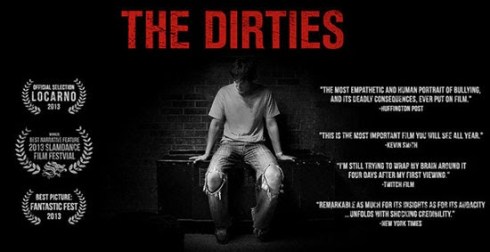
In 2013, an independent Canadian film called “The Dirties” premiered at the Slamdance Film Festival. Since then, filmmaker Kevin Smith helped with distribution by way of his company, Kevin Smith Movie Club, and it has since been released on home media and video-on-demand. Those who have seen it are rather split about it—some say it’s a fresh, compelling take on bullying while others either call it either a self-praising “meta-mockumentary” or an irresponsible look at a risky topic that shouldn’t be touched upon. That topic in question is “school shooting.”

There’s no doubt that whenever those two words are mentioned, people’s minds are at unease. People recall numerous horrifying occurrences in which students were killed by gunmen on campus, which then leads them to wonder why they happened to begin with. The answers from media and society are usually unclear, so people come to their own conclusions, mostly having to do with mental disorders or TV/film violence. “The Dirties” is a controversial film that raises similar questions but also manages to deliver its own interpretation as well.

The film is told through the perspective of a video camera and is about a teenage movie buff named Matt (played by writer-director Matt Johnson) wanting to make his own movie. He buys wireless microphones to use and has someone film him and his best (and only) friend, Owen (Owen Williams), presumably all the time. The movie he wants to make is a wish-fulfillment fantasy in which he and Owen exact revenge on a gang of bullies in their high school, whom they dub The Dirties. When that movie is complete, Matt comes up with an idea to make another movie—a more realistic one in which he actually brings a gun to school and shoots The Dirties. Owen doesn’t take Matt’s idea seriously at first, but he starts to question his sanity when he not only continues to play-act in front of the camera (as if living his own movie), but also has blueprints of the school and has been firing guns for target practice.

the_dirties_trailer_2_screen

The main character of Matt is trying to become a movie star of his own creation. He’s constantly making film references that no one else understands, tries to become the thing he’s referencing, and as the film goes on, he thinks less of what famous people would do and what he would do, since he has become what he usually references. And thanks to the obscure cameraman (whose identity is never revealed), he’s never alone. This is a modern problem in today’s society, that today’s kids film themselves and act in front of the camera. But Matt, who faces issues of bullying and alienation, actively puts himself on camera 24/7, and so he’s always trying to perform and he can’t seem to break out of it. Even when Owen acknowledges what he’s doing is insane, Matt can’t bring himself back to reality and instead wants to further his own interpretation of reality and continue making his movie.

Owen, meanwhile, would rather try something else than keep making a movie with Matt. He wants acceptance among his peers, which is something Matt clearly quit trying to achieve. He longs for the attention of a girl he likes; he wants to make new friends; he wants to try something new. The biggest turning point in his life is when Matt is so obsessed with his art that he never talks to Owen like a real person anymore and, even scarier, actually seems serious about conducting his own school shooting.

600

When looking for someone or something to blame for school shootings, media and society sometimes like to point the finger at violence portrayed in TV and movies, suggesting that watching it can make someone want to commit destruction. But this film shows how that’s actually never the case. What it tries to address is the issue of youth psychology and how it’s never always how we interpret it. According to filmmaker Johnson in an interview with cinema-scope.com, “The news always tells you the story of the kid starting at the last chapter of his or her life: that kid was a loner, or whatever. Which is really irrelevant to what happened. If you actually wanted to know what happened to the kid, you look at the first 200 pages of his life.”

That leads into the film’s ending. Some people complain that the film ends anticlimactically with no clear reasoning or logic. It ends with Matt, after having shot The Dirties in the school hallway and scared away his classmates, finding Owen cowering in a corner. He says, out of breath, “What are you doing? It’s me.” The scene cuts to black, the end credits roll, and that’s the end. But if you really think about it, it ends where the typical news story would start. The news story would start where the tragedy ends, but the film is a representation of what happened beforehand, which no one would want to talk about.

“The Dirties” may be one of the most important films of recent years, delivering a compelling portrait of disaffected youth and a descent into sociopathic behavior. It accurately portrays kids with real issues—being bullied, isolation, moving on, drifting apart, and even at some points, being bullies to each other and eventually to their own bullies. When the promising sociopath feels like a real person, instead of a standard, cold, distant, ruthless, cold-hearted killer, that makes it overall tragic; when a funny, artistic, even empathetic guy is also bullied and more, that can cause him to take drastic measures for vengeance.

“The Dirties” is not merely an unflinching portrayal; it’s also a cautionary tale. The back half of the film is laced with misfortune (albeit with an underlying comic tone, brought on by Matt trying to keep things lighthearted). One scene features Matt telling Owen he thinks he might be a “psychopath”—is this a cry for help or more play-acting? Whatever it is, Owen doesn’t listen. Shortly after, Owen has moved on and become just another face in the halls and another member of society the film specifically criticizes—his mind is elsewhere and he doesn’t see Matt as a friend in distress. So, in a way, it’s Owen, Matt’s best and only friend, who actually drives Matt to do what he ends up doing in the end of the film. As Owen fears for his own life when he sees what Matt has become, Matt doesn’t understand what’s changed and why he can’t see him for what he is, hence the line, “What are you doing? It’s me.” It’s a truly sad moment. We know what’s really going on, but no one else does. Even Matt doesn’t see the trouble in what he’s done.

7823798324uhrwehiuew978234

It’s a challenging concept when the victim is the one with the gun, at least in this film. Many people who see the film arguably miss the point of it (or they’re too busy questioning the identity of the cameraman), but those who don’t can’t help but wonder: Who’s really to blame for occurrences like this? Are they portrayed the exact opposite way? Etc.

More people should seek out “The Dirties,” which is available on demand. It’s the kind of film that will force them to ask questions and find answers they’re uncomfortable about, and it also emphasizes the importance of reaching out and helping those who need assistance and companionship. If society chooses to ignore or mishear cries for help, even from their own friends, it can lead to damage to themselves and/or others. That’s the theory Johnson tried to portray in “The Dirties,” and it’s hard to argue that it’s far off.

My original review: https://smithsverdict.wordpress.com/2015/09/19/the-dirties-2013/
The Wind Rises (2014)

24 Mar

yoko_out

Smith’s Verdict: ****

Reviewed by Tanner Smith

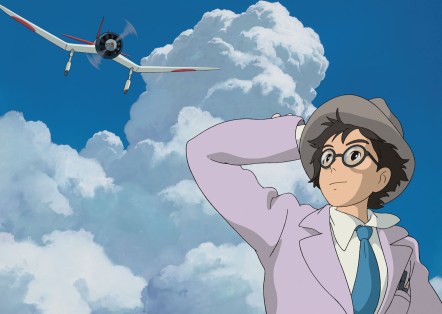
Visionary Japanese animation director Hayao Miyazaki has claimed that “The Wind Rises” is his final film. It’s not the first time he’s made that statement, but this film truly is his last one, it’s a great one to end his extraordinary career with. It showcases the best of his abilities—it’s visually stunning, tells a good story, is beautiful in its own way, and is a truly terrific film. What else should I expect from the man who gave us such animated classics as “Spirited Away,” “Kiki’s Delivery Service,” and “Castle in the Sky,” among others?

Miyazaki wanted to try something different for his swansong, so he apparently decided to add his usual touches to a biography, loosely based on the life of aviation engineer Jiro Horikoshi who came up with the design of the Japanese Zero fighters, which were used in World War II. From that description alone, you may be thinking this is not a good thing. But the character has no political agenda—he dreams of creating something truly unique and innovative just like his idols. He wants nothing to do with war; he just wants to create.

The film doesn’t have a political agenda either—it’s merely a fable about dreams, creativity, and passion. Though the film doesn’t necessarily ignore the controversies involved, they’re not the central focus. Instead, the central focus is breaking new ground with technology and bringing something incredible to life.

“The Wind Rises” begins in post-WWI days, with Jiro as a teenager (voiced by Zach Callison) who would love to fly but his poor eyesight discourages him. (Even in his dreams, he ends up crashing a plane he’s piloting—a definite bad sign, as flying is one of the most common traits of dreams.) But he is truly fascinated by aircraft and reads up on an Italian aviator (Stanley Tucci), who often visits Jiro in his dreams, and learns that he never actually flies the planes he invents. This inspires Jiro to craft his own designs. As time goes by, Jiro (now voiced as an adult by Joseph Gordon-Levitt) follows his dream by helping to create one plane after another.

One of the best things about “The Wind Rises” is the way it explores the creative process. It takes us into Jiro’s imagination; his dreams and fantasies, in which he mostly converses with his heroes. The film also shows us how little things inspire him—shooting stars, debris being whisked off by the wind, and even something as small as the curve on a fish bone in his lunch inspire his ultimate design. There are realistic dialogue-based scenes in which Jiro talks about his inventions with fellow engineers and others, but for the most part, what we need to know about his passion for creating is told through his dreams and fantasies, which are beautifully realized and, being a Miyazaki film, visually amazing.

And speaking of “visually amazing,” I can’t neglect to talk about the best-animated sequence in the film, which is the 1923 Great Kanto Earthquake. It’s intense, impactful, and well-drawn, and the aftermath of the earthquake is effectively handled, presenting a dread that would of course come from such a disaster.

In addition to showing Jiro’s work, “The Wind Rises” is also a sweet romance, as Jiro meets Nahoko Satomi (Emily Blunt) years after he assisted her when she was injured in the earthquake. You could say destiny, the wind (which, if you notice, whooshes them toward each other), or both brought them together after they lost track of each other, but they become reacquainted, spend much time together, and eventually get married. But unfortunately, due to her tuberculosis, their relationship is doomed.

The film doesn’t lose sight of the characters, and given its visual inventiveness, that’s no small feat. We enjoy these characters, especially Jiro, whose likeability equals his passion, who we root for when he inventions fail and he constantly has to try again, and who we feel sorry for when people take what he sees as wonderful and original and use it for dangerous, horrible purposes. His goal was never to create a war machine—it was to develop something that no one else had before, even if, in the end, it resulted in the deaths of many, many people. It leads to a haunting, bittersweet ending in which Jiro takes in what his invention has done in the wrong hands—writing about it would decrease the film’s impact and meaning, so I’ll leave you to interpret for yourself what it means.

Disney made a wise choice in having Touchstone present “The Wind Rises” for North American distribution and the MPAA, who I usually mock, I have to give credit for rating it PG-13. It may be animated, but that doesn’t mean it’s suitable for children. The film is very much adult (that is to say, “mature”) in its storytelling and historical content, and I also think the earthquake sequence would be too intense for younger children to take. Miyazaki went out of his way to tell a great story, regardless of his target audience, which really should be those looking for visionary ingenuity. The result is one of the best animated films in recent years. Would this be the end of Miyazaki’s long career? We shall see, but this is a pretty impressive film to go out on—one of his absolute best.

The Dirties (2013)

19 Sep

600x338

Smith’s Verdict: ***

Reviewed by Tanner Smith

In “The Dirties,” film-buff/high-school student Matt has been bullied very often, to the point where he decides to turn his plight into art. He and his best (and only) friend, a fellow outcast named Owen, secretly record themselves being bullied, as part of Matt’s revenge-fantasy project for film-class, in which he and Owen act out the murders of their tormentors.

And not only that, but Matt insists that he and Owen are filmed at all times because he has something bigger planned in mind for his next project. He even buys a set of lavalieres so he has no issues with audio. For his next big project, he plans to make a companion piece to the previous film, in which he films himself actually bringing a gun to school and shooting the bullies, because since he suffered for his art, they apparently might as well do the same.

If you’re wondering right away, yes, “The Dirties” is technically another “found-footage” movie, as it’s shown through the camera’s (or multiple cameras’) point(s) of view. Oddly though, the people filming are hardly ever identified. Who is filming all of this? We never know. For all we know, it could more another student or two, or it could be a documentary crew who gave the kids expensive lavalieres and wanted to make a documentary about bullying and being bullied. Then again, maybe the latter isn’t true, since Matt seems to have edited the “film” the way he wanted.

With that strange tidbit aside, “The Dirties” is actually a well-put-together, compelling portrait of disaffected youth and a descent into sociopathic behavior. That a film geek is the main character is even more interesting. Matt (well-played by the writer-director himself, Matt Johnson) loves film, he loves to spew movie quotes, and he loves to play with the camera when he’s filmed, like his life is a movie because it’s better than accepting a normal teenage life in a school environment where he’s picked on constantly. And we hardly even see his parents, so it seems like he has very little support from anyone else other than Owen (Owen Williams), his only friend. And Owen is at the point in his life where he’d rather do something else, like make new friends and get a girlfriend, and he’s slowly but surely breaking away from Matt. The biggest turning point in Owen’s life is when Matt is too obsessed with his art, never talks to Owen like a real person anymore (and instead, as a “character”), and even scarier, actually seems serious about performing a school shooting. Earlier, he may have just assumed Matt was only kidding, but when he sees that Matt has blueprints of the school (and this is after they’ve had target practice, using real guns), there’s hardly a doubt anymore. These are real kids with real issues—issues of being bullied, isolation, moving on, drifting apart, and even some points, being bullies to each other and eventually to their own bullies.

School shootings are such a risky topic to focus on in America, especially in film, and “The Dirties” may be the first one I’ve seen that really dives into what can cause such a horrific event. When the promising sociopath feels like a real person, instead of a standard, cold, distant, ruthless, cold-hearted killer, that makes it overall tragic; when a funny, artistic, even empathetic guy is also bullied and more that can cause him to take drastic measures for revenge.

Even more tragic is that he’s a high-school teenager who has very little to focus on other than his art. And everyone else is slow to catch on that even the original project was an outlet for his frustration; even the teacher doesn’t catch on, because his only concern is the violence and profanity that he feels needs to be deleted. As for the students, when they see the finished first project early on, they’re not concerned at all; they’re just laughing and mocking Matt and Owen.

The actual shooting occurs in the last few minutes of the movie, and thankfully, Johnson doesn’t dwell on that as much as Matt’s dangerous status and complete loss of innocence, making himself even more of an outcast. It does this by saying little and even doing little. It focuses on the right powerful moment to tell us this as it becomes clear. This is no game anymore. In fact, it never was.

The riskiest thing about “The Dirties” and what I think it deserves high points for is it portrays Matt as a real kid. I’ve known people like him and Owen. At some point, we were all like them, in a way. So, when they get pushed to the limit, we can see why one of them could be moved to retaliate. And there may even be more that we’re just not seeing.

Before anyone goes crazy, let me emphasize that I do not think committing horrific violent acts is acceptable or condonable. And that’s certainly not what’s supposed to be taken from “The Dirties”—those who do take that from this completely miss the point Johnson was trying to make. Also, the movie doesn’t provide us with many clear answers…but it does raise more questions about what causes something like this to happen.

The Up Series (1964-2013)

16 Sep

neil

Smith’s Verdict: ****

Reviewed by Tanner Smith

The “7 Up” project began in the mid-1960s as an episode of a British investigative current affairs program called “World in Action.” The near-40-minute episode, entitled “Seven Up!,” followed 14 children, all age 7, who were interviewed. The purpose of the program was to present “a glimpse of Britain’s future” and ended with the infamous quote, “Give me a child until he is seven and I will give you the man.” The participants were chosen to represent different social classes in Britain in the 1960s.

Seven years later, when the children were 14, researcher-turned-director Michael Apted directed “7 Plus Seven” (or “14 Up!,” as it’s also known) with follow-up interviews. And because Apted believed that human lives reform in some manner within seven years, he would continue to follow these same participants (for the most part; a few dropped out, since there was no long-term contract requiring them to participate in each film) at ages 21, 28, 35, 42, 49, and 56. (As of now, it’s unclear whether the series will continue at age 63.)

Watching these films as a whole, spanning five decades from “Seven Up” to “56 Up,” is a marvelous experience, capturing the truest essence of life possible for a documentary. It’s not only one of the best documentary projects of all time; it’s a real sociological study. It represents the lives of these people, they talk about what has changed every seven years and what hasn’t, and while we see the changes in each character, we still see who they were and get a sense that they are who they are. It’s like when you look at a photograph of yourself as a child—you know that you are the child and the child is you, but it’s difficult to comprehend the connection due to how much time has passed since the photograph was taken. And so, when each of these people in the “Up” series are shown as children and as adults, you notice the changes in each of them, but you also recognize some of the characteristics in them as children.

These are ordinary people—Tony, Suzy, Neil, Nick, Bruce, Jackie, Lynn, Sue, Symon, Paul, Andrew, John, Charles, and Peter. We don’t know them (though we feel like we do, through the films) and we can’t necessarily say that we at times are like them, because as the entire project indicates, no one is the same as another. But we do recognize parts of ourselves in some of these people that allow us to identify with them, want to know more about their lives, and become engrossed in everything else they have to say. Originally, the project was conceived as a way to make a political point about social class, but as Apted learned more about his subject’s lives, he lost sight of the bigger picture. But that’s fine, because the audience did too. He grew close to his subjects, so we did too.

The individual films in the series are all special in their own way. Some are more exciting and interesting than others, but there are hardly any downsides. The first two (“Seven Up!” and “7 Plus Seven”) are fairly standard, but that’s not bad at all. It starts to get very interesting at around “21 Up,” which shows the growth and maturity of the subjects as they prepare for the rough road of life. After “28 Up,” which some a couple fascinating changes (which I’ll get to in a moment), it becomes clear what the (new) purpose of the project is.

Now let’s talk about the participants. Jackie, Lynn, and Sue are all from the East End of London. While Lynn has a family and career, Jackie and Sue each married young, became single mothers, and later divorced their husbands. Andrew, John, and Charles, each representing the rich upper class people who usually map out the lives of children. These three pretty much followed the path that was already set for them by their parents and society. Of these three, Andrew is the only one who has participated in all of the films, Charles quit after 21, and John skipped 28 and 42. Symon and Paul lived in a children’s home run by charity—since then, Paul emigrated to Australia and has lived there with a wife and children ever since, and Symon has gone through a divorce and remarriage. (It’s also reported that his ex-wife didn’t care for the project, while his current wife does. He and his wife are now foster parents.) Nick grew up on a farm but didn’t see himself working on it in the future; he instead grew up to study science and become a professor and nuclear physicist in the United States. He married before 28, though everyone who saw the film apparently felt the marriage was doomed, due to her commentary. Because of this, she didn’t return for 35 or 42, and by 49, Nick was divorced and remarried. Bruce was a quiet boy who wanted to be a missionary and became a teacher and traveled to places such as Bangladesh. One of the more pleasing developments in the series is when he is 35 and regrets not having been married and in “42 Up,” he is a newlywed. He’s now a devoted husband and father. Neil and Peter were middle-class boys living in Liverpool. Peter skipped 35, 42, and 49, and returned in “56 Up” (mainly to promote his band). (I’ll get to Neil in a moment.)

Of the 14 participants, three stand out most to me (and a lot of other people, for that matter). One is Tony, also from the East End. He’s a favorite because he’s so open and charismatic and one of the biggest supporters of the project, which means he’ll most likely stay with it till the end. He dreamed of being a jockey at age 7; at 14, he was an apprentice at a horse-racing stable; at 21, he talks about a race where he had a photo-finish, from which he keeps a photograph as a souvenir, but he had to move on from being a jockey and instead concentrated on being a taxi driver; at 28, he owned his own cab, got married, and started raising a family. One of the most poignant moments in the series comes from “42 Up,” when he sits with his wife and confesses an affair he had; a real rough patch in their relationship. But they still stayed together after his wife forgave him. A particularly funny moment in the series is in “56 Up” when he tells an anecdote about how he was recognized for the series by someone who wanted his autograph instead of Buzz Aldrin’s (Aldrin was Tony’s fare).

Suzy, who comes from a wealthy background, was always reluctant about doing the films, as she was forced to do it in the first place by her parents. She’s always said she would stop participating, but she kept coming back (probably because she feels obligated to do so after so many years). Suzy was a very shy girl growing up, and by 21, she formed a very negative opinion about marriage. The most dramatic change in the series is from her from age 21 to 28. When you see her in “21 Up,” she’s bitter, chain-smoking, and nervous. But then in “28 Up,” she’s cheerful and happy and married with children; a remarkable transformation.

And last but definitely not least, there’s Neil, from a Liverpool suburb. Neil is the most complex person in the series and his story is consistently captivating and unpredictable. As a child, he was happy and excited, though you have to wonder what his home life was like, since he is also saying things like “I don’t want to have any children because they’re always doing naughty things and making the whole house untidy.” I don’t know many 7-year-olds who would talk like that, especially while smiling (like he does), so it may be indicated that Neil’s happiness was hiding something. By 21, he was living in a squat after dropping out of school after one term. By 28, he was homeless and living in Scotland; in “28 Up,” he provides the most heartbreakingly frank statement about why he will never have children: he’s afraid the child will inherit the most negative traits from him. Many people thought Neil would be dead by 35, but he was still alive, though his life had hit rock bottom. But luckily, by 42, he was able to put his life back together; he’s been involved in local council politics as a Liberal Democrat and he’s even made friends with Bruce, who let him live with him for a while.

This is what the most compelling documentaries contain: real human drama. You don’t find movie characters as fascinating as Neil.

Another special thing about the “Up” series is that with each film being released every seven years (and it still remains to be seen whether we will see “63 Up” in 2020), it allows the audience to think back about themselves and how their lives have changed in the past seven years. That reason (and more) is what truly makes the “Up” series special—it’s documentary filmmaking at its best.

The Purge (2013)

27 Oct

the-purge-masks

Smith’s Verdict: *

Reviewed by Tanner Smith

You can spew as much B.S. about it as you want (because that’s all I’m going to think of it as: B.S.), but there is no way I’m going to believe that The Purge should, could, or would be a real law, let alone “work.” That is the main problem with the film, “The Purge.” It’s a really dumb idea to begin with. It goes like this—in order to keep America in great shape and the crime rate at an all-time low, the “New Founding Fathers” (uh-huh) bring forth a social policy that every March 22 for 12 hours, criminal law is put on hold. This is known as The Purge. People can do whatever they want (or as they put it, “release the inner beast”), even murder, without fear of legal consequences. Some go out and let out pent-up anger they’ve held inside for a whole year, while others can hole up safely inside their homes.

Apparently, this law was created so people could let out all their inner anger for one night if they go by the honors system not to commit any crimes the rest of the year, thus bringing crime down and making America a more peaceful place. Do I even have to point out how ridiculous this sounds? It shouldn’t be much to complain about, since it’s only the setup for a laughable home-invasion thriller; but the characters keep repeating over and over why The Purge exists and why “it works” (and not once are mental scarring brought up in the slightest), and it’s very poorly handled. Even the social commentary (in that the rich attempts to cleanse the world of the poor) is weak. This results in “The Purge” turning out to be a pretentious, deplorable thriller that takes itself way too seriously.

The film takes place on March 22, 2022, and right there, you can tell how hard writer/director James DeMonaco is trying to warn his audience that The Purge could exist and it’s the direction America is going. Anyway, we get a couple introductory captions that explain that unemployment is down 1% and crime is abolished, thanks to The Purge. Our main characters are James and Mary Sandin (played by Ethan Hawke and Lena Headey), suburbanites who have made a living thanks to James’ successful security company, which has helped turn all neighborhood homes in fortresses to protect neighbors during The Purge (and the passive-aggressive neighbors resent them for this…for some reason never really explained). Of course, their house has a security system as well, and so they prepare to wait calmly during The Purge with their teenage kids, Charlie (Max Burkholder) and Zoey (Adelaide Kane). But when Charlie notices a homeless man (Edwin Hodge) desperately roaming the neighborhood and screaming for help, he decides to let him in for shelter. (Why did James tell his son the code to disarm the barricades?) James doesn’t trust the stranger, but it turns out the whole family has something more to fear. A group of teenagers wearing masks have been chasing the man down and the creepy Polite Leader (Rhys Wakefield) asks that the family release him or else they’ll break through the barricade and kill them.

From what I can gather, these kids are rich and delight in killing poor people during The Purge. And apparently, they want this particular poor person because he got away just as they were about to lynch him. Why they don’t just let him go and look for someone else to kill is anyone’s guess, since they don’t think to take advantage of The Purge, so it’s just a weak excuse to make “The Purge” into a home-invasion flick, which itself isn’t very successful. The homeless man doesn’t have enough moments to be declared a character, but more of a tool to allow James to question morals and ethics. So therefore, it’s hard to be scared by him when he doesn’t pose a threat, and it’s hard to care because James’ morals and ethics are hardly developed anyway. There’s too much behavior and not much rationality so that we’re questioning what’s really at stake while at the same time, we’re being asked to celebrate the deaths of the home invaders as they ultimately force their way in and delight in torturing their would-be victims just so there can be enough time for someone to come in and save them. But then, in the final few minutes, we’re led to believe that the best way to end the mayhem is peacefully. A worthy compromise, but it’s a bit hypocritical.

Ethan Hawke at least looks dedicated in his role, playing a man who’s being pushed over the edge (at least, I think that’s what’s happening). Lena Headey, on the other hand, looks like she’d rather be somewhere else, as she doesn’t seem invested in her character. The young actors, Max Burkholder and Adelaide Kane, are fine. Meanwhile, there’s the performance of Rhys Wakefield as the creepy leader of the invaders. I don’t know if he knew what he was acting in was laughably bad, but he can hardly keep a straight face while delivering hammy, supposedly-foreboding speeches. He is the most enjoyable part of the film.

What we’re supposed to learn from “The Purge” is that The Purge doesn’t work after all. Since it’s so obvious that The Purge could never happen (seriously, I would believe the futuristic society’s rules in “Divergent” before I believe this logic), there’s nothing to be afraid of or think about after the film is over. So just looking at it as a horror film, it still doesn’t succeed. It’s just a collection of horror-movie clichés within a half-assed political message. But apparently, it was so successful at the box-office that it warranted a sequel. Hopefully, writer/director James DeMonaco decides to do something more with an already-flawed premise and has learned something from making this film. Has he? Well, I’ll get to that later…

Come Morning (2013)

3 Apr

MlaX6fe9cLTROakOq21mlDTJ7IxD6odqkI2IEFOjXLYnOejeD43XZqNYXDDeKDDJ9Mql_0skzmy-NWKBK7Nwhk

Smith’s Verdict: ****

Reviewed by Tanner Smith

As I’m writing this review, it’s been a few days since I saw “Come Morning.” And I’m convinced that it’s one of those films that haunt you with not only how good it is but also how profound, effective, and unforgettable it is. It has a premise that sounds like a suitable idea for a tense thriller, and it’s easy to expect something exciting but also kind of generic. But not with “Come Morning.” It has its effective setup, it grabs you, and then it takes you where it wants to go.

The film is about 10-year-old D (Thor Wahlestedt) and his grandfather Frank (played wonderfully by Michael Ray Davis) who are on an afternoon hunting trip. The trip takes a tragic turn when D accidentally shoots and kills a trespassing neighbor. D wants Frank to call the authorities and explain what happened. But due to a long-running, complicated (and violent) feud between the two families, Frank knows that telling the other neighbors that the death was an accident won’t go well, and so he and D set out to bury the body deep in the woods.

The story occurs mostly in the woods and mostly at night, which creates an ongoing, effective, metaphorical visual for the narrative—the deeper into darkness the characters embark into, the more lost they become in their moralities. Things slowly but surely go more wrong as suddenly the realization of D’s accidental murder isn’t as relevant as what becomes revealed later with Frank. Some of his demons come back to haunt him, he runs into enemies from the past, and his actions causes him to consider his own morals and ethics as well as the loss of D’s innocence.

What really makes this whole film special is just how subtle it is. There is much revealed of the history between Frank’s family and the neighboring family, but hardly anything is spelled out for the audience. We just get visual storytelling, understated dialogue, and thought-provoking questions to interpret by the time the film is over. Without giving too much away, there isn’t just the guilt that D feels, but there’s more than Frank feels when it comes to facing his demons and trying to find ways out of the danger he put his family through; you can feel that he has had things happen that he can’t feel proud of and also can’t forgive himself for. It is also a damn good thriller; very suspenseful and becomes even more so as it continues.

Derrick Sims

Most of the praise for “Come Morning” unquestionably goes to Derrick Sims, who not only wrote and directed the film but also edited and photographed it. Not knowing another way to put this, I’ll say every move he makes for this film is the right one. There’s one particular scene in this film that spoke me in many ways as to just how great Sims was as a filmmaker; without giving too much away, it involves the final moment in a character’s life. It’s an amazingly effective scene that could have gone one of two ways and may have sunk the film. It went the other way and became the best scene in the film.

I also admire how he shot the film himself. It’s as if he had this vision in his head and just wouldn’t be satisfied unless he created it. And indeed, the cinematography is first-rate. I don’t know how he managed to create beautiful scenery when most of the film takes place in the wilderness in the dark, but he certainly did.

This is a great film; one of the best I’ve seen in a long time. That’s why it shocks me that while it had great reception at festivals (including the Oxford Film Festival, where it received the Jury Award for Best Cinematography), the film never got a real theatrical release. That’s a shame, because I can see a lot of people seeing “Come Morning” the same way I did: as an atmospheric, unforgettable, well-executed, haunting piece of art.

NOTE: “Come Morning” is available on DVD and BluRay, and can be purchased at www.fabledmotionpictures.com.

The World’s End (2013)

10 Feb

the-worlds-end-simon-pegg-nick-frost-martin-freeman1-600x399

Smith’s Verdict: ****

Reviewed by Tanner Smith

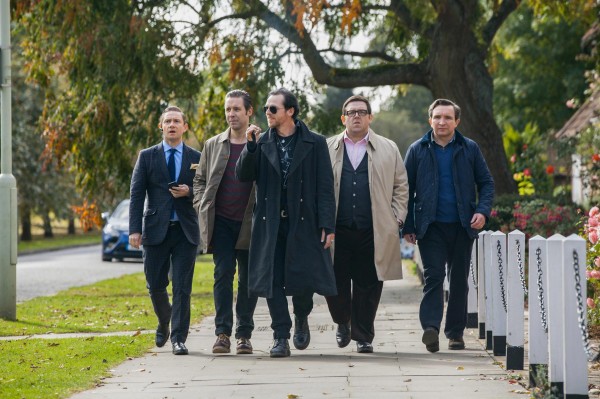
“The World’s End” is the supposed final entry in the “Cornetto” (or “Blood and Ice Cream”) trilogy, and I seriously hope that doesn’t mean writer-director Edgar Wright and co-writer Simon Pegg aren’t going to make any movies together, because with “Shaun of the Dead,” “Hot Fuzz,” and now this, they make some of the most intriguing, entertaining, ambitious, wonderful films (not just comedies; that’s too easy) to give us the pleasure of seeing. I don’t know what it is; maybe they bring out the best in each other through each other. But I love all three of these movies. I would be first in line to the next Wright-Pegg collaboration.

The review has barely started and I must sound like a fanboy right about now. Let’s get right to it.

“The World’s End” stars Pegg as Gary King, a middle-aged man stuck in a stage of arrested development and always lives in the past. He recalls a time 20 years ago when he and his four best friends, when they were teenagers, embarked on a journey known as the Golden Mile, which is mainly a series of 12 pubs, with the World’s End tavern being the final stop. Gary looks back with fondness but also with regret since he and his friends didn’t make it to the World’s End. But he still likes to see himself as a king of cool, as back in his teenage days, he was a charismatic, daring teenager who felt like he could take on the world as opposed to actually dealing with real-life issues.

Nowadays, 20 years later, he’s a pathetic middle-aged man who still thinks things can return to the way they were, still drinks, and still sees himself as king-of-cool. He hasn’t aged mentally and doesn’t care how pathetic he looks to everyone else. His friends, meanwhile, have drifted away from him. They live their lives with jobs, marriage, families, etc. They get surprise visits from Gary, whose plan is to rally his group together to relive the old days and do it right this time. He manages to talk his friends (Andy, played by Nick Frost; Steven, played by Paddy Considine; Peter, played by Eddie Marsan; and Oliver, played by Martin Freeman) into returning to their hometown of Newton Haven and finish the Golden Mile.

The only reason the friends, one of which (Andy) holds a grudge against Gary, go along with Gary’s plan is because they feel worried about his way of living and because he said his mother died (which isn’t true). Gary becomes a little too much for them to handle at times, and the friends have to try and talk sense into him and bring up that what he’s doing isn’t healthy or welcoming, and he needs to grow up and face reality.

Oddly enough, this first part of “The World’s End,” which runs for about 35 minutes, proves that it would be a great, funny and effective movie about a reunion of old friends thinking about the old days and when their lives are like now. They notice what’s changed and what hasn’t changed, and that includes their first few pub-stops in Newton Haven, which have been cleaned up and “Starbucked.” Gary even finds that his old flame, Sam (Rosamund Pike), isn’t interested in Gary anymore.

Think Adam Sandler’s “Grown Ups” done right. There’s great writing (the dialogue and one-liners are absolutely wonderful and very funny) and great acting and it seems like the story is going somewhere mature with what it has already. And it kind of does, but…not quite in the way those who haven’t seen the trailers or read the plot synopses would have expected. Those who have are waiting for me to bring up the “blanks,” the nicknames the main characters give to the robot-alien-things that have invaded the town.

Yep. Gary and friends discover that Newton Haven has been invaded by an alien intelligence, and most of the townspeople have been replaced by blue-ink-filled, life-size action-figure like, robotic replicates. Rather than get the hell out of that town, Gary figures the best solution is to continue on the Golden Mile so as they don’t raise suspicion and thus don’t fall victim.

Makes sense to me.

Bottom line is that Gary came here to complete a pub crawl and he’s going to do it, no matter how many times his friends try to convince him otherwise or how many other messy situations they get into with the robots. Gary pours himself a pint everywhere they go and rarely lets anything stop him. No matter what other changes he’ll come across, Gary will not back down. Through all this madness, there is still time to keep true to the reunion story by taking time to bring up new issues about past, present, and future. It all manages to oddly fit together, mixing comedy, drama, and sci-fi to give us a spot-on satire and a gripping story at the same time. Also, this is probably the most personal story Wright and Pegg have put together, since the focus is mainly on Gary’s character and how he’ll grow despite not wanting to and not expecting to.

But of course, I cannot forget to talk about the action sequences. They’re very entertaining to watch, as we get some of the funniest fight choreography I’ve ever seen in a comedy. Great stunts and the right moves help make these scenes gripping action and fast-paced comedy. And in these scenes, be sure to rewatch them a couple more times on DVD because there’s a chance you’ll miss a couple things, it’s so fast. It’s edited energetically, much like the other films (as well as “Attack the Block,” a Wright production). The special effects are pretty damn good too.

Simon Pegg delivers what is arguably his best performance here. He’s been good in movies before; this is his most accomplished work. I could also say the same for Nick Frost, who has co-starred opposite Pegg in the other “Cornetto” movies. As Andy, the uptight businessman who constantly tries to talk some sense into his friend, Frost is very effective. That comes as a surprise, as Pegg is usually the straight-man and Frost is usually the jokester. Here, it’s the other way around, and Frost is wonderful here. The rest of the cast, which includes David Bradley as a crazy old man who knows the score and Pierce Brosnan in an uncredited cameo, perform well and make for an appealing supporting cast. I don’t know why, but seeing Martin Freeman with an earpiece and a suit trying to fight is a joy to watch.

Everything builds to a climax in which Gary faces off against the leader (who’s just a voice of reason, so to speak) of the aliens. I won’t give away the ultimate resolution, but let’s just say it’s very clever and leads to one hell of an epilogue that you don’t see coming and are nevertheless fascinated by (or at least, I was). Mainly though, “The World’s End” is a joyous experience. A ton of fun. A funny, slick, well-made film. There’s more I could say about this film that express how much I love it, but I’ll do you a favor and leave you to enjoy it for yourself. What else can I say but it’s time to look into the future. And in my future, there’s more viewings of this film.

Wait, doesn’t that go against the “don’t cling to the past” message?

Ah well, I’ll figure it out later.

Saving Mr. Banks (2013)

28 Jan

saving-mr-banks-tom-hanks-emma-thompson-slice

Smith’s Verdict: ****

Reviewed by Tanner Smith

Here’s something I’m not sure anyone would have expected: a Disney film about the making of a Disney film. And it’s not just any Disney film, but “Mary Poppins,” well-known as one of Walt Disney’s best. Yet it also seems kind of ideal of an idea to be made, since the story behind Walt Disney and co. getting the rights to the original source material by author P.L. Travers is an interesting one. That story is made into Disney’s “Saving Mr. Banks.”

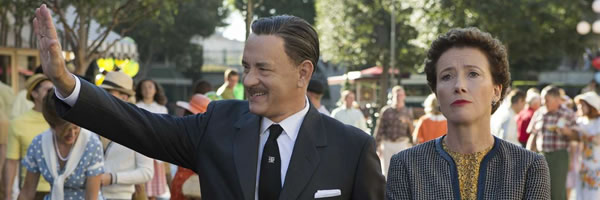
The film takes place in the early 1960s. Emma Thompson stars as P.L. Travers, the author of the popular “Mary Poppins” books, which Walt Disney (played by Tom Hanks) has been trying to obtain the rights to for years so he can produce a film adaptation. For 20 years, Travers has resisted the urgency because she isn’t a particular fan of Disney. She can’t abide cartoons, she doesn’t like his lighthearted fare, and she just can’t see her beloved characters treated in a way she’s afraid Disney would do. But now, she’s struggling with her financial situations and feels she has no choice but to agree to let the Disney studio make the “Mary Poppins” film.

She travels from London to Los Angeles to meet and negotiate with Disney, the songwriting Sherman brothers (Jason Schwartzman and B.J. Novak), and the writer Don DaGradi (Bradley Whitford). But each session tests her patience, as she doesn’t always agree with their decisions. She’s a stubborn, bitter woman who won’t stand for nonsense. They come to compromises (sometimes to her disdain) and Disney tries to open Travers’ heart to what magic he has to offer.

There is a lot of delight in the scenes where she visits with her collaborators, especially for those who know and love the popular Disney film. There are comic moments that reference what almost was and what did become part of the film, and the dialogue in these scenes is just fun to listen to. This is one of the most interesting, entertaining films I’ve seen about the collaborative process in Hollywood filmmaking. Even if some of it doesn’t necessarily ring true, it’s still interesting to watch.

It’s kind of unusual for this film to be made, since it isn’t an entirely pleasant story to be told. But director John Lee Hancock (who also directed the 2002 sports film released by Disney, “The Rookie”) and writers Kelly Marcel and Sue Smith found a way to make this film sweet and entertaining but also very effective. The story is intercut with the rougher edges of the film, which occur in flashback sequences in which Travers, living in Australia, deals with the sickness of her father (Colin Farrell) who is fighting a losing battle with alcoholism. In these sequences, we see where Travers got the idea for most of the characters and events in her books. We understand their meaning and why they’re so important to Travers.

It can be argued that the contrast between the 1900s flashbacks and the 1960s events makes the former feel like a different film. But I think the combination of light and darkness is suitable for giving the audience an understanding for why Travers feels the way she feels about certain things occurring now. This gives most of her meetings with Disney a greater meaning. And because of the flashbacks, we also have a complete portrait of P.L. Travers, seeing her as a child played by Annie Rose Buckley and as a middle-aged woman played by Thompson.

Emma Thompson carries this movie. Her performance as P.L. Travers is definitely spot-on. She plays a stubborn woman who has had a troubled past, as well as a writer who loves her characters too much to see them ruined. Any writer could relate to that in some way. Thompson’s great here. The surprise performance for me came from Tom Hanks. I didn’t know how well he would portray Uncle Walt himself, but he managed to project the right amount of optimism and happiness that can definitely remind you of the late Hollywood titan. And it’s just hard not to see him as Disney. Note the scene later on when he talks to Travers about why years back, he never gave away his character of Mickey Mouse for money; you can see and hear the sincerity in his performance.

Those who know the story beforehand may have a bit of an issue with the ending of “Saving Mr. Banks.” Without giving too much away, it may rub some people the wrong way. But personally, I would see it as a “on the one hand/on the other hand” resolution. Maybe it doesn’t entirely make clear what Travers is feeling at the premiere screening of “Mary Poppins,” but so what? It didn’t need to go one way by fully presenting what should be felt here; that would have been cheating. Instead, we get an ending that can be analytical and heartwarming at the same time.

For those with a soft spot for “Mary Poppins,” “Saving Mr. Banks” is a treasure. For those who are interested in the collaborative process in a movie studio, it’s also a treasure. And of course that can also be said for those who are straight-up Disney fans. I can relate to all three. I loved “Saving Mr. Banks.” It’s solidly-acted, it’s entertaining, it has an effective balance of comedy and drama, and for lack of a better term, it’s “Disney magic.”

Fruitvale Station (2013)

25 Jan

images

Smith’s Verdict: ****

Reviewed by Tanner Smith

“Fruitvale Station” is one of the strongest films I’ve seen in quite some time. It’s an effective, tragic, well-done account of the last day of the year 2008 and the last day in the life of Oscar Grant III. For those who don’t know, Grant was a 22-year-old Bay Area resident who was celebrating New Year’s with his friends when he was shot and killed by police at the Bay Area Rapid Transit (BART) Fruitvale Station in Oakland, California. The event was recorded by bystanders on their cellphones and uploaded online, leading to international outrage.

Ryan Coogler makes his feature debut with “Fruitvale Station,” a film based on the events leading up to the incident. It’s obvious Coogler cares so much for the subject that a film about it would have to be done exactly right. And thankfully, he knew how to tell the story. The film is presented in a straightforward way, as if the viewers are innocent bystanders or eavesdroppers as Oscar Grant III goes about his day, not knowing it will be his last. It’s an effective process.

The film begins with actual footage of that incident on the platform, as police brutally pin him to the ground, people shout “hey” and “let him go,” and the cop brings out his gun. Then the film starts, as it’s a dramatization of the day that led up to the incident. Oscar (played by Michael B. Jordan) is just going about his day—spending time with his girlfriend Sophina (Melonie Diaz) and their 4-year-old daughter Tatiana (Ariana Neal), looking to regain his job after having lost it, calling his mother and wishing her a happy birthday, finding her a birthday card, buying seafood for his grandmother’s gumbo, eating dinner and chatting with family, and more, with only one flashback showing that Oscar was once in jail for dealing drugs.

The first half of the film is just an ordinary day in Oscar’s life, but what makes it all tragic is that we know something important that Oscar doesn’t—whatever he does on this day is going to be his last. We know how it will end. He doesn’t. That makes a moment in which he tells his daughter goodnight before he and Sophina set out for a night out with friends—he promises to take her to Chuck E. Cheese the next day, but we know it’s not going to happen.

Then comes that night. Oscar, Sophina, and their friends ride the train, party before the countdown to New Year 2009, come across a couple pleasant people to talk with, and then they step onto the train leading to Fruitvale Station. A fight breaks out when Oscar comes across a hateful ex-cellmate, leading to the arrest of Oscar and his friends on the platform, leading to…

“Fruitvale Station” may be more about Oscar’s final day than it is about Oscar himself, but we do learn a few things while in his company. We know some things about his past, we see how his year in prison makes things uneasy for his mother (well-played by Octavia Spencer), we see his good qualities, we see his bad, we see him interact with people who love him. It’s enough for us to get a good sense of who he was, and Coogler is careful not to present him as a heroic type but as a many-sided human being. Oscar was a regular guy who had his problems but also had people who love him and would miss him. It’s a compelling portrait of such a man who befell a case such as this, and it also leads to one of the most brutal, uneasy scenes I’ve seen in recent memory. When the climax arrives, it’s a truly effective tough case of police brutality and even tougher to stomach as it was based on a true event. Though it also makes you think—do you think anyone would have even remembered Oscar’s name if he wasn’t killed the way he was?

“Fruitvale Station” is never manipulative (even a scene in which Oscar helps a young woman at the grocery store decide which fish to buy is convincing), and even when you think it’s going to be (such as when he helps a dog who just got hit by a car), Coogler finds a way to effectively roughen up the scenes, keeping with the consistency of the film which feels gritty and realistic. He’s aided by an excellent actor in the role of Oscar Grant III. Michael B. Jordan turns in a star-making performance, giving a powerful portrayal of a young man who goes about his day, not knowing it’s his last. He, along with the nontraditional cinematography and solid supporting cast, adds to the compelling nature of “Fruitvale Station,” a film I will not forget anytime soon.

Contracted (2013)

14 Jan

contracted

Smith’s Verdict: ***

Reviewed by Tanner Smith

Just to get this out of the way, the tagline for the “Contracted” poster reads “Not Your Average One Night Stand.” And the problem with that is I don’t think the sexual encounter in the opening of this film could be considered a “one night stand” so much as “rape.” Our female protagonist is clearly drunk, the predatory male picks her up, the next thing we know is that they’re getting it on in the back seat of a car with her repeatedly telling him to stop when he doesn’t, and it’s indicated later that roofies were more than likely involved.

Yeah, I’d consider that “rape.”

Now that that’s out of the way, let’s talk about Eric England’s “Contracted,” an effectively horrific, suitably gross horror film with as many smarts as gore. It’s a nicely-done chiller that plays as horror and as a cautionary tale about safe sex. It begins as 20something lesbian Samantha (Najarra Townsend) attends a party held by her best friend Alice (Alice Macdonald). Feeling her relationship with her girlfriend Nikki (Katie Stegeman) is deteriorating, she gets smashed, making her the perfect target for a mysterious stranger named BJ (Simon Barrett). Before she knows it, she has unprotected sex with him in a car, which will result in the impending horror.

The next day, which is given the foreboding caption “Day 1.” Samantha awakens with a slight case of the chills. She also has a rash and a bloody…well, never mind. She goes to see a doctor about it, but she gets that usual lame story about blood tests (though why she isn’t given a prescription at least, I couldn’t figure out). But things get even worse during the next couple days, and on Day 3 (which is labeled “Day 3 of 3”), things get even worse as her eyes change color, she gets a sore on her lower lip, and her hair, teeth, and fingernails fall out. (I won’t even mention the maggots.) This is far from STD; she is slowly but surely falling apart and losing her life.

The “grossout quality” is evident throughout “Contracted” and the makeup and effects in how they change the appearance of Najarra Townsend and do some neat practical effects for parts of the body are definitely something to be complimented, as they are well-done. And they did make me squeamish, particularly when Samantha notices something is not quite right with one of her fingernails.

But if that were all “Contracted” was, it would have been creepy but sort of ordinary. What I like about “Contracted” is that it is more of a character study than a straight-up horror flick. We come to understand Samantha as a person and thus we feel for her as she slowly and literally falls apart. There are hints given by her mother (Caroline Williams), whom she lives with, that she has had a troubled past involving drugs and that she has enough to be mad about, particularly with her lesbian lifestyle which her mother disapproves of. And I like that we’re not given expository dialogue about what Samantha has gone through in her life; everything is said to us through either hints of dialogue or how relationships between these characters flow with each meeting.

And Samantha does have a lot to deal with—her mother is overbearing; her girlfriend Nikki is hardly interested anymore; Alice is a little too clingy; there’s a nice guy (played by Matt Mercer) who won’t take the hint that Samantha isn’t interested in him; she isn’t too fond of her waitress job; she would rather do something with her hobby of growing orchids; and so on. There’s too much for her to deal with, which is why she sometimes makes mistakes due to her muddled priorities and sometimes-standoffish attitude. And now she’s had sex with a man for the first time, which came to this disease that is disturbingly ruining her life. But she’s too scared and too naïve to get everything on track once at a time. All that and more leads her to descending into madness and becoming destructive to herself (and to others) once it’s clear there’s no hope for her.

Samantha is not always easy to like, but she is easy to empathize with and you do feel sorry for her. And Najarra Townsend does a great job in the role. There isn’t a single false note in the performance, as far as I’m concerned.

Also, by having “Contracted” be more ABOUT a person, it also has the advantage of being an effective allegory about how people feel in the weird stages of early adulthood and how their deeds can lead to mistakes and consequences.

Not everything in “Contracted” works. Some of the mother’s reactions to her daughter’s illness are a little too unrealistic. You could argue that she’s afraid she’s resorting to old bad habits and she thinks that’s what this led to, but come on. And then there’s the second visit to the doctor, when the doctor notices that Samantha’s “condition” has only gotten worse. He doesn’t take her in for observation; he just tells her not to get in contact with anybody. Really? Then there’s a really nasty encounter with the nice guy who has been stalking Samantha for quite a while. Maybe if he were a little sleazier (or maybe if he were replaced by BJ), that would have been an effective comeuppance, if that’s what it was supposed to be. And what about BJ? (By the way, a brilliant move on the filmmakers’ part is that BJ is always kept out of focus during his scenes.) We don’t see him again except for a moment in which he picks up another woman. Why not put him in the nice guy’s place and give Samantha a moment of revenge?

(Granted, the fact that BJ isn’t given a form of comeuppance is somewhat chilling, since it’s obvious he’s going to keep spreading the disease around.)

Now I must admit I did read a few reviews of this film before watching it, because I am friends with this film’s 2nd 2nd Assistant Director and I wanted to know how the film was doing, critic-wise (as of now, it ranks 50 percent on Rotten Tomatoes). Each one of the reviews I read mentioned a certain word that made me correctly guess the film’s ending. What was that word and would it lead you to assume (possibly correctly) what the payoff to the disease is? I’m not sure I should reveal it. On the one hand, knowing beforehand made the film a little more fascinating in where it was going. On the other hand, I’m not sure how people would react to the final shot. I could see it having mixed reviews—some might react with an awed “whoa” (in a positive way); others might react with a dissatisfied, deadpan “what?”

Well, great. Now I can’t reveal that word now that I’ve built it up so much. People would guess the payoff for sure. Well, I guess the best thing to do would be to say to check out this film and decide for yourself whether you like the payoff or not.

I liked “Contracted.” It has a great protagonist; it’s well-made; it has a nice supporting cast, especially Katie Stegeman as unfriendly Australian lesbian Nikki and Charley Koontz as perpetually high Zain; the make-up effects are outstanding; it’s chilling; and its ending…well, I accepted it. Maybe you will too.