Archive | 2013 RSS feed for this section

Top 20 Films of the 2010s–#19

29 Nov

By Tanner Smith

Continuing my countdown of my favorite films of the past decade, here’s a recap: 20) Mad Max: Fury Road

19) FRUITVALE STATION (2013)

The first time I saw Ryan Coogler’s “Fruitvale Station,” it broke me. Even when I knew how it was going to end, I still wasn’t ready for it. I was sad, angry, and frustrated that what happened at the end of this film actually happened in real life.

“Fruitvale Station” is based on the events leading to the death of Oscar Grant, a 22-year-old man who was killed by Bay Area Rapid Transit (BART) police officers within the early morning hours of New Year’s Day 2009. The murder was witnessed by the present transit passengers stopped at the Fruitvale station where it happened. Many of these onlookers recorded the incident on their phones and shared it online, sparking a ton of interest and controversy.

Before writer-director Ryan Coogler begins his dramatized telling of what led up to this event, he makes the bold choice of showing us a recorded video of the incident (and cutting it off just as we hear the gunshot).

“Fruitvale Station” was Coogler’s feature debut. He was a graduate student at the University of Southern California School of Cinematic Arts when Grant was shot and killed. Since then, he held a passion for making a film about Grant’s last day, with the intent of telling the story that you usually wouldn’t find in the media: who Oscar Grant was. Coogler met and worked with Grant’s family to learn more about Grant, and then he had a big opportunity in 2011 when Forest Whitaker decided to support the project when his production company was looking for new talent to mentor.

In 2013, “Fruitvale Station” premiered at Sundance, where it won the Grand Jury Prize and the Audience Award for drama, and screened again at Cannes before it was released in theaters in July. It received a ton of praise from critics and audiences, and it’s easy to see why. This is a terrific film.

And it introduced us to a truly talented director in Ryan Coogler, who went on to revive the “Rocky” franchise by taking it in a different direction before making a Marvel Cinematic Universe movie that would challenge its audience (no, the other movie)–an impressive track record, to say the least!

All three of Coogler’s movies so far feature actor Michael B. Jordan, another great young talent who broke through this decade. In “Fruitvale Station,” he portrays Oscar Grant, a young parolee trying to stay out of trouble. It’s impossible to dislike him–he feels all too real, and it’s also to Jordan’s credit as a natural actor that we see him as a regular guy, flaws and all. He can get angry and impatient, but he also shows a genuine love for those who love him. When you make a film based on a real person, it’s easy to turn that person into a saint. But with “Fruitvale Station,” it seems Coogler was more focused on showing us who he was and who would miss him.

Nothing dramatic happens to Oscar in the day leading up to his death. He goes about his day preparing for his mother’s birthday party and a New Year’s night out with his girlfriend and their friends, and he’ll also spend time with his four-year-old daughter in the meantime. But there is something else to this day as well–he wants to turn his life around. He’s on parole, so he seeks to get a legitimate job–he was fired from a supermarket position, apparently weeks ago, and so today he’s trying to get his job back; and he even throws out the last of his drugs, which he was going to sell. He tells his girlfriend Sophina (Melonie Diaz), who isn’t very pleased that he’s been selling drugs in the time since he was fired, and he assures her that he’s going to find a way to keep going…and before they drop their daughter off at Sophina’s sister-in-law’s for the night before meeting their friends, Oscar tells Tatiana that they’ll go to Chuck E. Cheese the following morning…

Because we know how this story will end, each of these actions feel all the more meaningful and tragic because we know these are Oscar’s final moments of his life. The family and friends that Oscar interacts with are never going to see him again after this day.

What aids in the film’s effect is the use of handheld cameras to add some rawness to the proceedings, rather than rely on polished cinematography (which a lot of film-school graduates love to show off). And thanks to the first-rate acting from everyone involved (not just Jordan and Diaz but also Octavia Spencer as Oscar’s mother), “Fruitvale Station” both looks and feels real. When the incident finally occurs in the last 15 minutes of the film, even though I knew it was coming, I still wasn’t ready for it.

And…OK, let’s talk about the incident as it truly happened. The reason the BART officers arrived at the Fruitvale station to apprehend Oscar was because he was involved in a fight on the train with a thug he was in prison with. (Actually, they didn’t single out Oscar–they pulled off the train everyone they thought might have been involved in the fight.) The cops had their tasers out, pointed toward their detainees against the platform wall. One thing led to another, and Oscar was pinned to the floor by a cop who tried to arrest him for “resisting an officer.” He couldn’t reach Oscar’s hands, he unholstered his gun, and shot him in the back.

It was a time of confusion that led to ultimate tragedy. The officer who fired the shot was sentenced to two years for involuntary manslaughter after claiming he mistook his gun for his taser and released after 11 months. And the other officers involved were fired. All I can say is…that’s three less inept police officers in the world. Because, that’s what they were: inept. Whether Oscar disrespected them or not, that doesn’t matter. Whether the officer truly was reaching for his taser or not, that doesn’t matter. They panicked, they handled it all wrong, and they weren’t meant to be cops.

Whew. Glad I got that out of my system.

“Fruitvale Station” isn’t an easy film to watch. But it’s one that definitely made an impact on me. I will see it again a few more times, but it depends on the mood I’m in. But when I play the DVD, the ending has the same impact on me each time. And that’s why it’s on my decade-end top 20.
Looking Back at 2010s Films: Inside Llewyn Davis (2013)

26 Nov

By Tanner Smith

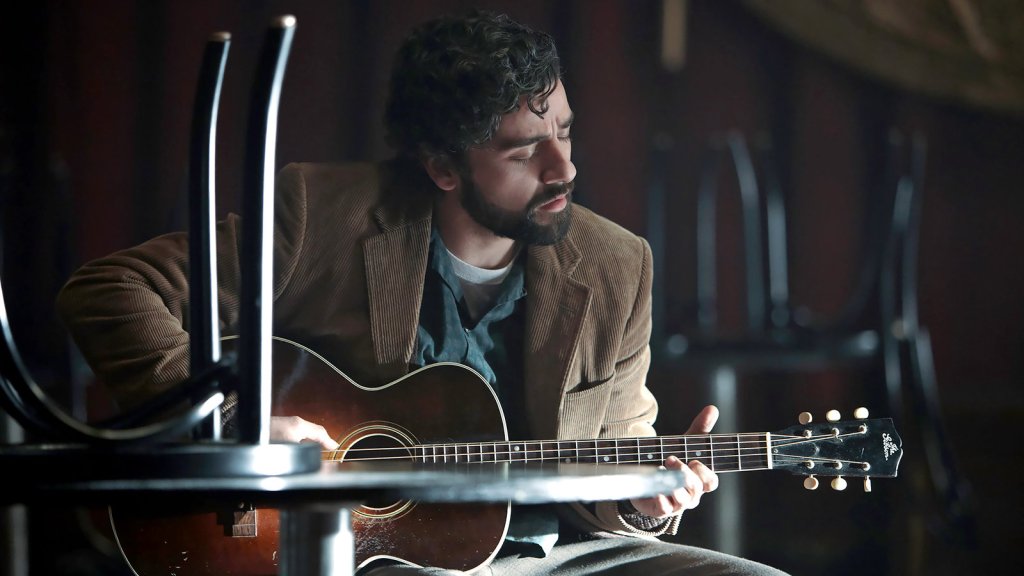
The Coen Brothers’ ode to the late-’50s/early-’60s folk-music scene, “Inside Llewyn Davis,” has become somewhat of a trading secret between movie lovers. Not enough people talk about it, but those that do usually praise it to high heaven. And I can certainly see why. It’s as offbeat and ridiculous as many of the Coen Brothers’ best-known works, but there’s something else to it as well–something that speaks to people (particularly those trying to make it in the arts) through the lead character, who is surly, depressed, and either trying so hard or not hard enough to make a name for himself in folk music. It’s the kind of film (and character) that wouldn’t work for a mainstream audience, because it’s so downbeat and also zigzagging, but would delight indie-scene individuals because both its narrative and characters are identifiable.

The setting is Greenwich Village, 1961. Llewyn Davis (Oscar Isaac) is a broke, homeless folk singer. With his guitar, he comes alive by performing a song. Without his guitar (hell, even WITH his guitar, which he often brings with him), he’s a bum crashing from place to place. And the film is just pretty much following this guy around for about a week as he interacts with friends, family, acquaintances, and new people he comes across. We see his offbeat relationship with an old flame, fellow musician Jean (Carey Mulligan), who is pregnant and doesn’t want the baby if it’s Llewyn’s and not her current boyfriend’s. (“Everything you touch turns to SH*T!” she snaps at him at one point.) We see him collaborate with other musicians–Jim (Justin Timberlake) and Al Cody (Adam Driver)–for easily the best song in the movie (which admittedly has a very strong soundtrack–I’m humming at least three of these tunes as I write this post), “Please Mr. Kennedy.” We see his rocky relationship with his sister (Jeanine Serralles), from whom he tries to borrow money. We even see him go on a bizarre road trip to Chicago with Roland Turner (John Goodman) and Johnny Five (Garrett Hedlund).

Oh, and there’s a cat too…I don’t know why the cat is there, but he’s a great supporting cat.

So many aspiring artists wish to do what they love doing for a living, and they’re often faced with a choice–continue struggling until something great happens to come along and set them for life…or get a “real” job with steady income. Sometimes, the choice is difficult to make because so many of us want to use our talents to our benefit. (Yes, I include myself–I want to make movies, not write about them forever.) That’s the choice Llewyn has to make in the end. (What’s beautiful about the resolution is that there hardly is a resolution–we don’t know the choice Llewyn ultimately makes.) There is a possibility that Llewyn will continue to struggle because he’s gotten used to it, as Jean bluntly insinuates at one point, but if he does make it in the field, he may actually turn out more miserable than he already is. It’s interesting to think about, and that’s one of the main reasons I think people love this movie. This is not your basic “star-is-born” story.

The cast is perfect, the songs are memorably well-suited, Bruno Delbonnel’s cinematography is wonderful, and it’s a Coen Bros. movie through and through. And upon seeing it again, I’m not gonna lie…it came close to making the decade-end top-20 list.

Looking Back at 2010s Films: Frozen (2013)

25 Nov

By Tanner Smith

It’s the big one! “Frozen” became Disney’s most popular, most profitable, most phenomenal animated film since “The Lion King.” For the past six years, it’s been impossible to get away from it–with a ridiculous amount of merchandising in every retail store, theatrical re-releases with sing-along pop-up lyrics for the musical numbers, and of course…”Let It Go,” an inescapable song so overplayed that it even drives people who like the film crazy just from the first few opening notes alone!

Because of the insane amount of popularity “Frozen” has received, there came the inevitable backlash. Is it really that good? Does it deserve this much attention? And so on.

Personally, I don’t think any movie deserves THAT much attention–sometimes, a movie should just be a movie; other times, a movie should be more than a movie; the case for “Frozen” is that it’s even more than that, so of course it’s going to welcome a crazy amount of backlash. So, even with all of that in mind, what do I think of “Frozen”?

It’s very good. In fact, much of it is great. So let’s talk about it.

Anna (voiced by Kristen Bell) and Elsa (Idina Menzel) are two princesses who grow up separated from each other in their large castle, because Elsa has a magical ability that controls the cold and she almost killed Anna with it while they were playing together (and Anna’s memory of both that and Elsa’s power was wiped out). The two grow up as polar opposites–Elsa is an introvert after keeping her powers secret for so long, and Anna is a wild extrovert, ready to open herself to anyone who will give her attention. During Elsa’s coronation as queen, Elsa’s powers are accidentally revealed, causing her to run away and leave the kingdom in ice. Anna sets out after her so she can convince her to come back and fix everything, with help from an iceman named Kristoff (Jonathan Groff), his reindeer Swen, and a magic, live snowman named Olaf (Josh Gad).

OK, what do I talk about first? Well, I guess I can start with what I haven’t mentioned yet: Anna’s fiance Hans (Santino Fontana). I don’t even think an hour has passed upon Anna and Hans meeting each other before deciding to marry–not too surprising for an animated fairy tale from Disney. What IS surprising and VERY refreshing is everyone’s reaction to it. Wouldn’t you know it, everyone is shocked and appalled that Anna would marry someone she just met! (Imagine that!) This is something Disney romances usually never touch upon, so that’s one of the things that make “Frozen” fresh and worth talking about.

And it actually follows through with a valuable life lesson about being careful who you trust. (I would issue a SPOILER ALERT here, but…eh, why bother? You’ve seen the movie, I bet.) Hans turns out to be the villain–a surprise villain in a Disney movie is not so surprising anymore. But here, it works, because Anna was so open to new ideas and possibilities, including agreeing to marry someone she met in a short amount of time. Put this much trust in somebody, and you’re asking for trouble. Especially for children who watch this movie, that’s a very good lesson.

But it’s not just a lesson for extreme extroverts. Elsa’s extreme introverted nature has consequences as well. Because she never socially interacted, she found herself truly alone with very little means of survival. Good lessons for both sides.

Neither of these two characters are annoyingly extreme, either. Anna is very funny and a lovable lead to follow, and Elsa is respectable and smart. And the side characters are fun too. Kristoff is a bright, resourceful, deadpan sidekick (who also sometimes talks for Swen–this Disney animal sidekick doesn’t talk, which is refreshing). And Olaf…yeah, a lot of people are annoyed by him too. Sometimes, he is a little aggravating, but I don’t mind him overall–for one thing, he’s quieter than most Disney comic reliefs; for another, he’s selfless; and last but not least, his song about waiting for summer (not knowing what the sun will do to a snowman like him) is still funny after all these years.

But that’s only from “Frozen.” For all I know, he’s gratingly obnoxious in “Frozen II,” which I haven’t seen (yet).

OK…let’s talk BRIEFLY about “Let It Go.” It’s a good song. It’s catchy, has a good melody, and is meaningful in terms of serving both the story and character…but WAY overplayed! But to be fair, there are worse songs that have become popular.

The animation is lovely and the visuals are gorgeous–not that I would expect anything less from Disney animation nowadays. The winter in this movie looks like the winter I wouldn’t mind living in. It’s beautiful.

So, yeah. “Frozen” is a very good movie. It’s not its fault people have overpraised, overhyped, and overbought every bit of it…OK, part of that is its fault, as Disney surely loves to manipulate its target audience. But you know what else is overdone in productivity? “A Christmas Story.” “Star Wars.” The Marvel Cinematic Universe. That’s just part of the game, I suppose. I’ll watch “Frozen” again this Christmastime (it is a fitting Christmas movie) and enjoy it just as much as before.

Looking Back at 2010s Films: Star Trek Into Darkness (2013)

22 Nov

By Tanner Smith

I admitted in my review of Abrams’ 2009 “Star Trek” that seeing that film was my first time seeing ANYTHING “Star Trek”-related. And it got me to watch other “Star Trek”-related stuff. I saw a few episodes from the ’60s TV series (on a “best-of” DVD) and a few episodes of “The Next Generation” too (it’s been on my Netflix list for years–I should really watch more of it), and in between, I watched the other movies. (I didn’t review them all, but I see them all.) Here are my quick thoughts on the pre-Abrams Star Trek movies:

“The Motion Picture”–boring+beautiful=beautifully boring
“The Wrath of Khan”–terrific film, one of my personal favorite movies (#215 in my Top 250 Favorite Movies)
“The Search for Spock”–overall pretty solid, though with a few awkward spots here and there
“The Voyage Home”–fun stuff (“Well, a double dumb-ass on YOU!”)
“The Final Frontier”–a pretty lousy movie with hardly anything accomplished…but it contains one of the best moments in any Star Trek movie (“I don’t want my pain taken away! I NEED my pain!” Pretty powerful stuff.)
“The Undiscovered Country”–…I remember seeing it…but I don’t remember what happens in it. (I’ll see it again sometime, surely.)
“Generations”–underrated
“First Contact”–VERY good
“Insurrection”–boring
“Nemesis”–meh

(And no, I haven’t seen a single episode of “Enterprise” or “Deep Space Nine” or whatever other spinoff series there was.)

Then came J.J. Abrams’ “Star Trek,” which something old and brought in something new, which resulted in a fun adventure that respected the familiar characters. He was called back to make a new film, which became “Star Trek Into Darkness.”

What am I getting at with all of this? “The Wrath of Khan” is the film that I (and a lot of other movie lovers) get the most out of when it comes to quality “Star Trek” entertainment. And I feel like “Into Darkness” came really (and I mean REALLY) close to being the “Dark Knight” of the rebooted franchise.

But it failed. Why?

Because it ended up with nothing more than a reminder of how great “The Wrath of Khan” is. Can we say “irony”?

I rewatched “Star Trek Into Darkness” recently. It was my first time seeing it in six years, since it was first released, when I wrote the review. I forgot how much I truly enjoyed the first 90 minutes (or so) of this two-hour-12-minute movie. I loved it! It was taking the characters in deeper waters than expected, the action was just as exciting as the previous film but even more tense because the stakes were raised, the villain was great and I loved the parallel connections between him and Kirk…why didn’t I watch this film again in the last six years??

Oh, right…the ending. The final 20 minutes brought the whole film down like a house of cards. (Even so, I still can’t pan the movie overall, but everything that came before it was entertaining as hell. So…3 stars, I guess.)

It ticks me off, because I keep thinking of other ways this could have worked. Keep what they were going for, but throw out the “Wrath of Khan” callbacks (in that they recite the lines of dialogue practically word-for-word!!)…and have NO dialogue in the scene! Just focus on the emotions alone–everything that we’ve seen before would’ve been part of a puzzle that this would have been part of!

And most importantly, THROW OUT THE EPILOGUE! That’s the part that REALLY killed the movie for me. It’s like everything that we’ve been through before and everything we’ve learned (everything the characters themselves learned in the process)…suddenly meant nothing. If the writers (who also wrote “The Amazing Spider-Man 2″…that makes so much sense the more I think about it) wanted to leave a memorable impact on movie audiences, they should’ve given us more to think about than easy resolutions.

If they had, again, this could have been the “Dark Knight” of the rebooted “Star Trek” franchise! But alas…it made me want to watch “The Wrath of Khan” again.

But it came SO close!

Looking Back at 2010s Films: All the Boys Love Mandy Lane (2013)

14 Oct

MV5BZGU3YzYzOTMtNjk0Zi00YTNiLTg1ZWMtYWEwN2Q2OTdmNzE5XkEyXkFqcGdeQXVyNjQ4ODE4MzQ@._V1_.jpg

By Tanner Smith

“All the Boys Love Mandy Lane” is a horror slasher film that is best known for its long-awaited release. It generated a ton of positive buzz at festivals in 2006, including TIFF and SXSW, and then…the studio that bought the rights decided not to release it for some reason. (Damn it, Weinsteins.) Then after it had already had a UK release long before, it was already released briefly in limited theaters before hitting VOD and DVD in late 2013 (thus barely making it qualify for my series of Looking Back at 2010s Films). And then the film that garnered a ton of good press at these festivals didn’t seem so special, with many reviews that said there’s hardly anything special about it apart from the gritty, grindhouse-like cinematography is top-notch.

What do I think of it? Well, at first, I didn’t think it was anything too special (though the cinematography was pretty nifty)…but that didn’t stop me from revisiting it again a few more times on Netflix. Much of the reason I like to watch it again has to do with the ending (which I’ll get into in a moment).

The film is well-directed, by Jonathan Levine. This was Levine’s first film, and while it’s a shame his debut got shelved for seven years, I am glad he made three well-received films (“The Wackness,” “50/50,” “Warm Bodies”) while waiting for this one to get released. By the time most of us got to see “All the Boys Love Mandy Lane,” we already knew it’d be well-directed. It’s well-acted, from actors who’d go on to other things in the waiting, including Amber Heard, Michael Welch, Whitney Able, Edwin Hodge, and Luke Grimes (who I’ll always know as Enoch from “War Eagle, Arkansas”–Fifty Shades of what?). But what did throw a lot of people off upon seeing it for the first time in 2013 was that up until the ending, it’s…well, let’s be honest, just another horror slasher film–a bunch of teens go partying at a secluded farmhouse, try to get their hookups, drink, do drugs, and then get slaughtered by an unknown psycho. (Though, unlike most modern horror films, it was shot on film and given a gritty aesthetic that calls back to horror films of the ’70s.) So why did it get all that hot buzz at festivals? I think it has to do with the ending and what the film means in hindsight–that’s why I revisited it myself. It seems like a teenage coming-of-age story disguised as a slasher film–it’s like “Dazed and Confused” meets “The Texas Chain Saw Massacre.”

The “Mandy Lane” in the title refers a high-school girl (Amber Heard) who was very awkward before she blossomed over the summer. Now, every guy wants her and, as evidenced in an opening scene, will do anything for her. Some guys invite her to a ranch out in the country, and some other guy starts to kill them one-by-one. Is there some kind of connection between the killings and Mandy Lane? Is she next?

SPOILER ALERT!!!!

Mandy was a social outcast before every jerk on campus wanted to sleep with her. When her friend Emmet (Michael Welch) convinced one of them to jump off a roof to impress her, Mandy started to realize the lengths these jackasses would go to for her. Watching the film again, a few looks she gives early in the film actually did hint that she was more devious than she was letting on (it’s also hinted that she had a messed-up childhood, though it’s not really explained). In the end, it all turns out that this night was part of a murder-suicide pact, with Emmet enacting all the murders of the partygoers, most of which were guys who were trying to one-up each other for the alpha-male position in attempts to seduce Mandy. They’re all like predators…only they didn’t realize Mandy was the predator, manipulating everyone’s emotions, both the guys’ and the girls’, everyone who thought they had a chance at scoring with her, getting her to try some other things, etc. But when Mandy and Emmet reunite, she realizes that Emmet did all this for her, showing her that he’s no better than the rest of them. So, Emmet dies, while Mandy survives, with the local farmhand, Garth (Anson Mount), getting her out of there…and it seems she can control his emotions too.

Seeing the film again with that knowledge made it more interesting, as I realize there’s more on this film’s mind than graphic violence (there isn’t even that much gore to be found). It actually captures both male and female insecurities (guys trying to one-up each other, girls’ body issues) in a unique way that could actually speak well and directly to high-school teens. The characters aren’t bad people; they’re just dumb, naive, insecure high-school kids, which makes their tale all the more tragic.

“All the Boys Love Mandy Lane” deserved more than it got. It definitely didn’t deserve to spend seven years on the shelf, when all the studio execs could’ve done was sit on it for a little bit, rather than let their minds be influenced by a negative test screening…ONE negative test screening…did they forget all the positive press from some of the highest-ranking film festivals in the country??

Again, nice move, Weinsteins.

Looking Back at 2010s Films: The Hunger Games Movies (2012-2015)

12 Oct

The_Hunger_Games_Mockingjay_Part_1

By Tanner Smith

Continuing my series of Looking Back at 2010s Films, let’s talk about the “Hunger Games” movies!

I read the first two (out of three) books in the “Hunger Games” series by Susanne Collins when I first heard the movies were being made. I skipped the last book, because…well…the second book (“Catching Fire”) didn’t really grab me as much as the first one did.

About a year later, “The Hunger Games,” the movie, was released. I really liked it. I thought it was well-acted with great performances from Jennifer Lawrence, Woody Harrelson, Josh Hutcherson, Lenny Kravitz, among others. And I thought it had great social commentary about what we perceive as entertainment, what draws the most attention in times of crisis, what classes find valuable, and so on. Yes, it is very dizzying with its constantly shaky camera movements and the whole purpose of an action film is to actually SHOW the action…but to be fair, I don’t want to see the bloody deaths of children. (Btw, even though they aren’t shown in graphic detail, this movie should’ve gotten an R rating! PG-13, my ass.) I will criticize the heavy amount of closeups and the actual “hunger” of the Hunger Games going ignored, but the shaky-cam? Eh. Doesn’t bother me that much.

Even though I wasn’t entirely sold on the second book, “Catching Fire,” I was still curious to see how that film adaptation would turn out…and to my amazement, “The Hunger Games: Catching Fire” turned out to be even better than the first movie! (It’s my favorite of the four “Hunger Games” movies.) I don’t know if it was a case of toning the material down while still getting a clear understanding about what made it worth selling to begin with, or if the new director (Francis Lawrence, taking over for Gary Ross) with a different style had something to do with it (I CAN SEE THE ACTION NOW), or whatever. But either way, “The Hunger Games: Catching Fire” had elements of what made “The Hunger Games” compelling and added to it by deepening the themes, broadening the characters, exploring the environment this story is set in, and heading into darker territory. This was like the “Empire Strikes Back” of young-adult book adaptations! And I loved it–and I still hadn’t read “Mockingjay,” the final book, so where was it going to go from there??

They split “Mockingjay” the movie into two parts (because of course they did).

“Part 1” is fine–it still has more of that commentary coming out and giving us more survival techniques for the resistance in this war-driven world, and Jennifer Lawrence carries a great deal of it (of course). But “Part 2” is where things get REAL good. This is the final resolution, the story that’s going to make things right…or are they? We get a lot of tough questions and even tougher answers, and we find ourselves asking, what would WE do if we had the upper hand on our enemies? It’s a lot more thought-provoking than I expected. There isn’t a lot of action in it, but I didn’t need a “Return of the King” type of climax for this series that’s talking to people about hard choices, such as moral uncertainty of war–I just needed something deeper than that. And I got it. And I admired this franchise for taking that risk.

My ranking of the films:
1. Catching Fire
2. Mockingjay Part 2
3. The Hunger Games
4. Mockingjay Part 1

Looking Back at 2010s Films: The Way, Way Back (2013)

11 Oct

the-way-way-back-film-film-reviews211.jpg

By Tanner Smith

Continuing my series of Looking Back at 2010s Films, there are four films that come to mind when I think of movies that really capture the essence of summertime–“The Sandlot,” “The Flamingo Kid,” “Call Me By Your Name,” and…”The Way, Way Back.”

Everyone has that Summer That Changed Everything–it’s that precious coming-of-age experience that you never forget. For super-awkward teenaged Duncan (Liam James, to whom I’m always going to refer as Young Shawn from the first few seasons of “Psych”), that time comes with a job at a water park. This kid definitely needs something fun in his life–his mom (Toni Collette) is going through a rough time, her new boyfriend (Steve Carell) is a jerk, there’s no one to hang out with, and it doesn’t help that he’s uncomfortable in his own skin. But that changes when he runs off to a water park near Carell’s vacation home and finds himself getting employed by the wacky man-child manager, Owen (Sam Rockwell), which he decides to keep a secret. He fits in with the older staff members and has numerous misadventures that help boost his self-esteem and cause him to take chances and stand up for himself.

“The Way, Way Back” was co-written and co-directed by Nat Faxon & Jim Rash, who also won the Oscar for Best Adapted Screenplay for their collaboration on the Alexander Payne film “The Descendants.” Rash has said that he put a lot of his own childhood experiences into the character of Duncan…even down to his own mother’s ex-boyfriend labeling him a “3” on a scale of 1 to 10. (No joke–he admitted this in the BluRay bonus features! People can be very cruel.) There’s obviously a lot of passion put into this script, and it shows. The comedy and drama feel like they’re part of the same movie (like the best “dramedies”) and the characters all feel real and fleshed out……well, for the most part. Allison Janney’s constantly-drunken, wisecracking single mother character feels a little too out-there, but…eh, it’s still Allison Janney–she’s always great even when she plays obnoxious.

Everyone else is GREAT. Liam James sells “awkward” really well, and he’s all too relatable. There are a lot of levels to Toni Collette’s mother character that become too obvious when watching the film again. Steve Carell’s character is a jerk but a realistic one–you can tell there are times when he wants to do better, but there’s just too much in the way…like a harpy played by Amanda Peet. AnnaSophia Robb is a three-dimensional dream-girl. Maya Rudolph is great as the water park’s general manager who takes things more seriously than Owen and yet can’t resist Owen’s charm at the end of the day. River Alexander is funny as the lazy-eyed kid who is constantly picked on by his mother (Janney) and ultimately becomes Duncan’s friend. And Faxon & Rash are good and funny in their own side roles as water-park staff.

And then you got Sam Rockwell……I’ll just say it–this is my absolute favorite Sam Rockwell performance. He’s great in a complex role in “Moon” and even better in his Oscar-winning performance that actually made a bigoted a-hole kind of empathetic in “Three Billboards Outside Ebbing, Missouri,” and he’s always been great in other stuff. But look at him here in this clip and you only get a little taste of his energy in this movie! Every time he’s on screen, I smile! And he BECOMES this movie.

Looking Back at 2010s Films: Short Term 12 (2013)

9 Oct

Short Term 12 Brie Larson and Keith Stanfield

By Tanner Smith

Continuing my series of Looking Back at 2010s Films…you know, some day, for one of these posts, I WILL get back to talking about films that the Oscars appreciated at least nearly as much as I did.* But for now, here’s one of several 2013 treasures that were completely shut out by Oscar.

Actually…let me list a few! “Mud.” “Fruitvale Station.” “The Spectacular Now.” “Frances Ha.” “The Way, Way Back.”

Sheesh! At least “Before Midnight” was recognized for its screenplay.

(Btw, I love “Gravity” and “Her,” so I’m not an Indie Spirits snob. And at least the Oscars recognized “Nebraska” and “Inside Llewyn Davis.”)

Where was I? Oh yeah, “Short Term 12.” I don’t think I was the only one who was shocked and dismayed that Brie Larson wasn’t nominated for her excellent performance in this film.

In the film, she plays Grace, a supervisor for a youth group home, where she looks after troubled teenagers day by day. She can relate to most of these kids as she too comes from a broken home….In fact, she was physically and emotionally abused by her father. So, you could say the reason she works at this facility is to make sure the youths have a better life than what she grew up with.

This proves an interesting contrast when you consider her coworker/boyfriend Mason (John Gallagher Jr.), who came from a loving foster home–you could say he’s there to make sure the kids know the love he grew up with.

Based on the short film of the same name by writer/director Destin Daniel Cretton (available on the feature film’s DVD extras), “Short Term 12” is an emotionally authentic study at the lives of troubled youths–what they go through, what they’ve been through, and how their futures can be in their own hands.

Among the youngsters are Jadyn (Kaitlyn Dever), a newcomer to the facility, whom Grace notices some similarities to her own teenage life, and Marcus (Lakeith Stanfield, the only actor to return from the original short), who was emotionally/physically traumatized by his mother and is about leave the home now that he’s reaching age 18. Grace and Mason listen to them tell their stories the only ways they know how in two particularly memorable moments–Marcus uses his own rap song to tell his story; Jadyn uses an illustrated parable from her journal.

I realize how many actors’ careers have really gone somewhere since this film. Lakeith Stanfield is one of today’s most reliable character actors. Kaitlyn Dever continues to impress me with each passing film (including “Booksmart,” which features my favorite performance of hers so far). Rami Malek, who recently won an Oscar, is in this movie as well, playing a meek new worker who finds a way to reach one of the kids.

Brie Larson is now one of our best actresses, and she did win an Oscar two years later (for “Room”). And she’s brilliant here as Grace. It’s really her story, as the film focuses predominantly on her inner life as well as her interactions with other characters. She’s subtle in her portrayal, but more importantly, Cretton’s writing of her is subtle as well. It’s understated and low-key, so we get as much as we can get without resorting to melodrama. I don’t feel a single false note in Larson’s performance.

And “Short Term 12” is a small masterpiece. A terrific film that I put in my personal Top 200 Favorite Films list. It’s a film that teaches us that no matter what we went through in our youth, we can help shape ourselves a bright future.

*At least half the titles on my best-of-the-2010s list were Oscar nominees/winners, so at least there’s that.

Don Jon (2013)

12 Aug

donjon.jpg

Smith’s Verdict: ***1/2

Reviewed by Tanner Smith

A man is addicted to porn. A woman is addicted to romance films. They go out together. But it doesn’t last. Not because one addiction gets in the way. But because both addictions don’t serve them well. The message of the film “Don Jon,” written and directed by (and starring) Joseph Gordon-Levitt, is that one-sided relationships lead to unhappiness.

And that’s the big surprise about the film that continued to impress me with repeated viewings: its ability to portray addiction in a way that affects romantic relationships. Addiction to anything can overwhelm someone’s life, but it can also impede on a promising relationship. “Don Jon” is a comedy, and it is a funny movie, to be sure. But its heavier aspects, while subdued, are more relevant to keep filmgoers coming back to it.

The film’s protagonist is Jon (Gordon-Levitt), a regular working-class New Jersey “guy’s guy”—works out, hangs out with his bros (Rob Brown & Jeremy Luc), and is all about the one-night stands, hooking up with random chicks he meets at the bar. But, as he explains in voiceover narration, even though he gets plenty of action from picking up random women nearly every night, nothing excites him more than climaxing while watching online pornographic videos. He loses himself in Internet porn because he can’t lose himself in real-life hookups, and so he can’t bring himself to any sort of commitment with any woman.

Jon has a pattern he repeats throughout his young-adult life that’s changed when he finds himself in an actual relationship, with a gorgeous blonde named Barbara (played by Scarlett Johansson). (Every other girl he picks up is either an “8” or a “9,” whereas Barbara is a “10,” or a “dime.”) She’s a Jersey goddess who could make any man’s dream come true, once said-man has cracked her tough shell. She teases Jon and promises a lot but keeps things on hold, thus giving Jon more of a challenge—one that makes him more active in attempts to please her. But as the relationship continues, Jon realizes more and more how unhealthy it is. Sex with her is disappointing, because there’s still something missing. It’s also abundantly clear that just as Don is addicted to a fantasy world given to him by porn, Barbara is addicted to a fantasy world given to her by theatrical romances. Both addictions give them different visions for ideal partners, which is what Jon ultimately realizes, thanks to encounters with Esther (Julianne Moore), an older classmate at a local community college. She’s more experienced in life and in romantic relationships and is able to let Jon know a thing or two.

“Don Jon” is a dark comedy with important matters to address when it isn’t making us laugh. It has quite a few things to say about the shallow ways men attempt (or even don’t bother to attempt) ways to relate to women, and vice versa, and there are things that are said about how different forms of entertainment can mold someone’s way of thinking toward the opposite sex. Therein lies the problem with Jon and Barbara’s relationship—they don’t know a thing about how to really relate to someone romantically; they’re both getting their imaginations from something that does not come from a real place (for Jon, it’s porn; for Barbara, it’s Hollywood writing). That’s what makes Jon’s friendship with Esther, which develops into something more as the film continues, all the more special, because Jon is learning more about what it really means to connect with somebody personally, which a lot of people will say is the ultimate key to any working relationship. (Esther even warns Jon at one point, after spying him watching porn on his phone in class, that the activity he watches isn’t real.)

(By the way, if you’re wondering, yes, there are bits and pieces of Internet porn videos scattered throughout the film, which do contain nudity. The film is rated R, so there isn’t much pornographic activity that would supply an NC-17. Even this plays an interesting role—in order to further the point that porn is nothing like the way things are in real life, the physical activity between the actors is more subdued, meaning not much revealed skin.)

Oh, and there’s also a subplot including Jon’s family, such as his overbearing father (Tony Danza) and shrill mother (Glenne Headly)—these two are funny but not very necessary, in my opinion. (I don’t think we need to be shown that Jon gets his chauvinism from the way his parents relate to one another.) But out of those scenes comes an effective mike-drop of a resolution for Jon’s sister (Brie Larson), who spends most of her screen time playing with her cellphone silently. She’s the Quiet Observer, not unlike Silent Bob in Kevin Smith’s films, who speaks only when the protagonist needs to hear something very important. When her time comes, it’s wonderful.

Gordon-Levitt, already proven to be a fully capable actor, proves with “Don Jon” to also be a fully capable writer/director. The way he shapes the story is effective, even in the ways he shows how repetitive his character’s life is in early-to-mid stages of the film (the concept of “routine” isn’t always successful in other movies). He also has an ear for the way people talk and communicate with one another, whether personal or casual, making for some really good dialogue for his actors (and himself) to deliver. And of course, he delivers a great performance in a role that could’ve easily been detestable.

In the end, Jon learns how to lose himself in someone he actually wants to share a deep connection with (and who actually wants to do the same with him). And it’s taught in a way that a lot of people could learn from as well, particularly those who are merely obsessed with “image.” Best of all, it doesn’t feel artificial or forced—despite the film’s quick pace, there are still ways for Gordon-Levitt to find ways for story aspects to occur more or less naturally. Small flaws be damned (I already mentioned how Jon’s parents’ scenes didn’t really work for me), “Don Jon” is a terrific film.

V/H/S/2 (2013) – V/H/S: Viral (2014)

27 Aug

VHS2-Short-Safe-Haven-Still.jpg

V/H/S/2

Smith’s Verdict: ***

Reviewed by Tanner Smith

As someone who enjoyed the found-footage horror anthology “V/H/S” as more-or-less a “guilty pleasure,” I was curious to see what could be done as a follow-up. Would “V/H/S” be a worthy horror franchise or would it wear out quickly after a desperate cash-grab attempt?

“V/H/S/2” (or “S-V/H/S,” as it was originally called) is about on par with “V/H/S” in that it’s uneven yet enjoyable for the best parts (just enough for me to recommend). There is one big difference, however—“V/H/S/2” has a middle segment that is creepier, more outrageous, and more fun than any of the other segments in either of the two “V/H/S” films. It itself is a terrific horror film worthy of a recommendation.

Once again, the wraparound story for the anthology involves people sneaking into a house and watching unsettling VHS tapes. While I thought the previous film’s connective tissue had some chilling subtle moments, I felt it was weak overall with a lack of clever resolution. But with this one (directed by Simon Barrett), I surprisingly found myself more involved in what was happening, as once again, little things change here and there that had me edgy—the surprise was I thought the twist was actually unique and well-done. My only problem with it is after the characters watch the segments in between. The things they see don’t seem to faze them very much; they just seem to shrug it off and continue to the next one each time.

The first segment (“Phase 1 Clinical Trials,” directed by Adam Wingard) is shown through a man’s ocular implant with a camera. The doctors warn him that the implant is experimental (hence the camera, to see how things go at first). Shortly after he gets it, he starts seeing visions of people who shouldn’t be there. It’s an unsettling, effectively done chiller with an ending that made me look away.

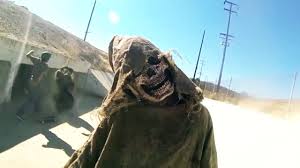
The second segment (“A Ride in the Park,” directed by Eduardo Sanchez and Gregg Hale) is shown mostly from the POV of a Go-Pro attached to a bicyclist’s helmet. The bicyclist is attacked by a zombie and soon becomes one himself. He turns others into zombies and they set off in search for fresh meat. This is a neat twist on the zombie-movie, with enough visceral gore to appease genre fans.

The third segment is the aforementioned best: “Safe Haven,” directed by Timo Tjahjanto and Gareth Huw Evans. The narrative here is more intricate than any of the previous segments, and it definitely works as its own short horror film. It involves a news crew getting the scoop on a cult run by an Indonesian deportee (played chillingly by Epy Kusnandar) who promises immortality to his followers. I could tell where this was going as soon as I knew a cult was involved, and it seemed to lead to where I thought it would. But after that, there was still about 15 minutes left to go…and man, I was way off! Would you believe me if I said Kool-Aid was the least of the worries here? This segment has a ton of surprises, neatly horrific developments, and unforgettable additional elements that make it worth recommending for all genre fans, if they can take it.

Unfortunately, after that, we get to the weakest segment in the series: “Slumber Party Alien Abduction,” from Jason Eisener (best-known for “Hobo With a Shotgun”). With a goofy fun-sounding title like that, I expected much more than what I got. Maybe it was because nothing could top “Safe Haven,” but I just wasn’t interested in this part at all. It’s fairly straightforward—teens have a sleepover, aliens invade, they try to get away, they get abducted, the end. Oh, and there’s a camera attached to a dog. It might be enjoyable for some, and it may not be fair comparing it to “Safe Haven” after all, but I expected a better end portion than this.

I recommend the film overall, but it really comes down to “Safe Haven.” It’s worth seeing just for its own insanely entertaining bit of craziness.

But then we take a step down in quality and quantity; the ultimate end of a promising horror franchise; the final nail in the coffin…

url.jpg

V/H/S: Viral

Smith’s Verdict: *

Reviewed by Tanner Smith

“V/H/S: Viral” is not merely bad—it’s obnoxious. With the previous films, you could tell they were labors of love from indie filmmakers having fun with this style of “hyper-realistic” horror. But with this, you can tell it’s a feeble cash-grab attempt. I don’t feel any passion put into this at all, and everyone else seemed to agree with me, as no future “V/H/S” films were planned since this film’s release.

I think what this film is trying to say is that we’re all obsessed with viral videos and many members of our generation are looking to capture the next best online hit. I think (but I’m not sure, as the motivations are muddled at best) that was the intention of the wraparound story to present that message. But the result is so confused and baffling that it’s hard to find the sense in it. Even the ending, which should spell out what it means, left me scratching my head. But on the plus side, it made me feel better to know it was over and I didn’t have to think about it anymore.

From what I could gather, it’s about teens trying to make their own viral videos and weird things happen that endanger their lives…and that’s all I got.

There’s no structure of people finding VHS tapes and watching horrific shorts. It’s just a bunch of random shorts thrown in between this strange supposed-wraparound.

(Just to state up front—I won’t list any names of the directors of these segments. I like to think I’m doing them a favor.)

The first random short is “Dante the Great,” which is about a magician who obtains a mystical cloak that truly is magic and gives him unbelievable power, which goes to his head. His assistant has to confront him and fight him one-on-one and somehow gain the upper hand against his real magic. This actually would be a neat idea and the effects are decent, but its execution is all over the place. Sometimes, it’s shown as a documentary. But then there’s hidden camera footage that no one could have gotten. There’s cheating in “found-footage,” and then there’s this.

The second segment is “Parallel Monsters” is a little better. It has an intriguing concept of a guy unlocking a portal to another dimension and switching places with his counterpart, only to find that it’s not what he expected at all. What he finds is creepy enough and it leads to some effective imagery. But unfortunately, it ends on a disappointing note.

After the passable “Parallel Monsters,” we are then cursed with the most detestable part of the film: “Bonestorm,” about a bunch of loud, rude, crude, vulgar, obnoxious, detestable skateboarders who go to Mexico and fight off a bunch of cult members looking for a sacrifice (I think; it was hard to tell exactly what was happening). This is what got me over the edge, as I facepalmed myself and wondered if it was even worth sitting through the rest of this thing. But I faced it head-on, as painful as it was. “Bonestorm” was such an aggressively bad short. Its shot choices are repetitive and with no style put into it, making it painful to look at—even skateboard videos and video games have more style than this thing.

Even the message of the film makes no sense! I just realized that even though there’s this stupid wraparound story that’s supposed to talk about young people and their obsession with “going viral,” neither of these three segments have ANYTHING to do with that in the slightest! They’re just random shorts trying to recapture that spirit of the previous films and failing miserably. No thought went into this at all. “V/H/S: Viral” is a lazy, badly-done conclusion of a “trilogy” made by people who I would guess didn’t care for what it was going to be as much as how quickly they could turn it in. I hated this movie.