Archive | 2012 RSS feed for this section

Bernie (2012)

22 Jul

images

Smith’s Verdict: ***1/2

Reviewed by Tanner Smith

“Bernie” is a quite unusual film. It takes a true story, tells it in both fictional and documental format (so perhaps a docudrama?), and despite the grimness that underlies the tale, is quirky, funny, and strangely sweet. This is a movie about a man who has murdered a person, and because he was so well-liked among his community, hardly anyone believed it and no one wanted him taken away for a life sentence in prison. They love this man, they hated his murder victim, so they hoped he would get off scot-free.

The “Bernie” in the title of Richard Linklater’s droll comedy refers to Bernie Tiede, who was an east Texas “funeral director” (kinder term for “mortician”) who loved everyone in town as much as everyone in town loved him. He was a regular man of the people—always participating in social events, always making friends, always being there for those in grief, and so on. He was even able to make the meanest, most disliked woman in Carthage, Texas—Marjorie Tugent—like him. He was that lovable.

Unfortunately, while Marjorie has been using her late husband’s money to much extent, she is able to make herself more than Bernie could bear. She hires him as her personal assistant, to be there at her beck and call. And Bernie, being the nice pushover, always had to respond, no matter how busy he was or how much he could take from this woman anymore. And before he could take it any longer (and presumably before he could find a shot at gaining some inheritance from her), he picks up an “armadillo gun” and shoots her four times from behind.

For nine months, Bernie hides Marjorie’s body in a meat freezer in her own garage and constantly makes up excuses for her absence. It’s not until her stockbroker shows enough concern to use her estranged family to find out what he suspects. The police find the body and bring Bernie in on a first-degree murder charge. How did the local townspeople react, especially since Bernie actually did confess to the crime? They stick up for him and try to convince the district attorney, Danny Buck Davidson, to help get him off. They do believe that Marjorie was too mean to handle and she deserved to die, and Bernie acted in “self-defense.”

Can you believe this? I mean, really, can you? I can see why “Bernie” has been labeled as “a story so unbelievable it must be TRUE.” This really did happen. Bernie Tiede was a real person from Carthage, Texas and he really did have enough respect from many people that no one believed it when he killed this elderly woman. To tell this story would be a difficult task, but luckily, director/co-writer Richard Linklater is a filmmaker who loves to take risks, and with “Bernie,” he has somehow found a way to make the feel of the film light and dark at the same time. I think you need both for telling a story like this, and “Bernie” is able to effectively mix the comedy with the grimness in such a seamless manner that sometimes you laugh but don’t know how to feel about what you’re laughing at, and other times you strangely care about what you’re watching and don’t seem to mind so much about what you find funny. It’s a strange concept, but it works.

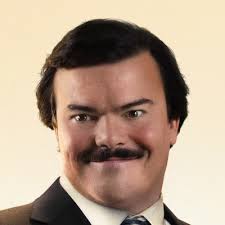
And I’ll tell you what else works about “Bernie”—the lead performance from Jack Black as Bernie Tiede himself. This is Jack Black like I’ve never seen him before. He’s restrained, he’s mannered, he’s almost overly mild, which makes him somewhat creepy but oddly endearing, and he just creates this character with everything that hardly anyone would suspect of a typical Jack Black character. This is easily the best performance I’ve seen from Jack Black—he’s given just the right role and is able to pull it off successfully. Even I liked this man Bernie, based on this performance. I didn’t want to see him go to prison!

Shirley MacLaine plays Marjorie, the bitch of a woman who maybe didn’t “deserve” to die, but she was a bitter, mean old woman after all. Matthew McConaughey is Danny Buck Davidson, the D.A. who doesn’t care about how well-liked Bernie as long as he can prove that what he did was so wrong. Other actors play certain parts, like the stockbroker and Marjorie’s “grieving” granddaughter. But everyone else, and this is the weirdest and yet most intriguing part of the framing of this story, is interviewed in a documentary style in the most conventional ways of such a structure, and they are, for the most part, Carthage residents playing themselves. It’s all the more fascinating in that when they talk about Bernie, they really are talking about the actual Bernie Tiede.

“Bernie” is not necessarily a “deep” or “moving” film, depending on how you want to look at it (though maybe you are moved by Black’s portrayal of this man). But it isn’t supposed to be. It’s just an odd, offbeat docu-comedy (yes, that is what I’m calling this movie) about a lovable man who did a hateful deed that no one could ever believe, and it’s the kind of film you’re glad that Linklater would make and that Black could star in. It’s a treasure of a movie.
The Innkeepers (2012)

11 Jul

images

Smith’s Verdict: ***1/2

Reviewed by Tanner Smith

I’m convinced now—Ti West is the new king of horror. As he showed with “The House of the Devil” and now “The Innkeepers,” West clearly knows how to build suspense and how to hook audiences and keep them invested from the intriguingly creepy setup to the horrific payoff. West doesn’t go for the easy ways out—he hints early on at what’s going to be seen late in the film, and builds the suspense from that. Thanks to sharp execution and a few effectively helpful gimmicks (letting a shot continue, using open spaces, and such), he’s able to keep us on edge whenever a character appears or walks into a certain position. That’s a pure sign that a horror-film director can earn the trust of horror-film buffs.

West’s “The Innkeepers” also has the fortune of having visible character development. The film is essentially a ghost story that is merely built around these characters, so that more time is spent getting to know them so that we grow to care about them by the time the real horror begins. “The Innkeepers” takes place at the Yankee Pedlar Inn, an old time hotel in New England that is going out of business, due to lack of customers and modern-day touch. The hotel is seemingly haunted, which fascinates the two people working there on the last weekend before the hotel closes for good. These are Claire (Sara Paxton) and Luke (Pat Healy), who decide to spend their time at the hotel investigating paranormal activity and seeking any sort of sign of a ghostly figure. Luke has already claimed to have seen something, and so Claire wants to make her own encounter. So, she roams around the empty rooms and hallways with an audio-recording device, hoping to see or hear a haunting spirit.

Aside from an annoyed single mother and her little son, the other guests at the hotel are Leanne Rease-Jones (Kelly McGillis), an actress who became a “psychic healer” who claims she is able to make contact with the spirits of the hotel and tries to warn Claire not to mess with what she doesn’t understand, and a decrepit old man (George Riddle) who comes to stay in the Honeymoon Suite because he wants the old memories brought back to him…yeah, how much do you want to bet something is wrong with this character?

“The Innkeepers” gets darker and darker as it goes along. Actually, it’s a little more lighthearted at the beginning, when we’re introduced to the characters of Claire and Luke. We see how they work, how they interact with one another, and it’s a believable “work-relationship” and friendship that maybe one of them wants to see as something more, but the other possibly doesn’t want to complicate things.

Then, the supernatural/paranormal element is introduced, and the tone becomes a little playful, with a certain amount of intrigue adding to the mystery as Claire continues to figure it out and talks with Luke about it. But then later on, it becomes clear that this hotel is haunted and the ghosts are definitely not to be trifled with. Remember, people—ghosts are generally tortured souls with no other ambition than to scare you silly or find some way to harm you.

The “ghost-story” aspect is sort of a by-the-numbers concept, but West makes up for it with atmosphere, great execution, and two particularly fine actors—Sara Paxton and Pat Healy—in the lead roles. One of the great examples of horror-movie filmmaking is that West allows the shot to linger and take its time with each scene, and then builds the suspense from that notion that something might happen. As a result, the audience is on edge throughout, thinking something is going to happen and nervously waiting for it.

Now, of course, when things go really, really wrong near the end of “The Innkeepers,” the characters have to make dumb decisions like go in “that room” or go down “those stairs” instead of—oh I don’t know—get out of that damn hotel because it is clearly haunted! I really wish that wouldn’t have been the case in which characters previously shown as bright and smart make dumb decisions to keep that particular “horror-movie” cliché.

But the amount of atmosphere and the characterization that you don’t find very often in mainstream horror movies are what make “The Innkeepers” chilling and quite memorable and definitely worth recommending. This filmmaker Ti West clearly respects the horror genre and is able to make good, smart horror movies that play with the standard elements and make them his own. After seeing both this and “The House of the Devil,” I have to be honest and say that I’d be interested in seeing his “director’s cut” of “Cabin Fever 2.”

Ruby Sparks (2012)

28 Jun

ruby_sparks_trailer

Smith’s Verdict: ****

Reviewed by Tanner Smith

“Ruby Sparks” is like a wake-up call to all hopeless romantics. Those searching for the “perfect one.” Those who ignore the notion that the Honeymoon Stage will end. Those who are only interested in a specific vision of said-“perfect one.” It’s not so easy, and I’m sure many people would agree with me. Relationships take time and practice in order for it to work. Certain problems can either be dealt with or ignored, depending on how much you care for a future with this person.

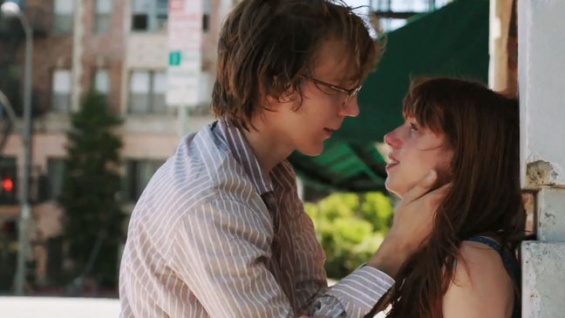
Take Calvin, the protagonist of the romantic-comedy “Ruby Sparks.” Calvin (Paul Dano) is a twentysomething author whose first novel, which he wrote just after high school, was very successful. But now, he has a bad case of writer’s block, is asocial, lives alone in his apartment with his dog, and has been through a nasty breakup. He’s also a hopeless romantic, hoping to find the “perfect girl” which his married brother, Harry (Chris Messina), says doesn’t exist. One day, his inspiration appears in a dream—a muse in the form of a beautiful woman named Ruby Sparks (played by Zoe Kazan, who also wrote the screenplay for the film). She can’t possibly be real, says Harry. He may be right, but Calvin doesn’t want to believe that. So he decides to write a book about a fictional version of him in a relationship with Ruby. He falls in love with the character of Ruby, as he doesn’t want a real woman—he wants the “perfect woman.”

Then something magical happens. And when I say “magical,” I mean you just go with it, just like with “Groundhog Day” or “Stranger than Fiction.” Ruby has suddenly appeared into Calvin’s home, and also into his life. Calvin at first thinks he’s going crazy and just seeing her as a manifestation of his hope for “the one.” But no—it turns out that other people can see her too. She’s very, very real. She believes she’s real and has all of the personality traits and memories that Calvin has given her, so they’re actually in a relationship together.

But that’s not all. Calvin realizes that he can also change anything about her just by typing on his typewriter. He convinces Harry of this by having her speak fluent French without knowing it. When he realizes this, he finds he can’t help but try it again when he realizes that the relationship between him and Ruby has somewhat turned downhill, as they don’t see eye-to-eye on certain things, she becomes more independent, and he doesn’t see her as the “perfect woman” anymore. So he decides to make a few changes…

I’ve heard of authors falling in love with their characters, but this is ridiculous. And that’s part of the reason I adore this film. “Ruby Sparks” is that rare “magical” look at the creative process, in that the creator is passionate about a creation, in this case an author and a favorite character. What serves as inspiration for a new novel? Maybe a dream that represents a manifestation of something that a person yearns for, hopes for, wants to know more about, etc. Think of how an author must feel having to kill off a favorite character to bring the story to a more dramatic quality and effect. With “Ruby Sparks,” we have Calvin, who creates this character and has this magical event occur in his life that actually brings that character to life. He feels the responsibility to keep the character consistent to his original thoughts. But when she’s real, he can’t deal with it and tries to make things the way they were. But it’s not easy. He could have dealt with certain little issues by talking with Ruby, but instead, he changes her personality. First he makes it as if she’s miserable without him; she’s clingy beyond belief (she won’t even let him go to the bathroom without her). Then he brings her an endless amount of joy; she becomes an annoyance pretty fast. Every change he can make goes very wrong and he can’t seem to fix it. Can it be fixed? Should it even have been trifled with? What are Calvin’s responsibilities as his creator? Does he have the right to twist Ruby’s persona in order to satisfy his desires? The fantasy aspect of “Ruby Sparks” delighted me in the way it mixed romance and the creative process with a magic element. And I love how Kazan’s screenplay never explains how Ruby can exist. I don’t think I needed to know. It’s quite intriguing that way, and I was with it every step of the way. Even when it takes a tragic dark turn (which I might add, is very well-handled) later in the film, I was with it, wondering how it was going to play out.

I’ve always seen Paul Dano as an actor who can either be very solid or very annoying. Here, he’s very likable and identifiable, and his low-key performance makes the story even more effective. This is probably the best work I’ve seen from the actor whose résumé also includes memorable titles such as “Little Miss Sunshine” and “There Will Be Blood.” Zoe Kazan, Dano’s real-life girlfriend, makes her writing debut and was previously seen in supporting roles in indie films such as “Me and Orson Welles” and “Meek’s Cutoff,” in which she also appeared with Dano. As an actress, she has an ethereal presence and an immense appeal. As a writer, she’s even better, knowing how to keep the narrative flowing, how to restrict myth from reality, and how to develop each character, even the supporting characters who could have been typical romcom walking clichés, but are given much personality and three dimensions.

Speaking of which, the supporting cast is just great. Chris Messina plays the type of role that is usually the wisecracking buddy, but the character is able to give helpful advice that makes sense. Annette Bening is a riot as Calvin’s hippie mother, and Antonio Banderas is even better as her lover; I have to wonder how a movie centering around them would play out. Steve Coogan is a sleazy author. Elliott Gould is a helpful shrink that Calvin turns to when he has writer’s block. The actors add light and color to what could have been thankless roles.

I mentioned before that “Ruby Sparks” does take a dark turn, and indeed it does, once the gravity of this bizarre event fully grabs hold of Calvin. This is a sequence that some viewers are divided upon. They either love it or hate it. As for me, this is the kind of descent into darkness that most romantic comedies don’t have the nerve to take a chance on. Without giving much away, it fits very well with the magic aspect and opens Calvin’s eyes to what he was looking for and what may or may not be real. It’s bleak, but effectively so.

“Ruby Sparks” is quite the unusual romance film. With Kazan’s screenplay and husband-and-wife directing team Jonathan Dayton and Valerie Faris (whose previous film was “Little Miss Sunshine”), the aspects of the romantic comedy have been deconstructed into something that seems much like the typical one at first, but then develops into something more and ultimately, much deeper than you might expect. I admire that “Ruby Sparks” took chances in its story and characters, and to me, it pays off in a most refreshing way. I love this film.

Celeste and Jesse Forever (2012)

27 Jun

44692000001_1702426955001_Celeste-and-Jesse-Forever

Smith’s Verdict: ***1/2

Reviewed by Tanner Smith

I love Rashida Jones. Everything she’s in, I’m always curious about; I’m not going to lie. Jones has a very appealing personality that comes with undeniable talent that mixes wit with sweetness; you can’t help but pay attention to her because when she doesn’t make you laugh, she makes you smile. It’s impossible for me to dislike her. I loved her in “The Office”; she’s very funny in “Parks & Recreation”; and she’s fresh and appealing in comedies such as “I Love You, Man” and “Our Idiot Brother.” I will watch her in just about anything. Sometimes, though, I feel she’s underused, which is why I was delighted to find that she takes the lead role in a script that she co-wrote. That film is the romantic-comedy-drama “Celeste and Jesse Forever.”

As you can tell by the title, Jones plays the “Celeste” in that titular couple. Who’s “Jesse?” Andy Samberg. Right away, I’m hooked—Rashida Jones and Andy Samberg together. I’ve always been a fan of Samberg’s “SNL” work and especially his hilarious, collaborative Lonely Island shorts (and he “killed” as a host on the 2009 MTV Movie Awards), so pairing him with Jones had me curious but also interested. What really surprised me was that Samberg had impressive range as an actor, something I never found in “Hot Rod” or “I Love You, Man” which required him to play broadly comedic roles. Here, he’s pretty good and delivers the type of solid (even subtle) performance the role needs, especially considering…

OK, I’m getting ahead of myself here. I just admire these two comic actors so much that I already liked the film before I even saw it. What do I think of the film itself?

Well first, I’ll just state that it exceeded my expectations by not being a mainstream romantic-comedy with two likable leads and a series of comedic antics and dramatic conflict (we already had “The Five-Year Engagement” for that, I guess). Instead, while it is good-hearted, the film, written by Jones and Will McCormack and directed by Lee Toland Krieger, presents more of a nonconventional look at what happens after the end of a relationship.

The story: Celeste (Jones) and Jesse (Samberg) are a likable couple who married young and find themselves at a crossroads now pushing the age of 30. To keep from hating each other, they separate, awaiting divorce, but remain close friends. They still hang out together, laugh at each other’s jokes, and despite the separation, they still live on the same property. They’re still in love with each other, but they won’t admit it. Celeste and Jesse are happy with this friendship, however, although their friends, Beth (Ari Graynor) and Tucker (Eric Christian Olsen), think it’s weird that these two are still close with one another, despite getting divorced. Celeste states that the reason she wants to divorce him is because Jesse is not the right husband for her, since she is a successful career woman and he is unemployed and a bit of a slacker.

Jesse runs into a woman he shared a one-night stand with, Veronica (Rebecca Dayan). It turns out that she’s pregnant with his baby and he decides to stick with her, meaning that the friendship between him and Celeste is on hold for long periods of time. Once reality sinks in, Celeste realizes that she loves Jesse and wants him back, but she probably can’t get him back. As time goes by, Celeste’s life spins out of control and she finds himself incapable of being the way she was when Jesse was around.

This is not the typical romantic-comedy in which two people meet, fall in love, endure certain problems (usually a villain that gets in the way of things), and they get married. While that is overdone, I think maybe I would have liked to see the meeting of Celeste and Jesse, oddly enough. But to be fair, it’s probably because Rashida Jones and Andy Samberg make such an appealing couple that I would have loved following the story of how they met. The early scenes in which they’re together are wonderful, as the two play off each other perfectly with the right amount of timing. But anyway, instead of the usual romantic-comedy clichés, we have the couple reaching the end of their relationship, long after they were married. This is not a film about how the most important thing is to love and be loved, though it is acknowledged that love is powerful; it’s mainly a case of these two people dealing with the poignancy the regret of this situation. There may be a second chance, there may not. This worked especially well for me, because I never knew from one point to the next what was going to happen, which is unusual because I usually pretend to predict the outcome of a romantic-comedy. I didn’t know if they would get back together or even if they would be happy at all (though to be fair, there is that suspicion that the latter is probable in some way).

The second half of “Celeste and Jesse Forever” shows Celeste as she turns from being a happy, controlled businesswoman to being an out-of-control neurotic—it’s like the indie-cred version of “Bridesmaids,” which also featured a neurotic woman struggling to seek control of her life. This puts Rashida Jones center-screen—a leading role. I’m not even surprised when I realize she’s excellent here. She has great range as an actress, she delivers her lines naturally, and I hope that more screenwriters and directors create another role with her abilities in mind so that she herself doesn’t have to create a character for herself (I mentioned before that she co-wrote the screenplay).

Does everything about “Celeste and Jesse Forever” work? Well, not quite. I found a few things to be distracting, like the subplot involving a teen-queen (played by Emma Roberts) who comes into Celeste’s life, and a few unnecessarily harsh moments that sort of drag. But if I’m going to pick on one supporting character, I should name a few others because they do have their funny moments—Celeste’s gay boss (Elijah Wood), whom I was glad was not portrayed in a broad, stereotypical fashion (in fact, the film even cracks a few jokes at the stereotype the character could have been); Skillz (McCormack), the local pot-dealer; and the newlywed couple played by Graynor and Olsen. I have to be honest and say that I’m generally not a fan of Graynor’s usual airheadedness (sue me; I didn’t find her very charming in “Nick and Noah’s Infinite Playlist”), but I thought she acquitted herself nicely here.

“Celeste and Jesse Forever” has its funny moments, but the laughs come from authenticity rather than forced dirty humor you usually find in romantic-comedies desperate for a laugh. This is a romantic-comedy that seems real and credible, with interesting characters and a genuine feel for both Celeste and Jesse. It may not be “forever” for these two, but maybe they’ll remain “just friends.” (Oh boy, here we go again…)

Lawless (2012)

18 Apr

lawless-2012-picture05

Smith’s Verdict: **1/2

Reviewed by Tanner Smith

“Lawless” is a mixed bag. It’s well-made and well-acted, but there seems to be something that’s bringing it down. That “something” is possibly the trying-too-hard syndrome. To make this film about violent and ignorant people a more mainstream project than to be expected from the Weinstein Company doesn’t entire work in the film’s favor. Unfortunately, I can only praise the acting and cinematography, while the rest of the material doesn’t do much to support them.

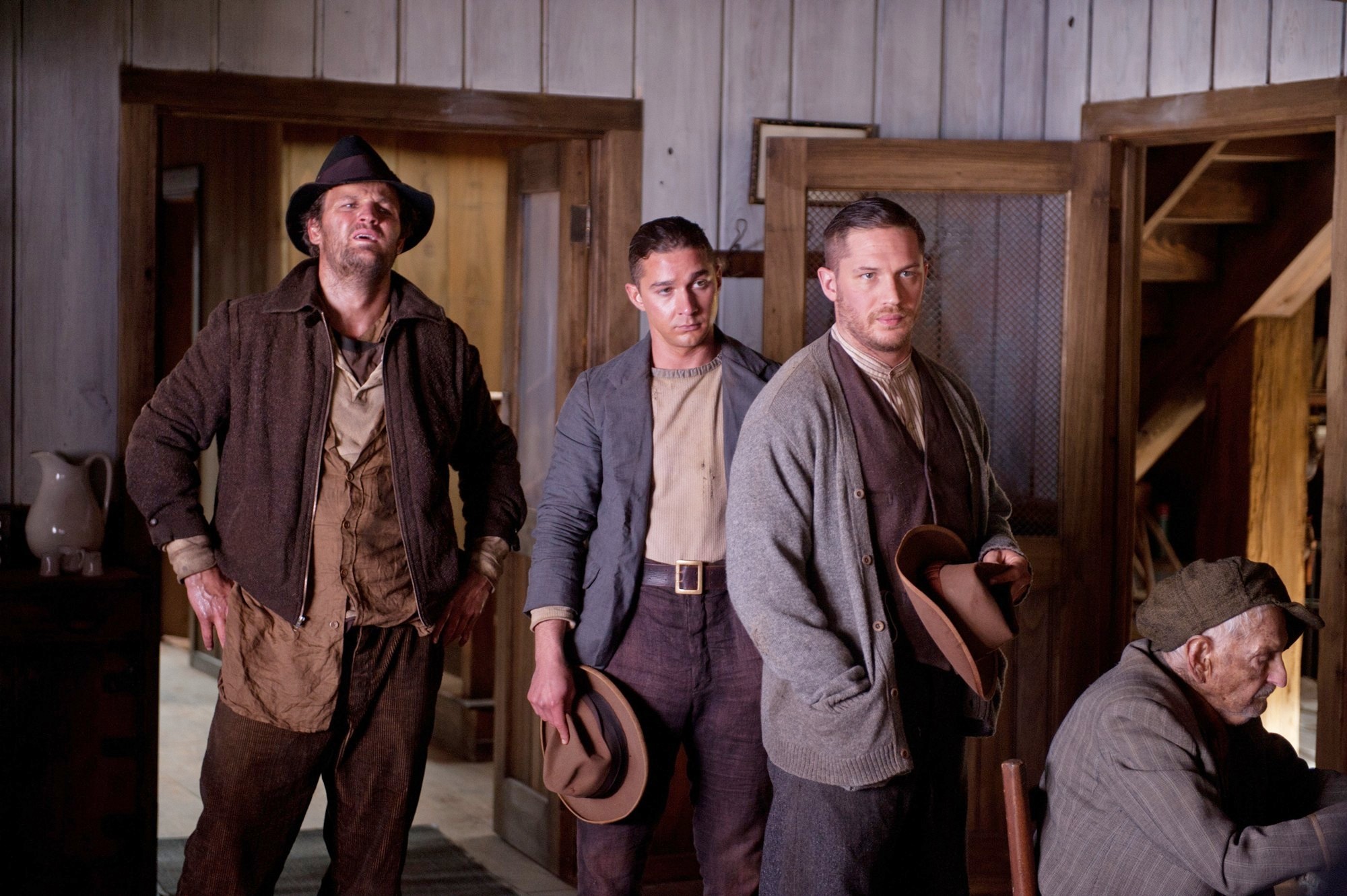
“Lawless” is a gangster film based on the story of the Bondurant brothers, who sold moonshine in Franklin County, Virginia, during Prohibition in the United States. (How much is based on fact, I’m not entirely sure.) The brothers—timid Jack (Shia LaBeouf), tough Forrest (Tom Hardy), and manic Howard (Jason Clarke)—are seen as the best, most prominently respected bootleggers around. They make great moonshine, using their bar for their activities, with help from Forrest’s lover Maggie Beauford (Jessica Chastain) and Jack’s enthusiastic best friend Cricket (Dane DeHaan, “Chronicle”).

Enter Special Agent Charley Rakes (Guy Pearce), a slimy, smarmy Chicago federal agent. He’s working with the local sheriff to attempt to shut them down…or at least, that’s what I think he wants to do. I say that because this guy Rakes is such a cartoonishly evil bad guy, which his sadistic persona and oily appearance (he’s ridiculously well-dressed, with his hair slicked back as well) certainly don’t do him justice for. There’s no motive with this guy; no dramatic purpose. This is one of the problems with the movie—a lot of the action scenes ride with this character, the antagonist, and most of them don’t work because they’re not amounting to much, from a dramatic standpoint.

Also, I’m wondering why Rakes wasn’t shot early into the proceedings, but these movies mainly require him to live to see the climax. And speaking of certain/uncertain death, don’t tell me you’re not able to guess the fate of the young, enthusiastic, innocent, jittery Cricket the moment he runs on screen for the first time. Audiences love him, but those who have seen many other movies like this will know that he’s a dead man walking.

The real reason to see “Lawless” is the acting. Aside from Shia LaBeouf providing a likable lead character (proving once again that he can be a credible, appealing actor), Jason Clarke being suitably maniacal, and Gary Oldman in a small role as a Chicago gangster, the real standouts are Tom Hardy as Forrest and Jessica Chastain as Maggie. Hardy is charismatic and delivers a solid, strong screen presence—I can even forgive the strange scene in which his throat is cut open and he lives long enough to crawl to the hospital and be treated, because Hardy makes it believable somehow. Jessica Chastain, whom I’m still convinced is an angel, is as great as expected, and has her sexiest role to date (she’s even topless at one point), playing an exotic dancer from the city who comes to the country to get away from the violence she gets herself into after the brothers mess with Rakes. Guy Pearce…well, he just does what he’s required to do as Rakes.

There is a great deal of violence in “Lawless,” as you’d expect from an American gangster film. Things get pretty vicious, particularly near the end as the battle lines are crossed. Those scenes actually strike the right note of tension that this fable (if you will) requires. But before that, like I said, the action scenes may have the grit, but they don’t bring the interesting moral dilemmas that something like the remake of “True Grit” was able to deliver, by comparison. It’s just set out like this—the illegal bootleggers (innocent, young Jack and tough, heart-of-gold Forrest) are good; the man trying to do the right thing (the over-the-top villainous Rakes) is bad. And there are some gangsters thrown in for measure (notice I didn’t say “good” measure). “Lawless” is not flawless, I’m sad to say.

Madison County (2012)

30 Mar

madison-county-movie-hiding-behind-a-tree-pig-mask

Smith’s Verdict: ***

Reviewed by Tanner Smith

Give the five central young people in the horror film “Madison County” credit—at least they don’t take the Obligatory Wrong Turn. Midway through their trip to Madison County in rural Arkansas, they encounter a Mysterious Pickup Truck Driver who asks where they’re going. He responds by giving his own directions. Do they take his advice? Surprisingly, no…but here’s a bigger surprise—they still endure all sorts of slasher-film-type torture nonetheless. Maybe it’s because I’ve seen so many movies, but that was a refreshing move.

To be sure, “Madison County” is standard stuff. A group of attractive young people embarks on a seemingly harmless trip far from home, and they stop at a practically-dead town, where they encounter the wrong guy who just wants to stalk and kill them. It goes all the way back to “The Texas Chainsaw Massacre.” (You could call this film “The Arkansas Axe Slaughter.”)

But that doesn’t make “Madison County” a bad movie. In fact, I found myself rather enjoying this film. It’s competently made and knows how to satisfy the average horror fan. I was surprised by how much I liked the film—it brought back fond memories of when I was exploring the slasher-movie genre for the first time as a young teenager (and yes, that included watching “The Texas Chainsaw Massacre”), and how since then (especially now that I’m a film critic) I’ve found some to be acceptable (with some sick, recognizing enjoyment to them) and others to be deplorable (that just feel like an overcoming sickness). The truth is, however, that slasher movies have existed for decades and there’s no sign of stopping anytime soon. But so few of them are as satisfactory as “Madison County.”

The film follows a group of college kids (Colley Bailey, Matt Mercer, Ace Marrero, Joanna Sotomura, and Natalie Scheetz) as they hit the road for a small mountain town called Madison County, Arkansas, in the hopes of interviewing the author of a novel that is based on a legendary murderer named Damien Ewell. One of the kids needs the interview for a class project, and yet he and his buddy bring their girlfriends along with them (with a fifth, the protective older brother of one of the girlfriends, in tow) in the hopes of having a good time. (And let’s face it, it’s also because a standard slasher movie requirement is to have five young, attractive people—not four or six; five! But I digress.)

Once they do make it to Madison County (again, without taking that Obligatory Wrong Turn), they snoop around private property, encounter a strange group of locals at the local diner (including an elderly woman who just seems all too polite), and are warned to turn back before they get into trouble. But wouldn’t you know it—while exploring the woods, trouble does find them. And it’s in the form of a psychotic killer with an axe and a pig-face mask.

I was surprised by how well the first half was set up to prepare us for what the blood hits the fan. It establishes the mystery that the characters are trying to find about, and by doing so, the first half of the film maintains a quiet level of creepiness and eases us into the violence that will occur in the second half, which is composed of the young outsiders racing to survive the predatory Damien. Also, I give the first half credit for setting up the characters in a plausible way, and I found myself liking them as well—they’re not the obnoxious goofballs you see in Eli Roth’s horror films; they’re people you want to root for. This isn’t really an actor’s movie, but the actors playing the five do adequate jobs—in particular, Ace Marrero as the broody, protective “older brother” (mentioned above) adds an unaffected confidence to the role that makes him stand out.

And the film is genuinely scary at times. In particular, there’s a chase between Damien and two young women in the woods, as Damien gets closer and closer to a hiding spot while the woman is too scared to run (and also, give the scene credit for having the other woman make herself a decoy to save the other one). That overly-polite woman at the diner that I mentioned steals every scene she’s in, because you know something just isn’t right with her. And I should also mention the film’s terrific opening scene that shows a young, half-naked, unconscious woman in the back of a moving pickup truck. She wakes up and has no idea where she is, and I’m thinking that I feel her pain. That opening scene got me hooked, and prepared me for what was to follow. (Who that woman was is part of the mystery, by the way.)

“Madison County” is certainly better than most independent slasher movies in recent memory, and most of the credit for that goes to the writer-director, Eric England. He knows that the slasher-horror genre is done to death (so to speak), and doesn’t do a lot to change most of its elements and gimmicks, making it all the more welcome in the way that most of its familiarity works in the film’s favor, in my opinion.

The Five-Year Engagement (2012)

21 Mar

the-five-year-engagement

Smith’s Verdict: ***

Reviewed by Tanner Smith

Really? Five years? Eh, whatever. Should be an interesting TEN-year separation. (Hey, there’s a sequel idea! But I digress.)

“The Five-Year Engagement” is a dopey romantic comedy from the guys that brought us “Forgetting Sarah Marshall” (director/co-writer Nicholas Stoller, star/co-writer Jason Segel, and producer Judd Apatow), and while it’s not quite up there with that hilarious, heartwarming treasure of a movie, it’s still a nicely-done romantic comedy. This is good in my book (or review), especially compared to the many terrible romcoms that just keep coming to the dismay of us critics, but the general public seems to eat up. Come on, how many sappy novels did Nicholas Sparks write that his film adaptations keep coming every year? But I digress.

Jason Segel and Emily Blunt are an appealing couple and exhibit great chemistry on-screen. They play Tom and Violet, whose story begins just how most romcoms would end—a marriage proposal. In an opening scene, Tom accidentally ruins the surprise for Violet that he has set up for a proposal during a skit, but nevertheless, Violet says “yes” and the movie begins.

But the big question after the OTHER big question is, when’s the big date? Violet tries to plan the perfect wedding, while waiting for a college professorial opening in psychology, and Tom is doing well at work as a chef, a job that might get him a promotion. But soon, things start to spiral downward when Violet’s dream job offer arrives. The job is in Michigan, not in the Bay Area, meaning Tom has to quit his job, relocate with Violet, and start anew. Violet is happy with her new job. But the wedding doesn’t seem to be happening anytime soon because of this. As time goes by, Tom starts to become more resentful of Violet’s newly developed success and the continuing engagement seems like it could working its way up to a breakup.

The romcom rulebook states that there must be many concerned family relatives and the best friends who are simply there to provide comic relief. I’m usually very sick of these people because they slow things down and cause the kinds of clichés that I truly cannot stand in romcoms anymore (misunderstandings, revelations, etc.). And while they do slow things down at certain spots, and there is a slight misunderstanding involving Violet and her new boss (Rhys Ifans), they don’t damage the story to the point where it becomes annoying. In particular, we have Tom’s wisecracking best friend Alex (Chris Pratt) and Violet’s sassy sister Suzie (Alison Brie) who meet and married well before Tom and Violet. These two do what their stereotypes have them do, but they still provide laughs. Brie, in particular, has a hilarious imitation of Elmo as she discreetly discusses this “five-year engagement” (yes, the title tells no lie) with Violet in front of her four-year-old daughter. (And Blunt, as wonderful as she is, deserves credit for her equally-funny imitation of the Cookie Monster.)

There are also some funny supporting characters involving Ifans and his psych-study group, which includes Mindy Kaling and Kevin Hart who make the most of their scenes with some very funny one-liners.

One major problem I had with “The Five-Year Engagement” is that it goes on for too long at two hours and four minutes of running time. It especially shows in many scenes that have made their point already and yet are still rolling. You just want to yell “Cut!” at certain points or just wish the editing was tighter.

But what makes “The Five-Year Engagement” worth watching are the performances from Jason Segel and Emily Blunt. Segel has always played a likable, hulking, sometimes-dim guy and he’s just as appealing here. Even when he makes some mistakes (and there are people who even rank him out as stupid), it’s hard not to like him. Emily Blunt is marvelous as always. She’s likable, pretty, funny, and just a fabulous screen presence. I will watch her in anything she acts in.

“The Five-Year Engagement” has just what we want in a romcom—two appealing lead actors and some very funny gags (including one involving a babysitting job and a crossbow). I just wish it was tightened up at least a little bit in the editing process. There’s a very good romantic comedy buried in filler, but it’s better than buried in…well, never mind.

Sinister (2012)

20 Mar

Sinister-2012-movie-4

Smith’s Verdict: ***1/2

Reviewed by Tanner Smith

We have seen many movies with “found-footage” scenarios—“The Blair Witch Project,” “Cloverfield,” “Diary of the Dead,” “District 9,” the “Paranormal Activity” movies, “The Last Exorcism,” “Chronicle,” and “Project X.” It should be its own genre, if it isn’t already. We know what to think of them because when all is said and done, they are movies. But you have to wonder if someone did view these odd scenarios as if they really were found footage. In other words, what if these types of scenarios really were found footage, and not something staged for a production? What would be going through the head of the person who found it? What would he feel? How would he react? Would watching it have any effects on him?

“Sinister” uses that idea to tell a story about a character that grows obsessed and consumed by a mystery. Much like Alfred Hitchcock’s “Rear Window” or Michael Mann’s “Manhunter,” “Sinister” is mainly about the rules and clues within the mystery, and how it affects the person investigating it as well as how it affects those around him.

But “Sinister” is a horror movie. It has all the aspects of such—darkness, loud noises, a house with a troubled past and a mysterious attic, moaning and groaning, and murders to be investigated. Oh, and there’s also a few odd supernatural symbols and a scary demon-face that appears out of nowhere at appropriate times.

“Sinister” opens in an effectively disturbing way—a Super-8 film that shows the hanging deaths of a family of four, hanging from a tree limb. Soon, we notice that the same tree is in the backyard of the new family moving into this same house. Ellison Oswalt (Ethan Hawke) is an author of crime novels, and he knows that something grisly happened at this location, though he’s forbidden from his supportive wife Tracy (Juliet Rylance) to tell her or their two young children anything about it. Ellison is in need of a bestseller, so he decides to look more into what happened here. While searching through the attic, Ellison comes across a box of Super-8 movies. It seems quite harmless, as they’re all labeled as family home-movies, until Ellison decides to watch them.

Ellison discovers that they are snuff films that show families being murdered in various ways—throats slit in bed, multiple drowning in a swimming pool, being run over by a lawn mower, and also that hanging that was seen earlier. Ellison suspects these are all the pattern of a serial killer and decides to investigate further. But then baffling things start to happen—footsteps in the attic, the film projector starting on its own, and then there’s that ghoulish face that appears in one of the films, and also seems to move on a saved still-photograph. And it turns out there’s more than some human serial killer that Ellison is considering.

You know how the characters of horror films seem to make stupid mistakes when it builds up a climactic act? Ellison is no exception, but at least he has a reason for doing what he winds up doing as the film continues. He’s obsessed, intrigued, and even somewhat fascinated by all of this. The more clues he comes across with this, the more captivated he is by this whole situation. But of course, he also gets his family in danger as well with such knowledge. His son is having night terrors, and his daughter is possibly influenced by some sort of supernatural presence related to this.

(However, you do have to wonder where Ellison’s wife draws the line and decides to pack up the kids and leave this man before he digs deeper into this.)

“Sinister” has fun with the horror genre and also tells its story in an intriguing way so that we are learning with the character more and more as the story continues, like how most good thrillers/horror films work. And it also knows how powerful a film image, such as in these Super-8 films, can be. But what makes it more fascinating was that it was co-written, with director Scott Derrickson, by film critic C. Robert Cargill (spill.com). The fact that a film critic wrote this allows for more to be analyzed through repeated viewings. Watching the film a second time on DVD (I saw it on the big screen the first time), there are a few little things I didn’t notice before, but are starting to become clearer now. You can also tell where he got some of his influences as a writer because there is that Hitchcockian element of voyeurism, as we are watching Ellison watching these Super-8 movies that should never have been watched.

I have to come back to the first paragraph. That’s still fascinating, how it was decided “Sinister” should be, with the “found-footage” aspect. I’m very pleased that Cargill and Derrickson decided to go this route and add the elements of mystery and nosiness to it.

“Sinister” is quite an affecting horror film—it truly lives up to its name. It’s unsettling, creepy, well-executed, and like the most iconic horror films (though I’m hoping there isn’t a sequel to this), it has images that you will haunt you for quite a while, whether you like it or not.

The Dark Knight Rises (2012)

13 Mar

The-Dark-Knight-Rises-and-Bane-get-high-marks

Smith’s Verdict: ****

Reviewed by Tanner Smith

Let’s face it—even if we know that the third and final chapter of a trilogy is somewhat underwhelming compared to the previous movies, we can’t help but see them anyway because we have to see for ourselves what these franchises will end on. This is especially true of the updated “Batman” series by Christopher Nolan, whose “Batman Begins” is brought the Marvel hero Batman to a new darker level, and whose “The Dark Knight” is practically a masterpiece. “The Dark Knight Rises” is the third and concluding chapter in this trilogy and it’s a marvelous, extraordinary, satisfying conclusion to one of the great trilogies in film history.

It’s unbelievable, what Nolan and his crew have not only done to Batman, but also to the superhero genre. Not only are they excellently crafted when skillful filmmaking and top-notch action sequences, they bring heavy doses of conflict and pull off the riskiest move—making the hero an anti-hero. All of that is brought to the nth degree, in that it makes the films the darkest in the genre, and that is why these “Dark Knight” films are so great. They weren’t popcorn films or even lighthearted entertainments—they were deep, rich movies that really made you think about human issues and conflict…and the protagonist just happens to sport a black mask and cape.

“The Dark Knight Rises” picks up eight years after the events in “The Dark Knight.” Bruce Wayne (Christian Bale) is a recluse and his night identity as Batman is no more. If you recall in “The Dark Knight,” the hero-turned-villain Harvey Dent was killed, with only Batman and Commissioner Gordon (Gary Oldman) knowing his true deeds. Gotham was led to believe that Dent was the hero all along and that Batman is no longer needed. Eight years later, Bruce Wayne doesn’t leave the east wing of Wayne Manor and is aided by his loyal butler Alfred (Michael Caine), who thinks it’s time for him to live a new life away from Gotham, as it just made him more miserable. Alfred believes that Wayne just wants things to go bad again so he can feel better.

And coincidentally, enter the mercenary Bane (Tom Hardy), sporting a metal breathing mask and carrying a voice that is part Sean Connery, part Darth Vader. He comes from the League of Shadows, once communicated by Ra’s Al Ghul (Liam Neeson, making a brief cameo as he reprises his role in the first film). He comes to Gotham to expertly spread chaos, and also to rule it as his own. Who can stop him?

Introduced into the mix is a heroic young cop (Joseph Gordon-Levitt), a reluctant deputy (Matthew Modine) who is forced to work that “hothead” cop, and two possible romantic partners for Bruce—one is the sexy, thieving, feisty, not very trustworthy Selina Kyle (Anne Hathaway) also known as Catwoman, and Miranda Tate (Marion Cotillard) who may be able to rescue Wayne Enterprises after Bane’s stock market wipes out Wayne’s finances. I think Wayne has more chemistry with Tate, but then again, he and Catwoman are too busy trying to trust each other to create foreplay (unless that is the foreplay).

But anyway, with help from his new sidekicks and some new gear created by the Q-like Lucius Fox (Morgan Freeman), Bruce Wayne rises again as Batman to assist Gotham in restoring its safety. However, as Catwoman states, there’s a storm coming. Without giving too much away, Bane is surely taking over Gotham and he actually manages to get Batman out of the picture so that he wins. The question is, can the Dark Knight rise again?

Too often do we get the villains attempting to succeed in taking over whatever it is they’re trying to take over. Only in the case of “The Dark Knight Rises,” Bane actually succeeds for the most part. In the middle of the movie, he is able to overrule Gotham and run things along with his followers—mainly prisoners and would-be criminals. (There’s a nice touch having the Scarecrow, played again by Cillian Murphy, being the Judge that sentences mutineers to either exile on thin ice, death by execution, or death by exile.) The city is an absolute hell-on-earth scenario, and only Batman can bring everything back to normal. But how?

As was the case with the previous movies, the action sequences are outstanding. There are scenes of physical violence involving Batman and Bane, and of course Catwoman gets in a few kicks every now and then. But there are also some great chases, with vehicles like the Batmobile, Batplane, and even a Batcycle, most of which come in handy in the sensational action-filled climax. I don’t know how Christopher Nolan is able to take an action sequence and make it look as kick-ass without being overdone, but he always seems to pull it off. I can’t necessarily explain how he does it; marvel at the action here and in his films such as “The Dark Knight” and “Inception” and you’ll see what I mean. I would have loved to see this movie on an IMAX screen—heck, I’d even see it in IMAX 3D if I could!

The Bruce Wayne character is even more conflicted this time around—he’s more heroic, but he’s also more flawed. Not only does he have some major disadvantages that come into place at crucial points in the movie, but also we get more of Bruce’s status as an anti-hero. He’s a hero who could at any point be pushed into joining the dark side, which is why we’re happy that he is our hero and wants to stay our hero. But will he stay that way or will he end up like Harvey Dent, after he realized that being a hero brought nothing to him?

All of the cast members are excellent. Christian Bale is still a solid Bruce Wayne/Batman. Gary Oldman, Morgan Freeman, and Michael Caine are still very game at their reprising roles. The almost-unrecognizable Tom Hardy is a solid villain, though his voice takes getting used to at first. And other newcomers to the trilogy Anne Hathaway, Marion Cotillard, and Joseph Gordon-Levitt are more than welcome.

The ending is just perfect. It hits all the right notes about how to conclude this story of Batman, and that is all I’m going to say about that.

How do I rank “The Dark Knight Rises” along with “Batman Begins” and “The Dark Knight?” To me, that’s kind of a tough decision to make, as I love all three movies the same. It’s like asking me which fast food chain I like better, when the answer is just unnecessary. I love this movie, it’s absolutely thrilling, and it’s one of my favorite films of 2012.

There’s something else I should bring up, and it’s very important. “The Dark Knight Rises” has a running time of two hours and 44 minutes. It was the fastest two hours and 44 minutes I’ve experienced in a cinema. I was not bored for a minute.

NOTE: I state that the third and final chapters of great movie trilogies are underwhelming only when compared to the previous films. “Return of the Jedi” and “The Godfather Part III” may not be as (I’ll just say it) “perfect” as their predecessors in their own series, but they are still fine films. And look at the Academy Award winning film “The Lord of the Rings: The Return of the King”—need I say more?

Premium Rush (2012)

12 Mar

24PREMIUM_SPAN-articleLarge

Smith’s Verdict: ***1/2

Reviewed by Tanner Smith

I have thought about it and no, I don’t recall many action chase movies in which bicycling is the subjective way to go. And now that I think about it, it seems like a nice idea for a thriller—a cat-and-mouse chase, only with the hero chased on a bicycle. And on a busy city street, no less. David Koepp, probably one of the best-known successful screenwriters (scripts on his resume include “Jurassic Park,” “Panic Room,” and the first “Spider-Man”), has taken this idea to the screen for the exciting, well-crafted chase picture “Premium Rush,” which he directed as well as co-wrote.

“Premium Rush” centers on New York City’s daredevil bicycle messengers. The best is Wilee (Joseph Gordon-Levitt), fast on his two wheels and smart on the fly. His bike doesn’t have any brakes, because he fears they would cause him to wipe out at some point. But he’s fast—very fast. Fast enough to be cocky and reckless.

Wilee, along with his on-again off-again girlfriend Vanessa (Diana Ramirez) and the awesome Manny (Wole Parks), ride around the city, delivering letters in a hurry for thirty bucks a job. Wilee is asked specifically by Vanessa’s roommate Nima (Jamie Chung) to quickly deliver an envelope to Chinatown, to a person who will make an important call to China. Wilee accepts the job, but is cornered by a crooked cop, Bobby Monday (Michael Shannon), who politely asks for the envelope. Wilee says no, and Monday cuts the crap and gets rough, leading to Monday chasing Wilee on his bike and trying to overtake with his car. Wilee constantly has the upper hand, but not without suspense of trying to get out of what should be dead ends.

Forget the standard schlock action flicks that use chase scenes to attempt the story going, but instead manage to bore an audience to sleep, and just remember that chases can be fun. With the right amount of pacing, a good dose of tension, and very impressive stunt work, a chase scene can be very exciting to watch. Some movies recall this; others don’t. “Premium Rush” definitely does. There is a good dose of entertaining chase scenes in this movie, and they’re all very effective adrenaline rushes. Aside from the remarkable stunt work (for once, I don’t believe that a lot of CGI was used for this action movie—if they did, I have to admit I was fooled then), the camerawork is extraordinary. As Wilee is racing down the street on his bike, we’re subjected to point-of-view shots, mid-range shots, and above shots. Add that to some nifty editing and we’ve got one hell of an exciting chase picture. Also of note is a fair amount of clever moments, such as when Wilee is sorting out in his mind the exact routes to take as alternatives (if he takes a wrong turn, he’ll get hit by a vehicle—we see visions of the alternatives, some of which are quite amusing). Try doing that when you’re on a time limit.

“Premium Rush” is not all chases, however. There’s enough in this hour-and-a-half-long film to make room for a story involving why this envelope is important, why it needs to be delivered, why this dirty cop wants it so badly, etc. Most of it is told in flashback and intersects with certain parts of the movie we’ve seen before. I have to admit I almost didn’t want to see this flashback at first, since I kind of wanted to keep with the bicycle chase stuff. But as it progressed, I didn’t mind. In fact, I actually found myself caring for what was at stake.

Joseph Gordon-Levitt is one of the more reliable actors nowadays, and here he gives a top-notch performance. His character of Wilee is cocky and reckless (sort of like Chris Evans’ beach-bum character in “Cellular,” except he’s a daredevil), but he’s also likable enough for us to root for him. How much real bicycle stunt work Gordon-Levitt was able to do is beyond me, though Gordon-Levitt reportedly needed about 30 stitches after an accident with a taxi. (Stick around for a post-credits shot of the aftermath of the accident.)

And what can I say about Michael Shannon as the dirty cop Monday, other than he is just wonderful in this movie? Shannon is clearly having a lot of fun with his performance, creating a sleazy villain we love to hate. He even provides a lot of the bleakly comedic moments in “Premium Rush.”

There’s not exactly any insight in human nature or depth in much else, but “Premium Rush” isn’t exactly supposed to contain those elements. It just wants to take us on an adventure. This is a fun, exciting, energetic action film that anything but routine.