Archive | 2011 RSS feed for this section

Take Shelter (2011)

22 Mar

TAKE-SHELTER-Jeff-Nichols

Smith’s Verdict: ****

Reviewed by Tanner Smith

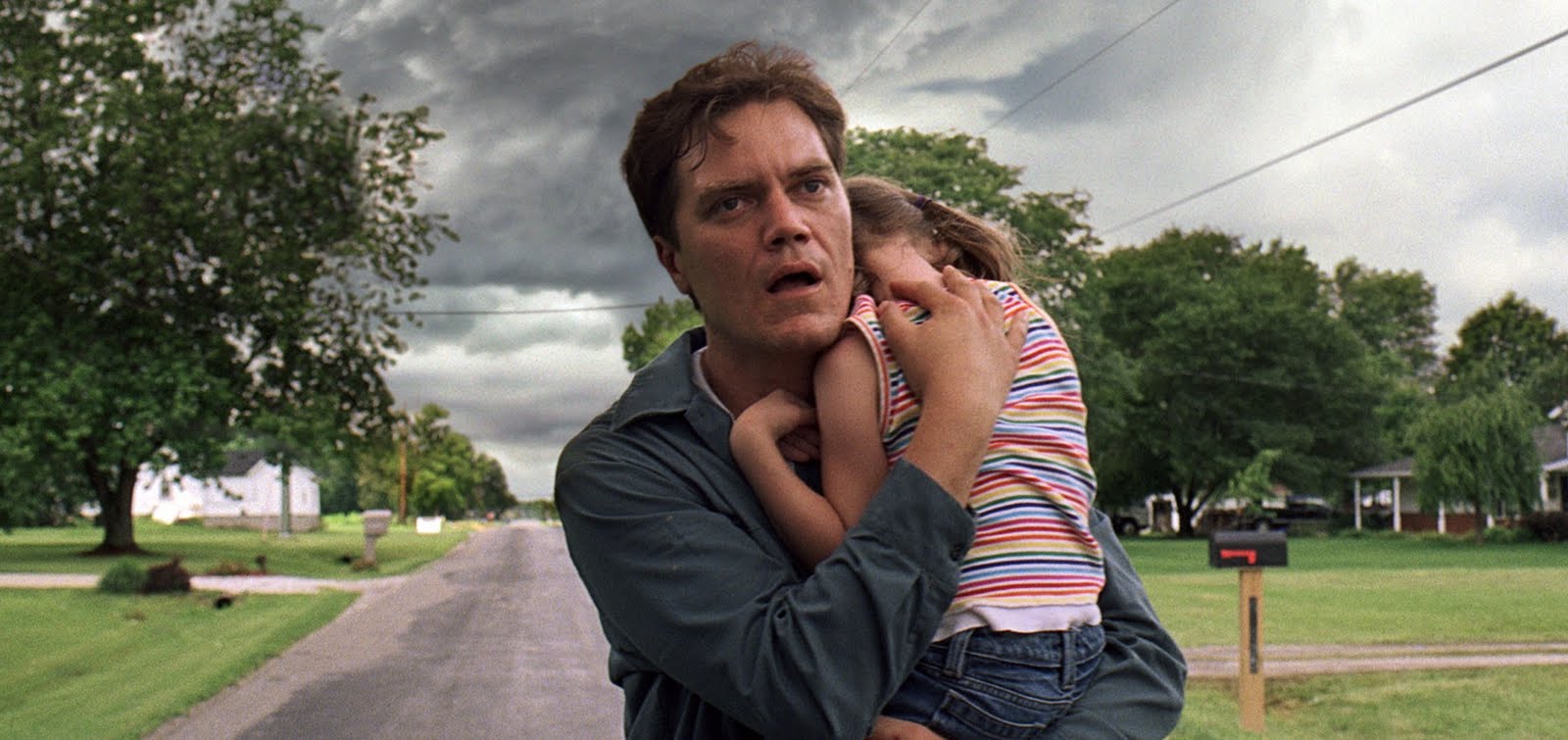
“Take Shelter” brings about a subject that is one of the main envelopments of mankind—fear. Everyone is afraid of something, and how we deal with that fear is up to us. “Take Shelter,” written and directed by Jeff Nichols, is essentially about a man who deals with his fears while not completely understanding them.

The man’s name is Curtis (Michael Shannon). He’s a working-class man in his mid-30s with a loving wife named Samantha (Jessica Chastain) and an adorable little daughter named Hannah (Tova Stewart), who is deaf. Curtis has a nightmare about a strange thunderstorm that oddly rains what looks like motor oil. He dismisses it as just a strange dream, but the next night, it’s even stranger when he dreams of the same storm and the family dog attacks him. But while the dog only bites him in the dream, Curtis can still feel the pain when he wakes up.

The nightmares get worse and more vivid. Curtis dreams of the same storm with the strange rain that apparently causes people to act crazily and violently. But during his day job as a sand miner, he has hallucinations of a similar theme—he’s the only one who notices that the birds in town are acting strangely. He soon starts to believe (and fear) that the dreams are not only dreams, but also visions of an impending disaster. So he gets the idea of rebuilding the old tornado shelter in his backyard and reconstructing it into a safe haven for him and his family if the visions are indeed accurate.

But there’s a problem here—Curtis is dealing with his fear in this way while also fearing something that runs even deeper. You see, his family has a history of mental illness—his mother (Kathy Baker) has been confined to a home since Curtis was ten years old. Is Curtis slowly but surely going crazy? Are these visions signs of possible schizophrenia? It’s unclear, but while Curtis goes to see several doctors and counselors about his dreams, he’s still working on that shelter to be ready in case he isn’t crazy. How’s everyone else with his “home improvement project?” Samantha is concerned, but will stick with him through thick and thin like the loving wife she is. Curtis’ work buddy Dewart (Shea Wiggum) helps him a couple times, though it means borrowing a few things from work.

What’s really happening here? Curtis doesn’t know, and a great thing about “Take Shelter” is that I didn’t know either. I’m watching this man as he deals with his fears in these ways. Is he going mad? Is there something dangerous headed our way? Is Curtis protecting his family from an impending storm or himself?

“Take Shelter” is a piece of masterful filmmaking. Jeff Nichols, whose previous outing as a writer/director was the excellent indie film “Shotgun Stories” (which also starred Michael Shannon), creates this story with a real intelligence for its audience. For example, the dream sequences—anyone in the audience can tell that a certain scene is one of Curtis’ nightmares. And I hate those old, cheap payoffs in which the dreamer wakes up in a cold sweat. But the thing is, there’s always a small feeling that these aren’t just dreams. With the way the story is developing, it’s hard to tell whether or not what we just saw will relate to anything else in a later scene or not. That’s another great thing about “Take Shelter”—its lack of predictability. The story is told in a way that any of the two possibilities could be real, and it keeps us guessing. And then when the film hit the climactic moment in the final moment, I had chills. I couldn’t tell what was going to happen. I won’t dare give away what will happen, but either way you’d expect it go down, it’d be hard to deny that the final product has a great sense of dramatic tension.

Also, there’s the excellent cinematography (by Adam Stone) from the open skies to Curtis and Samantha’s bedroom to inside the shelter, while the special effects blend in credibly. There’s a sense of atmosphere here.

Michael Shannon and Jessica Chastain deserved Oscar nominations for their work (and unfortunately, the whole film was snubbed). Shannon—one of the perhaps odd but most reliable character actors working today—delivers a powerhouse performance, showing emotional fragmentation, and Chastain is excellent as the reactor to Curtis’ problems and deeds.

To be honest, I’m not sure if I’m making “Take Shelter” sound like the great movie that I sincerely think it is. Let me put it this way—I wrote in an above paragraph that I thought Nichols’ earlier film “Shotgun Stories” was excellent, and I think that his follow-up “Take Shelter” is even better. If that’s not enough, let me put it this way—I think this is the best film I’ve seen in 2011. It’s inspired, unpredictable, chilling, wonderfully-acted, well-executed, and intriguing.

Super 8 (2011)

17 Mar

Super-8-Movie-Image-2

Smith’s Verdict: ****

Reviewed by Tanner Smith

To get straight to the point before I type my review, “Super 8,” one of the most highly anticipated movies of the 2011 summer season, is a love letter to the summer blockbuster season—it has gripping action, first-rate special effects, and great acting. Take all of those elements up a notch and there’s a movie that deserves four stars from me.

“Super 8” clearly loves the tradition of the summer blockbuster. It reminds of how “Jaws” created that phrase. And that reference to Steven Spielberg’s 1975 hit brings us to this note: “Super 8,” which was produced by Spielberg himself, is also in the tradition of the early Spielberg classics, paying homages to “Jaws,” “Close Encounters,” “ET,” “Poltergeist,” and “The Goonies.” We have a likable bunch of kids as the film’s central heroes, an ominous threat, a small town, awe-inspiring visuals, and scary moments to boot. Writer-director J.J. Abrams, of “Lost,” “Mission: Impossible III,” and “Star Trek,” obviously has a great affection for Spielberg and “Super 8” is his way of showing that as a tribute to Spielbergian elements.

Abrams also shows his affection for filmmaking. When he was a kid, he was making movies in his neighborhood with an 8mm camera. Spielberg did the same, as the kids in “Super 8” do. The film takes place in 1979—no iPods, Smart Phones, or Internet are found here. Instead, the kids use whatever they can get ahold of, even if at one point it’s another kid’s dad’s Super 8 camera. The kids (each about 12 years old) are Joe Lamb (Joel Courtney), the makeup artist; Charles (Riley Griffiths), the intense director; Cary (Ryan Lee), the pyromaniac practical-effects expert; Martin (Gabriel Basso), the nervous leading actor; and Preston (Zach Mills), the lighting guy. They’re making a zombie movie in their small town of Lillian, Ohio, and they need a leading lady. So they recruit Alice Dainard (Elle Fanning, Dakota’s sister), one of the prettiest girls in school.

Alice is unsure of Joe because both their fathers—Deputy Jackson Lamb (Kyle Chandler) and Louis Dainard (Ron Eldard)—hate each other and their kids. You see, Joe lost his beloved mother to an accident at the factory she works in, and his father hates Louis because he couldn’t make his shift at that same factory and Joe’s mother had to fill in for him. Jackson blames Louis for the accident, and tells Joe, whom he barely connects with, to stay clear of Alice. Louis tells Alice to stay clear of Joe. But Joe and Alice, while making Charles’ movie, form a nice friendship together.

Anyway, the kids work on the movie secretly (it’s more fun that way, so no matter). They sneak out in the middle of the night (stealing Alice’s dad’s car) to film a dramatic scene near some train tracks. A train passes by, but this is coming to an advantage—“Production value!” Charles gladly exclaims to his friends. But something goes really, really wrong as the train derails while the kids are filming. In one of the best special-effects sequences I’ve seen recently, the kids nearly get killed as they outrun the train cars and debris crashing down. You’ve seen parts of this sequence in the trailer (and in FOX sneak peeks), but once you’ve seen the whole sequence, you’ll realize how “insane” the actual scene is. I mean it—when I saw that scene, I was close to hyperventilating, and I tell no lie. I was in complete awe and fright. Now, there’s a cinematic experience I’ll never forget.

OK, those who’ve seen the trailers and TV spots know that the train crash was no accident and that something escapes from one of the train cars. We don’t know what it is and we continue to not know until the final act of the film. Following the rule of “Jaws,” we see only glimpses of the monster until its big reveal much later in the film. But whatever it is, it scares all of the dogs in town away, steals almost every electrical appliance in town, and comes out only at night to attack people. What it is, where it came from, and what its true motivations are, I won’t give away.

Anyway, the US Air Force shows up after the big train wreck. At first, it seems as if they are going to clean up after it, but to Deputy Lamb, it becomes clear that they’re here for something more. When he asks Colonel Nelec (Noah Emmerich) if the cargo is anything to be concerned about, he gets the response, “I can assure you the answer is no.” He’s lying. Lamb and Nelec are in a constant battle of wits as Lamb tries to get some answers out of him and hopefully explain to the panicked townspeople exactly what is going on.

Kyle Chandler is so good in these scenes in which he tries to piece things together, much like police chief Martin Brody in “Jaws.” He also has to find way to get through to his son, since he wasn’t as much of a parent as his deceased wife. Chandler handles these scenes in an effectively strong way.

But he’s only in a supporting role. Most of the screen time is given to the kids. They try to get on with their lives after barely surviving witnessing the train derailment. But certain events happen that lead to them searching for clues and figuring out everything about the escaped creature. They’re on a crazy adventure that would make the Goonies envious.

These are some very talented young actors. When playing nerdy adolescents, they don’t seem to be acting at all. You really buy their friendship with each other, whether they’re singing “My Sharona,” playfully trading insults to each other, or just sitting at a diner and talking. They are always convincing and have the energy to carry the film. In particular, Joel Courtney is a promising newcomer whom I hope to see more of in the future, and Elle Fanning (who was last seen as Stephen Dorff’s daughter in Sofia Coppola’s “Somewhere”) really shows off some acting chops. There are some very touching moments when these two are together, including one in which Joe helps Alice with her zombie makeup and another in which they talk about the accident that killed Joe’s mother. The other kids—Riley Griffiths, Ryan Lee, Gabriel Basso, and Zach Mills—are likable, funny, and, like I said, convincing. I love how Griffiths handles this role of a bossy, yet chirpy and excited young director and shows a convincing jealous-adolescent side of the character when he knows that Alice likes Joe when he wanted her to like him. Then there’s Lee, who plays the character of a fireworks nut that parents tell their kids to be careful around, and Basso, who is always vomiting whenever he’s scared. It’s amazing these kids are still able to function after what they go through.

I say that last sentence in the previous paragraph because there are many scary moments in “Super 8”—this movie is rated PG-13 not only for its constant use of profanity, you know. This movie is not for those under the ages of 10 or 11. Maybe 12, like the kids in this movie, but I dunno. There’s one particularly frightening scene in which the creature attacks a bus with four of the kids in it. It’s even more effective because the monster still hasn’t been fully seen yet.

I really didn’t mind that the action hits harder when the film reaches the final act. It has to, or it wouldn’t be a summer blockbuster in the 21st century. But these action sequences are exciting and actually have purpose within them. Besides, the whole movie isn’t about action or the creature—it’s about the kids and how they react to this strange, terrifying situation. This is one of the best types of film—the characters are introduced and developed so that when the action happens, it amounts to something. “Super 8” is the best summer blockbuster to come around in a long time.

In Time (2011)

16 Mar

in-time-Justin-Timberlake-Amanda-Seyfried-1

Smith’s Verdict: ***

Reviewed by Tanner Smith

Someone has taken the phrase “time is money” way too seriously, in order to have the regular-Hollywood amount of time to create the sci-fi/action film “In Time.” I say that because in “In Time,” the currency of the future (or a parallel dimension, which I will accept more) is time. Thanks to genetic alternation, humanity stops aging at 25 and “time” to continue living can be transferred among individuals, shown on a timer-clock implanted on people’s arms—when the clock stops, the person dies. Think of it as a visible internal clock. You go and purchase something, you pay with your own time. You want more time, open an account at the “time bank.” Like money, be careful how you spend it; though in this case, be careful not to use it up and end your life.  The poor, with limited time to live for even a day, live in the ghettos of Dayton. The rich, who have enough time to live for centuries, live in the deluxe New Greenwich.

In the movies, it’s always miserable in the future, isn’t it?

If that genetic-altering element sounds even a little like the setup for a film such as “Gattaca,” it should be, as Andrew Niccol, who happened to make “Gattaca” in 1997, directed “In Time” as well. But “In Time” is a slick, entertaining, well-made film that has fun with its premise, does a great job of establishing the rules of this world, and gives us some real characters to root for and against.

Will Salas (Justin Timberlake) is 28 years old and lives with his mother Rachel (Olivia Wilde), who is 50 but still looks 25. They live day-to-day, but Rachel’s time has run out and she expires because she couldn’t get to Will in time for a “recharge.” At the same time, Will has been given an incredible amount of time by a wealthy stranger (Matt Bomer) who believes that people shouldn’t live forever and just make the most of their time. The stranger gives up almost all of his time before he dies. Provoked by his mother’s death, Will decides to go to New Greenwich to somehow gamble enough time for most people in the ghetto.

A “Timekeeper” (a “time cop,” if you will) named Raymond Leon (Cillian Murphy) accuses Will of murdering the stranger and corners him with the charges of murder and theft. To get away, Will takes Sylvia (Amanda Seyfried)—daughter of the wealthy Philippe Weis (Vincent Kartheiser)—hostage. They go on the run and eventually Sylvia becomes Will’s fugitive accomplice as they plan to rob the banks of time and deliver to the less fortunate.

This is when “In Time” switches gears and turns into a futuristic version of “Bonnie and Clyde” mixed with a Robin Hood tale. Surprisingly, this is not the downgrade I expected it to be. In many ways, it’s respectful that the story would continue as opposed to laying down new rules of this world. We’ve set up the story, and now we’re going on a little journey.

Some things are a little clumsy, like all the obvious puns involving “time” (though now that I think about it, “time is money” is never used at all). And also, I kept asking questions like, why age 25? Why not 35 or 40? I won’t question that anymore; it’s their logic, not mine. But I can ask why this way of life was chosen. What was the purpose of this to begin with?

What I did like are the ways in which this time-currency concept is developed, and it leads to some intriguing scenes of surprise. For example, there’s a scene in which Will and Philippe are playing a high-stakes poker game where time is on the line—you’re betting your life for this game. And I enjoyed the littler elements, such as these handheld cartridges that these people use to grant themselves more “time.”

Justin Timberlake has already established himself as a real talented actor, and while he’s not necessarily playing one with so many dimensions, he is likable and enough to hold our attention for almost two hours of running time. Amanda Seyfried (sporting an odd hair choice) is quite engaging as Sylvia. She starts out as a captive, but once she becomes an accomplice in Will’s plan, she’s allowed to have some genuine cool moments. Vincent Kartheiser is suitably creepy as Philippe and Olivia Wilde also deserves credit for being surprisingly credible as Will’s mother, given the circumstances (and also, Timberlake is actually three years older than Wilde in reality).

Is “In Time” worth your time? Well, if you have very little time to waste, I probably wouldn’t recommend it. For those with too much time on their hands, I would have to say…something other than “check out ‘In Time’” but otherwise, it’s fine. I can relate to both at certain points in life, and I do recommend “In Time.”

Real Steel (2011)

13 Mar

Real-Steal-2011-Movie-Poste

Smith’s Verdict: ***

Reviewed by Tanner Smith

SPOILER ALERT! I’m not bringing up the “Rock-Em/Sock-Em Robots” reference in this review of “Real Steel,” because everyone else already has….and OK, END OF SPOILER ALERT!

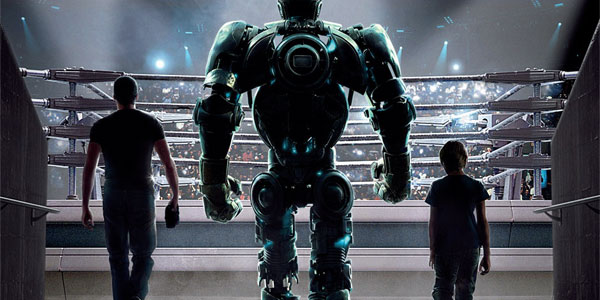
Before I go into the giant boxing mechanical robots that take up the central part of the film, “Real Steel” should first be acknowledged as that rarity of stories—a story set in a future that doesn’t suck for once. Every tale set in the future nowadays has to be some cautionary tale about how our lifestyles will lead to our downfall. But not “Real Steel.” This takes place in the year 2020, which doesn’t look much different from today. The main difference is in our technology. It has advanced to the point where human boxers are replaced by eight-or-nine-foot robots controlled by their owners/managers.

The bizarre thing is that “Real Steel” is actually convincing in making us believe that this could happen. Our technology is changing every time, so why not advance them to the point of using these new creations for underworld boxing? And it’s being taken seriously—the conversations don’t sound contrived, given the situations. They sound surprisingly realistic. Once you accept the idea that robots are fighting in matches, you can buy the movie in general. However, there is also the matter of the story, which is made up of a lot of sports clichés that either tire you or excite you. If you’re in the latter, and like I said, if you can accept this premise, you’re most likely going to enjoy this movie.

The film stars solid-as-always Hugh Jackman as Charlie Kenton, a former boxer who is now operating robots for fights. (In an opening scene, we see him operate a robot to go up against…a bull. That sequence is hilariously credible.) He owes a lot of money to his challengers and keeps repairing and purchasing new robots to go for the big win every time. Once his newest robot is a piece of scrap heap, he needs money to buy a new robot. Enter his 11-year-old son Max (Dakota Goyo), whom he hasn’t seen in years. Max’s mother has just died and Charlie is in line for custody of the child. However, Max’s aunt Debra (Hope Davis) wants to raise him. So Charlie makes a deal with Debra’s wealthy husband (James Rebhorn) that for a hundred-grand, he’ll sell his custody rights over to them. But there’s a catch—Charlie has to babysit the kid for the summer so Debra can go on vacation.

In a junkyard, Max stumbles upon a rusty, old robot called “Atom.” After doing some repairs and tinkering, with help from Charlie’s girlfriend Bailey (Evangeline Kelly), they bring the small, older robot to life. Max convinces Charlie to give him a fight, and to Charlie’s surprise, Atom winds up winning his first fight. And then he keeps winning, with Max teaching him new moves and Charlie lending his own skills in boxing. This seems a lot like a mechanical version of “Rocky,” and wouldn’t you know it? They make it to the championship where Atom must square off against the big, hulking mechanical beast called “Zeus,” run by an Asian billionaire and a female Russian manager. As if that connection to the fourth “Rocky” film wasn’t enough, they even had to deliver the line, “Whatever Zeus hits, he kills.” Sound familiar? I know I’m thinking of a Russian super-boxer from the fourth entry of a certain film series.

“Real Steel” is the kind of sports film with the reliable clichés to depend upon. And it works because of the passion that’s put into the making of it. And the best way to make you decide whether or not you’ll enjoy this movie is to set up the climax, because the climax is nothing new, but delivers those over-the-top dramatic moments of victory. It’s the underdog story, it’s the heroes looking on and smiling, it’s the villains looking shocked as if to say, “No, that’s impossible,” and the buildup to the final round. If that interests you, or if you enjoy these kinds of heartfelt climaxes, you are going to really like this movie. This is in the great tradition of those kinds of sports movies. You either eat it up or you don’t; I just had a good time.

The special effects are incredible. I hear they mixed motion-capture CGI and animatronics for the well-designed robots and choreography for these boxing matches. It’s seamlessly effective. It really looks like the robots are really there, sparring. The “Transformers” movies don’t deliver this well, because I always felt that those giant robots were too much like CGI and I didn’t really believe they were there, nor did I care much for them either. Here, it works. And the robot Atom is pretty likable, and this brings me to write one of the strangest things I’ll write in a review probably ever—if you can make a robot likable, you have quite a movie.

But the robots don’t upstage the human actors that much. In fact, “Real Steel” is actually a character-based story with people that have purpose and dimensions. The key relationship in the movie is with stubborn, handsome, sometimes-a-jerk Charlie and young, enthusiastic, bright, sometimes-a-brat Max. These two aren’t exactly seeing eye-to-eye at first, but on the road, they develop the father/son bond that should have occurred long ago, and this is their second chance.

Hugh Jackman does what he does as Charlie—this is the kind of film role he specializes in playing. And the acting from young Dakota Goyo impresses—he’s not playing the cute-little-kid role. He has more of a personality than that. I only wish that Evangeline Kelly’s Bailey was more developed, especially since she’s introduced in her opening scenes as a strong individual. Olga Fonda has fun playing the over-the-top, grim-smiling Russian manager who loves to exploit her never-losing champion Zeus.

“Real Steel” is an appealing “Rocky for robots,” if you will, and enjoyable all the way through. If you can get into the characters, the cool fight scenes, and the effects, as well as the premise, the heart-tugging, and the ending climax, you’re most likely to enjoy this movie. It’s not great art, but it’s fun, skillful, and enjoyable.

Fright Night (2011)

12 Mar

????????????

Smith’s Verdict: ***

Reviewed by Tanner Smith

First, I’ll state that I liked the original 1985 horror-comedy film “Fright Night” as a clever mix of horror and comedy. It wasn’t a masterpiece in the horror genre, but it was still kind of fun. But more importantly, I think this 2011 remake is just as good. Hey, seeing as how good vampire movies come in short supply nowadays, that’s good enough in my book…or review.

The main protagonist is a teenager named Charley Brewster (Anton Yelchin, “Star Trek” and “Terminator Salvation”). He used to be a high school nerd until he started dating the hottest girl in school—Amy (Imogen Poots, “28 Weeks Later”)—and avoided his nerdy ex-best friend Ed (Christopher Mintz-Plasse—yes, McLovin from “Superbad”). Now he’s a jerk who ignores Ed’s cries for help.

Why does Ed want Charley’s help in the first place? Well, he believes that Charley’s new next-door neighbor in their suburban neighborhood—a smooth-talking brooder named Jerry—is a vampire. He also believes that he has killed many people in town, including their friend (whom we saw get murdered in an unnecessary opening scene).

“That is a terrible vampire name,” Charley scoffs in disbelief. “Jerry?”

But it turns out that Ed’s right. Jerry really is a vampire, as Charley discovers a little later. Jerry knows that Charley knows his secret and begins stalking him before setting out to slaughter him, his girlfriend, and his mother (Toni Collette). Charley sets out to protect them (and himself) from the all-powerful Jerry. But he needs help, so he turns to a British illusionist named Peter Vincent (David Tennant, channeling Mindfreak) for help. He knows a lot about vampires, you see. The only problem is, he doesn’t believe they’re real. What he does believe in are his booze, his tricks, and his sex life. But who knows? Things could happen that could bring him in the middle of this madness.

Colin Farrell plays Jerry, and it’s a good, tough performance. He is menacing as an invincible fanged man, but seems normal as a man who is merely mysterious. He lives in a suburban house outside of Las Vegas—his windows are blacked out, but there’s no use in questioning why since most people who live near Vegas work nights and therefore sleep during the day. He seems cool and smooth to those who give a friendly “hello” (including Charley’s mother). But when he thinks that people know about his secret, he scares them until he knows for sure that they know (at least, that’s what I believe), and then if he believes they’ll become smart enough to fight him, he goes after them. That’s what happens with him and Charley. Jerry seems cool towards Charley, yet when Charley discovers that Ed may be right about him, Jerry seems to know that Charley may be a little suspicious and plays with his mind a little bit. It’s a chilling scene that sets up everything else involving Charley pushing himself (and those around him) deeper into trouble.

“Fright Night” has to be noted for its antagonist as an interesting vampire. As Ed puts it, “He’s not brooding or love-sick. He’s the shark from ‘Jaws.’ He’ll kill anyone who gets in his way.” That’s true, and it’s not cheated at. Chris Sarandon may have been a little more subtle in hiding his secret as the vampire in the original 1985 film, but Colin Farrell seems more threatening and menacing when it comes to showing himself as a vampire. But while Farrell has a menacing presence, he also has fun with the role by playing it with a dry sense of humor. It’s as if he’s messing with his prey and having a good time because he knows he’ll get it soon enough.

Now, I think I know what you’re thinking and yes, “Fright Night” does get back to the traditional vampire mythological traits—wooden stakes, crucifixes, fire, jokes about garlic omelets, sunlight that burns the vampires to ashes, bites to the jugular, etc. No vampire sparkles in this movie.

Anton Yelchin, as the hero, is a definite improvement over William Ragsdale’s boring performance in the original film. It takes a while to like him, but that’s really the point seeing as how Charley starts out as a jerk. Imogen Poots, as his girlfriend, is a somewhat improvement over Amanda Bearse’s whiny, annoying performance in the original film—sure, she’s prettier and doesn’t bug her boyfriend as much, but really that’s just it about her until the final half of the movie. (The less said about that, the better.) Toni Collette has a dopey-mom role, but that’s a lot better than the valium-high (and barely visible) mother in the original film. I wasn’t sure how Christopher Mintz-Plasse would handle the role that was played by Stephen Geoffreys with such hilarious intensity as the best friend Evil Ed in the original film. But he’s quite amusing in this remake, mainly because he makes it his own character.

And for those who have seen the original film, don’t think I’ve forgotten about Peter Vincent. Let’s face it—he was the best thing about the original “Fright Night,” played by Roddy McDowell in a terrific comic performance. Peter Vincent was a Hollywood B-actor who is out of a job because no one wants to see vampires or vampire slayers in movies anymore, and then gets involved in a crazy run-in with a real vampire. David Tennant plays Peter Vincent in the remake as more droll and self-indulgent. He’s a foul, rude, aggressive playboy who lives in a Las Vegas penthouse occupied with a lot of vampire artifacts (and silver bullets—you know, for werewolves). And when a vampire first confronts him, Peter does what the true Peter Vincent doesn’t do on stage for his horror show—scream and run. But eventually, he does team up with Charley and sneak into Jerry’s lair because he’s so drunk he’ll do anything. (I love the bit where they reach the basement and he says he’s probably not drunk enough for this.)

“Fright Night” is an ambitious, well-made horror movie with some real production value. However, it’s not a great horror film. There’s an unnecessary introductory scene that features a character that is so obviously going to be killed—I’m tired of scenes like that. The early scenes that show Charley interacting with his friends in high school don’t look or feel the least bit convincing. And while some of the CGI is impressive, more of it (like when Jerry transforms into an ugly beast or some vampires explode in sunlight) just seems so flashy and unrealistic. The prosthetic makeup is more impressive—Jerry’s two simple fangs look frightening enough. “Fright Night” is suitably scary, nicely acted (particularly with strong work by Colin Farrell and David Tennant), good-looking, and funny when it needs to be. I recommend this remake as an energetic horror film.

30 Minutes or Less (2011)

10 Mar

images

Smith’s Verdict: ***

Reviewed by Tanner Smith

I know a lot of critics reviewing the comedy “30 Minutes or Less” bring up the tragic incident that this film plays its premise off of. To get through it quick, this is a movie about a pizza delivery man with a bomb strapped to him by some guys who tell him to rob a bank or they’ll blow him up. This is a flashback to a 2003 incident where a pizza delivery man planned to rob a bank with what was supposed to be a fake bomb strapped to him, but his partners double-crossed him with a real bomb.

I must confess I didn’t know about that at the time I was watching “30 Minutes or Less,” and I enjoyed watching it with blissful ignorance. Knowing now, I guess I should hate it now, right? Well…I don’t.

No, I still find “30 Minutes or Less” to be a reasonably entertaining comedy that managed to take a grim situation and make it quite amusing. It doesn’t break new ground or fashion a distressing tale about greed, and a lot of the humor comes from politically incorrectness. But I laughed, I wasn’t ashamed by it (for the most part), and I liked the comic actors that are oddly game for this material. It’s not a breakthrough comedy hit, like “Zombieland,” directed by Ruben Fleischer, the same director of this film. It’s just a modestly funny film.

Nick (Jesse Eisenberg) is a loser. He’s a post-college age pizza delivery guy with no ambition in life. He’s labeled a pathetic “man-child,” even by his best (and only) friend Chet (Aziz Ansari) who works as a substitute teacher. Things aren’t much better between the two of them when Chet finds out that Nick has slept with his twin sister Kate (Dilshad Cadsaria) and still has feelings for her.

Meanwhile, two even bigger losers have come up with a scheme. This is Dwayne (Danny McBride), a hapless, witless, wisecracking jackass, and Travis (Nick Swardson), his equally-luckless buddy. Dwayne lives with his Ex-Marine father “Major” (Fred Ward), and makes 10 bucks just by cleaning his swimming pool. “Major” has won the lottery and Dwayne gets the idea of hiring a hitman to kill him so he can get that money. They need a hundred grand to pay off the hitman (Michael Pena). What to do? Travis creates a bomb vest and he and Dwayne decide to strap it to some unfortunate loser and force him to rob a bank or blow him up. They order a pizza, Nick is the delivery guy, and there you go.

Of course, they could have just constructed a realistic-looking fake bomb vest and robbed the bank themselves instead of hiring a hostage. But oh well.

Scared out of his wits, Nick turns to Chet for help and as the bomb timer is winding down, Nick and Chet pair up to pull off the robbery and save their own lives.

There’s something about the tone that is just right for the movie and makes it watchable. Ruben Fleischer is careful not to overdo the heavier material. The robbery scene is paced just perfectly, with the right dose of comedy. And even though there are routine car chases, they’re still lively enough and not supposed to be taken too seriously.

Jesse Eisenberg is a likable lead and Aziz Ansari is a game comedic foil. Together, these two are a good buddy-comedy duo with very amusing banter. Even though Eisenberg’s character makes so many stupid mistakes, running around with explosives strapped to his chest and even risking the life of his girlfriend (who, by the way, is only in the movie so she can be kidnapped in the climax), it’s hard not to like and root for him.

Danny McBride’s Dwayne is an effective villain for this material—idiotic, menacing, and charismatic. This is the McBride I was looking for and really missed in the dreadful “Your Highness.” Nick Swardson is usually next to Rob Schneider as a constantly failing comedic actor, but now he has found the right role as Dwayne’s sidekick—smart, but completely weak-minded compared to Dwayne’s strong will. He’s quite funny here.

Also having their moments in “30 Minutes or Less” are Fred Ward, outstanding as Dwayne’s ex-Marine father with that Fred Ward strict attitude (and a pen-gun, if you can believe it); Michael Pena as the not-entirely-macho hitman the guys hire; and Bianca Kajlich as a stripper named “Juicy,” who goes crazy when someone messes with her investment.

“30 Minutes or Less” recalls some effective moments in “Pineapple Express,” has some game comic actors who do what they can, and brings the laughs however it can. Even if some of the gags don’t work and its raunchy jokes are sophomoric to say the least. But it never runs out of steam and it’s over in just an hour and twenty minutes, excluding the end credits. Laughs overstay the film’s flaws.

Captain America: The First Avenger (2011)

4 Mar

captain-america-the-first-avenger-movie-image-76

Smith’s Verdict: ***

Reviewed by Tanner Smith

“Captain America: The First Avenger” is the last piece of the superhero puzzle to give the general public yet another superhero to join as part of the Avengers. Knowing the Avengers from the comic book series, it was inevitable that a “Captain America” film had to be released among the two “Iron Man” movies, “The Incredible Hulk,” and “Thor.” After that, we would have to wait for “The Avengers.” So, it would seem like this would be more of a bland requirement than a real movie. But having different people work on these films works as an advantage.

“Captain America: The First Avenger” is a real movie. It has setups, payoffs, action, adventure, characters, and another superhero origin story. Yes, it has a great share of CGI action sequences and it can get pretty silly at times, but it’s far from an incomprehensible mess. It has real production value, a nice weight to the story, and a hero we care about and root for.

The reason the film is subtitled “The First Avenger,” even though it’s the last entry before “The Avengers,” is because its main story occurs during World War II. How Captain America is brought to life in the modern-day is comic-book logic (obviously not a spoiler), but as long as I don’t get to see that annoying eyepatch-sporting Samuel L. Jackson character giving yet another ominous warning of something big to come, I’m fine. (By the way, I truly hate to dis Jackson, one of my favorite actors, for this.)

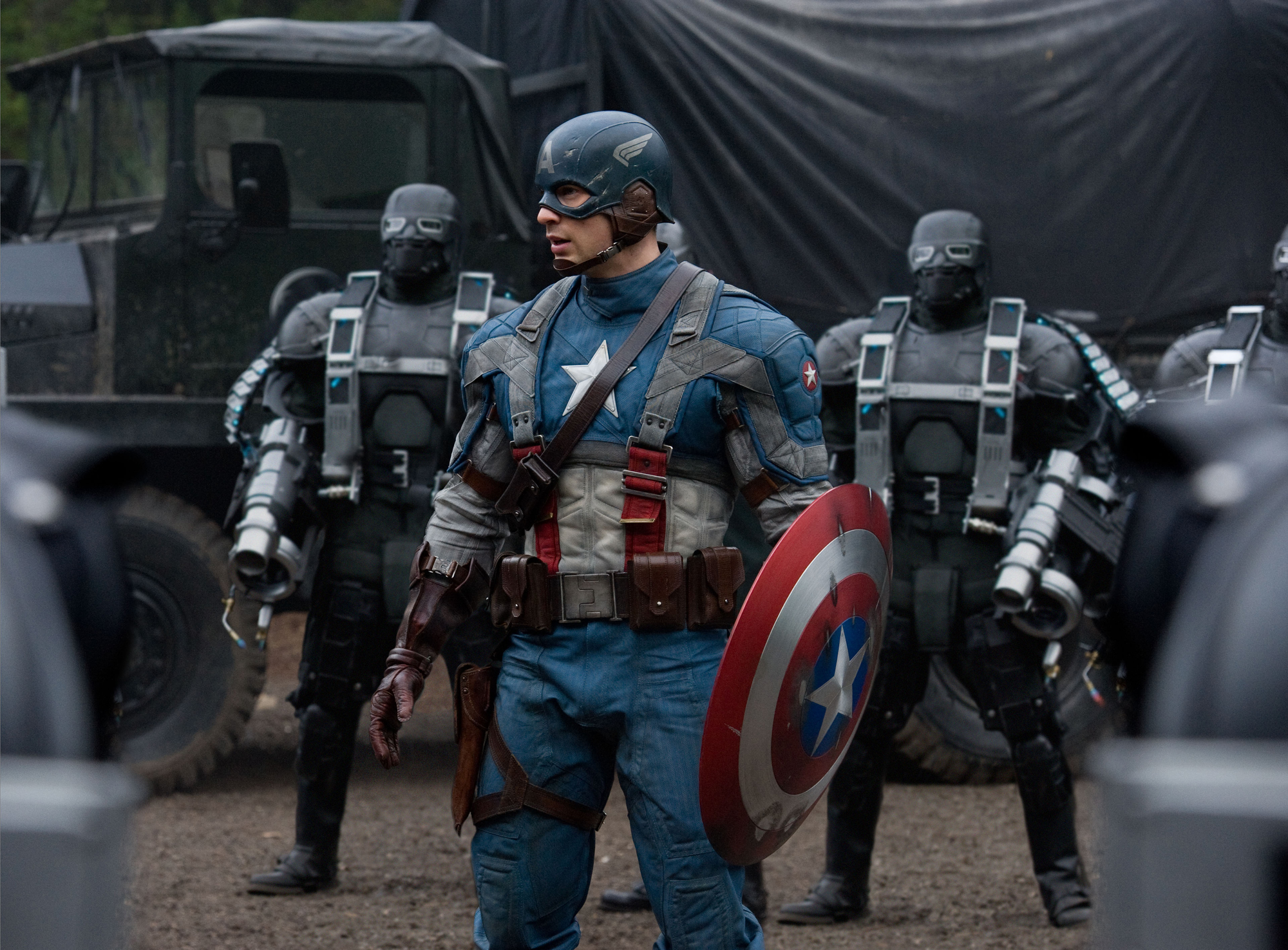
The story centers around a 90-pound, five-foot-nothing weakling named Steve Rogers (Chris Evans, much more appealing here than he was as one of the Fantastic Four). He’s a stubborn kid with a can-do attitude, but a tendency to get himself beat upon by bullies because he doesn’t run away from a fight. He gets rejected by the US Army, but after trying and trying, he eventually makes it into basic training. He’s usually the one slowing down from everyone else, but he seems like the perfect choice for the testing of a scientific experiment, supervised by a scientist (Stanley Tucci with a German accent) and Col. Phillips (Tommy Lee Jones, playing the always-welcome role of…Tommy Lee Jones), that will apparently enhance a weakling’s physical strength.

Admittedly, this experiment is pretty silly, as it’s described as making it so that your nature will come through to your physicality, so that if you have a good mind, you become great. Courageous Steve goes into the machine and becomes a strong supersoldier. He’s a foot taller, is very muscular, and is faster than most men alive. The Army gives him a silly costume, though a cool-looking shield, and markets him as Captain America, the great American hero.

The first half of the movie is pretty strong, as we get the origin story of Steve Rogers becoming Captain America. It’s nicely-paced, well-developed, and with some pretty darn convincing effects—the effects that make Chris Evans into a short, wimpy dwarf are incredibly seamless. The character is quite likable and his early dilemmas are engaging. He wants to do right, even if he doesn’t have the physical strength, and has a can-do attitude with the courage to go for it. When he becomes Captain America, there’s a nice sendup to the ‘40s war-time relief in which Captain America makes public appearances, complete with a cheesy song and female dancers. Other good things about the first half—Steve has a nice relationship with the sultry Agent Peggy Carter (Hayley Atwell); there’s a manufacturer character named Howard Stark (Dominic Cooper), whom we all know is Tony “Iron Man” Stark’s grandfather; and there are some pretty exciting action sequences, particularly one in which Captain America sneaks into enemy territory to break out prisoners of war.

The second half of the movie is exciting, yes. But it’s somewhat ordinary. We know the drill—more action sequences (though some good ones) and a final showdown between the hero and the villain. And that’s another problem with the movie—the villain. Honestly, I don’t remember much about him, nor did I care for what he was after. Give the over-the-top Loki in “Thor” some credit for being deliciously (and needlessly) evil. I’m not sure what Red Skull (Hugo Weaving) had in mind. I guess he had this secret society that was planning to use this McGuffin to rule the world, but nothing is as clear as we’d like it to be in our superhero movies. Also, this is where the pacing starts to become inconsistent—for a film with two hours of running time, there are many parts that felt rushed.

However, “Captain America: The First Avenger” has more pleasures than flawed faults. Comic book readers will be pleased and those who love superhero movies will find enjoyment from this. Director Joe Johnston (directing his first superhero movie since 1991’s “The Rocketeer”) creates a broad narrative that entertains and has waiting for more adventures of Captain America. And be honest—you’re even more excited when you stick around after the end credits and see another foreword about “The Avengers.”

Rise of the Planet of the Apes (2011)

2 Mar

images

Smith’s Verdict: ***

Reviewed by Tanner Smith

I’ll admit I was never really interested in seeing this movie. I mean, what can be done to create the origin story of “Planet of the Apes?” We all know what’s going to happen and we know things are going to work out terribly for us human beings so that primates can rule the world. However, “Rise of the Planet of the Apes” (which should simply have been changed to “Rise of the Apes”) finds a way to beat that problem. The result is a sometimes-silly, sometimes-scarily-effective B-movie.

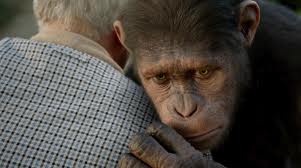
“Rise of the Planet of the Apes” isn’t the first movie to feature an animal as the main character, however it is the first movie to treat the animal as an actual main character. This animal—a chimpanzee named Caesar—is actually thoughtful, feeling, and self-aware. Caesar was born to a mutated laboratory ape which was injected with an experimental gene-therapy drug created by scientist Will Rodman (James Franco). The drug was invented as a possible cure for Alzheimer’s disease and was tested upon the chimp to see the effects. With the ape taken away after a rampage (caused by a side effect), and now that the experiment is shut down because of it, the chimp’s baby—Caesar—was secretly left in the care of Will.

As years go by, we learn that Caesar has inherited his mother’s genes and has exhibited human intelligence and understanding. The early scenes featuring Caesar adapting to the world, being what he is, is done quite effectively, especially in the scene where he goes outside on his own for the first time and learns the bad side of humans (he scares a couple kids, whose father goes after him). And there’s another effective scene in which Will takes Caesar to a redwood forest park and discovers the meaning of “pets.” Will has to convince Caesar that he’s not a pet and he’s much more than that.

After Caesar hostilely defends Will’s father (John Lithgow) from an angry neighbor, Caesar is placed in an animal sanctuary, where he is with regular apes (chimps, gorillas, and orangutans). It’s a hard life that constantly eats at Caesar’s nature more and more until he finally decides to hatch a plan to turn the tables on man…

“Rise of the Planet of the Apes” takes a lot of its time building up to the inevitable climax—the beginning of the end, if you will—and that’s what really surprised me. We see a lot of this ape, and even more surprisingly, we understand his plight. I love movies that take its time to build up the story elements, so that when the payoff occurs, it really means something, as it should. It’s in the final half-hour that Caesar uses this drug to effect all the apes, escape their prison, run amok, and attack whoever tries to stop them. This sequence is as terrifying (though sometimes as silly) as it’s been built up to be.

Apes can be smart and friendly, but they can get bigger and quite vicious. With Caesar as this sort-of humanistic ape, if you will, it fits into the always-reliable allegory of who-is-man-and-who-is-beast. It’s the allegory that seems like an old friend that comes to visit in science-fiction thrillers, for the most part, and it’s welcome when it can experiment new territory.

Caesar is a very well-developed character. We experience the important elements of the story with him. A lot of credit for that has to go to the performance by Andy Serkis, who performs in the role of Caesar thanks to performance-capture and computer effects. Serkis has carried this sort of performance before as Gollum in “The Lord of the Rings” and Kong in “King Kong.” With Caesar, he can add himself as a special name in motion-capture animation history. Serkis gives the best performance in the movie.

The human performers more or less do what they’re required to do, and some of them are either useless or underused. James Franco is a little bland as Will, and that’s unfortunate considering that he’s practically the father of the apocalypse. Freida Pinto, as Will’s girlfriend, is essentially pointless other than just being the hero’s girlfriend. Tom Felton plays the nasty son of the sanctuary owner (Brian Cox, doing what’s required of his underwritten role), and his name is Dodge Landon (an in-joke referring to the original 1968 “Planet of the Apes” movie), but you might as well keep calling him Draco Malfoy. The best human performance comes from John Lithgow, heartbreaking as Will’s Alzheimer’s-diagnosed father.

“Rise of the Planet of the Apes” has its pleasures—an extraordinary use of CGI effects, a convincing animal protagonist, and some terrific sequences of real power—and for that, I’m recommending the movie. But one major problem I had with this movie was its ending. Not only does the story just come to a halt, obviously setting for a sequel (I guess the origin story isn’t enough to set up the events in the previous movies), but it delivers mixed feelings about what we’ve just seen—all this violence and anger, ending on a triumphant note. Is it supposed to be a happy ending? Watch the movie, watch the ending, and watch James Franco’s face as he observes this new “revolution,” and maybe you’ll see what I mean.

Horrible Bosses (2011)

2 Mar

charlie-day-jennifer-aniston-horrible-bosses

Smith’s Verdict: ***

Reviewed by Tanner Smith

“Horrible Bosses” does indeed feature three horrible bosses—bosses that go beyond the very description and just venture into dreadful people entirely. There’s a sadistic psychopath, a vicious sexual predator, and a coke-addicted tool. Those are the three “horrible bosses” of three underappreciated friends who would like nothing more than to kill them and end their misery. And “Horrible Bosses” is a movie with that very premise.

Cheerfully macabre, “Horrible Bosses” is an effectively comedic version of “Strangers on a Train,” and also following 1987’s black comedy “Throw Momma From the Train” (both films are mentioned by the characters in this movie). The guys want to kill their own bosses, but they realize that they each have their own motives. So they all agree to kill each other’s bosses instead of their own.

And trust me—these bosses are horrible people indeed. You have to praise the casting on this one. While the writing of the characters’ descriptions are suitably horrid in their favor in the screenplay by Michael Markowitz, John Francis Daley, and Jonathan Goldstein, the casting of the bosses must be given as much credit for bringing them to life and making us love to hate them. Kevin Spacey plays to his strengths as a disdainful sadist who loves to mess around with his middle manager Nick (Jason Bateman). Jennifer Aniston plays against type as a sexy dentist who wouldn’t know the meaning of sexual harassment if it came onto her as much as she does with her nervous (and married) assistant Dale (Charlie Day). Colin Farrell, a handsome guy who allows the makeup artist to make him look as repulsive as possible, plays Bobby, the cokehead son of Kurt’s (Jason Sudeikis) beloved employer (Donald Sutherland) who unfortunately dies at the beginning of the movie.

Nick, Dale, and Kurt don’t know anything about killing while covering up their tracks, and they’re not as sophisticated as they pretend to be. So they go to a rough bar, where they hope to hire someone to help them out. They come across someone they think is a hitman (whose name has undoubtedly inspired the MPAA’s R rating), played by Jamie Foxx. It’s his idea to have them swap murders. But first, they must do some reconnaissance, which involves breaking into their houses to find weaknesses of the bosses. Most of the laughs around these three come from bumbling about and only occasionally (and accidentally) doing something right.

Jason Bateman, Charlie Day, and Jason Sudeikis are reliable comic actors (though Day can occasionally become obnoxious and unbearably annoying), but their characters are not particularly well-written. The characters aren’t developed properly and there isn’t a great deal of chemistry among the three (mainly because Day has a tendency to make things a bit awkward). But they are individually funny enough for us to laugh at them, as well as sympathetic enough for us to root for them.

The final half is when things really start to heat up. Without giving too much away, things get even more sadistic, and funnier as well, as the Spacey character becomes less of a sadistic jerk and more of a psychopathic unstable mind. Spacey really sells it here.

“Horrible Bosses” has a good amount of gleefully vulgar moments, a few cheerfully stupid moments, and slick evil performances from Spacey, Aniston, and Farrell that makes for a funny hard-R-rated comedy. The movie has a wicked energy in its situation comedy that results in some big laughs. And who can look at Jennifer Aniston the same way again after seeing her as her crazy bitch of a character?

Friends with Benefits (2011)

26 Feb

friends-with-benefits-still03

Smith’s Verdict: ***1/2

Reviewed by Tanner Smith

“Friends With Benefits” is the title of a romantic comedy featuring exactly what the title suggests—a man and woman who are friends but also sexual partners with no plans of a loving relationship. (I think Jane Lynch put it best in “The 40-Year-Old Virgin”—the easiest term is “*bleep*-buddy.”) But “Friends With Benefits,” despite its title, is not the first movie to show us this relationship. It hasn’t even been a year since “Love and Other Drugs” and “No Strings Attached” were released, featuring the same “friends with benefits” element. There really isn’t anything new in “Friends With Benefits”—it’s a romantic comedy in which the two leads start out as friends, have sex repeatedly, realize they have feelings for each other, have certain complications in dealing with those emotions, and (spoiler alert) they end up together. But that doesn’t mean it doesn’t work. In fact, I really liked “Friends With Benefits.” It uses rom-com formulas, but has fun with them in a self-referential way.

One of the reasons for the success behind “Friends With Benefits” is the pairing of Justin Timberlake and Mila Kunis as the two leads. These two are impossible to dislike—they’re appealing individually and engaging together. They’re not mismatched in the slightest, their characters are well-developed, and they never annoy the audience.

Describing the plot is somewhat pointless, but it’s probably best to mention a few things. Timberlake plays Dylan, a Los Angeles-based editor of a popular blog, who is recruited for a job in New York working for GQ Magazine. Kunis plays Jamie, a headhunter who flew Dylan there and shows him around the city. Soon, Dylan and Jamie become good friends, but are also attracted to each other physically. So they agree to become friends without romance—“No relationship,” Jamie explains, “No emotions, just sex.”

Of course, this works for a while. Of course, they start to fall for one another. Of course, they don’t know how to handle this. Of course—well, you get it, mainly. You know the formula; it’s been done before. But what makes “Friends With Benefits” worth watching is not only the convincing chemistry and charm between Justin Timberlake and Mila Kunis, but also its self-aware screenplay. There are a lot of funny lines of dialogue (mostly involving the leads picking apart some romantic comedy clichés) and some running gags (some including references to rapper-duo Kriss Kross) that work. This movie is quite funny in a dopey but consistently smart way.

The supporting cast is also game and funny. Jenna Elfman has some funny lines as Dylan’s knowing, sassy sister; Patricia Clarkson is hilarious as Jamie’s wisecracking mother; Richard Jenkins doesn’t overdo it with his character of Dylan’s father, diagnosed with Alzheimer’s disease; there are welcome cameos by Andy Samberg, Emma Stone, and the pairing of Jason Segel & Rashida Jones (whose rom-com-within-a-rom-com that the characters watch is hilarious); and there’s also a young actor named Nolan Gould who has his share of funny moments as Dylan’s aspiring magician nephew. I know I should have already mentioned Woody Harrelson as a gay sports editor who constantly comes on to Dylan, but to be honest…I never found him very funny in this. He just came across as obnoxious.

So even if “Friends With Benefits” is mostly predictable, it makes up for it with two charming lead actors, an engaging supporting cast, and a winning screenplay. It’s easy to like “Friends With Benefits” and not feel embarrassed by saying so.