Archive | 1986 RSS feed for this section

At Close Range (1986)

4 Feb

At-Close-Range-1986-Christopher-Walken-pic-7

Smith’s Verdict: ***1/2

Reviewed by Tanner Smith

“At Close Range” tells a sad, cruel, merciless story about a boy who respects his father who would just as soon kill him in order to save himself. And as a movie, it’s violent and unforgiving, but it’s also powerfully acted and very effective. Even more shocking is that it’s based on true events that occurred in 1978.

Sean Penn stars as young Bradford Whitewood, Jr., a rebellious young misfit with little to no potential and lives in a life of untidy poverty in Tennessee with his divorced mother, grandmother, and half-brother Tommy (Christopher Penn, Sean’s real-life younger brother). Two very important people come into his life (or one of them actually back into his life). One is a neat farm girl, named Terry (Mary Stuart Masterson), whom he meets and starts hanging out with. Another is Bradford Whitewood, Sr. (Christopher Walken), his criminal father who only comes in every now and then to give money. Brad Sr. seems to be doing all right for himself, as Brad Jr. notices. Brad Jr. wants to know more about him, so he decides to live at his place with his gang of professional thieves. Brad Jr. isn’t necessarily the criminal type, but he is reckless, as we saw in an opening scene where he deals unusually and effectively with a man who cheated Tommy and a buddy of his out of a bottle of liquor. He decides he wants a taste of his father’s gang’s action, since it seems a lot more exciting than what he has now. So he rallies his own gang—Tommy and his friends (Stephen Geoffreys, Crispin Glover, and Kiefer Sutherland)—and Brad Sr. assigns them to perform easy robbery tasks for them, in order to prepare for the big stuff that they want to try sometime. But while Brad Jr. is in orbit around his father’s world, his relationship with Terry, who becomes his girlfriend, strengthens and he’s hoping Brad Sr. will “come up with some money” in order to provide a place for him and her to live. However, he finds that Brad Sr. is more than a robber, but that he’s a sick, twisted killer who kills anyone who gets in his way. Brad Jr. learns the hard way when he witnesses Brad Sr. shoot a former member of his gang in the head at close range. Then, things get more dangerous when Brad Jr.’s gang messes up on a job and are busted. Brad Sr. knows that he and his own gang will be connected to all of this, and ultimately decides to take drastic measures to save himself. This also means betraying his son, to kill him if need be.

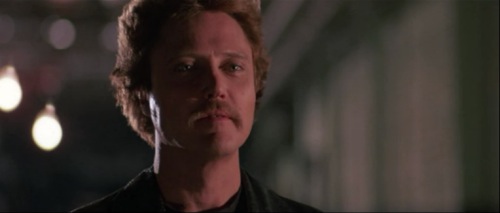
Brad Sr. is a ruthless S.O.B. and Christopher Walken shows the dark side with intensity. This is one of Walken’s best performances in a film—he has a great ability to move between easygoingness to straight-up malice, and it really comes through in this film. Sometimes he can be a wise guy, as when he enjoys the fact that Brad Jr. idolizes him and plays around it, acting like a big shot most of the time. But when he’s mad, he can turn into a truly evil creature of a man. And he won’t care whom he has to kill to save himself.

“At Close Range” is sometimes an uneasy film to watch. It’s not pleasant or particularly charming, except for the first scenes featuring Brad Jr. and Terry (their relationship is the only sweet part of the movie). It’s very violent, especially in the final act, and seems to glamorize the lifestyles of this gang of violent criminals that Brad Jr. wants to be a part of. And when things go very wrong, the movie still doesn’t let up. But it also makes “At Close Range” an effective portrait of human nature while also delivering the much-needed subtle message against violence and gun use.

Sean Penn is excellent as Brad Jr., creating a conflicted young man caught between two worlds—the nice little world he shares with his girlfriend and the mysterious world with his father that later becomes life-threateningly violent. He’s perfectly natural and very strong in the role.

Maybe “At Close Range” isn’t the movie for you, if you don’t like violence or think this story is too much. But I think it is worth seeing for the performances by Penn and Walken. These are two of the brightest, strongest actors who deliver excellent performances.
Critters (1986)

30 Jan

220px-Crittersposter

Smith’s Verdict: ***

Reviewed by Tanner Smith

1985 released a critically-panned, “Gremlins”-spoofed, box office bomb “Ghoulies.” It’s a long, sad story, but I won’t write about it right now. But I do know the last line—“they will never rip off ‘Gremlins’ again.” Well, now we not only have one but four science fiction hits that 1986’s “Critters” has to satirize. I have to say I really enjoyed this satire on the science fiction hits of the early 1980s. It’s charming, it’s witty, and it’s funny.

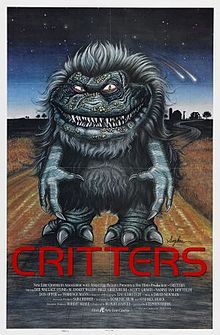
Those sci-fi hits are “Gremlins” (of course), “The Terminator,” “Starman,” and “E.T. the Extra-Terrestrial.” In “Critters,” we get the “Gremlins” spoof with the villains in the film—furry, carnivorous, rolling aliens who come to earth to eat us; we get the “Terminator” bit with the bounty hunters who hunt the aliens and shoot at everything, including the TV; we get the “Starman” bit when the bounty hunters turn human; and the “E.T.” bit with Dee Wallace Stone as the mother to another big-eyed small boy. Oh, and the Critters look curiously at an E.T. puppet.

Well, let’s move on to the “Critters” plot. The movie begins in outer space. A prison asteroid is carrying fanged alien fuzzballs called “Crites” who are about to be terminated for their ravenous appetite for…just about anything. The Crites escape on a stolen spaceship and travel around the solar system until finding the best planet to land and eat—ours.

On earth, we’re introduced to your average family of four living in Kansas, the Brown family. The Browns are Helen (Dee Wallace Stone) and Jay (Billy Bush) and their two kids April (Nadine van der Velde) and Brad (nicely played by Scott Grimes), who is often teasing April, getting into trouble, mouthing off, and shooting firecrackers. Brad is a wild kid in an otherwise “perfect family.”

Hunting for the Crites are the galaxy’s two bounty hunters. Their mission: annihilate the Crites and get paid. They track them down to Earth, pick human identities (one of them chooses a rock star, the other can’t find the right one, so he chooses many), and pack a huge gun to get ready to blow them to kingdom come. But the hungry Crites are now invading the Brown farm and soon the Browns are left in their house in the middle of nowhere to battle until the bounty hunters can find them in time.

This should’ve led to a big scene in a bowling alley where bowlers mistake Crites for bowling balls and Brad and the bounty hunters fight them, but it didn’t. Too bad, considering the possibilities with that idea.

I enjoyed this little film called “Critters.” What I really liked about this movie was that the screenplay didn’t go for the wrong stuff and just gave us a group of characters to root for, scenes to laugh at, and a good satirical screenplay. And that Brad kid isn’t a kid that gets on our nerves. He’s a really cool kid with a great personality and we’re rooting for him to save the day. Also, I admire that this movie lets the two sides of aliens fight amongst themselves.

And it’s funny. This movie has a lot of laughs in it. I especially liked the scenes with the bounty hunters and I’m cracking up already thinking about their antics. This was a nice friendly town and now it’s occupied by these two buffoons who never crack a smile and blow up everything, even a bowling pin and a television set. And one of them can’t even keep an identity. When one of them picks the form of a rock star to disguise himself, the other one chooses the town patroller, the priest, and the town crazy Charlie, who thinks he gets signals in his teeth about arriving aliens- aren’t you surprised, my friend. The screenplay keeps comedy coming as well as horror and the Crites even have some of the best lines. Another funny character is the town sheriff played by M. Emmet Walsh who has no clue as to what’s going on.

“Critters” isn’t quite up there with “Gremlins,” which is a classic comedy-horror film, but this works gloriously as a sci-fi satire or spoof and it’s not dumb either. I still need to give praise to young Scott Grimes because he’s very good as the smart aleck, troublemaking kid who teams up with the bounty hunters and saves the day. The movie’s very entertaining, the Browns are likable characters, the bounty hunters are funny, the script is witty, and it just goes to show that this movie is a lot of fun and the filmmakers a lot of fun making it.

Back to School (1986)

26 Jan

images

Smith’s Verdict: ***

Reviewed by Tanner Smith

“Back to School” is a comedy starring comedian Rodney Dangerfield—that it’s delightful is a rarity since many movies featuring the hilarious Dangerfield tend to underplay his talent, rather than glorify it. Dangerfield is a very funny guy. He not only looks funny (which I mean in the nicest way possible—I mean, he looks funny because he widens his eyes and sweats whenever he’s anxious). He is funny. His infamous one-liners hit almost every time he delivers.

But about “Back to School”—Rodney Dangerfield is this movie. The movie is as routine as you’d expect, but it is pleasant enough and Dangerfield has a lot of fun playing center stage. He plays Thornton Melon, a wealthy clothing manufacturer (he owns a chain of Tall & Fat Shops) who cares for his son Jason (Keith Gordon, playing it sincere), a college student. Melon believes his son is a fraternity member and a star of the diving team. But when he arrives at the university for a surprise visit, he finds that Jason is actually the campus wimp who “don’t get no respect.” (By the way, I love this line Dangerfield delivers when Jason reveals that he lied about his popularity—“I’m your father. You don’t lie to me—you lie to girls.”)

Jason tells his dad that he’s thinking of dropping out. To change his mind, Melon decides to enroll himself as a freshman, to show Jason how important and easy it is to stay in school (which has the obvious flaw, since Melon never had a full education). Thanks to the venal administrator (get this—he’s referred to as “Dean” Martin), he’s able to take classes and show Jason the ropes while also playing by his own rules.

“Back to School” has its share of predictable stock characters—the bland but attractive bombshell that Jason pines for (who is a brunette instead of a blonde—a change for the 80s teen movie genre); the mean-spirited jock who always gives Jason and his punk buddy Derek (Robert Downey, Jr.) a hard time; and of course, the stuffy, overdressed professor (Paxton Whitehead) who, of course, doesn’t find Melon’s charm and humor appealing and sees Melon as a threat to a prestigious institution. (Oh, and did I mention that he has a snooty British accent?) While these three are obligatory and not that entertaining, other side characters are obligatory but also welcome and well-cast. One is that “punk buddy” character I mentioned, played by Robert Downey Jr., who has a unique comic presence; one is Ned Beatty as “Dean” Martin; another is Burt Young as Lou, Melon’s chauffer; there’s the reliable character actor M. Emmet Walsh as the diving instructor; and of course, there’s the sweet romantic interest—Sally Kellerman as the English teacher who shares a relationship with Melon as the story continues. But my favorite has to be Sam Kinison as a crazed Vietnam-veteran/history-teacher. He has very little to do, but his moments are very amusing.

The story is as standard and predictable as the characters, but it still has its funny moments, mostly thanks to fresh touches provided by the film’s writers (Steven Kampmann, Will Porter, Peter Torokvei, and Harold Ramis) and of course Dangerfield’s improvisations. For example, get a load of the scene in which Melon has to buy his books, using many credit cards—“Shakespeare for everybody!” he exclaims to everyone present. How about when he is assigned term papers? Who do you get to help? Kurt Vonnegut, Jr., of course! And I won’t give away more of the film’s gags. This isn’t going to one of those reviews of comedies that spoil gags to make the review funnier.

What it all comes down to is Rodney Dangerfield as Melon. He is what makes “Back to School” delightful. He’s hilarious every time he’s on screen. His improvisational one-liners are enough to make anyone smile, and it seems that everyone in the movie (aside from the snooty professor who practically has no soul) smile and chuckle, while the rest of us are laughing more. He makes this movie work.

Something Wild (1986)

25 Jan

images

Smith’s Verdict: ***1/2

Reviewed by Tanner Smith

“Something Wild” is one of the more accurate titles for a comedy. It’s about a wild woman, a not-too-wild businessman, a wild series of events, and wild encounters. It gets even wilder as it continues and only lets up in a more conventional final act, but doesn’t hurt the movie so much. It’s too interesting to be brought down.

The movie gets to the plot immediately. As it opens, a conventional businessman, named Charlie Driggs (Jeff Daniels), meets an interesting, sexy woman named Lulu (Melanie Griffith). She asks him out to lunch, even if Charlie might be married. But Charlie is easily stimulated by her boldness and comes along anyway. It’s when he gets into her car that he realizes that Lulu is a wild child. She practically kidnaps Charlie and they do whatever she wants to do, and he enjoys her free-spirited, impulsive recklessness. She is that person to bring spark into Charlie’s life and he goes along with whatever she has in mind.

They rent a hotel room, have wild sex, and while he’s handcuffed to the bed, she dials his boss’ number and forces him to talk, because after all, he’s supposed to be at the office. He has to make some sort of excuse, right?

Things get even wilder from there. It involves spending a lot of money, going from hotel to hotel, continuous sex, and soon enough, leading to meeting Lulu’s mother, as Lulu introduces Charlie as her husband. That’s how fast she is; she has a creative imagination and thinks on the fly, all while leaving Charlie to experience it as it goes. (“Lulu,” by the way, is not her real name. It’s the name she chose for the week.)

Charlie and Lulu drive from New York to Tallahassee to attend Lulu’s high-school reunion, still pulling the “husband” card on Charlie to impress her former classmates. They have a fun time (and there’s a brilliant comic scene in which the two dance to a cover of David Bowie’s “Fame”), but they both run into the last people they wanted to meet. For Charlie, it’s his co-worker, an accountant from the office who knows the real deal about Charlie and could either aid him or make things worse. And for Lulu, it’s her ex-husband Ray (Ray Liotta), who was just released from prison (or did he escape?) and came to the reunion to see Lulu again. She’s not interested, but he sticks to the two and soon enough takes them captive in the same way Lulu took Charlie. Charlie is looking for more fun and excitement, but Ray is far too wild to hang around with. He has crime-related ideas to act upon, gets the two involved, and Charlie realizes he must fight for Lulu and for his own life.

The first half of “Something Wild” is mesmerizing. It takes the ordinary everyday world into a bizarre play-land for just about anything to happen at any time. We never see any of the tricks coming; they’re bestowed upon us as they go. They’re random, inventive, and unpredictable. You have to wonder if director Jonathan Demme can keep it going…and it turns out he can keep the spontaneity for so long that the movie descends into a more conventional route, as Ray continues to stalk Charlie and Lulu with vengeance on his mind. This of course must lead to an ultimate showdown—a climactic fight between Charlie and Ray. We pretty much know what’s going to happen at this point, so the tension that was brought upon the impulsiveness and eroticism of the earlier and middle sequences is somewhat reduced.

The actors carry the movie with incredible timing, appeal, and believability. Melanie Griffith has to convince us that her character is a wild child, and has no problem pulling that off. Jeff Daniels is likable and has that look in his eye that says that he wants something, but doesn’t quite know how to get it. That’s where Griffith comes in. The two share great chemistry on-screen, as well as suitable sexual tension. Ray Liotta, showing up midway through the movie, is absolutely compelling as the jealous ex-husband. He has that similar look in his eye, but resorts to higher measures to get what he wants. He is convincing in being able to get Charlie to trust him—this is a guy you’d like to go partying with before realizing that he’s a little too much into the act, more so than you are.

“Something Wild” is indeed something wild. It’s one of those inventive comedies in which the characters and the plot are consistent in that they’re just as surprised to continue as we are. Everything is thought through and seems spontaneous for us to laugh and be invested, and the actors are game for the material. Even if it goes more for a standard climax, it has a lot of fun leading up to it.

Stand by Me (1986)

24 Jan

365647730_640

Smith’s Verdict: ****

Reviewed by Tanner Smith

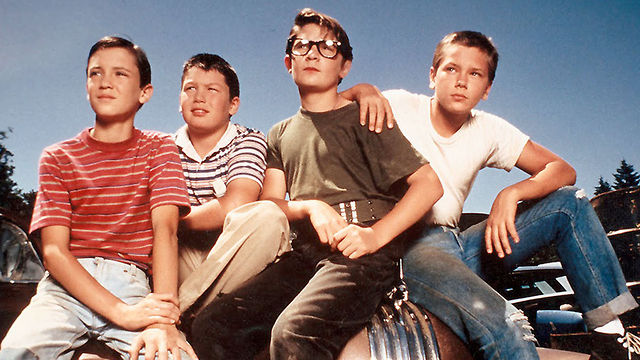
In a series of novellas called “Different Seasons” by Stephen King, the third (of four) novella—entitled “The Body”—uses the segment “Fall from Innocence,” meaning in all of our lives there is a time that changes our lives forever. Coming-of-age stories are the tales that showcase a character (or characters) going through important events in their lives. In “The Body,” the event for four pre-teenage boys is the journey to find a dead body and become famous for turning it in. They find the body, but they really find each other and learn some valuable life lessons. Despite being written by Stephen King, it isn’t a horror story. In fact, one of King’s strengths in his horror stories is the strong friendships that develop between the characters. This is simply a story of one of those friendships with no macabre elements (save for the sight of a corpse); just simple life lessons.

The novella is closely adapted into the film “Stand by Me.” You can put the praise onto the nostalgia aspects of the story, the convincing portrayals of these four compelling young characters by four excellent young actors, its honest look at their journey (psychologically, as well), or all of the above. Either way, “Stand by Me” is a wonderful movie. It’s one of the best teenage coming-of-age films I’ve ever seen. It’s fun, it’s touching, it’s believable, well-acted, well-executed, and when it needs to be, very funny. It’s the third outing for Rob Reiner as a director, after the success of “This is Spinal Tap” and “The Sure Thing.” His impressive streak continued with “Stand by Me.” Reiner knows the subject material by heart and, with an excellent screenplay by Ray Gideon and Bruce A. Evans, brings delight to the screen in telling this story.

Unlike most coming-of-age stories, this one takes place in just a couple of days, rather than a couple weeks, months, or even years. That’s how long it takes for these small-town Oregon treehouse boys to walk along the railroad tracks to find the dead body of a missing kid. It begins as pudgy, wimpy Vern Tessio (Jerry O’Connell) arrives to the treehouse to tell his friends—Gordie Lachance (Wil Wheaton), Chris Chambers (River Phoenix), and Teddy Duchamp (Corey Feldman)—his knowledge of where it can be found. They decide to trek after it, turn it to the authorities, and become famous.

Where do I start with the effective drama in this movie?

Each of these boys have their own demons, as we learn through the journey. Gordie—who serves as the narrator of the story, voiced as an adult by Richard Dreyfuss—is haunted by the thought that his parents believe his late older brother—the “favorite son” (played in flashbacks by John Cusack)—was the wrong one that died. (He even has a nightmare in which his father states, “It should’ve been you.”) Chris comes from a family who doesn’t love him, has a reputation of being a bad seed like his brother “Eyeball” (Bradley Gregg), and just wants a fresh start, but feels trapped by his hometown. Teddy’s mentally unstable father, who wound up in a mental hospital, abused Teddy and no one ever lets him forget it. Vern is a coward, always afraid of trying anything new. Each of these elements are brought up and confronted along the way. They realize the good things they have in life—one is each other, and the other is their own abilities. In particular, Gordie is a creative storyteller and Chris is loyal and mostly takes the peaceful route. This is all told in a convincing, well-written, well-acted way that makes for one great scene after another. The most touching scene is when Chris finally breaks down and tells Gordie, his best friend for life, about the time he really felt let down.

The boys’ friendship is in danger of being torn apart. This is first brought up when Chris tells Gordie that he’ll be separated from him and the others, because he’ll achieve at a higher rank than them. Gordie doesn’t want that to happen, but it’s inevitable. Since Chris doesn’t want to drag Gordie down, he doesn’t want to fight it—he wants Gordie to use his gift of writing to succeed in life. No one’s friendship is the same as when they were 12 years old, but at the time, there’s nothing stronger than that bond.

Then once the kids find the body, they’re faced with their own mortality once it turns out that the town bullies, led by knife-wielding Ace (Kiefer Sutherland), show up and decide to claim it for themselves. It’s then that they realize what’s more important, what’s at stake.

This is great stuff! It’s all told in a very effective way and makes us believe in every detail these characters go through. But the movie isn’t so dramatic that it will turn people off—there is a lot of comic relief in many inventive scenes of comedy and adventure. In the latter category, we have the actual trek itself. The boys get attacked by a junkyard dog, which turns out to show as a real difference between fantasy and reality (it turns out to be a harmless-looking Golden Retriever); they go through leech-invested waters in the middle of the forest; and in the most exciting scene, they cross a railroad bridge and nearly get run down by an oncoming train. As for comedy, the best segment comes during the boys’ campout—it’s the story told by Gordie to the others about a tormented overweight boy who gets his revenge at a pie-eating contest, in the most disgusting and hilarious way. It works as comedy and as a concept of a disregarded child, giving come-uppance to his tormentors.

The comedy, drama, and adventure go great together, and the performances by Wil Wheaton, River Phoenix, Corey Feldman, and Jerry O’Connell are spot-on. They capture their personalities distinctively and memorably and make for great company to spend an hour-and-a-half with.

I love this movie. I love it so much that I’m sincerely hoping I’m not leaving anything out in this review. Sometimes, I want to hurry along a review and finish it. But with really great movies such as this one, I hope there’s nothing I’ve missed that needs to be brought up. I love “Stand by Me” that much.