Archive by Author

Something Wild (1986)

25 Jan

images

Smith’s Verdict: ***1/2

Reviewed by Tanner Smith

“Something Wild” is one of the more accurate titles for a comedy. It’s about a wild woman, a not-too-wild businessman, a wild series of events, and wild encounters. It gets even wilder as it continues and only lets up in a more conventional final act, but doesn’t hurt the movie so much. It’s too interesting to be brought down.

The movie gets to the plot immediately. As it opens, a conventional businessman, named Charlie Driggs (Jeff Daniels), meets an interesting, sexy woman named Lulu (Melanie Griffith). She asks him out to lunch, even if Charlie might be married. But Charlie is easily stimulated by her boldness and comes along anyway. It’s when he gets into her car that he realizes that Lulu is a wild child. She practically kidnaps Charlie and they do whatever she wants to do, and he enjoys her free-spirited, impulsive recklessness. She is that person to bring spark into Charlie’s life and he goes along with whatever she has in mind.

They rent a hotel room, have wild sex, and while he’s handcuffed to the bed, she dials his boss’ number and forces him to talk, because after all, he’s supposed to be at the office. He has to make some sort of excuse, right?

Things get even wilder from there. It involves spending a lot of money, going from hotel to hotel, continuous sex, and soon enough, leading to meeting Lulu’s mother, as Lulu introduces Charlie as her husband. That’s how fast she is; she has a creative imagination and thinks on the fly, all while leaving Charlie to experience it as it goes. (“Lulu,” by the way, is not her real name. It’s the name she chose for the week.)

Charlie and Lulu drive from New York to Tallahassee to attend Lulu’s high-school reunion, still pulling the “husband” card on Charlie to impress her former classmates. They have a fun time (and there’s a brilliant comic scene in which the two dance to a cover of David Bowie’s “Fame”), but they both run into the last people they wanted to meet. For Charlie, it’s his co-worker, an accountant from the office who knows the real deal about Charlie and could either aid him or make things worse. And for Lulu, it’s her ex-husband Ray (Ray Liotta), who was just released from prison (or did he escape?) and came to the reunion to see Lulu again. She’s not interested, but he sticks to the two and soon enough takes them captive in the same way Lulu took Charlie. Charlie is looking for more fun and excitement, but Ray is far too wild to hang around with. He has crime-related ideas to act upon, gets the two involved, and Charlie realizes he must fight for Lulu and for his own life.

The first half of “Something Wild” is mesmerizing. It takes the ordinary everyday world into a bizarre play-land for just about anything to happen at any time. We never see any of the tricks coming; they’re bestowed upon us as they go. They’re random, inventive, and unpredictable. You have to wonder if director Jonathan Demme can keep it going…and it turns out he can keep the spontaneity for so long that the movie descends into a more conventional route, as Ray continues to stalk Charlie and Lulu with vengeance on his mind. This of course must lead to an ultimate showdown—a climactic fight between Charlie and Ray. We pretty much know what’s going to happen at this point, so the tension that was brought upon the impulsiveness and eroticism of the earlier and middle sequences is somewhat reduced.

The actors carry the movie with incredible timing, appeal, and believability. Melanie Griffith has to convince us that her character is a wild child, and has no problem pulling that off. Jeff Daniels is likable and has that look in his eye that says that he wants something, but doesn’t quite know how to get it. That’s where Griffith comes in. The two share great chemistry on-screen, as well as suitable sexual tension. Ray Liotta, showing up midway through the movie, is absolutely compelling as the jealous ex-husband. He has that similar look in his eye, but resorts to higher measures to get what he wants. He is convincing in being able to get Charlie to trust him—this is a guy you’d like to go partying with before realizing that he’s a little too much into the act, more so than you are.

“Something Wild” is indeed something wild. It’s one of those inventive comedies in which the characters and the plot are consistent in that they’re just as surprised to continue as we are. Everything is thought through and seems spontaneous for us to laugh and be invested, and the actors are game for the material. Even if it goes more for a standard climax, it has a lot of fun leading up to it.
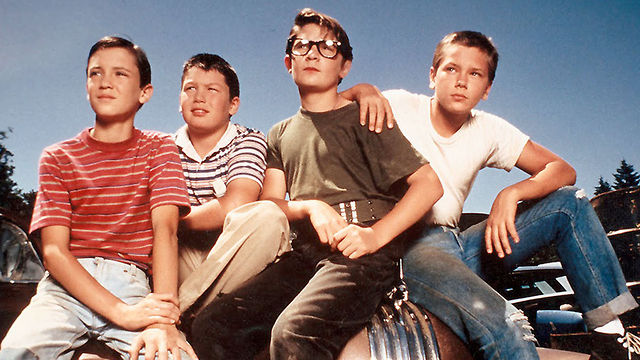
Stand by Me (1986)

24 Jan

365647730_640

Smith’s Verdict: ****

Reviewed by Tanner Smith

In a series of novellas called “Different Seasons” by Stephen King, the third (of four) novella—entitled “The Body”—uses the segment “Fall from Innocence,” meaning in all of our lives there is a time that changes our lives forever. Coming-of-age stories are the tales that showcase a character (or characters) going through important events in their lives. In “The Body,” the event for four pre-teenage boys is the journey to find a dead body and become famous for turning it in. They find the body, but they really find each other and learn some valuable life lessons. Despite being written by Stephen King, it isn’t a horror story. In fact, one of King’s strengths in his horror stories is the strong friendships that develop between the characters. This is simply a story of one of those friendships with no macabre elements (save for the sight of a corpse); just simple life lessons.

The novella is closely adapted into the film “Stand by Me.” You can put the praise onto the nostalgia aspects of the story, the convincing portrayals of these four compelling young characters by four excellent young actors, its honest look at their journey (psychologically, as well), or all of the above. Either way, “Stand by Me” is a wonderful movie. It’s one of the best teenage coming-of-age films I’ve ever seen. It’s fun, it’s touching, it’s believable, well-acted, well-executed, and when it needs to be, very funny. It’s the third outing for Rob Reiner as a director, after the success of “This is Spinal Tap” and “The Sure Thing.” His impressive streak continued with “Stand by Me.” Reiner knows the subject material by heart and, with an excellent screenplay by Ray Gideon and Bruce A. Evans, brings delight to the screen in telling this story.

Unlike most coming-of-age stories, this one takes place in just a couple of days, rather than a couple weeks, months, or even years. That’s how long it takes for these small-town Oregon treehouse boys to walk along the railroad tracks to find the dead body of a missing kid. It begins as pudgy, wimpy Vern Tessio (Jerry O’Connell) arrives to the treehouse to tell his friends—Gordie Lachance (Wil Wheaton), Chris Chambers (River Phoenix), and Teddy Duchamp (Corey Feldman)—his knowledge of where it can be found. They decide to trek after it, turn it to the authorities, and become famous.

Where do I start with the effective drama in this movie?

Each of these boys have their own demons, as we learn through the journey. Gordie—who serves as the narrator of the story, voiced as an adult by Richard Dreyfuss—is haunted by the thought that his parents believe his late older brother—the “favorite son” (played in flashbacks by John Cusack)—was the wrong one that died. (He even has a nightmare in which his father states, “It should’ve been you.”) Chris comes from a family who doesn’t love him, has a reputation of being a bad seed like his brother “Eyeball” (Bradley Gregg), and just wants a fresh start, but feels trapped by his hometown. Teddy’s mentally unstable father, who wound up in a mental hospital, abused Teddy and no one ever lets him forget it. Vern is a coward, always afraid of trying anything new. Each of these elements are brought up and confronted along the way. They realize the good things they have in life—one is each other, and the other is their own abilities. In particular, Gordie is a creative storyteller and Chris is loyal and mostly takes the peaceful route. This is all told in a convincing, well-written, well-acted way that makes for one great scene after another. The most touching scene is when Chris finally breaks down and tells Gordie, his best friend for life, about the time he really felt let down.

The boys’ friendship is in danger of being torn apart. This is first brought up when Chris tells Gordie that he’ll be separated from him and the others, because he’ll achieve at a higher rank than them. Gordie doesn’t want that to happen, but it’s inevitable. Since Chris doesn’t want to drag Gordie down, he doesn’t want to fight it—he wants Gordie to use his gift of writing to succeed in life. No one’s friendship is the same as when they were 12 years old, but at the time, there’s nothing stronger than that bond.

Then once the kids find the body, they’re faced with their own mortality once it turns out that the town bullies, led by knife-wielding Ace (Kiefer Sutherland), show up and decide to claim it for themselves. It’s then that they realize what’s more important, what’s at stake.

This is great stuff! It’s all told in a very effective way and makes us believe in every detail these characters go through. But the movie isn’t so dramatic that it will turn people off—there is a lot of comic relief in many inventive scenes of comedy and adventure. In the latter category, we have the actual trek itself. The boys get attacked by a junkyard dog, which turns out to show as a real difference between fantasy and reality (it turns out to be a harmless-looking Golden Retriever); they go through leech-invested waters in the middle of the forest; and in the most exciting scene, they cross a railroad bridge and nearly get run down by an oncoming train. As for comedy, the best segment comes during the boys’ campout—it’s the story told by Gordie to the others about a tormented overweight boy who gets his revenge at a pie-eating contest, in the most disgusting and hilarious way. It works as comedy and as a concept of a disregarded child, giving come-uppance to his tormentors.

The comedy, drama, and adventure go great together, and the performances by Wil Wheaton, River Phoenix, Corey Feldman, and Jerry O’Connell are spot-on. They capture their personalities distinctively and memorably and make for great company to spend an hour-and-a-half with.

I love this movie. I love it so much that I’m sincerely hoping I’m not leaving anything out in this review. Sometimes, I want to hurry along a review and finish it. But with really great movies such as this one, I hope there’s nothing I’ve missed that needs to be brought up. I love “Stand by Me” that much.

Waterworld (1995)

24 Jan

screenshot-med-01

Smith’s Verdict: ***

Reviewed by Tanner Smith

The most expensive movie ever made at its time, 1995’s “Waterworld” is known as one of the all-time bombs—up there with productions like “Heaven’s Gate” that didn’t even come close to making its money back. That doesn’t necessarily mean it’s one of the all-time worst movies. Actually, it’s a pretty decent action flick with nicely-handled sequences and great sets that give atmosphere.

Though, with the label of “most expensive movie,” it’s easy to see why people were disappointed by the outcome of the production. Even disappointing to me, actually—for a movie of this budget, perhaps being merely “decent” is a disappointment. But you take what you can get.

“Waterworld” takes place in the distant future, as we see a change in the opening Universal logo with the polar ice caps melting, and a brief narration stating that most of the world is covered with water. Thus, we have Waterworld, a place filled with drifters, terrorists, and falling civilizations—all survivors now living on manmade boats, one large ship, and large docks. No land in sight. Freshwater and dirt are now valuable trading. People and brotherhood aren’t what matter to the survivors anymore.

Kevin Costner stars as Mariner, a drifter who lives on his own, sailing on a boat of his creation. He trades for some dirt and sells it in a civilization made up on a big floating “atoll.” However, upon closer inspection, the people there see that he’s a mutant—he has gills and webbed feet. But while the people want him executed, a barmaid named Helen (Jeanne Tripplehorn) and her adopted daughter Enola (Tina Majorino) believe he has seen Dryland, assuming from most of the materials he has traded. So they join him on a journey to get there. However, a terrorist group called the Smokers, led by one-eyed, nasty Deacon (Dennis Hopper), is after Enola (quite an unusual name—it’s “alone” spelt backward) because she has markings tattooed on her back that might actually be directions to Dryland (though no one can decipher them).

“Waterworld” has some intriguing ideas. As we see in the beginning of the film, we see how Mariner is able to stay hydrated and healthy—he processes his own urine, drinks it, gargles, and spits on his little lime tree. That’s very clever. We also see many of the technical aspects of this world—there are a lot of shots focused on how many gadgets work. I love the focus on the mechanics in this world.

But there are some pretty dumb moments with “Waterworld” as well. For example, why would the people on the atoll try and kill Mariner after finding out about his mutation, when HE WAS JUST ABOUT TO LEAVE? What did they have to worry about? And also, why is there a prejudice against people with gills in this world? With some experimentation, couldn’t there be some problems solved around this man who can breathe underwater, in a world that is maybe entirely covered in water? Nothing is made clear of this. There are also moments involving stunts involving jetskis in which the movie looks like a TV spot for Seaworld.

The action sequences are mostly well-staged, particularly the Smokers’ attack on the atoll as Mariner, Helen, and Enola must escape. Even if the stuff with the jetskis looks commercial-like, there is some impressive stuntwork there. I also really liked the final sequence in which Mariner must storm the Smokers’ ship in order to rescue Enola from Deacon’s clutches (and hammy speeches).

Kevin Costner is probably not the best choice to play this part—as the anti-hero, Costner doesn’t particularly come across with as much energy as Mel Gibson with his “Mad Max” movies, nor does he have the goofy one-liners that Schwarzenegger could deliver. Sometimes, he’s just kind of a bore. But as an unsmiling action hero, he’s mostly effective. He does have his share of badass moments. Dennis Hopper, as the villainous Deacon, is deliciously over the top and also serves as weirdly effective comic relief. Jeanne Tripplehorn is fine and Tina Majorino, while kind of annoying at first, gets better as the role progresses.

“Waterworld” has its problems, but has its action and sets to make up for them. This may be one of the bigger bombs in the past thirty years, but it’s far from one of the worst movies in the past thirty years. It’s just decent.

The Secret of NIMH (1982)

24 Jan

000015_16

Smith’s Verdict: ***1/2

Reviewed by Tanner Smith

Don Bluth’s animated movie “The Secret of NIMH” recalls the joy of some of the earlier Disney features. In fact, I think Walt Disney himself would’ve been impressed by the chances this animated movie takes and how unusually thought-provoking it is.

If you think the NIMH in the title is the acronym for the National Institute of Mental Health, you’re right. We learn that a group of NIMH laboratory rats and mice were injected with a secret serum that made them smarter. They could read, reason, and became so smart that they escaped from the lab and made their own secret home and society in the backyard of a farmhouse. They were able to create lights, electricity, and other mystical elements that the movie doesn’t explain, but to be fair, I’m not sure the altered rats themselves can explain them either.

That’s the secret of NIMH that the title suggests, discovered by the story’s heroine on her own adventure. This is Mrs. Brisby (voiced by Elizabeth Hartman), a field mouse/widowed mother who has a deeper connection to the rats of NIMH than she thinks.

Mrs. Brisby is an unusual leading character for a movie like this. Usually, it’s the plucky young children (like Brisby’s own children) who go out and embark on the incredible journey (in fact, in most Disney movies, parents end up either dead or separated). But not here—Mrs. Brisby also isn’t a wisecracking action hero that races to save the day. She’s a concerned mother with a real bravery to her that forces her to go out and do what she does in order to protect her family. She’s kind and likable, and serves as an appealing heroine.

Mrs. Brisby’s ill child is sick of pneumonia, as a mouse named Mr. Ages (Arthur Malet) declares, and must stay in bed for about three weeks. But “moving day” is approaching fast, meaning that a tractor will come along and plow the field. Mrs. Brisby can’t take her child away from home and risk him dying, so she must venture into the farm for answers.

After an encounter with a visionary, intimidating Great Owl (John Carradine), Mrs. Brisby finds the home of the NIMH rats, meets their wise old leader Nicodemus (Derek Jacobi), discovers their secret, and enlists their help to move her home to safe location. At the same time, the rats are trapped with the ethical dilemma of whether or not to keep stealing supplies from the humans or to move out into the wilderness to set up a new society for themselves.

For that matter, what is needed for the rats of NIMH to continue to survive together? Is it discovery? Is it science? Is it logic? Is it intelligence? Maybe it’s all of those choices. This helps make “The Secret of NIMH” into a deeper social commentary. What all do we need to survive in this world, when you really think about it?

“The Secret of NIMH” has a complicated but intriguing story that is distracted only by the unnecessary antics of an annoying talking crow named Jeremy (Dom DeLuise). Kids may enjoy this character, as he is constantly mumbling nervously and acting clumsily, but he really did nothing for me. He doesn’t really have a payoff either—he doesn’t wind up helping to save the day (he returns too late)—so the only reason he’s there is so Mrs. Brisby can ask him to look after her children while she’s gone, and the kids tie him up and torture him.

The animation from Don Bluth and his followers is nicely done. Body language is expressed for the characters, the animals range from cute to frightening, the backgrounds are interesting, and the settings are good-looking. There’s a real sense of depth here.

“The Secret of NIMH” moves at a brisk pace, is delightfully drawn, and carefully constructed. It’s a well-done family film that will entertain adults as well as kids, because they can probably see more than just cute little mice and an inviting look. They can see something deeper within the story.

Young Sherlock Holmes (1985)

24 Jan

Ysh_poster

Smith’s Verdict: ***

Reviewed by Tanner Smith

“Young Sherlock Holmes” imagines what it would be like if Sir Arthur Conan Doyle’s notorious detective characters Sherlock Holmes and Dr. Watson met as young men. And even if the screenplay calls for young Holmes and young Watson to embark on an adventure of Spielberg proportions not necessarily worthy of the Doyle tales (indeed, Steven Spielberg was one of the film’s producers), it’s a pretty entertaining watch.

The introduction of young Holmes and young Watson is wonderful—a real treat. Young Watson is the new-boy-at-school in every sense—he’s near-sighted and slightly round. His first encounter with a fellow student is a young genius named Holmes. Just as Watson is about to introduce himself, Holmes stops him, saying “Let me.” After an awkward pause, Holmes, without stuttering, states proudly, “Your name is James Watson, you’re from the North of England, your father is a doctor, you’ve spent a considerable amount of leisure time writing, and you have a particular fondness for custard tarts. Am I correct?” He was right about everything except that Watson’s name is John. Watson asks how he did that, to which Holmes responds that it was clear, elementary deduction from a close look at his belongings.

“The name tag on your mattress reads J. Watson. I selected the most common name that belongs with ‘J’—James. John would have been my second choice.”

The boarding school that Holmes and Watson attend is in the great tradition of English locations used in fiction, in which a great sense of unconventionality is always visible. In particular, living in the school, is a retired old professor, Dr. Waxflatter (Nigel Stock). He has many bizarre, clever, wonderful inventions in his workplace. His latest is a contraption much like a one-man pedaling airplane—however, his many tests have proven unsuccessful.

And let’s not forget that nosy dark-cloaked figure that stalks the grounds and uses a blowpipe to shoot special thorns into his victims. The thorns are dipped in a solution that causes those exposed to it to experience frightening hallucinations. The victims seem to be killing themselves to escape their drug-induced nightmares—these include a gargoyle that comes alive and attacks; a coat hanger that turns into snakes; and the most impressive (although definitely underused) special effect, a stained-glass-window knight that jumps off the window and walks toward the victim. (For you trivia buffs out there—That knight is the first entirely computer-generated character to be released in a feature film.)

When Waxflatter falls victim to the hallucinations, Holmes and Watson are left important clues. Holmes is determined to get to the bottom of this foul play, as he, Watson, and Holmes’ girlfriend Elizabeth race to solve the mystery.

What they find, I’ll admit, is not worthy of Holmes and Watson. It’s a secret Egyptian religious cult that partakes in human sacrifice of young female virgins, inside an underground pyramid. Just call this “Young Sherlock Holmes and the Temple of Doom” and you get the idea. (Fittingly enough, in some countries, this film is entitled “Pyramid of Fear.”)

“Young Sherlock Holmes” is essentially Doyle mixed with Spielberg, and it does more justice to Spielberg than it does to Doyle. But there are many Doyle elements to enjoy—such as the references to the Holmes/Watson elements we know of (Holmes’ pipe, his cloak, his violin-playing, etc.). The characters of young Holmes and young Watson are portrayed and written convincingly in the great spirit of Doyle, and played wonderfully by Nicholas Rowe as the charismatic young genius and Alan Cox as the loyal Watson. They’re effective so that Holmes purists won’t be offended.

There’s one element that fans will notice doesn’t fit into this Holmes story and that’s the character of Elizabeth (Sophie Ward), a beautiful young woman who lives at the school and serves as Holmes’ love interest. She’s beautiful, nice, and attentive; but you can tell where the character is going so that no woman will ever touch Holmes’ heart again, hence his bachelor lifestyle. However, to her credit, if anyone were to be the only woman for Holmes, it would have to be Elizabeth.

Even if the special effects don’t belong in a Holmes story, they’re still fun, and so is this movie. “Young Sherlock Holmes” gives us interesting heroes to root for, an engaging mystery for us to follow, and more-than-capable execution from director Barry Levinson, writer Chris Columbus, and cinematographer Stephen Goldblatt.

The Stepfather (1987)

23 Jan

500full

Smith’s Verdict: ***

Reviewed by Tanner Smith

“It’s like I have Ward Cleaver for a dad.”

In the low-budget thriller “The Stepfather,” teenager Stephanie Blake doesn’t know the half of it when she delivers that simile about her new stepfather. This new man in hers and her mother’s life seems like the perfect family man, or he just wants the perfect family. It seems like he wants his family to be like those in “Father Knows Best.” But there’s something we know that Stephanie and her mother don’t. The stepfather Jerry is undoubtedly an unstable, sick mind. As we see in a creepy, gripping opening scene, this man has murdered his family (we don’t see the murders, but we do see the bodies in the living room), changed his appearance (shaved his beard and wears contact lenses), and went off to find a new family. One year later, he has changed his identity and remarried Susan Blake (Shelley Hack) to come across, possibly yet again, as an ideal family man. Susan falls for it, but daughter Stephanie (Jill Schoelen) sees right through him—she complains to her mother, “It’s not even our house anymore—it’s his.”

The stepfather goes through the notions of an ideal family man, fooling everybody in the neighborhood. He hosts dinner parties with his real-estate clients, gives Stephanie a puppy as a present, and even calls her Pumpkin, which creeps her out even more. Stephanie’s therapist (Charles Lanyer) thinks she’s just having trouble adjusting to having a stepfather to replace her deceased father, and her acting up in school—and getting expelled—doesn’t make her any more credible. But she knows that something is wrong with this man.

“The Stepfather” has its share of effectively disturbing moments—the most memorable is that opening scene I described. Just as tense is the scene in which Stephanie comes across the stepfather having a mental breakdown before immediately snapping back into character when he sees her. But it also has one other, very important thing going for it, and that is the performance by Terry O’Quinn as the stepfather. O’Quinn is great in the role—chilling, subtle, and even strangely likable at some points. He’s convincing as a psychopath who acts as a normal person but has an unbalanced mind that resorts him to murder when everything goes wrong. The tension is always there when he’s on screen.

Not particularly strong is the subplot involving the brother of his latest victim trying to track down the killer, by using a newspaper reporter and a police detective to try and track him down. It’s not particularly interesting and pretty distracting, compared to the family aspects and tension.

What really satisfied me about the film was that the characters weren’t necessarily idiots to figure this guy out, especially when the film shows the audience right from the start. I feel like this man could fool anybody; of course, that includes Susan. And Stephanie does her own detective work. She has a sure plan to figure him out, which backfires, making her feel like she was wrong about him. This helps raise the tension level.

“The Stepfather” isn’t like the usual slasher films you come across. Sure, it does have a rising action that comes down to a climactic confrontation between the psychotic killer and his family, and you could use that for the climax for any other film of this sort. But what makes “The Stepfather” special is the characterization and performance of the title character, its successful scary moments and haunting feel, and a sharp script by Donald Westlake. It’s an effective thriller.

Bridge to Terabithia (2007)

23 Jan

images

Smith’s Verdict: ****

Reviewed by Tanner Smith

“Bridge to Terabithia” had been marketed as a  “Harry Potter”/”Narnia” clone with a magical world and a promise of fantastic adventure. This is most puzzling to those who were/are fans of the popular novel of the same name (it’s assigned reading in most grade schools), which is said to be the film’s predecessor. But could you really tell that from the film’s trailers, TV spots, or even its poster?

I’ve read the book—the 1977 Newbery Award winning children’s book by Katherine Paterson. It’s a wonderful read about acceptance, imagination, and friendship—not monsters, action, and magic. “Bridge to Terabithia” is co-written (with Jeff Stockwell) by Katherine Paterson’s son David, so how could it be that “Bridge to Terabithia” has transformed into a low-rent “Narnia?” The answer: it hasn’t. Not at all. This film adaptation of “Bridge to Terabithia” is a wonderful film, marketed in such a deceptive way that those who know the film only by its marketing will be as puzzled as readers of the book, if not more puzzled.

“Bridge to Terabithia” is one of the best live-action family films in the past ten years. It’s such a rich and meaningful movie that keeps the same themes of acceptance, imagination, and friendship brought upon by the original book. How it was marketed the way it was is dishonorable, but I guess they had to get the kids to the box office by showcasing the film’s special effects. But while there are elements of fantasy (a central action sequence takes place), they exist to serve and support the story. There’s far more than what you see in the film’s trailer.

The story features Jess Aarons (Josh Hutcherson), a lonely boy from a poor farming family. Jess loves to draw and can draw very well, though his parents don’t support his talent. At school, he takes a great deal of bullying and tries to prove himself worthy on the first day of school, by competing in a recess running race. But he comes in second, next to Leslie Burke (AnnaSophia Robb), the new girl in class.

Despite having an earnest, energetic presence, Leslie is an outsider too. Her parents are authors working on their new book, she’s as creative as Jess (only through writing and creating stories), and her family doesn’t own a TV set, which of course makes her a subject of ridicule by the other kids. At first, Jess is as disrespectful toward her as the other kids. But their similar talents of creativity—his drawings and her writing—help form a friendship between the two. They find an old swinging rope that they use to go to the land across the nearby river, where they create the imaginary world of Terabithia, where squirrels are furry beasts, birds are giant vultures, and trees are trolls. Every day, they swing across the rope into Terabithia and come up with new adventures.

Sure, that stuff isn’t in the original book, nor is the central action sequence in which Jess and Leslie fight these figures all at once. But the element of imagination was present and is upgraded for this film adaptation. Since they don’t hurt the story at all and continue to support the story’s themes, it’s acceptable. Even that action sequence serves a purpose—without giving too much away, it serves as a metaphor for facing fears and earning respect. Terabithia is an example of using imagination to escape everyday life—the world of neglectful parents, strict teachers, and harsh school bullies. Some of these creatures that Jess and Leslie create in their mind are based on some of these people—for example, the squirrel monster is based upon one of the bullies.

And I should also note how good the CGI looks. It isn’t used often, but when it appears, it’s used very well.

The family aspect of “Bridge to Terabithia” is very effective, particularly with Jess’ home life. He comes from a farming family and his family can’t afford much. So since money is an important value in his family’s life, his father is strict about his son keeping with the program and getting his head out of the clouds. The father doesn’t approve of Jess’ artistic ability, even though Jess tries to impress him. These scenes between Jess and his father are powerful, and the father isn’t a one-dimensional caricature. He does care about his son, and only wants what he thinks is best for him (and the rest of the family).

Josh Hutcherson and AnnaSophia Robb both do incredible jobs and have the charismatic screen presence and chemistry to succeed in playing these roles. You really buy them as great friends and individually troubled kids. The supporting cast is excellent—Robert Patrick delivers a strong performance as Jess’ strict (but not uncaring) father, Zooey Deschanel is lively as Jess’ music teacher whom Jess has a small crush on, and Bailee Madison is good as Jess’ adorable little sister May Belle. Also of note is Lauren Clinton, who portrays a convincing bully with a troubling family life. (The other bullies are one-dimensional.)

There’s something I want to mention before I get to the main conflict that takes up the final act of the movie. The music, composed by Aaron Zigman, is absolutely amazing—particularly the central music score that opens and closes the film. It’s memorable, it’s catchy, and it’s magical. I was humming this tune just a few minutes after I saw the film.

One very important part of the original book is a tragic accident. Without saying too much about it, because the less said the better (if you haven’t read the book), this movie doesn’t shy away from it to keep its friendliness. It tells this story straight and shows just how these characters deal with it. It really hit me hard. Again, without giving too much away, the back half of this movie is extraordinary in the way these people deal with this ordeal. If at first you feel denial after a death in your life, it helps to talk about it and share your feelings.

“Bridge to Terabithia” is grounded more into reality than into fantasy, despite what the marketing suggests. I guess they couldn’t find a more effective way to advertise the film and get kids invested, so they went with a showcase of the special effects that are only part of the characters’ imagination. Whoever made this decision was not playing fair with their own movie. This is a great family movie that will appeal to both kids and adults. The acting is great, the themes are well-presented, the screenplay is great, and the drama is legitimate. It’s a worthy adaptation to a wonderful book, made into a wonderful movie.

The Client (1994)

23 Jan

TheClient1

Smith’s Verdict: ***

Reviewed by Tanner Smith

It’s easy to see why John Grisham writes best-selling novels. His stories may not be particularly new, but his characters are fresh, original, and three-dimensional. It helps to have memorable, compelling characters to follow in any story. This is true of his book “The Client,” which was adapted into a film in 1994. The film—named “The Client”—is just what you’d expect. The story is told in a credible-enough way right before it drifts into improbable territory at the end, in which all of these appealing, three-dimensional characters are thrust beyond their credibility. There are enough things to praise in “The Client” that I’m going to recommend the film for its strengths.

As the movie opens, the eleven-year-old hero Mark Sway and his little brother are playing in the woods near their trailer park in Memphis, Tennessee (Grisham’s usual Southern setting). A black car drives into the woods and the brothers sneak over to see an overweight lawyer get out of the car, stick one end of a garden hose into the exhaust pipe, and another end in a window. Mark realizes what he’s attempting to do and tries to stop him, but is caught by the lawyer (named Jerome “Romey” Clifford) who puts him in the car with him and tells him why he’s committing suicide—he also tells him something he definitely shouldn’t know that involves the Mafia and the whereabouts of a missing dead body.

Mark escapes and the lawyer offs himself. When Mark calls the police and sneaks back to watch them take away the body, he gets caught and is questioned. But this is a smart (though frightened) kid who knows that if he tells them that he was in the car and that Romey told him what he knows, he and his family will be in danger by the mob. He tries to cover his experience by lying, but there’s evidence against him. Also, there’s an FBI agent named Roy Foltrigg, known to the public affectionately as “Reverend Roy” because of his tendency to quote scripture during court. Luckily, the kid is smart enough to know that he needs a lawyer. And he finds one—a tough-as-nails female lawyer named Reggie Love who only costs a dollar for Mark. But can Mark keep his secret?

If the story isn’t enough to suck you in, the characters and their performances from the actors really are. Brad Renfro, as Mark, is a natural actor—there doesn’t seem to be a moment when he’s acting. He’s a tough Southern kid who is very resourceful and wise for his age. Then, there’s Susan Sarandon, who plays Reggie Love. She’s as tough as lawyers come, but has her own demons to conquer—she has a troubled back story. Sarandon is great here. And then, there’s Tommy Lee Jones, who plays Reverend Roy in an over-the-top performance. How can you not like him when he snaps in court? “What hubris is this?! Speak, child, now! Lyin’ lips are an abomination to the Lord!”

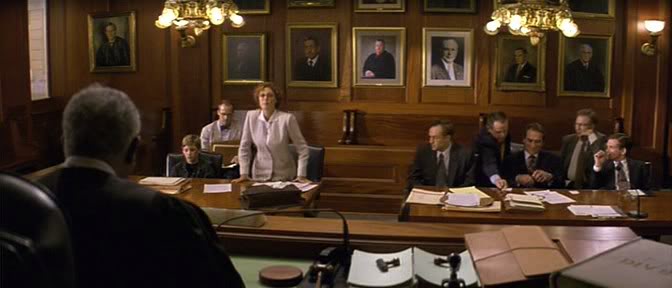
The film falls short of being a great thriller and winds up being only good. Oh, there are great sequences in the movie, to be sure. Three, in my opinion, are most memorable. The first one comes right at the beginning, when Mark is stuck in a car with the suicidal lawyer who plans to do away with the kid before himself—there’s great tension with the music and the atmosphere, particularly. Another great sequence is the first meeting of Mark and Reggie—Renfro and Sarandon share a great rapport with each other in almost every scene when they’re together, but this is the strongest, I believe. The third great sequence is the courtroom scene in which Mark must finally decide whether or not to tell what he knows—Ossie Davis is especially good as the judge in this scene, as he cuts through Reverend Roy’s bull. These sequences are spectacularly well-handled and well-shot. But the major flaw with the movie is with the villains—generic mobsters, led by Barry the Blade (Anthony LaPalgia). They want to silence the kid, to kill if necessary…and that’s about it. Nothing exciting or original there; nothing of substance. Also, the final half isn’t believable—it’s just a “Hardy Boys” scenario in which Mark and Reggie are sneaking around the boathouse in New Orleans searching for clues. No points for guessing correctly whom they encounter.

“The Client” is a good film, but not as great as it leads up to be. I wouldn’t place the blame on John Grisham, who wrote the source material. I can possibly place the blame on Akiva Goldman, who co-wrote the screenplay with Robert Getchell. They should’ve known that the final half wouldn’t be as credible as what came before it. Maybe purists of Grisham’s novels would’ve thanked them for making something different. (Then again, I could be wrong.) But I can still go back and rewatch “The Client” and see it for its strengths rather than its flaws.

The Straight Story (1999)

23 Jan

the-straight-story

Smith’s Verdict: ****

Reviewed by Tanner Smith

Before I get into what a treasure “The Straight Story” is, that it’s based on a true story, and it features the best performance from veteran actor Richard Farnsworth, let me express a surprising thought from the opening credits. Let’s see, there was the “Walt Disney Pictures” logo, followed by a starry sky, the first text appeared—“Walt Disney Pictures presents.” But then, something unusual happened—not that the director was credited before the title and lead actors’ credit (in a late-‘90s Disney film), but who the director turned out to be. David Lynch. I couldn’t believe my eyes, but there it was—“A Film by David Lynch.”

I contained my surprise and my interests. I never would have believed that David Lynch, one of the oddest, revealing, visionary filmmakers around (see “Twin Peaks,” see “Blue Velvet”), would make a G-rated family film for Disney. But I guess every filmmaker wants to try something new every now and then, much like how Francis Ford Coppola wanted to try something new after such gripping masterpieces as “The Godfather” and “Apocalypse Now” would make something like “The Outsiders,” “Peggy Sue Got Married,” or (to a much lesser extent) “Jack.” Then again, it’s not like Lynch hasn’t ventured into different territory before “The Straight Story” (see “Dune,” for example), but this is about as new as he could venture.

And for the record, I want to make something perfectly clear. Just because a film is rated G, that doesn’t necessarily mean it’s a children’s film. Actually, I think “The Straight Story” was more aimed for adults than children who, despite the Disney distribution, could be bored out of their minds. Oh, you can show it to them, but they might not care much for it. However, if you do, I’m sure they’ll remember it more fondly as they get older and more mature, and thank you for showing it to them. “The Straight Story” is an excellent movie. It’s touching, effective, interesting, colorful, brilliantly-executed, wonderfully-acted, and with a real feel-good spirit to it.

You read that last part right—this is a feel-good movie. While Lynch’s “Eraserhead” featured nightmarish elements and “Blue Velvet” had extreme views on happiness and bleakness, “The Straight Story” features sincerity and positive elements that make this something special and of course make you feel glad you watched it. It’s practically impossible not to love this movie.

Like most feel-good stories, “The Straight Story” is based on a real event that occurred in the life of a real person. The story follows a 73-year-old man named Alvin Straight (Richard Farnsworth), who lives in Laurens, Iowa with his daughter Rose (Sissy Spacek). Alvin has a hip problem (that requires to walk with two canes), has bad vision, and is dealing with the fact that he just doesn’t feel as young as he did. One day, he hears that his estranged brother Lyle (Harry Dean Stanton) has suffered a stroke, and decides that he must go see him. With no driver’s license and poor eyesight, he is going to make the trip from Laurens, Iowa to Mt. Zion, Wisconsin (about 320 miles) with his own John Deere lawnmower and a homemade trailer. (I’m sure this was probably Lynch’s hook to direct this movie—an unusual road trip with a slow-moving lawnmower.)

As unusual and possibly as silly as that might sound, Lynch plays the story straight (forgive the pun) with a real sense of sincerity in the way that Alvin makes the trip in about six weeks, stopping at night to camp out in nearby fields and meets some good-natured, interesting people along the way (as you see in just about every road movie). That’s not to say there isn’t quirkiness involved, but it’s more measured than you might expect.

“The Straight Story” showcases Lynch’s talent as a filmmaker in just about every scene, mainly because he is in constant control. Every shot is perfectly set up and has a purpose, and everything in the foreground and background is focused upon interestingly. Some of the best examples are the earlier scenes that give us an atmospheric look at the South, which from the standpoint of a person who has lived in a rural area most of his life, is captured perfectly.

There are many masterful sequences during this six-week trip, which is shown almost episodically. One of which has to do with a young female hitchhiker who shares a campfire with Alvin, who manages to give her helpful advice. We don’t know what happens to her later, after she has left the following morning, but we can imagine that she made the right choice. Then, there’s a scene in which a frightened woman breaks down when she accidentally hits another deer on the street (and it was her thirteenth accident). This scene has nothing to do with anything else, but you can feel the sadness the woman must be going through, even if the scene only lasts about two or three minutes. And there’s a particularly well-edited, tense sequence that sort-of serves as the sole action sequence, as it features Alvin losing control of the mower and speeding down a hill, nearly getting himself killed, into a town where more people come into his life, most of which are good-natured, helpful individuals.

The setting of the town is possibly the best of Alvin’s stops. We see more memorable side characters, including a bickering pair of brothers (which symbolize the past relationship of Alvin and his own brother who the trip is for) and a retired John Deere employee who lets Alvin camp out in his backyard while he fixes the lawnmower’s transmission. (By the way, if you’re wondering, Alvin won’t come into the house, even to use the phone.) And this is also where we get a heartbreaking monologue, delivered perfectly by Richard Farnsworth, as he tells the story of being a sniper in World War II and the fatal mistake he made. It’s a great scene and an excellent monologue—one I’ll never forget.

Richard Farnsworth is perfectly cast as Alvin Straight. With his kindly voice and sweet manner, Farnsworth is one of those actors whose presence helps make the movie. He has the right spirit, the perfect sense of conviction, great clarity, and real effectiveness. We’re with him throughout this movie and he is believable and likable from the first minute to the last.

“The Straight Story” is a wonderful film. It features an artist in top form while stepping into new territory, a veteran actor in his best (and unfortunately, last) performance of his career, and a nice respectful feel to it. If David Lynch has to show that he doesn’t have to resort to shock tactics to get people’s attention, especially to studios, this is the film that is a prime example of him as a more-than-capable filmmaker.

The Breakfast Club (1985)

22 Jan

Image

Smith’s Verdict: ***1/2

Reviewed by Tanner Smith

“The Breakfast Club” is a delight. It’s a wonderful, funny, feel-good comedy/drama with this simple premise—five strangers spend a day together and become closer than anyone could have imagined. Make the five strangers into teenagers from different high school cliques and have them in detention together and you have “The Breakfast Club,” a movie written, produced, and directed by John Hughes, who also made the sweet “Sixteen Candles” and actually takes teenagers seriously. Hughes creates teenage movie characters as real teenagers—young people wanting to belong in this world. Usually for the 1980s, a lot of movies will depict teenagers as simply sex-crazed or dumb or just victims in a slasher movie, like the “Friday the 13th” movies. But not with John Hughes writing the material. “The Breakfast Club” is one of those rarities that makes teenagers into three-dimensional characters while adding realistic drama and comic relief.

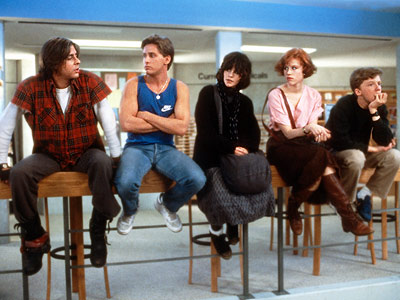
So we have the five teenage leads from different groups in high school—we have Brian who is a brain (ha ha), Andrew Clark who is a jock, Bender who is a rebel, Claire who is the queen bee, and Allison who is a “basket case.” They are forced to spend a Saturday in the library for a full-day detention and are checked up on every now and then by the strict vice principal Vernon (Paul Gleason).

When the day starts, they have nothing to say to each other and want nothing to do with each other. By the end of the day, they have shared their feelings and realize that they can become friends. All of this is told almost all in dialogue. Each character has his/her moment to express themselves. We feel for each of them. And the way the script is almost entirely written in dialogue, you think this could possibly be a play, especially in the scene in which the kids all sit in the floor and have a sort-of “group therapy” session. This goes on for 20 minutes, but it doesn’t get boring because we really do feel for these people.

For example, we learn that Andrew (Emilio Estevez) has a father who is a practical perfectionist who wants Andrew to win every time, and that drove Andrew to the point where he went over the edge just to please him. For Bender (Judd Nelson), the idea of pleasing his own father is difficult, since his own father is the possible abusive type who probably can never please him, whatever he does. Maybe this is why Bender is a rebel. Isn’t rebellion started by parents’ ignorance? Come to think of it, that could be why Allison (Ally Sheedy) is a recluse.

The acting is very good, especially from Judd Nelson as the down-on-his-luck criminal Bender; he’s very good here. And the other actors, more experienced than Nelson at the time, are good too—Molly Ringwald shows a different side to the character of a high school beauty, Emilio Estevez is strong as a tortured athlete, Ally Sheedy is suitably weird as the weirdo who is also a compulsive liar, and Anthony Michael Hall is a likable (and realistic) nerd (he shows you don’t have to look like a geek—he doesn’t have zits or thick glasses; you just have to act like one to be labeled a “geek”).

If there’s a weakness, it’s that the adults aren’t as drawn out. John Kapelos, as a smart-aleck janitor named Carl, is OK in his small role, but Paul Gleason’s character of the strict vice principal is one-dimensional and the scene in which he tries to connect with Carl is brief and not very interesting.

The question that Brian, the brain, asks near the end of the film is shocking to hear because even though we all were probably expecting the subject to come around, I wasn’t ready for it. Brian asks the question of what’s going to happen when all five of them go back to school. Will they still be friends? The answer he receives is the harsh truth. This is the film’s most powerful moment because it has a ring of truth and really draws the line as to where high school kids stand as individuals. What will happen? Who knows? But the ending does what it can to have the assumption that maybe they can still be friends. We don’t know what happens after this day, which is why we really have to think about who these people are and what sort of people they’re going to become.

I don’t want to make “The Breakfast Club” sound so deep that people wouldn’t be interested because there are moments when it’s fun, particularly when the kids sneak out of the room and have to get back before Vernon realizes they’re gone. But at the surface, this is a strong coming-of-age teenage film that has more than meets the eye.