Archive by Author

Batman: Mask of the Phantasm (1993)

17 Feb

Batman Mask of the Phantasm phantasm

Smith’s Verdict: ***1/2

Reviewed by Tanner Smith

“Batman: Mask of the Phantasm” was the only theatrical release based on the animated series of “Batman” (entitled “Batman: The Animated Series”). The series was dark and complex, which is what also could be said about this movie. It’s strange and very intriguing in the way that this movie (and the series) was able to strike the right notes for kids and adults. But “Batman: Mask of the Phantasm” is a gripping thriller that both would enjoy.

Actually, I just realized what is special about both this movie and the series—it treated the kids like adults!

“Batman: Mask of the Phantasm” digs deeper into Bruce Wayne’s past, as we discover that he almost had a normal life before becoming the Dark Knight himself. This is brought back to him by the arrival of an old flame, Andrea Beaumont, with whom he restarts a romance. At the same time, there’s a new villain in town—a mysterious vigilante who is killing off Gotham City’s crime bosses. This villain, who can appear and disappear with a puff of smoke, is called the Phantasm and is also mistaken for Batman. So while trying to deal with his life as Bruce Wayne, Batman is also on the run and out to clear his name.

The animated series was mostly known for its Gothic stories and character development, as hard choices and haunting memories come into place. Such is the case here. The flashback sequence in which we see events that lead to Bruce Wayne becoming Batman is very well-handled and quite complicated. It shows the fantasies of what might or should be, and then reality takes its toll in a harsh way that leads to tough decisions that ultimately must be made.

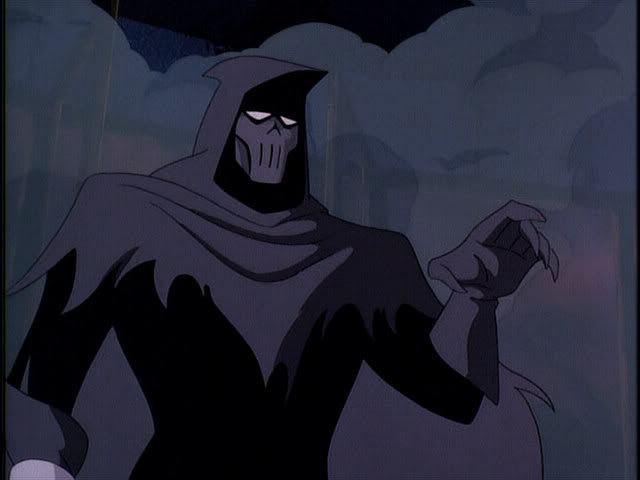
The new villain, the Phantasm, is a welcome addition. With a dark cloak, glowing eyes, a mask that also alters voice, and a lot of smoke to fool during encounters, the Phantasm is one tough customer. As the story progresses, there is more to be told about the Phantasm’s story, and during the film’s harrowing final act, that story comes full-circle in a way I wouldn’t dare give away. The Phantasm isn’t the only villain, however. We’re also fortunate enough to have the Joker, slimy as ever. And the scheme that these villains follow through with is surprisingly well-put into detail. Maybe I wasn’t too enthralled by evil schemes in some of the live-action Batman movies, but this one was quite intriguing.

The climactic final act is phenomenal. It’s not just because of the crafty animation style that makes it worth watching; it’s everything that has been set up before, and is now paying off. I love action-thrillers in which the climax really means something after all that’s happened before.

It’s a shame that this animated Batman movie was a box-office bomb. (Reportedly, this had to do with Warner Bros.’ inept marketing campaign.) It has since gained a cult following on home media release, and for good reason. It’s a pretty strong film. Even Siskel & Ebert, in 1995 (the year “Batman Forever” was released), admitted that they regretted missing this film in the theater, saying they enjoyed it more that “the current Batman adventure.” Much like the animated series this was based on, “Batman: Mask of the Phantasm” is intelligent, spectacularly-drawn, and quite dark and intricate.

Children of the Corn (1984)

17 Feb

images-2

Smith’s Verdict: *

Reviewed by Tanner Smith

“Children of the Corn” is a movie in serious need of punishment. This is a sick, depraved movie that isn’t enjoyable unless you like to see children under the age of 19 butcher adults and attempt to sacrifice a woman to their deity He Who Walks Behind The Rows, shouting “Kill! Kill! Kill!” Why is their deity called that, anyway? He doesn’t walk behind the rows, he tunnels underneath them.

These little monsters are led by the sadistic young preacher named Isaac (John Franklin), who brings the children of small town Gatlin, Nebraska into the clearing of the corn fields to preach about He Who Walks Behind The Rows. He orders the children to follow his orders and kill all of the adults in town. His main executioner is another sadistic little snot named Malachi (Courtney Gains), who always has his hunting knife handy for slitting throats of children who rebel against Isaac.

Where did Isaac come from? How did he get to be this way? We don’t know. All we know is that we would love to kill this kid, along with Malachi with his own hunting knife. The rest of the kids are practically just their robots, agreeing with them in deadpan.

The narrator of the movie is a boy named Job (Robby Kiger)—he explains in narration that the town has been adult-free for three years. He, his older brother Joseph, and his psychic sister Sarah (she can draw what is going to happen) are nonbelievers, but they keep it a secret from the other children. Joseph plans to run away from Gatlin through the cornfield. He doesn’t make it—he gets his throat cut by Malachi and is thrown out into the road, where his body is hit by a traveling young couple (Peter Horton and Linda Hamilton). The couple is traveling to Seattle and is passing through Gatlin to report the body but they don’t know what they’re in for.

The only thing that looks good in “Children of the Corn” are the shots of the cornfield (someone running through them looks like someone stumbling through a maze) and the music score, which is quite eerie and belongs in a different, more acceptable horror movie. The character are uninteresting—the young couple is bland and stupid and the kids are annoying and sadistic—and the movie is not well-made by most means. There are cheap shots through almost 85% of the movie. Also, there’s a character of a grizzled gas station manager played by R.G Armstrong that doesn’t work at all.

The climax of the film in which He Who Walks Behind The Rows must be stopped is tacky with an unfinished and unsatisfying feeling.

Then there’s the narration by the kid named Job. For the first half-hour, we hear his narration and then the filmmakers just forget to finish it up or pay it off. There is no ending narration—instead, there is a credit that seems to come out of nowhere rather than end the movie.

“Children of the Corn” is loosely based on Stephen King’s short story in his collection of short stories called “Night Shift.” I don’t know what he was thinking of when he wrote the story to begin with. This premise could never work. It certainly doesn’t work here. However, to be fair about the story, it has more cleverly-written dialogue than any of the lines in this movie.

The Shining (1980)

17 Feb

images-1

Smith’s Verdict: ****

Reviewed by Tanner Smith

Who can be truly trusted in Stanley Kubrick’s adaptation of Stephen King’s novel “The Shining?” There are three central characters taking up the screen most of the time and they all seem to be going crazy, even though two of them end up running from another one who is wielding an axe. Those two aren’t exploited as possibly losing their sanities but when the movie is over, you really have to think about it. Did we see what we really saw? Did we hear what we really heard? Did we rely on the right central character?

“The Shining” could be considered a ghost story. It features a creepy hotel that appears to be haunted. We get glimpses of ghostly twin sisters and a whole party in the hotel bar that was supposed to be closed for the winter. I wouldn’t call it a ghost story because of what is never quite explained. But there are many elements of a ghost story within “The Shining,” and a lot more to it than that so that I wouldn’t call it a ghost story. What it is, however, is downright frightening.

Who else but Stanley Kubrick would want to make this movie? He always wants to take chances and with “The Shining,” he takes the chance of changing King’s original novel into a story with no reliable narrator and that really makes wonder. But his biggest strength is his direction, which is great here. We get long hallways inside this hotel, long panning shots in which the camera follows one character from one room to another seemingly from the wall rather than behind the character, nicely done steadycam shots (the best of which features a little boy named Danny riding a tricycle through a long hallway—that scene alone is creepy, especially when he goes around corners because we think he might see something disturbing around that particular corner or the next one, and also when the wheels make a rumbling sound on the hardwood floor but is muffled when riding on a carpet), and a great sense of isolation. This is a hotel high up in the mountains. It is closed for the winter. Novelist Jack Torrance (Jack Nicholson) is hired as the caretaker while it is closed. He brings along his wife Wendy (Shelley Duvall) and five-year-old son Danny (Danny Lloyd).

The first scene of “The Shining,” in which Jack is interviewed, recalls some great formality in the dialogue. Jack and his employer make some small talk but then unexpectedly, the employer tells Jack about the original caretaker of the same hotel—he went insane with cabin fever and chopped his family into little pieces. Jack takes this rather well, “That’s not going to happen to me.”

We then learn that Jack is a recovering alcoholic and seems like a nice enough person to his wife and son. Wendy is rather meek and follows her husband wherever. Danny, on the other hand, is a special case. He has an imaginary friend named Tony, who is described by Danny as “the little boy who lives in my mouth.” Is Tony real? Well, even when Danny is alone, he uses his finger for Tony to talk. And Tony shows Danny visions of what could happen at the hotel. These visions are terrifying, one of which features what appears to be blood filling up an entire hallway. The most disturbing is a shot of two men huddled together near the end of a bed (one of which is wearing a bear suit—huh???) Later on, those visions prove accurate…

There is another person that shares Danny’s gift called “shining.” This character is probably the only trustworthy character in the movie—the hotel’s original cook Dick Hallorann (Scatman Crothers). He is away from the hotel but there are small scenes in which he grows concerned about the family being all alone in that hotel.

He has reason to be concerned. Things go wrong as the family spends months at the hotel. Jack starts to get grumpy and Danny is seeing terrifying visions of ghosts and past events. Wendy is just trying to adjust and keep the family together but when she notices Jack’s odd behavior, she can’t help but be concerned. What can she do to help? Later through the movie, Jack’s grumpiness turns to insanity as he talks to ghosts in the hotel bar. The cabin fever has certainly gotten the better of him. Much later, it becomes clear that Wendy and Danny’s lives are in jeopardy, beginning in the movie’s most shocking revelation in which Wendy discovers how long Jack has been going crazy—by finding out what he’s written, as a novelist, in the past few months they’ve been at the hotel (I will not give it away). But when you think about what these characters are seeing, you start to wonder if Wendy and Danny are going crazy as well. If that’s the case, who can we rely on in this story? There’s a revealing twist at the end that I would dare to give away but it really made me question the entire movie, which is very frightening.

Jack Nicholson is one of the best actors…period. He is phenomenal as Jack, calm with his assuring voice, grumpy when possible, and absolutely crazy and powerful in the second half of the movie. Shelley Duvall is doing what she is supposed to be doing—sane in the first half, hysteric in the second. I believed her when she was scared practically to death.

I believe I should also mention the long hedge maze near the hotel. The way Kubrick directs characters walking through this giant maze is fantastic, really giving us fear and a sense of entrapment.

“The Shining” needs to be watched and then interpreted. Take every plot element piece by piece and try to come up with your own analysis. I can’t say I “enjoyed” “The Shining.” But I definitely can’t forget it either.

Pan’s Labyrinth (2006)

16 Feb

1330547600963_panslabyrinth2_2x1_Overlay_640_320

Smith’s Verdict: ****

Reviewed by Tanner Smith

Guillermo del Toro’s “Pan’s Labyrinth” is a fairy-tale fantasy that does two things different with the fairy-tale element in its story. 1) It blends it with reality in a way that what goes on with the protagonist in the real world is somewhat related to the fantasy world. 2) It gives, without exaggeration, the darkest fantasy ever depicted on film (and yes, I’ve seen “Heavenly Creatures”). This movie deserves its hard R rating—it is not for children, by any means. Don’t be fooled by the poster that shows a plucky little girl venturing into the fantasy world—this movie is hard on all levels. It is also one of the best fantasies in the history of cinema—touching, thrilling, well-executed, powerfully-acted, and dark. Very dark.

This movie was made in Spain, and Spanish is the language heard throughout. Yes, this is a foreign film and it shouldn’t be a problem unless you can’t read the English subtitles.

The setting is Spain, 1944. A young girl named Ofelia (Ivana Banquero, in her acting debut) travels with her pregnant mother, whose pregnancy is killing her, to a house in the forest. There, she meets her stepfather-to-be, Captain Vidal (Sergi Lopez), a vile man who runs an old mill and commands a fascist outpost.

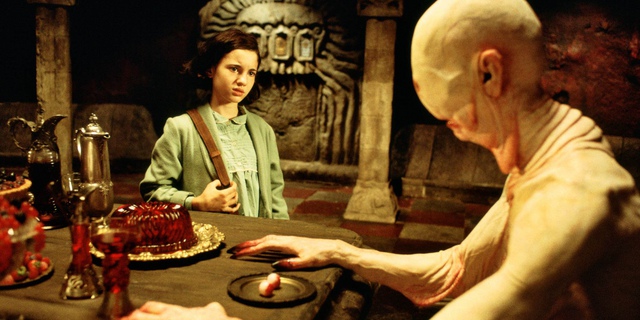
Near the house is a stone labyrinth that is easy to get lost into. But it turns out this labyrinth is enchanted and visited by fairies and a faun (presumably the “Pan” in the title, but no one refers to him by name). The faun believes that Ofelia is a lost princess from his world of enchantment and tests her skills by giving her three tasks. If she succeeds for all three, she gets invited to stay in the fantasy world, free from the trouble that is life and away from her the cruel Captain Vidal. One of her tasks involves a run-in with a scary pale man with pale and decomposing skin all over his body (oh, and he has eyeballs in the palms of both his hands). He chases her because she breaks the rules of the task—that’s an easy life lesson for kids who do wind up seeing this movie.

In the way that these fantasy sequences are intertwined with the reality of the story with Ofelia’s mother and cruel stepfather, there are many times in which we can hardly tell if what she’s only dreaming these strange events in this bizarre world. This is very effective because in some ways, the creatures she encounters are even more frightening than Captain Vidal and we do fear for her life. This is not handled predictably. In the meantime, we get plenty of scenes involving Captain Vidal and his men looking for the enemy in the woods and a subplot involving Ofelia’s secret that she knows the maid Mercedes (a great performance by Maribel Verdu) is assisting their enemies as well. It’s interesting how fantasy and reality are both involved in this movie.

Director Guillermo del Toro reportedly did not want Hollywood to help him with this movie. I bet if they did, most of the shots that make many scenes even more powerful would have been omitted or not even filmed in the first place. They also would’ve asked for the story to be toned down to a PG rating. (At least, that’s what I think.) There are a lot of great visual shots in this movie—one shot in particular doesn’t even take place inside the labyrinth, but inside Ofelia’s mother’s womb, where we see the fetus of the unborn baby. This shot is unsettling, but very inventive and haunting. Also, the visual style here is amazing—especially in the adventures Ofelia has in the fantasy world—and the makeup, for the faun and the pale man, is ultimately effective and impressive. This faun, played by Doug Jones (not a Spanish actor, by the way), is probably going to give children nightmares based on his look, as well as his speech. This creature is really creepy. But the sight of the pale man with eyeballs in his hands may do even worse effect. This movie is not intended for kids, by any means.

Oh, and I should also mention the mandrake root that Ofelia hides under her sick mother’s bed. It becomes what is probably more creepy-looking than the faun or the pale man. It looks like a half-baby made from elements of the earth.

“Pan’s Labyrinth” is visually stunning—every creature looks about as real as you could get and we fear them; they are nightmare fodders for sure—and the direction by Del Toro is amazing. There is one shot in which we follow a strange insect (a mantis-type creature) as it flies all around the forest until it finds its way to our heroine for the first time. But what really makes “Pan’s Labyrinth” an extraordinary fantasy, as well as its look, is the grimness and great power of the storyline. Let me remind parents—it is R-rated. If you want your children to watch the “Wizard of Oz” of the 21st century, this is not it (there are many “Harry Potter” movies for that, maybe). But adults (and maybe teenagers) are going to find the movie powerful, scary, fantastic, and, once again, very grim.

Harry Potter and the Sorcerer’s Stone (2001)

16 Feb

images

Smith’s Verdict: ****

Reviewed by Tanner Smith

When filmmakers adapt novels to films, there is that danger of being too far from the spirit of the source material. And then, there is also the “danger” (I use quotations because I don’t believe in it personally) of being too faithful to the source material. In any case, they try to please the half of the film’s audience who has read the novel the film was based on already. But I don’t know if I can find anyone who wouldn’t like “Harry Potter and the Sorcerer’s Stone,” based on the first novel (though in some countries, it’s known as “Harry Potter and the Philosopher’s Stone”) in a best-selling book series by British author J.K. Rowling. The “Harry Potter” book series gives great depth, emotion, magic, and intensely vivid imagination to readers young and old. This film adaptation of the first book is most likely to be liked by anyone who enjoys great fantasy/adventure films and those who have read the book before seeing the movie in the first place.

In my opinion, “Harry Potter and the Sorcerer’s Stone” is a classic—one of the best fantasy films I’ve ever seen, with no doubt in my mind. It is magical and enchanting, but it is also dark, gruesome, and with some creepy atmosphere. This film is rated PG and it, as well as the books, are more targeted at children and young adults than adults (who enjoy the books just as well as they). There are scenes of menace and fright assisted by special effects—there is a three-headed dog, a dark wizard feasting on a dead unicorn, a back story involving the young hero’s parents’ deaths, and a pit of tendrils called the Devil’s Snare. They are scary, but not too scary. Besides, if some of the special effects creatures don’t frighten the younger kids, they will instead delight them because they’re having fun. And there is more fun to be had with the whole idea of terrific, colorful characters in a world of supernatural adventure and terror.

Daniel Radcliffe plays the titular, bespectacled 11-year-old Harry Potter and I highly doubt anyone would dislike his casting—he looks exactly right for the part, but most importantly, he feels right. He’s a likable hero—brave, honest, and true. Left on the doorstep of his hateful aunt and uncle as a baby, he has been raised as more of a charity. His young life seems empty until he receives many strange letters and a visit from a gentle giant named Hagrid (Robbie Coltrane). Harry has been accepted to a boarding school for young wizards and witches who learn to develop their magical powers.

And what a place it is—Hogwarts, as the school is called, was created with a set and by computers. With the right sort of technology, anything can seem real. Hogwarts is no exception. It looks as real as anything. Harry is bewildered by this school, and we are too. The staircases move, the paintings come alive as people pass by, there are friendly ghosts lounging about in the common room, ceilings that change whatever the mood, and then there are the classes in which the kids learn to use their magic using wands. They make things float, they learn to fly on broomsticks, and more.

Harry makes two friends at his new home—enthusiastic Ron Weasley (Rupert Grint) and bookish Hermione Granger (Emma Watson). He meets many colorful, eccentric teachers—one is the mysterious, glaring potions teacher Snape (Alan Rickman, excellent casting), another is Professor McGonagall (Maggie Smith) who can shape-shift into a cat, and then there’s the bearded headmaster Dumbledore (Richard Harris).

But there is a story to be told here—Harry, Ron, and Hermione stumble upon a secret within the school. While getting through their classes, as well as a rough game of Quidditch (more on that in a bit), they move into further adventure and danger in the meantime. They encounter a three-headed dog named Fluffy who seems to be guarding something under a trapdoor. They battle a giant troll that seems to be have been brought in by a teacher, whom they suspect is attempting to steal what is hidden in that trapdoor. They fall into that pit of tendrils called the Devil’s Snare. They play a life-size game of Wizard Chess, in which gigantic chess pieces come alive and shatter their opponents. And so on. Computers make these sequences look plausible, and they do a great job, as well as the actors who make us root for them during each of these sequences. These scenes have atmosphere, gravity, and (dare I say) credibility.

Fans of the book who saw the movie were most likely thrilled by the exciting game of Quidditch, a sporting event played midway through the film in which two teams (each member on a broomstick) chase after multiple balls to get through their opponents’ hoops. Harry is good with a broomstick for a wizard his age, so he is made the seeker, which means he has to catch a small, fast, golden ball with wings—this is called the Golden Snitch. This game would be near impossible to film, but even then, the filmmakers take their chances and create an excellent sequence in which everyone is flying, struggling, and going for the win. It looks more or less like I imagined it, anyway.

The director Chris Columbus (best known for his directorial work in “Home Alone” and “Mrs. Doubtfire,” as well as writing the menacing and also PG-rated “Gremlins” and “The Goonies”) has directed a classic in the fantasy genre. The actors—the three young unknowns and the high-profile adult British actors—are first-rate in their performances, hitting just the right notes for this movie. The action is exciting, the set pieces are outstanding, there are many scenes that bring true magic to viewers, and the very best thing about the whole movie is that it doesn’t just set up for the sequel—it could work as a stand-alone film. But we all know that the sequels are worth seeing and that this series of books is a possible successful fantasy/adventure film franchise.

“Harry Potter and the Sorcerer’s Stone’s” running time is 152 minutes—there was not a single moment when I was checking for the time. I was entertained, moved, or enchanted by just about every scene in this film.

In & Out (1997)

16 Feb

1852104

Smith’s Verdict: ***

Reviewed by Tanner Smith

“In & Out” stars Kevin Kline as a high school English teacher who is neatly-dressed, reads Shakespeare, watches Barbra Streisand movies, and is somewhat of a wimp. Those four traits are thrown in the way of his masculinity when everyone in the movie thinks he’s a homosexual.

It begins as Kline’s character Howard and his fiancée Emily (Joan Cusack) are watching the Oscars, rooting for one of their former students, who is one of the Best Actor nominees. He’s apparently so successful that Glenn Close spends so much time talking about how great he is, and then just says the other actors’ names as if they’re not important. (By the way, who would have thought Steven Seagal would be nominated alongside Paul Newman, Clint Eastwood, and Michael Douglas? Nice joke, though.)

Anyway, the actor—a goof named Cameron Drake, played by Matt Dillon—wins the Academy Award for playing a gay soldier, and in his speech dedicates it to Howard, “who is gay.” This comes as shocking news to everyone, including his fiancée, his parents (Wilford Brimley and Debbie Reynolds), his students, and the high school principal (Bob Newhart). But Howard keeps telling everyone that he isn’t gay. His students want to believe him, but they consider the facts about his personality and aren’t so sure. He hasn’t even made love to his fiancée in the three years they’ve been engaged—even the Parish priest he goes to believes he’s gay. The premise may sound like dark-comic indie-crowd fare, but “In & Out” is a jolly PG-13 mainstream comedy that’s about as innocent as it can get, given its subject matter. The result is a mostly funny and well-acted, though flawed, comedy.

When Kevin Kline turned into Jim Carrey is beyond me, though I suppose winning the Oscar for his nutty character in 1988’s “A Fish Called Wanda” helped a lot. The movie’s funniest scene is when he proves his masculinity to himself by playing a self-help tape, but can’t resist those distracting showtunes thrown in as tricks. The tape shouts back as if it’s talking right at him. Kline’s very funny here. He’s well-suited with Joan Cusack as his fiancée who has lost about 75 pounds working out to Richard Simmons’ workout videos, and now feels her world falling apart when she thinks she doesn’t know as much about Howard as she thought.

In a movie that has a solid cast and interesting character development (including Matt Dillon as the actor, who had no intention of ruining Howard’s life and whose intentions are revealed later), the best performance in the movie goes to Tom Selleck as a celebrity gossip TV journalist who believes Howard is gay and arrives to this small town in Indiana to make a documentary about his eventual coming-out. Selleck is perfect in his role—effectively convincing throughout as this dedicated TV personality out to get the real story. There’s not a moment when he steers wrong.

“In & Out” has humor and heart, but what didn’t work for me was the ending. It bogs down into a cornball confrontation that interrupts a high school graduation ceremony to allow Howard to win the people’s respect again. It involves everyone shouting “I’m gay” to get at the principal, who just can’t find a good explanation for firing Howard other than he’s gay. It was too uplifting that it wound up as just cloying. But give the scene credit for not taking place in a courtroom.

There are a few slight problems such as the cheesy feel-good music that tells you what to feel when the actors are doing a well-enough job of that. And also, I could see a few things coming a mile away. But what I couldn’t see coming were the movie’s best jokes—a bachelor party that goes unexpectedly, a hilarious snap at Barbra Streisand, that self-help tape scene I mentioned above, and some terrific one-liners. All of the actors are solid, the writing is sharp, and the movie has an overall positive feel to its subject matter. “In & Out” is a certified crowd pleaser.

Child’s Play (1988)

16 Feb

images

Smith’s Verdict: ***

Reviewed by Tanner Smith

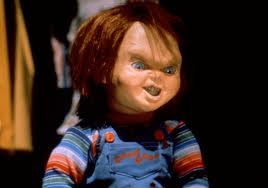
There are many horror-slasher movies with villains that are scary and villains that look scary. “Child’s Play” has a villain of both sides. At first, this “doll”—you read right, it’s a “doll”—looks nice and friendly (and it’s called a Good Guy), but then he was inhabited by the human soul of a serial killer…and now, he looks and acts like someone’s worst little nightmare! With a blade in his hand, a different, scary smile, and a voice that could be Jack Nicholson’s (but it’s actually Brad Dourif’s), we have Chucky…

You know those three heavy musical notes that play in the movies and on TV that are played when someone says something that scares people? Those would fit great if I gave my review on an Internet video.

I don’t really like Freddy Krueger (of “Nightmare on Elm Street”) as a villain; I just see him as a comedic scarface trying to be the big shot. And Jason Voorhees (of the “Friday the 13th” sequels) is still a hard person to figure out. Even the Shape (you know, Michael Myers of the “Halloween” movies), who I thought was scary in the original “Halloween,” tires me with his ridiculous sequels. But Chucky, whose name when he was human was Charles Lee Ray, scares me in appearance and in spirit. This little guy is everybody’s worst little nightmare.

“Child’s Play” begins with Ray, a notorious voodoo-educated serial killer, getting shot by a cop and dying. He’s not ready to die. He screams a revenge threat at the cop and tries to get out of the toy store he’s in so he can find somebody to use his voodoo knowledge on so he can possess the person, but instead he finds one of the Good Guy dolls, a nice, friendly-looking, red-haired doll. After a freak accident, we can assume that he’s now the doll…

The doll, nicknamed “Chucky,” is bought by Karen Barclay (Catherine Hicks) as a present for her six-year-old son Andy (Alex Vincent). The doll comes off as just a doll, staying quiet and whatever the Good Guy dolls are supposed to do. But when Andy’s babysitter is pushed out a who-knows-which-story window, Andy can only say “Chucky did it.” It’s the truth, but his mother and the police don’t believe him and start to be concerned about him. Nobody believes him until his mother discovers that Chucky is talking even though he doesn’t have any batteries in him.

Then, the police don’t believe Karen when she tells them that Chucky is alive. But the movie kicks into more horror when the cop barely escapes Chucky’s wrath and especially when we learn that Chucky needs to possess Andy or else be stuck in the doll’s body forever.

Why is “Child’s Play” worth recommending? Because it’s well-made, contains very good performances from Hicks and Vincent as the scared family, and the villain is a psychotic doll. How else can I explain Chucky except for telling that every time I see his picture on a poster or a cover of a video box, a shiver crawls my spine?

I also like the plot gimmick they use here, such as when Andy tries to tell his mother and the police, they don’t believe him. And then, when his mother founds out the truth by discovering no batteries in him, she tells the police and they don’t believe her either. Then, the cop—Detective Mike Norris (Chris Sarandon)—is attacked by the little devil and barely survives.

And also, that scene in which Karen finds out the truth is a real scary scene.

She’s walking in with the doll, very depressed. Then, she leaves the doll in the living room and goes into the kitchen. She’s about to throw away the box, when…uh-oh–batteries fall out. Then, she slowly walks into the room, cautiously picks up the doll, opens the battery case, and sees nothing…then the doll turns its head and says in a child’s computerized voice “Hey, wanna play?!” The mother screams and drops the doll then Chucky really makes himself known…

That is one creepy scene and also, one of the great things about the movie is the good-looking demonstration of the mad slasher genre. When you think the killer is dead, he really isn’t. You could shoot him multiple times, stab him multiple times, and even burn him to a crisp…he still isn’t dead. The way they do it here is quite interesting.

The director of the film Tom Holland delivered the goods in 1985’s “Fright Night”; he does it here too. He knows how to make an audience go for horror films and he treats them right. Both movies mix some funny dialogue with some flat-out horror and work. Although the gimmick of the “child-in-jeopardy” is sort of cheap, it works here because the little boy played by Vincent isn’t just screaming for his mommy. He has something to do and he stands up to the little devil. Once again, I really like the way the filmmakers made that doll from a nice-looking cute doll to a more horrifying, ugly thing. “Child’s Play” is a well-made horror film with an actually scary villain.

Star Trek III: The Search for Spock (1984)

16 Feb

621_356_star_trek_3_the_search_for_spok

Smith’s Verdict: ***

Reviewed by Tanner Smith

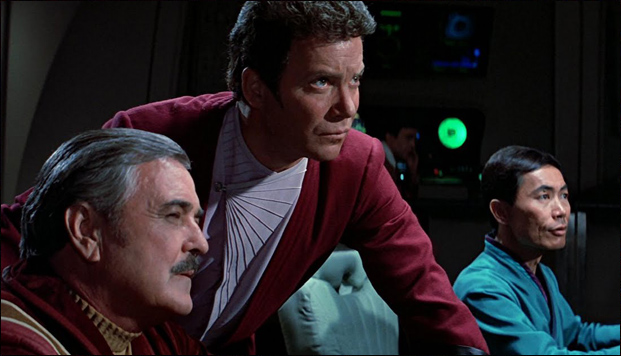
The third “Star Trek” movie is subtitled “The Search for Spock,” leading to the possibility that by the time this movie is over, Mr. Spock will return to join the USS Enterprise crew once again. But it starts out with Spock not merely missing—in fact, for those who don’t recall the end of the previous movie (if you don’t, this movie recaps the moment), Spock sacrificed his life to save the ship and the crew. The crew threw a funeral for him, launched him out into space, and fans of the series undoubtedly cried at the fact that Mr. Spock (Leonard Nimoy), arguably the most famous character in the “Star Trek” franchise, has died. But in the movies, anything can happen—thus, we have “Star Trek III: The Search for Spock,” in which Admiral Kirk and his crew are going to find Spock and bring him back from wherever he is.

Strangeness occurs that gets the search underway. For one thing, Dr. Bones McCoy (DeForest Kelley) seems to be of two minds, so to speak. It seems as if some of Spock’s memories have been stored into McCoy’s mind. He begs Kirk (William Shatner) to find Spock on the Genesis planet, where it turns out Spock has been reborn due to the planet’s growth. (At least I think that’s how it worked—certain parts of the story seem kind of odd to me.) For those who remember, the Genesis planet, from the previous movie, was created for new life. Kirk and the crew are to be reassigned and are forbidden by the Federation to go to the planet to search for Spock. But they disobey their orders and go for it anyway. However, they run into trouble with a ship of aggressive Klingons, led by the ruthless Kruge (Christopher Lloyd), who want to steal the secret to Genesis.

The search is a good deal of fun, though the scenes leading up to it could’ve used either tighter editing or a simpler script. There’s a great deal of heavy exposition involving the location and rebirth of Spock, mostly by Spock’s father (Mark Lenard), and they go on for quite a while. But once Kirk steals the Enterprise from the Federation, in a terrific ten-minute sequence, the movie gets on its feet and gets more interesting. The afore-mentioned sequence is quite impressive and very well-paced. There’s some tension on the planet, as Kirk’s son David (Merritt Butrick) and Vulcan Saavik (Robin Curtis, taking over for Kirstie Alley) make their own expedition on the planet for inspecting a “mysterious life form.” The Klingons continue to zero in on the heroes, such as when the Enterprise is met with a Klingon bird-of-prey. And of course, everything must come down to a battle between Kirk and the nasty Kruge, and once that’s done, we can deal with the matter of Spock’s return.

Christopher Lloyd’s Kruge is just an OK villain—he doesn’t really have the same kind of menace that Ricardo Montalban’s villain had in the previous movie. Sometimes, with Lloyd’s eyes bugging out half the time, it’s hard to take him seriously. And when you’re familiar with the actor’s other work, hearing him speak Klingon (which sounds like a cat throwing up half the time) is, let’s face it, quite hilarious.

I won’t be spoiling anything when I say that Spock does return at the end. What, did you expect the Enterprise crew do go on this search and not find him? This isn’t that kind of movie, guys. I’ll praise the scene involving his return because it reigns as one of the more satisfying moments in the “Star Trek” series—I was glad to see him again.

“Star Trek III: The Search for Spock” isn’t as great as “Star Trek II: The Wrath of Khan”—there are some overlong scenes, some moments that are silly, and the villain isn’t particularly compelling. But the theme of sacrifice is still present—like how Kirk has to sacrifice just about everything to save his best friend—and the action is still tense and exciting, while leaving for the beloved character interaction “Star Trek” fans have grown accustomed to. This is a good “Star Trek” movie, but not a great one. Still, like all good movies, that doesn’t mean it doesn’t deserve to be checked out.

Back to the Future (1985)

15 Feb

Back To The Future 2

Smith’s Verdict: ****

Reviewed by Tanner Smith

“Back to the Future” is an enjoyable, well-crafted, fantastic movie that has probably one of the best screenplays ever executed to film. Written by Robert Zemeckis (who also directs the film) and Bob Gale, I can just watch this movie and imagine what it would have been like for these two to write this script. They must’ve had a great time—I see beers and snacks all around, with chuckling, laughing out loud, and collaborating on new ideas and nodding in agreement. Or maybe I’m just being too positive. But what they delivered is a screenplay that, directed by Zemeckis, makes for a fun, entertaining, very well-written, even deep-at-some-points movie.

The story for “Back to the Future” takes place in 1985 (when this movie was made). Why do I bring this up? You’ll find out—though most of you reading this will already know why.

The hero is a California teenager named Marty McFly (Michael J. Fox). He plays lead guitar for a garage band and has a nice, attractive girlfriend, but his home life is an embarrassment. His older brother and sister are underachievers, his mother is a chronic drunk, and his father is such a nerdy wimp that he still lets his high school bully push him around.

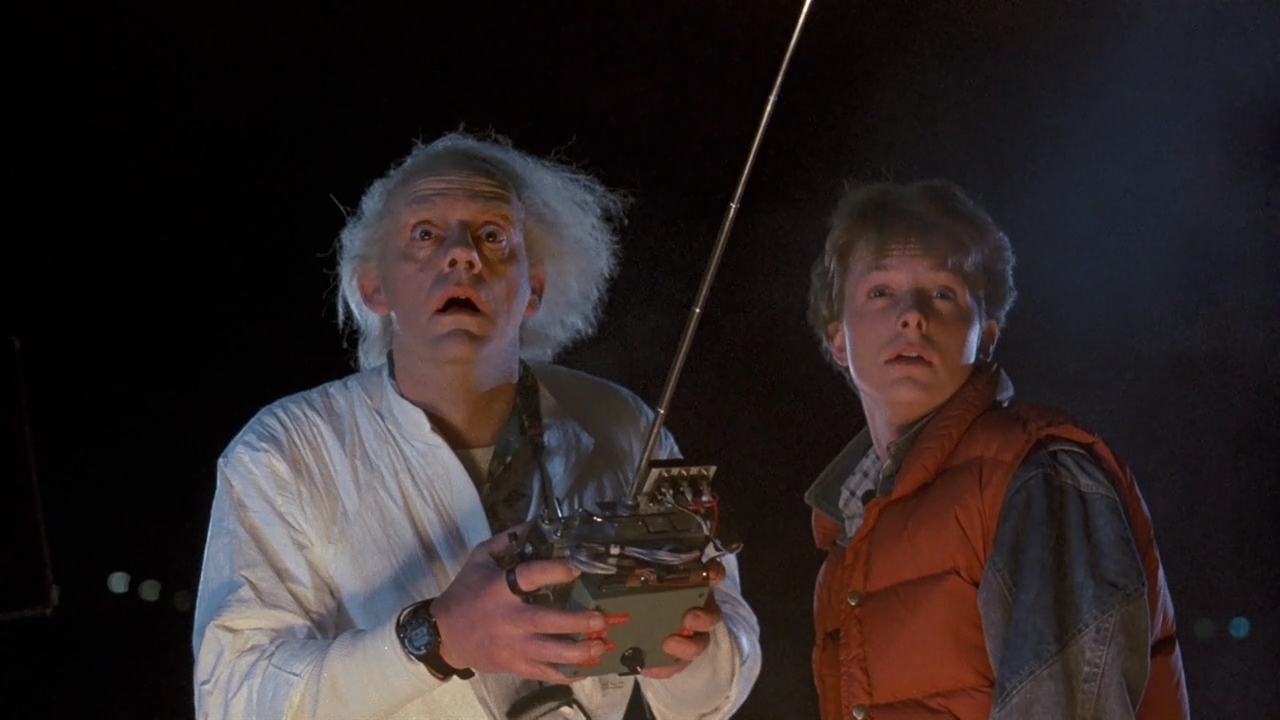
Marty’s zany scientist friend Doc Brown (Christopher Lloyd) is excited about his newest creation and asks Marty to come to the local mall and document by video camera the experimental testing. The invention is a DeLorean vehicle that turns out to be a time machine. Doc has remodeled it with all sorts of gadgets to make it possible, and it turns out to work like a charm. But for complicated reasons, Marty winds up in the car/time machine and accidentally sends himself thirty years into the past.

It’s the year 1955. It’s the same town, same school, and same neighborhood…but the twist is that he’s now the same age as his parents. This is where the story really gets interesting and very funny—Marty’s relationships with his parents, who of course don’t know who he really is. Marty befriends his father George (Crispin Glover), who is still as nerdy now/then as he was then/now and letting the school bully Biff (Thomas F. Wilson) pick on him. His mother-to-be Lorraine (Lea Thompson), who in the future became a skeptical, slightly-ugly, overly protective mother, is a beautiful, popular girl who cheats on school exams and follows boys around. These two are supposed to meet an upcoming school dance and fall in love. But Marty accidentally interferes with their meeting for the first time and Lorraine, his own mother-to-be—get this—is infatuated by him. This means that Marty has to undo the mess he made and set up the date with George and Lorraine himself, so they’ll meet, fall in love, and have children…or he’ll be erased from existence.

Marty never would have thought that his mother used to act this way or that his father was always as wimpy as he is. But something that just every person thinks of their parents, or at least every kid or teenager, is that their parents were never young. They were always the cynical, uptight beings that their kids see them as. Maybe the adults think they’re never as old as they really are, I don’t know. But “Back to the Future” has a pleasant fantasy spin to that. It answers the question of how a teenager would react if he saw his or her parents as teenagers.

Anyway, a few circuits on the time machine have been fried and as he convinces the 1955 version of Doc Brown that he’ll create this contraption, it turns out that the best thing to start it back up is with a bolt of lightning. But luckily, Marty knows when lightning will strike the town’s central clock tower and they have a week to prepare for it and get Marty back to the future. In the meantime, of course, Marty must settle things with his parents if they are still to become his parents.

This is great stuff! “Back to the Future” is full of neat ideas, it’s played for laughs (though there are some serious moments in the mix), its characters are memorable, and it constantly pleases with surprise after surprise. Everything has a setup and it all pays off by the time the movie is over—even the little details that you notice the second or third time watching it. There’s a great sense of comic timing along with its charming, lighthearted feel that you love watching this movie, even if the best parts haven’t occurred yet.

Some of the funniest bits involve the “fish-out-of-water” story with Marty interacting with a different place—or in his case, the past. For example, everyone mistakes his down jacket for a life jacket, and he can break the handles off of a scooter and use the board as a skateboard to escape from Biff and his cohorts. My favorite bit is how everyone reacts when he performs guitar at the dance and plays his solo a little too wildly. What really should be noted is the set design for the town, recreating a 1980s small town to show certain similarities and differences for the ‘50s version. It’s very well-done and quite creative.

With the wrong actor to play Marty, the character wouldn’t have gained our sympathies with him and since a lot rides on him, we wouldn’t have cared that much for the movie. This shows that a great screenplay doesn’t just make a movie—execution is probably the most important detail, and that includes casting and acting. But Michael J. Fox is perfect as Marty—he’s cocky, frantic, and wisecracking, but he’s also friendly, bright, and has an unforced, natural charm that makes us like Marty and root for him to work everything out.

Christopher Lloyd, as both versions of the Doc (past and future), is memorably wonderful. He plays him like a stereotypical mad scientist (and even sports a lab coat and a fright wig)—brilliant, zany, and constantly exclaiming in excitement. He has some of the best, funniest reaction shots I’ve seen in a movie. The supporting cast is also solid—Lea Thompson and Crispin Glover have fun with their roles, past and present. (Glover, in particular, is wonderful as the nerdy George who just needs to boost his self-respect and self-esteem.) Thomas F. Wilson is cartoonish but very memorable as the bully Biff.

There is so much to enjoy in “Back to the Future” that when it’s over, we feel joyful, energized, and glad to have seen it. I can’t imagine anyone not enjoying this movie—it’s fantastic fun.

The Social Network (2010)

15 Feb

The Social Network

Smith’s Verdict: ****

Reviewed by Tanner Smith

It’s hard to make a good or great movie about networking, but it is possible—I am referencing television networking in that statement. It’s even harder (and seemingly impossible) to make a good or great movie about the creation of a social network via computer. But “The Social Network” amazingly pulls it off—this is a great movie, not just because it knows what it’s talking about when it comes to developing this website, but because it’s so skillfully made and highlights a great cast and a sharp script.

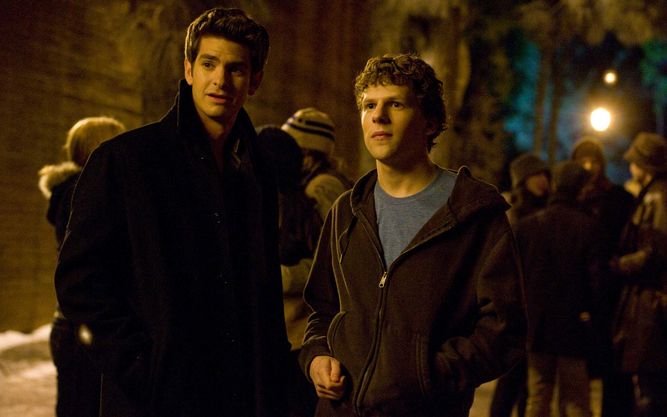
You can see in the TV ads that “The Social Network” is the true story about the creation of Facebook, the social network we all (or most of us, anyway) know and love. But you’d be surprised that this is more about people than about Facebook. Facebook was created by an intelligent young man named Mark Zuckerberg, whose creation made him the youngest billionaire in America in his early 20s. In the movie, Mark is played by Jesse Eisenberg as a Harvard student who thinks he is right all the time. This doesn’t do him well with social situations—in an opening scene, he uses logic with his date Erica (Rooney Mara, soon to be known as The Girl with the Dragon Tattoo) to the point where she dumps him and calls him an a**hole. Indeed, he is arrogant, persistent, and may be an a**hole, but he’s intelligent and somewhat witty in his own logical arguments.

Mark gets the idea while drunk and blogging that he could develop a site where fellow students could decide which of two Harvard girls is hotter than the other. He hacks into the system with the “facebooks” of students on campus computers, creates the site, and is declared an even bigger a—hole. But this brings the attention of identical twin brothers Cameron and Tyler Winklevoss (Armie Hammer), both of which are on the university’s rowing team, and their business partner Divya Narendra (Max Minghella). They tell Mark that they want him to help them program a new website called The Harvard Connection. Mark agrees, but goes to his best (and only) friend Eduardo (Andrew Garfield, soon to be known as the next Spider-Man) with the idea of making this idea into something bigger—“Thefacebook,” an online social network to Harvard students, where people can display personal information.

Mark and Eduardo eventually launch the site, which brings them popularity and trouble. The film intersects back and forth between those scenes and scenes involving Mark being sued by both the twins, for stealing their idea, and by Eduardo, for reasons to be explained later in the film. This shows you can be popular with one idea, but an enemy to others. In the storytelling scenes, we see as Facebook develops into a wider network, Eduardo is made CFO and pays thousands of dollars to help program it, and we later meet Sean Parker (Justin Timberlake), the founder of two music web startups (Napster and Plaxo). Sean is brought in to give insight on “Thefacebook” (drop the “the,” expand it, create a Wall, etc.). Sean is a manipulative creep who has Mark in his hands and pulls him into the big time. Why expand Facebook—well, why make millions when they can make billions?

The story for “The Social Network” (of which some elements are true, but like most biopics, they add flights of fancy) seems impossible to make into a movie. But the storytelling is amazingly well-developed with an excellent script. This is a great movie to listen to—the dialogue that these bright Harvard students say is on-target and amazing, but never to the point where we’re annoyed. And I love movies that show the whole process of creation—even if the idea of writing or filming how they begin to invent Facebook sounds unfilmable and illiterate, the script still surprises us with spellbinding writing and explanations in ways we can understand. This screenplay, written by Aaron Sorkin, really deserved the Oscar nomination for Best Adapted Screenplay (the film is partially based on the book, “The Accidental Billionaires”). It never falters, condescends, or dumb down the material or the characters. It’s amazing how this writer Aaron Sorkin and the film’s director David Fincher is able to tell this story without boring audiences.

Also, the script is excellent in developing the characters. Mark Zuckerberg is a nonsocial smart aleck, Eduardo is reliable but has a breaking point, and Sean is a bigger a**hole than Mark, but tries to cover it with manipulation and charm. The story gets heavier when Mark doesn’t even realize that Sean redrafts the financial arrangements to keep Eduardo out of the picture. All three roles are wonderfully acted and even “wonderfully” is not a strong enough adjective to describe these performances. Jesse Eisenberg deserves an Oscar (or at least a nomination) for his portrayal of Mark Zuckerberg. We all know from “Adventureland” and “Zombieland,” in which he starred as the lead role, that Eisenberg is a great young actor with a dry, highly verbal sense of humor. Here, he gives his best performance—he gives that same personality in this movie, but he gives something more to the character so we understand his arrogance and intelligence. He makes Mark Zuckerberg a living, breathing character rather than the butt of a joke this movie could have become. He has great screen presence, remarkable comic timing, excellent acting range, and is absolutely fantastic in this movie. Other strong performances—Justin Timberlake is memorable as Sean and Andrew Garfield is very good as Eduardo.

With a great cast, sharp direction, and an excellent script, “The Social Network” is, in my opinion, the best film of 2010.