Archive by Author

Harry Potter and the Deathly Hallows: Part 2 (2011)

23 Feb

Harry Potter and the Deathly Hallows Part 2

Smith’s Verdict: ***1/2

Reviewed by Tanner Smith

At age 11 (“Harry Potter and the Sorcerer’s Stone”), the young wizard Harry Potter and his friends Ron and Hermione spent their first year at Hogwarts School of Witchcraft and Wizardry as they encountered a giant three-headed dog, fought a troll, and played a life-size game of chess. At age 12 (“Harry Potter and the Chamber of Secrets”), they solved a deadly mystery that included mutant spiders, a dark underground chamber, and a giant snake. At age 13 (“Harry Potter and the Prisoner of Azkaban”), they were pursued by a mysterious prisoner of Azkaban (the wizard prison) who turned out to be something more. At age 14 (“Harry Potter and the Goblet of Fire”), Harry was faced by deadly challenges (including a dragon, vicious merpeople, and a treacherous hedge maze) before he witnessed the return of the evil Lord Voldemort, the former Hogwarts student who became evil and tried to overrun the wizarding world before he disappeared (but not before killing Harry’s parents). Now Voldemort is back and is slowly but surely gathering other wizards and witches to create an army to finish what he started. So at age 15 (“Harry Potter and the Order of the Phoenix”), Harry taught other students how to defend themselves, should they have to fight against Voldemort and his followers. Then at age 16 (“Harry Potter and the Half-Blood Prince”), Harry and school headmaster Dumbledore discover a way to defeat Voldemort. But Dumbledore is killed, leaving Harry, Ron, and Hermione to eventually, at age 17 (“Harry Potter and the Deathly Hallows: Part 1”), find hidden objects that contain remnants of Voldemort’s soul. Once they destroy them, Voldemort is vulnerable.

Whew! I tell you, these kids have been on more adventures than Indiana Jones.

Anyway, they’ve destroyed three of these “Horcruxes” so far, now with two more to go as Voldemort and his army grows stronger. Thus, we have the long-awaited cinematic conclusion to the beloved and successful “Harry Potter” film series, adapted from the most-beloved book series by J.K. Rowling. This is Part 2 of the seventh and final book “Harry Potter and the Deathly Hallows,” leaving this to be the eighth and final film. The result is a most satisfying conclusion to a wonderful series of films.

“Harry Potter and the Deathly Hallows: Part 2” picks up where “Part 1” left off. Voldemort has found the wand that is said to be the most powerful of them all as he seeks out Harry and sends out his army of Death Eaters to overtake Hogwarts. In the meantime, Harry, Ron, and Hermione still have to find the last two horcruxes. They locate one in a scene that’s in the spirit of the previous films’ harrowing adventure scenes (this one involving a dragon) before racing off to find themselves back at Hogwarts.

The only thing I can say about the rest of the plot is this: For those who were upset that “Part 1” may have ended abruptly (by the way, what’d you expect from a “part 1” anyway?), it’s time to watch “Part 2” and witness what we’ve all been waiting for—the final confrontation between Harry Potter and Lord Voldemort. The previous films have been building up to it and now it’s finally here. I can say that it doesn’t disappoint. It’s dark and epic, just as we wanted it to be.

Every past setup has its payoff and every character has his/her moment (I especially like how Professor McGonagall, played by Dame Maggie Smith, rolls up her sleeves) as Hogwarts becomes a battleground for the students and teachers of Hogwarts versus Voldemort and his large army Death Eaters.

Now, I can’t say exactly what the bolts shot out of each character’s wands do to whoever is hit by them. But I don’t care—they’re lethal. Isn’t that enough? I suppose so.

We get an introduction to Dumbledore’s brother Aberforth Dumbledore (Ciaran Hinds) who helps the central trio back to Hogwarts. Then, we get other sides of characters we already knew, particularly Snape (delightful deadpan Alan Rickman) who has become Voldemort’s assistant. We had our suspicions about him before we found out he was just unpleasant. Now, he’s turned over to the dark side and even killed Prof. Dumbledore (Michael Gambon) in the sixth film. Not giving anything away, we discover why Snape wasn’t so fond of Harry from the start and why…he is what he is. As for Draco Malfoy (Tom Felton), Harry’s slimy bully at Hogwarts who also became a Death Eater along with his father (Jason Isaacs) and mother, we get hints at where he’s going but we get the point nonetheless. We get a more heroic side of the once-nervous Hogwarts student Neville Longbottom (Matthew Lewis) and—I swear, I am not kidding here—an actual emotion—though brief, mind you—from Luna Lovegood (Evanna Lynch). And then there’s Voldemort (Ralph Fiennes). We know what we already knew from the previous films and that’s all the character needs in the end. Who have I left out? Well, two characters briefly seen in the first film make appearances here (but they’re very crucial)—they’re played by Warwick Davis and John Hurt. Oh, and of course, there’s Ginny Weasley (Bonnie Wright), Harry’s love interest. Well, let’s just leave it at that.

The actors—young and old—have become their roles, as is expected after seven previous films. In fact, you wonder what feature film roles the young actors Daniel Radcliffe (Harry), Rupert Grint (Ron), and Emma Watson (Hermione) will take on next. To me, they will always be Harry, Ron, and Hermione. They have become their characters in these movies, physically and emotionally. It will be interesting to see what they do next.

So what else is there to say about “Harry Potter and the Deathly Hallows: Part 2?” The pacing is brilliant (there isn’t a dull moment here), the dialogue isn’t hurried, and there are pleasant surprises for those who haven’t read the books and are fans of the films (don’t worry—those who read the books may be delighted as well). Even though the epilogue leaves an open door for a continuation, J.K. Rowling informs the public that it won’t happen. So I suppose what is left to say is…goodbye.
Like Father, Like Son (1987)

23 Feb

Like Father Like Son3

Smith’s Verdict: *

Reviewed by Tanner Smith

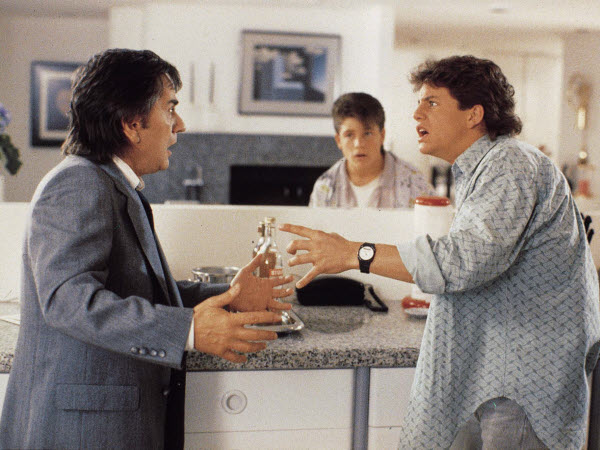
“Like Father, Like Son” is a comedy so desperate to get any kind of laugh just by one gimmick only. That gimmick is the same one used in “Freaky Friday,” in which parent and child switched places for a day. Well, a gimmick isn’t enough. A smart, funny screenplay was needed to lift it into the air. “Like Father, Like Son” barely makes it off the runway.

It’s a shame too, because it stars Dudley Moore, who has shown in many other comedies to be an effective British comedic actor. It also stars 1980s teen idol Kirk Cameron (best known as the smarmy teenager from the TV sitcom “Growing Pains”), who I believe is capable of a good performance when he’s not incredibly annoying (I’m not much of a “Growing Pains” fan…anymore). But these two don’t have any juicy material to work with. They play a squabbling father and son. (Where’s the mother? Never addressed.) Moore plays a doctor who wants Cameron to follow in his footsteps. (“But I’m 17,” Cameron complains, to which Moore responds, “When I was 17, I was in my second year at Oxford.”) But Cameron’s highest grade in high school biology class is a C, which won’t do well with Dad.

Cameron has a wisecracking friend nicknamed “Trigger” (played by Sean Astin in, believe it or not, a smarmier teen performance than…Kirk Cameron’s “Growing Pains” role), who has a weird uncle who came across a magic potion that can transfer minds.

Moore accidentally drinks the mind transference serum and suddenly, he and Cameron switch bodies. So, Moore is inside Cameron’s body, and vice versa. And so, until Trigger can get in contact with his uncle again and find an antidote, the father and son have to lead each other’s identities. Moore (with Cameron’s mind) goes to work in the hospital and Cameron (with Moore’s mind) goes to high school. Constant misunderstandings occur, and not one of them made me laugh. Cameron acts with a certain authority to his high school teachers; Moore behaves silly without understanding medical procedure. So what?

See if you can follow this. Apparently, if you drink the mind transference serum, you look at somebody and switch bodies with him or her. So, how would you change yourself back to normal?

Exactly! Drink the potion and look at the same person again. There’d be another switch—problem solved. See? You’re already smarter than the writers and the characters they created.

I’m serious—Moore and Cameron’s characters never consider just doing the same thing again, because the movie would be over too quickly. Also, it’s not a mind transference serum; they make it perfectly clear that it’s a “brain” transference serum. In that case, how come the brain isn’t connected to the tongue in this movie? In the first test of this potion, it is. Cameron and his friend test the potion on a cat and a dog, so that the cat has the dog’s mind and vice versa. The cat growls and barks like the dog. So then, when father and son switch places, why doesn’t Kirk Cameron speak with Dudley Moore’s British accent? Moore, with Cameron’s mind, still speaks in that accent, and Cameron, with Moore’s mind, still sounds like a Southern California teenager.

Here’s a surprise—the writing is so inept that the dog/cat joke isn’t taken advantage of. In fact, it’s never mentioned again.

This is one of those movies where all of the characters have to be total idiots to keep the story going. Why is this interesting? Why is this funny? Just because two guys switch bodies, that itself isn’t funny. You need actual jokes, characters, and a well-developed script. I didn’t care about these two clods. You could have two guys trade law files and it’d be more interesting. Dudley Moore is trying his best, as in one plot thread, he’s seduced by his boss’ wife. But Kirk Cameron doesn’t get one good moment. He’s forced to wade through the script just simply misreading things. Yes, he thinks the music at a rock concert is too loud. Where does this lead him on his date? Nowhere. Come on! There could’ve been an interesting discussion with him and the girl he was dating. But no. It’s just glanced over. It’s 1987, writers—you’re not helping with Kirk Cameron’s movie career. He could show talent; give the guy something to do.

“Like Father, Like Son” stinks all the way through. All we’re left asking ourselves after watching it is, “Were they really that cheap to not synch Moore’s voice with Cameron’s?” The premise didn’t work, I never cared, and most criminal of all for a comedy, I never laughed.

Sound of my Voice (2012)

23 Feb

sound_of_my_voice_rectangle

Smith’s Verdict: ***1/2

Reviewed by Tanner Smith

I love these science-fiction thrillers that keep the sci-fi elements in obscurity (for the most part, at least). “Sound of my Voice” is an example of this type. The basic idea is that there’s an underground cult led by a woman who claims to be from the future. So OK, you have the time-travel element that is talked about a lot in this film. Is it true or false?

And to be honest, I can’t exactly write about “Sound of my Voice” without mentioning a film that was released the same year as this—another indie film that also had to do with the possibility of time-travel, titled “Safety Not Guaranteed.” That film was more of a lighthearted, upbeat comedy-drama—the exact opposite of “Sound of my Voice,” which is grim, more mysterious, and even kind of creepy.

But it’s still as fascinating.

“Sound of my Voice” was co-written by writer-actress Brit Marling, who also co-wrote and starred in the terrific sci-fi/drama (if you will) “Another Earth.” The best thing about both films is that they use their sci-fi elements to serve the human stories that are the main focus.

The plot involves a Los Angeles couple—aspiring filmmakers Peter (Christopher Denham) and Lorna (Nicole Vicius)—as they decide to make a documentary that exposes a mysterious cult. In order to do so, they have to join the cult. On the first night, they are blindfolded and led to a basement to join cult members, dressed in white robes. And they learn the cult’s complicated secret handshake as well.

The cult’s leader, also dressed in white, is Maggie (Marling). She comes into the room, and the cult just bows down to her, as if she was their Savior. When she tells the new members her story, those who buy it sort of see why the others see her like this. She announces that she is from the year 2054 and she started this cult to prepare them for a civil war. She seems very serious about this, and her voice is quite comforting, so people will listen to her—even Peter, who at first seems cynical about all of this. Among her peculiarities—she carries an oxygen tank because she’s allergic to our air; because present-day toxins are easy for her to catch, so she eats organic food grown by one of her followers; and her methods are most unusual. For example, she gets the cult members to purge themselves by vomiting. Peter won’t do it (though he says instead that he can’t do it), and so Maggie does some pushing to get him to do it. She even manages to touch at something so personal from his past that he ultimately and successfully hurls.

By the way, if you’re wondering how Peter and Lorna are getting their footage, I forgot to mention—Peter has a hidden camera in his eyeglasses, and he also swallowed a small radio transmitter to record audio.

Anyway, who is this woman Maggie? Is she telling the truth? Is she a con artist, like Peter believes? Even he is starting to have doubts about what he thought before, which is actually starting to bring concerns from Lorna, as motivations for joining the group are starting to feel unsure.

The odd thing about “Sound of my Voice” is that Maggie’s stories of her “appearance in the present-day” and her “future-day” aren’t as convincing because time-travel is not the only explanation. She says she woke up in an apartment, with no memory and a tattoo that made her realize who she was—there’s some kind of symbol tattooed to her ankle, and the number “54,” which she “recollects” as being the sign of the traveler from 2054. And how about when the cult asks her to sing a song from the future? “We want to hear the future,” someone says. She chooses a popular song from the Cranberrys, saying it was covered by a future artist. I don’t want to give too much away, but “Sound of my Voice” has this odd tendency to keep Maggie talking about her back-story without ever declaring if it’s true.

“Sound of my Voice” has a consistently-unnerving tone as it progresses, and manages to tell an effective commentary on changing lives and beliefs or disbeliefs with tense results. It also helps to have solid characterizations to tell a more human story than you might expect. Peter is classified as a cynic to this cult’s existence, but he’s a nice guy and grade-school teacher, and honestly, who wouldn’t feel this way at first? But he also has a tragic past (his mother died on the night before his 13th birthday) that Maggie is able to play to with the “sound of her voice” (if you will) and this starts to open something in his mind. It’s almost as if he’s starting to be like the brainwashed followers she has led. Christopher Denham delivers a great performance, in a role that could have been thankless. He nails it.

Nicole Vicius is also good as the girlfriend who too is fascinated by what goes on in this cult, but she still remembers why she and Peter joined the group and is starting to question Peter’s sanity, even though he insists that he still believes it’s all a con. But it really comes down to Brit Marling, whose ethereal performance as Maggie brings so many fascinating details to wonder about with this character. She’s perfect here. (And I look forward to another one of her screenplays as well.)

The final act gets more suspenseful, as it moves into a plot development, which I won’t give away, that is both eerie and unusual. But I will say this—I mentioned that nothing is truly declared in this plot, so don’t be surprised if the ending leaves things unresolved. Like “Another Earth,” it’s an ending that leaves things open for interpretation. The mystery is still there, but there’s one little bit that they end on that brings about a whole other part of the mystery to read into. “Sound of my Voice” is an intriguing sci-fi thriller that keeps you guessing all the way through, and still has you guessing after it’s over.

The Dead Zone (1983)

23 Feb

images

Smith’s Verdict: ***1/2

Reviewed by Tanner Smith

I will admit that David Cronenberg is a gifted filmmaker and is capable of good work, but to be honest, some of his films kind of rub me the wrong way. Sure, I was shocked by the special effects in “Scanners,” but was bored by everything else. And I got into some interesting elements of “Videodrome” such as the “TV-seduction” scene, but was put off by its seemingly complicated invasion story. Really, Cronenberg’s best thriller, in my opinion, is “The Fly.” That film had fascinating, realistic-looking (albeit disgusting) makeup/effects, like most of Cronenberg’s “creature features” (if you will), and it also had characters to care about with empathize with so it made itself into a pretty strong drama—quite unusual for a horror film. I call “The Fly” one of the best films of 1986 (I have a list).

But what comes close second in Cronenberg’s thrillers for me is the film that led up to “The Fly”—it’s “The Dead Zone,” based on the Stephen King novel of the same name. But before I review it, let me state that I have not read the original novel and that this is a review of the film adaptation itself. However, if it’s faithful to the source material, I’ll be impressed. (I’ll explain why later.)

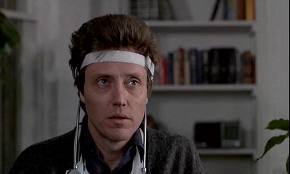
“The Dead Zone” stars Christopher Walken as Johnny Smith, a schoolteacher who is involved in a serious car accident that puts him in a coma. Five years later, he awakens and finds that everything has changed. For example, his girlfriend Sarah (Brooke Adams) is now married and has a child. But in particular, Johnny now possesses a strange ability that is either a blessing or a curse. It’s a psychic ability that allows him to learn of a person’s secrets in time, whether it’s past, present, or future, just by touching them. More people discover Johnny’s “gift” and soon, the local sheriff (Tom Skerrit) asks him to help investigate a series of murders occurring in town.

If the whole movie had been like that, with Johnny constantly using his gift to notice clues, see the future, and then change it for a new future, it’d be exciting. And there are some nicely-done eerie moments. But what makes “The Dead Zone” so good is the characterization. Once the premise has been established for a supernatural thriller, we have a good amount of serious drama and interesting, three-dimensional characters to follow. Johnny is trying to live with this new ability, but also trying to live with his new life. His job is gone, his girl has found someone else, and his life is turned upside-down. As we watch this guy go through the madness that this power and new life brings him, we keep forgetting that this is a supernatural thriller. As a result, you can buy the premise and accept “The Dead Zone” as his story.

Christopher Walken does an excellent job of portraying Johnny. He’s a confused, scared, angry individual doing what he can with his new life—whether with his companions or with his gift. Walken gets lost in the role and it’s a powerful performance. Also good are Brooke Adams as the woman that has married another man, but still loves Johnny (as a result, there’s a touch of fascinating complexity in their scenes together); Herbert Lom as a sympathetic doctor who wants to help Johnny with his gift; Tom Skerrit as the sheriff; and (possibly the best in the supporting cast) Martin Sheen, a populist politician who becomes an important role in the film’s (admittedly) very clever climax.

The story does get back on track with its story of using Johnny’s gift to change the future when it’s predicted with disaster. But then, we’ve accepted the story because we care for the characters, and what follows is very strong because of so. And if this film is faithful to the original Stephen King novel, I guess I underestimated King as a supernatural-horror writer. What I mean is, some of his stories having to do with monsters and psychic abilities have never made a whole lot of sense (sometimes, they’re intriguing; otherwise, they’re laughable). But with “The Dead Zone,” Stephen King got it right. As does director David Cronenberg, who adapted it into a fine thriller. Congratulations to both talented individuals.

Pulp Fiction (1994)

23 Feb

pulp-fiction-originall

Smith’s Verdict: ****

Reviewed by Tanner Smith

Quentin Tarantino is a filmmaker who must truly love movies. And he obviously loves making them. It’s as if someone gave him a computer and a camera, and he started right away on a script and film, aching to make a movie (much like a kid that plays with his toys). You can definitely see in “Pulp Fiction,” which he co-wrote and directed, that he wanted to get every shot and every story detail just right to create a masterpiece.

Well, he definitely succeeded there. And if he hasn’t, then he definitely didn’t bore me with “Pulp Fiction,” a movie about…basically, everything from gore to violence to sex to drugs to whatever. Tarantino couldn’t possibly bore anybody with “Pulp Fiction”—he’s too gifted a filmmaker to do so. He does many complicated things with “Pulp Fiction” and it’s amazing how he’s able to pull them all off. This movie shows us one series of characters and situations, then another series, then another, and then it almost blends them all and the movie sort of doubles back on you before it’s over. These characters live in a world of crime and danger, but also excitement and intrigue.

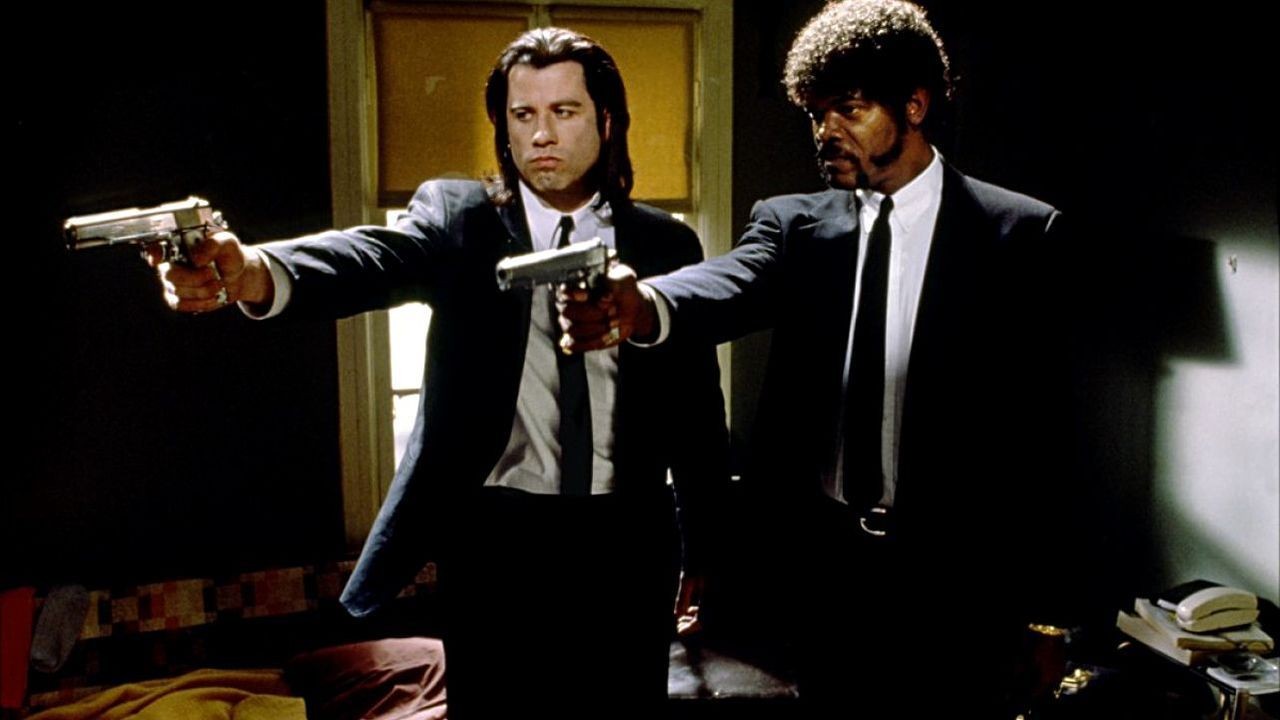
John Travolta is Vincent Vega and Samuel L. Jackson is his partner Jules. They are hit men working for a crime boss to carry out assignments that end in death for the people they are assigned to visit. But what Tarantino does is sensational—he allows these characters to talk before and during their assignments. For example, on their way to visit somebody they’re supposed to receive a mysterious briefcase from, Vega and Jules discuss why they call a Quarter Pounder with cheese in Paris a “Royale with cheese” because of their metric system. And just when it seems like action is going to happen, it’s delayed and what happens? They still talk, giving pointless conversation, but also comic timing and somewhat realism. I loved listening to these characters talk. And throughout this movie is plenty of great dialogue written by Tarantino and Roger Avery.

It’s interesting how these characters are played out. Vega doesn’t clean up after himself, probably because he doesn’t know how, but he knows plenty of people who are able to help him out, some of them involuntarily. There’s another complicated character—a boxer named Butch Coolidge (Bruce Willis) who was ordered to throw a fight, but doesn’t, so he leaves with his sweet girlfriend (Maria de Medeiros) right away. Of course she doesn’t understand why. And then there’s the watch that Butch was given which becomes an important part of Butch’s story. The story of that watch is told in a flashback through a monologue by Christopher Walken and gives the film its biggest laugh. Then there’s the outlaw couple played by Tim Roth and Amanda Plummer who also talk before robbing a restaurant in the beginning and end of the movie. And then there’s the wife of the crime boss (Uma Thurman) whom Vega is paid to take on a night of the town. This results in a wonderfully tense sequence in which Vega is forced to take her to his friend’s house after she overdoses on heroin. He has to give her an injection of adrenaline straight into her heart. His friend (Eric Stoltz) says, “You brought you here! You give her the shot!” That scene is sensationally well-written and well-crafted. I could watch that scene over and over again. And almost all of the scenes in this movie are inventive and original. Another great thing about this movie is I never knew from one point to the next what was going to happen…and then something bigger happens.

“Pulp Fiction” is a great film to watch and a great film to listen to. It’s truly a film that shows what a great filmmaker Quentin Tarantino is, and how great it came to be in the years since. I loved every minute of “Pulp Fiction.”

Harry Potter and the Deathly Hallows: Part 1 (2010)

22 Feb

images

Smith’s Verdict: ***1/2

Reviewed by Tanner Smith

Here we go—the beginning of the end of the popular “Harry Potter” film series, based on the book series by J.K. Rowling. The book series ends with “Harry Potter and the Deathly Hallows,” which was so long that the filmmakers had to split it into two parts. And so, here is “Harry Potter and the Deathly Hallows: Part 1,” which of course ends abruptly and keeps us waiting anxiously for Part 2 to arrive in a few months.

“Harry Potter and the Deathly Hallows: Part 1” is not a film to start with if you are not familiar with the “Harry Potter” series or haven’t seen the previous films. This is strictly for fans only. This is the setup to what we have been waiting for since the evil Lord Voldemort has risen and Harry Potter must fight him in the end. The battle will most definitely happen in Part 2 and that will be the end of this wonderful series about the young wizard Harry Potter who started out as just a regular kid who found out he was a wizard and came to Hogwarts School to test his wits, and wound up in many adventures that lead to the rise of Lord Voldemort, who killed his parents long ago and tried to do so with Harry and failed. Now, Voldemort is back.

No place is safe anymore. It’s dangerous to the point where Harry’s friend Hermione is forced to erase any memory of her from her parents and run away. Harry’s hateful relatives have moved out, knowing they are not safe in their house anymore—Harry would have been thrilled that they are leaving if not for the reason why. Now Harry, Hermione, and their friend Ron are in the world away from Hogwarts, which is dangerous for them now. But then again, it’s dangerous here too as Voldemort and his army of Death Eaters draws near.

“Harry Potter and the Deathly Hallows: Part 1” is a solid entry in the “Harry Potter” series—the best in quite a while. It’s action-packed, the three central characters are here with things to do, and by now, we more than care about everyone involved here. This is why it hurts us when about two characters we knew from earlier films meet their ends here. I won’t give away who dies in this movie—I wouldn’t dare spoil anything.

Harry (Daniel Radcliffe) has survived every incredible ordeal in the past years, and so have Ron and Hermione (Rupert Grint and Emma Watson). But somehow this is different—the villains mean business and the situations are more deadly, if you can believe that. Even the Ministry of Magic is out to destroy the three young heroes this time.

These three characters are not kids anymore—their school days are nostalgic memories now and the stakes are higher this time around. They have reached the state of adulthood and now have to take things upon themselves. They spend most of their journey alone as Voldemort (Ralph Fiennes) sends his minions out to get them, as well as Ron’s numerous family members and old friends. The three camp out at night and go searching for new clues by day in order to find the key to stopping all of this madness. While they camp out, they are safe from Voldemort but they find complications with themselves, particularly with Ron who not only is jealous of Hermione being alone with Harry but also with Harry’s persistence. There is one scene in which Ron is about to lose himself entirely and sees Harry and Hermione completely nude and making out with each other. This is when you know that you don’t know what is going to happen because this time, all bets are off.

There are many great sequences in this film. One shows the characters as they use a Polyjuice potion in order to disguise themselves as members of the Ministry of Magic and get the next clue (and meet an old friend who will send a chill to anyone who knows who the character is). This scene is suspenseful and also funny at some points. And then there’s a big snake that will definitely scare small children—the PG-13 rating is deserved. There are many other scenes like this and it’s only Part 1 and the major conflict hasn’t even begun yet. We have to wait for Part 2 for more.

Daniel Radcliffe, Rupert Grint, and Emma Watson have grown into their characters and are still engaging in their roles. They have changed here as well—Radcliffe begins to grow a beard, Grint has his demons within him, and Watson is becoming a very attractive young woman. I will follow them anywhere in any Harry Potter movie. The studios made the wise decision not to recast these three people and allowed them to grow with the movies.

“Harry Potter and the Deathly Hallows: Part 1” does end abruptly—someone should have added a caption, “To be concluded.” Part 2 arrives in a few months and we will finally see every plot point line up, every character’s situation resolved, and the villains will fight the heroes in a final climactic battle. But you must see every Harry Potter film before you see that film. And before this film as well.

Looper (2012)

22 Feb

Joseph-Gordon-Levitt-in-Looper-2012-Movie-Image1-600x301

Smith’s Verdict: ***1/2

Reviewed by Tanner Smith

I love movies that involve time-travel. You have to shut your mind out to logic and science, and let the paradox elements win you over, if the script is smart enough not to overanalyze them. “Looper,” an especially tricky sci-fi story, does indeed play it smart. Instead of overruling all of the time-travel paradoxes, this film plays off from them and gives us a wild and brilliant sci-fi thriller.

The story takes place in the future. It looks somewhat normal, like a realistic variation of the American present-day, but it wouldn’t be a sci-fi thriller if there wasn’t something wrong (and unusual), now would it? In this case, it’s 2044 and hired assassins called “loopers” are called upon to kill time-travelers. You see, time-travel hasn’t been discovered yet, but it will be, about thirty years later. But it’s illegal and used only by the most powerful criminals (when I say “powerful,” I mean some people have telekinetic abilities in this time period—but face it; they’ve got nothing against the kids in “Chronicle”). A mafia company in Kansas City hires loopers to dispose of agents sent back in time (by their corporate employers in Shanghai). The way it works is; a looper stands at a certain place and time, the time-traveler is put in front of him, and the looper shoots him at close range. In return, they get paid with silver. The main rules—don’t hesitate and don’t let your target get away.

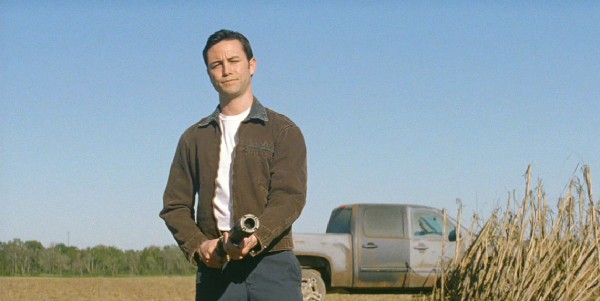
But corporate has a unique way of terminating a looper’s contract, or “closing the loop,” by sending their older versions to be killed by their younger versions (they get paid in gold). This is what leads to the main conflict of the story, in which the best of the loopers, Joe (Joseph Gordon-Levitt), doesn’t succeed in assassinating his older self (Bruce Willis).

With young Joe and old Joe now in the same time period and on the run from the mob, they meet in a small countryside diner, where they discuss terms of this truly bizarre situation. This is one of the best scenes in the movie, one of the joys of time-travel in a movie is you can have a scene in which younger and older versions of the same person can have a conversation together. But instead of playing it merely for intrigue, it plays with the reactions and metaphysics of their current position. The result is a deeply effective scene—it’s portrayed in a realistic manner, as is the rest of the movie.

The realistic style of the film’s execution is what makes “Looper” special. It brings about emotional depth, human relations, and a surprising amount of grittiness to the quieter moments. This isn’t one of those time-travel stories in which common twists and turns take place, leaving the plot to be bogged down into overuse of clichéd detail. There’s a genuine richness to the story here. It only gets better as young Joe is forced to hole up in the boondocks with the aid of a strong, independent woman named Sara (Emily Blunt, sporting a more-than-capable American accent), who wields a shotgun and does what she can to keep her five-year-old son safe. She doesn’t trust Joe at first and wants nothing to do with him, but she does help him as long as he helps her from any suspicious visitors…

The problems I have with “Looper” are slight, and no worries about the sci-fi “logic,” because these criticisms have nothing to do with them. It’s just that there are some little inconsistencies and pointless shots that get a little distracting—for example, what was the point of Sara having T.K. if she only uses it once for play? Also, I have trouble with the speech of that little kid Cid—he doesn’t come off as natural; he sounds like a young adult, at least, in a five-year-old body. And the supposed twist approaching the final half of the movie is a letdown because I saw it coming miles away. I won’t give it away, but you can probably guess it as well as I did. A little more development in that area would have created a great flow.

Many time-travel stories wear out by the time their climaxes approach—not “Looper,” however. Instead, “Looper” provides us with a conclusion that pays off from the introduced elements and gives us some real surprises. You care about the outcome, which is important of any sci-fi thriller.

Joseph Gordon-Levitt, continuing to show his reputation as one of the best actors of this generation, gives a strong performance as the antihero Joe; tough but likable enough for us to connect with him and root for him. Oh, and I forgot to mention—if Joseph Gordon-Levitt looks just the slightest unfamiliar to you, he was made up to appear as if he were the younger version of…let’s say Bruce Willis. Speaking of which, Willis makes a nice impression as old Joe, mixing humanity with elements of an action-hero. There are times when you may hate him for the things he winds up doing, but strangely enough, you can see why he does them and feel even more disturbed for having understanding. Emily Blunt is more than the “love interest” that her character Sara could easily have become. She brings a lot of weight to her role. Also strong are the performances by Jeff Daniels as the calm mob boss and Paul Dano as a looper who also breaks the main rules.

“Looper” takes the interesting concept of taking the younger and older versions of the same character and have them heading off against each other, and creates with it a powerfully-told tale of time-travel and its effects, while also delivering well-developed characters and plenty of human elements among the action and suspense. It’s energetic, well-told, and interesting from start to finish.

RoboCop (1987)

22 Feb

robocop_1987_6

Smith’s Verdict: ***1/2

Reviewed by Tanner Smith

“Robocop” sucks us in almost immediately with a scene that features a giant robot. This robot has been programmed to act immediately to an armed criminal—to shoot him if he doesn’t obey the robot’s orders to drop the gun. A young executive tests the big hunk of metal by aiming a gun at it, the robot acts right away, warns the young man that he has twenty seconds to drop his gun. The man drops his gun, but the robot still warns him, counts down to zero, and ultimately shoots him dead. Now, that scene may be unsettling, but honestly it’s also funny. And it lets us know that “Robocop” is not just going to be a serious thriller. There are many moments like that, but the film keeps us waiting to find out where it’s headed.

A lot of critics are criticizing the look of “Robocop,” which is set in the future. If you think about it, almost every “future” in the movies is bleak, isn’t it? And a lot of critics are pointing fingers at “Robocop” as something no different. But honestly, I don’t see why it should be different. And for the record, I didn’t see any kind of change in the world at all. So why should I complain? The technology looks better; why should the city of Detroit, in which this movie is set (or accordingly, the city of Detroit in the “future”)?

We’re introduced to a rookie cop named Murphy (Peter Weller), who is recruited to join the police force in Detroit. A woman cop named Lewis (Nancy Allen) shows him the ropes, but before long, they run into a band of criminals who mercilessly shoot Murphy dead.

But he’s not entirely dead. Something inside him is still alive and that brings the company that created the killer robot at the beginning of the film to rebuild him as a cyborg. They believe this is a better type of policeman to fight crime downtown. They call him a “robocop,” a half-man, half-machine with little to no memory of Murphy’s human life. Oh, and only his mouth and chin are visible under a heavy amount of metal armor. Robocop does become the next best thing on the force and goes around protecting the innocent and arresting criminals. (There’s one great moment that involves Robocop stopping a rapist, but I won’t give away the outcome.) Lewis, however, recognizes this half-man, half-machine as her old partner and tries to make Robocop remember her.

“Robocop” is a mixture of a thriller, a comedy, and a romance, each one hitting the right notes. There is slapstick and political satire involved, most of the laughs coming from the big robot again. The romance aspect works as well; the idea of having Weller and Allen play with this strange occurrence is cute, despite its silliness. But mostly, the movie wants to thrill us and it works as a thriller. The action scenes are compelling and well-directed by filmmaker Paul Verhoeven. And also, the movie’s bad guys are real bad guys; not just exaggerated morons with guns. They are ruthless, violent, and merciless. For example, when they kill Murphy, they don’t just shoot him and leave him. They do worse.

Through it all is Peter Weller as Robocop. He begins in human form as Murphy with little to no personality as the new man on the force. But once he is in all that circuitry and his voice is electronic monotone, most of his (as Robocop) personality comes from that voice. It’s the voice that computers have had in movies for years and with Robocop, it blends assurance with confusion in the character. This is where the character wins our sympathy and strangely enough, he’s more human as this Robocop than he was as an actual human. He has a heavy amount of appeal with this performance, despite having his face nearly hidden and his voice mechanically altered. Nancy Allen is effective as she tries to find out what really happened to her old partner and what she can do to help him.

Mostly, “Robocop” is entertaining. It’s an action-thriller with a heart but most importantly, with also a brain.

Signs (2002)

22 Feb

signs2

Smith’s Verdict: ****

Reviewed by Tanner Smith

“Signs” is an unusual piece of work. It goes into the “science fiction” genre yet it features a limited arrangement of special effects, does not show any signs of authority such as the US Government, strays away from unnecessary explanations for these unusual occurrences, and focuses only on one family during one big event that could mean the end of the world—usually we go back and forth through different characters, but not here. Because “Signs” never takes the easy way out, it becomes one of the most intriguing science-fiction films I’ve ever seen. Produced, written, and directed by M. Night Shyamalan, the filmmaker best known for the 1999 hit “The Sixth Sense” (which also strayed away from the easy way out, in the sense of being a psychological thriller), “Signs” is quite extraordinary.

Mel Gibson stars as Graham Hess, a former minister who has lost his faith in God ever since his wife died in an accident. He lives with his more faithful brother Merrill (Joaquin Phoenix) and his even more faithful two kids, 10-year-old Morgan (Rory Culkin, Macaulay and Kieran’s youngest brother) and 5-year-old Bo (Abigail Breslin), in Bucks County, Pennsylvania, surrounded by a cornfield. As the movie opens, the family awakens to discover a series of crop circles in the field behind their house. You know what crop circles are—those geometric shapes drawn into cornfields in the 1970s that created paranoid proof of extraterrestrials, dismissed as hoaxes in the early 1990s. But now, there are crop circles all over the world. This cannot be a hoax. There is absolutely no way that so many people around the world would create such an elaborate prank. It could be real.

The crop circles are shown on the film’s poster and may be just the interpretation of the title. But there is much more to the title of “Signs” than just the crop circles and where they come from. The movie progresses into deep, dark material as it seems like something from the beyond is going to kill us all. The signs in the title refer to signs that maybe there is someone out there watching over us. Graham, however, is skeptical because of his wife’s tragic death—“There is no one watching over us. We are all on our own.” Then again, he is skeptical about the alien theory as well. But soon, nothing really matters except for the safety of his family. That’s one of many important points within this movie—whether or not aliens actually appear in this movie doesn’t matter all that much.

M. Night Shyamalan treats this science fiction story like a horror movie, even using the main element that made Alfred Hitchcock’s “The Birds” effective. That element is silence. Shyamalan doesn’t rely on a heavy score to scare us. He frames shots exactly right, he lets his characters talk about dramatic subjects without even a subtle music score to keep the mood, and even the scariest moments are without music. Also borrowing from “Psycho,” the score from James Newton Howard that reminds us of the music in “Psycho” is there at the necessary points, such as the opening credits and moments of discovery and pain. But the best parts of the movie did not need that score and it isn’t used for those parts—it’s more frightening that way. Through the movie, we hear dogs barking, we jump at the sound of a phone ringing, and we fear during the moment when Graham encounters something (I will only say “something”). Also, an element from “Jaws” is used in the way that the family—these four central characters—is the only thing we care about during all this madness. We care and fear for them. And I also love how Shyamalan is able to use everyday objects for something more. A knife is used as a mirror, many glasses of water that Bo leaves behind because of her fear of water create an uneasy feeling, and then there’s a baseball bat.

In the second half, when everything supposedly pays off, nothing is predictable—you can’t tell what’s going to happen even for the slightest bit. What will become of Earth? What will happen with this family? Are there aliens? Are they friendly or hostile? On the night when “something” is supposed to happen, the bizarre alien theory is not the subject of fear because this family has been through enough already to be scared. “Signs” is thrilling, edgy, suspenseful, intelligent, attentive, and frightening with superb performances by Mel Gibson, Joaquin Phoenix, and those two talented child actors Rory Culkin and Abigail Breslin, a nice blend of science fiction and thriller elements, big ideas, and masterful filmmaking.

Star Trek (2009)

22 Feb

star-trek-2009-sample-003

Smith’s Verdict: ***1/2

Reviewed by Tanner Smith

“Star Trek” has generated many fans with its long-running TV series, originated from Gene Roddenberry, and numerous films. Now here is the prequel in which the characters, that fans have grown to know and love, meet each other for the first time. You’d think from seeing the cast list of this film that the actors seem be playing trick-or-treat with the “Star Trek” characters because they’re so young. But that’s the fun of “Star Trek”—this movie is a prequel to the show and other films. Every superhero story (or any other popular franchise) requires an origin story and here we have the origins of Capt. James T. Kirk, Mr. Spock, Uhura, Bones McCoy, Sulu, Chekov, and Scotty. So it makes perfect sense why the characters are younger this time around.

“Star Trek” is directed by J.J. Abrams who delivers slam-bang action sequences that are all great fun. And seeing as how special effects have improved long since the original show, all of the effects in the action scenes are extremely well done. More importantly, I wasn’t bored. The film looked great, the special effects were first-rate, and the characters were interesting, which made the action all the more exciting.

We have the younger versions of the well-known “Star Trek” characters here and the actors seem to be channeling their adult counterparts. We meet James T. Kirk as a rebellious, hotheaded young man (played by Chris Pine) who gets into all sorts of trouble, even when he believes he is right about how to take control when flying a spacecraft. This raises an issue with young Spock (Zachary Quinto) who created the flight-simulation test that James has taken three times now.

For fans of the “Star Trek” franchise, this is great fun. Seeing James and Spock as young adults (and at each other’s throats every now and then) will delight many viewers. Without giving much away, I have a feeling they’ll be even more delighted when the old Spock (reprised by Leonard Nimoy) arrives from the future and meets young James. Now see, young James does believe that this is Spock Prime, but he just can’t believe that he’ll be Spock’s dear friend, as Spock Prime calls him, because the young Spock that he already knows is an emotionless, somewhat-pompous guy.

Yes, time travel is part of the movie’s plot, which could explain the origin story itself.

The main villain in “Star Trek” is the evil Romulan Capt. Nero (Eric Bana) who, along with his forces, are destroying planets (including Spock’s home planet Vulcan) and going through (and creating) black holes that devour everything in sight. James and Spock are two of many space cadets chosen to do battle with Nero, so it’s onboard the U.S.S. Enterprise in its visual glory. Among the cadets are Communications Officer Uhura (Zoe Saldana), Doctor Leonard “Bones” McCoy (Karl Urban), and Navigators Sulu (John Cho) and Chekov (Anton Yelchin). Scotty (Simon Pegg) will join later, but I won’t go into it—I don’t want to go into heavy detail as to how everything comes to anything in this film, but then again, I already mentioned Spock Prime. One weakness with the film is that sometimes, the situations feel just a bit rushed.

Among the brilliant action scenes—the opening space battle, the scene in which James and Sulu use swords and fists to fight off a couple of Romulans after landing on a platform in the air from which the Romulans are drilling a hole into the core of Vulcan (…OK that’s cool with me), and the final climax. Each of these are thrilling and great entertainment.

The characters in this movie are well-developed. They have to be, since their characters will become the people that “Star Trek” fans know and love already. They are all given their moments and they all work fine. Spock, in particular, is half-human and half-Klingon, so he is constantly taunted by his peers as a child and by the Ministry of Vulcan. Klingons supposedly have no emotion and Spock is always trying to betray emotion, but being also half-human, it’s hard. You really want to see him lose it and shed a tear or even smile once in a while. And then you have Spock Prime, who seems more human. You get the two of them together and…what can I say? It’s satisfying. Also satisfying is the relationship between James and Spock—their beginning rivalry and their eventual teamwork in the final climax.

The actors are all solid here—Chris Pine is suitably cocky and charismatic as James T. Kirk, Zachary Quinto does a nice understated job as Spock, and Leonard Nimoy is excellent in reprising his role from the original show and films. Zoe Saldana and Karl Urban are spot-on in physique and personality of their older counterparts; and John Cho, Anton Yelchin, and Simon Pegg are also fun company. Eric Bana is quite effective as the villain.

I need to be honest—before I saw this movie, I had never seen a single “Star Trek” TV episode or movie. So this was my introduction to the “Star Trek” franchise. I knew a few things about the show and films—I just hadn’t seen either of them. This is a solid introduction for me and it deserves a solid recommendation from me. It’s a well-done space opera that packs the punches and delivers the goods. I look forward to checking out any other “Star Trek” film (or maybe an episode) sometime soon. Or maybe there will be a sequel to this one coming soon…can’t wait!