Archive | November, 2019

Looking Back at 2010s Films: Captain America: Civil War (2016)

8 Nov

By Tanner Smith

In 2015, the MCU had a confusing time. Fans were outraged at “Avengers: Age of Ultron” for not living up to the standards of “The Avengers,” yet they were enthralled with “Ant-Man,” a romp in which our hero shrinks to the size of an ant. Sounds a bit topsy-turvy, doesn’t it?

What would we get next? 2016’s “Captain America: Civil War”–the film everyone proclaimed the real “Avengers” sequel (minus Hulk and Thor).

This film was awesome–this was what really pushed the MCU to the next level, which is what we needed in two years. It did more than its set formula required.

After the tragic casualties of the events in “Avengers: Age of Ultron,” along comes the question of a government agreement to control the Avengers. Tony Stark aka Iron Man (Robert Downey, Jr.) wants to go along with it, since he feels guilty for the innocents who perished in their battles. But Steve Rogers aka Captain America (Chris Evans) isn’t sure what to think, especially when it comes to what should be done with his old friend Bucky (Sebastian Stan), who was brainwashed to become the lethal Winter Soldier. Should he be brought to justice for his crimes or should there be an alternative, since he did things beyond his control? The more things go on, the more a rift occurs between the Avengers, as many of them don’t agree with each other and a line is drawn and eventually crossed.

Thus…one of the greatest sequences in any MCU movie…as Captain America, Sam Wilson aka Falcon (Anthony Mackie), Scott Lang aka Ant-Man (Paul Rudd), Clint Barton aka Hawkeye (Jeremy Renner), and Wanda Maximoff aka Scarlet Witch (Elizabeth Olsen) are confronted by Iron Man, Natasha Romanoff aka Black Widow (Scarlett Johansson), War Machine (Don Cheadle), and Vision (Paul Bettany) at an airport where they engage in battle!! Did I miss anybody? Yep! Two important figures–T’Challa aka Black Panther (Chadwick Boseman), the prince of an African nation called Wakanda who has immense strength and wants to avenge his father who was assassinated by the Winter Soldier; and Peter Parker aka Spider-Man (Tom Holland), a New York teen with spider-like abilities who is recruited by Stark for a quick favor and then it’s back to Aunt May’s, mister (it’s a school night, after all).

It’s hero against hero, skill against skill–how will this awesomeness conclude?? This sequence was only as ongoing as it needed to be.

Oh, and there’s a villain pulling the strings here. His motivation is that he wants to see the Avengers suffer for their actions that claimed many lives. Even he’s not the strongest Marvel villain, we can understand what brought him here.

What makes this one so compelling is that we know exactly why something has to happen when it does. We get what drives our heroes in this scenario. And it was also a pleasant surprise to get behind Stark again, after I was aggravated by his idiotic decisions in previous MCU movies. (In “Iron Man 3,” he shouted his home address to a terrorist on live TV. Where did he think he was going with that??) Here, he put his abrasive, cynical ego aside for a while to think about the consequences of many actions that he was partially the cause of.

It’s weird that when the film was advertised, the marketing asked fans if we were on Team Captain America or Team Iron Man, as if there was a clear choice to make. I don’t think there was, and that’s the beauty of it. It’s just different ideologies clashing, and you understand both of them. It’s tough for me to decide whose side I would choose. I bet if Peter knew what each side was fighting for, he’d have trouble thinking about it too. (But dude! Tony Stark is asking me for help! This is cool!! I better suit up!)

Speaking of whom, Tom Holland nailed it as Spider-Man. After seeing him in this movie, I was more than excited to see what he would do in future MCU movies. He’s very likable, has great quippy one-liners, and feels like a real kid caught in the middle of such craziness. (Yeah, he’s not really Spider-MAN yet so much as Spider-Boy, but that’s the fun of a coming-of-age journey–we knew he’d earn that title eventually.)

Black Panther is an interesting, compelling figure, and while his vengeance motivation is clear and obvious, what kept me interested was where he was going to go once he found out who was truly behind his father’s assassination. Once his resolution came along, I was behind him.

And trust me, I’ll get to his 2018 movie soon enough–that’s one of my absolute favorites in the MCU. But first, I gotta talk about all three MCU movies from 2017: a great year for Marvel movies (and not just for Logan, either).
Looking Back at 2010s Films: Guardians of the Galaxy (2014)

8 Nov

By Tanner Smith

How do you follow something as big and innovative as “Captain America: The Winter Soldier” in the MCU?

With “weird.” But, like, the good, awesome kind of “weird.” Why not hire Troma aficionado James Gunn to adapt the Marvel comic book about space aliens and a talking raccoon kicking ass across the galaxy?

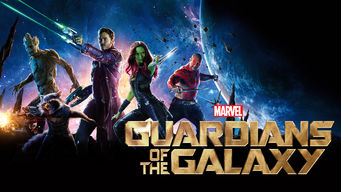
Thus came “Guardians of the Galaxy,” the blockbuster hit no one expected. Even fans of the comics didn’t see this coming.

It is interesting to go to intergalactic fugitives battling through space after we’ve been used to superheroes and all-powerful gods. How are we supposed to take a talking raccoon and a walking tree (who only says three words: “I am Groot”) seriously? Well…we kind of do and kind of don’t at the same time. It’s complicated.

How complicated? Here’s how the movie opens–we get an emotionally heavy scene in which a little boy sees his mother die in a hospital bed right in front of him, before he’s abducted by aliens as he runs off in a sad fit. That’s the kind of WTF-ness we’re in for, so we just have to see what we get.

Cue the Marvel logo, followed by the caption “27 YEARS LATER” on a desert planet as a masked rogue kicks some small alien creatures while rocking out to Redbone’s “Come and Get Your Love” on his walkman and headphones, as the opening credits roll.

OK, movie. I’m hooked. Keep it coming.

Point is, “Guardians of the Galaxy” has a sense of humor and we’re not meant to take it that seriously. But at the same time, it embraces its weirdness, so we can identify as well.

So, we have our hero…hero…er…….considering the idiotic things Peter Quill aka Starlord (Chris Pratt) does in subsequent MCU entries, I don’t like to call him “our hero” anymore. Well, anyway, Peter was abducted by alien bounty/treasure hunters and has lived amongst them since then. But now he’s caught and imprisoned by the Nova Corps, along with other outlaws: a humanoid plant named Groot (voiced by Vin Diesel), a lab-experiment swearing raccoon named Rocket (voiced by Bradley Cooper), and Gamora (Zoe Saldana), the adopted daughter of Thanos who works as an assassin.

Oh, and this marks the first appearance of Thanos (not including his end-credits cameo in “The Avengers”), the all-powerful super-villain. Everyone saw this as a big deal; I didn’t. He doesn’t do much in this one, so we’re subjected one of his boring subjects, Ronan the Accuser (I had to look up his name; that’s how forgettable he is). And whenever he reappeared at a distance in future MCU movies, I wouldn’t give a damn who this guy was…until about four years later, of course, when he finally comes out to play in “Avengers: Infinity War.”

This was also the second appearance of the Infinity Stones (which were set up in “Thor: The Dark World”). Again, we had to wait to see what those were all about. (Or at least I had to–I don’t read comics.)

Anyway, our band of outlaws team up with Drax the Destroyer (Dave Bautista), a heavyset warrior who never lies or understands sarcasm, as they escape the prison and race to outrun Ronan before they decide to stand together and fight him.

“Captain America: The Winter Soldier” gave us something interesting and new while still staying true to the Marvel traditions, whereas “Guardians of the Galaxy” is…different. And we embraced it because of that. I did too. I thought it was fun and funny…I even called it the “Ghostbusters” of our generation. Do I still think that?

Well…maybe it’s not as great as I remember it being. Maybe I just appreciated it highly for being so different. But it is still a fun watch.

I may be in a minority opinion here, but the Guardians of the Galaxy aren’t the most interesting heroes to me. I mean, their backstories are interesting, but they themselves…let me put it this way: it feels like they think they’re funnier than they really are. Peter’s a dork who’s too high on himself (and I’ll get to his “ego,” if you will, in future posts), which is funny sometimes when he practically whines to be taken seriously with his title of “Starlord”; Rocket laughs way too much at his own jokes; and soon, even when Drax lightens up, he becomes a little grating too. I like them better when they’re sincere goofballs rather than standup comedians who need to know when to move along with the next bit.

But something else that makes me hold back a little bit when looking back on this movie is that the pacing is a little confused. Some of the action goes on a little long, and the emotional moments (such as Groot lighting up a room) are a little short. I get that it’s a comedy first and foremost, but sometimes, especially for an MCU entry, it feels a little messy.

But I still enjoy “Guardians of the Galaxy” for individual scenes that make me laugh out loud, individual moments that get me excited, and simply the overall creative and giddy spirit of the thing. (And of course, the rousing vintage soundtrack helps a lot too.) I don’t love it as much as most MCU fans do, but I still had a good time revisiting it.

Looking Back at 2010s Films: Pete’s Dragon (2016)

8 Nov

By Tanner Smith

David Lowery’s “Pete’s Dragon” is a remake of the 1977 Disney romp of the same name…in name only. There is a boy named Pete and there is also a dragon…that’s about it. And I am very OK with that.

Let’s face it–the 1977 version, which I grew up with, is too silly and corny to try to replicate. I’m surprised Disney even considered a remake of it at all. But with the recent collection of Disney live-action remakes that we’ve been getting (and are still coming), they saw an opportunity for SOME nostalgia that could bring in SOME profit. So, why not give us something new with that title?

Well, when I first saw the trailer, I was very cynical about it. It didn’t look like anything new–it looked like “E.T. with a dragon.” So, I missed it in theaters, even despite film critics praising it.

But my fiancee insisted we watch the Blu-Ray (which she bought for me as a Valentine’s gift) together. So, I gave it a chance…and I was pleasantly surprised.

Don’t get me wrong–it does have the very things I was afraid it would have: an antagonist who doesn’t listen to reason and a rousing climax in which the dragon is captured and needs to be rescued. But it also has some deep, powerful, emotional moments that I didn’t expect–enough to make for an impressive, memorable, and quite lovely family film.

But it didn’t start very promisingly. It opens with a happy family, so you can predict just how quickly the parents are going to be out of the picture so that the little boy can go off on his own adventures. This is followed by whimsical music and a whimsical voiceover narration from Robert Redford as the local old coot who tells the kids the same stories about a dragon that lives within the nearby forest. And of course, his daughter, a park ranger (Bryce Dallas Howard), continuously brushes off his tales, even in front of the kids (oh come on!).

I thought to myself, “Oh, this is gonna hurt.”

But then, it quickly caught my interest with a neat sequence that could almost be compared to “The Black Stallion,” as we see how this little boy from the beginning has grown in the wild for six years thanks to the help of his lone companion: a green, cute dragon named Elliot (named after a character in a storybook).

Watching these two together, I strangely buy their connection. For one thing, the dragon looks great, with wonderfully convincing CGI and a remarkably expressive face that gets a lot of character across. For another, the kid is a very good actor (Oakes Fegley) and genuinely acts as if he’s playing with a big imaginary beast. And the filmmaking is very well-done here as well. Director David Lowery (whose previous film was the underrated “Ain’t Them Bodies Saints” and later films would be “A Ghost Story” and “The Old Man & The Gun”) knows to capture the atmosphere and environment just right if this is going to work. And the quiet moments with Pete and Elliot together work wonderfully. (Considering his experimental work and Disney’s studio tactics, I take it this is another case of a director not arguing with studio demands but instead compromising with them, just as Mike Flanagan did with “Ouija: Origin of Evil”–different movie, but the point still remains.)

I would’ve liked to see more of how Pete and Elliot survive together–that could have made a whole movie on its own. But we still have this story to get to, so let’s see what we got. Pete is discovered by the ranger, who takes him in to meet her family as she tries to figure out where he came from. Sounds about right, you say? Well, even this is well-handled, as Pete, who’s been away from civilization for far too long, struggles with his new surroundings. But he does come to trust the ranger and her daughter, who’s about the same age as Pete, and he does give it a chance because he feels like this is the closest thing that came close to a family for him since his parents were tragically killed. This is what I like; I care for this…now let’s talk about what I don’t care for.

The ranger’s hotheaded brother-in-law (Karl Urban) sees the dragon in the woods and is determined to catch it. And just as Pete takes the family into the forest to introduce them to Elliot (P.S. I like that the dragon is revealed to them in the middle rather than the end of the story), the jerk tranquilizes Elliot and takes him away, resulting in the kids and the ranger racing to save him in one big chase scene… The point of this whole sequence, outside of Disney thinks the audience needs to be woken up from time to time (note the unnecessary chase scenes in “Christopher Robin” and “Mary Poppins Returns,” for example), is that Pete has to come to terms with the reality that a dragon isn’t what he needs when there’s a family that will care for him. But I think this point could have been made in other ways.

To be fair, the brother-in-law is not a one-dimensional bad guy–he does see the error of his ways. But did we really need this whole situation? I was really getting into the scenes with Pete adapting to civilization, Pete befriending the family, and Elliot looking on as he knows he’s losing his best friend. Those scenes are the heart of the story.

But they do make up a good portion of the movie, so as long as they’re well-done, I guess I’ll have to accept the climax that will of course end well for our main characters.

And I will take it over “brazzle, dazzle days” in which our oh-so-jolly good guys are having so much fun painting lighthouses and cleaning windows with their clothed buttocks. (Man the original “Pete’s Dragon” was WEIRD. If you haven’t seen it, check out CinemaSins’ video about it on YouTube.)

It’s easy to call this new “Pete’s Dragon” the best of the modern Disney live-action remakes, because it does something completely different from its source material (which, let me remind you, wasn’t all that special to begin with). But while I obviously don’t think it’s great, I do think it’s good–Lowery’s head was in the right place overall and he came up with a satisfying film even if it could have been improved in some areas. There are many things for me to keep coming back to it and to tell others to check it out as well.

NOTE: There is another Disney live-action remake I really like that did stay true to its original source but also adds and improves upon certain aspects of it: Jon Favreau’s “The Jungle Book.” I’ll probably write about that one too.

Looking Back at 2010s Films: West of Memphis (2012)

8 Nov

By Tanner Smith

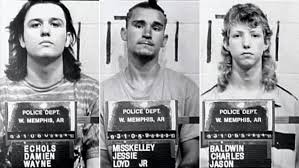
If there’s one film that needs to be seen about the well-known West Memphis Three, Amy Berg’s documentary “West of Memphis” would be the best bet because it tells the whole story.

The trilogy of “Paradise Lost” documentaries chronicle the actual events as they go along. And even from the first chronicle, it became clear that these kids did not commit this sick murder of three little boys and that the town was so blinded by hatred and sadness that they had to blame somebody. A trio of teenage boys who wore black and listened to heavy metal were the perfect targets for them, and they spent 18 years in prison as a result. They were only freed as part of a plea bargain.

“West of Memphis” has the advantage of hindsight. It draws a more investigative, closely-examined portrayal of the case, the place, the people involved, the pains, the evidence (or lack thereof), and even how the convicted three men, after spending 18 years in prison, attempt to go on with their lives after finally being released.

This is a deep, sometimes painful examination of a failure in justice that is by far the superior film about the WM3. Seek it out if you haven’t already.

Looking Back at 2010s Films: Life of Pi (2012)

8 Nov

By Tanner Smith

So this is the book they said was “unfilmable”…

The visual style of “Life of Pi” made for a great moviegoing experience for me, seeing it on the big screen and in 3D (I didn’t see this film in IMAX and it was still pretty amazing). Maybe I can’t relive that same experience, but it’s not like the visuals went away when it hit home media, and it’s not like they still can’t be appreciated either.

But style aside, Ang Lee’s “Life of Pi” is still a pretty memorable film. It’s deep, it’s adventurous, it has a great hook (a young man and a tiger are stranded together on a lifeboat in the middle of the ocean), Suraj Sharma is an engaging lead, and the effects used to bring the tiger, “Richard Parker,” to life are nothing short of brilliant.

And of course, it’s still amazing to look at, whether you see it on the big screen or small.

A lot of people have problems with the “revelatory” scene at the end, mainly because there are no visual aids. I personally think it was the right choice to just hear about it, because we can ask ourselves, “Did it really happen like that?”

“Life of Pi” remains to be a great achievement in top-notch effects and narrative storytelling.

Looking Back at 2010s Films: The Artist (2011)

8 Nov

By Tanner Smith

WHAT?! “The Artist” isn’t on my decade-end top 20, either?! C’mon!

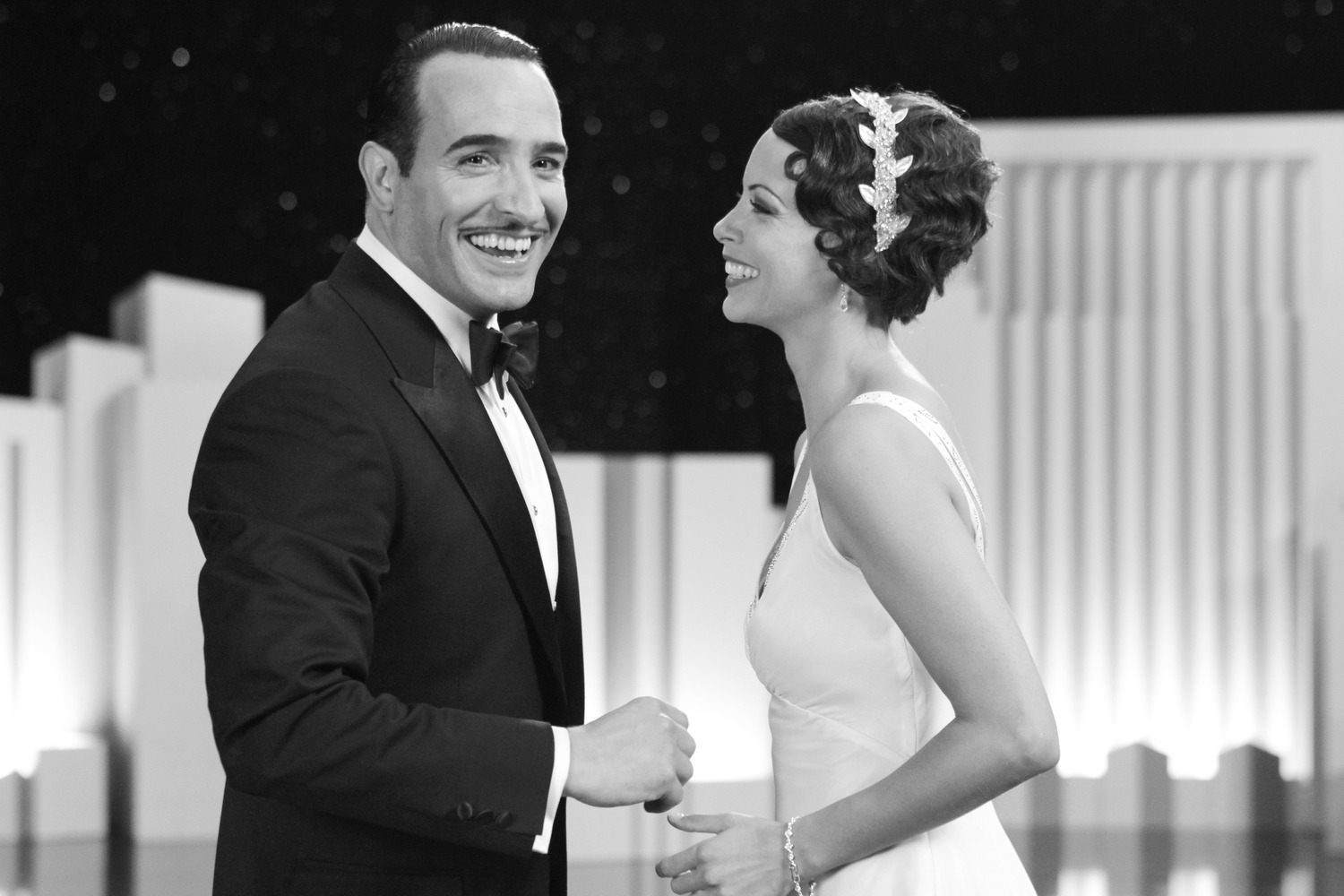
What a wonderful piece of cinema. This is a silent film that is not only homage to silent film but also a riveting, touching story that works no matter if it’s in sound or silent. This is a movie about the dawning era of “talkies,” a time when silent films were put to an end and those who were famous for their work had to adjust to being heard in these new films. This has also been covered in movies like “Singin’ in the Rain,” which was about how actors learned to adapt to this change, but “The Artist” does something more complicated; it tells the story of a silent-film actor who couldn’t make that transition, and whose career was ruined because of it.

It’s a deeply effective portrait of a man who had everything and wound up with close to nothing. That’s not to say the whole film is a downer, because there are many comic moments to be found here as well, particularly those that mimic the style of silent films in the earlier scenes. I love that the people who made this movie actually went out of their way to craft something creative and remarkable. Do you really need dialogue (and color) to tell a story? “The Artist” says no–it allows the performances and scenery to assist in telling a story that you can easily get caught up in. If you haven’t seen it, do yourself a favor and rent this astonishing treasure of a movie.

And as much as I’ve mocked the Oscars for ignoring certain films or performances (all in good jest, mind you), I applaud them for recognizing the majesty of this film, even awarding it the Best Picture statue.

Looking Back at 2010s Films: Rich Hill (2014)

8 Nov

By Tanner Smith

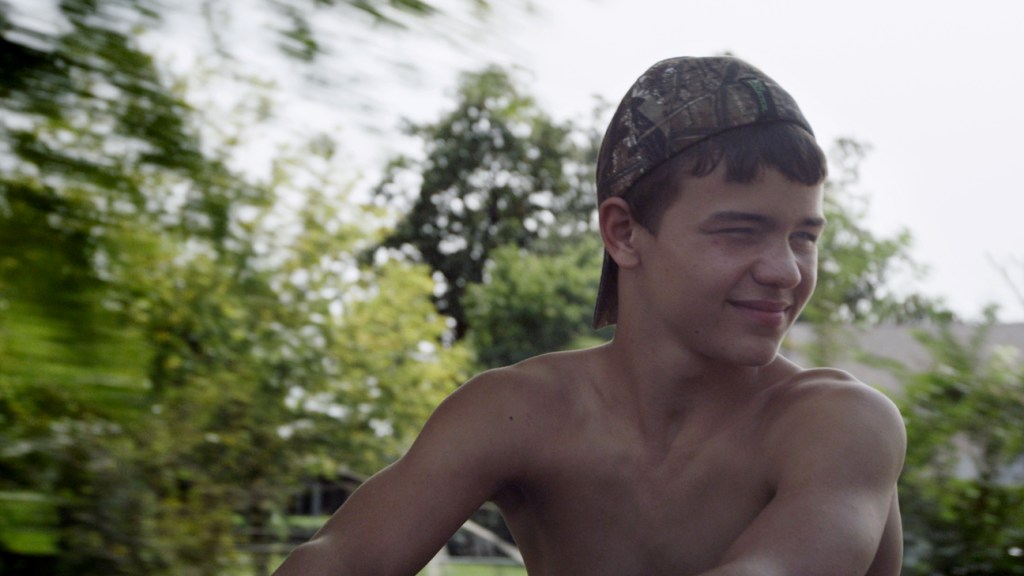
Rich Hill is a documentary I saw at the 2014 Little Rock Film Festival during its festival run. I remember immediately wanting to write about it upon seeing it, because it affected me that deeply.

It’s a documentary that gives us insight into the lives of three different teenage boys (Andrew, Harley, and Appachey) who live in the impoverished town of Rich Hill, Missouri. We meet their families, see what they do during the day, how they all live, and how they get by, so that we get a melancholy yet hopeful portrait of three boys with families who are not “white-trash,” as Andrew puts it, but “good people.” The one who gets the most sympathy from me is Harley, whose case is so sad that I really hope things are going well for him now.

More than five years later, I do still wonder where these kids are today. I hope wherever they are, they’re doing OK.

“Rich Hill” is now available for streaming.

Looking Back at 2010s Films: Flight (2012)

8 Nov

By Tanner Smith

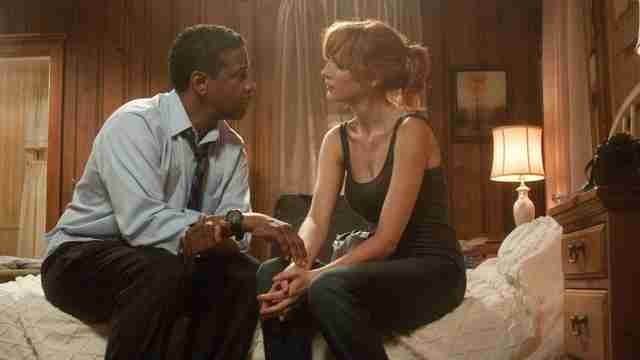
I didn’t know much about Robert Zemeckis’ “Flight” when I first saw it. I knew it starred Denzel Washington, I knew it involved a plane crash, and more importantly, I knew it was directed by Robert Zemeckis (“Back to the Future,” “Who Framed Roger Rabbit,” “Forrest Gump,” “Cast Away”); I was going to see it regardless!

What I got was…a two-hour movie about Denzel suffering addiction and its terrible effects. But even when it catches me off guard, at the end of the day, it’s a very well-done, disturbingly effective portrait of an otherwise decent man and the damage that occurs from his alcoholism.

What gets the film started is a realistically terrifying sequence in which Denzel’s pilot manages to use his skills to pull off something that not other pilots could’ve pulled off. He loses only a few people in the crash, saving over a hundred others. But it turns out he was intoxicated and high at the time he was flying, raising more questions about what happened and heightening the issue.

From that point on, it’s an uncompromisingly dark picture about how Denzel must stay clean and never look back or face consequences set up for himself long before.

I got so into this story that when it comes to a crucial point in which Denzel mustn’t drink and yet faces temptation involving a hotel refrigerator, I was nervous as to what was going to happen.

And of course, as with any Denzel performance, he’s giving it his all. He was nominated for an Oscar for his performance here, and for good reason.

Also great is Kelly Reilly as a younger woman who is addicted to drugs and has already hit rock-bottom, hoping for a chance of recovery. I was just as invested in her story as I was in Denzel’s.

The film is rarely an upper, but it’s consistently compelling and packs a dramatic punch.

Looking Back at 2010s Films: Flipped (2010)

8 Nov

By Tanner Smith

Rob Reiner’s “Flipped” is yet another underrated treasure that I think more people should check out. It had a limited release in Fall 2010 before heading straight to DVD. No one saw it, and I probably wouldn’t have either if I hadn’t read two highly positive reviews by Roger Ebert and James Berardinelli. And that’s a shame, because this would have been the film that would have earned Rob Reiner some respect again, after a long dry spell.

And he’s still struggling, with subsequent films such as “The Magic of Belle Isle,” “Being Charlie,” “And So It Goes,” and “Shock and Awe.” (Though, I thought “LBJ” was decent.)

“Flipped” is a film that shows a love story between two pre-teens that has an ingenious storytelling gimmick of showing scenarios from the perspectives of both the girl and the boy. The girl has liked him since 2nd grade, the boy has been trying to avoid her all this time, and as time goes by, their feelings for each other start to change–he starts to like her while she develops a disinterest in him. And the best thing is, you’re able to understand from both angles.

Family film, schmamily film. That doesn’t make it a “kid film”–Watch this movie, and tell me you don’t recognize certain feelings you felt when you were a kid.

There is one major thing that nearly kills the movie for me. Bryce’s father (played by Anthony Edwards) is such an ass. I can’t stand him. He always says the wrong things without thinking about them, and I just want to smack him each time he shows up on screen. Later, when the film tries to make us see him as “a coward,” I groaned because I still couldn’t see a character there.

The only reason I originally rated this film three-and-a-half stars instead of three (which would still be a recommendation) is because while there are many family-oriented films that feature supporting characters as one-note jerks (“The Education of Little Tree,” “Secondhand Lions,” “The Odd Life of Timothy Green,” among others), this one only has ONE. So I guess that’s a relief.

“Flipped” is still Rob Reiner’s best film in years–probably not up there with “This is Spinal Tap,” “Stand by Me,” “The Princess Bride,” “When Harry Met Sally,” “Misery,” “The Sure Thing,” “A Few Good Men”…man, he’s made some great stuff before “North,” hasn’t he? (Bring ’em back, Rob!) But anyway, then again, so few films are up to those standards. “Flipped” is still a pleasant, touching, satisfying romantic comedy that more people should give a watch.

It: Chapter Two (2019)

6 Nov

Smith’s Verdict: ***

Reviewed by Tanner Smith

“It” (or “It: Chapter One,” released in 2017) was a horror classic—both scary and deep. I loved it, and I considered the possibilities of a worthy sequel. I knew the direction it was going to go, with the kids from “Chapter One” having grown up in “Chapter Two” to return to their hometown and combat their childhood traumas in the form of a demonic clown named Pennywise. 

This story was already covered in the first adaptation of Stephen King’s original novel, in a 1990 TV miniseries—but while the material with those kids was solid and effective enough, even its director agreed that the stuff with the adult counterparts simply wasn’t as good. But I wasn’t cynical about this cinematic retelling, because I felt there was a great story and a great horror film that can be executed with the very idea of adults looking back on the things that terrified them as children and having to confront the past again. 

“It: Chapter Two” wasn’t exactly that. But it was still enough of an interesting ride that I’ll recommend it and see it again. 

Remember in “Chapter One,” when the kids encounter Pennywise (played chillingly by Bill Skarsgard) and other silly monsters in a haunted house? It was a fun detour, in an “Evil Dead” sort of way. But that’s all it was: a detour. Not all of the scares in “Chapter One” were meant to be that way. And that’s the big problem I have with “Chapter Two”—MANY of them are executed in that insane, over-the-top fashion.

At first, I thought, this makes sense—since It’s favorite form is a clown, it stands to reason that It will use “clownish” ways to mess with people it plans to eat/destroy. And to be fair, some of it is fun, such as when our main characters encounter goofy horrors within fortune cookies at a Chinese restaurant. But in a horror film that runs 170 minutes(!) long, it’s probably better to save that kind of insanity for the climax rather than give us great chunks of that ahead of time. 

For example, remember that creepy old lady from the teaser trailer that got audiences interested from the start? In the movie, she turns into something that’s not so “creepy.” 

But this is still the skillful work of director Andy Muschietti, who also helmed “Chapter One.” And he still gives us solid characterization from the characters (who I’ll get to in a bit), as well as some genuinely frightening and tense moments—these include a very creepy scene in which Pennywise manipulates a little girl with a facial birthmark, an encounter with Pennywise in a carnival funhouse (go figure), and the film also opens with a harsh, savage beating of a gay couple, half of whom becomes Pennywise’s first victim. (That serves as effective commentary—a vicious hate crime is what awakens the demon that plagues this small town.) 

So, here we are, meeting up with “the Losers Club” having grown up since the original and left this town of Derry, Maine behind (for the most part) and now come back because they swore 27 years ago to return if Pennywise returned after they thought they defeated It. Many of them have forgotten the experiences with It—when they return, it doesn’t take them terribly long to remember why they’re there. And after considering turning away again and leaving it all behind, they all realize that they can’t let It get away and claim any more victims, and so they stay and fight—only this time, they’re determined to kill it and stop it forever. 

Mike Hanlon (Isaiah Mustafa), the town librarian, is the only member of the Losers who stayed in Derry, and thus is the one who remembers. When Pennywise claims its first victim, Mike rallies all of the other Losers, who have all gone their separate ways to become successful one way or another:

  • Bill Denbrough (James McAvoy) was the ringleader of the Losers as a child, having brought his friends together to fight the monster after it killed his little brother Georgie. Now he’s a best-selling novelist/screenwriter and married to a successful actress. But everyone, including director Peter Bogdanovich (interesting cameo), tells him he has trouble with his endings.
  • Beverly Marsh (Jessica Chastain), who was subject to many nasty rumors in school and abused by her father, is now a fashion designer. But she’s also in a bad relationship with an abusive husband. 
  • Ben Hanscom (Jay Ryan) has slimmed down in a major way after being overweight as a child and is now a hunky architect. (Side-note: Brandon Crane, who played Young Ben in the 1990 miniseries, cameos here as a partner in Ben’s firm. I thought that was pretty cool.) 
  • Richie Tozier (Bill Hader) is still the “trashmouth” he was when he was a kid, only now he’s a stand-up comedian. 
  • Eddie Kaspbrak (James Ransome) is still a hypochondriac, but he now has the appropriate job of risk assessor. (And ironically, when he gets the call about the news, he gets into a slight traffic accident.) 
  • Stanley Uris (Andy Bean), the most fearful and reluctant member of the Losers, is now an accountant. His tale is the most tragic of the bunch, as when he gets the call from Mike about Pennywise’s return, he decides not to come back to Derry…in fact, he kills himself. (This happens early in the film—I wouldn’t call it a spoiler.) 

Since the Losers have grown up and put the past behind them, they have practically become the adults that wouldn’t help them as children. This is what I meant when I said there was some great potential in a story like this—these characters can not only overcome their past and change their future as a result, but they can right many wrongs that were made to It’s other targets. Once these characters are reunited (or at least, most of them are reunited), we’re on board and ready to follow them wherever they go…even though, I’ll admit, there is something silly about square adults going up against a clown that most people can’t even see. Pennywise is more of a conventional horror-movie monster this time around than the horrifying demonic presence he was in “Chapter One,” which also means there’s something more off-putting and terrifying about this thing going after small children than grown adults. 

(But Bill Skarsgard still does a game job as Pennywise. He’s always fun to watch.) 

All of the actors playing the grown Losers are terrific, especially Isaiah Mustafa who plays Mike as someone who has been through hell and is waiting for a way out, James Ransome who is both sincere and funny as Eddie, and especially Bill Hader, who knocks it out of the park as Richie, who of course is one of those comics who uses humor as a defense mechanism for his own insecurities. (And of course, James McAvoy and Jessica Chastain, who have already proven themselves as accomplished actors, are very good here as well.) When they’re alone, facing individual terrors brought on by It, they’re very effective. But they’re even better when they’re together. 

Oh, and I forgot to mention the return of the child actors from “Chapter One” reappearing in flashback sequences in “Chapter Two.” On the one hand, it’s great to see these kids again after we’ve come to know them well in a whole movie before. But on the other hand…there is some CG reworking to make them younger, since they’ve obviously gotten a little older in the two years prior. Some of it is actually quite unnoticeable…while the rest of it (especially with Jeremy Ray Taylor as young Ben) is on the same distracting uncanny-valley level as Grand Moff Tarkin in “Rogue One.” 

I’m recommending “It: Chapter Two” as a fun, well-crafted, GOOD horror movie, but at the same time, I’m disappointed when I keep imaging the GREAT horror film it could have been. Maybe if, as I said, more focus was brought onto purely tense and psychological terror than a lot of CGI boo-scares and grossout visuals (not to mention, a lot of spider-based visuals too), it would have been right up there with “Chapter One,” which I still think is a great movie. But I can’t deny I still had fun with much of “Chapter Two,” and when it does give me what I asked for, with a few tense, creepy moments here or there and the trials of our main characters (not to mention the solid chemistry amongst them all), it is quite satisfying. And at the very least, as the conclusion to a nearly-five-hour horror story, it feels like the end. The whole story has been told, the original book’s structure has been covered, and there’s no reason for Pennywise the Dancing Clown (or It) to return…is there?