Archive | October, 2019

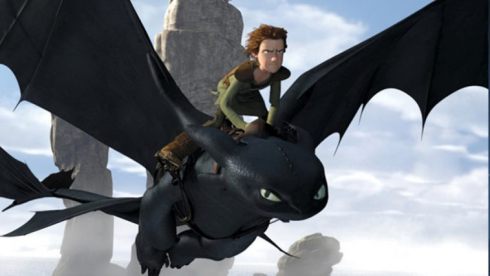
Looking Back at 2010s Films: How to Train Your Dragon (2010)

2 Oct

how-to-train-your-dragon-1_758_427_81_s.jpg

By Tanner Smith

Continuing my series of Looking Back at 2010s Films, I finally saw “How to Train Your Dragon” a second time–the first time was nine years ago in a theater.

It wasn’t that I didn’t WANT to see “How to Train Your Dragon” again, because I liked it–it was more like I felt I didn’t HAVE to see it again. But I finally did, and I gotta say, it’s even better the second time. (Maybe the third viewing will be in the near future rather than the distant future.)

Now I HAVE to see the sequels!

It’s weird how good this film is–on paper, it sounds so conventional (and so boring); a prejudice story, set in Viking times, with a twerp who becomes the hero, has to lie about who he is, has to keep a supposedly “dangerous” pet (in this case, a dragon) a secret because, you know, prejudice and stuff, the kid’s father turns him away when he finds out the truth, but of course there’s a climax that shows these people the error of their ways, and blah blah blah, WHO CARES??…….OK, that sounds mean–we do need stories like this to show today’s kids because prejudice is still alive and well in our world today, sadly.

Anyway, as predictable as this type of story may be, there’s a way of doing it right. And “How to Train Your Dragon” found that way.

For one thing, the characters seem real. Hiccup (voiced by Jay Baruchel–already, I’m on board with this unusual choice of voice casting) is aware of his own status and doesn’t try too hard to prove himself worthy of being a typical Viking but still tries to prove his worth in other ways, which is refreshing for a story like this. His father (Gerard Butler) is a typical brutish Viking type who has hardly anything but strength and fighting in his heart–he’s embarrassed by his son’s weak, slim build and his prejudice of course leads to him doing something horrible towards his son when he learns the secret that he can tame and train dragons…yet at the same time, he’s not portrayed as this one-dimensional brute; you see the humanity within him and that it actually hurts him to do and say the things he does sometimes. (And another refreshing take for this story–there is no real villain here!)

Many of the characters seem three-dimensional…not just because they’re 3D-animated. (Boy, that might be the dumbest thing I’ve written for this series of posts.)

The environment of this Viking village is well-established, the dragon itself (named “Toothless”) is expressive and cute, and the flying scenes…THE FLYING SCENES…….I really wish I saw this film in IMAX instead of a regular theater. I kept hearing about how great the flying scenes looked in IMAX and in 3D, and seeing it again (on a small TV screen), I don’t doubt it looks great on the biggest screen!

“How to Train Your Dragon” is just good fun with a familiar story told really well–I’ll be watching it again soon…and then I’ll get to the sequels.

Looking Back at 2010s Films: Buried (2010)

2 Oct

Image result for buried movie

By Tanner Smith

Continuing my series of Looking Back at 2010s Films, let’s go back to a time when we were surprised to see Ryan Reynolds give a good performance in a good movie: 2010.

In the 2000s, Reynolds was often compared to Chevy Chase, in that he came off as thinking he was funnier and more charming than he actually was. Sometimes, he would surprise us by actually being funny and charming in movies like “Definitely, Maybe” and “Adventureland” (and I haven’t see “The Proposal,” but I’m assuming he’s one of the reasons that film was a hit). Nowadays, mostly thanks to the “Deadpool” movies, he’s a superstar and everyone loves him.

But if there’s a film that stretches his acting range to Oscar-worthy levels, it’s 2010’s extremely tense thriller “Buried.”

Reynolds has to carry the entire movie all by himself. It begins with him awakening in a wooden box, with a lighter, a cellphone, and a few other resources given to him by those who put him there and buried the box underground. Buried alive, he uses the phone to call out for help and also learns that he’s being held for ransom by terrorists. We learn that he’s an American civilian working in Iraq and he and his unit were ambushed, thus leading to his situation. If he doesn’t come up with the ransom money for the terrorists, he will be left in the coffin to die. So, he desperately tries connecting with anyone who might, could, and more importantly, WOULD be able to help before it’s too late.

Did I mention there’s a snake that shows up in the box at one point? (Yikes…)

This is the movie–one guy is buried alive, trapped inside a coffin, trying to stay alive, hoping to be rescued, calling for help. We never leave the box. We never see who’s on the other end of the phone calls. The only backstory/exposition we get is what the main character reveals over the phone. I love that director Rodrigo Cortes was able to use his absolute minimalist resources to create something so raw and compelling.

If we’re going to spend an hour-and-a-half feeling like we’re trapped in a box with this guy, he’d better be a damn good actor. And Ryan Reynolds is unbe-freaking-lievable. As if the claustrophobic atmosphere wasn’t enough, Reynold’s performance makes you feel as uncomfortable as he is–you feel his anger, his fear, his agitation, his anxiety, everything. He has to carry the entire movie all by himself, and he’s more than able to do so.

If you’re willing to spend the entire movie in his company (and I totally understand if you’re not–if you’re at all claustrophobic, this film is not for you), you will see just how good of an actor Ryan Reynolds can be.

The ending is as unforgiving as it is horrifying, but it’s also brutally effective at delivering one last bit of social commentary that will haunt me forever. I won’t give it away here.

Looking Back at 2010s Films: The Meyerowitz Stories (New and Selected) (2017)

2 Oct

Image result for the meyerowitz stories (new and selected)

By Tanner Smith

Continuing my series of Looking Back at 2010s Films, Noah Baumbach has had some pretty terrific films this decade. “Greenberg,” “Mistress America,” “De Palma,” “While We’re Young,” and he also co-wrote “Madagascar 3!”

(That last one, I probably need to revisit, based on that credit alone!)

Oh, and he also made “Frances Ha”…I’m going to have plenty to say about that one by the end of the decade. I’ve gone from liking that film to leaving it everything in my will!

Baumbach’s movies have that effect on me. I’ll “admire” his work before I “like” them after watching them again. And again. And again.

“The Meyerowitz Stories (New and Selected)” is his 2017 Netflix Original film that impressed me when I first saw it…and I’ve lost count as to how many times I’ve streamed it since then. (I even listened to it play on my phone while walking around my local library, I’m that familiar with it by now!)

You’d think “The Meyerowitz Stories” is based on a novel or a collection of short stories…it’s not. But you’d think it is.

“The Meyerowitz Stories (New and Selected)” is a comedy-drama about adult siblings who are still in the shadow of their father. Their father, Harold (Dustin Hoffman), is a retired Bard College art professor and sculptor…this guy is a piece of work……OK, let’s just say it–he’s a self-centered asshole who resents any attention not given to himself. He even turns down Bard’s faculty group show to present some of his sculptures because he doesn’t want to be part of any group show. (Oh get over yourself, you miserable loser!)

His unemployed son Danny (Adam Sandler) moves in with him after separating from his wife. Danny loves his father and wants to be closer to him, but it’s clear Harold’s favorite son is Danny’s half-brother Matthew (Ben Stiller), a successful financial advisor who works on the other side of the country probably just to be as far away from his father as possible. Matthew resents Harold for preferring a life of art over money. (“I BEAT YOU!” he shouts at him at one point.)

Oh, and there’s also Jean (Elizabeth Marvel), Danny’s sister and Matthew’s half-sister. She’s withdrawn and awkward and probably my favorite character in the film, right next to Danny’s sexually charged college-bound aspiring-filmmaker daughter Eliza (Grace Van Patten). Jean’s laid-back, sincere one-liners make me chuckle each time I revisit the film.

All of these characters are united when Harold goes to hospital due to illness. The siblings decide to manage his care themselves and they grow closer together in the process.

All of these actors are GREAT. Including Adam Sandler. When he’s not making “The Cobbler” (ugh) or “Jack & Jill” (UGGGGHHHH) or “Just Go With It” (BLECH!!!) or “The Ridiculous Six” (…OK, I skipped that one), he can show how good of an actor he is in a good movie. He’s not only good as Danny–he’s heart-breakingly good. I FEEL for this guy. It’s one of his most authentic performances of his career.

Oh, and the songs he plays in this movie? Nice tunes. (I don’t know if he or Baumbach wrote it, or if they wrote it together, or if composer Randy Newman did it, but still, these are good sounds. “Mommy and Daddy and Genius Girl Make Three”…OK, that title alone sounds like a Newman song.)

Oh yeah, I forgot about Emma Thompson as Harold’s boozy wife Maureen. This may be the best attempt at an American accent she’s ever accomplished…though that might be because she has to play the role as drunk most of the time.

Yeah, the acting is great, but what really makes the film great is the writing. Baumbach’s always been great with dialogue, and this is probably his most enthralling script. Everything these characters say, I’m listening to. And then I’m thinking about what they said. Sometimes, I need to rewatch scenes a few more times to make sure I heard everything, because as is typical of a Baumbach film, most of the characters talk over one another constantly, which also doesn’t help when the dialogue switches from topic to topic at great speed. (And as I said before, I have watched this film countless times in the past two years.) We get poignant insights and sharp comedy from just how privileged and ridiculous these people are.

Later this year, another Baumbach film is coming to Netflix–“Marriage Story,” starring Adam Driver and Scarlett Johansson. It’s gotten a lot of buzz at festivals, but I was looking forward to it even before that.

Looking Back at 2010s Films: Lights Out (2016)

1 Oct

NELFQozZmZbZQL_1_b.jpg

By Tanner Smith

Continuing my series of Looking Back on 2010s Films, here’s a horror film from the director of “Shazam!”

“Lights Out” is based on director David F. Sandberg’s 3-minute horror short of the same name. It became so popular online that it gained the attention of James Wan, who got him a deal to get a feature version made.

The concept: in the light, you’re safe; in the dark, you’re screwed. How do you turn that into a solid hour-and-a-half feature?

Well, the answer is quite simple–go beyond the gimmick. Give us characters. Give us a story. Give us something to think about. THEN you can creep us out. (Oh, and as a bonus, make it short–like, just barely 80 minutes.)

The film is atmospheric and creepy and gave me chills at times. But it’s about something much more…

The supernatural being in “Lights Out” represents depression–those who live with it and those who try to help cope. In this case, depression takes the form of a dark-dwelling creature that controls and manipulates a widowed mother (Maria Bello) and pushes aside (and kills) anyone tries to help her. The mother knows what this thing is doing to her, but she feels utterly powerless to do anything about it and simply tries to live with it, as hard as it is. She has a pre-teenage son (Gabriel Bateman), who is scared awake by the fact that his mother is not just talking to herself late at night. (That’s a refreshing take, by the way–in this particular horror film, the little kid is AFRAID of the “imaginary friend!” Why do kids in horror movies just ACCEPT demonic presences in the house?)

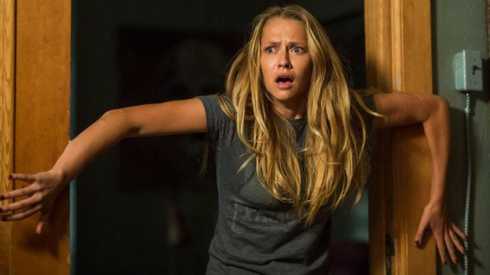
He asks for help from his older half-sister Rebecca (Teresa Palmer), who left home as soon as she could. She’s somewhat irresponsible and reckless and especially standoffish, but she knows she’s the boy’s only hope. She knows about “Diana,” the monster who haunted her as a child, and brushed it off as a manifestation of her guilt towards her mother. But now it’s clear that Diana is real and now Rebecca has to do something about it.

We have an interesting character arc in Rebecca learning to accept the responsibility of protecting Martin, the half-brother, and trying to help her mother through what she realizes is darker than she initially thought. And she also learns to let other people into her life, such as her kinda-sorta boyfriend, Bret (Alexander DiPersia), who remains devoted to Rebecca despite her seeming unable to let him in. (This guy’s my favorite character in the film–rather than become the jerky dead-meat boyfriend you see in many horror films, Bret is actually loyal, smart, and lives to see the end of the film.)

And with the mother, we have an interesting performance from Maria Bello as a traumatized, grieving, depressed mother who tries to protect her children from what’s ailing her…even trying to make them part of it, under the impression that the thing won’t harm them if they join it.

Now…I’m going to talk about the ending. SPOILER WARNING!!!!

The theatrical ending for “Lights Out” is controversial. Many audience members were turned off by the resolution, which involved the mother committing suicide to rid herself and her kids of the monster. People thought the film promoted suicide. Director Sandberg originally shot a second ending (which is included on the film’s BluRay), in which after the fact, Rebecca went through the process of adopting Martin before Martin became depressed, causing Diana to come back again before she is killed. Test audiences hated it because it meant the mother’s sacrifice would have been in vain. Sandberg himself suffers from depression (and one of his friends has killed himself), and he did go on record saying that he wanted to make less of a horror film and more of an allegory for depression and mental illness. He never wanted to promote suicide at all. And he did express remorse for the way audiences felt about the theatrical ending.

You can find out more about that in this interview.

Maybe if Sandberg makes a sequel to “Lights Out,” he can expand on the idea of this thing taking over someone’s life and the numerous options of what can be done to combat it.

I’d definitely be interested in seeing that.

Also, check out the short. It’s pretty creepy: https://vimeo.com/82920243

Looking Back at 2010s Films: T2 Trainspotting (2017)

1 Oct

Image result for t2 trainspotting

By Tanner Smith

Continuing my series of posts about 2010s films I really like…”T2: Trainspotting”……there is only ONE T2 in my life (Terminator 2), so I am NOT referring to the “Trainspotting” sequel as “T2”!!

Though, I can see why they didn’t give it the title of the book this film was based on (“Porno”).

Anyway, TRAINSPOTTING 2 (as I’m calling it) catches up with the characters of “Trainspotting” 20 years later. I always like this idea of revisiting characters years later (…when it’s done right).

This one explores the long-term consequences of the junkie “Trainspotting” characters, after one of them sold the others out at the end of the original film. Now it’s two decades later, and we see that they’re older but not necessarily wiser. Renton (Ewan McGregor) has been living straight as an accountant in Amsterdam; the manic Sick Boy (now known by his legal name Simon) (Jonny Lee Miller) runs a pub and performs petty deeds on the side; the psychotic, dangerous lover of arguably the most offensive word in the English language (you know the one) Begbie (Robert Carlyle) has been in prison all this time; and Spud (Ewen Bremner) is still struggling with hardcore addiction to the point of attempting suicide.

Renton comes back to his hometown, where he’s ready to face his old friends again and own up to the mistakes he’s made in the past. But his old friends are just as messed up as they were before. One of the most tragically telling moments of this sequel is when he prevents Spud’s suicide attempt and cries that he tried to help him by leaving $4,000 to him (and leaving none of the money from the score for Sick Boy and Begbie)–Spud has to remind Renton that he’s a junkie and that money wasn’t going to be around for long.

Oh, and Begbie’s escaped from prison. One of the funniest sequences in the film is when he learns Renton has returned and so he’s determined to chase him down and kill him. (Maybe this IS supposed to remind me of “Terminator 2”–Begbie’s starting to remind me of T-1000.)

There are a lot of callbacks to the original “Trainspotting,” as characters continuously look back on the “good old days.” Sometimes, it’s to remind themselves of how good they felt, not realizing how pathetic those times were. Other times, it’s to go right for the throat during an argument–remember the ill fate of the baby that was apparently Sick Boy’s daughter? Yeah, Renton reminds Simon of that! (Harsh.) And of course, the “Choose Life” monologue comes back into play, with some adjustments–that scene was the one that made it clear that “Trainspotting 2” is part-nostalgic, part-moving-ahead…

Just like the characters.

Looking Back at 2010s Films: The Stanford Prison Experiment (2015)

1 Oct

the-stanford-prison-experiment-640x321

By Tanner Smith

Continuing my series of Looking Back at 2010s Films, one of the best double-features I ever had was in September 2015, when I took a little trip to the Riverdale 10 theater in Little Rock to see a couple indie films I was curious about–“The End of the Tour” (which I’ll get to later) and “The Stanford Prison Experiment.” I loved both films. “The Stanford Prison Experiment” was the last of the two, after which I drove a half-hour back home…and thought about it, long and hard. It haunted me for quite a while.

What would I do if I were part of the experiment? If I were a prisoner, would I obey? Would I rebel? Would I stick to it because it’s what I signed on for? Would I try anything possible to get out of it?

And what if I were a guard? Would I treat the prisoners fairly? Would I abuse them?

It’s so easy to say you’d never behave the way the people in the real-life Stanford Prison Experiment did. But that’s the point of the study (and this film)–you don’t know.

Ezra Miller’s character was a prisoner who tried to rebel and broke when he couldn’t hack it. Michael Angarano’s character was a guard who abused his authority. What would’ve happened if the roles were reversed? According to Dr. Zimbardo, who’s running the experiment, “The only thing that separates those two was a coin flip.” Is that entirely true? We don’t know.

Watching the film, I half-expected a full-blown prison riot that would’ve terminated the whole experiment. Hell, I even expected someone to DIE. (This is a case of me not knowing the true story of the experiment before seeing the film.) Instead, the damage is psychological.

And it is disturbing not only that the guards would let themselves go so far but that only a couple prisoners speak up and try to stop them. But that is a common case when people have trouble with authority–they don’t know WHAT to do.

What I also love about the film is that the people running the experiment each have different opinions on where they think the study is headed. Sometimes, when characters analyze the situation at hand, I wonder if they’re as interesting as discussions moviegoers would have after seeing the film. Here, I’m hanging on to every word, because I’m invested. Who’s right? Who’s wrong? Who’s to say?

And of course, what aids the material is a really strong ensemble cast–Billy Crudup, Nelsan Ellis, Olivia Thirlby, James Wolk, Michael Angarano, Ezra Miller, and over a dozen talented young actors who were either already well-established in their careers or up-and-coming in the field. (Call it the Dazed-and-Confused Effect.) Add that to the effectively simplistic filmmaking, and this one’s a winner.

Looking Back at 2010s Films: Hush (2016)

1 Oct

HUSH16REV

By Tanner Smith

Continuing my series of posts about 2010s films I really like, “Hush” is my personal favorite Netflix Original film…no really.

This film was directed by Mike Flanagan, one of my favorite directors working today–he also made “Oculus,” “Ouija: Origin of Evil,” “Before I Wake,” “Gerald’s Game,” and the upcoming “Doctor Sleep.” (He’s also the creator of “The Haunting of Hill House.”)

Here’s the premise–a home-invasion thriller in which the victim who becomes a fighter is deaf and mute.

I was hooked from that premise alone. And I wasn’t disappointed. In fact, I’ll even say that “Hush” is one of my favorite horror films, period. (There’s one I like just a little bit more that’ll end up on my best-of-the-2010s list.) I love watching it every now and then, especially at night, because it’s a real good time.

Three things in particular make this film a winner to me in terms of the horror genre. One is Maddie, played terrifically by co-writer Kate Siegel (who’s now Mrs. Mike Flanagan). She’s a compelling heroine who’s not only easy to sympathize with because she can’t speak or hear but also easy to root for because she’s smart and thinks of several different outcomes she could attempt in a desperate situation. She’s a writer, so she knows a thing or two (or seven) about story-endings. And it’s up to her to choose the one that ultimately results in her survival. Plus, she’s not always vulnerable–she uses her limited skills to her advantage. Maddie’s actually a badass when the chips are down.

Another thing is, we know nothing about the guy that’s outside making life hell for her, standing outside her house, mocking her, killing those who may be able to help. You expect a twist like, “It’s her ex-boyfriend she’s been avoiding!” But the twist here is…there is no twist. This guy is just some psycho who decided to have sick, twisted fun one night. He starts off with a menacing mask to cover his face, and then after Maddie tries to bargain with him to make him go away (“DIDN’T SEE FACE”), he TAKES OFF THE MASK TO REVEAL HIS FACE TO HER. (“You’ve seen it now, haven’t you?”) And he tells her he can come into the house anytime he wants but he’ll wait until she wishes she was dead. We know nothing about this guy–just that we want him to go away and leave her alone. To quote “Scream,” “It’s a lot scarier when there’s no motive.”

And finally, this home-invasion thriller is more of a battle of wits because we know the danger Maddie is in and we know The Intruder has the advantage of hearing. The entire mid-section of the film is practically dialogue-free, and Flanagan’s directing and Siegel’s performance makes for a great example of visual storytelling.

Great stuff here. If you have a Netflix account, I highly recommend you check out Hush if you haven’t already. Don’t just take my word for it. Take it from Stephen King, who gave Hush a shoutout on Twitter: “How good is HUSH? Up there with HALLOWEEN and–even more–WAIT UNTIL DARK. White knuckle time. On Netflix.”

Looking Back at 2010s Films: Cop Car (2015)

1 Oct

copcar

By Tanner Smith

Continuing my series of posts about 2010s films I really like, “You don’t…steal…a f***in’…COP CAR!!!”

Before director Jon Watts made the thrilling “Spider-Man: Homecoming,” he made a tense thriller called “Cop Car,” which starts off as a lighthearted romp before easing us into dark Cormac McCarthy territory.

It begins as two 10-year-old boys run away from home in the deep South, walking along empty fields, until they come across…a cop car. It’s a patrol unit parked out in the open, no cop in sight, and they decide to hit it with a rock…then they decide to play inside…then they realize the keys are in it…

And this leads to a fun joyride, as the boys drive along fields before taking it to the mostly-empty highway to drive faster. But meanwhile, the Sheriff (Kevin Bacon, very scary) wants his car back…

Sounds pretty stale, right? But believe it or not…the situation gets ugly. And this is where the film goes from kinda fun to holy-crap-this-is-kinda-messed-up crazy. The Sheriff is definitely a bad guy. He’s already disposed of one body, and there’s another in the trunk of the car…which the boys have stolen, not knowing about it until they hear someone banging from inside the trunk! What does this lead to? Ohhhh boy…let’s just say it’s a miracle ANYONE gets out of this situation alive, let alone two little boys, movie characters or not!

It’s like someone took those direct-to-video kiddie adventure flicks I grew up watching and turned it into “No Country for Old Men!” That’s why I love “Cop Car”!!

Looking Back at 2010s Films: 127 Hours (2010)

1 Oct

Image result for 127 hours movie

By Tanner Smith

SPOILERS…but Deadpool already spoiled this movie, so what difference does it make?

Continuing my series of posts about 2010s films I really like, saying “127 Hours” is a film about a guy who cuts off his own arm is like saying “It’s a Wonderful Life” is about a guy who gets drunk and crashes his car.

(I stole that simile from Chicago film critic Richard Roeper–sorry to say I’m not as witty as he is.)

But seriously though, “127 Hours” is one of my favorite movies…and I say that despite never being able to watch THE SCENE all the way through in the eight years I’ve seen the movie multiple times.

You know THE SCENE. It’s gotten a lot of publicity, especially since moviegoers who saw THE SCENE supposedly fainted at test screenings and some had to be taken away from cinemas by paramedics. I saw this film in a theater with my parents–we had trouble viewing THE SCENE too. Even though we all knew it had to happen, we weren’t ready for it to happen.

For me, it’s not just seeing the action happen–as a film buff/film student, I know it’s latex and rubber and corn syrup and whatever else they could use to make the effect as graphic and realistic as possible. It’s not just that…it’s the SOUND DESIGN. Just hearing the bones break and James Franco’s agonized yells and ESPECIALLY the sounds the nerves make when they’re about to be severed (sounds like an electric guitar string)…NOT FOR ME.

So yeah, I usually skip the climax of the movie and yet I still call it one of my favorite movies. WHY??

THE SCENE is inevitable, the film took its time earning the important moment, and because it’s so important that it had to happen, of course director Danny Boyle was going to go all out in showing the audience HOW it was going to happen. THE SCENE had to be in the film…I just skip through it, is all.

Why do I love this movie? It’s a film with a concept that’s as minimalist as you can get–our main character is trapped in stasis for five days–and yet, it feels bigger than it is, thanks to Boyle’s unique hyperactive directing style. Despite our character, Aron Ralston (played by James Franco in an excellent performance–he’s another important reason this film works so well), being immobile, Boyle went all out in making sure we’re being inside the character’s mind as it rushes through all sorts of emotions of anger, sadness, freedom, confusion, and more. He illustrates Aron’s frenzied mental state beautifully. We even get a little black comedy as Aron imagines being on a talk show talking about his situation. That’s typical Boyle.

Not that the opposite approach (to make us feel as trapped as the character) wouldn’t work–in fact, “127 Hours” came out the same year as “Buried,” which was about a guy trapped in a coffin and we’re trapped inside the coffin with him, and it turned out to be a pretty solid thriller.

And when all is said and done, I understand everything Aron went through and why he had to do what he did in order to survive and start his life all over again. It also begs the question, “Would YOU do it?” I’m not so sure I would, but then again, if I were trapped in a canyon for five days and had no other alternative……

Looking Back at 2010s Films: 10 Cloverfield Lane (2016)

1 Oct

10 CLOVERFIELD LANE

By Tanner Smith

Continuing my series of Looking Back at 2010s Films, there are so many fan theories about how “Cloverfield” and “10 Cloverfield Lane” (and “The Cloverfield Paradox”) connect together, and I’m not going to try to give my own take. I’m just going to talk about “10 Cloverfield Lane” as its own movie.

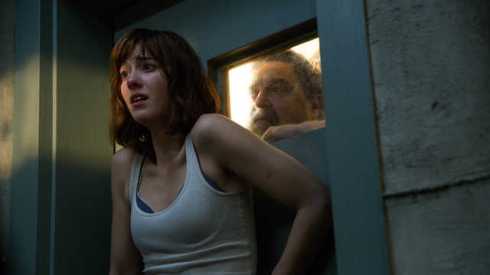
The story is told from the perspective of Michelle (Mary Elizabeth Winstead in her best performance), who suddenly awakens from a car crash to a farmhouse basement. She was brought there by a mysterious hulking man, Howard (John Goodman, always a delight), who tells her that above ground is a war zone–according to him, an “attack” of some kind seems to have contaminated the air, and the basement is the safest place to be. Michelle isn’t sure what to make of it, since Howard seems potentially dangerous. But when she notices some strange things that sort of back up his statement, she and her companion, Emmett (John Gallagher Jr.), have no choice but to ride it out. But soon enough, the question of whether it’s safer in here or out there comes into play…

“10 Cloverfield Lane” is a masterfully done thriller that gets better each time I watch it. The first time I saw it, I didn’t know what to make of it after its ending, which felt like a different movie. But the more I thought about it, and the more pieces I put together after watching it repeatedly, the more sense the ending made. It made the film even more intriguing both in hindsight and in revisit.

I love movies like that–movies that you have to watch more than once in order to fully understand it. If you need to watch a movie only once, what’s so special about it? (I mean…unless it’s something as incredibly disturbing albeit well-made, like “The Girl Next Door” or “We Need to Talk About Kevin.”)

The ending does make sense. All the sounds the characters hear, many of the things that are said or implied–it all adds up. And we don’t know everything–because most of the movie is set in this closed-off basement area, our knowledge of what’s really happening upstairs is as limited as it gets. It’s only when we get a major clue at the end, which makes for a neat climax, that we’re able to piece together the puzzle.

But something else I really like about “10 Cloverfield Lane” is the development from our lead character Michelle. When we first meet her, she’s running away from her husband after they allegedly had some kind of domestic dispute (though, when her husband calls as she drives away, he simply describes it as a little fight). And when she’s in the basement, we see her use every resource to attempt to escape, however and whenever she can. That’s the only thing she knows how to do, having grown up from an abusive household and regrets not doing anything about what she saw both then and now. You can tell she’s not a fighter, but she will do anything and everything to run away from an uncomfortable situation. The first time I saw the movie, I was too busy thinking about how SMART this horror-movie protagonist is before I could pick up on that, but at least I’m giving her credit for something in the first place. (SPOILER ALERT!!!) Then, she fights her way out of the basement to take her chances outside…where it turns out Howard was right all along about the attack, as she encounters some kind of alien ship and, using her wits, skill, resources, and newfound courage, manages to blow the thing up. So, now she’s a fighter. But will she continue to run? She’s free to go wherever she wants. But instead, after hearing a distress call on a radio station coming from the other direction, she decides she’s going to help people instead of run from them.

Really good stuff here.