
Archive | October, 2019

Looking Back at 2010s Films: The Martian (2015)

8 Oct

The-Martian

By Tanner Smith

Continuing my series of Looking Back at 2010s Films, Ridley Scott’s “The Martian” lost some of its appeal after seeing it a few more times.

But only some. And it’s not even that big a deal; it’s just a nitpick I have. Honestly, the movie is still really good, and I like to watch it from time to time…though, I usually fast-forward through its scenes set on Earth.

Except for Donald Glover’s cameo–that’s still gold.

You have an astronaut/botanist who’s left for dead and stranded on Mars, and he has to do whatever he can to survive until help and (hopefully) rescue finally come. That’s the hook.

You have a subplot involving his crew in space, who don’t know their partner is still alive until they’re halfway home. That’s an interesting addition.

…And then, you have the people at NASA (played by great actors like Jeff Daniels, Chiwetel Ejiofor, Kristen Wiig, and Mackenzie Davis) reporting his death, finding out later that he’s still alive and on Mars, having to admit that they messed up, worried that they’ll look bad with the truth, yadda yadda yadda–I don’t need that, and I don’t care about that. They do find a way to bring him home (again, thanks to Donald Glover), but you could’ve just had the development come with the other astronauts, and nothing would’ve been missed. Plus, it would’ve decreased the film’s runtime by about 20-25 minutes!

I don’t care if it was in the book this was based on–it’s just not that interesting.

But thankfully, most of the focus is on where it should be, with Matt Damon as Mark Watney, an astronaut who was part of a crew whose Mars mission is complicated by a strong dust storm. Thinking Mark died in the storm, the rest of the crew abort the mission and leave without him. But he is still alive; however, he’s unable to communicate with his crew or with Earth, meaning his only rescue option is the next Mars mission, four years later. So, now he has to find ways to survive until he can figure some things out–luckily, he’s a botanist, so he can find ways to grow food…on a planet where nothing grows.

What’s great about this story, aside from the interesting developments that our main character has to go through? (I mean, being trapped on a whole other planet–that’s WAY worse than being trapped on a desert island.) It’s how he responds to it. He, of course, has his initial moment of panic and concern (and this is after he’s had to perform self-surgery to get a piece of debris out of himself!), but then he simply asks, “What should I do now?” And he goes and finds ways to keep on going in what may or may not be a hopeless situation. That’s what I love about this film–Mark’s an optimist. He doesn’t give up easily, even when things go from bad to worse–he’ll just find a way to make it work again because he’s determined not to die on Mars.

Another thing I really like about “The Martian” is its sense of humor. With a sharply written script by Drew Goddard (most famous for “The Cabin in the Woods” and…well, now this), the moments of levity in this survival story are much appreciated. And it also helps that Mark is given some of the funnier lines in the movie.

Here are some of my favorites:
-“Mars will come to fear my botany powers.”
-“I colonized Mars. In your face, Neil Armstrong!”
-“I’m gonna have to science the shit out of this.”

Let’s see, was this script nominated for an Oscar? Please let the answer be “yes.” *scrolls through Wikipedia*………Yes!

Blend a comic script with Ridley Scott’s serious direction, and you have something unique. That’s really what it comes down to, more than “The Martian” being humorous–it’s hopeful. When it’s on Mars or on the spacecraft with the rest of the crew (played by Jessica Chastain, Michael Pena, Kate Mara, Sebastian Stan, and Aksel Hennie), the film really works. On Earth, however, not so much….again, except for the Donald Glover cameo. (I hope I never have to say this about another movie with Jeff Daniels, Chiwetel Ejiofor, Kristen Wiig, and Mackenzie Davis!)


Looking Back at 2010s Films: Miss Stevens (2016)

8 Oct

MV5BMmE3MGRjNzYtNTQ2MS00ZDM5LWJlMjItNGNmN2IxNDZiZmI5XkEyXkFqcGdeQXVyNDcxNzU3MTE@._V1_.jpg

By Tanner Smith

Continuing my series of Looking Back at 2010s Films, I love movies that start out well enough on the first viewing and then grow into more appreciation after a few more viewings. (About half of my decade-end top-20 choices are among those movies!) I liked “Miss Stevens” fine when I first saw it, I showed it to my fiancee and enjoyed it a second time, and recently I played it in the background on Netflix and…my attention kept getting drawn towards it.

So much for the film that started out “fine” at first.

“Miss Stevens” is an indie road-movie about a high-school teacher (Rachel Stevens, played by Lily Rabe of “American Horror Story” fame) who chaperones three students to a state drama competition. One is Billy (Timothee Chalamet, who acted in this film just one year before his career breakthrough), who has a behavioral disorder and a crush on the teacher; one is Margot (Lili Reinhart), the organized and somewhat stuck-up one of the trio; and the other is Sam (Anthony Quintal), the sweet, chill one of the bunch. This is one of those weekend-that-changed-everything movies, as the teacher and the students bond over the weekend and learn important lessons and become better people and–you get the idea.

Actually, it is sweet, the way they find ways to relate to one another, even when Billy’s attempts at flirting are borderline creepy (but you have to remember, he’s just a teenager–and Miss Stevens lets him down easy). Billy learns to control his anger and channel it into his acting performance for the competition. Margot learns some rules are OK to break. Sam works up the courage to ask one of the other competitors out on a date. And Miss Stevens, or Rachel, learns to follow her own advice, as she needs someone to help take care of her too.

A lot of the charm in this small but likable film comes from the actors. Lily Rabe won a Special Jury Award for her acting at SXSW, and it’s easy to see why–she’s caring but has her own problems, and she’s able to let us see both sides of the same person. It’s a wonderful balance she pulls off. And Timothee Chalamet is excellent as the most troubled of her students. I’m glad this guy’s career has taken off in a major way, with his accolades for “Call Me By Your Name” and whatnot, and is still giving him much to work with. Here, I genuinely believe him as a kid with so many issues built up inside of him that he’s able to unleash when in character during his competing representation of “Death of a Salesman.” (Eat your heart out, Dave Franco in “The Disaster Artist.”)

The film’s director is Julia Hart. Her next film, “Fast Color,” which was released earlier this year, is a gripping indie look at a superhero origin story. Her upcoming film, “Stargirl” (based on the novel of the same name), is coming to Disney Plus, so I’ll be interested in seeing that too.

“Miss Stevens” is still available on Netflix–check it out and see what you think…and then see it again.

Fast Color (2019)

7 Oct

fast-color-116514.jpeg

Smith’s Verdict: ***1/2

Reviewed by Tanner Smith

Gugu Mbatha-Raw is a star on the rise. I just know in my heart that a Hollywood director or producer is going to discover her excellent leading performance in Julia Hart’s “Fast Color” and  hire her in a mainstream studio film, whether it be a comedy or a sci-fi epic or the next Marvel movie, that will give her more exposure. She deserves the attention, as does “Fast Color.”

In the film, Mbatha-Raw plays Ruth, a young woman on the run because she has superhuman abilities—because, where there’s someone who has superpowers, there’s always some secret government agency that wants to hunt them down, capture them, and lock them up. (If these people would watch “Stranger Things,” in which the government agents get their brains smushed by telekinesis, they’d at least consider the option of offering them positions to help make the world a better place…as long as they don’t hound them for it.) She has violent seizures that cause earthquakes, even in places where there shouldn’t be earthquakes. And she has trouble controlling them. When she was a teenager, one of her seizures nearly caused the death of a family member and she left her mother’s house and never looked back.

Years later, she travels from place to place, always on the run, in fear that she’ll hurt somebody with another seizure and that someone in power will find her and take her away. Early in the film, she finds that her fear is justified, as she gets a ride from who she thinks is a kind stranger but is really a government agent who, of course, wants to take her with him. She fights back as soon as he holds up a syringe, and she finds there’s nowhere else to go but back home.

This is also set in a dying world where it hasn’t rained in years (and water is a precious commodity)—in a refreshing change of pace, these government slimeballs aren’t seeking mutants just because they’re afraid of their powers or because they think they’re interesting; instead, it’s to see if they can use their mysterious powers to bring the world back to life. How they go about it, however, could be worked on—will these people ever learn?

Anyway, Ruth returns to her childhood home, a farmhouse out in the middle of nowhere. She’s reunited with her mother Bo (Lorraine Toussaint, fantastic here), who is stern and overprotective, especially of her adolescent granddaughter Lila (Saniyya Sidney). Ruth is Lila’s mother and hasn’t seen Lila since she was a baby, and now, this is an opportunity to mother, daughter, and granddaughter to connect as a family.

Oh, and Bo and Lila have their own abilities as well. It also seems Lila has mastered her abilities way better than Ruth could ever attempt, which leads to interesting conversations between the two, which leads to a few sweet dramatic moments together. We also understand Bo’s reasoning to protect Lila as she tried to protect Ruth long ago—sometimes, she even has to protect Lila from Ruth, whether Ruth intends harm or not. And Ruth learns to see the bright side in her own abilities, which she never wanted in the first place.

All three are compelling, well-defined characters that keep the film at a grounded level. And the direction from Julia Hart (whose previous film was the comedy-drama “Miss Stevens”) helps make the film more than it could have been. It feels like a superhero origin story with real people.

Where this intriguing dynamic of three different generations of supernatural abilities leads, I’ll leave for you to discover. All I can say is I thought I was going to be disappointed. Instead, I was left with much to discuss with someone else who has seen it. (And I’ll be showing this film to my fiancee Kelly, for sure. Can’t wait to discuss it with her.)

Gugu Mbatha-Raw is at the center of “Fast Color,” and her performance, which has a great blend of vulnerability, confusion, and anger, is the kind that should gain a lot of awards attention (but probably won’t, sadly). But I get the feeling something bigger is in store for her. And she deserves it. She’s great in this film, she’s been great in other films (“Beyond the Lights,” “The Cloverfield Paradox”), and she’ll be great in many others to come.

Looking Back at 2010s Films: The End of the Tour (2015)

7 Oct

the-end-of-the-tour

By Tanner Smith

Continuing my series of Looking Back at 2010s Films………why is “The End of the Tour” not on my top-20-of-the-decade list?

Well, there’s a ridiculous BS reason as to why. Same reason as to why there’s only one MCU movie that’s going to be on my list. The way I made the list was I split the choices into separate categories to make it easier to choose some over others. “The End of the Tour” fit into the Biopic category, and there’s one biopic that I’d feel bad for leaving off the list…this wasn’t it.

But I LOVE this film–believe me, I do! I have a select group of dialogue-heavy films available on streaming services that I just like to listen to on my phone while I’m driving or walking through the mall or the library or whatever. “The End of the Tour,” currently available on Netflix, is one of them.

The dialogue in this film’s screenplay is BRILLIANT. It reminds me a lot of Linklater’s “Before” trilogy, in that it’s mostly centered around two smart people sharing smart ideas and philosophies. And here, we have reporter/novelist David Lipsky and the late enigmatic author David Foster Wallace–two smart guys who bond together by simply discussing their views on life for just a few days.

Played by Jesse Eisenberg and Jason Segel, I could listen to these two smart guys talk about anything. What does it mean to have something you don’t want? What if you didn’t know you didn’t want it? What if you want it and don’t know how to get it? Who can you truly trust when you have this “celebrity” status? Do you think you’re performing some sort of “social strategy” to alter your persona to less intelligent, average Joes? They even discuss other things like “Die Hard,” Alanis Morrissette, even masturbation.

What makes the conversations especially interesting is that Lipsky convinced his Rolling Stone editor to let him write a piece on Wallace while he’s on the last stages of his book tour promoting his ingenious novel “Infinite Jest.” (At least, I heard “Infinite Jest” was “ingenious.” I never read it…I think I’m scared to.) That’s because he hero-worships Wallace for having the fame that he desires. (As the film opens, Lipsky has just published a novel himself, but chances are it won’t go anywhere.) So, he’s happy to be having these pleasant chats with him, and vice versa (though, Wallace is a bit uncertain as to Lipsky’s “agenda” for the article–he even tells him at one point, “This is nice…this is not real.”). And then, late in the film, Lipsky decides to call Wallace out on what he’s seen so far on the tour, which is that Wallace, who must obviously be “brilliant” to write this long, allegorical novel, is performing some sort of act around him and other people so that they won’t be intimidated. Wallace’s response is amazing. What he’s basically saying is that everybody wants to be perceived in certain ways because we want to please other people. Therefore, we WILL adopt different personas.

I’m guilty of it. And you are, too.

The film was directed by James Ponsoldt, who also directed one of my favorite teen films, “The Spectacular Now.” And it was written by Donald Margulies, the Pulitzer Prize winning playwright famous for “Dinner with Friends.” It was also based on the real Lipsky’s novel “Although Of Course You End Up Becoming Yourself,” which he wrote based on tape recordings he made with the real Wallace–I’d be interested in reading that…I don’t know why I haven’t yet.

I love “The End of the Tour.” I love the dialogue. I love the two lead performances from Segel and Eisenberg. And I love how it makes me feel each time I watch (or listen to) it.

Looking Back at 2010s Films: Can You Ever Forgive Me? (2018)

7 Oct

07a4bb20-38f5-4552-8236-d69d12329446.jpg

By Tanner Smith

Continuing my series of Looking Back at 2010s Films, why are we always surprised when comedic actors play it straight?

Seriously–are there any comedic actors who CAN’T play it straight? Why are we always surprised when Adam Sandler turns in a solid dramatic performance or Jason Segel or Bill Murray or Chris Tucker or Seth Rogen or Marlon Wayans or Kristen Wiig or Albert Brooks–I could go on and on, but you get my point. They can stay committed to comedic bits; they can stay committed to going outside of that too.

Same goes for Melissa McCarthy–critics were surprised to see a different side to her, given her reputation as a loud, obnoxious, abrasive personality in several mainstream comedies (one of which even gave her an Oscar nomination for Best Supporting Actress). She also had a dramatic supporting role in “St. Vincent” in 2014, but hardly anyone saw that. In Marielle Heller’s biopic “Can You Ever Forgive Me?,” she takes center-stage as Lee Israel, a failed novelist who made a living by forging celebrities’ memorabilia and selling it. She forges letters “written” by Dorothy Parker and Noel Coward, among others, and sells them to collectors for huge amounts of cash. Her fakes are so believable, and she’s able to keep it going for a while, but of course, she has to get caught. (That’s not a spoiler–this is based on a true story.)

McCarthy is wonderful in this film (and thankfully she was nominated for the Best Actress Oscar for her work). She has to be drinking constantly, she has to be resentful of her falling career, she has to lash out on the wrong people, she does all these illegal activities to earn money–it takes work to make someone like that likable, and McCarthy pulls it off. Actually, she plays it like the exact opposite of the kind of character she’s used to–she’s not the life of the party, but she COULD be if she opened herself up to society.

It’s when we see her with her only friend (outside of her 12-year-old cat), a charming but weathered gay man named Jack Hock (Richard E. Grant, also nominated for his fine work), that we see what it’d be like to be around her when she lowers her defenses, and she can make for good company.

Oh, and best of all–SHE DOESN’T IMPROVISE! That’s one of my pet peeves about her comedic work–sometimes, she doesn’t trust the script enough to be funny, and she’ll try so hard to make people laugh that she’ll ramble after the bit should be over. Here, she trusts the writing of a script (that was also nominated, for Best Adapted Screenplay) and Heller’s direction.

The script, by the way, was written by Jeff Whitty and Nicole Holofcener. Whitty is a playwright best known for the stage musical “Avenue Q,” but Holofcener has become well-known to me after I saw both this film and the Netflix Original film she directed (“The Land of Steady Habits”), which were both released around the same time. Then I would look up what else she wrote and/or directed and check out these other indie treasures, like “Walking and Talking,” “Lovely and Amazing,” “Friends With Money,” “Please Give,” and “Enough Said”…and it turned out I had apparently seen some “Parks and Recreation” episodes she did (and one episode of “Togetherness”). Now that I know who she is, I’m very glad her work for “Can You Ever Forgive Me?” has been recognized by so many Screenplay awards.

Marielle Heller previously made the solid indie coming-of-age film “The Diary of a Teenage Girl,” which I only learned about from the audio commentary from The Lonely Island film “Popstar: Never Stop Never Stopping,” in which she made a cameo as a documentary filmmaker “best-known for the great indie flick ‘The Diary of a Teenage Girl.'” (When I looked up the film was when I found out Heller was Jorma Taccone’s wife.)

Her next film, “A Beautiful Day in the Neighborhood,” starring Tom Hanks as Fred Rogers, comes out this fall, and I’m looking forward to seeing it.

Looking Back at 2010s Films: Lean on Pete (2018)

7 Oct

Lean-on-pete-header

By Tanner Smith

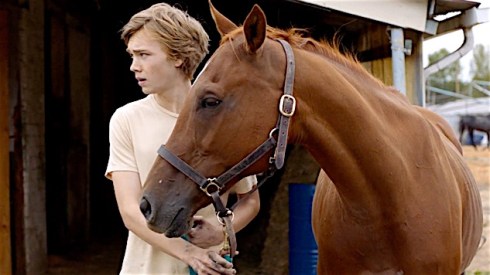
Continuing my series of Looking Back at 2010s Films, I missed “Lean on Pete” in theaters–I didn’t even know about it. But when I worked at Vintage Stock and we got a series of trailers for upcoming DVD releases, I noticed one with many festival laurels and critical blurbs praising it–the sound wasn’t on the TV set that displayed the trailer, and it just looked like a typical boy-and-his-horse story. But if film critic Richard Roeper gave it four stars, I knew it would be anything but “typical.”

When it was released on DVD, I rented it, checked it out…and was blown away.

“Lean on Pete” is a film about a 15-year-old boy who gets a job looking after an aging racehorse, named Lean On Pete. He learns the horse is bound for slaughter because he’s slowing up, and when he ends up in a situation where he may go into care, he steals Lean On Pete and sets off on a journey to find his aunt, with whom he hasn’t been in contact for years.

Think “The Grapes of Wrath” meets “The 400 Blows.”

“Lean on Pete” is a beautiful film–not always heartwarming but always compelling. The kid in this movie, Charley (played by Charlie Plummer), is a good kid who endures many hardships (and sometimes has to do the wrong thing to get ahead), and it’s so hard not to root for him to find what he’s looking for. What IS he looking for? He just wants a place to call “home.”

My favorite scene comes late in the film, in which Charley is walking with Lean On Pete through the frontier and he tells him about a time when he was invited to breakfast by one of his friends. This kid’s a football jock, so you would think he’s got other things to talk about. But no–he was just happy to be accepted somewhere with people he liked. That’s all he wants. Like Marge from “Fargo” or Atticus Finch from “To Kill a Mockingbird,” Charley from “Lean on Pete” has learned what others need spelled out for them–that the simplest pleasures are the greatest treasures.

I remember seeing this kid Charlie Plummer represent a film he starred in four years ago (called “King Jack”) at the Little Rock Film Festival and thinking he’d have a great career ahead of him. Well now, he’s been in a Ridley Scott film (“All the Money in the World”), he was considered for the MCU’s Spider-Man for a while, he’s appeared in a few more indie flicks (including the thriller “The Clovehitch Killer”)–he’s barely 20 years old; I hope he keeps up the good work!

Charlie Plummer IS this film. If “Lean on Pete” works for you, then it’s because of him. If “Lean on Pete” doesn’t work for you, meaning you don’t tear up or at least feel some kind of sympathy for this kid, then you might be dead. Take that for what it’s worth.

Looking Back at 2010s Films: The Ballad of Buster Scruggs (2018)

7 Oct
67770184_10211432753774022_765546176408715264_n.jpg
By Tanner Smith
Continuing my series of Looking Back at 2010s Films, I move from one Coen Brothers Western to another–one of last year’s most pleasant surprises on Netflix: “The Ballad of Buster Scruggs.”

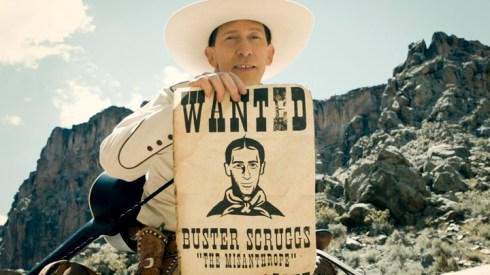
“The Ballad of Buster Scruggs” is an anthology film of six short stories…even though it’s the first one that features both a ballad and a Buster Scruggs.

And WOW, does this collection start with a bang! It can even be argued that the film peaks too soon with the first segment, which only lasts about 20 minutes (if even that).

What’s the thing you remember the most from the Coens’ 2001 hit “O Brother, Where Art Thou?” Aside from Man of Constant Sorrow. Aside from John Goodman. Aside from the cinematography. Aside from the baptism. Aside from–oh hell with it, it’s Tim Blake Nelson! His heavy Southern drawl crossed with his character’s naive innocence (save for that Piggly Wiggly he knocked over in Yazoo) made him easily everyone’s favorite character in that flick. Here, as jolly outlaw Buster Scruggs, he’s far from innocent but his persona is the same. He constantly monologues to the camera about how things work in the West and how most people go against it, causing him to strike back in a major way. He’s extremely crafty, especially when it comes to dealing with idiots who don’t play fair. And even he knows “you can’t be top dog forever.” All with that familiar Texas drawl that only Tim Blake Nelson can use to perfection.

His bit only lasts about 17 minutes–I could easily watch an entire feature-length film about this guy. But alas, after a darkly hilarious musical number, his story is over and we have no choice but to move on to the next chapter.

But even though we’ve had the best with the first of these six chapters, the rest of the chapters are entertaining and/or enthralling in their own ways. The second chapter, called “Near Algodones,” is pretty impressive. James Franco plays a cowboy who robs the wrong bank and thus endures unusual circumstances and consequences–one of which involves a pretty funny visual gag involving Franco being strung up by the neck and a horse that needn’t take many steps forward. And it only gets more unfortunate for Franco from there.

The third chapter, “Meal Ticket,” is where it gets very bleak and cold. Liam Neeson is an impresario who promotes an armless and legless performer who recites literary passages (and more)….I won’t give away how it ends, but let me just say I would skip this one if not for Dudley from the “Harry Potter” movies quoting the Bible and Shakespeare.

The fourth segment, “All Gold Canyon,” is the prettiest to look at, as it’s beautifully photographed. Tom Waits wanders through a canyon prospecting wherever he can for the possibility of gold–what he finds, I’ll leave you to discover.

The fifth chapter, “The Gal Who Got Rattled,” is probably the second best of the six. Zoe Kazan plays a young woman who finds herself in a dangerous situation, and Bill Heck is the heroic type that has to protect her…it doesn’t end well, sadly. (I said it was “second-best”; I didn’t say it was “fun.”)

And finally, “The Mortal Remains”–this one’s about a “Hateful Eight” type of situation with bounty hunters and other interesting folks riding in a stagecoach to a foreboding hotel. Not the strongest segment, but it is…interesting…enough.

Not that the Coens are often known for going on high notes with most of their films, anyway. What they usually care about is whether or not they make an impression. And with the four terrific films they’ve released this decade (including two other films I’ll get to before the decade is over–the underrated “Hail, Caesar!” and the critically beloved “Inside Llewyn Davis”), I’d say they still got what made them infamous to begin with.

“The Ballad of Buster Scruggs” is available on Netflix.

Looking Back at 2010s Films: True Grit (2010)

7 Oct

truegrit2_wide-4b699e9ddcf73d0553b038bd48651f8cdc23e262-s800-c85.jpg

By Tanner Smith

Continuing my series of Looking Back at 2010s Films…is it possible for a film to be nominated for 10 Oscars and not win a single one? I didn’t think so, until I checked the awards for the Coen Brothers’ 2010 adaptation of “True Grit!”

DAMN, and to think the 1969 John Wayne version won 1 out of 2.

The John Wayne version is as classic a Western as they come–a joyous, enthralling, and “gritty” frontier adventure. The Coen Brothers’ version plays the story differently…it’s not as joyous as the other. That makes it more interesting.

All the fun you can find in a young girl’s bloodthirsty quest to find her father’s killer and bring him to justice is GONE. This journey is as gritty as they come. And the ending hammers in effectively just what this crusade has done to this child.

And I’m going to talk about the ending, so…SPOILER ALERT!!!

Mattie Ross loses her arm from the snake bite, she and Rooster Cogburn never see each other again, and she grows up bitter and cold, an old maid with clearly no love in her heart. This might be the Coens’ way of saying someone this young being so dedicated to vengeance leads to a life of misery. That’s how the film ends! John Wayne doesn’t ride merrily into the sunset, there’s no happy ending (though not really a “sad” ending either), it just…ends. You can barely even argue that it even “ends” so much as “stops.” I actually found that pretty intriguing. It stayed with me more than the ending of the John Wayne movie.

END OF SPOILERS!!!

Hailee Steinfeld is brilliant as Mattie Ross, and there’s no way you can convince me that she deserved a Best SUPPORTING Actress nomination–the film is ABOUT HER CHARACTER! (They should’ve switched her out with Annette Bening in “The Kids Are All Right” for the Best Actress nod.)

Jeff Bridges is also perfect as Rooster Cogburn. He vanishes in the role of a dirty, nasty, mean-as-hell fighter of justice, which admittedly is more than I could say for John Wayne who played it almost too “safe.”

Also great is Matt Damon as the Texas bounty hunter. He plays the role as a hero from a different movie who isn’t too keen on playing second-fiddle to Mattie and Rooster’s story.

And the supporting cast is solid too, from Josh Brolin as the killer to Barry Pepper as the gang leader Ned Pepper (wait, what?) to…hey wait, is that Domhnall Gleeson as Moon?? Holy crap, I just noticed when watching this film again today! He’s definitely come a long way since having his fingers cut off…especially that horrible line reading. (You know the one–“Oh Lord…I’m dying!”)

And of course being a film lensed by Roger Deakins, it looks great. Under the shadow of the Coens and these fine performances, we’re also taken through a dark, grey, compelling world where anything can happen and anyone can die. Let me see, was this film nominated for Best Cinematography….?

Yes it was. (Whew–it would’ve surprised me if that WASN’T one of the 10 Oscars it was nominated for.)

There is some much appreciated levity sprinkled throughout, so the film isn’t so gritty that it’s depressing. But pit one “True Grit” against the other, and it just depends on the kind of movie you prefer–one that’s overall lighthearted or one that’s overall compelling.

For me, though, I prefer the latter.

Looking Back at 2010s Films: The Big Sick (2017)

7 Oct

024a_tbs_sg_30719-h_2017.jpg

By Tanner Smith

Continuing my series of Looking Back at 2010s Films, I was trying to think of what was my favorite romantic comedy of the decade. It didn’t take too long to realize it was “The Big Sick.”

The script for “The Big Sick” was written by comedian Kumail Nanjiani and his wife Emily Gordon, based on the true-life experience of how they met and fell in love. Thanks to producer Judd Apatow, they were able to get the screenplay made into a film. (And the screenplay was nominated for an Oscar!)

This semi-autobiographical romcom stars Nanjiani as more-or-less a fictional version of himself, a Pakistani-American stand-up comedian whose strict, traditional family don’t want him to partake in the American Dream. That’s why when he meets a white grad student (Emily, played by Zoe Kazan) and starts up somewhat of a relationship with her as time passes, he keeps her a secret from his parents and vice versa. But when Emily finds out, she feels like he’s ashamed of her and breaks up with him.

The end? Of course not! (I can’t even issue a spoiler alert–the writing credits alone are a spoiler.)

Midway through the film, Kumail learns Emily has suffered a serious lung infection and needs to be immediately placed into a medically induced coma. Feeling guilty, he signs the permission form and calls her parents. Now that Emily’s being treated in comatose, Kumail has to deal with her parents (Holly Hunter and Ray Romano), who already know Kumail and Emily broke up. As they deal with Emily’s illness, the three grow closer and find common ground. In particular, Kumail learns more about relationships from being around this married couple who has been together through good times and bad. This causes him to want to patch things up with Emily when she wakes…if he can gently let his parents know how he feels.

I’ve said this before, and I’ll say it again. If there’s anything more important than a comedy that can make you laugh, it’s a comedy that can make you feel. There’s a lot to laugh at in “The Big Sick” (such as “positive heckling,” Holly Hunter’s mocking of a racist heckler, Ray Romano’s liberal guilt, Kumail’s one-man show, and the differences between good and bad standup comedians). But we also feel for the main characters and see the side characters as real people. Therefore, when something dramatic happens, like when it seems Emily may not make it through after the illness spreads throughout her body or when Kumail’s parents disown him after he finally tells the truth, it really means something for them. It also helps that Kumail and Emily are great together. (Though, I have to wonder how the real Emily herself felt about her husband reliving their meet-cute and honeymoon phase with an actress instead of her.)

Btw, Bo Burnham is in this film, playing one of Kumail’s comic friends. Not knowing anything about his standup, it was surprising watching this film again after watching “Eighth Grade,” seeing his opening credit, and being like, “Wait, that guy directed ‘Eighth Grade’? Whoa. Next, you’ll be telling me director Michael Showalter was in ‘Signs’…I need to watch ‘Wet Hot American Summer,’ don’t I?”

Looking Back at 2010s Films: Tangled (2010)

7 Oct

Tangled.jpg

By Tanner Smith

Continuing my series of Looking Back at 2010s Films, I’d personally like to thank my fiancee Kelly for begging me to watch “Tangled” again with her…and even bought me the DVD for $30 at Barnes and Noble. (I could’ve just rented it from the local library or bought it cheaper at Vintage Stock, but whatever–that’s how far she’ll go to watch a movie with me.)

Can I blame her? It’s a good flick. And it should’ve been nominated for Best Animated Feature.

Have you heard of “Toy Story 3?” Of course. Have you heard of “How To Train Your Dragon”? Yes. Have you heard of “The Illusionist”? No? Some of you, maybe? Well I hope so, because that was nominated instead of “Tangled” that year. You thought “Lego Movie” was snubbed?

“Tangled” is an update on the classic fairy tale Rapunzel. My favorite addition? A sense of humor. There’s a lot of comedy in just how unprepared Rapunzel (voiced by Mandy Moore) is for the world outside the tower in which she’s been trapped most of her life. (“Frying pans–who knew?”) But there’s also pathos to be found in that issue as well, especially when she learns who she truly is and what’s been waiting for her that her “mother” (who’s actually kept Rapunzel there for her magic hair that gives eternal life, hence why the hair so long) has been keeping her away from.

And then there’s Flynn Rider (voiced by Zachary Levi), the dashing heroic narrator. He could’ve easily just been your typical rogue misunderstood hero with a heart of gold…well, he is, but he’s also very funny, which makes all the difference! (What do I like about both “Tangled” and “Frozen”? Both their main characters are as funny as they are likable!) His wit, his one-liners, his quick thinking–it’s hard for me not to like this guy.

It’s like if Joss Whedon wrote a fairy tale.

But my favorite character (and Kelly’s favorite too) has no lines of dialogue in the slightest. No, it’s not the chameleon. It’s Maximus, the horse that hunts Flynn down. The expressions he gives, the body language he uses, his overall intent–this is like if a silent-movie comic just happened to be a horse!

While “Frozen” is arguably better at tackling Disney-movie tropes (and ironically added new ones because it became so popular), I do like the little digs “Tangled” was able to sneak in, such as when Flynn asks why everyone suddenly bursts into song.

Speaking of which, the songs are pretty good and memorable. “I See the Light” is nice, “When Will My Life Begin” is right up there with “Part of That World” (from “The Little Mermaid”) when it comes to Disney heroine songs about wanting more, and “I’ve Got a Dream” and “Mother Knows Best” are both lighthearted and funny for different reasons.

“Tangled” is a fun Disney movie. Next time Kelly wants to see it, I’ll sit down and watch it with her.