
Archive | October, 2019

Looking Back at 2010s Films: The Hunger Games Movies (2012-2015)

12 Oct

The_Hunger_Games_Mockingjay_Part_1

By Tanner Smith

Continuing my series of Looking Back at 2010s Films, let’s talk about the “Hunger Games” movies!

I read the first two (out of three) books in the “Hunger Games” series by Susanne Collins when I first heard the movies were being made. I skipped the last book, because…well…the second book (“Catching Fire”) didn’t really grab me as much as the first one did.

About a year later, “The Hunger Games,” the movie, was released. I really liked it. I thought it was well-acted with great performances from Jennifer Lawrence, Woody Harrelson, Josh Hutcherson, Lenny Kravitz, among others. And I thought it had great social commentary about what we perceive as entertainment, what draws the most attention in times of crisis, what classes find valuable, and so on. Yes, it is very dizzying with its constantly shaky camera movements and the whole purpose of an action film is to actually SHOW the action…but to be fair, I don’t want to see the bloody deaths of children. (Btw, even though they aren’t shown in graphic detail, this movie should’ve gotten an R rating! PG-13, my ass.) I will criticize the heavy amount of closeups and the actual “hunger” of the Hunger Games going ignored, but the shaky-cam? Eh. Doesn’t bother me that much.

Even though I wasn’t entirely sold on the second book, “Catching Fire,” I was still curious to see how that film adaptation would turn out…and to my amazement, “The Hunger Games: Catching Fire” turned out to be even better than the first movie! (It’s my favorite of the four “Hunger Games” movies.) I don’t know if it was a case of toning the material down while still getting a clear understanding about what made it worth selling to begin with, or if the new director (Francis Lawrence, taking over for Gary Ross) with a different style had something to do with it (I CAN SEE THE ACTION NOW), or whatever. But either way, “The Hunger Games: Catching Fire” had elements of what made “The Hunger Games” compelling and added to it by deepening the themes, broadening the characters, exploring the environment this story is set in, and heading into darker territory. This was like the “Empire Strikes Back” of young-adult book adaptations! And I loved it–and I still hadn’t read “Mockingjay,” the final book, so where was it going to go from there??

They split “Mockingjay” the movie into two parts (because of course they did).

“Part 1” is fine–it still has more of that commentary coming out and giving us more survival techniques for the resistance in this war-driven world, and Jennifer Lawrence carries a great deal of it (of course). But “Part 2” is where things get REAL good. This is the final resolution, the story that’s going to make things right…or are they? We get a lot of tough questions and even tougher answers, and we find ourselves asking, what would WE do if we had the upper hand on our enemies? It’s a lot more thought-provoking than I expected. There isn’t a lot of action in it, but I didn’t need a “Return of the King” type of climax for this series that’s talking to people about hard choices, such as moral uncertainty of war–I just needed something deeper than that. And I got it. And I admired this franchise for taking that risk.

My ranking of the films:
1. Catching Fire
2. Mockingjay Part 2
3. The Hunger Games
4. Mockingjay Part 1
Looking Back at 2010s Films: Stuck (Short Film) (2014)

11 Oct

10170685_269154369930564_7839115434050606911_n.jpg

By Tanner Smith

Continuing my series of Looking Back at 2010s Films, who says every film I talk about here has to be feature-length? Not me–it’s my series; I’ll do what I want with it! With that said, I’m going to highlight some short films as well, starting with John Hockaday’s award-winning short film “Stuck.”

“Stuck” is a 20-minute short about Spence (Scott McEntire), a door-to-door salesman for glue (yes, GLUE!) whose life is changed when his man-child brother, named Bob (Jay Clark), moves in with his family.

10260016_271919986320669_5566062525866172658_n.jpg

“Stuck” was Hockaday’s undergraduate thesis film for the film program at the University of Central Arkansas. It was filmed in February 2014, and when it was finished, it screened at the 2014 Little Rock Film Festival in May. The film was nominated for three awards Best Arkansas Film, Best Actor in an Arkansas Film (Jay Clark), and Best Arkansas Director. Hockaday took home the directing award.

I couldn’t have been happier for him, for three reasons. For one, I was also a UCA film student at the time and a year before I would make my own undergrad thesis film. I would often sit in on the film classes to catch up on the progresses of the films being made at the time, i.e. watch rough cuts to see which ones had the most potential.

(Excuse me while I take a moment to shudder my own usage of the word “potential,” a word often spoken to me in film-school. I have an utter disdain for the term now. But you get what I mean.)

Anyway, “Stuck” was a film that I could tell would become something special. And it wasn’t just me–one of Hockaday’s classmates (who shall remain anonymous, even five-and-a-half years later) told me in confidence that he was jealous of Hockaday’s film. (And the classmate’s film was pretty good too.)

For another reason, Hockaday was a very good friend of mine. I used to hang out with him on campus, we’d often chill at his apartment, my nickname for him was “Hockadude,” and we had a mutual love for movies and the art of filmmaking. It was amazing to see my dear friend win the Director award at LRFF, and I knew he was walking on air at the time.

And last but not least, “Stuck” is a very good film. It has a lot of heart to it, it’s very well-made, and it just comes off as the type of feel-good movie that audiences generally feel the need for every now and then.

Now let’s address a certain elephant in the room I brought upon myself in this post. You could argue that because of our friendship, I’m obligated to like whatever film he made for his thesis. Well, he was honest with me after I showed him some of my work at the time, so I had to return the favor. I could have given “Stuck” my highest rating of 4 stars out of 4 when I originally reviewed it. I didn’t–I gave it 3 1/2, which was close enough…because there were a few little nitpicks I had with the film.

And I might as well address them now:

-The character of Spence’s wife (played by Julie Atkins) is barely a character at all, she’s so underwritten.

-Why does Spence’s son (Peter Grant) have two beds (one of which is occupied by Bob when he moves in)? Is there another child we didn’t see in the film? Did he or his parents think it would be fitting to have twin beds? A little nitpick, but it always bothered me.

-As clever as the “stuck” metaphor is, I’m not sure there are a lot of ways to make GLUE funny.

-In the fabulous opening musical number, Spence turns to the camera to express his bitterness in an angry way. In the original cut of the film, Spence maintained his forced giddiness while singing the same lyrics–under the film professor’s advisement, Hockaday brought actor Scott McEntire back to re-record the lyrics in an angrier tone…and I don’t think it’s nearly as funny.

There. I’ve shared the few things I don’t like about “Stuck.” Now I can talk about how awesome the rest of the film is.

And I’ll just power through it:

The opening song is delightful, with impeccable lyrical timing/content (that is, except for the fourth-wall breaking, which could’ve been funnier the other way–that’s the last time I mention that). I also like that there are two different versions of the song, with an acoustic reprise playing during the end credits. The acting is very solid; particularly, Clark is a ball of energy that is impossible to dislike. Jarrod Paul Beck’s cinematography is top-notch. (I’ve seen many UCA-produced films lensed by this guy, and I’ve worked with him many times as well–he always knew what he was doing.) It’s very funny (particularly with the payoff to the introduction of Spence & Bob’s parents’ ashes…even now, I can’t believe Hockaday actually went there). The editing is excellent. I love this line: “WHAT IN THE GREAT STATE OF ARKANSAS IS GOING ON HERE?!” And I love the energy that Hockaday put into the making of this film, from pre-production to post.

You can check out the film on YouTube and see if you agree: https://www.youtube.com/watch?v=blgWI_jBR8g

10297873_277635615749106_8044313234235864819_n.jpg

NOTE: Hockaday has since worked behind-the-scenes for studio films such as “Star Wars: The Force Awakens” (post-production assistant), “10 Cloverfield Lane” (assistant visual effects coordinator), and “Star Trek Beyond,” among others.

Looking Back at 2010s Films: The Way, Way Back (2013)

11 Oct

the-way-way-back-film-film-reviews211.jpg

By Tanner Smith

Continuing my series of Looking Back at 2010s Films, there are four films that come to mind when I think of movies that really capture the essence of summertime–“The Sandlot,” “The Flamingo Kid,” “Call Me By Your Name,” and…”The Way, Way Back.”

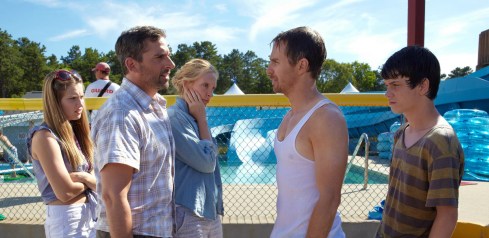
Everyone has that Summer That Changed Everything–it’s that precious coming-of-age experience that you never forget. For super-awkward teenaged Duncan (Liam James, to whom I’m always going to refer as Young Shawn from the first few seasons of “Psych”), that time comes with a job at a water park. This kid definitely needs something fun in his life–his mom (Toni Collette) is going through a rough time, her new boyfriend (Steve Carell) is a jerk, there’s no one to hang out with, and it doesn’t help that he’s uncomfortable in his own skin. But that changes when he runs off to a water park near Carell’s vacation home and finds himself getting employed by the wacky man-child manager, Owen (Sam Rockwell), which he decides to keep a secret. He fits in with the older staff members and has numerous misadventures that help boost his self-esteem and cause him to take chances and stand up for himself.

“The Way, Way Back” was co-written and co-directed by Nat Faxon & Jim Rash, who also won the Oscar for Best Adapted Screenplay for their collaboration on the Alexander Payne film “The Descendants.” Rash has said that he put a lot of his own childhood experiences into the character of Duncan…even down to his own mother’s ex-boyfriend labeling him a “3” on a scale of 1 to 10. (No joke–he admitted this in the BluRay bonus features! People can be very cruel.) There’s obviously a lot of passion put into this script, and it shows. The comedy and drama feel like they’re part of the same movie (like the best “dramedies”) and the characters all feel real and fleshed out……well, for the most part. Allison Janney’s constantly-drunken, wisecracking single mother character feels a little too out-there, but…eh, it’s still Allison Janney–she’s always great even when she plays obnoxious.

Everyone else is GREAT. Liam James sells “awkward” really well, and he’s all too relatable. There are a lot of levels to Toni Collette’s mother character that become too obvious when watching the film again. Steve Carell’s character is a jerk but a realistic one–you can tell there are times when he wants to do better, but there’s just too much in the way…like a harpy played by Amanda Peet. AnnaSophia Robb is a three-dimensional dream-girl. Maya Rudolph is great as the water park’s general manager who takes things more seriously than Owen and yet can’t resist Owen’s charm at the end of the day. River Alexander is funny as the lazy-eyed kid who is constantly picked on by his mother (Janney) and ultimately becomes Duncan’s friend. And Faxon & Rash are good and funny in their own side roles as water-park staff.

And then you got Sam Rockwell……I’ll just say it–this is my absolute favorite Sam Rockwell performance. He’s great in a complex role in “Moon” and even better in his Oscar-winning performance that actually made a bigoted a-hole kind of empathetic in “Three Billboards Outside Ebbing, Missouri,” and he’s always been great in other stuff. But look at him here in this clip and you only get a little taste of his energy in this movie! Every time he’s on screen, I smile! And he BECOMES this movie.

Looking Back at 2010s Films: Straight Outta Compton (2015)

11 Oct

hero_StraightOuttaCompton_2015_1

By Tanner Smith

Continuing my series of Looking Back at 2010s Films, let’s talk about the major anti-authority movie of 2015. No, it’s not “The Big Short.” Instead, it’s “Straight Outta Compton.”

Do I even need to describe this one? This film was a big hit because no one needed to tell them it wasn’t going to be.

For those few who don’t know, it’s basically a two-and-a-half-hour tribute to NWA, a group of young rappers who became famous for what was dubbed “reality rap,” mostly reporting on the horrid things they saw on the streets in the late 1980s and early 1990s. Young black men would get stopped and even handcuffed by police even for the mere act of standing there.

Oh, how far we haven’t come…

“Straight Outta Compton” is a conventional biopic, which is both its main strength and its main weakness. We know the drill–the early days starting out with big ambitions, creative people getting together to make some magic, getting a big break, moving to big performances, the introduction to the downfalls of fame, the controversies, the fighting, the breakups, the tragedies…..let’s face it, it all sounds familiar. I guess just about every celebrity goes through it all one way or another.

But why do we keep watching music biopics? Because even the same stuff is different for everybody that goes through them. And if it’s told well with interesting characters and smart writing, we still get something special.

The first hour-and-a-half or so has the best parts of the movie. It’s interesting to see how these kids start out–Eazy-E is a drug dealer, Dr. Dre performs his mixes wherever he can, Ice Cube is writing lyrics on the school bus, and so on. And it’s great to see them work together, such as in this clip where they lay down a track for the first time.

The second hour or so is the least interesting, as we see the gradual fall of NWA. But it still does consist of compelling material, such as what NWA has become after many of them have left to do their own thing, the hustling manager Jerry Heller (Paul Giamatti) continues to show favoritism towards E, and Dre teams up with Suge Knight (R. Marcos Taylor, very chilling), and then…tragedy strikes.

Yeah, the film does drag from time to time. But strangely, when the credits roll, and we get the real-life footage of the actual NWA, I find myself thinking, “Yeah…that WAS good! In fact, I think it should’ve gone on longer!” Director F. Gary Gray (who also directed the Ice Cube-penned “Friday”) and screenwriters Jonathan Herman & Andrea Berloff (who were nominated for an Oscar for their script) clearly had a story to tell and were going to try hard to create one of the best music biopics ever made.

All the actors are terrific. Jason Mitchell is winning and charismatic as Eazy-E, Corey Hawkins is a solid Dr. Dre, and O’Shea Jackson Jr. as Ice Cube…you know, now that I’ve seen Jackson in other movies since “Straight Outta Compton” (“Ingrid Goes West,” “Long Shot”), I don’t have to see him as “Ice Cube’s son” but “O’Shea Jackson Jr., a very talented actor.” That just makes his performance as Ice Cube (his own father) all the more interesting. He’s great here.

And, uh…OK, let’s address the elephant in the room. Because the real Ice Cube and Dr. Dre are among the film’s producers, there’s no mention of Dre’s publicized violence against women. But…at least they don’t try to make the NWA members into role-model types? I dunno, it is a bit disconcerting that a lot of the real important negative attitudes are either merely glanced at or ignored entirely.

But then again, it’s not really about that; maybe it’s simply about the impact these people had on culture, telling the truth the best way they knew how and becoming famous for it. And as such, it’s a pretty solid film.

Looking Back at 2010s Films: The Edge of Seventeen (2016)

11 Oct

af91364d-8abe-4a50-b8a3-6e470a780e56.jpg

By Tanner Smith

Continuing my series of Looking Back at 2010s Films, this is “The Edge of Seventeen”…not to be confused with the Stevie Nicks song…which is nowhere to be heard in this movie…weird.

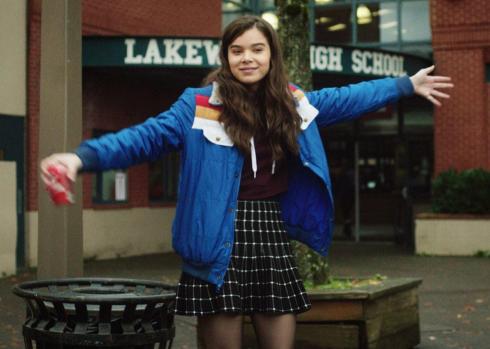
This is a teenage coming-of-age comedy-drama about an awkward, depressed outsider named Nadine (played wonderfully by Hailee Steinfeld) in her senior year of high school. She’s resentful of her popular brother Darian (Blake Jenner from “Everybody Wants Some!!”), her mother (Kyra Sedgwick) doesn’t pay enough attention to her, she’s not comfortable in her own skin, and worse yet, her only friend (Haley Lu Richardson) is now in a relationship with Darian. There’s an awkward but sweet classmate named Erwin (Hayden Szeto, who I learned was *30* when he made this film!) who not-so-secretly admires her, and while she does give him attention, she has another boy on her mind–you know, the “dangerous” type. The film is basically about Nadine being comfortable with herself with help from those around her, including a teacher (Woody Harrelson) who tells it like it is.

A lot of this material is familiar, but a lot of us have gone through similar experiences in high-school and it’s important for as many writer-directors to draw from what they themselves have gone through.

There is a lot of heart and emotion in this film, thanks to writer-director Kelly Fremon Craig’s vision and the performances from her talented cast.

Nadine is easy to empathize with, even when she seems difficult to sympathize with, because she’s 100% real. When she’s a smartass, when she’s sad, when she’s self-loathing, when she’s a terror towards other people–I get it, because we’ve all been there and done that.

ALL of the characters seem real. They’re not as fleshed out as Nadine (obviously), but they aren’t portrayed as two-dimensional types either. The mom is clueless but she’s trying. The brother has self-esteem issues too. The best friend wants to venture away from familiar territory. The teacher has wisdom behind his wisecracks. And so on.

Oh, and there’s also Erwin. Was I the only one who bought his charm from the beginning? I didn’t know I was supposed to warm up to him the same way Nadine (and apparently the rest of the audience) did. Whatever–Erwin’s awesome, and I’m glad he got the girl.

One other thing I want to say to critics who aren’t reading my posts–stop comparing today’s “teen movies” to John Hughes teen movies. It’s cliched and doesn’t make sense anymore. Those movies were also good at blending comedy and drama with real teen problems. But this is a new era, with new problems, and new filmmaking techniques. Just call “The Edge of Seventeen” what it is–one of the smartest coming-of-age films in a decade full of smart coming-of-age films.

Kelly Fremon Craig’s upcoming film project is an adaptation of the Judy Blume novel, “Are You There God? It’s Me Margaret.” And I’m definitely curious to see how she handles that heavy material.

Looking Back at 2010s Films: Gifted (2017)

11 Oct

67101473_10211328887897440_5701080683233935360_n.jpg

By Tanner Smith

Continuing my series of Looking Back at 2010s Films…here’s the setup for Marc Webb’s “Gifted.” A single working-class man is raising his 7-year-old niece who is actually a child prodigy. Soon enough, her mathematical abilities catch the attention of the child’s formidable grandmother, who seeks to be sure that her brilliance is put to good use, which means she and her uncle will be separated.

Well, gee. Will the uncle fight to keep her in his custody, and will the grandmother learn the error of her ways, and more importantly, will anyone who isn’t a fan of Hallmark movies care about any of this?

The answer to that last one is definitely more important than the answers to the other ones, but they’re all the same: Yes.

I did care. Very much, actually. But why? This sounds like a cliched story with cliched characters, but everything is done…RIGHT.

For one thing, the characters are given more dimensions than you’d expect. Even the grandmother, Evelyn (played by Lindsay Duncan–just when I thought her critic character in “Birdman” was her most unlikable role), is more human than the role deserves to be. She IS a stick-in-the-mud and she feels superior to most people, but her backstory, which involves her failed attempts at raising her own daughter who was also a prodigy, lets you understand what she’s trying to do. It’s arguably unhealthy, and she’s hardly sympathetic (especially when you learn what becomes, or what could’ve become, of the granddaughter’s precious one-eyed cat), but she does turn out to be empathetic. She’s one of the more interesting characters in the film.

That’s a BIG plus for a film like this–turning your antagonist into a human being.

Chris Evans plays Frank, the guy who cares for Mary, the kid (played by McKenna Grace), and he’s great here. He’s had many opportunities to display his acting chops as Captain America, but he stretches his range even further with this role, and he’s really good at it. He’s somewhat reclusive and doesn’t make much contact with other people, but when it comes to his niece, we see the person underneath his act–his heart’s in the right place, even if he is just making things up as he goes in the ways of guardianship.

We also get a lot of supporting characters, including Mary’s teacher (Jenny Slate) who’s the first to realize maybe Mary doesn’t belong in her classroom solving simple math problems, like literally within the first few minutes of school! There’s also the next-door neighbor, Roberta (Octavia Spencer), who constantly checks in Frank and Mary from time to time and forces herself into their lives. Even these characters are well-done, even if…oh gee, I wonder if Frank and the teacher are going to hook up despite her telling him they won’t?

There are a lot of courtroom scenes when the conflict could’ve been resolved a few different ways. But to be fair, the only reason it isn’t is because both Evelyn and Frank are too stubborn and loving towards Mary to back down, which does make for an interesting debate…even in a scene in which Evelyn gives a totally-full-of-sh*t speech in the courtroom about what she believes in and whatnot. (Even that, you could say, is part of the character’s desperation.)

That’s another reason “Gifted” works so well–the SCRIPT is good. Written by Tom Flynn, it’s full of sharp dialogue and warm insights, as well as moments of well-done humor. The characters feel like real people, the comedy and drama mix perfectly rather than forcibly, and as a result, I CARED.

My only major nitpick–and it really IS a nitpick–is McKenna Grace as Mary. I mean, this is a very talented young actress (she was also in “I, Tonya” and “Captain Marvel”), but for some reason, I’m not quite accepting of her as a child prodigy–I just see it as it is: a talented child actress TRYING to play smart. Funny enough, this film came out the same year as Colin Trevorrow’s “The Book of Henry,” starring another child actor, Jaeden Lieberher (“It,” “Midnight Special”), as another child genius–that film wasn’t nearly as good as this one, but I bought HIS performance as a prodigy hook-line-and-sinker more than I did Grace’s.

The film was directed by Marc Webb, who also directed one of my favorite romcoms, “500 Days of Summer.” He’s best at directing small indie flicks than he is at directing web-slinging superheroes…OK, I still like “The Amazing Spider-Man” (though, not as much as I did originally). (“The Amazing Spider-Man 2,” though? Yikes…) Although, there was another indie film directed by Webb that came out the same year as “Gifted,” called “The Only Living Boy in New York.” I think that one’s a dud–maybe he just needs the right material to make a good movie. (Doesn’t everybody?)

So yeah. I cared about what happened in “Gifted.” I even cared about the cat. And I’m not a cat person. That should say something. Check out “Gifted.”

Looking Back at 2010s Films: mid90s (2018)

11 Oct
mid90s-m9_03032_rgb

She said see you later boy: Stevie (Sunny Suljic) stars in Jonah Hill’s Mid90s.

By Tanner Smith

Continuing my series of Looking Back at 2010s Films, let’s talk about Jonah Hill’s directorial debut that you could swear was made in the mid-1990s: “mid90s.”

Set in the mid-90s (obviously), “mid90s” is about a short, scrawny 13-year-old boy named Stevie (Sunny Suljic) who falls in with a crowd of skateboarders to escape the abuse of his older brother. He of course comes of age and learns he doesn’t have to take the hardest hits, on or off the board. Call it “The Sandlot” meets “Kids.”

Jonah Hill does a really good job as a first-time director. If I didn’t know any better (or recognize today’s actors like Lucas Hedges and Katherine Waterston), I’d swear this film was actually made in the mid 1990s. The aesthetic is reminiscent of a ’90s indie flick, and the passive-aggressive attitudes of these ’90s teens feel genuine.* (In fact, it’s rumored that a theater projectionist asked the distributor where they found a lost treasure from the 1990s…I hope that’s not true, but that says something about the film’s quality.)

Besides, we need a break from the ’80s anyway, right?

There’s hardly a plot here, but that’s not what matters–what matters is the emotions that are felt throughout. This poor kid has been pushed around and beaten up by his jerk older brother, and he takes up skateboarding as a sporty means of escape…mainly because when he falls, he’s used to getting hurt. This is disturbing and screwed up–it makes you feel for the kid even more, even when his friend Ray (Na-kel Smith) tells him after the most brutal accident, “You literally take the hardest hits out of anybody I’d ever seen in my life. You know you don’t have to do that, right?”

And it’s not just the sport that can used as a means of escape–it’s who you’re sharing the escape with that also truly matters. These other kids have their own problems, but altogether, each other is what they need to get through.

Would I relate to any of the kids if I saw this film at a younger age? I’d see a part of myself in Stevie, but if I’m being honest…I think I was more like Fourth Grade, the kid who’s always filming with a video camera because he wants to make movies someday. I was pretty dumb at that age (and filming stuff constantly) but not dumb enough to say some of the things he says in this movie. (“Can black people get sunburned?”) But I won’t go there.

*The authenticity of the kids, of course, means there’s a lot of misogynistic and homophobic language, which sadly was common in the mid-90s. Hill wanted his characters to discuss why they talk like that, but producer Scott Rudin (who himself is gay) advised against the idea, stating he didn’t think anyone would have this conversation in the mid-90s. Hill also said in an interview, “I’m not celebrating it–I’m just telling the truth. Why are artists supposed to be like the moral police? YOU make the decision.” Meaning, this is a conversation that would probably most definitely take place in 2018-2019, but probably not back then…maybe.

Looking Back at 2010s Films: The Kids Are All Right (2010)

10 Oct

67547002_10211426572419492_126050066002608128_n.jpg

By Tanner Smith

Continuing my series of Looking Back at 2010s Films, as much as I liked “The Kids Are All Right” upon first viewing, I was irritated by the characters’ codependency the second time around, so much so that I wouldn’t see the film for another 8 years.

Good thing I did, because now that I’m older and understand things more clearly than I did when I was 18 (the age I first saw it in a theater and only saw it because critics were praising it), I recognize the reality of said-codependency and therefore see the film as honest and effective.

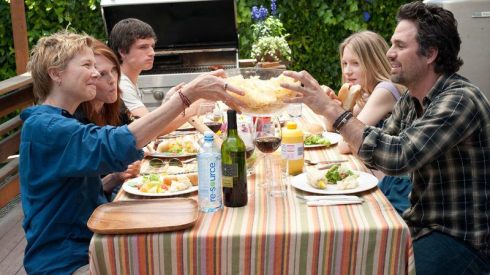
“The Kids Are All Right” is an indie dramedy about Nic (Annette Bening) and Jules (Julianne Moore), a same-sex couple who have been together for about 20 years, raising two children who were conceived thanks to an anonymous sperm donor. The two kids are 18-year-old Joni (Mia Wasikowska) and 15-year-old Laser (Josh Hutcherson). Joni is about to leave the nest for college, and Laser pleads for her to do him a little favor before she leaves: try and contact their biological father. She reluctantly does, and the kids meet the guy, who’s a laid-back bohemian named Paul (Mark Ruffalo). They get along well, he’s happy to know them, and they agree to see each other again, but Nic and Jules want to meet him first. Paul’s relationship with the family grows, but as the family dynamic changes, things don’t go as smoothly as they’d like it to…

What makes the film as highly regarded as it is has to do with the script. For one thing, and probably the most important thing, the characterization is terrific. We already get a sense of Nic and Jules’ relationship before we’re even halfway through the film. They’re committed to each other, but it’s clear they’re not who they used to be and that causes a strain in their relationship. They each have careers, which add to the more difficult aspects of daily life–do they still want what they want when they have it? And they also notice little things about each other that they just don’t find attractive, such as Nic’s abrasiveness and condescending attitude, Jules’ micromanaging, that Nic is always busy (which makes sense, as she’s a doctor), and so on. The most telling scene is midway through in which Jules prepares for a romantic evening with Nic, and Nic suddenly becomes busy on the phone with a patient and Jules is left alone in the bathtub. This is what their marriage has become.

(SPOILER ALERT!!!) That’s why it makes sense that she would start an affair with Paul, because she’s finding the passion with him that she used to have with her wife. And of course, that’s not going to end well.

(END OF SPOILER ALERT!!!)

Will their relationship continue after the film is over? Maybe. A lot of couples go through some real rough patches, and they’re still together. Maybe Nic and Jules are too.

Btw, THIS is what I was referring to when I said I grew annoyed by the characters in the second-viewing–little did I know this is just how people in long-lasting relationships tend to behave. (Don’t review movies until you’ve had a little life experience.)

Paul is also a well-rounded character. Despite his business in running his own restaurant and growing his own food, he always ducked certain responsibilities. Now that his two biological children have welcomed him into their lives, he suddenly feels the need to play father-figure. But he does screw up the family dynamic real badly, and I was surprised to find that his resolution isn’t as pleasant as the type of situation would be in other movies–maybe he’ll have learned from this whole ordeal and bettered himself in the future…or he won’t have learned a thing and it just brings him back to where he started. I dunno, I’m sticking with the first thing–I’m an optimist.

Plus, Mark Ruffalo is unbelievably fantastic in this role. From his mannerisms to his quirks to his body language, he inhabits this flawed character…flawlessly.

And the kids are also more than “all right.” Joni’s coming-of-age is one of the more interesting parts of the film, as she says goodbye to everything she’s known, including her family, because she’s ready to move on and go to college away from it all. And Laser (man I’m jealous of that name–why’d I get stuck with “Tanner”*?) is a sensitive jock type who just wants to know what it’s like to have a man (a father) in his life after witnessing the dynamic between his punk friend Clay and his own father. He too comes of age, outgrowing his friendship with Clay and appreciating the parents that he already has.

As honest and realistic as the dialogue between these characters are (and is very well-written by director Lisa Cholodenko and her co-writer Stuart Blumberg), I think what made the script more special was the characters. If you have great characters, they can write most of the story for you.

They’re also very well-acted. Ruffalo and Bening were nominated for their respective performances–why wasn’t Moore? I think of the two lead actresses, Moore as Jules had the more interesting role. (Would that be “Moore interesting role”? Rim-shot!)

“The Kids Are All Right” was heralded as an arthouse treasure and went on to gain Oscar nominations–not just Best Actress (Bening) and Best Supporting Actor (Ruffalo) but also Best Original Screenplay and Best Picture. If I didn’t understand why then, I certainly understand why now. It’s an honest character-based drama with something to say about relationships.

*Just kidding, Mom–I love my name.

Looking Back at 2010s Films: The Avengers (2012)

10 Oct

14433460_f520.jpg

By Tanner Smith

Continuing my series of Looking Back at 2010s Films, here’s a film that made a majority of moviegoers hella hyped and excited…and it would only be the beginning!

Who would’ve thought 2008’s “Iron Man,” as awesome as it was, would lead to one of the greatest movie franchises we could ever ask for? I mean, a lot of people hoped, but lots of movies promised future installments that never came through. This one gave birth to a cinematic universe, which back then was only a mere thought! In the three years that followed, we got “The Incredible Hulk” (which I thought was OK), “Iron Man 2” (meh), “Thor” (fine), and “Captain America: The First Avenger” (decent). It was all leading up to…”The Avengers!”

Needless to say, “The Avengers” made bank…times 10! Because we all had to see what was going to happen! And it was AWESOME!!!

Writer-director Joss Whedon and the studio execs gave us pretty much exactly what we wanted–the heroes we’ve seen in five different movies have come together, first as rivals and ultimately as allies fighting off a mega invasion. Unlike most recent action flicks where the first act is more interesting than the second, the whole film is interesting for different reasons. The first act is reintroducing all of these characters to us and introducing them to each other, and seeing them together is pretty interesting. Tony Stark aka Iron Man is still snarky and cocky. Steve Rogers aka Captain America, now getting used to being in a whole new era he was used to, feels the need to take initiative. And Bruce Banner aka Hulk (played by Mark Ruffalo who took over for Edward Norton) has learned to channel his anger (which Hulk of course represents), but the bickering amongst the others is trying his patience. And then we get the second act…

It’s revealed that Loki (Tom Hiddleston) brought them all together because he knew they wouldn’t get along, but he forgot they all share the same purpose of saving the world, which he’s trying to dominate. (Even Stark states at one point, “Not a great plan.”) Along comes an army of alien beings that come to mess up New York City…and along comes who are now officially The Avengers to mess them up! We get a pretty awesome fight that you would think would be the big climax. But nope! That’s just the beginning. And we’re treated to about 45 minutes of incredible, heart-pumping, hell-yeah action that is never boring and always fun to watch! And of course, as typical for a Whedon production, there are lots of one-liners as well.

I remember seeing this flick in a packed theater, and the audience roared, cheered, and applauded at the part where Hulk throws Loki around like an insignificant rag doll, in easily the most awesome part of the film! The response was so loud that I didn’t even hear until the second time I saw the film that Hulk muttered, “Puny god.”

Yeah, this movie was pretty awesome. But little did we know that this Marvel Cinematic Universe wouldn’t end there. And the movies would get better and better (for the most part)–more questions would be raised, important issues would be discussed, our favorite characters would grow, others would be introduced and developed, and we’d have a whole universe full of fun superhero films (as of now there are *23* MCU movies!). “The Avengers” would be the end of Phase One and the start of something that would be every bit as interesting and fun.

Looking Back at 2010s Films: Searching (2018)

10 Oct

searchingmovie-1535579481-6735

By Tanner Smith

Continuing my series of Looking Back at 2010s Films, you remember “Unfriended?” “The Den?” Other minimalist “cyber-thrillers” that were told entirely from the point-of-view of a computer screen? Well, those films were only setting us up for what would become the best of this particular “subgenre.”

That film is “Searching,” a mystery-drama about a father desperately trying to find her missing daughter. He does so by using potential clues left from her computer–her social media, her calendar events, just about anything and everything that could possibly lead to answers to numerous questions about her. And yes, the entire film is told through media–computer screens, phone screens, camera monitors, news feed, you name it.

It’s just a gimmick used as a device to tell the story, but with that said, I appreciate the lengths that director Aneesh Chaganty went to to further the story with as minimal techniques as possible and still make it effective. And with a mystery such as this, using as many online resources as possible, to do it well using this gimmick is impressive indeed.

John Cho stars as David, the widowed father who tries everything he can think of to obtain more answers about his teenage daughter Margot’s disappearance. With this film and 2017’s drama “Columbus” (which I’ll get to later), Cho has come quite a long way since his comedic roles as the “MILF” guy in the “American Pie” movies and the uptight stoner who went to White Castle and Guantanamo Bay with his buddy Kumar. He’s proven to be a more than capable dramatic actor, and he’s absolutely terrific here. There’s not a moment in Searching where I don’t feel for him–I want to help this poor guy because he’s going through a living hell. Every time he comes to another dead end after thinking he’s finally going to get THE answer he’s been searching for (the question being, “where the f is my daughter??”), it’s heartbreaking.

Cho was nominated for a Film Independent Spirit Award for this performance–yet another reason for me to appreciate the Indie Spirits more than the Oscars.

“Searching” also has a great amount of heart to it, established with an emotional prologue that shows the family dynamic of David, Margot, and Pam, who would die of cancer. From these first few minutes, we see how this tragic death affected the lives of both David and Margot. Margot feels very alone and closes herself off from everyone, including her father. When she disappears, David realizes he doesn’t know his own daughter anymore and has to learn all he can about her through her social media in order to gain some insight about what might have happened to her, where she could be, etc. He finds he’s closed himself off from her as well.

This mystery-thriller is as good at going for the emotions as it is generating suspense, and I applaud it for that. The mystery itself is pretty intriguing and just as much so the second time.

Also, here’s a wonderfully effective, biting piece of commentary that I appreciate. David questions Margot’s classmates who admit they weren’t really Margot’s “friends” because she was too shy and closed-off. Later, when an Amber Alert is set up and Margot becomes a trending topic, THOSE SAME PEOPLE are making tearful videos about how much they “loved” Margot and that she was their “best friend.” It’s true that so many of us don’t really hop on board a certain issue until that issue becomes popular, and I thank the film for showing that in this way. (There are even a bunch of attention-hungry jerks who hop on board to blame David for it all.)

“Searching” is an engaging, taut thriller that wouldn’t work in a more conventional filmmaking fashion because it’d be difficult to get across more of Margot’s inner life via traditional flashbacks. This is the computer-POV gimmick done right, and I wonder how it could be topped.