Archive | May, 2013

Iron Man 3 (2013)

7 May

images-1

Smith’s Verdict: ***1/2

Reviewed by Tanner Smith

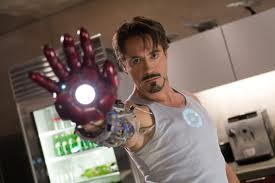
Funny, I kind of thought last year’s “The Avengers” was “Iron Man 3” in a way (that would also make it “Thor 2,” “Captain America 2,” and “The Incredible Hulk 2” in that same sense), but…whatever. It doesn’t matter. Robert Downey Jr.’s memorable, likeable, witty, solid Tony Stark a.k.a. Iron Man is back for more, and he’s more than welcome on the big screen. With more action and more humor, “Iron Man 3” is the best in the popular superhero-movie franchise (based on the Marvel comic book series) since the original five years ago. The second film may have been somewhat disappointing for fans of the original; this third film (yes, I might as well quit calling “The Avengers” a “third film” in this franchise—it’s not necessarily fair anway) is more than likely to satisfy those fans and more. It’s action-packed, intense, funny, and well-executed. A good time at the movies.

People who were disappointed by “Iron Man 2” may be satisfied with this film. But if people are expecting something as big and bombastic as “The Avengers,” that may be reason for them to be disappointed. But it may also be too much to hope for. This is a smaller picture by comparison, not relying entirely on a large amount of action, explosions, and CGI. But not to worry—there are still enough extended action sequences to deliver, which is what we expect in summer entertainment.

“Iron Man 3” takes place shortly after the climactic New York battle in “The Avengers,” as Tony Stark is back in Malibu making more improvements on his new “Iron Man” suits (such as making parts of the suit fly over to him and attach themselves). But he suffers from insomnia and anxiety attacks that may have to do with his experience in the “wormhole” (for those who recall, it may not have been easy to escape from). This doesn’t do well with his relationship with his lovely girlfriend, Pepper Potts (Gwyneth Paltrow), as he spends more time in his basement-laboratory than in the bed with her at night.

A new villain has entered the story—two, actually. One is a terrorist, known as The Mandarin (Ben Kingsley), and the other is his henchman, a slimy genius named Killian (Guy Pearce). They attack mostly with a special kind of suicide bombers—people who are altered to explode after their missions are complete. After one of these attacks puts Tony’s bodyguards, Happy (Jon Favreau, not directing this “Iron Man” movie, by the way), in a coma, Tony makes a public threat to the Mandarin, swearing revenge. In response, the Mandarin’s army attacks Tony’s mansion with great force, leaving Tony for dead. But Tony is still alive (though with limited materials and a low-on-paper Iron Man suit) in a small Tennessee town, and so he must find a way to stop the Mandarin before he strikes for the President (William Sadler).

Where are the other Avengers during all of this? You’d think that an assassination plot for the President would get their attention, but no. Tony and his friend Rhodes (Don Cheadle), who is now the “Iron Patriot,” are the only ones with the right abilities to stop it. Wouldn’t it be rather awesome if the Hulk suddenly came in and smacked Killian to near-death?

There is plenty of action and humor to please audiences. The best action sequences are the attack on the mansion; a low-scale barfight with one of the “suicide bombers”; and the climactic final battle on a ship, in which the ultimate deus ex machina is brought upon to help (you either accept it or you don’t; I thought it was rather awesome). The film is briskly paced and high on energy, but also has plenty of humor. There are Tony’s one-liners, which are always welcome because they’re delivered by Downey with great sharp wit every time. There are some neat visual gags involving the suits. And there’s also a nice buddy-comedy element in that Tennessee town, in which Tony gains assistance from a smart young boy and they banter like Murtaugh and Riggs.

We’re used to seeing Tony Stark as a wisecracking, cocky, likeable cutup (who also happens to be a rich genius), so it’s refreshing to see another side to him. These anxiety attacks say a lot about his vulnerability, giving him even more dimensions than we thought he had. The only little problem I had with this movie was that the attacks don’t have much of a payoff. Why not have these memories of the wormhole come back to him somehow during the climax? There would be more psychological conflict that way.

Robert Downey Jr.—what can you say? It’s RDJ. He’s Tony Stark. He’s always solid and powerful when playing this role. The rest of the actors are no slouches either—they’re very game and do credible jobs. Gwyneth Paltrow does more than play the love-interest and she gives us more reason to sympathize with her—she even sports the Iron Man suit at one point (awesome). Don Cheadle is great as the new “Iron Patriot” (formerly known as “War Machine”). Guy Pearce is suitably slimy and callous and does what the role requires him to do.

If this is the final installment in the series, it wouldn’t be very surprising, as it does have the final of a concluding entry (and a satisfactory one at that). But I am sort of hoping that at least one of the other post-“Avengers” movies feature Robert Downey Jr.’s character of Tony Stark, because he really is the most engaging of the team, and the most amusing. Either way, “Iron Man 3” is a terrific superhero-movie sequel. It’s enjoyable, engaging, and fun all the way through.

NOTE: Stay after the end-credits for a little bonus treat. (And no, it’s not Samuel L. Jackson in an eye-patch again.)

Gremlins (1984)

7 May

images

Smith’s Verdict: ***

Reviewed by Tanner Smith

In “Gremlins,” a young man is given a special Christmas present—a little furry creature that comes with three very important rules. The rules are: keep it away from bright light (especially sunlight), don’t get it wet (don’t even give it a bath), and the most important rule of them all—don’t ever feed it after midnight. But then again, it’s always “after midnight,” isn’t it? Maybe they just mean midnight to 6am is when the little Mogwai (as it’s called) shouldn’t be fed.

Those three rules are said right at the beginning of “Gremlins,” as the kid’s father (Hoyt Axton) buys the rare creature from a shop in Chinatown. His son, Billy (Zach Galligan), is amazed and excited by his new pet, which he names Gizmo. Gizmo is unbearably cute in its appearance (with his big eyes and ears) and many talents, which include singing (or rather, humming). You wouldn’t believe that this cute little thing could cause any trouble, but as if inevitably, Gizmo is accidentally wet and produces some more of the little creatures. And those things are fed after midnight, and that’s when things get very dangerous…

The Gremlins of the title refer to the form that a Mogwai transforms into after being fed “after midnight.” They’re more vile, vicious, hateful little beasts with claws and scales. They run amok in Billy’s hometown, causing all sorts of mayhem and injuring/killing many people. So Billy and his girlfriend, Kate (Phoebe Cates), along with Gizmo, must race to stop them.

There’s a great contrast between how wholesome the town in this movie is and how it will ultimately be ravaged by the little monsters by the time this movie is over. It’s a Capra/Rockwell-esque sort of town—snowy, pleasant, and yet with a hint of darkness underneath (for example, Kate has a grim overview of Christmas, stated in full detail later). That the story takes place around Christmas makes it even more transforming.

The characters are well-suited for a town like this. Billy is a nice, innocent young man—he’s very polite and looks out for his family; not exactly the hero-type, but he’ll do what he has to do. His father is a zany inventor with inventions such as a handheld toiletry compartment (toothpick, toothbrush, toothpaste, attachable razor, shaving cream, etc.)—my favorite was the “peeler juicer” that is supposed to make quality orange juice if it doesn’t cover the kitchen in orange pulp. There’s also a cranky old man who complains about “foreign technology”; a wide-eyed little kid who is intrigued by the Mogwai and wants one of the copies; and an old ruthless hag whom Billy works for at a bank. Oh, and let’s not forget the blithering sheriff who doesn’t listen to Billy’s warnings at first until he sees something that makes him believe. They’re all basic movie characters—they’re not supposed to upstage the Mogwai or the Gremlins, who are made up of convincing mechanics and special effects.

“Gremlins” starts out light and innocent before it becomes a well-made hellraiser with a few laughs as well. Mind you, there are also some truly disgusting moments—in particular, there’s a scene in which Billy’s mother disposes of some Gremlins in her kitchen by stabbing one to death, throwing another one in a blender, and stuffing another in a microwave, causing it to explode. (That scene alone pushed the boundaries of a PG rating—nowadays, this film would be rated PG-13.) It all leads to a climax in a department store in which Billy, Kate, and Gizmo square off against the Gremlin leader. I love how Gizmo uses a little toy car to come to the rescue when Billy is attacked with a chainsaw.

The executive producer for “Gremlins” was Steven Spielberg, and so while it may seem like another “E.T.” at the beginning, it’s far from it. Another “E.T.” wouldn’t have every possible thing you could imagine going wrong on Christmas Eve. This is a witty, fun B-movie with a dark sense of humor.

Iron Man 2 (2010)

6 May


imagesSmith’s Verdict: ***

Reviewed by Tanner Smith

Have you ever noticed that in almost every superhero movie, the human side of the hero keeps its alter-ego as a burden? Clark Kent is still trying to keep his Superman identity a secret to the public, Bruce Wayne’s Batman is a curious case, and Peter Parker is still angst-ridden when he’s not Spider-Man and even more troubled when he is Spider-Man. Now with Iron Man, Tony Stark has the whole world know who he is and doesn’t seem the least bit resentful. This is why he’s one of the freshest superheroes in recent memory, based on a popular Marvel comic book and brought to life by Robert Downey, Jr. in 2008’s smash hit “Iron Man.” So you would expect a sequel and hope that Robert Downey, Jr. can give the Tony Stark the same wit and strength that he gave in the original. And he does in “Iron Man 2.”

While the original spent more time getting to know its characters and keeping the action to an absolute minimum, this sequel knows that we already know the characters and now we want to see them in action. There is more action in “Iron Man 2” and each sequence is, I must say, better crafted than the original. The best CGI sequence occurs at a racetrack when a villain and Tony square off—the villain in a suit, Tony in a car. Sometimes though, the action almost makes the characters not as interesting as they were in the original.

Robert Downey, Jr., of course, owns this film. His narcissism, wit, and innate charisma make everything he does in any movie make you want to root for him. In “Iron Man 2,” his Tony Stark has let everybody know he is Iron Man and brings world peace by traveling around the globe and eliminating problems. But privately, he’s dying. He is suffering from palladium poisoning caused by the magnetic device in his chest that was, ironically, keeping him alive. I love the scene where he treats his birthday party like his last and does a drunken standup to his guests.

His actions in that scene cause his friend Rhodey (Don Cheadle, reprising the role Terrence Howard played in the original) to steal one of Tony’s extra iron suits and try to smash some sense into him. There are many conflicts like that in this movie, two others more threatening. There, of course, has to be a villain. This one is bitter, fully-tatooed-body, Russian physicist Ivan Vanko (Mickey Rourke) who has created his own iron suit, with a few nasty adjustments. There is also a smarmy entrepreneur named Justin Hammer (Sam Rockwell) who wants Vanko to make about fifty iron drones for the Military to out-Stark Tony. My problem is that Rourke, who is marketed as the main villain in this film, is not very compelling. His performance mainly is composed of insisting growling and nasty laughter with his golden teeth and full-body tattoos. Sam Rockwell, however, outwits Rourke in every scene which features them together, trying to outwit Downey Jr., even. Rockwell delivers a brilliant comic performance, a whiner trying to get in the big leagues but tries WAY too hard.

With all these characters I’ve mentioned, I almost forgot the rest of the main characters. Another little problem with this movie is how many characters there are and how hard to could be to keep track of them. Pepper Potts, Tony’s Girl Friday and possible love interest from the original (still played by Gwyneth Paltrow), is back as CEO of Tony’s weapons company. She isn’t used enough in this movie. The chemistry between the two in the original was one of that movie’s treasures. Here, they just share a few good scenes together and then they just worry about each other, Pepper more worried about Tony. New to the story is a sexy martial arts expert named Natalie Rushman (Scarlett Johansson) who may not be who she seems. She was called Black Widow in the original comic book—wow, welcoming. Who have I left out? Only Agent Coulson (Clark Gregg) and Hogan (Jon Favreau, director of this movie), other familiar faces.

“Iron Man 2” is not as good as the original but I did like it. This sequel delivers more or less than it promises and Jon Favreau, who also directed the original film, proves more of himself as an action director, pacing the action appropriately. I did like the action, the script by Justin Theroux delivers some clever one-liners (the best ones are delivered by Downey Jr. and Cheadle), and I really loved seeing Robert Downey, Jr.’s Tony Stark in action once again. Its not-so-particularly compelling Russian villain and overuse of characters keeps this from being one of the better superhero movie sequels (such as “Spider-Man 2” and “The Dark Knight”). But I did like seeing Tony Stark sport on the iconic iron suit and kick some ass!

Daredevil (2003)

6 May

images-1

Smith’s Verdict: **1/2

Reviewed by Tanner Smith

In the Marvel Comics superhero universe, Daredevil would seem like their answer to DC’s Batman. While the Devil isn’t as wealthy or as smooth as the Dark Knight (and on top of that, he’s blind), he does have a similarly tragic backstory, has impressive stealth and skill (not just for a blind man; for anybody), and is still human when all is said and done. He’s vulnerable and he’s experienced so much, and yet has more to overcome and grow from as well.

Mark Steven Johnson’s film adaptation, “Daredevil,” shows this. It moves back and forth between the human and hero side of Matt Murdock/Daredevil, and manages to give its audience a good sense of his plight. There’s a scene early on in which he walks through his apartment after a night out, and he listens to a voicemail by an old flame that indicates that he is closed off from people and has this new identity that is continuing to haunt him each night.

The film opens with Matt Murdock’s backstory. Matt (played as a teenager by Scott Terra) gets into an unfortunate accident involving toxic chemicals. He loses his vision, but his other four senses have been enhanced in such a way that he develops radar sense that allows him to be more alert. This new sense is now his sight and he uses it to develop new talents that do him well. As his father is killed by one of the local mobsters, Matt ultimately devotes himself to bring criminals to justice, even if it means dressing up in a tight leather suit and a mask as an adult.

Many years later (whatever happened in that time is hardly explained, so I’m not sure how long Matt has been Daredevil), Matt (now played by Ben Affleck) is a lawyer by day and a vigilante by night. He apparently is kept busy defeating evildoers, as most of them work for the Kingpin (Michael Clarke Duncan), the biggest crime lord in New York. Kingpin wants to see Daredevil caught and killed, and so he sends in his chief minister—a bald Irish villain named Bullseye (Colin Farrell), who “never misses a shot” and has a target tattooed to his forehead.

Meanwhile, Matt starts a relationship with an athletic, tenacious woman named Elektra Natchios (Jennifer Garner), who has enough fight in her system to playfully engage with Matt upon their first encounter. She has been trained by her father (Erick Avari) to “not be a victim,” and it seems her skills may come in handy when she is next on the target list for the Kingpin. Something happens midway through the story that gives her motivation to follow the same mission as Daredevil—to seek justice/vengeance.

“Daredevil” gets a lot of things right. In particular, the origins of Daredevil, which are shown in a 15-minute prologue, is very well-done. The action scenes, for the most part, are exciting, although my favorite is the foreplay fight between Matt and Elektra after they first meet; they show off their skills by trying to knock each other down. The Kingpin is sort of an obvious villain (which he’s supposed to be), and so Bullseye is the more intriguing, creepier badass. The look of Hell’s Kitchen is genuinely dark and disturbing, making it look as peculiar as Gotham City. And there are some genuinely sweet moments between Matt and Elektra in their relationship. In the film’s most touching scene among these two, Matt has Elektra stand in the rain so that the sounds of the raindrops falling on her face can give Matt a clear-enough image of what Elektra looks like. That’s a very good scene. Also, Ben Affleck is quite solid as the hero—nothing great, but still enough for us to root for him. Jennifer Garner is even better as she radiates enough energy and determination as Elektra.

But there are more than a few missteps that keep “Daredevil” from the type of superhero movie that fans can “marvel” at (in a matter of speaking). For one thing, Matt Murdock is not particularly good at hiding the fact that he’s a vigilante, even though he tells criminals in court (in front of everybody) that he “hopes that justice will find you” and this is followed by those same criminals falling in the hands of the mysterious Devil. The idea is that, like most superhero stories, no one is supposed to know about Matt Murdock’s alter-ego, but Matt (or rather, the way Affleck plays it) is not particularly subtle and it just leads to question of how no one can figure him out. This is especially hurtful in that a nosy reporter (Joe Pantoliano) is able to figure it out quite easily. Now, granted, I know that people wouldn’t suspect a blind man that can be the superhero that prowls the city at night. But Matt doesn’t keep his abilities a secret either, so it’s still in question.

Also, I found myself wondering just what are the extents of Daredevil’s abilities anyway? He can apparently jump from building to building. First of all, how is he able to know where to land without the sound to assist him? Second, have his joints been enhanced in such a way that improves his jumping abilities? That’s not as clarified as his other senses.

And then there are the obligatory, “Batman-esque” lines of dialogue such as, “Can one man make a difference?” Instead of giving it the proper motivation it needed for a story such as this, it just feels like uninspired comic-book-speak.

The execution is all over the place as well. The editing feels like overkill, as there are many music-video tricks that are overused; it makes it pretty distracting at times.

Also, I feel like so much was cut out of the final product before the film’s release date, which is why certain sequences feel unevenly paced. It’s 100 minutes in length, and yet it feels like there’s enough room for more development in certain areas. I hear there’s a “director’s cut” on DVD somewhere; I think I might check it out sometime. The truth is, I don’t see this as a bad film. It has enough elements for a good superhero film. But the way it is, “Daredevil” is merely action-packed entertainment with not much else to offer, except for an admittedly-engaging dark tone. Movies based on Marvel superheroes would only get better as years go by, and while “Daredevil” isn’t among the worst, it’s not as impressive it could have been.

Iron Man (2008)

6 May

images

Smith’s Verdict: ***1/2

Reviewed by Tanner Smith

“Iron Man” is a superhero movie that is quite surprising in how it’s presented, but nonetheless exceptional as a result. Its story structure is standard for a superhero-origin-tale, but not so much, necessarily, is how it views its hero and how he reacts to his situations or relates to those around him. But it’s not saying that it isn’t entertaining, because at the same time, “Iron Man” presents some nifty action sequences as well as special effects (which are used to serve the story). This is a superhero movie that is about something. It’s gripping, well-made, funny when it needs to be, and also rather awesome when it needs to be.

Based on the Marvel comic book series, “Iron Man” tells the origin story of weapons manufacturer Tony Stark as he becomes the awesome heroic figure simply known as “Iron Man.” Tony is introduced as a wealthy, brilliant yet naïve playboy who has a creative, ingenious mind and a tendency to slack off. When in Afghanistan to present his latest weapon, from his company Stark Industries, he is attacked and captured, brought to a cave by his captors. He is healed from his serious injuries with an electromagnet attached to his torso to keep bits of irremovable shrapnel from his heart. He is kept alive to build a new lethal weapon for his guerilla captors. But instead, he spends his time building something they didn’t expect—a way out. Using his limited resources, he is able to build a bulletproof, armed, metal suit and uses it to escape and make his way back home. Upon his return, he makes a few changes—he shuts down Stark Industries’ weapons division and decides to make a few improvements on the suit’s design. For instance, he stabilizes flight and gives it more perfection in the weapon implants it has.

While “Iron Man” does have its share of action, as Iron Man must destroy a rebel base full of weapons (manufactured by Stark industries, in an ironic twist) and also battle an ultimate antagonist with a similar suit of armor, this film is more of a character story, particularly in the way Stark develops his personality throughout the movie. Here’s a guy who has a luxurious, ignorant outlook on his life, not fully knowing what his company is really doing or even how he is with the people around him—those include his loyal Girl Friday, Pepper Potts (Gwyneth Paltrow); his best friend, Jim Rhodes (Terrence Howard); and his no-nonsense business partner, Obadiah Stane (Jeff Bridges). Once he has had his eye-opening experience in the cave, and knowing that these ruthless guerillas are the main ones purchasing his company’s weapons, a sense of alarming alertness overcomes him. He now knows he has to do something about this.

Robert Downey, Jr. is this movie. He’s an inspired choice to play the role of “hero,” and Downey makes it his own, giving it a great amount of wit, flair, and energy (even more so than most superhero-movie protagonists). He dominates the screen throughout, as he should. He’s downright brilliant and so charismatic for us to follow him all through the movie. And he has a sharp wit that comes with the character, making him all the more entertaining to watch and listen to.

There’s also a solid supporting cast. Gwyneth Paltrow, as Tony’s Girl Friday and possible love-interest, is quite appealing, and she and Downey share engaging banter on par with Bond-and-Moneypenny talk; they’re great together. Jeff Bridges plays pretty much the main villain, but a good move on the film’s part is that he’s not clearly identified as such a role (but you don’t necessarily deny it, because he seems quite slick).

Thankfully, director Jon Favreau knows not to have this superhero origin-story aimed for mostly teenage boys. There is some good action, aided by well-done special effects (that don’t show up the actors, thankfully), but there’s more to it in setting up the story, developing the characters, and showing their plight and conceptions. There’s a nice, smooth pacing going with the film, and strangely enough, it doesn’t feel like the average superhero movie. Oh, there are elements existent so that superhero fans won’t be disappointed. But there’s more to it than that. It includes numerous details, some of which you wouldn’t expect, and it brings you into most of them so that you really get an understanding for this tale. “Iron Man” is a solid film, a worthy successor in the superhero-movie genre.

Mud (2013)

5 May

Jeff-Nichols-Mud-Movie-Reviews

Smith’s Verdict: ****

Reviewed by Tanner Smith

Jeff Nichols is undoubtedly one of the best modern filmmakers of our time. He obviously cares deeply for film and filmmaking, which was clear evidence in 2008’s “Shotgun Stories” and 2011’s “Take Shelter” (both of which are different yet excellent films), and doesn’t always go for the easy way out, yet finds new ways to satisfy audiences. So when I found out that his third feature, “Mud,” was aimed for more mainstream appeal, I was wondering if he would stoop to the new low that David Gordon Green (another visionary filmmaker who began in the indie circuit) took with his stoner comedies. And for the record, I know Green’s latest films have their audiences, and maybe they were the kind of films he wanted to make all along. Maybe “Mud” was the kind of film that Nichols wanted to make while he was making his other films to give himself an image in order to do so; but either way there is to look at it, his move into the mainstream is welcome with this film.

I love this film. This might be the kind of movie that Nichols wanted to make for a long time, but this is also the kind of movie that I would love to make. It’s a coming-of-age story in a nontraditional sense, using elements of adventure to tell the story of two young boys learning some important life lessons. Another such film is 1986’s “Stand by Me,” which was one of my main influences to become a film critic and a filmmaker. There’s just something so engaging about a coming-of-age adventure such as this.

“Mud” takes place in the Arkansas Delta, near the White and Mississippi rivers, giving the film its great deal of Southern grittiness. Our main characters are two 14-year-old boys—Ellis (Tye Sheridan) and Neckbone (Jacob Lofland)—who spend their days riding a dirt bike and using a skiff to explore the Mississippi. They come across an island in which a boat is lodged high up in a tree, due to a flood. But they find that the boat is inhabited by a ragged-looking man named Mud (Matthew McConaughey).

Mud may be homeless, hiding out on the island, and he does carry a gun for “protection,” but he comes off as unthreatening to the boys, telling them tales of superstition (nails in the shape of crosses in his boot-heels, his white shirt representing “good luck,” his snake tattoo representing “bad luck,” etc.) and about his love who is supposedly coming to meet him so they can escape together. Ellis and Neckbone decide to help him out, bringing him food and running a few errands for Mud in town, which includes finding his girlfriend, Juniper (Reese Witherspoon), and bringing her messages from him.

The main reason Ellis wants to help Mud and Juniper get back together is because he still wants to believe that true love still exists, despite the upcoming divorce his parents will go through. He wants something to believe in, and so he does what he can to make sure it follows through. The fact that Mud killed a man to protect Juniper doesn’t decrease his intrigue; if anything, it increases it.

Mud’s devotion to Juniper also mirrors that of Ellis’ infatuation with an older girl, May Pearl (Bonnie Sterdivant). After Ellis defends her honor by punching out a high-school senior, she lets him take her out on a date, which doesn’t lead to what he would hope for. Without giving too much away, his disappointment to a certain reveal about her is heartbreaking, because I think we all went through something like that in our young lives. And it does fit into the adult-romance that Mud and Juniper should have while there’s a high chance that things aren’t exactly what they should be.

This new look upon reality, which Ellis is starting to realize, is what makes “Mud” an effective drama, as well as an adventure story. His interaction with Mud increases his self-esteem and the pride he feels in what he feels he should do. He also learns some harsh truths that Mud learned the hard way, giving this character much room to grow. By the end of the story, Ellis has learned some important things about life (which is the case for any coming-of-age tale), while Neckbone is more or less the same adventurous boy he was at the beginning of the story, and so that leaves an interesting contrast between the two boys. This didn’t necessarily have to be a coming-of-age tale involving two boys; just one is enough, while the other is suitable for the “adventure” element.

Speaking of which, things get even more dangerous when the boys encounter a nasty bounty hunter (Stuart Greer) who is seeking vengeance against Mud (the man Mud killed turned out to be his brother) along with a posse led by his father (Joe Don Baker). They keep close watch on Juniper, believing that she’ll lead them to him, and so Ellis and Neckbone must plan a sneaky way to get her back to Mud.

Matthew McConaughey is receiving well-deserved praise for his strong, memorable portrayal of a man who has risked (and is still risking) everything for who he believes is his soulmate and truly believes he’ll figure something out with each misstep. He’s truly brilliant here. But the real stars of “Mud” are the two excellent young actors playing Ellis and Neckbone. Tye Sheridan and Jacob Lofland are already labeled as resembling Tom Sawyer and Huckleberry Finn in their performances, and deservedly so (this is a Mark Twain type of story). Sheridan’s Ellis is more enlightened and thoughtful while Lofland’s Neckbone is more outgoing and defiant (and he also provides some funny moments as well). The blend of these two is excellent and is played in an entirely credible way.

This is more of the boys’ story as they are the main focus, though the adult characters (aside from Mud) play pivotal roles in their tale. Reese Witherspoon’s role of Juniper is more complicated than just being a “soulmate” and there manages to be more complexity implied than actually stated; Sarah Paulsen and Ray McKinnon are convincing as Ellis’ squabbling parents who each try to give Ellis further outlook about growing up; the bounty hunters, led by Joe Don Baker and Stuart Greer, are given a specific purpose of vengeance for the man Mud killed; and we also get Sam Shepard as Tom Blankenship, Ellis’ neighbor who has a past connection with Mud.

Oh, and there’s also Neckbone’s uncle and guardian, played by Michael Shannon (a regular for Jeff Nichols’ films). He’s pretty much an overgrown teenager who slacks off and plays “Help Me Rhonda” (by The Beach Boys) during sex with random women. And…that’s about it. Aside from one little talk to Ellis about how Neckbone looks up to him, he really serves no purpose to the story. I think if you remove his scenes in the editing room, you wouldn’t miss anything. But I’ll let it slide because he is quite solid in the role, and frankly it is good to see him in a Jeff Nichols film.

The look and feel of the Arkansas Delta is captured perfectly. As someone who has spent a majority of his life so far in an Arkansan small town, a sense of familiarity overcame me. The small town; the boondocks; the landscapes. I felt like I wasn’t too far from home. And for anybody, with the way the film captures this particular essence, those who live in large cities are most likely to notice the vividness of atmosphere.

“Mud” is a wonderful film, and yet another winner in Jeff Nichols’ great résumé. This is further proof that Jeff Nichols is one of the most impressive filmmakers of our time. I love his films, and I eagerly await his next project.

Indiana Jones and the Temple of Doom (1984)

5 May

indiana-jones-and-the-temple-of-doom_1984-1-1024x768_scroller

Smith’s Verdict: ****

Reviewed by Tanner Smith

Indiana Jones could be considered a James Bond type, in that he goes through a series of improbable adventures that are great, deadly fun for audiences. He proved that first in “Raiders of the Lost Ark,” which became a huge hit because of its style, taste for adventure, and a new hero named Indiana Jones. Then because of its success, it was inevitable in that there would be a sequel—“Indiana Jones and the Temple of Doom.”

“Indiana Jones and the Temple of Doom” delivers gripping action, suspense, and great fun and Steven Spielberg never shies away from creating a movie with a series of climactic battles and daring adventures, rescues, and escapes. This movie features a temple, human sacrifice, magical stones, a mine-car roller-coaster, and much more. I heard in an interview with George Lucas and Steven Spielberg that they used everything they couldn’t use in “Raiders of the Lost Ark” to bring “Indiana Jones and the Temple of Doom” to life. I can only imagine what a movie with all of those elements in both films would be like.

In an opening scene, Indiana Jones (Harrison Ford) is caught in a trap in a night club in Shanghai and flees with his enemy’s girlfriend—an American singer named Willie Scott (Kate Capshaw), whose main purpose in this movie is to accompany the hero in his adventure and mainly just scream a lot (and that’s exactly what she does—boy, can she scream). Indy, along with Willie and his energetic, pint-sized partner Short Round (Ke Huy Quan), are forced to jump out of a plane (on a life raft) and wind up in India, where they come across a ruined village. The children from this village and a magic rock that keeps the village safe are missing and the elders believe that an evil tribe called the Thuggee Cult is responsible for this.

And so, Indy, with Short Round and Willie (really not thrilled about this adventure) in tow, sets out to Pankot Palace to try to piece together this puzzle. This leads them to the discovery of the underground Temple of Doom, in which the Thuggee Cult sacrifices nonbelievers to their evil deity into a fiery pit. As is the case for movies like this, it’s the hero’s job to sneak in, grab the treasure, and sneak out without being seen. But it’s not going to be easy here. The second half of this movie, which involves the heroes in the Temple of Doom and trying to get out, delivers a great deal of suspense, danger, adventure, terror, and an excellent chase sequence in a mine. They are always inches away from certain death.

“Indiana Jones and the Temple of Doom” delivers just what you ask for. You accept what you can get from this movie—I accepted it, therefore I give it four stars. This is just as much fun as any of the earlier Sean Connery-James Bond pictures. It’s interesting how the first half is about explanation, wonders, and weirdness—especially a dinner scene, in which chilled monkey brains and soup with eyeballs floating to the top are served—and how the second half pays them off with a breathtaking series of adventures.

The set design for the Temple of Doom is just outstanding. It looks almost like how hell could be pictured, with all the fire and caves. This set alone is arguably more impressive than any set piece in “Raiders of the Lost Ark.”

I loved “Indiana Jones and the Temple of Doom” for what it is—a great thrill ride. Like I said, there’s nothing more or less within its own storytelling and its characters—Willie stays whiny, Short Round stays energetic—but it’s a fun, escapist movie that is a strong sequel to “Raiders of the Lost Ark.”

NOTE: I should also mention that it is darker than the predecessor, much like how “The Empire Strikes Back” was darker than “Star Wars.” This is PG, but it shows children being abused and used as slaves in that Temple and hearts being ripped out of people’s bodies. This is not for small children.

Diamond John (Short Film)

4 May

321425_569445063085864_193779341_n

Smith’s Verdict: ****

Reviewed by Tanner Smith

John Wesley Huddleston was a quite peculiar man with a passion for prospecting. Ever since he was told (as a child) a legend of riches, he has been searching and digging for gold and precious stones, while also trying to support his family. But he has never found anything in all the years he’s been searching, which tries the patience of his wife and five daughters who wish he would get a job and rescue them from what would seem like inevitable bankruptcy. It seemed as if all hope was lost until he found exactly what he was seeking.

Those who are familiar with the folk tales surrounding “Diamond John” (as Huddleston would be labeled) also know that Huddleston discovered “one of the largest naturally occurring diamond sites in the world” in Murfreesboro, Arkansas 1906. This story is always traced back to when it comes to “diamonds” and “Arkansas,” and I have to wonder what a feature film (90-120 minutes of running time) would deliver on it. It is a fascinating tale and deserves to be told through film.

What there is, however, is a rather delightful, well-made short film (about 14 minutes of running time), aptly titled “Diamond John,” that surprisingly manages to tell a good chunk of the story in a non-rushed manner and with enough feel-good spirit to make it endearing.

This is a great short film. It’s well-executed. It’s engaging. It’s amusing at times. It looks good. You can tell that a lot of hard work and energy went into the making of this project, and also going by the minute-long applause at the UCA Film Festival (where this film premiered, and also following an afterparty/awards ceremony at which it dominated with about seven or eight awards), it all paid off.

935795_569445079752529_658903991_n

“Diamond John” was presented by the University of Central Arkansas (UCA) Digital Filmmaking department, and written and directed by Travis Mosler as a student project. Mosler, a Digital Filmmaking major, has done a lot of research based around the biography of John Huddleston (a lot more than I have in the first paragraph of this review, let’s just say), and has conducted an effective period piece with a talented cast and crew. Taking place in 1906 Arkansas, a majority of funds the crew gained on their Indiegogo campaign went into the look and feel of the appropriate era. It’s astonishing, how authentic it all looks, from costumes to props to locations. In particular, John’s family home looks like the appropriate setting for such; there’s a realistic-looking western village that looks just right for the time-period; and also, there’s even a Model T Ford Coupe that makes an appearance—how they managed to get that is anyone’s guess, but I’ll take it!

Unusually for reviewing a short film, I feel obligated to praise the acting, but the roles here are hardly thankless anyway. Tom Kagy, as Diamond John himself, effectively captures the eccentricities and passion of the character. Ann Muse is credible as John’s wife, Sarah, who constantly tries to get John out of his dream and into the real world. Also, Jason Willey is very funny in a small but important role as a nervous bank clerk.

“Diamond John” runs for about 14 minutes. I’m not going to lie; I wish that with this talent in front of and behind the camera, this endearing story was crafted into (at the very least) a 30-minute film or even a 90-minute feature film. But as it is, it hardly feels rushed. It’s tightly edited, but has enough to keep your attention and more importantly, to make you care. It worked for me; it could work for you.

Risky Business (1983)

4 May

risky-business-1983-02-g

Smith’s Verdict: ****

Reviewed by Tanner Smith

In a time when the teen-movie genre was leaning towards being sex comedies for commercial appeal (and no, I won’t bring up the gimmick-setting “Porky’s” again—everyone else is thinking of it anyway), “Risky Business” was like a breath of fresh air. It wasn’t as mature and as slice-of-life as “Tex,” released the year before. But it managed to be charismatic, funny, well-executed, surprisingly insightful, and even romantic rather than lustful, unlike the sleazy teenage sex comedies that were released around the same time as this one. This film is unique and yet still entertaining to teenagers.

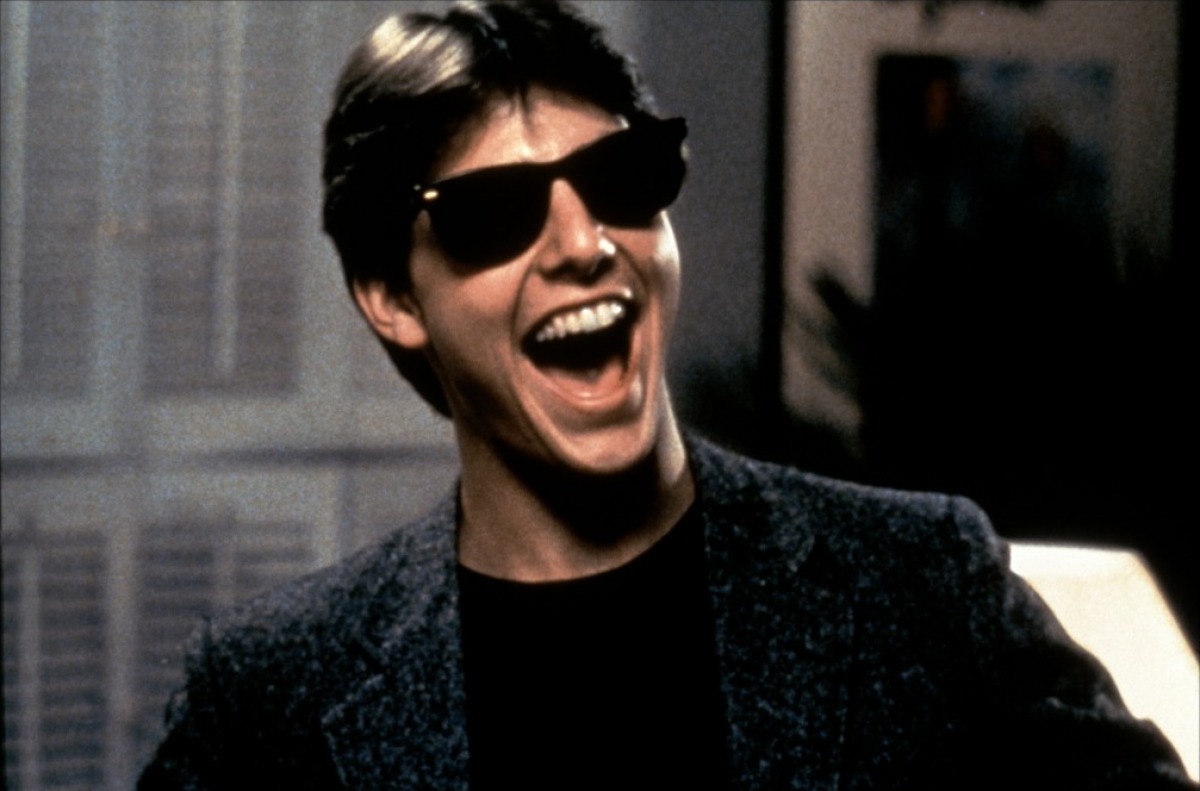
But “Risky Business” is mainly well-known for ascending the fame of Tom Cruise. When this was released in 1983, Cruise was regarded as an actor to watch out for—a true movie star. After this movie’s release, his image was everywhere, and his fame would grow and grow and continue to do so.

Cruise plays Joel Goodsen, a suburban Chicago high school senior who always does the right thing, listens to his parents, and has his eyes set on higher academics. But like most teenagers, Joel is worried about his future. In the film’s terrific opening scene, Joel explains to the audience this reoccurring dream he has in which he’s tempted by a beautiful woman before realizing he missed his college-board exams. That’s a common fear among teenage boys—nervousness about taking those tests and worrying that they won’t get to college. Most of us have that going through our mind, along with sex, hence the beautiful woman in the dream.

Joel’s friends are the horny set of teenagers you find in most teenage sex comedies, but they’re still funny and actually pretty likeable. One is Miles (Curtis Armstrong), who gives Joel the advice to just take some chances and “make your move.” Joel starts to take this advice when his parents go out of town for the week—first, he sneaks a drink from the liquor cabinet before taking his father’s Porsche out for a spin. But then thanks to Miles’ persistence, Joel gets in touch with a call-girl named Lana (Rebecca De Mornay). She’s beautiful, sexy, and sweet—and Joel falls for it immediately. After an intimate night, he owes her $300 the next morning. While leaving her alone in his house, he discovers that an important ornament is missing. From here, things take a turn for the unusual and out-of-control status, as Joel encounters Lana’s pimp Guido (Joe Pantoliano), his dad’s Porsche winds up in Lake Michigan, and Joel’s house turns into a brothel for his friends to pay for a night with Lana’s friends/fellow-prostitutes…and also at a time when a Princeton representative (played by Richard Masur) arrives to interview Joel. (I love his line upon meeting Joel, “If this is at all an inconvenient time…”) Joel must get himself out of each and every situation before his parents come home soon.

Joel and Lana’s relationship grows as the movie progresses, and it’s a common male fantasy that a sex expert would fall for a regular guy. That’s only part of “Risky Business’” widespread appeal, which also manages to work in some economic satire in the ways Joel and his friends start a business venture with the “new brothel.” The film is highly stylized, particularly with Joel and Lana’s first sex scene to make it seem more erotic, and has a tempting electro-pop soundtrack that adds to the magnetism of situation after situation.

As for the romance between Joel and Lana, they do share good chemistry together and trust each other with meaningful conversations (though usually followed by sex). But there’s a problem here that helps Joel to grow up after this experience, making “Risky Business” an effective coming-of-age tale—their romance can’t last very long, as Lana must still do her job once this is all over. But there’s no denying that she genuinely does feel something for Joel, which if you think about it makes it even more difficult. (Watch the film’s original ending on the DVD and you’ll see what I mean.

Tom Cruise is this movie. He delivers a highly-magnetic performance with a great deal of charisma and an “average-guy” image, making us like and believe in him throughout the movie. It’s far from difficult to understand why Cruise became a star since then. As for Rebecca De Mornay, she’s very good here as well. Playing a hooker with a good heart, it’s a thankless role, but De Mornay plays it in such a way that makes it far from predictable. She’s not entirely pleasant, despite a pretty face, but she does have her moments of affection that make her not only believable but also complicated. She’s terrific in this movie.

“Risky Business” is a terrific teenage comedy that still holds up today. It’s funny, erotic, appealing, perceptive, and features an impressive leading performance from Tom Cruise that would further lead him to Hollywood stardom.

My Bodyguard (1980)

4 May

MyBodyguard1

Smith’s Verdict: ***

Reviewed by Tanner Smith

“My Bodyguard” is an enjoyable, appealing high-school comedy-drama with quite the engaging premise: a short teenage boy is bullied by a group of thugs at his new high school, so he hires the biggest kid in the class to be his bodyguard. That itself sounds like an appealing idea for a teen movie, but “My Bodyguard” has the heart and soul to progress it even further by adding an interesting development in the friendship that the boy and his “bodyguard” form with each other. This movie could have been just a pleasant comedy; it’s more than that.

The hero of “My Bodyguard” is fifteen-year-old Clifford Peache (Chris Makepeace), a regular kid. He’s shy, small for his age, and normal…which doesn’t make him very popular at his new high school. On his first day, he is immediately the target of the campus wise-guy, Moody (Matt Dillon), and his cohorts who threaten students for a dollar each day. Moody puts it this way—one dollar each day gives them reason to protect them from the dreaded Ricky Linderman (Adam Baldwin), the school’s hulking, most whispered-about, feared kid who is said to have raped a teacher, killed a cop, poked out some guy’s eyes, etc. Clifford sees right through the bull, and refuses to pay. Thus, the bullies make school miserable for him.

Once Clifford notices that Moody is actually intimidated by Linderman himself, Clifford gets the idea to pay him some money to be his bodyguard. After more torture from the bullies, Linderman finally shows some sympathy and, in one of the film’s best scenes, humiliates Moody with the mere presence of him and Clifford standing together, in front of all their classmates.

You could call that the end of Movie 1. In Movie 2, we see more of Clifford and Linderman as they develop a nice friendship together. At first, Linderman just wants the kid to go away and leave him alone. But Clifford wants to know more about the guy and why he’s so closed off from everybody else in school. Eventually though, they do become friends as they hang out together and talk about some past experiences. They even find the missing part Linderman needed for his broken-down motorcycle, after a year of searching (and they ride through the city of New York together). There is a tragic incident dangling in the background, however, as Clifford learns that the death of Linderman’s younger brother may or may not have been his fault. Either way, he learns this is why he alienates himself from everybody, and because of his appearance, his peers like to share horror stories about him (“I heard…” etc.). And Linderman himself, as it turns out, isn’t much good in a fight. Later in the movie, Moody hires his own bodyguard who is about the size of Linderman, and Linderman actually chickens out. We get more character development and room for further story details as the movie continues.

But in the end, you know the drill—the two “bodyguards” will finally square off against each other in a fistfight, and so will Clifford and Moody. It’s pretty easy to predict the outcome, but that doesn’t mean we don’t enjoy seeing the bullies get their comeuppance.

If there’s one thing about “My Bodyguard” that really doesn’t work, and practically kills the movie for a good few minutes every time it appears, it’s every scene set in the hotel where Clifford lives and where his dad (Martin Mull) works as a manager. And it’s also where we get the most unnecessary character in the movie—Clifford’s wild, young-for-her-age grandmother (Ruth Gordon) who constantly hits on younger men, gets drunk, delivers one-liners, and pretty much annoyed me every time she showed up. Why is she in this movie? She adds nothing to the story, except teaching Linderman and Clifford “palm-reading” which has no payoff except they can show their friends how to do it.

With the exception of that constant distraction, “My Bodyguard” gets his pleasurable moments from the scenes involving the kids. The kids and their high-school adventures are appealing and fun to watch, with sharp writing and good acting. Chris Makepeace is very likeable; Adam Baldwin is solid as Linderman; Matt Dillon is suitably creepy; and there’s also Paul Quandt as Clifford’s rumor-spewing classroom buddy and Joan Cusack as braces-sporting nice-girl Shelly. They all do very good work here.

“My Bodyguard” is a lighthearted, pleasant comedy that has only one troublesome distraction. I’m serious—take out the Ruth Gordon character, and you’ve got a great movie. For the most part, it’s fun, enjoyable, and amusing.