Archive | May, 2013

Last Shot Love (Short Film)

21 May

537636_304262883000910_23165206_n

Smith’s Verdict: ***1/2

Reviewed by Tanner Smith

It’s good that the comedic short films, “Last Shot Love” by Nolan Dean and “The Discontentment of Ed Telfair” by Daniel Campbell, were screened in the same block at the Little Rock Film Festival. Playing two comedies with terrific setups and great punchlines delivers all the more laughter and enjoyment, especially after having to endure quite a few “artful” projects. “Last Shot Love” is somewhat broader in comedic style than the latter, but the laughs are still there and they come as a punch to the gut (or in this case, a shot to the…well, never mind). It has a great buildup and a surprising, unexpected, hilarious payoff that I won’t forget anytime soon.

“Last Shot Love” is about a love-struck 30-year-old named Michael (Brian Villalobos) whose platonic relationship with the beautiful, appealing Annie (Akasha Villalobos) constantly has him thinking of more than just being friends. For ten years, Michael has been working up the courage to ask her out on a date. When he finally does, he’s foolish enough to take advice from his friend Colin (Seth Kuhn)—well, “foolish enough” for us anyway, since we all know that most “best-friend” characters in romantic comedies are some of the most unreliable schmucks to come across.

Colin gives Michael the idea to stage a seemingly harmless presentation to further impress Annie on their date, and make her fall in love with him. But wouldn’t you know it—something goes terribly wrong.

I won’t give away the last five minutes of “Last Shot Love” because the less you know, the more you’ll wind up laughing at the payoff. But to that point, the buildup is funny because it’s relatable. The character of Michael is relatable (for men, anyway) as he’s just a guy caught in a girl’s “friend zone.” This is a guy who just seeks just one date with this woman for the sake of the possibility that there might be something between him and this woman. I’ve been in that situation more than once, and I bet every man has. And of course, there’s that other possibility that states that if this date doesn’t go well because these two people (who are already good friends), then things would be quite awkward and the friendship would be ruined because of that one damn date. (Man, I hate when that happens…)

So it would make sense that Michael would listen to Colin and go to certain extremes in order to make Annie fall for him the same way he has for her. And again, without giving away the utterly-hilarious surprise, those “extremes” that one should take when attempting this approach…should just take caution of what they’re getting themselves into.

I thought I could see where this was going; I wasn’t even close. And that’s all I’m going to say about that.

“Last Shot Love,” written and directed by Nolan Dean, is a funny, engaging 15-minute film. The writing is fresh, the actors are good (especially Seth Kuhn, who’s a riot as Colin), and the payoff…you know what? I’m going to stop talking. Go see the film—it’s still in its festival run, and it’s worth the trip to see whenever and wherever you can.

My Top 20 Favorite Movies

20 May

I love making lists. I love it so much that I even have a collection of lists of my favorite films of a certain year. (I would post those on this blog if there weren’t many other good films to see, and thus add to the list.) And I’ve been asked more than a few times what my favorite movies are. Really thinking about it, it should be relatively easy. “Favorite” movies, after all, aren’t exactly what you would call the “best movies of all time.” They’re more on a personal level of movie-watching. What movies do I love to watch in sickness and in health? What movies do I just love?

So, I compiled a list of my Top 20 Favorite Movies. And to get the record straight, this is not my list of the Top 20 Best Movies of All Time—these are just my personal favorites. So with that said, let’s start with #20…

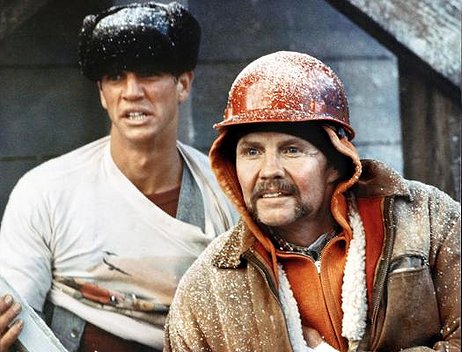
20. Runaway Train (1985)
12830295_gal

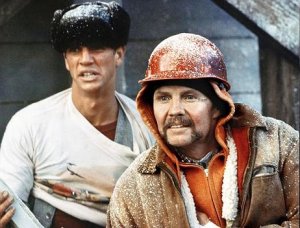
This is one of those movies that just gets better and better every time I watch it. It stars Jon Voight as a lifer in a maximum-security Alaska prison who enlists the assistance of a younger prisoner, played by Eric Roberts, to escape. Roberts tags along, and the two men make it to a railroad yard where they hop aboard a train. But unbeknownst to them, the engineer has died of a heart attack and the train is now a runaway. They find the only other person on the train—a woman named Sara, played by Rebecca de Mornay—and attempt to stop the train.

What’s odd and quite fascinating to me about “Runaway Train” is that it starts out as a standard prison picture and then works its way into an action picture. But this is more about characterization than it is about action, though there are some pretty damn good stunts in this movie. Particularly, the Voight character is older and more insightful in life than the younger, more naïve Roberts character, and so he’s able to teach him the “youngster” a thing or two. But due to a sick mind and serving a long prison sentence, he himself walks that fine line between “human” and “animal.” Voight is just excellent here, delivering a performance that is practically Brando-like.

The ending of this movie is just great. Without giving it away, it involves Voight ultimately making a choice between life and death. I always get a little tense and even teary-eyed when I watch it. I just love it.

Now, this is a movie I originally gave three-and-a-half stars to when I first watched it and reviewed it just a couple years ago. I think what kept it from a four-star rating was feeling that while the stuff with the two main characters and their adventure on the titular “runaway train” was thrilling and unforgettable, the scenes set elsewhere kind of slowed it down (so to speak). But since then, I found myself watching it quite a lot. And I still watch it very often. Every time I do, I’m amazed by it. So much so that I have no resentment in naming it one of my favorite movies.

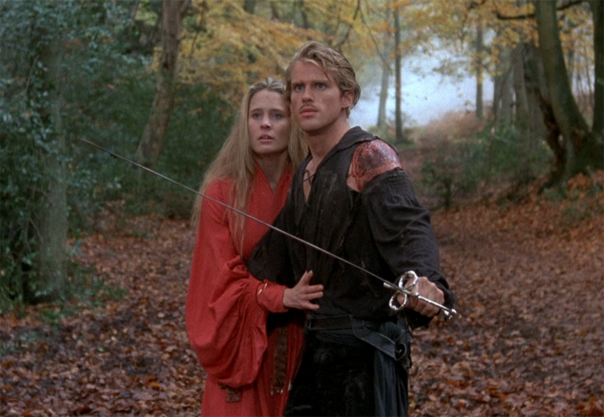
19. The Princess Bride
The-Princess-Bride-1987_gallery_primary

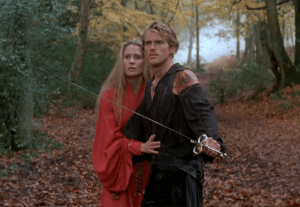
Do I even have to talk about why I love this movie? It’s enjoyable, it’s funny, it’s a clever satire on sword-and-sorcery tales while ironically becoming an iconic one itself. It’s one of my favorite comedies. It’s one of those movies I love to quote often to other fans of the movie. (I mean, come on—when have you not once said Inigo Montoya’s infamous repeated line of dialogue?) Everyone remembers many memorable lines from this movie and smile when they recall some of the action-adventure scenes, such as Inigo’s duel with the Dread Pirate Roberts and Westley and Buttercup’s trek through the Fire Swamp, and laugh at many other scenes, including a “battle of wits” between Dread Pirate Roberts and the ruthless, intelligent Vizzini and of course, the assistance of Miracle Max, played by Billy Crystal in an excellent cameo appearance. I’m not even sure how to describe this movie’s impact (which is probably why I haven’t written a full review for it yet). I just love this movie—I think it’s brilliant, enjoyable, and entertaining.

18. Tex
images11

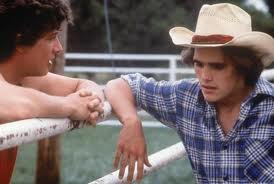
This is a film that hardly anyone I know has even heard of, but it truly is a gem. “Tex” was based on a novel by S.E. Hinton and it starred Matt Dillon as a fifteen-year-old Oklahoma kid named Tex McCormick, who lives with his older brother Mason, played by Jim Metzler. Their mother is dead, their father is usually away on business for months, and so Mason sort of acts as a surrogate father to Tex. And…that’s pretty much it. “Tex” is more about focusing on the lives of these two brothers as they live with one another, and how Tex comes of age and realizes how much Mason is putting on the line for him. Mason even had to sell Tex’s beloved horse to put food on the table, and while it takes Tex a long while to get over it, he does and comes to understand why.

It’s amazing how insightful and how true to life this film seems to be. This was released in the early 1980s, when movies that focused on teenagers were all about teenage sex (and it was released the same year as the infamous “Porky’s”). “Tex” is such an effective portrait of troubled teenagers, and it gets pretty much everything right—the conversations between Tex and Mason (such as a brief talk about sex); the relationship between Tex and his potential girlfriend; and even the secret talks Mason has about his buddy’s girlfriend’s pregnancy (he sees it as an inconvenience while Tex is happy for them). Everything seems genuine and very real.

And I might as well say it—it still shocks me that “Tex” was distributed by Disney. I just can’t help but wonder how they thought this would suitable for their audiences, given the racy themes of teenage pregnancy, the concept of teenage sex, abandonment, and even drug-dealing. But then again, this was at a time when Disney pushed itself with dark horror films as well (like “Something Wicked This Way Comes,” released one year after this one).

But oh well. “Tex” is such a great movie, and I hope more people will come across it and give it a watch.

REVIEW:

https://smithsverdict.wordpress.com/2013/01/29/tex-1982/

17. Shotgun Stories
images

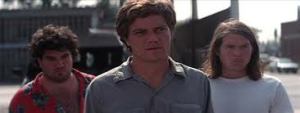
Before award-winning critical faves such as 2011’s “Take Shelter” and this year’s “Mud,” writer-director Jeff Nichols debuted into feature-filmmaking with “Shotgun Stories.” Given a limited theatrical release in 2008, this shocked independent-film audiences in just how unusual and unique it was. And I don’t blame them one bit. It’s not only unconventional; it’s unpretentious. It’s not trying to show off a certain art to a huge extent; it’s just telling a story the way Nichols sees it, and he has a very specific vision that comes off as effectively insightful.

“Shotgun Stories” is about a continuing feud between two sets of half-brothers in a small Arkansas town. The less-fortunate older set (played by Michael Shannon as Son, Douglas Ligon as Boy, and Barlow Jacobs as Kid—yes, those are their names) have gone through tough times growing up, while their birth father had left them and their mother to start a new family. When they hear the news of their father’s death, Son arrives at the funeral with hateful words. This starts a new cause for the feud to get even worse, as the other set seek revenge. Things only get worse and worse…

This film is just “perfect” in my eyes. I can’t find a single thing wrong with it. The acting is perfect. The directing is perfect. The atmosphere is perfect. The script is perfect. Even the music fits the tone of the entire film so that it too fits into the “perfect” element. I love this film so much that I almost hate it. The subtleties of both the developments and the performances really make this film. And it brings about the question of whether or not violence is the only way to fix true conflict. The result is unforgettable.

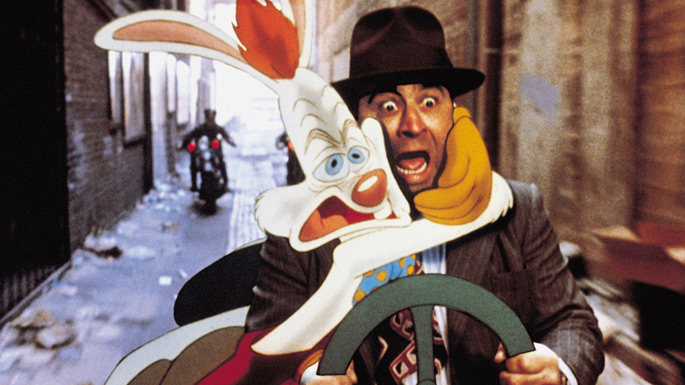
16. Who Framed Roger Rabbit
roger_rabbit

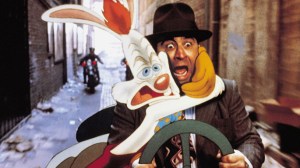
What can I say about this enjoyably imaginative, creative film that literally no one else has? Shortest reasoning for why this is one of my favorite movies—It’s clever, imaginative, has brilliant usage of cartoon characters, is visually interesting, and I immensely enjoy watching it every time. Let’s move on…

REVIEW:

https://smithsverdict.wordpress.com/2013/04/14/who-framed-roger-rabbit-1988/

15. Ed Wood
images-1

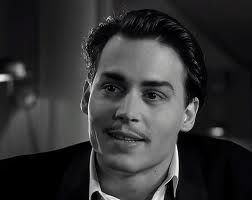
This is probably one of the best films about filmmaking, if not THE best. It tells the tale of schlock filmmaker Edward D. Wood Jr. who made some of the worst, most laughably bad pictures of all time, such as “Glen or Glenda” and “Plan 9 From Outer Space.” And it’s also about doing what he loves doing, and how he won’t let the critics or pessimists bring him down. Great performance from Johnny Depp as an unabashed optimist—it is impossible not to like Ed Wood in this. He’s excitable, cheerful, and never lets anyone talk him out of continuing to do what he genuinely loves doing.

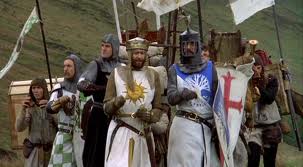
14. Monty Python and the Holy Grail
images-5

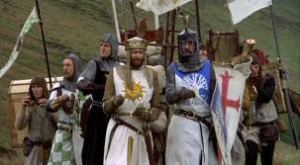
Put a gun to my head, ask me what my favorite comedy is, and I’ll respond without hesitation, “Monty Python and the Holy Grail.” Now I’ll admit, I’ve never seen the “Monty Python” TV series—my only familiarity with “Monty Python” comedy was this movie and “Life of Brian.” But you don’t have to be familiar with Python-esque humor in order to laugh at the absurdity of the production and the brilliant comic writing. For me, there was hardly a moment in the film when I was cracking up. I’m even cracking up just thinking of certain scenes from the movie, such as the Black Knight battle, the witch-talk, the attack of a cartoon-animated monster, and so on. There are literally so many memorably funny moments that it’s hard to think of one that made me laugh the most. Every time I watch this movie, I laugh and laugh and laugh.

13. Pulp Fiction

pulp-fiction-originall

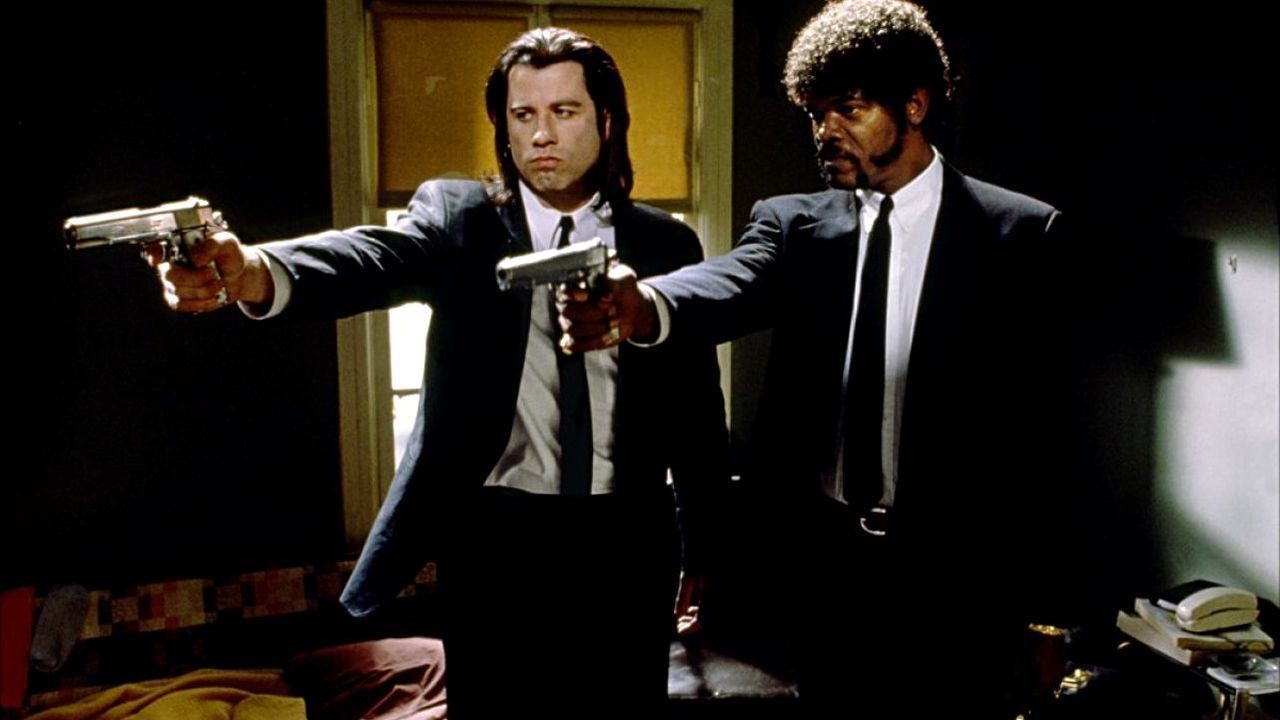
Whenever I think of great screenwriting, this is one of the movies that instantly come to mind. It doesn’t go for just the necessary lines of dialogue; it makes it somewhat relatable by adding more to it, like the moments in which John Travolta and Samuel L. Jackson talk about a French McDonald’s restaurant or even foot massages. And the storytelling (in the way it uses parallels) makes it all the more fascinating. Memorable moments all around, much like writer-director Quentin Tarantino’s best work. “Pulp Fiction” is an unforgettable film that may be weird and talkative, but it definitely has a soul.

REVIEW:

https://smithsverdict.wordpress.com/2013/02/23/pulp-fiction-1994/

12. The Goonies
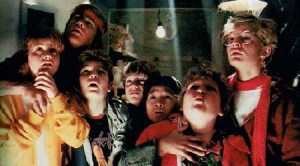
goonies

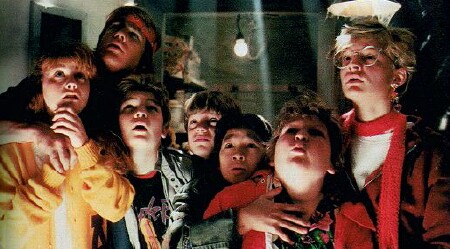
Now remember, this is a list of my personal favorites. I love this movie. I love love love love this movie. Love it. I loved it when I was a kid. I love it as an adult. I can’t watch it on DVD anymore without watching all the bonus features as well, that’s how much I love it. This appointed “Indiana-Jones-for-kids” is just a ton of fun, and I can’t see myself disliking it anytime soon.

REVIEW:

https://smithsverdict.wordpress.com/2013/03/14/the-goonies-1985/

11. The Haunting
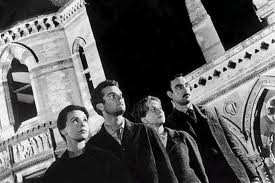
images-4

Surprisingly, I find that this 1963 Robert Wise production is constantly overlooked by a lot of people, and yet the 1999 loose remake of the same name (starring Liam Neesen and Catherine Zeta-Jones) seems familiar. I have my issues with the remake, but I truly love the original. I see it as a terrific ghost story and an excellent psychological thriller with good scares and unique character developments that are not only scary, but effectively insightful. The atmosphere is great, as you get a sense that you’re there in a haunted house with these characters who are there to see if it really is haunted. And the characterization of the main protagonist, a woman named Eleanor (played wonderfully by Julie Harris), who is insecure and emotionally unstable to the point where you’re unsure how much of this ghost story is real and how much is inside her mind. It’s all the more intriguing and chilling in that sense. I love this movie and I hope that other people check it out if they’ve already been subject to, and I’ll just say it, the horrible remake.

10. To Kill a Mockingbird
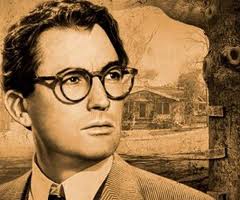
images-3

By any standards, “To Kill a Mockingbird” is an astounding film. Whether it’s seen as a courtroom drama, a coming-of-age tale, or a prejudice story, you can’t deny the true power of the film’s structure. Probably the best move to make this story was to tell it from the point-of-view from the two young protagonists, Scout and Jem, who are typical children, as they observe how the world works in strange and sometimes ineffective ways. The film also has the advantage of having one of the best characters ever created—Atticus Finch (played by Gregory Peck), Scout and Jem’s father who is a lawyer defending a black man in a case that is overseen by an all-white jury in a racially-tense Southern small town. Atticus is going out of his way to see justice prevail, despite what people think of him. He stands up for what he believes and has a strong confidence that he will succeed, which makes his question, near the end, of the system in this small town all the more insightful.

Great acting, excellent storytelling, a faithful adaptation of the terrific novel. I was practically raised by this movie by my parents (who named my younger sister Scout, if you can believe it); I’m glad they did because this always gets me every time I watch it.

9. Stand by Me
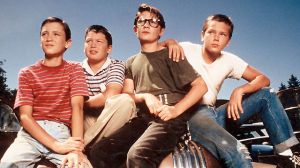
365647730_640

Another movie I was practically raised by. At least, “Stand by Me” was the first R-rated movie I ever watched, anyway. My dad really wanted me to watch it at the early age of nine, because he knew I would thank him someday. I still watch it every now and then, the reason being very simple—I love every minute of it.

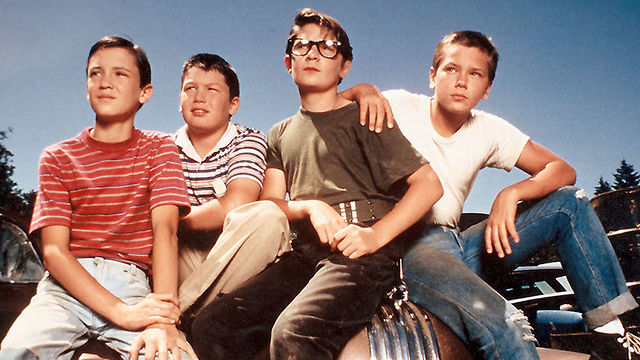
When I was a kid, I just saw it as a fun movie about four twelve-year-old boys trekking along railroad tracks to find the body of a dead kid, as they encounter obstacles including a junkyard dog, swamp leeches, and, my favorite, a desperate chase off a railroad bridge. As I got older and continued to watch it more and more, I did notice there was more that director Rob Reiner, and original author Stephen King, had in mind for it. There was actual character development among the boys, and all of them were portrayed in very convincing ways—one’s struggling to deal with lack of acceptance from his family because of the tragic death of the older, more beloved sibling. That’s both sad and complex.

I like that “Stand by Me” uses an adventure for these boys to come of age, and that it takes place in just a couple days. It wouldn’t be nearly as entertaining and effective without this trek for these kids to embark on and learn life lessons along the way. By the end of this story, maybe half of them haven’t learned much, while the other half know where they stand in the future and feel there’s a possibility that things will turn out better.

“Stand by Me”—one of my favorite movies. Thank you, Dad.

REVIEW:

https://smithsverdict.wordpress.com/2013/01/24/stand-by-me-1986/

8. Beauty and the Beast
belle-and-beast-in-walt-disneys-beauty-and-the-beast-1991-0

I was mostly raised by Disney, whether it be movies, TV shows, or even those silly “Sing-Along-Songs” tapes/discs that never made me forget the songs from the latest Disney animated films. That would be the best way to describe Disney—getting you while you’re young so you’ll never forget them as you grow older. Disney essentially developed our personalities in childhood, and we would always watch them because they always had ways to entertain us.

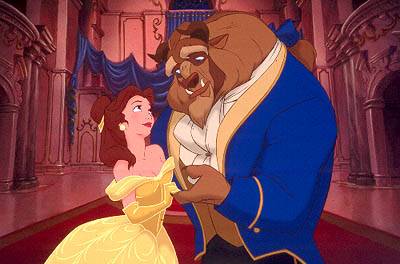
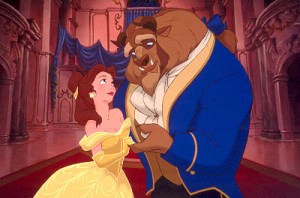
I still enjoy the Disney films I grew up watching, such as “Aladdin,” “The Lion King,” and others, but if I had to pick my absolute favorite, it would have to be “Beauty and the Beast.” Even as an adult, it never ceases to amaze me. The animation, the art design, the songs, the characters—everything about this movie is memorable and appealing. The “beauty,” Belle, is the best Disney heroine, in my opinion. She’s beautiful, kind, pleasant, and best of all, three-dimensional—she can be kind and polite sometimes while angry and demanding other times, with good reason. The Beast is an incredible design but also a three-dimensional character. He can be beastly sometimes, sympathetic other times. The romance between Belle and the Beast is played perfectly, allowing time to develop as the movie continues. We like them and root for them to stay together. That’s an important key to any romance.

And of course, the animation is beautiful (particularly the dance sequence in the giant ballroom, with a crane shot while Belle and the Beast are dancing—fabulous scene) and the songs are good and memorable (especially the title song and “Be Our Guest”). “Beauty and the Beast” is a treasure of a movie—a Disney animated feature that appeals to both children and adults.

REVIEW:

https://smithsverdict.wordpress.com/2013/01/31/beauty-and-the-beast-1991/

7. A Simple Plan

simple-plan

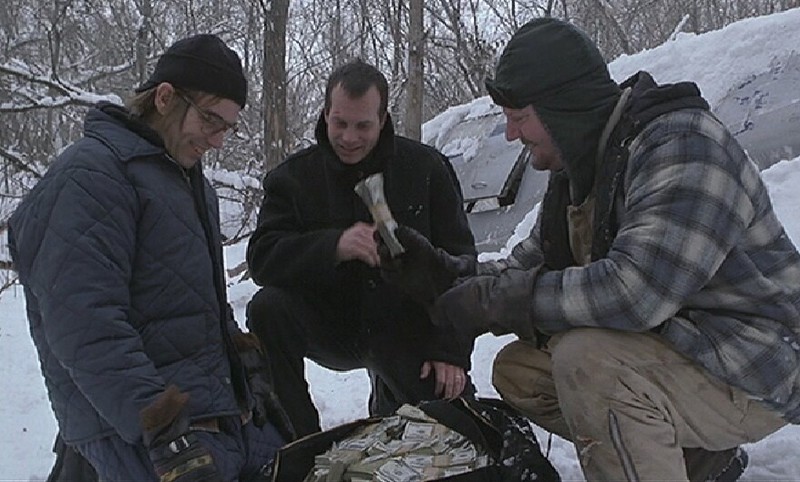
Director Sam Raimi presents “A Simple Plan” almost like a mystical Coen Brothers movie (which makes sense, since Raimi and the Coens are good friends). It takes place in a snowy, mid-American small town where three working-class men (played by Bill Paxton, Billy Bob Thornton, and Brent Briscoe) stumble across a crashed airplane in the middle of some nearby woods. Inside, they discover a duffel bag full of money and decide to keep it. Paxton, being the reasonable one, decides to hide it and agrees to wait a while before they split the loot. But as he brings his wife, played by Bridget Fonda, in on the supposed “simple plan,” she brings up an important detail they overlooked. As he and Thornton go to take care of it, a confused misunderstanding results in the murder of a local in the process. Once they cover that up, they find that this is only the beginning of a dark series of loose ends and more danger. As the body count rises and Paxton and Thornton starts to feel more evil each day, the question of how far they’ll go for their greed hangs in the balance.

This is a thriller that always has me tense from beginning to end. This is a fascinating, intriguing, unbelievably effective, unnerving portrait of good people doing evil things when faced with greed. How far will working-class folks go to protect the secret of millions of dollars of which they gain possession? There’s betrayal, jealousy, even murder! At what point do you draw the line? Add that to great acting (especially from Billy Bob Thornton as Paxton’s mentally-unstable brother who feels the most guilt), and this is one hell of a film!

REVIEW:

https://smithsverdict.wordpress.com/2013/01/26/a-simple-plan-1998/

6. A tie between Before Sunrise and Before Sunset
before-sunrise-sunset

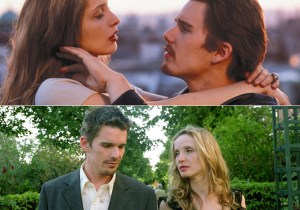
Do you know what happens in “Before Sunrise?” A man and woman meet and talk. That’s it. The whole movie just shows them spending one night together talking about what they think is important, and they enjoy each other’s company. And there’s no bull. No clichés. None of those standard romance elements. It just begins as they meet and ends as they separate. A film like this would be extremely hard to make, but director Richard Linklater and actors Ethan Hawke and Julie Delpy completely made me care about this romance. What’s so special about “Before Sunrise” is that it seems completely natural—there’s never a moment that seems forced or contrived. Sure, some of the dialogue isn’t very important, but I give Linklater credit for not resisting the urge to give what we expect from a romantic film. The result is a very fresh, appealing romance that is great to listen to and all-around sweet to endure.

Surprisingly, I think I like “Before Sunset” even better, because taking place nine years later, it catches up with those same two characters and shows how much they’ve grown as people since that first night together. They continue to talk, they still have feelings for each other, and they wonder as much as we do if this is a second chance. This makes it more insightful in what future they may have together.

I truly love these movies; I look forward to seeing the third film, “Before Midnight,” which is set to release this summer (nine years since “Before Sunset”)!

REVIEW:

https://smithsverdict.wordpress.com/2013/01/16/before-sunrise-1995-before-sunset-2004/

5. It’s a Wonderful Life
images-2

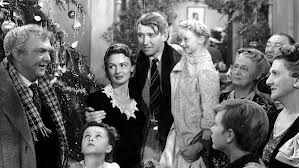
Traditionally, I don’t watch this movie until around Christmastime, but whenever I do, it always gets me. I love the narrative storytelling, and how it sets up everything you don’t think will be important until much later on when you realize you’re glad you paid attention. The whole movie has a magical feel to it, saddled with a heartfelt performance from James Stewart, an intelligently-written screenplay, and a good touching resolution at the end. It’s one of those movies just makes you feel good about yourself, even when things seem very depressing.

4. E.T. the Extra-Terrestrial
et2

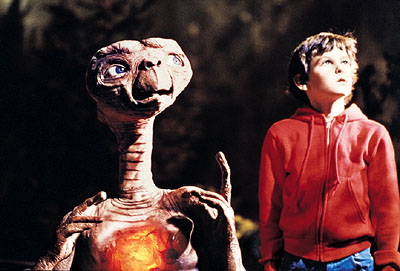
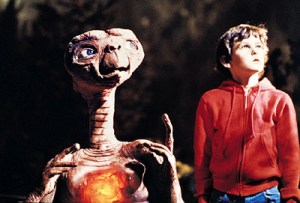
Again, what can I say about “E.T.” that others haven’t already? It’s magical, it’s greatly developed, it understands childhood, it’s a great fantasy, it has unique techniques in the direction (like keeping the adults, except the mom, obscure until much later on when they’re needed), it’s pure movie-magic, and just great Spielberg! And…yeah, I love this movie. Moving on!

REVIEW:

https://smithsverdict.wordpress.com/2013/01/15/e-t-the-extra-terrestrial/

3. Lucas
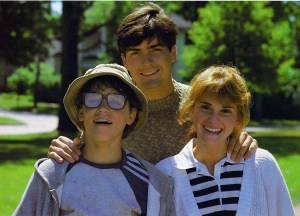
tumblr_l3phddo2tp1qzcwkno1_1280

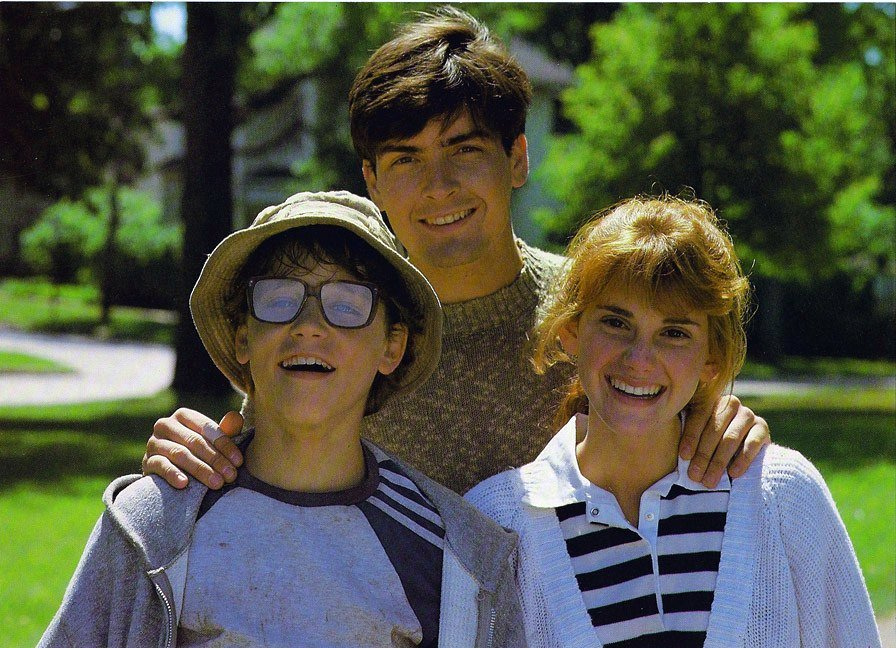
Man I love this movie. This movie got me through some tough times in high school. It knows what it’s like to be a teenage outcast and how to fall in love for the first time. And being a teen movie of the ’80s, it’s also one of those rarities that didn’t focus on sleaze and sex to get its audience. It’s just a touching, realistic portrait of a unique 14-year-old boy who falls in puppy love with a girl two years older. And then when he realizes he can’t have her, he tries everything to prove himself otherwise (including going out for the football team, despite his small size).

“Lucas” moves, it has amusing moments, it has convincing characters (including a jock character who isn’t like any you’ve seen in other such movies), and yes it has the slow-clap at the end. But you know what? It earned it! It also delivers greatly the message that things can work out, though in ways you never expected.

REVIEW:

https://smithsverdict.wordpress.com/2013/03/15/lucas-1986/

2. War Eagle, Arkansas

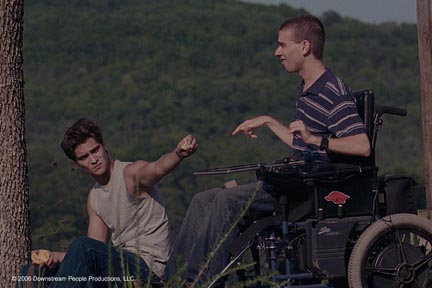
Luke Grimes and Dan McCabe in "War Eagle, Arkansas."

Doug “The Nostalgia Critic” Walker once talked about “Eyes Wide Shut,” claiming he could do a commentary on the whole film. That’s what I could do for this film, “War Eagle, Arkansas.” I must have seen this film at a special time (and I did, but that’s another story), because I genuinely love this film and it only gets better and better every time I watch it. This is one of those “perfect movies”–there’s not one thing I can find wrong with it. The directing is perfect, the acting is perfect, the writing is perfect…which really ticks me off at times when I remember that this is the same co-writer of “The Love Guru!” But I digress. It’s about a teenage boy named Enoch who has a stuttering problem, but a talent for baseball. He gets a shot at a scholarship for a university, but if he takes it, it means leaving behind his small hometown, as well as his best friend–the wheelchair bound “Wheels” who has an acid tongue. Enoch is stuck choosing between a new life and his old home. And truth be told, I related every bit with this kid Enoch. I grew up in a small town as well, and I didn’t feel as resentful towards it as others seemed to. That’s not to say there weren’t times when I felt like it was slowing me down from being a writer-filmmaker, but I got over it because when all was said and done, this was my home. And I’m so glad that special attention was given to this film to make seem as real and genuine as it is. This easily could have been a deplorable, generic, wholesome film. It’s not. It’s excellent.

And for the record, I suppose I should do a revision of my review someday, as I originally reviewed it when I first saw it. Seeing it numerous times, I can probably come up with a more insightful review. But for now, here’s the original review:

https://smithsverdict.wordpress.com/2013/01/29/war-eagle-arkansas-2009/

And my number-one favorite movie is…

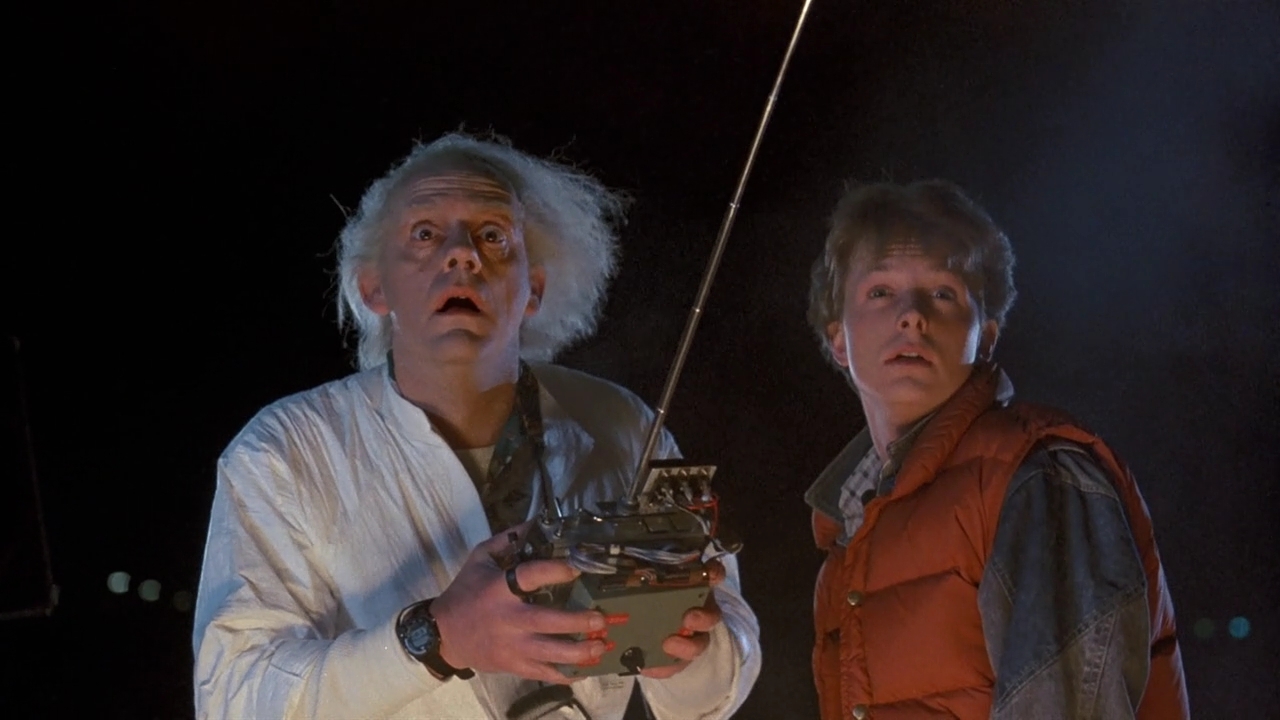
1. Back to the Future
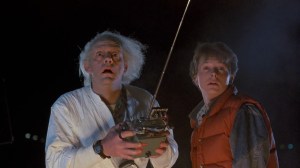
back-to-the-future-2

This movie rocked my world. I mean…wow. Every detail. Every setup. Every payoff. Every comedic time-travel element. Imaginative. Enjoyable. Creative. Fun. Funny. Entertaining. Inspiring, even!

OK, I’m sorry, but that’s really the impact this movie left on me, and still continues to leave on me every time I watch it. It’s a highly enjoyable, well-thought-out, fantastic movie that has probably one of the best screenplays ever executed to film. Written by Robert Zemeckis and Bob Gale, I can just watch this movie and imagine what it would have been like for these two to write this script. But what they delivered was a screenplay that, directed by Zemeckis, makes for a fun, entertaining, very well-written, even deep-at-some-points movie.

There is just so much to enjoy in “Back to the Future” that when it’s over, I feel joyful, energized, and glad to have watched it, every time. And that is why “Back to the Future” is my number-one personal-favorite movie.

REVIEW:

https://smithsverdict.wordpress.com/2013/02/15/back-to-the-future-1985/
Ghostbusters (1984)

20 May

images

Smith’s Verdict: ****

Reviewed by Tanner Smith

“Ghostbusters” is a highly enjoyable comedy. It features three elements that make it inventive (the casting of SNL/SCTV alumni, state-of-the-art ILM special effects, and a B-movie plot) and a sharp screenplay with some very funny dialogue to make it work. We have Bill Murray, Dan Aykroyd, and Harold Ramis as a team of paranormal investigators/”ghost exterminators,” and a whole lot of special effects. But because it’s Murray, Aykroyd, and Ramis as the three heroes in a special-effects summer blockbuster, the effects do not overshadow them in the slightest. They instead assist them. And rightly so, because these three make for very funny company—they’re like a group of college buddies who know the score of their own jokes. I could listen to these guys talk and watch them interact with each other for hours, and they do plenty of that in “Ghostbusters,” even in some heavy-duty FX sequences when they should try and be serious.

Murray plays Peter Venkman, Aykroyd is Ray Stantz, and Ramis is Egon Spengler. They are parapsychologists working at Columbia University, but are somewhat of a misfit group. Stantz and Spengler are more serious about their work, but haven’t necessarily stumbled upon anything yet. Venkman, on the other hand, is a class-A goofball who likes to tease his research students with shock therapy. But one day, the three encounter a ghost for the first time at the local library, and after they are fired from their jobs at Columbia, they decide to start their own “ghost-catching” business. They call themselves “Ghostbusters” and are able to create a special sort of technology that can allow them to “contain” apparitions. Their first bust is a green, disgusting blob (“Slimer”) at a hotel, and once more and more ghosts appear, the Ghostbusters are on call to contain them.

One assignment that has them busy is Dana Barrett (Sigourney Weaver), whose refrigerator apparently to be haunted by a demonic spirit known as “Zuul.” As Stantz and Spengler discover, the penthouse apartments of her building are the source of the paranormal activity happening around the city, which means that something big is about to happen—something of apocalyptic proportions. And if that sounds completely ridiculous for a comedy, you really shouldn’t care, because the movie is all about laughs in the face of the situation. Dana does become possessed by Zuul, after being attacked by two beasts that serve as a dark lord’s pets (or something like that), so when Venkman arrives for their date and notices the change in her, he decides to mess around with the situation. He says things like, “That’s a new look for you, isn’t it?” and when he asks “Zuul” if he can talk to Dana to which he gets a response in a deep demonic voice, he responds, “What a lovely singing voice you have.”

And the rest of the movie goes on like that, which is fascinating in the way that these actors are game and funny enough to make a movie like this work. This of course leads to a climax in which the Ghostbusters must stand up against a shape-shifting god of destruction, and the film never allows the special-effects to reduce the actors. There are still plenty of funny lines said by the heroes to keep things interesting and funny, and the special-effects come to their assistance in the final battle whose key to its success is an effect that is an absolutely hilarious visual gag. (Those who have seen the movie know what I’m talking about.)

Also, I should add that the Ghostbusters don’t act as if this is the “grand adventure” they’re supposed to be doing in the way other characters act in other special-effects movies. Instead, it feels as if they’re just simply winging it and making things up as they go along, which is a clever move. Sure, they’re intelligent and bright, but they don’t always know what they’re doing and they are genuinely funny.

The dialogue in “Ghostbusters,” with a screenplay written by Aykroyd and Ramis themselves, is utterly hilarious. I could listen to these characters speak even longer than the film’s running time if I thought they could come up with enough wit, irony, skepticism, and merry goofiness to keep going. I don’t know how many people who’ve seen this movie can’t quote less than ten memorable lines from the movie. Or how about 20?

Bill Murray is excellent in this movie. He’s hilarious throughout, as his Venkman is more the wise-guy of the group. His deadpan delivery practically makes this movie, as he gets most of the best lines—his reaction to Dana telling the Ghostbusters about her refrigerator being haunted by Zuul: “Generally, you don’t see that kind of behavior in a major appliance.” Dan Aykroyd is enjoyable as the cheerful scientist who takes every bit of phenomena with joy. Harold Ramis, probably the drier wit of the group, is suitably witty as the smartest member. All three are terrific in their low-key, funny performances. The supporting cast is game as well. Sigourney Weaver does what she’s required to do, and having to act possessed and ultimately come on to Murray in a seductive manner is quite amusing. Even better are Rick Moranis as Dana’s nerdy neighbor who has his own encounter with the supernatural; the calm, cool presence of Ernie Hudson as Winston Zeddemore who joins the Ghostbusters later in the film (he says he’ll believe in the supernatural “if there’s a steady paycheck in it”); and Annie Potts as the Ghostbusters’ deadpan secretary. There’s also William Atherton who is beyond over-the-top as Walter Peck, an environmentalist who wants to shut the Ghostbusters down and will take no bullcrap, even as Murray puts him down.

“Ghostbusters” is a sly, very funny and enjoyable movie that is fun to watch and even more fun to listen to. I tell you, I could quote practically the entire movie with a few friends if the time came. This is one of my favorite comedies; I’ve seen it a hundred times before, and I’ll probably see it a hundred more times in the future.

No Way Out (1987)

20 May

images-1

Smith’s Verdict: ***1/2

Reviewed by Tanner Smith

In a list of what I think are the most compelling thrillers to come out of the 1980s (which would also include “Witness,” “Blood Simple,” and “Jagged Edge,” among others), 1987’s “No Way Out” would definitely be in a high ranking. This film has so many twists and turns in a story that started out simple and progressed to be anything but. The result is an engaging, complicated thriller that is well-acted and engrossing.

Kevin Costner stars as US Navy Lt. Tom Farrell, who is being interrogated by government agents for reasons that will be revealed to us as the main story is told in flashback. Six months earlier, we see him at a diplomatic reception party to meet the secretary of defense, David Brice (Gene Hackman), as he is introduced by his dutiful assistant, Scott Pritchard (Will Patton), who is friends with Farrell. Farrell also strikes up an encounter with a sexy young woman, Susan Atwell (Sean Young), and the two start an affair, even though she is involved with someone else. After Farrell becomes a hero on his next Naval deployment, he is then assigned to work at the Pentagon in Washington for Brice.

Here is where a few of those said-twists begin, and I’ll just reveal only a couple of them for the story’s setup. First of all, it turns out that Susan is actually Brice’s mistress. This leads to the night in which Brice pays her a surprise visit, as Farrell sneaks out the back door before he enters. Brice does notice him walking away, but doesn’t make him out in the dark. Brice demands to know who Susan is seeing, and in a violent rage, winds up killing her. So when Farrell learns of her death, he knows who the culprit is. But he can’t reveal Brice’s name to anybody because A) Brice, with the help of Pritchard, is already covering up the murder by using the rumored identity of a Soviet spy. B) Evidence is going to come back to Farrell, especially after finding a negative Polaroid picture in Susan’s place that could reveal him. And C) Farrell is put in charge of the investigation.

Whew! That’s a hell of a buildup, and it’s only the beginning of the story that has Farrell continually trying to slow down the investigation and find some way to preserve some things he learns about his fellow investigators in order to use them to his advantage, all while setting out to find a way to prove Brice’s guilt and Pritchard’s accessory. The twists don’t stop there, so I haven’t given away too much. “No Way Out” is a compelling mystery that gets more interesting as it goes along, and the more it continues with the story, the more I wound up caring about the characters involved.

The acting is great in this film. Kevin Costner is solid in the lead role and it’s quite complicated to pull off—an innocent man who has a lot of evidence leading back to him and is about to be wrongfully accused of a murder. Unless he can do something about it with his wits and intelligence, he’s a dead man. Costner and Sean Young share good chemistry together, and Young has a good amount of spunk that makes us care for her and not see her so much as a plot device. Gene Hackman is top-notch as usual. Will Patton is excellent as Pritchard, who says he’ll do anything for the secretary of defense, and yet because of yet another twist, we realize there’s probably more to it than that with him. Also terrific is George Dzundza as a wheelchair-bound computer expert whom Costner has to trust without saying too much about the mystery.

There is an even bigger twist that comes near the end that makes us question everything we’ve seen before. This is one that you either buy or you don’t. I did, and I watched the film again immediately after just so I could fully get everything that was shown to me before. That’s all I’m going to say about that.

“No Way Out” is a successful thriller that keeps you on edge all the way through until that final twist. It starts out simple and works its way up to a complicated puzzle that puts the hero’s life at risk, as well as the lives around him. The setup is incredible, the story continues to be investing, the cast is across-the-board solid, and there are enough twists to keep you interested throughout.

Fearless (1993)

16 May

images-1

Smith’s Verdict: ***1/2

Reviewed by Tanner Smith

When you feel for even a moment that you are unbreakable and nothing can kill you, there is always something to bring you back to reality. But how far is that “something” from this fearless state? Take Max Klein. After surviving a brutal plane crash, a new feeling suddenly overcomes him. He is no longer afraid of anything because he feels that no one or nothing can kill him anymore, since he survived the wreck. How far does it go? He finds himself walking along the edge on the roof of a tall building and joyfully dancing about because he believes he won’t fall. And on top of that, he no longer feels true love with his wife, Laura. So how far into this new, potentially dangerous mental state is this going to continue?

In “Fearless,” Max (played by Jeff Bridges) has not merely lost his heart in his faltering relationship with his family. But he has also lost his soul, practically. And the reason he does all of this stuff not merely to prove how far his relieved fear of dying will go, but also because he might be able to snap himself out of it. It’s as if he’s putting himself through real pain (or wants to put himself through real pain) just to snap him out of this inner pain. Because, surviving this horrific disaster now has this man questioning whether or not he deserved to survive and deserves to go on living. In some way, he’s between the living and the dead.

As for Laura (Isabella Rossellini), the main problem with this relationship between her and Max now is that she simply doesn’t understand what he’s going through. Only one person in Max’s life gets it—a young woman named Carla (Rosie Perez) who also survived the crash and has lost her infant child in the incident. She can’t connect with her own husband (Benicio del Toro) and also, along with Max, can’t be reached by the airline therapist (John Turturro). But they do understand each other because they feel more or less the same way as survivors. They spend a lot of time together, as Max convinces her to follow him on whatever he has in mind next. It’s not necessarily a romance between them, but it is emotional for both of them. And through Max, she eventually finds a way to wake up from her own morbid state. Although, with Max, it’s unclear for a long time whether or not he himself can awaken.

Max is not necessarily an appealing leading character in the traditional sense—in fact, there are times when he’s downright horrid. But you do feel for him throughout the movie because of his trauma and what it has led him to. It makes more complex in the sense that he thinks he’s fearless, but we know as well as his wife that he isn’t indestructible. And director Peter Weir shows the film in a way that we as an audience are pulled into this somewhat hypnotic state so that we can find some way of understanding what others can’t. it’s that feeling of omnipotence that most of us look for in movies.

While I really think “Fearless” is a terrific film, I can’t help but feel like it could have been a lot better if it further developed some of the subplots, such as the relationship between Max and his son in contrast to the relationship between Max and a kid who survived the crash and looks to Max as a hero; that pretty much goes nowhere. Maybe if the film focused more on that and omitted some details that would like to make us think they were going somewhere special but don’t, such as the group-therapy session midway in the movie or even the character of a conniving lawyer (Tom Hulce) who serves hardly a purpose in the story.

But its true focus on Max and his fearless state is very effectively handled and it practically is this movie. It’s handled very well with sharp direction by Weir and a strong performance by Bridges. The ending of “Fearless” is absolutely fantastic. Without giving too much away, it truly contains the essence of enduring an out-of-body experience. It’s emotionally-driven and really feels like you’re in that medium of life and death with Max as he goes through his final part of the state. That scene left a big impact on me, and this film as a whole works even better because of it. After watching it, I found myself thinking more about the story. Watching it a second time, I was even more enthralled with everything that was happening. “Fearless” is a movie that I will definitely not forget anytime soon.

Medicine Man (1992)

16 May

images

Smith’s Verdict: *

Reviewed by Tanner Smith

How could John McTiernan, the director of “Predator” and “Die Hard,” have made a film that was so unbelievably boring? It’d be one thing if “Medicine Man” was dumb and witless, which it is (don’t get me wrong). But “Medicine Man” is really an endurance exam, with the questions being: How long can I endure a bad actress and a practical “king-of-cool” actor constantly bantering with one another? How long can I endure a story that is all tell and no show? How long can I stay awake?

Man, did I hate this movie. At least with most bad movies, there is at least something interesting to keep you watching and hoping something good will ultimately come of it. But this is just much ado about nothing.

Lorraine Bracco stars as a Bronx scientist who talks tough and takes no nonsense. Sean Connery is an eccentric researcher who has been living in the Amazon rainforests for about six years, studying jungle potions and sickness cures. Bracco is out there because the organization she works for (which is funding his experiments) wants to know what he’s doing out here in the jungle with Indian natives. What she discovers is that Connery has actually found a cure for cancer. But because he’s running low on it, having experimented on it too much, he and Bracco must trek across the jungle to get to a place where a lot of this cure can be found. But they must hurry, as the place is about to be bulldozed.

Now to be fair, the look of the film is first-rate. You do get a sense that you’re there in the Amazon rainforest, hiking along with these characters. But when there’s nothing substantial in the dialogue or characterization, and also when there’s hardly any action to be found here, do you really want to stay here for about an hour and 40 minutes?

There’s also a nice scene involving a rope-and-pulley setup that allows Connery and Bracco to make their ways up to the treetops. From there, they can get a good view of the land, and so do we.

But then it’s back to the ground, where our main characters are. Sean Connery is sometimes known for making anything watchable, and while he does do a decent job here, he’s not enough to save the movie from its overlong, boring dialogue scenes that try to whimsically entrance us with the joys and mysteries of nature and a non-too-subtle environmental message. Half of the time, I couldn’t keep up with what was going on, and ultimately I didn’t care.

I’m sure Lorraine Bracco can deliver a fine performance, given the right director (see her work in Martin Scorsese’s “Goodfellas”). But it’s obvious that this actress has a very limited acting range, and that’s clearly shown here. Bracco is teeth-grindingly awful here. She’s never convincing, she’s stilted in her line deliveries, and she never shuts up. And all her character does is complain, even when she shouldn’t. I get that her character is liberated, and Connery is supposed to ease her into some sort of romantic relationship, but this is just too much. Also, I didn’t buy any of the “chemistry” that supposedly was brought upon by Connery and Bracco together—they’re equally boring here. All they do is banter, banter, banter. Here’s a sample exchange, upon first encountering each other: “I’m not a girl!” “The hell you’re not!” “I’m your research assistant!” “The hell you are!” And it’s all downhill from there. “Romancing the Stone,” this is not. It’d be one thing if this was actually trying to be a “Tarzan” picture; it’d at least be fun. But instead, “Medicine Man” is just a bore.

La Petite Mort: The 48-Hour Film Project (Short Film)

16 May

little-rock-la-petite-mort-by-brickhut

Smith’s Verdict: ****

Reviewed by Tanner Smith

I was going to pass on reviewing this one. I like this five-minute short film quite a lot, but I figured it would have been very tough to review. It has no story, no characterization, and no real setup-payoff. When you get down to it, Matt Owen’s “La Petite Mort” is just a bizarre, well-crafted, darkly funny music video. In other adjectives and adverbs, it’s twisted, ingeniously executed, rigorously edited, and when it is all said and done, strangely engaging to watch.

This is a horror story fit into a music video style, as two men—Tommy (Chris Kindrick) and Tammy Shuttles (Joe Maneiro, in a dress)—serenade their love for one another in a quite unusual but very unforgettable love song. But the video is intersected with moments of graphic violence in a torture-room that makes it seem like an unusual romance was intersected with elements of “Saw” and “Hostel.” The result is strangely intriguing.

There—it’s that simple. I love this five-minute short film made by Brick Hut Productions for the Little 48-Hour Film Project in summer 2012. That’s enough of a review right there, given what little it has and yet how much of an impact it has. If any Little Rock friend/filmmaking-acquaintance ask me what I think of it, I say I loved it. But there is one important detail that I may have overlooked that changes everything (for the better). It’s not just that “La Petite Mort” is well-shot, cleverly-edited, and, for a music video, has a tune that I practically dare you to forget once you’ve heard it. It’s that it was all done—planned, filmed, edited, and completed—within a little less than two days. That is very, very impressive.

I’ve participated in the 48-Hour Film Project twice already. Let me tell you—it’s not simple. It’s a challenge for filmmakers to do what they can do within 48 hours of preparing, shooting, and finishing a short film. Given that limited time, it’s quite complicated to do, and even more so to make a short film that really stands out among the other competitors’ films. And while making the film, there’s always a great deal of conflicts (such as disagreements) and a lot of pressure on the filmmaker in charge of the crew. What’s important is for the competitors to do their best and have fun with this filmmaking test.

I’m not sure how the making of “La Petite Mort” went for Brick Hut Productions, but I imagine they took advantage of every hour they had to make it happen. I imagine a lot of coffee was involved to keep them alert, especially the film’s editor who had to edit the song with the sinister deeds the singers do in their free time. The result is just brilliant—it’s a corny love song (with not the best lyrics but a memorable melody) between two men, intersected with gruesome scenes of torture and murder. it’s ironic, dark, and yet somewhat (intentionally) amusing at the same time, and I think the song is more memorable because of the subject matter—it’s that deliciously ironic dark aspect. Who these victims turn out to be, revealed midway through the short, is beyond ingenious.

“La Petite Mort” is a weirdly ingenious short film that hardly seems to have a flaw in what it needed to be. And given some of the projects made in competition for 48-Hour, that’s really saying something. What else can I say, except I love this short film and the energy that was put into it.

NOTE: The short is in a festival run right now; hopefully sometime soon, it will be posted online for you to see. When it is, I’ll post a link immediately.

OTHER NOTE: When I do, be aware of these three 2012 48-Hr. requirements the film needed—a singer character (Tommy or Tammy Shuttles), a melon for a prop, and the line of dialogue, “What do we have here?”

Patch Adams (1998)

15 May

patch-adams-1998--650-75

Smith’s Verdict: *1/2

Reviewed by Tanner Smith

“Patch Adams” is one of the most manipulative films that is said to be “based on a true story.” And it is based on a true story (albeit very loosely)—the life story of Dr. Hunter “Patch” Adams. I’ll get to the fact-vs.-fiction aspects later in this review, but to get straight to the point, even if it wasn’t loosely based on the life story of a fascinating individual, I still wouldn’t recommend “Patch Adams.” It’s not only manipulative in the ways of delivering melodrama; it’s forced, obvious, and very clichéd. Its main purpose is to bestow upon movie audiences an emotional tearjerker by using cheap maneuvers.

Robin Williams stars as the title character, Patch Adams. As the movie begins, he is a mental patient in the Fairfax State Psychiatric Ward. During his time there, he finds he is able to help his fellow inmates, and decides to become a medical doctor. When he’s released, he enrolls in the Virginia Medical University, where he is the oldest first-year student, at age 40-something.

But because this is a contrived feel-good melodrama that shows almost every other character as one-dimensional, Patch questions the methods that are being taught that involve emotional detachment from patients. Patch believes that in order to treat a patient’s disease, it’s important for a doctor to reach and connect with the patient. To prove his points, he shows a few students a few methods of his own, such as seeing patients (even though only third-year students are allowed to deal with patients) and pulling all sorts of antics to cheer them up and make them laugh. But of course, while a few fellow students follow him on this, Dean Walcott (Bob Gunton) doesn’t approve of Patch’s “excessive happiness” and seeks to throw him out of medical school.

By the way, I’m not even kidding—that’s literally what he calls Patch’s behavior and his reason for such untraditional behavior.

The depiction of the other doctors in “Patch Adams” is one of the most manipulative parts of the movie. They’re simply plot-tools to make us hate them and like Patch. This movie acts as if bedside manner is nonexistent and there’s apparently no difference between being a doctor and a complete jerk. And this movie also acts as if Patch Adams was the first person to invent such methods as a doctor-patient relationship. OK, I guess it sort of makes sense that emotional detachment keeps some doctors from being too involved to the point where they can’t let themselves go any further with the patient, because of such a relationship. But here’s a tip for the stuck-up jerkoffs in this movie—at least learn the patient’s name for starters.

Patch uses all sorts of tricks and treats to make patients happy. And to be honest, he’s quite good at it. He’s a good clown…but wait a minute! This unstable, out-of-control, “excessively happy” man is supposed to be a doctor? If he really wants to reach people and cheer them up, why doesn’t he just skip the psychiatrist concept or medical doctor angle and just become a clown that is assigned to come to hospitals and bring joy where it’s needed?

Oh wait, I forgot—it’s because, as Patch believes, laughter is the best medicine, so I guess that counts…?

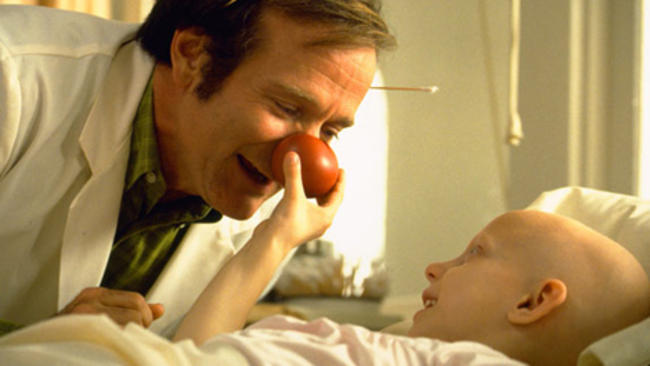
And it doesn’t just stop at the hospital either. His mission is to make everyone around him see things his way by using these same methods. He shows a no-nonsense woman, Carin (Monica Potter), the joys of laughter when using an enema bulb for a red clown nose; he brings his friend, medical student Truman Schiff (Daniel London), with him on his “unorthodox” exercises; and he even builds a giant papier-mâché pair of legs that reach an apex at an entrance for a gynecologists’ convention. (Class act.) Oh, and I’m pretty sure Patch’s stuffy bore of a roommate, Mitch (Philip Seymour Hoffman), will crack a smile once the movie is over.

Robin Williams is fit to play the part, but that really isn’t saying much. That’s because “Patch Adams” is pretty much an ideal example of the “Robin Williams formula” in which Robin Williams plays a quirky free-spirit that is up against the villainous establishment-types, and while he’s rebellious and confident “poet” of a protagonist, he manages to get his way in the end, usually after an obligatory big-speech.

Speaking of which, there is a big-speech. And yes, it takes place in a courtroom. And wouldn’t you believe it—this scene ends on an unbelievably forced, painful note with the child cancer-patients walking into the room with big red clown noses to appeal to the jury that seeks to finish with Patch’s medical career quickly. Give me a break. (And why are all of those kids even out of bed?!)

Now, a word about the real Dr. Hunter “Patch” Adams. Despite what this movie would like you to believe for the sake of a typical Hollywood tearjerker, this Patch Adams goes beyond just being a clown. This guy knows what he’s doing. His methods are untraditional in some sense, but always in a way of hard work. And he treats his patients with respect and individuality, compared to the fictional Patch Adams in the movie which pretty just portrays him as more or less…a clown.

But here’s where the fact-vs.-fiction really shoots the movie in the foot—not just with the inaccurate portrayal of a fascinating guy, but also of his friends. In particular, the character of Carin, we all know is there for a romantic love-interest and is simply there to die because that will lead to a crisis that will need to be resolved. Here’s something that maybe you didn’t know—Carin was loosely based on a real person, but she was never romantically interested in Patch in the slightest at all. In fact, Patch had a best friend whose life was lost in a tragic incident just like Carin’s was, but it wasn’t in the same way as was shown here. And if you could believe it, that friend was not a “she,” but a “he.” Why did they change the gender and make the friend into a love-interest for Patch in the movie? Because every feel-good movie needs a relationship and a crisis, so the filmmakers decided to kill two birds with one stone. This movie makes me want to puke.

“Patch Adams” definitely does not earn its corniness or melodrama. It’s so obvious, so clumsy, and such a miscalculation in a “based-on-a-true-story” subgenre if ever I saw one. Do yourselves a favor, and look up the actual Dr. Hunter “Patch” Adams. Don’t rely on this movie to tell you about him.

Eye for an Eye (1996)

15 May

eye-for-an-eye-5-1

Smith’s Verdict: *

Reviewed by Tanner Smith

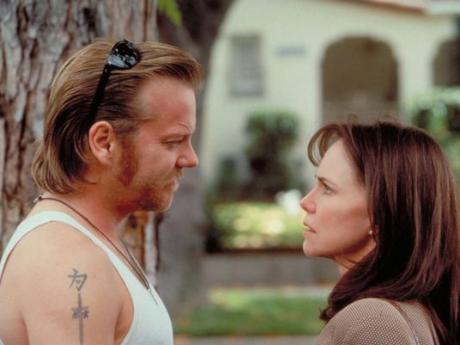
“Eye for an Eye” is a confused movie that doesn’t know what kind of film it wants to be. Is it a film that tells us vigilantism is bad, or is it a film that shows the necessaries of such? It’s about a woman whose teenager daughter is raped and murdered, and seeks bloody revenge on the man who did it. She gets ahold of a gun, practices shooting targets every day for weeks, gains assistance from other secret vigilantes, and even follows the guy around from place to place.

This is of course still going after the man calls the mother on it and threatens her other, much-younger daughter if she’s seen near him again. But for her, it won’t end. Well OK fine, but what about the police? When the same man rapes and murders another woman, they’re still not able to lock him up, even though they clearly know he’s a killer as much as we do. Give me a break.

Early in the movie, the mother, Karen McCann (Sally Field), has heard her daughter’s attack and murder over the telephone as the daughter tried to call for help. And I have to admit, this is a pretty effectively horrifying scene—that we focus more on Field’s face makes the scene work well, as she does sell it with the proper emotions. That we don’t see the killer’s face in the cutting-back to the attack helps too.

But it’s pretty obvious very quickly who the killer is, as the film never lets us forget that a suspect, a deliveryman named Doob (Kiefer Sutherland), is not merely a suspect, but the true killer. He is vile, mean, cruel, nasty, doesn’t care for anything, and even kicks dogs. And yet even though a supposed-smart cop (Joe Mantegna) knows that he’s clearly the killer, and I’m sure most of the force knows this too, Doob is let off because of lack of evidence. So he’s free to find another woman to stalk and eventually kill, just as Karen is planning to do the same thing to Doob.

Karen joins a support group for parents who lost their children to murderers (and their motto is “You show me your heartbreak and I’ll show you mine”), where she is then introduced to a few members who take it upon themselves to bring justice to those who did their children in. So that’s exactly what she decides to do. But when Doob realizes that he’s being followed by her, he advances toward Karen’s youngest daughter, Megan.

Get this—he’s actually able to walk onto the school playground and join Megan in a playhouse for mud pies. Where are the teachers on duty during this? Does it matter? “Eye for an Eye” is simply an exploitation film and this scene clearly shows you where it stands. It also sets the standards for how deplorable the film is.

The tone for “Eye for an Eye” is inconsistent. First, it wants us to question whether the characters are what we’re supposed to think of them, while what follows are scenes that clearly show the opposite of what we’re supposed to think and feel. And it’s painfully obvious that Doob, with no human or redeemable qualities whatsoever, is simply there for us to hate him. Why try to fool us into thinking otherwise at certain points? He’s clearly the killer here. But it doesn’t matter anymore, since the movie, I guess, tries to “fool” us by ultimately showing another murder committed by him.

Oh, and how about those quirky, lighthearted, comedic moments that come out of nowhere? For example, Karen thinks someone is following her in a parking garage, so she defends herself only to discover that it’s just a man walking to his car. And do I even need to mention the scene in which she has powerful sex with her husband (Ed Harris) after developing new skills?

Here’s a shock—the ending for “Eye for an Eye” is so rushed and so much of a copout that you just have to wonder if the writers had no idea where this story was going, and just decided to give it the conclusion we all knew was inevitable. Well thanks a lot. We waited an hour-and-a-half to get to what we expected all this time with nothing at all to back it up. I should be grateful that it finally just went ahead and ended, but I am past the point where I even care, after what I’ve been through to get to this point. On top of that, morality is thrown right out the window. There’s hardly a resolution, and yet we’ve spent a great amount of running time watching a movie that thinks it’s questioning certain morals and ethics. And this is supposed to be a happy ending. In some respects, it sort of is, but why would they execute it in this manner?

Not even a solid cast with Sally Field, Kiefer Sutherland, and Ed Harris could save “Eye for an Eye.” They’re let down by bad writing and deplorable nonsense. Here’s hardly a sense of moral values, you don’t much for this family’s plight since it’s merely glanced over in the first reel, and it seems like it’s more interested in cheap thrills than telling a complex story. “Eye for an Eye” is a horrible movie.

Twister (1996)

14 May

images

Smith’s Verdict: **1/2

Reviewed by Tanner Smith

“Twister” is one of those movies that inspire the question, “When you really get down to it, what’s the point?” This is a blockbuster that just feels like an excuse to showcase some high-quality special effects, and market the hell out of them so that the film will become a hit at the box-office. That’s it—that’s the main purpose I think was in mind when “Twister” was greenlit. This isn’t a disaster movie by most means. The characters aren’t in danger (for the most part, anyway); they’re just scientists studying the “mystery” of tornadoes and racing to get a machine inside one. There’s a romance in an attempt to try and tell some sort of human-interest story, but it just feels like filler until the next tornado effect arrives. And there’s a villain because…Lord knows a massive twister isn’t enough?

Now, to be fair, this is disposable entertainment. It’s energetic enough. The actors are game for the material. And yes, the effects are first-rate. This is a terrific film to look at and admire the technique. The tornadoes look incredible—they’re huge, loud, forceful, fierce, and amazing. And there’s even some room for special effects as humor, such as when a cow is sucked away by the tornado and the characters think another has passed when it’s actually the same one.

It’s obvious that “Twister” doesn’t care much for character, dialogue, or such to make for dramatic situations. And I wouldn’t mind so much, except that I didn’t really find it as witty or as energetic as it would like me to see it as, and thus I ask the question of what’s the point?

OK, fine. I know the point by now. It’s all about showcasing the new effects at the time.

The plot, such as it is, involves a team of tornado chasers, led by Jo (Helen Hunt). She is obsessed finding out the secret of the phenomenon ever since a twister took her father away years ago. Her team’s mission is to try out “Dorothy,” a machine designed to deliver data from inside the vortex. And thankfully, this is the time of one of the big series of storms, so they have to follow tornado among tornado until they reach “the finger of God.” Accompanying her is her ex-husband, Bill (Bill Paxton), and accompanying him is his fiancée, Melissa (Jami Gertz). The rest of the team is mostly forgettable, except for a zany comic relief played by Philip Seymour Hoffman.

Like I said, there is a villain here because apparently, Mother Nature isn’t enough of a villain here. So we have the slick, slimy Jonas (Cary Elwes), a rival scientist who has his own version of “Dorothy” to attempt with his own team. And yes, this means both tornado-chaser groups are competing against each other, trying to get to each storm first. It’s like tornado-hunting is an aggressive sport now or something.

“Superfluous” is not merely the right word to describe the character of Jonas. He’s not only unnecessary; he’s just annoying. (Cary Elwes’ *bleep*-eating grin and hokey Southern accent doesn’t help much either.) Apparently, Jonas used to be part of Jo and Bill’s team until he went solo and got corporate. Insert product-plug here, I guess.

The plot is completely artificial. Also superfluous is the subplot involving the rebuilding relationship between Jo and Bill. You can easily tell from their first meeting in this movie that they’re going to be back together and Melissa will get the shaft (though not the vortex, thankfully). They banter, they share moments, they catch up on certain topics of conversation, etc. Even though Bill Paxton and Helen Hunt are appealing performers, they’re not able to keep this subplot interesting enough. And Melissa is pretty much just a plot device to keep it going, unfortunately.

Mainly, “Twister” is disposable entertainment that you get into for the effects or don’t get into because there isn’t much else. I don’t hate this movie—the effects are fantastic and there are some effective moments of action and tension. But if it didn’t need a substantial plot, it at least needed enough wit to win me over and keep me invested. It didn’t, so I guess it didn’t work for me because of that. It’s not something I’ll be watching again anytime soon.