Archive | April, 2013

Antiquities (Short Film) (2010)

6 Apr

1275924313-anitquities

Smith’s Verdict: ****

Reviewed by Tanner Smith

“Antiquities” is an independent short film that seems to have come from the mindset of aspiring writers who gain further inspiration by thinking, “I have very little money; I’ll write funny jokes.” Arkansas writer-director Daniel Campbell is obviously so intelligent a filmmaker that he’s able to get laughs by just everyday quirkiness, because the comedy in “Antiquities” comes from the oddness of a particular day at work. It’s short (with a running time of about 18 minutes), it’s funny, and it has something to say about the oddities of everyday life.

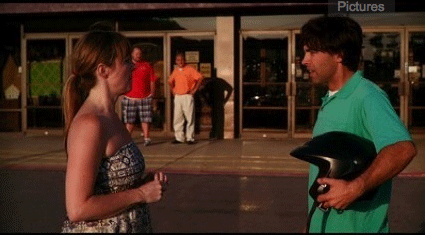
The film is centered on an awkward young man named Terrence (Jason Thompson) who works in an antiques mall. To call him socially-inept would be an understatement; Napoleon Dynamite would be more easily approachable by comparison. Campbell is not afraid of making Terrence as uncomfortable as possible. Of course, this sets the tone for the rest of the film, as Terrence interacts with his co-workers. This particular workday is Terrence’s “LAST CHANCE” day to hopefully get the courage to ask out the sole female employee, Marissa (Jennifer Pierce), on her last day at work. And apparently, the store’s standard S.O.B. Blundale (Roger Scott), who is also Terrence’s boss, is out to put his mind on other things, like a bad haircut and an inane strip joint.

There’s a feature-length film that could be made with the material in “Antiquities.” It’s the kind of material, for an offbeat, romantic comedy, that indie-film lovers love to search Internet film-forums about.

There’s a specific rhythm that adds to the charm of “Antiquities” that comes with the pacing of the story. For a film that has a lot of quirky material, everything seems to flow naturally without rushing into it. Even the characters seem fleshed out and very real, despite the fact that we follow only one (Terrence) as he interacts with the people around him—that’s the surprising part: each of the supporting characters seems realized and memorable. Aside from Blundale, we have the flamboyant Lewis (Tucker Steinmetz), lazy Ben (Matt Newcomb), “gangsta”-imitating Nathan (Jason Willey), and even Marissa herself has her own quirks.

The actors playing these characters are in tune with the rhythm of the film, making the performances praise-worthy. Jason Thompson is excellent as Terrence, and is ably supported by Roger Scott, Jennifer Pierce, Matt Newcomb, Greg Ballard, Tucker Steinmetz, and Jason Willey as his co-workers.

I mentioned “Antiquities” is quite funny, and it did get some good laughs out of me, particularly with the oddness of what seems like everyday quirks in this setting that, again going with the rhythm of the film, flow naturally, particularly when showing how much of an a-hole Blundale really is—he’s a jerk who knows he’s a jerk, and doesn’t care. And there are some great lines of dialogue here, such as when Blundale ropes Terrence into getting a haircut because “the board doesn’t like shaggy hair.” My favorite line comes when Blundale, trying to keep his mind off Marissa, takes Terrence to a strip bar, where the female stripper is too slow to impress; the stripper retorts to Blundale’s rude remarks toward her: “You try doing this when you’re three months pregnant!”

I’m not quite sure I made my point well enough in how good “Antiquities” is, and how delightful it is. But it is a very well-executed short film with a smooth comic flow and an original quirkiness in its writing and characterization. It’s a real treasure.

The Host (2013)

5 Apr

revthehost

Smith’s Verdict: **

Reviewed by Tanner Smith

The young-adult novel “The Host” was yet another attempt from Stephenie Meyer to tell a story about true love conquering all even in the most surreal (and supernatural) of struggles. That’s what she presented with the “Twilight” books (which inspired the “Twilight” movies), which was about a sadomasochistic girl and a brooding vampire boy risking everything to be together. And then she followed with “The Host,” which is more like a teenage version of “Invasion of the Body Snatchers” in that most of humanity is controlled by alien parasites, and the main characters are mostly young people (in love, of course). Now that the series of “Twilight” adaptations are finished, it was inevitable that the other Meyer young-adult novel would be adapted for a film to cash in on that “craze” (if you will). That of course is the science-fiction teen-romance of the same name, “The Host.”

As the movie opens, we learn that most of the human race has been assimilated by an alien race—a species of parasites called “Souls” that enter a body though a slit in the neck and take over. (The only giveaway side-effects is that the eyes are now glowing-blue and, for some reason, everyone is required to wear white suits.) This way, the humans are dying out, and the aliens are spreading with their bodies and identities.

A small resistance of surviving humans includes teenage Melanie Stryder (Saoirse Ronan) who is captured by a “Seeker” (Diane Kruger) while on a looting mission with her brother and boyfriend. She leads them away from her brother and boyfriend, but gets captured after an accident and becomes the “host” for an alien named Wanderer. But because Melanie was still alive when her body was invaded, she still lingers, imprisoned in her own mind. Wanderer can hear Melanie’s voice, and the two often struggle for control. When Seeker can’t get the information she needs to find the whereabouts of Melanie’s family and friends, she decides insert her own Soul into Melanie’s body and gain the information herself. With Melanie’s help, Wanderer escapes and travels to the desert to find the rebellion group Melanie was with.

Soon enough, they’re united with Melanie’s younger brother Jamie (Chandler Canterbury, “Knowing”), Melanie’s boyfriend Jared (Max Irons), and Uncle Jeb (William Hurt), who is the smartest person in the entire movie. (The movie even takes a crack at his intelligence a couple times.) They are all part of a rebellion that hides in a cavernous home from patrollers in helicopters and search cars. Of course no one, except Uncle Jeb (like I said, smart guy), believes that Wanderer is on their side. But she manages to gain trust from some of them, and even convinces a few of them, especially Jamie and Jared, that Melanie is still around.

In the meantime, Wanderer (who gains the nickname of “Wanda”) develops a life of her own, becoming part of the group and falling for Ian (Jake Abel). This of course leads to complications, and a most bizarre love triangle. Or is a love rectangle? We have Melanie and Wanda in one body, but we have Jared hoping to start things over with Melanie and Ian who wants to be with Wanda. And whenever Jared wants to kiss Melanie, she’s really kissing Wanda who occupies Melanie’s body; and whenever Ian kisses Wanda, Melanie is disgusted and attempts to push him away by gaining control of her own body. Now, if that sounds the least bit ridiculous, it basically is ridiculous. But that’s not basically the problem here. The main problem is that while the movie spends so much time with this (and to the movie’s credit, there is no boring jealous rage boiling between both young men), you never feel like you know anything about either Jared or Ian. They’re just two strapping young lads with little to no personality, and I didn’t really feel any chemistry between Melanie/Wanda and either of them.

Writer-director Andrew Niccol (“Gattaca,” “In Time”) seems to be trying hard to make “The Host” into a good movie. You can feel that effort was put into the making of this adaptation of Stephenie Meyer’s novel. But as I hear he’s also very faithful to the source material (as far as I heard; I never read the novel in the first place), there lies the problem here. If the novel’s dialogue is as hokey and embarrassingly bad as in the screenplay (lines include “It’s not me you want, it’s this body”), then my notion is that this could’ve been improved if it was rewritten as a different story. That’s because as the dialogue is clumsy, the narrative structure is also awkward. The story seems to jump all over the place, particularly evident when we’re dealing with Seeker and her persistent search for Wanda and the resistance. OK, I guess it is interesting how Seeker discovering her dark side with this invasion (and by the way, it’s funny how no one else seemed to bring that up all this time), as she does start to feel guilt after making a few mistakes in finding what she wants. But Seeker doesn’t have enough significant screen time to make it really amount to anything—there are hardly any compelling issues to sense here. It leads to a flat resolution as a result.

I mentioned that Niccol put some effort into this film, and there are some scenes that are quite effective, such as when Jamie shows Wanda his secret cave with a thousand glowworms that make the cave wall look like the night sky. That’s a nice scene, and there are some other pleasant scenes in which Wanda interacts with the people in the caves. I can’t help but feel how this would have been if Niccol just removed the Meyer material and told a story using the same premise, because while it’s not entirely original, it is admittedly engaging.

What really makes “The Host” at least watchable is Saoirse Ronan as Melanie/Wanda. Having been from the big screen for about two years, she still proves to be one of the best young actresses of this generation. She’s very good here, though hardly anyone else is of the same strength. Diane Kruger is dreadfully miscast as Seeker; Max Irons and Jake Abel do what they’re required to do (which is to say not much); William Hurt doesn’t even seem to be trying for credibility as Uncle Jeb.

So while I can’t say “The Host” is a terrible movie, I can’t say it’s really that good. Let me put it this way—it’s more mediocre than it is godawful. It could have been a lot worse. It has some interesting ideas for dramatic tension in its subject matter, but the film is so one-note that it robs it much opportunity.

My Cousin Vinny (1992)

5 Apr

001

Smith’s Verdict: ***1/2

Reviewed by Tanner Smith

“My Cousin Vinny” is a comedy that relies not just on the comedic talents of the actors, but on its script. This is one of those comedies where the screenplay—material and dialogue—is funny, whether the film itself stinks or not. Luckily, while “My Cousin Vinny” has its problems, it also plenty of laughs and great acting that make it a treat to watch.

The movie opens as two young men on their way to college stop at a gas station in a small town in Alabama. Shortly after they leave, they’re arrested. At first, they think it’s because of the can of tuna that they didn’t realize they’d lifted from the store. But they soon realize—though, a little later—that they’re suspected of murdering the store’s clerk. (I love this exchange: “You think we’re being booked for shoplifting?” “No, you’re being booked for shoplifting. I’m being booked for accessory to shoplifting.”) So the boys—played by Ralph Macchio (“The Karate Kid”) and Mitchell Whitfield—need a lawyer to defend their case. Luckily, Macchio has a cousin named Vinny (Joe Pesci)…who has graduated law school, but passed the bar only after the eighth time. This is his first trial. He lies to the judge (Fred Gwynne) about handling plenty of cases and is held in contempt for sporting his leather jacket in the courtroom. But who knows? He could have what it takes to win this case in the end.

Accompanying Vinny from New York to Alabama is his fiancée named Mona Lisa Vito (Marisa Tomei). She has a loud mouth, a hard Brooklyn accent, and a tendency to stick out in this small town like a sore thumb (with her sexy attire and camera in hand), but she’s supportive and lends Vinny a helping hand, even though Vinny is reluctant to give it. But who knows? She might know a thing or two that could be important to the case.

The running joke is that Vinny is a terrible lawyer, since this is his first case and the boys’ lives rest in his hands to prove their innocence. Surprisingly, this works. Any smaller case, like robbery or drugs, and this probably would’ve proven to be too believable to be funny—I could be wrong. But in this murder case, the more unbelievable it is, the more agitated and nervous Vinny is, and the funnier it is as a result.

Pesci’s funny, but even funnier is Marisa Tomei as Vinny’s fiancée Lisa, who is just lovable. The character’s street-smart personality and her ways of interpreting things or dealing with things make for more-than-effective comic timing. There is not a false note in Tomei’s performance—beauty, brains, and wisecracks are what the character requires. Tomei delivers more than that. She’s perfect in this movie, and she displays great chemistry with Pesci.

There are many laughs in this script. Highlights include: Whitfield’s misunderstanding when he first meets Vinny (while in jail); Vinny’s “explanation” after being asked how his clients plead; Lisa’s reaction when Vinny goes hunting with the prosecutor (Lane Smith); Gwynne’s misreading of the word “yoot” (“youth”); the public defender (Austin Pendleton) not letting out a complete sentence half the time. Plenty of good, funny stuff in this movie, and I haven’t listed them all. It wouldn’t be fair. But I can say that the final scenes of this movie, in which the getaway car is in question, are brilliantly written and very funny as well.

“My Cousin VInny” does have a few hit-and-miss jokes and the movie loses focus of the two boys, so it’s a little hard to worry about them. But with Pesci and Tomei’s performances and a script with plenty of goods, “My Cousin Vinny” is a terrific comedy about trial and error.

The Uninvited (2009)

5 Apr

normal_the-uninvited-2009

Smith’s Verdict: ***

Reviewed by Tanner Smith

(Originally reviewed mid-2009)

Another Asian horror film remade for American audiences…this time, it’s “A Tale of Two Sisters” from Korea remade as “The Uninvited.” Now, don’t dismiss this as a rip-off right away. “The Uninvited” is a chilling piece of work by the Guard Brothers by Britain. This is their directorial debut, and it’s not a bad one.

The main reason “The Uninvited” works so well is that Emily Browning is a most engaging choice for a heroine. Her face is so wonderfully expressive and she makes her character convincing in the scenes where she is supposed to be scared or confused. Emily Browning is an Australian actress, and she is 20 years old, though she looks 14. She was previously seen in “Lemony Snicket’s A Series of Unfortunate Events.” She’s terrific in this movie, and she’s so fresh and ready to take on any role.

Emily Browning plays Anna, a teenaged girl who is at a party at the beach one night. But when she is making out with her boyfriend, he says he has a condom. That causes her to leave but when she arrives at her house, she sees the boathouse nearby blow up with her terminally ill mother inside of it.

For almost a year after the incident, Anna is released from a mental institution to go back home to her loving father (David Strathairn) and her sassy older sister Alex (Arielle Kebbel). She doesn’t quite remember what happened the night of the incident. Her father’s new girlfriend is Rachel (Elizabeth Banks), who was her mother’s caregiver. Anna doesn’t trust Rachel, who is just dangerously nice.

Anna keeps questioning what really happened that night. Her boyfriend Matt claims to be a witness to the accident but he never gets a chance to talk to her. Rachel may have something to do with it. Even Alex seems to think so—the fire may not have been an accident but an act of murder by Rachel to get closer to their father. While Anna tries to figure things out, she is being haunted by visions of her dead mother who creepily tries to tell her something.

The movie looks good. I like the ominous look of the horror movies from the 70s and 80s. And the thriller aspect is effective. I recoiled in my seat during a few of the scenes. One sequence in particular is nail-biting. It’s the scene in which Anna sits up in bed and some thing is creeping towards her.

The actors are effective. David Strathairn is well-cast as the loving father who may have a secret kept. Arielle Kebbel brings charisma and energy to her role as the sassy older sister. And Elizabeth Banks, who has been the career woman for the past few months (she was George Bush’s wife in “W,” Miri in “Zack & Miri,” and the love interest in “Role Models”) as the beautiful, nice blonde, shows a darker side than we’ve seen her before. But Emily Browning makes the best impression here.

This is a thriller that works. We don’t really know why Anna is seeing all of these visions and we keep anticipating for an answer. There are a lot of scenes that seem set up and they all lead to the big twist at the end of the movie.

I have seen a lot of thrillers with big twists at the end and I love them sometimes—for example, “The Sixth Sense” and “Frailty.” But with “The Uninvited,” the ending’s twist is a bit too much. I will say this, though—I didn’t predict it. But it makes the whole movie kind of sad in a way that makes the audience question themselves, “Did who we rooted for deserve to be rooted for?” I’m not going to give the ending away, but I am going to give “The Uninvited” a marginal recommendation. Emily Browning won me over.

Antz (1998)

5 Apr

1667223

Smith’s Verdict: ***1/2

Reviewed by Tanner Smith

Woody Allen in a voiceover role—it had to happen sooner or later. His fast-paced comic timing is what made him famous in the first place, and you just had to imagine him in a recording studio, performing for an animated character. “Antz” is the film that finally used this method.

“Antz” is the second computer-animated film after Disney/Pixar’s “Toy Story” three years before. And speaking of which, I’d say that Dreamworks (the studio behind “Antz”) was in a hurry to give Disney a run for its money, seeing as how Disney/Pixar made a similar “insect epic” (as I think you’d call it) called “A Bug’s Life,” released the same year as “Antz.” Both movies feature ants on incredible adventures. But I’m not comparing the two, because they are both very good movies. I’ll just talk about “Antz,” a delightful movie with a sharp script and a visual brilliance.

The story involves an ant named Z (Woody Allen), who’s as neurotic and cynical as Allen’s other characters. There are two types of ants in his world—workers and soldiers (and of course, there’s also the royal family). Z belongs in the former category, helping to continue building the anthill. He wants to be more than the group—he doesn’t want to continue being insignificant. Then one night, at a party, he dances with Princess Bala, is completely lovestruck, and dares to find a way to meet her again.

His plan is to impersonate his soldier friend Weaver, because soldier ants get to serve for the royal family and thus Z will be able to see the princess again. But he couldn’t have picked a worse time, as it turns out the ants are at war with a colony of termites. In a battle, Z hides as the other soldiers fight. But when he’s the lone survivor of the battle, he’s mistaken for a war hero and sent to honor the royals. But when his identity as a worker is revealed, Z runs away and takes Bala with him. Together, they embark on a quest to find “Insectopia,” which is said to have mountains of food, while enduring many obstacles along the way.

The story is nothing special—a loner is suddenly in the middle of a grand adventure and must be the one to thwart a villain (in this case, it’s the evil General Mandible, who won’t stand for workers’ newly-formed individuality). But the scope of the film is just marvelous. Because the ants are so small and we see from their point of view, the world around them must be grand. An anthill is like a palace, a thermos is a big round tower, a magnifying glass’ sun glare becomes fatal, a apple’s worm turns into a roller-coaster ride, and in the film’s most exciting sequence, a pair of sneakered feet become an imminent threat. Visually, “Antz” is impressive and I could forgive the shortcomings of its story and just enjoy this great new world—ours, seen by little eyes.

This is not necessarily a “kids’ movie.” At its best, it’s a comedy. Like I said, Woody Allen’s vocal performance the neurotic worker ant Z is wonderful. There are great visual jokes, such as when Z and others are being chased by a magnifying glass and the reveal of Insectopia (a garbage can). Although, some of which are somewhat brutally funny, such as a death scene with Z and the disembodied head of a friendly soldier. The dialogue is consistently funny, such as when Z asks about how the soldier ants can’t just compromise with the termites and “try influencing their political process with campaign contributions.”

And Z knows that the story is nothing new—he refers to it as a “basic boy-meets-girl, boy-likes-girl, boy-changes-underlying-social-structure” tale.

The vocal cast is very game. In addition to Allen, we also have Sharon Stone as Princess Kala, Sylvester Stallone doing solid work as Z’s dim-but-trusty friend Weaver, Gene Hackman as the villain, Christopher Walken hamming it up more than Hackman as the general’s second-in-command, Jennifer Lopez as Weaver’s love interest, Danny Glover as a friendly soldier that Z meets before the battle, and Anne Bancroft as the ant queen. I think I should also the clever move of having the characters share similar faces to the actors showcasing their voices.

Even though most people easily compare this to “A Bug’s Life”, I think they should just enjoy “Antz” for what it is—a nice, visually-impressive comedy that will entertain adults, who will laugh at certain mature bits of humor, as well as children, who will dig the story and the cool visuals.

NOTE: This movie is rated PG, but only for casual swearing (very unusual for an animated film).

Rocky IV (1985)

5 Apr

rocky iv 1985

Smith’s Verdict: ***

Reviewed by Tanner Smith

I want to ease into reviewing “Rocky IV,” the fourth entry in the “Rocky” film series, because I really shouldn’t rate it three stars (out of four). I should give it two-and-a-half stars—it’s not a good movie, but not a bad one either. But I won’t give it a mixed review because to me, this is a certain guilty pleasure. That’s what the “Rocky” series has stooped to—silliness yet a great deal of fun. The Academy Award-winning original film, “Rocky,” is an all-American classic, the second film is about as strong, and the third one was only decent. You notice how the films are descending from “all-American classic” to “just as strong” to “only decent” to “silliness yet a great deal of fun?”

Yet, I just can’t help myself. I enjoyed “Rocky IV” as a silly sports film. Yes, it’s predictable. Yes, it’s full of sports film clichés—hammy motivational speeches and training montages (there are many to be found here). Oh, and there’s more…

“Rocky IV” takes place a few years after the climactic fight between Rocky Balboa (Sylvester Stallone) and Mr. T. He, his wife Adrian (Talia Shire), and their 8-year-old son attend a birthday party for Rocky’s brother-in-law Paulie (Burt Young). Apparently, Paulie doesn’t have a lot of friends, seeing as how Rocky, Adrian, and Rocky Jr. are the only ones that are there. If that’s not enough, here’s the most bizarre part of this scene—Rocky’s birthday present for Paulie is a robot that apparently understands human statements and responds to them. All I’m thinking is—what was Sylvester Stallone thinking when he wrote the screenplay for this film, like he wrote the first three films? Did he really think a talking robot was necessary for the “Rocky” films? I mean, you don’t even see something like that in “Staying Alive,” which Stallone directed.

Five minutes in and there you go: the most bizarre thing you’ll find in a sequel to an “all-American classic.”

Then, we meet Drago (Dolph Lundgren), a 6 ft. 4, 261-pound Russian genetically-altered boxer. (This guy could make a great video game villain.) He comes to America to take on some great American fighters. So Apollo Creed (Carl Weathers), feeling like he’s lost his strength, decides to fight the giant monster himself. Needless to say, this doesn’t go too well, so Rocky spends the rest of the film training to take on Drago for a big climactic fight in Russia.

So there you go. The robot and the “super boxer” make the first half into something bizarre for the “Rocky” films. Then, in the second half, we get Adrian’s worrying (as usual), Paulie’s comic relief (as usual), and the climactic fight (as usual). Don’t think I forgot the training montages because I’m going to say that there are a lot of them in this movie—no exaggeration whatsoever. The rich dialogue and characters from the original “Rocky” are gone—“Rocky IV” is a silly sports film. It even has the people of Moscow chanting, “Rocky! Rocky! Rocky!”

What’s fun about this movie? Well, the fact that Rocky’s rival-turned-buddy Apollo Creed and Rocky’s soon-to-be opponent Drago are fighting each other for a match is fun even of itself, but before the fight begins, James Brown comes along and sings “Living in America”—I couldn’t help but smile during that scene. Rocky is still the man he was and played by Stallone with gusto. Dolph Lundgren is suitably menacing as Drago, though I’d like to see another side of him, preferably with his wife, played by Brigette Nielsen. And of course, I’ll never get tired of Paulie.

Oh yeah, and just to make sure the film doesn’t end as the first three movies did (the fight ends, the victory music is played, and Rocky hugs Adrian), the screenplay finds it fitting for Rocky to give a hokey speech about how people can change.

I am dead serious. Rocky makes a speech about world peace after he and Drago pummel each other almost to death. I want to hate this movie, but I just can’t!

Cold Tracker (Short Film) (2012)

4 Apr

stills_ColdTracker2

Smith’s Verdict: ***

Reviewed by Tanner Smith

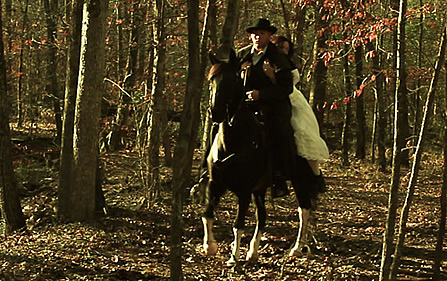
“Cold Tracker” is a short Western, set in the American Civil War era, about a man who returns home to rural Arkansas after serving in the war, only to find that his wife had been murdered only the day before. With the law unwilling to go after the bandits responsible, the man takes matters into his own hands and sets out to track them down himself.

It sounds like a standard story for a Western, but what makes it interesting is the way the titular cold tracker (Scott McEntire) is struggling with the conflict of dealing with the loss of his wife (Mandy Fason), whom he knows he could have protected if he returned just one day earlier. While he’s on this crusade to track down her killers, he is accompanied by a vision of his wife that aids him as he continues. This leads to the choice of what to do when he actually finds them. Will he kill them in order to avenge his wife, or will he let the law do the job?

All of this occurs in a running time of 13 minutes (well, 12 minutes, excluding the credits), creating a brisk pace and not stopping for anything pointless. The flashbacks are placed properly in intersecting with the ongoing story, and the film even manages to leave room for one effective dramatic scene—a flashback in which the tracker leaves for war and tells his crying wife goodbye. This makes his journey all the more effective in that you know how much guilt he feels in knowing that was the last time he would see her alive.

My only quibbles with “Cold Tracker” are minor. Some line-readings are a bit stilted (but for the most part, they’re spot-on). And also, being a 13-minute short with enough story material for 20 minutes (at least), parts of the film felt a bit rushed, and unfortunately so does the ultimate resolution/redemption for the hero. It’s there, but it feels hurried. But to the film’s credit, the ending, what follows that scene, does have enough weight to continue to feel for what has occurred before.

“Cold Tracker” was written and directed by Leon Tidwell, the visually-impaired Arkansas filmmaker who also made the amusing short “The Conversation.” That was a film that allowed him to show, in a narrative metaphorical way, the frustrations in finding work because of his disability. With “Cold Tracker,” it’s clearer that this is a guy who truly loves movies and is determined to keep making movies despite his visual impairment. And I further look forward to seeing his latest work, because “Cold Tracker” is a good short film that continues to showcase the talent of this skillful filmmaker.

NOTE: The film can be seen here: https://vimeo.com/68456516

Drive (2011)

4 Apr

Drive-2011-Movie-Image-3

Smith’s Verdict: ***1/2

Reviewed by Tanner Smith

Is “Drive” a blockbuster? I’m not sure. But it is an action film…or is it? Maybe it’s an action film made for those who usually like blockbusters or action films. There are car chases and a deal of tension, but more importantly, it also has a sense of calmness in its pacing about it and it has characters worth watching.

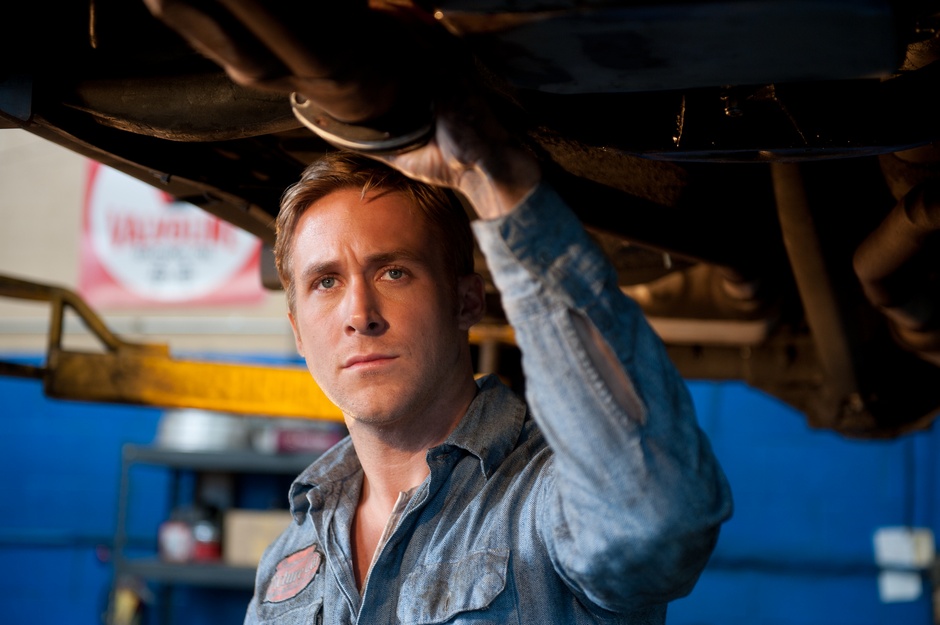
It’s important for a film like this (or sort of like this) to have an intriguing hero, and “Drive” definitely has one. As played by Ryan Gosling, the lead in “Drive” is a guy simply called the “Driver.” He’s a mysterious auto mechanic who mostly drives—he does car stunts for action movies and drives getaway cars for bank robberies. He says very little and is given little background. This guy is a puzzle. We never know his name and we’re never fully aware of his intentions. We just know that he drives and he has no fear of dying. Ryan Gosling may not be a likely choice for an action hero, but this isn’t a likely choice for an action film. (Excuse me; I’m going back and forth as to whether or not “Drive” is really an action film.)

“Drive” opens spectacularly with a prologue involving a getaway. The Driver provides transportation for some criminals and evades a police chase by timing, swiftness, and possible further-planning, This opening sequence lasts about eight minutes and it’s one of the best paced, thrilling scenes I’ve seen in a long time. That alone could make its own short film, but the rest of the movie is still pretty good.

The plot involves the Driver as his boss Shannon (Bryan Cranston) gets him a job that will allow him to drive a souped-up car in races. But to pay for the car, he has to turn to a couple of mob thugs, Bernie (Albert Brooks) and Nino (Ron Perlman). Meanwhile, he befriends his neighbor Irene (Carey Mulligan) and her young son. In about a week, they grow warm, but then Irene’s husband (Oscar Isaac) is released from prison. In a nice twist, the husband isn’t a hostile, enraged, or even jealous man. He thanks the Driver for looking after his wife and kid, but he also asks him for a favor since he sees him as a professional driver. He plans a heist and asks the Driver to provide the getaway vehicle, and this is where the movie goes underway.

The heist doesn’t end well and the dilemma with Bernie and Nino is further developed, putting lives at risk, which include Irene and her son as well as the Driver.

So with the Driver as an intriguing hero, there must also be menacing villains. Bernie and Nino are absolutely (and memorably) ruthless, while Shannon is more benevolent as the man who the Driver needs on his side. They’re all well played by Albert Brooks, Ron Perlman, and Bryan Cranston, but if I had to pick the standout, it would have to be Brooks. Because we’re used to seeing Brooks play the sympathetic funny guy, it’s surprising to see just how believable and how effective he is as the refined Bernie, constantly going off on the more loutish Nino and secretly planning his next moves.

The whole movie is presented in a real sense of style. The writing is very smart in making the Driver a sympathetic mystery, the villains consistently ruthless, and the abilities to know when to relax and develop character while also setting up the action. The car scenes are outstanding—there seems to be very little CGI and it looks like real stunt driving happening on the screen. It feels so real as it’s happening, and that further builds up the tension. The final act of the movie isn’t as strong as what followed before. This is more standard action film stuff—it’s when the action kicks up an extra notch, the violence becomes more intense (including a gruesome scene in an elevator), and Gosling and Brooks finally meet for a conclusion for either one of them or both of them. But that doesn’t mean we’re not interested in the final outcome.

There’s a real 1980s-vintage feel to the film, from the pink-colored opening titles to the pumping soundtrack (which features a beautiful-sounding song called “A Real Hero,” by the band College). There’s also symbolism to be found, such as when the color of blood is contrasted the beauty of the palm tree outside a nearby window. The director Nicholas Winding Refn crafts this film with complete seriousness—he takes the characters as seriously as the action scenes. That’s what makes it different from most action films (OK, I’ll call it an action film) and why the final act is interesting, despite my little quibbles with it. “Drive” sets up its characters so we can get to know them so that when the action does kick up an extra notch, it’s effective.

Ryan Gosling, with only mannerisms and facial expressions to work with, is just phenomenal. He makes the Driver a compelling individual to watch—we want to know more about him. He creates a hero that is so shrouded in mystery that it’s very compelling. This isn’t the type of role that Gosling isn’t accustomed to—he winds up owning the screen. His relationship with Carey Mulligan’s Irene and her son is sweet. They say very little, as the Driver hardly engages in small talk, but the mood is there. Mulligan is lovely and innocent in the role and deserves to be secure.

“Drive” is a tense, stylish, wonderfully acted, brilliantly crafted thriller (hey—there’s a better way to describe “Drive!”) that opens masterfully, continues smoothly and icily, and ends chaotically, for better or worse. All in all, this is a very good movie with an intriguing hero, menacing villains, an icy tone, and some real badass driving.

Class (1983)

4 Apr

class 1

Smith’s Verdict: ***

Reviewed by Tanner Smith

I don’t understand why most critics seem to have a grudge against the adult drama and the teenage comedy in the film, “Class,” which seems to have both. I think, with this storyline, they needed both. I didn’t have much of a problem with the dramatic parts like those who didn’t like “Class” did. I thought they sort of fit.

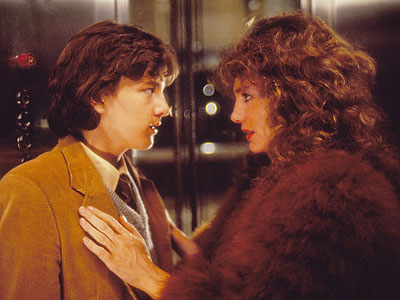
The storyline is this—a shy 17-year-old virgin named Jonathan (Andrew McCarthy) moves into a boarding school. His roommate and best friend Skip (Rob Lowe) gives him some money to go into the city to find some excitement. Jonathan goes to the city and finds excitement, alright…in the form of an attractive (and much older) woman, played by Jacqueline Bisset. As the days go by, he and the woman have an affair together. Jonathan is suddenly the stud at school now (word gets around), but there’s a problem. A huge problem…

And that’s all I’m going to say about that. Even though the advertisers went out of their way to make sure everyone who saw this film in cinemas knew the secret that comes midway through the film, I won’t give it away here. I myself knew what the secret was, but that was on the fault of the advertising, not the movie itself. It’s very discreet in setting up the twist.

“Class” is like a prep-school retread of “The Graduate,” but it has more comedy in the scenes involving Skip, Jonathan, and their friends as they pull practical jokes on each other. Those scenes are pretty funny. Also, the film has a solid characterization of students and teachers. Then we have the more dangerous stuff. The scenes involving Jonathan and the Bisset character are handled delicately, after a gratuitous sex scene that shows up in almost every teen movie in the 80s. Jonathan is proud of his popularly at the prep school (while the woman thinks he’s attending college) and likes being around this gorgeous, nice woman, so it’s not just about losing his virginity. But then when she founds about who he is (and how young he is), he really misses her. Then when the secret is revealed, Jonathan is caught up in complications that he can’t seem to handle.

To be sure, this isn’t a great movie. Sometimes, it seems like the Jacqueline Bisset character is a bit confused. Also, the film is somewhat inconsistent with some of the comedy and drama, and the ending comes off as flat—this film doesn’t have a real payoff. But most of “Class” did work for me. Rob Lowe and Andrew McCarthy are both good, appealing young actors and most of the scenes involving them and their friends are funny (they’re more appealing than the teenagers in “Porky’s”). The drama works nice, save for the moments I criticized above. So I recommend “Class” with three stars out of four.

All of Me (1984)

4 Apr

allofme

Smith’s Verdict: ***1/2

Reviewed by Tanner Smith

Steve Martin continued to show his skill as a highly acceptable comic actor in 1984’s “All of Me.” “All of Me” has a risky idea—having Lily Tomlin possess the right side of Steve Martin’s body while he controls his left side. The reason that is risky is because Lily Tomlin is a great comedienne and Steve Martin hadn’t been fully appreciated at the time this was made. And since Lily Tomlin is mainly inside Steve Martin, we see more of Martin than we want to, right? In this case, wrong. Lily Tomlin (whose voice is heard a lot) does show up when Steve Martin looks in the mirror and they have their own conversations. But in the meantime, Steve Martin is such a great presence that we love watching him control his own body.

Steve Martin learned to relax a little bit this time, since his over-the-top goofiness in “The Jerk” (directed from the same man who directed “All of Me”—Carl Reiner). Here, he plays Roger Cobb, a hotshot attorney who is unhappy because he is reaching middle-age. Roger will do anything to get a promotion (although bringing his dog to work shouldn’t help, it almost does in the case of his boss). But then he meets Edwina Cutwater (Tomlin), a dying rich woman who wants to live forever (or rather, have a new better life). Roger is to get her affairs in order but he thinks that she’s crazy. She, on the other hand, is confident enough to shun lesser people down.

Edwina hires a guru of transmigration (Richard Libertini) to put her soul into the body of a young, attractive British woman Terry Hoskins (Victoria Tennant). But during the process, something goes wrong and Edwina accidentally winds up in Roger’s body. But she doesn’t control his whole body. Roger is still alive and he controls his left side while Edwina controls the right. This brings a series of misunderstandings, confusion, goofiness, and big laughs. In the scene where it has happened, Roger and Edwina fight for control over Roger’s body as if playing a game of tug-of-war. That’s a very funny scene.

As Roger and Edwina figure a way out of this mess, there are many other great scenes. Some of them may be obligatory but they’re still funny—for example, when Roger has to go to the bathroom, he needs Edwina to help him. Many other scenes showcase Steve Martin’s wonderful physical comic talent. We believe he really is fighting for control over his body—watch that scene I mentioned in the above paragraph and you’ll see what I mean. Steve Martin is great in this movie. He doesn’t go for the obvious physical jokes either (and neither does the script, which is funny and sweet at the same time)—he has learned to control himself a little more, so to speak.

Lily Tomlin is still with us—we just don’t see her as much. We hear her voice most of the time and we see her whenever Roger looks into a mirror and sees her instead of his own reflection. It’s fun to watch them mimic each other’s moves. Also, when Martin is alone, we never feel that Tomlin has left us.

The writing is very good. By the end of the movie, we have laughed and now we feel something for the characters. There are big laughs and genuine sweetness by the time the movie is over. What I also liked were the members of the supporting cast of characters—especially the guru who is learning how to get by in America. His scenes are hilarious and get even better with he’s with Martin, who is desperately trying to communicate with him while the guru is trying to comprehend. I also liked the character of Ty (Jason Bernard), who is a black, blind musician and Martin’s friend and partner.

“All of Me” is a very good comedy—funny, charming, sweet, and fantastic.