Archive | March, 2013

Spider-Man 3 (2007)

24 Mar

images

Smith’s Verdict: **

Reviewed by Tanner Smith

Where do I even begin with “Spider-Man 3?” Maybe I can start by saying that there are too many plotlines and villains for one superhero movie. But the problem is that I didn’t care much for either of them. Whereas “Spider-Man 2” knew what to focus on and how to make me care for what was happening, “Spider-Man 3” is all over the map. So, all I had out of this movie were a few nicely-done special-effects action sequences…and not much else.

There are so many problems with this movie that I hardly know where to start. I guess I should start with Peter Parker and Mary Jane Watson, two of the most boring characters to come around in a superhero movie. While they were likable, charismatic characters in the previous films, they’re just dull saps here. And is it really time for Peter to propose after only a few kisses? Their romance is so uninteresting that the waiter (Bruce Campbell) is the best thing about a romantic scene. And he’s the comic relief.

Now let’s look at them individually. Peter (Tobey Maguire) is still Spider-Man, but while he was conquering his demons in the previous films, everything just seems so hunky-dory for him that it just gets to his head so much that I’m not convinced when he supposedly “has a moment.” This is the movie in which Tobey Maguire did what he didn’t in the previous films as Peter Parker and that was, bore me. Then, we have Mary Jane (Kirsten Dunst). What is her deal? She’s a somewhat talented actress who is constantly having an on-again/off-again relationship with Peter (oh, did I forget to mention THAT). Could she just pick and develop an emotion? After seeing her, I realized I would’ve loved to see more of Gwen Stacy (Bryce Dallas Howard), Peter’s pretty science lab partner who is put in jeopardy so Spider-Man can save her and make Mary Jane jealous!

Then, there’s the villain…and the other villain…and a third villain! That’s right—there are three villains in “Spider-Man 3.” Not one of them are developed or interesting enough. In action movies, it’s better to have an interesting villain to go with an interesting hero. But the hero isn’t interesting in this movie and neither are the villains. First, we have Flint Marko (Thomas Haden Church), an escaped convict who wants to make things better for himself and for his family. While running from the police, he winds up…some sort of testing area that isn’t explained. I guess the radiation and the sand in that pit mixed with him and transformed him into half-man, half-sand. This gives him the nickname The Sandman. Do we ever know how he feels? Does he have a personality? Is he excused from a contrived plot point, such as killing Peter’s uncle? The answer to all three questions is no. We never know how he feels, whether turning into a dust storm or becoming a gigantic sand mutant in the street. In “Spider-Man 2,” we always knew how the villain Doc Ock felt. We know very little about the Sandman in this movie.

Then, there’s Peter’s former best friend Harry Osborn (James Franco). If you recall from the previous film, Harry discovered that his buddy was Spider-Man and believes he killed his father, who was the Green Goblin in the first film. Now, there is a new suit and glider left for him (I suppose) so he can become the next Green Goblin, or whatever. There are a couple fights between him and Peter—only one of them is well-done on an action-packed level. But don’t people see these unmasked flying men fighting through New York? Nobody looks out their windows to see what the commotion is about? The second fight is…a fistfight. That’s right—a fistfight. This isn’t a “Spider-Man” movie—it’s an Abbott and Costello knockoff.

Then, there’s Venom, which should have been the most interesting part of the movie. It has enough back story to make its own movie. But it isn’t used well—and when it is, it’s not used well ENOUGH. You see, it begins when a slimy, black alien organism lands on Earth and follows Peter home—how did Peter not notice it with his spidey-sense? But I digress. Apparently, it’s some sort of parasite that attaches itself to a host and takes over a part of its mind. So it attaches itself to the Spidey suit, turning it black and changing Peter’s attitude. Peter suddenly believes he’s cool and struts down the city sidewalk, pointing and smiling as people pass by. Good grief—Peter isn’t even a convincing bad boy; he just seems like a dork. And then—I’m not kidding—he dances at a club. He dances all over the place—like I said, not a regular “Spider-Man” movie.

And then once Peter takes the alien slime off of himself and it lands on Eddie Brock (Topher Grace), who conveniently (or inconveniently) happens to be Peter’s arch nemesis as photographer for the Daily Bugle. Now, he turns into Venom and sets out to kill Peter. This whole subplot could’ve been its own movie and could’ve been right. But no. Instead of a serious look at this otherworldly substance taking over an individual, we get that weird dance I mentioned in the above paragraph.

Have I left anything out? I sure hope not because I’m tired of writing this review and listing all of these faults. Oh, I suppose I should list some positive things about “Spider-Man 3.” The special effects do look great—I love the sequence involving an out-of-control crane. And a few people may see the film as a silly action picture. I enjoy silly action pictures, but this is pushing it for me. To wrap up this review, I’ll sum up “Spider-Man 3” in one noun—mess!
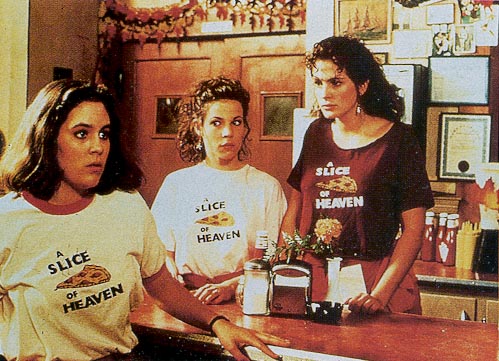
Mystic Pizza (1988)

24 Mar

mystic01

Smith’s Verdict: ***1/2

Reviewed by Tanner Smith

“Mystic Pizza” is a coming-of-age story featuring three young women who fall in love. It’s usually in movies like this where young people meet somebody attractive and go through many lengths to get what they want, but in “Mystic Pizza,” they don’t merely fall in love; they learn about their own standards for love. It’s a nice, well-acted movie that deals realistically with these issues, but with a certain charm that keeps it from containing a gritty feel.

The title “Mystic Pizza” refers to the local pizzeria in a fishing town called Mystic, Connecticut. The three central characters work there as waitresses—Daisy Arujo (Julia Roberts), her sister Kat (Annabeth Gish), and their friend Jojo (Lili Taylor). Their boss is the sassy but friendly Leona (Conchata Farrell), whose pizza contains a special secret sauce that has people coming for more—she won’t even tell her employers what’s in the sauce. (We never find out, either.)

The girls have their own adventures/issues with romance. As the movie begins, Jojo is about to be married to her loving boyfriend Bill (Vincent Philip D’Onofrio) when she passes out from stress right there at the altar. She loves Bill, but just isn’t ready for a big commitment, like he is. (Huh—that’s also a change in the movies. Usually, it’s the guy that won’t commit.) As the movie continues, she tries to romance Bill many times, but Bill believes that they should wait til marriage before they get physical. Would Jojo stoop so low as to marry Bill just to have sex with him? Actually, no. But she would like more passion in their relationship.

Daisy is playing pool and drinking beer at a local hangout when she notices Pretty Boy walking in and asking her to play a set with him. He’s rich, nice, handsome, and has the name Charles Gordon Windsor (Adam Storke). (Oh, and he can also shoot three dart bullseyes in a row after having shots of tequila.) He tells Daisy that he’s currently in law school, but eventually comes clean and says he was kicked out for cheating on a final. (Huh—no wonder he can shoot darts so well; he’s had time to practice.) Daisy is the most standoffish of the three women and possibly the more slutty, but she’s not dumb and can read people well. She takes a chance on this rich boy, but then she learns something she didn’t need to know about him, in a scene near the end when Charles actually stages a dramatic dinner scene with her invited to the family dinner—he accuses his family of being snobbish and actually pulls out the tablecloth from under the dishes. It’s then that Daisy notices that maybe Charles is just looking for someone to look up to him, which isn’t exactly what she needs.

Meanwhile, Kat is babysitting the daughter of a 30-year-old Yale graduate named Tim (William R. Moses). He’s a nice, smart man whom Kat falls in love with, which can cause problems because not only is he twelve years older than her, but he’s also married. The wife isn’t around, so she won’t have to worry about it until later. But she does restrain herself from expressing her feelings towards him. He starts to like her too, for her intelligence (she’s been accepted at Yale). However, by the time she comes home, she realizes she doesn’t know how to handle the situation as it is.

“Mystic Pizza” follows these three couples through a long summer where everyone would just rather not be stuck in Mystic, but you make do with what you have. Lessons are learned, certain secrets are revealed, and hearts are broken. What Kat, Daisy, and Jojo learn is that they have each other and their job at the pizzeria.

The acting is wonderful, especially by the three lead actresses. Lili Taylor displays a comic presence in the way of her odd relationship with Bill—there’s human comedy in how she reacts to certain things, like how she nearly freaks out after Bill expresses his true feelings (she comes to work three hours early, and nervously unstacks the table chairs). Julia Roberts is a true beauty and has a fierce amount of energy—watch the scene in which she tries to imitate the hitchhiking scene from “It Happened One Night”; it’s pure delight. Annabeth Gish is my favorite of the performers, portraying Kat with intelligence but also with a little vulnerability. The supporting cast is solid, but it’s Conchata Ferrell as the pizzeria owner and Louis Turenne as an uptight food critic who really shine.

“Mystic Pizza” is an interesting, nicely-handled drama with good performances and a lighthearted screenplay. It shows that love may not be easy, but at least you know what you want. It succeeds in delivering that message.

Revenge of the Nerds (1984)

24 Mar

images

Smith’s Verdict: ***

Reviewed by Tanner Smith

Here’s another risqué comedy about young people who break the rules and often talk vulgarly. When done right (like “Animal House” and to a lighter extent, “Risky Business”), it can be less raunchy than it sounds. But when done wrong (“Porky’s,” “Porky’s II,” “Where the Boys Are 84”—I could go on and on, but I won’t for space), they can be real scuzz-pits. Then you have “Revenge of the Nerds”—that’s a clever title for a movie and a clever idea. This is a raunchy comedy that doesn’t focus on the slobs or the jocks, but the nerds—the geeky, twerpy guys who are smart but socially awkward. This film does not take place in the real world—this is a movie in which all jocks are stereotypical jerks who, of course, are the most-loved ones on college campus, and also know nerds when they see them wearing glasses or sporting pocket protectors on their shirt pockets. Oh, and most of the “nerds” are freshmen, which makes it hard to believe. No introduction necessary—they just shout “nerd” at you and make your life miserable. It doesn’t matter what you do; you will always be a nerd to them.

Just describing that one detail of “Revenge of the Nerds” makes it seem ridiculously stupid. But this is a surprise—yes, it features stereotypical jocks (and nerds, for that matter) and quite a lot of female nudity from the sexiest sorority girls. But it also features enough laughs and enough likable lead characters (the nerds) that I’m recommending the film. It’s stupid, but it’s playfully stupid.

So anyway, the trouble starts when the jocks’ idiotic behavior burns their frat house to the ground and the jocks invade the freshmen’s dorms, forcing the “nerds” to sleep in the gym. Then, when the nerds (I hate to call them this) have an opportunity to make into the only fraternity that’s left for them—an all-African-American fraternity called Lambda—those dumb jocks ruin their chances by crashing their party and humiliating them. This will not do. It’s time to stand up and retaliate. Led by Louis (Robert Carradine) and Gilbert (Anthony Edwards), the nerds panty-raid the jocks’ favorite sorority house, install hidden cameras in their dorm rooms, and put “liquid heat” in the jocks’ jockstraps. And if they win the Homecoming decathlon at school, they can take over the jock fraternity.

At that point, the film is predictable, but it’s honest and displays the message that nerds are people too. Some of the nerds are types—we have the slob, the horny Asian, the gay African-American, and the weak nerd—but the two leads, Louis and Gilbert, seem like real people and do earn our sympathies. The jocks—this includes the football coach, played over-the-top by John Goodman—are types, like I said. But in this case, they deserve their comeuppance. I know I smiled when seeing them in pain after the nerds put liquid heat in their jockstraps.

Some of “Revenge of the Nerds” is funny and some of it is heroic. That’s a good enough mix for me to recommend the film without going too crazy over it.

Sling Blade (1996)

24 Mar

images-1

Smith’s Verdict: ****

Reviewed by Tanner Smith

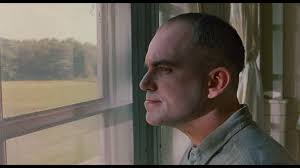
The first scene in “Sling Blade” lets you know that you’re in for something unique. It’s a remarkable monologue delivered by its lead character Karl Childers. Karl is mentally retarded, has a raspy voice, an overshot jaw, and a chilling story to tell. He has spent years in a mental institution after killing his mother and her lover. He is telling the story to a high school student for her newspaper and the only light in the room in which he tells the story is from a lamp. The lighting makes the scene even more chilling while he’s giving his monologue. But we also see the pain in Karl’s eyes as he tells it. It’s a great scene.

Karl is being let out into the world, because the doctors think he’s cured. He probably is. He’s not a killer; just a misunderstood human being. When asked if he could kill again, he says, “I reckon I got no reason to kill nobody.”

Karl Childers is one of the most memorable movie characters I’ve ever seen. Think of Forrest Gump crossed with a country man, give him a chilling back story, and you have a truly original character. He has little intelligence but feels pain and has a sort of sweetness to him. He also speaks and acts in a much distinctive way. Karl is played by Billy Bob Thornton, who also directed and wrote “Sling Blade,” with brilliance. He came up with the character, he notes, one day while shaving and practicing in the mirror, talking in a raspy voice. And Thornton makes “Sling Blade” a truly original, compelling, fascinating piece of work.

When he’s released, Karl finds work as a mechanic and befriends a boy named Frank (Lucas Black). Frank is a troubled boy whom Karl senses has a wounded spirit. He lives with a loving mother (Natalie Canerday), who lets Karl live in her garage. But Frank’s wounded spirit and troubles are caused by his mother’s boyfriend Doyle (country singer Dwight Yoakam), who is one of the slimiest characters in any movie. This is an example of Evil Personified. He lounges around the living room, has loud hurtful opinions about everyone, is abusive, and criticizes Frank very cruelly. Why the woman just doesn’t dump Doyle is beyond me, but whatever. Love is blind.

Another key character is Vaughan (John Ritter), a homosexual who is insecure about his sexuality but trying to accept it. He’s also a nice guy who looks out for Frank and his mother.

Even though I’m giving “Sling Blade” four stars, I have to admit I knew how the movie was going to end and what was going to happen. It became obvious when we have a character who has murdered in the past and another who might murder a boy and his mother. But it’s the way it’s all played out that grant the movie four stars instead of three-and-a-half. Everything else is great. The characters are well-developed, especially Karl who is, like I said, one of the most memorable movie characters. I enjoyed going along with Karl on his journey through the town—ordering French fries, going to work, and spending time with Frank and those around him. We see everything through Karl. We hardly stray away from him. Thornton is just wonderful as Karl—it’s the kind of performance that deserves recognition (and thankfully, it did). Lucas Black delivers one of the best child performances as far as I’m concerned (and that’s saying something, considering all the young talent that’s introduced year by year), John Ritter doesn’t hit a wrong note with his performance, and Dwight Yoakam is suitably (and memorably) slimy as the abusive Doyle.

“Sling Blade” is a fantastic movie. I loved almost every moment of it. Even the obvious destination isn’t overplayed, but just played. With great performances by the talented cast, excellent direction, and great writing, “Sling Blade” is a spellbindingly good film.

The Phantom (1996)

24 Mar

images

Smith’s Verdict: ***

Reviewed by Tanner Smith

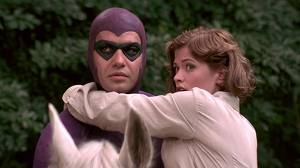
“The Phantom” is based on the superhero comic strip originated in the 1930s, which means this is probably one of the very first superheroes, if not the first (I regret not knowing the history of Batman or Superman). The Phantom—or the Ghost Who Walks—is not one of the well-known heroes, and the film adaptation shows how dated the hero is. The movie apparently knows this too, as it takes place in the same time period as when the comic strip was first released. The movie is true to the Phantom’s origins. When he’s not the mild-mannered Kit Walker (Billy Zane), he’s the Phantom. He doesn’t have the strength, speed, or flight of Superman or Batman’s cool gadgetry, and he’s not very stealth either. He’s a man who is quick-witted and fast on his feet, but not incredibly super. He’s called the Phantom, or the Ghost Who Walks, but he’s not a ghost. He’s human—he can’t live forever. Apparently, he’s the 21st in a long line of Phantoms who live a skull cave in the jungle. Phantoms have a vow to fight evil and thievery, and thus whenever someone comes sneaking around the jungle trying to obtain something hidden, the “Ghost Who Walks” is there to thwart them.

OK, why he’s called “Ghost Who Walks” is beyond me. Is “Ghost Who Works” really supposed to sound scary? Why not “Ghost Who Kills?” That’s as silly, but more threatening than…a ghost who walks. But more importantly, there’s the issue of the Phantom’s silly purple costume and eye mask. Yeah, it’s pretty silly-looking and you know purple never blends into anything, let alone the jungle. But let it slide—the movie is entertaining enough to forget that.

“The Phantom” features an evil industrialist named Xander Drax (Treat Williams), who plans to find a few of these mystical skulls that, when combined, can create unbelievable power and thus give him the ability to overpower mankind. Onto him is a Big Apple newspaper publisher (Bill Smitrovich) who investigates along with his daughter Diana Palmer (Kristy Swanson). But Diana gets captured by Drax’s pirates, including Catherine Zeta-Jones as an exotic bad girl whom Diana constantly tries to get to join the good side because…she’s a woman, I guess. The Phantom rescues her, and he helps on the quest to stop Drax from locating the skulls. And by the way, here’s a “small-world” moment for you—Kit Walker, the Phantom’s human identity, actually had a relationship with his damsel-in-distress Diana in the past. Small world, huh?

“The Phantom” lets loose a lot of fun action sequences—chases, fights, and other stunts that are quite impressive. My favorite is a central sequence in which the Phantom and Diana get away from the villains’ ship, using one of their planes, and having to land on the Phantom’s fast horse before the conveniently-extremely-low-on-fuel plane crashes. (This horse and the Phantom’s wolf who runs at the same speed have to be the fastest animals in the world.) There’s also a showdown in a creepy cavern, a struggle with a truck on an unstable suspension bridge, and other neat action scenes that are quite fun. No wonder, considering the writer of this movie—Jeffery Boam—was the writer of the third Indiana Jones movie.

Billy Zane is a terrific casting choice for the Phantom. He’s sly, suave, bright, and just finds the right tone for the role. Kristy Swanson, as Diana, doesn’t just play the damsel-in-distress. She has enough spunk and nice moves to make the character as interesting as she can. Treat Williams is an absolute riot as the slick villain Drax—you can tell he’s having a ton of fun with this role. And also on hand is Catherine Zeta-Jones, who has plenty of gusto as the woman working for the bad guys, but could maybe be useful for the good guys.

Even if “The Phantom” gets pretty silly (and you have to admit, that silly purple costume doesn’t make the Phantom look particularly threatening), it is still a modestly entertaining movie with game performances and some nifty action scenes as well.

Vision Quest (1985)

23 Mar

images

Smith’s Verdict: ***1/2

Reviewed by Tanner Smith

Even though “Vision Quest” follows a routine that most sports movies follow, it’s still a nicely done, entertaining film about a high school wrestler who has two dreams that must come true before the movie is over. The first dream is to go to the state championship and take on the toughest guy on the mat. The other dream is to win the love of a girl who has come into his life.

The kid’s name is Louden Swain (played by Matthew Modine). He has dropped from 200 pounds to 178 to join a different weight division on the school wrestling team. He baffles the coach, but is determined enough to continue working out and lose more pounds to compete against the toughest wrestler in the state, named Shute.

As you can read, the protagonist is about as standard as a sports film can ask for, but Matthew Modine is a fine actor and does what he can with his attitude as an actor to make his character quirky and engaging, and therefore a nice leading man to follow.

On his side are Louden’s respectful father (Ronny Cox); an English teacher, Tanneran (Harold Sylvester); a wrestling coach (Charles Hallahan) though sometimes he feels negatively about Louden’s determination; and his best friend Kuch (Michael Schoeffling), a teenage punk with a Mohawk hairstyle and describes himself as “Half-Indian,” though he might just be going through a phase. All of these characters are not like the usual types you would see in most sports films. For example, the father in this movie is not scornful and skeptical; the coach isn’t entirely cynical; the best friend is an actual individual instead of a one-dimensional, loudmouthed idiot. They’re all fresh and original characters.

But then there’s the girl that Louden tries to win the heart of. Her name is Carla and she’s hands-down the best character in “Vision Quest.” She’s a 21-year-old independent drifter who stays with Louden and his dad while her car, which has broken down while passing through town, is being fixed. Carla (Linda Fiorentino) is a woman who doesn’t look at anybody the wrong way; just as they are. But at the same time, she still keeps her cunning attitude and uses it to see who is real and who is a phony. Maybe this could explain why, after Louden realizes he’s infatuated by her, she doesn’t question why he sniffs her panties when he thinks no one Is looking. She doesn’t confront him about it; she waits it out to see what he’ll do next before passing judgments. What develops is a sweet relationship that doesn’t revolve around sex, but with trust. By the end of the film, you have to wonder what will happen for them in the future. That’s where the real suspense is; not just with the big match at the end.

We know that Louden will reach down to the weight limit to fight Shute, we know that they will fight in a big match with a large crowd watching, and we know there will be certain complications beforehand. But the twist is that those complications are uncertain when we follow Louden and Carla as their relationship grows. Now I have to confess something—as I mention this relationship (and continue to think about those remarkable supporting characters), I change my rating from three stars to three-and-a-half stars. I guess what can be said about “Vision Quest” is that if a seemingly-tired genre film is written well and acted beautifully, it can redeem the subject matter.

Russkies (1987)

23 Mar

images

Smith’s Verdict: **1/2

Reviewed by Tanner Smith

“Russkies” is a good-natured film that has a cute setup and some nice ideas to follow through with it, right up until the ending climax that made the film seem desperate.

The movie, set in Key West, Florida, at a time when the Cold War is still going on, features three pre-teenage boys who find a Russian sailor. The Russian is stranded after being washed ashore and the boys are the first ones to find him. The boys—Danny (Joaquin “Leaf” Phoenix), Adam (Peter Billingsley, “A Christmas Story”), and Jason (Stefan DeSalle)—have been reared by military families and raised on a series of anti-foreigner comic books called “Sgt. Slammer,” so naturally, their first instinct is to believe that this Russian radio operator is a Commie spy. They’re able to hold him at gunpoint with the Russian’s own gun and threaten to turn him into the authorities, but soon enough, they discover that Mischa—the Russian, played by Whip Hubley—is actually a nice guy and decide to let him hang around with them.

This is good stuff—the way these kids interact with this stranger is handled in a fun way and not a disturbing way. The kids are well-cast and Whip Hubley has appeal and a certain credibility as a Russian—sometimes, he’s not entirely convincing as a Russian, but close enough mostly. And it is nice to see how Mischa reacts to America—he eats Big Macs, gets used to Jeans and collar shirts, plays video games, rides go-carts, and even develops a relationship with Adam’s sweet older sister Diane (Susan Walters)—but also would love to return home somehow.

While the setup is fun, “Russkies,” unfortunately, has a dim-witted payoff that is implausible and seems like a pale imitation of the climax in “E.T.” Without going into much detail, much of it involves a sadistic drunken fisherman, the kids’ idiot parents, and two real Russian spies in a boat chase for separate reasons. I did not need this climax and I particularly did not need a mean drunk to be the real bad guy here.

What “Russkies” has that makes it work are fun scenes set in the kids’ point of view, mixing comic books with comedy and adventure. They are what I liked about “Russkies,” but the rest of the film has run out of ideas and energy, and so I can’t recommend it.

The Muppet Movie (1979)

23 Mar

the-muppet-movie-all-of-us-under-its-spell

Smith’s Verdict: ***1/2

Reviewed by Tanner Smith

When we see the Muppets, do we really need to wonder where the puppeteers are when they’re controlling the Muppets’ actions and moving mouths? I personally don’t care, since the Muppets have great personalities. But the opening scene in “The Muppet Movie” had me wonder where the puppeteer was. That scene features Kermit the Frog in a swamp surrounded by water and playing the banjo. Since Kermit is on a rock and surrounded by water, where is the puppeteer controlling him from? But as the scene progressed and Kermit continued to play, I didn’t care. I just watched Kermit in his original habitat.

If you haven’t already guessed, “The Muppet Movie” tells the story of how the Muppets got started in fame and fortune. This is as interesting as superhero origin story. We all wanted to know how our favorite superheroes became our favorite superheroes and now, since the Muppets hit close to our hearts, we can see how they became such successes. “The Muppet Movie” is the answer to the question fans of the Muppets would have loved to ask, but haven’t quite thought about it.

Kermit the Frog used to live in a swamp (of course). One day, after playing his banjo, he is met by Dom DeLuise as a Hollywood agent who informs Kermit that Hollywood is holding an audition for frogs. And so, Kermit is off to Hollywood. He needs a driver so he meets Fozzie the Bear, originally a bartender. They drive a Studebaker and make their way into Hollywood (Fozzie proclaims, “A bear in his natural habitat—a Studebaker”).

Along the way, they come across the other Muppets—such as Gonzo (originally a plumber) and Miss Piggy (who hasn’t changed much since they meet her after she wins a beauty pageant). But they are also chased by a ruthless fast food magnate, who wants Kermit to sign on as a trademark for a frog-leg fast-food franchise. He even hires gunmen and an unreliable sidekick (Austin Pendleton) to hunt him down. This subplot may frighten younger viewers, so parents should take that into consideration.

As if predictably, Kermit and Miss Piggy fall in love, but they run into many ups and downs during this road trip. Along the way, the Muppets become friends and encounter all sorts of special guest appearances, including Mel Brooks, Bob Hope, Carol Kane, Steve Martin, Richard Pryor, Telly Savalas, Orson Welles, and, in their last film appearance before their deaths, Edgar Bergen and Charlie McCarthy. The best joke in the film—Fozzie meets Big Bird hitchhiking on the highway and offers a lift; Big Bird responds, “No thanks. I’m on my way to New York City to sneak into public television.” The movie is full of clever, funny moments like that—as rich as anything in “The Muppet Show.” But “The Muppet Movie” has a great big surprise and that is…we see the Muppets’ feet. There’s a scene in which Kermit really seems to be riding a bicycle and all I’m thinking is, “How’d they do THAT?”  And of course, there has to be a musical number every 20 minutes. The problem is that the songs are not particularly interesting or memorable.

In “The Muppet Movie,” we get to know these characters better than we could in their original TV show. The Muppets are appealing, great to look at, well-managed, and with great comic personalities. I loved watching these Muppets in their own origin story.

Dodgeball: A True Underdog Story (2004)

23 Mar

dodgeball1

Smith’s Verdict: ***1/2

Reviewed by Tanner Smith

No, I don’t believe that “Dodgeball: A True Underdog Story” was based on a true underdog story. More accurately, it could be labeled as an underdog story that is much funnier that how we usually see underdogs in movies. The underdog team that we follow in “Dodgeball” is a band of underdogs who get better at playing the movie’s sport and play in the Big Game. Among the guys on the team are a guy who thinks he’s a pirate and another guy who didn’t know that there even was such a guy on the team.

What is the sport these underdogs play in the movie? Well, it is dodgeball. It’s that game we’ve all played in school in gym class where you try to hit the opposing team with rubber balls. The best way to win is to get all the bigger guys on your team, and if you have enough guts to catch a ball before it hits the ground, then the player who threw that ball is out and a person from your team comes back into the game.

OK, enough of the refresher course. Back to the first movie about dodgeball called “Dodgeball: A True Underdog Story”…

The reliably-funny and fast-talking Vince Vaughn plays Peter La Fleur, an Average Joe who manages a rundown gym called “Average Joe’s.” Among those who hang around there are the pirate character I mentioned earlier, the person who didn’t know there was a pirate guy around, a geeky teenager, and an overweight loser who reads a magazine called “Obscure Sports Quarterly.” Peter’s rival is the ridiculously pompous White Goodman (Ben Stiller), who runs “Globo Gym,” an over-the-top fitness program with the slogan, “We’re better than you and we know it!”

Ben Stiller’s performance has to be seen to be believed. Imagine Fonzie of TV’s “Happy Days” and make him more energetic and in spandex. Though the performance almost runs out of steam towards the end, it’s still very funny.

Anyway, White wants to close down the “Average Joe’s” gym to create a new building for his corporation of fit sadists. So, Peter and his group challenge White and his band of monsters to a Las Vegas Dodgeball Tournament, televised by ESPN 8 (“The Ocho”).

What follows is a great line of gags and jokes that I will not reveal, but I have give notice to Rip Torn, who portrays the coach for the team of misfits. He’s an old coot in a wheelchair, but also a veteran of dodgeball. His methods are very unusual but downright hilarious. They involve a sack of wrenches. Two other characters draw our attention: Christine Taylor (Ben Stiller’s wife) is an attractive bank employee who joins the good guys in the tournament and may (or may not) have a thing for Peter. And Gary Cole is very funny as the commentator on the tournament. It’s the funniest sports commentary since Fred Willard’s commentary in “Best in Show.”

Every character in this movie is either funny or fun to watch. And this movie really is funny. The strangest thing about Vince Vaughn’s performance is that he doesn’t do a lot to be funny. He plays a straight man that happens to deliver some one-liners when he has to. Some of the gags are great, including one in a scene where White pumps himself up before meeting a woman (not giving away the gag). There are cameos that come in and out and those bits are funny too. And another great thing about this movie is that during the Big Game (of course, it’s obvious that the “Average Joe’s” team is going to play in the Big Game), I wasn’t bored. I was with these guys, getting hit with dodgeballs with these guys, and I was glad to go along for the ride with these guys. And I laughed along the way.

“Dodgeball: A True Underdog Story” is a very funny movie; full of fun characters to watch, very funny moments here and there, and a satire on overdone sports movies. And I guess I can say nobody throws a wrench like Rip Torn.

George of the Jungle (1997)

23 Mar

images

Smith’s Verdict: ***

Reviewed by Tanner Smith

I wasn’t a fan of the original animated TV series “George of the Jungle.” In fact, I never saw it. All I know about it is its catchy theme song that goes “George—George—George of the Jungle.” But the show’s film adaptation of the same name “George of the Jungle” is so fresh and funny that I don’t think I want to watch the show. I should probably quit while I’m ahead.

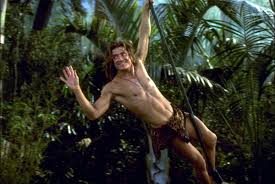
One of the best things about the movie “George of the Jungle” is the casting of Brendan Fraser. He’s the type of guy who might be seen posing as Tarzan on a GQ magazine cover, but he’s also convincing as a doofus. He plays George, who was separated from his human family as a baby and raised by apes in the jungle. He has grown to manhood as king of the jungle. The running gag is that George loves to swing on vines, much like Tarzan, only he crashes into trees, even after someone warns him, “Watch out for that tree!”

Exploring his jungle is a young woman named Ursula (Leslie Mann) and her self-absorbed fiancé Lyle (Thomas Haden Church) as they hunt for a legendary White Ape (which is probably George). They are attacked by a lion, and when Lyle is knocked unconscious when running away, George comes to the aid of Lyle’s lovely fiancée in a very funny scene in which George fights with the lion. When I heard the boxing bell ring three times before the fight, I laughed and knew I was in for a treat. This scene is a real treat—George clotheslines the lion, spins it on his finger (“George not even trying hard”), and even body slams the animal. The way it’s handled is cartoonish, but very funny.

When George takes Ursula back to his tree house, he introduces her to his “brother”—a walking, talking, and even intelligent ape named Ape (voiced by John Cleese). Then he introduces her to the funniest creature in the movie. This is George’s “dog” Shep, who is really an elephant who thinks he’s a dog because George trained him to be a dog. When I saw this elephant run and bark over to George, I laughed and laughed and laughed and had trouble stopping. The scene gets even funnier when George plays fetch with Shep by throwing a huge log to where he can fetch it with his trunk.

“George of the Jungle” is full of good cheer and delivers with humor and charm. The charm of the film comes from the funny moments and also the love story that develops between George and Ursula. George has never seen a human female before so this attraction to her is all too new for him. It’s sweet the way their relationship becomes something more. And the movie really is funny. I love the elephant and the ape has more comic timing than the gorilla from “Congo” (you know, the gorilla trained to speak sign language and drink martinis). It’s also funny the way the script kids itself with the flimsy material. I love how the narrator kids with the characters and the storyline through most of the movie. Here’s an example:

NARRATOR: They reacted with awe. CHARACTERS: Awwwwwwww… NARRATOR: I said “awe.” A-W-E. CHARACTERS: Ooooohhhh… NARRATOR: That’s better.

The movie does start to head downhill when George is taken to Ursula’s jungle—the city of San Francisco. George has never seen anything outside the wildlife before so he attempts to fit in but of course it’s not easy. The whole episode of that concept is funny at first, kind of like a “Crocodile Dundee” situation, but then it starts to grow a little tedious and the energy doesn’t quite pick up until George is forced to go back into the jungle and rescue Ape from poachers.

“George of the Jungle” is alive and suitably silly. It has many funny gags and a lot of charm. Even if the whole “fish-out-of-water” subplot doesn’t exactly work, the rest of the film is still fun to watch.