Archive | March, 2013

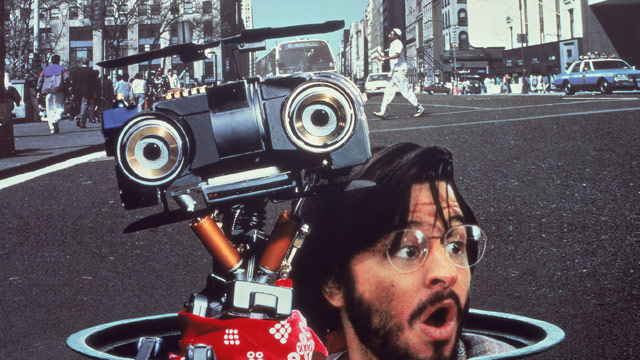
The Man with One Red Shoe (1985)

29 Mar

M8DMAWI FE007

Smith’s Verdict: *1/2

Reviewed by Tanner Smith

I haven’t seen the French mistaken-identity comedy entitled “The Tall Blond Man with One Black Shoe,” so I can’t say how its American remake—entitled “The Man with One Red Shoe”—follows it. But it doesn’t matter. “The Man with One Red Shoe,” also about a case of mistaken identity, is a mess. It’s not very funny and what’s worse is that it’s boring.

It features an ordinary man walking his way through a story of CIA situations, as a violinist (played by Tom Hanks) is followed around, believed to be a spy for reasons that I can’t recollect. Apparently, they needed an innocent man to be their target and went for Hanks’ character because he walks around one day wearing mismatched shoes (yes, one of the shoes is red).

Wait—something is coming back to me. I think Dabney Coleman and Charles Durning played two CIA spies from different sides and Durning needed an innocent bystander to confuse Coleman and his team. So they pick this “man with one red shoe” and treat him as if he were spy who has information on Coleman. The running gag is that Hanks has no idea just what in the world is going on.

Things get even more confusing (and exciting) for him when a bombshell of a young female spy (Lori Singer) winds up falling for Hanks. There’s an uncomfortable scene in which they date each other and her hair is stuck in his pants zipper.

But the movie seems more focused on its spy story than its attempts to create written humor. I wouldn’t mind so much except that this isn’t a good spy movie. Good spy movies have a tendency to be exciting (even the bad ones do), but it’s still boring because very little thought went into creating a fully-detailed story. And then near the end, it has the gall to have a character say a line like, “This affair must end in a shooting match, just like all good spy stories.”

With a cast like Tom Hanks, Dabney Coleman, Lori Singer (“Footloose”), and Charles Durning, you’d expect a better movie than this. A cast can’t just carry a movie like this—the best comedies have scripts to support their performances. Tom Hanks, usually known for dramatic roles (and amazing at them too), has shown what he can do with comedy, but even he’s boring beyond belief. He plays it straight—with all that happens, this isn’t funny. Maybe Bill Murray would have pulled it off in this role. Coleman isn’t any better—all he does in this movie is scowl.

A word about Lori Singer as the seductive female spy—she isn’t the least bit convincing as a spy. It’s not because she’s so beautiful—I’m sure a spy can be as beautiful as that (I even know of a movie producer as beautiful as she, but I’m not naming names), but every line she says just sounds like it came from a script and worse, it sounds forced.

The only two amusing bits feature Jim Belushi as Hanks’ best friend. One scene has him chasing after the spies’ borrowed ambulance on his bike, because he hears the bugged recording of his wife (Carrie Fisher, so annoying here) putting moves on Hanks and…making “Tarzan” noises—don’t ask, you shouldn’t care—coming from inside the vehicle. That was kind of a funny chase scene.

Another funny bit is after Belushi tries to convince Hanks that there are dead spies on the floor in his apartment, but the ones that killed them keep hiding them from sight to the point where Belushi cries because he thinks he may be crazy and then takes a leak—a dead body is hanging from the bathroom door and his reaction is priceless: “Oh, come on!”

Those are the only funny bits in this depressing, boring picture called “The Man with One Red Shoe.” The only thing left to say in this review is that the French filmmakers (who made the film this was based on) should sue.
Defending Your Life (1991)

29 Mar

defending-your-life

Smith’s Verdict: ***1/2

Reviewed by Tanner Smith

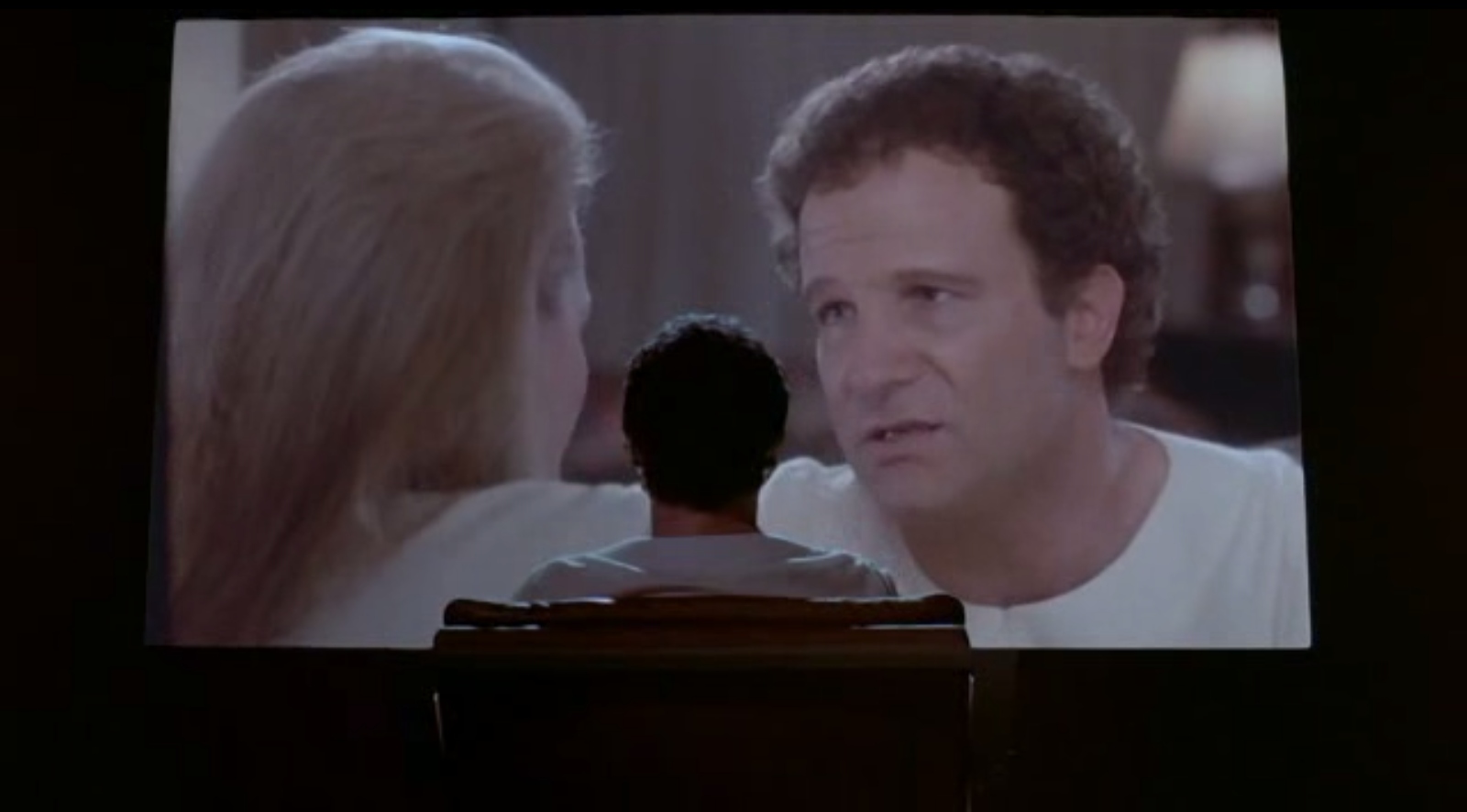
Everybody has their own visions of it, and Albert Brooks decides to share his vision in a film he wrote, directed, and starred in called “Defending Your Life,” a film with wonderful ideas about life after death.

Just imagine if you will. You just bought a new convertible and decide to give it a drive around the city. You listen to the radio and you’re just so happy. But then something drops on the floorboard of the passenger side and you bend down to pick it up while the vehicle is in motion. And then, as luck would have it, an oncoming bus hits you. Whoops. That’s funnily tragic, but then you wake up in Judgment City. That’s exactly what happens to Brooks’ lead character Daniel Miller in the first few minutes of “Defending Your Life.”

You see, apparently there is no heaven or hell (although there isn’t the decision that there isn’t a God). There is only Judgment City. And what a place it is. This city could just be heaven, though nobody wants to admit it. It makes you smarter the longer you stay there and it has the best-tasting foods you could imagine. And get this—apparently, you can eat as much as you want and never gain one ounce of weight. The restaurants are all-you-can-eat. Its one downside—a lackluster comedy club.

Well, there’s another downside. If you’re a Little Brain (which residents call those who have just died and came here), then you have to “defend your life.” It’s like being put on trial for your fears in life on Earth. It’s explained that because people use so little of their brains, their lives function mainly on fear. If the Judgment court has decided that you’ve conquered your fears, then you get to stay in Judgment City and become as smart as them. Otherwise, you’re sent back to Earth as a reincarnation to try again to get past fear.

Daniel has a defense attorney, Bob Diamond (Rip Torn), who explains all of this to him. He is called into a room where Diamond defends against a tough prosecutor (Lee Grant), as we see flashbacks of Daniel’s life. The court uses these clips to show whether Daniel has fear or just dignity, and Daniel gets chances to explain himself.

This is an inventive premise and there are many delights in how it’s all played out. But “Defending Your Life” is also a love story. Daniel roams around the city and meets a wonderful, sweet woman named Julia, who has a smile and manner that only Meryl Streep can deliver. Indeed, Streep plays Julia and her romance with Daniel is beautifully handled. They have warm conversations and enjoy each other’s company—a very sweet romance.

The ending of “Defending Your Life” is dramatically satisfying with the right emotional payoff. “Defending Your Life” is a success in fantasy mixed with romance. It has an inventive premise that delivers on its product and just got more intriguing as it went along.

Johnny Be Good (1988)

29 Mar

johnny-be-good

Smith’s Verdict: *

Reviewed by Tanner Smith

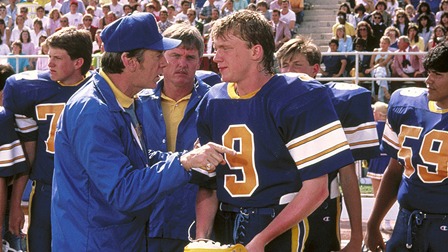
What has Coach Hisler done to deserve such rotten treatment? Huh?

Here’s a nice guy that coaches football and hopes for the best for his star high school football player, wanting him to go to a better, smaller school than his brat of a star shoots for. And yet, he’s the butt of the player’s jokes and even at one point, the brat, along with his buddy, come over and seemingly asks for help in his English class, but no—it was a setup for a prank, in which pizza delivery boys bring along about 200 pizzas, and an elephant is delivered. And I’m pretty sure I remember Hare Krishnas dancing about the kitchen while the brat and buddy laugh uproariously.

The coach is the guy I’m supposed to hate? The brat is supposed to be our hero? The coach is the only likable character in this piece-of-crap, dim-witted teenage comedy “Johnny Be Good” and I don’t think it was intentional.

Wow, is this movie bad. And it’s far from funny. The laughs aren’t there, hardly any gag works, lines of dialogue are either forced or clichéd, and reality gives way to scenes that are either uncomfortable or unfunny. I have to wonder if this is a first draft. These are the people who wrote “Revenge of the Nerds,” an offbeat teenage comedy that had its share of funny moments. There’s nothing here that I remember even slightly chucking at.

Anthony Michael Hall is best-known as the teenage geek character in movies like “Sixteen Candles,” “The Breakfast Club,” and “Weird Science.” I guess he took this role to keep from being typecast. Which role am I referring to? The football hero. That’s right—Anthony Michael Hall as a high school football hero. Yeah…right.

I don’t mind that Hall wants to change his image, but he is completely miscast here as Johnny (Be Good, get it?…I don’t). He’s so bland that I was wishing his SNL persona would take over, or that Robert Downey, Jr. would smack some funny into him. Indeed, Robert Downey, Jr. co-stars as Johnny’s buddy. Downey, Jr. can be very funny, but he just doesn’t have much to work with here.

I didn’t care about popular Johnny’s quest for college—from Texas to California. I didn’t care about his relationship with his girlfriend (Uma Thurman in an all too generic role). I didn’t care that he was forbidden to see her because her father’s a hard-headed cop. I just didn’t care, nor did I ever laugh.

Paul Gleason plays the aforementioned coach, and you know you’re in trouble when you care more for the supposed antagonist.

“Johnny Be Good” is a bad movie that deserves no more words.

Spring Breakers (2013)

28 Mar

images-1

Smith’s Verdict: ***1/2

Reviewed by Tanner Smith

How do I even begin to describe my feeling towards Harmony Korine’s “Spring Breakers?” This film is so surreal, so oddly-executed, so vulgar, so raunchy, so ambitious…and yet so unique, so powerful, and so effective. This film, written and directed by the polarizing Harmony Korine (whose screenplay for Larry Clark’s “Kids” was very unusual and yet effective in that way), is like a bizarre, candy-colored fantasy about wild, reckless teenage girls having a blast on a most peculiar Spring Break.

Anyone who knows of Korine’s work (which also includes “Gummo” and “Trash Humpers”) is most likely going to expect something very strange out of a fairly simple concept—capture the lives of ordinary people as characters. The results are usually not as “simple” as they would seem—the characters in his stories don’t feel like characters in execution; actually, they’re not even very likeable…but they seem all too real. That was the case with the loathsome teenager Telly in “Kids,” and this is the case with the four teenage girls in “Spring Breakers.”

Teenage girls Faith (Selena Gomez), Candy (Vanessa Hudgens), Brit (Ashley Benson), and Cotty (Rachel Korine) are four lifelong friends who seek a memorable Spring Break vacation. But they lack enough money for room-and-board, as well as booze and drugs. How do three of the girls (the three nastier ones of the group) obtain the money? They rob a chicken restaurant, with ski masks and fake pistols to make them look threatening.

By the way, that scene is very well-done, as it occurs in one tracking sequence that shows from the camera’s exterior perspective how it all goes down. And the scene returns later, only this time we’re in that restaurant with the people who are frightened by these felons, and so are we, because we see how downright vicious they were. The three are telling (and reenacting) this story to their sweeter friend (Faith) who might actually start to believe that she’s hanging with the wrong people. (They, however, are laughing like hyenas as they retell the story.) But nothing is certain unless it needs to be, just like in reality.

Anyway, for about the first 40 minutes, “Spring Breakers” is thin on story, but rich with style as the girls go about their Spring Break out of town and enjoy themselves by drinking, getting high, gyrating, fooling around with strangers, cruising around on rented scooters, enjoying sunsets with their arms wrapped around each other, and just having a great time, all while Korine uses handheld camera movements and a particularly effective soundtrack to make it look like an even more perverse version of “Girls Gone Wild.” Then, the girls are arrested, jailed, and thrown in court (and still in their bikinis, no less), and they realize that too much of their fun can lead to this. This is where the film suddenly takes a new story turn, as the girls are bailed out by a “gangsta rappa” dubbed “Alien” (James Franco) in exchange for being in the company of him and his own posse as they enjoy Spring Break their own way. Alien considers himself “legit”—he deals drugs, is filthy-rich, has a ridiculous amount of weaponry, and even has twin henchmen to look out for him. And he’s definitely not afraid to let anyone know it, including his new women—in a monologue inside his pad, he constantly uses the phrase, “Look at my s—.”

This is where “Spring Breakers” takes a most sociopathic turn, as the girls have fun with their new predatory acquaintance by playing with guns, fooling around, and lose their innocence more and more (what little they had left, anyway). Things get even darker when Alien’s enemy, another drug dealer, and his allies warns Alien to stop selling in his territory. Of course, Alien ignores him and this leads to a drive-by shooting, which will lead to an ultimate retaliation.

The casting is very spot-on, to say the least. To see Franco in this performance is to believe him. Very rarely do I see James Franco in a “performance,” but here, he really steals the show. This “Alien” character (his real name is Al) deserves his own movie.

images-2

For those who saw the names Selena Gomez and Vanessa Hudgens (both former Disney Channel starlets), and Ashley Benson (TV’s “Pretty Little Liars”), listed above as three actresses who co-star in this film, and are wondering if you read that correctly…you did. The fact of the matter is that these actresses (along with Rachel Korine, Harmony’s wife) are all undeniably convincing. In particular, I want to bring up Selena Gomez. Selena Gomez’s character of Faith, a good Christian girl, is the only one with a soul, while the other three are just plain foul with hardly a trace of a clear conscience anymore. She actually leaves the group midway through the movie because she has gotten as far as she wanted to go with her experiencing with rebellion. This gives Gomez the more complicated role to pull off, and I can’t emphasize this enough—she does.

What “Spring Breakers” does different from Hollywood comedies that use Spring Break as a setup is that it doesn’t emphasize on the fun that these stupid young people seem to have. Instead, it gives us something completely original, almost a different genre of itself (I can see many ripoffs coming after this hits its inevitable “cult-classic” status). It has a bitter essence to it while also getting its laughs from just the unusual psychoticism of certain situations—for example, there’s one particularly odd scene in which Alien plays a touching Britney Spears song (“Everytime”) on the piano while three gun-toting nymphs are accompanying his performance. Watch that scene, and you’ll know that while you’re stuck on knowing exactly how to feel, you can’t deny its originality.

The only thing about “Spring Breakers” I didn’t find fitting in comparison to everything that followed it was the ending. Without giving too much away, it’s supposed to show the growth of certain characters who resort to ultimate destruction to put an end to their paradisiac holiday. First of all, I felt the development of moving along a better path was somewhat sporadic. Second of all, it seemed a little conventional, which is odd to say, especially considering that the rest of the film is far from conventional.

Any other writer-director other than Harmony Korine, and “Spring Breakers” would have been just another raunchy Spring Break comedy. As it is, it’s dark and adamant. Maybe a little too much—I admit, I left the theater feeling somewhat bitter and cold because of everything that was being thrown at me. One thing I can say for sure about “Spring Breakers”—it’s the most unforgettable film of 2013 so far.

NOTE: I mentioned the “particularly effective” soundtrack—the end-credits are played under the hauntingly beautiful Ellie Goulding song “Lights.” That song is now “haunting” for different reasons.

Elephant (2003)

28 Mar

images

Smith’s Verdict: ****

Reviewed by Tanner Smith

“Elephant” is a dark little movie, somewhat based upon the shootings at Columbine High School in 1999. It’s a very controversial subject that probably shouldn’t have been made into a film. Gus van Sant probably knew that, but also figured that depicting a school shooting in a film would succeed in frightening audiences. That film is called “Elephant” (why it’s called that, I’m not quite sure).

I don’t think “Elephant” necessarily needed a script and it shouldn’t be considered a docudrama because it doesn’t document nor does it dramatize. It simply watches as students of a high school (not named Columbine High School) go throughout their daily routine until two of them bring guns and shoot up the hallways. Students of the high school were allowed to work as extras for this movie and they blend with the young actors who improvised most of their dialogue. Almost every kid in this film is a non-actor and they are all called by their real first names (Alex Frost is Alex, Eric Deulen is Eric, John Robinson is John).

At many times, we feel like stalkers as we view these kids go throughout their days. A majority of the movie shows nothing in particular happening—just a school day. And since we know that kids are going to shoot up the school, we see certain motives from most of the kids. For example, John is embarrassed because his drunken father causes him to be late for school, a geeky girl named Michelle is embarrassed by her legs, etc. But instead we see two other kids named Alex and Eric. In a quiet scene, we simply observe them as Alex plays the piano and Eric plays video games. We never figure out why they become killers. Maybe they were just had nothing better to do. And once you think about that concept, this is a really terrifying movie. There is not much in this movie that explains why the shootings in this movie took place.

But then again, if Gus van Sant did take the time to fit in an explanation for the shootings, the movie would’ve been more offensive and sadistic rather than frightening. The movie leads up to those shootings with one uneventful day at the school and one of the scariest things about the movie is that it takes place in such a realistic setting. This is just a high school. There is hardly anything different about this school from any other school. And then this terrible event, such as the Columbine High School Massacre, takes place and you get the sense that maybe routines can change and there is no safe place to be. I admire Gus van Sant’s cinematography. He uses Steadycam shots to follow many students through the school day through the hallways, into the cafeteria, and through the school yard. We can’t help but fear that someone is going to come around the next corner with a shotgun.

NOTE: I just discovered why the movie is called “Elephant.” According to imdb.com, Gus Van Sant borrowed the title from Alan Clarke’s film of the same name, and thought that it referred to the Chinese proverb about five blind men who were each led to a different part of an elephant. Each man thinks that it is a different thing. What Clarke’s title actually referred to was the idea of the “elephant in the room.” It’s an idiom for an obvious truth that gets ignored, like an elephant in a room that no one will acknowledge is there.

Stolen Summer (The Project Greenlight Movie) (2002)

28 Mar

ppqPV65sRyRrOjQ3qO6k8SYZdYd

Smith’s Verdict: **

Reviewed by Tanner Smith

“Stolen Summer” was filmed out of competition for the “Project Greenlight” contest, sponsored by Ben Affleck, Matt Damon, and Chris Moore (under their production name Liveplanet). Aspiring writer-director Pete Jones’s screenplay “Stolen Summer” was chosen to be made into a film for Miramax, under the condition that Jones allow pre-production, production, and post-production to be filmed by a documentary crew for the HBO TV series that went behind-the-scenes of the project. The series, “Project Greenlight,” showed Jones as was able to direct his film with help from more experienced crew members, as they got together to make it with the small budget they were given. Throughout the series, we were with the people as they talked through their problems of filmmaking and we were able to understand what they were going through because the complications were just part of a first-time project. “Stolen Summer” was given a limited theatrical release (of course, with the tagline “The Project Greenlight Movie”), and anyone could tell you it’s not as compelling as the TV series that showed it being made. But how is it as a movie itself? How do I put this delicately? It’s not very good.

There’s a reason people like to mention the term “afterschool special” with a mocking sense. ABC Afterschool Specials may have tackled subjects that should have been faced in order to deliver lessons for kids, but they were also clumsily-handled, broadly-written, overly-dramatic, and as a result, easy to make fun of. What makes it more distracting is the notion that buried not too deeply beneath the surface of these TV movies, there were elements of moving stories to be told. But as they were told, for the most part anyway, they were relentlessly manipulative and not subtle in the slightest.

Unfortunately, the same can be said about Pete Jones’ “Stolen Summer.” I’m not denying that Jones has talent as a filmmaker, but this does somewhat reek of “first-project” status. And this film does have that “afterschool special” feel—it’s trying to be a heartwarming tearjerker while also trying to teach something, but it’s all too generic and so wholesome in spirit and tone. As a result, it’s somewhat flat.

The plot: Set in Chicago in the mid-1970s, second-grader Pete O’Malley (Adi Stein) is out of Catholic school for the summer just after a nun tells him to walk along a path towards Jesus and away from the Devil. Pete takes this warning a bit too seriously, as he sets out on a “quest” to make sure he gets into Heaven. He makes a goal to help someone else get to Heaven as well, and so he decides to convert a Jew to Catholicism, as he believes that Catholicism is the true path to Jesus and Heaven. He meets the rabbi of the local synagogue, Rabbi Jacobson (Kevin Pollak), and also makes friends with his son, Danny (Mike Weinberg), who is dying of leukemia. Pete is convinced that Danny is the perfect subject for conversion, so he decides to help him get to Heaven by proving his worthiness to God.

Is this really what a Catholic-school second-grader would think about when faced with the subjects of religion? Actually, it might be. Pete is just a kid; he reacts to these two religions—Judaism and Catholicism—as a test he wants to take, and he learns more about both of them as the film continues. He’s just a kid; he doesn’t know how it all works, or much of how life works for instance, but he’s impressionable.

Now, this part is more of a personal feeling—Pete’s talks with his Irish-Catholic father (Aidan Quinn), the Rabbi, and the Catholic priest (Brian Dennehy) can be either be seen as very charming or just too cute to the point of annoyance. I’m afraid I fall into the latter category, although I did find a few one-liners regarding certain elements of the religions to be amusing. For example, when Pete wonders if the priest gets paid to do what he does, and curiously asks if he takes from the collection—his response: “No. *chuckles* Why, did anybody tell you that?” Other than that, I felt that some of these scenes lacked a little tact, and while they’re not entirely offensive, they’re still not entirely in good taste.

The talks that Pete’s parents share with each other about Pete’s crusade, and also the talks that the Rabbi shares with his wife about the same subject, are the most interesting part of the movie, and even more so when both fathers confront each other about what this is doing for them (people question Pete’s lemonade stand in front of the synagogue; Pete’s father believes Pete is too young to be thinking about this sort of thing, etc.). Even though these scenes are somewhat broadly-written, they are admittedly assisted by capable actors to go through them. Aidan Quinn is quite good as Pete’s fireman dad, Joe, who was raised to work hard and take no nonsense. This character could have been portrayed as a stereotypically cynical Irishman, but Quinn’s performance is credible enough to make the character more of a human being. Kevin Pollak delivers solid work as the friendly Rabbi Jacobson who lets Pete continue with this “quest” because it still gives his own son Danny a possible last chance to act like a normal kid. At the same time, he’s worrying about how much time Danny has left, and even breaks down and cries (and prays) in one certain scene. Pollak has a lot to do with this role—he’s able to pull it off. Also good is Bonnie Hunt as Margaret, the mother of the O’Malley children (there are about eight, including Pete of course, if I didn’t lose count), who plays the role with a sardonic wit. Hunt has arguably the most truthful bits, especially in the beginning when she gets the family ready for church, and when one of her unruly sons mouths off, she points him forward assuring him that she isn’t going to hit him, and then smacks him in the head. Also quite strong is “American Pie” alum Eddie Kaye Thomas as Patrick, the oldest O’Malley son who tries to find a manageable way to work despite his father’s decisions to keep him away from college (he believes Patrick will wind up sleeping late and smoking pot, like most college students he heard about).

Actually, I realize that the reason that “Stolen Summer” doesn’t work so well is because of the central story of the kids and how almost everything has to be played around it. I would rather see a story more based around the people I mentioned in the previous paragraph—Joe, Margaret, Rabbi Jacobson, Patrick (and also the priest, well-played by Brian Dennehy). Played by these game actors, they’re able to step out of the material they’re given and manage to make their characters their own. And they do have a genuinely effective scene every once in a while. But the big problem I have with the story of the two kids, I’m real sorry to say, are the young actors playing them—Adi Stein and Mike Weinberg. I hate to criticize child actors, but these two just aren’t very good here, and because a lot rides on these two to pull off as much generic material as their older, more experienced co-stars are able to, much of “Stolen Summer” sinks when it should have floated.

“Stolen Summer” right from the opening lighthearted piano score to the generically hopeful final shot just has that feel of an afterschool special. The actors are fine (for the most part, as I’ve said) and a couple of scenes work, but it’s too manipulative and tries way too hard to get its audience teary-eyed after watching it.

Mean Creek (2004)

28 Mar

mean_creek_2004_portrait_w858

Smith’s Verdict: ***1/2

Reviewed by Tanner Smith

“Mean Creek” is a powerful, disturbingly effective film about how even the smallest thing leads to big magnitude, and how it’s dealt with. It’s also about troubled kids who feel alienated and are soon dealt with the biggest crisis of their lives. Now, they have to deal with it. It reminded me of “River’s Edge,” in which burnout teenagers had to deal with the fact that one of their own killed another one of their own. They were told by their leader not to tell anyone, but how could they not? In “Mean Creek,” it shows kids who all have problems and it also shows that every action comes with a consequence.

As the movie opens, a nice kid named Sam (Rory Culkin, Macaulay’s youngest brother) is beat up by a schoolyard bully named George (Josh Peck), a bipolar kid who has been left back in school because of a learning disability. Sam’s brother Rocky (Trevor Morgan), who smokes weed and drinks a lot as a way of escaping his own insecurities (that’s what I believe, anyway), decides to teach George a lesson in ultimate humiliation. Sam decides to go with it as long as they “hurt him without really hurting him.” Rocky enlists the aid of his two best friends. One is Clyde (Ryan Kelley), who resents the fact that he lives with gay fathers. Another is Marty (Scott Mechlowicz), who lives with his abusive brother who lets out his anger on him whenever their late suicidal father is mentioned. So now, Marty is aching to take out his own anger on George.

The boys invite George to a seemingly harmless boat ride—Sam pretends to make amends by inviting him to his “birthday party” and then the others are going to pull a practical joke on him. So Sam, Rocky, Clyde, Marty, George, and Sam’s girlfriend Millie (Carly Schroeder) head upriver but the unusual thing is that George is acting kind of friendly. Sam, Millie, Rocky, and Clyde see that George isn’t such a bad guy after all, but that he’s just lonely and wants friends. They decide to call off the plan, but Marty is determined to move forward. He wants to create pain and misery for George and when he finally tells George the plan, it leads to a big tragedy.

You probably already know what is going to happen already. “Mean Creek” is not a thriller and there aren’t any surprises either. This is pure drama happening here, and after that climax, the final half of the movie shows how the kids deal with it. They talk about it, they discuss it, they predict the possibilities of what will happen if they tell or not, and they all regret their actions. Their lives will never be the same again. The final half is excellent because it’s just so chilling and so convincing and deeply moving.

“Mean Creek” mainly a dramatic character piece. It doesn’t go over the top; it feels real. The six young actors playing the kids are all credible. There are no weak elements to their performances and there’s no sense of miscasting. Rory Culkin is good as the early teenager who is involved with a huge situation. Josh Peck is brilliant as the troubled fat kid willing to let out some anger on the kid—there are many levels to Peck’s performance. Scott Mechlowicz is chillingly convincing as the tough guy who soon becomes the leader of the group and makes the decision of not telling the authorities about that terrible day. Trevor Morgan, Ryan Kelley, and Carlie Schroeder deliver strong work as well.

“Mean Creek” is the writing/directing debut for Jacob Aaron Estes and he makes a wise choice of keeping his classic camera movements and angles to a basic minimum. He doesn’t direct it like a big-shot mob-movie director. He lets his own script do the work and that’s the right move for this film.

NOTE: This movie is deservedly rated R by the MPAA for violence, profanity, teen drug use, and teen alcohol use. There is one scene in particular that shows young Peck use the f-word practically a hundred times in one scene. This movie isn’t for everybody, especially those who are fans of Nickelodeon’s “Drake and Josh.” But I kid.

Short Circuit 2 (1988)

28 Mar

syn_shortcircuit2_0

Smith’s Verdict: ***

Reviewed by Tanner Smith

This is not how it goes. Sequels are not supposed to succeed far above their original films. But that’s the case with “Short Circuit 2,” a far better movie than its predecessor “Short Circuit.” The only thing that movie had going for it was a cute robot with an appealing comic personality. The problem was it was sidelined with an idiotic plot and Steve Guttenberg. But now, with “Short Circuit 2,” the robot—now named Johnny Five—is in a movie worthy of him. Yes, I called the robot “him.” Why? Because the robot is alive. Johnny Five has a mind of its own. You might recall in the original film, he got struck by lightning and was brought to life magically.

“Short Circuit 2” also features Fisher Stevens, whom you might remember from the original film as the Indian man named Ben. He’s the one who helped Guttenberg construct Johnny Five in the first place. Ben is now selling goods on the streets of New York—in this case, he’s selling six-inch lookalikes of Johnny Five. They’re real treats to have. The attractive Sandy (Cynthia Gibb), who is a worker for a toy company, notices these little robots and is very impressed. She and Ben strike a deal—if Ben can make a thousand of these little robots by the end of the month, they will be marketed and purchased. Ben agrees, and to his reluctance, he gains assistance from a wise-cracking street hustler named Fred (Michael McKean) and gets himself an abandoned building to gain a factory to work inside. But things don’t go well and burglars keep trying to get in because there’s a tunnel under the floor of that building that may lead to a bank vault. Are you still with me?

Anyway, Johnny Five is sent in a package to Ben and Fred to help. He does a spectacular job too. But Johnny Five is always hungry for more “input” and when he realizes he’s in a city, he constantly comes out of the factory to explore. In one funny scene, he comes across a street gang and unwittingly helps them steal lots of car radios. I like the way he imitates a crazed car salesman when he shows the gang the radios he stole. You see, Johnny Five can get a lot of input from reading books in just a few mere seconds. But mostly, he just imitates what he sees on TV. This is charming. Don’t we all imitate what we see on TV every once in a while?

Of course the people in the city make fun of the robot. This is where “Short Circuit 2” gets its seriousness. Johnny Five, since he has a mind of his own, feels left out of society. He has thoughts and feelings and now he feels that as a robot, he’s not human. And nobody in the city is treating him like a human. All he wants is respect. Don’t we all?

But since this is a robot, you have to ask yourself this question—“Do you care if the creature’s life is in jeopardy?” The answer is yes. Johnny Five unwittingly helps the burglars get to the bank vault (he trusts their leader) and the leader of the burglars sees Johnny Five as a witness that can identify them. That brings us to the intense showstopping scene in which Johnny Five is being smashed by the bad guys. That scene shocked me and frightened me, so I really did care for this robot’s “life.”

“Short Circuit 2” isn’t just about that robot. The characters of Ben and Fred are actually kind of interesting. Ben is an Indian man waiting to become an American citizen and Fred is trying to get rich but he knows what’s right in the end—the refreshing thing about his character before that point is that he’s not a bad guy. Then there’s the crush Ben has with Sandy, who of course feels something for him too. There’s a funny scene where Ben is given help from Johnny Five (with Johnny Five flashing sentences on a billboard) in order to talk to Sandy on their first date.

There’s another scene I want to mention. When the burglars lock Ben and Fred up in a freezer of a Chinese restaurant, Ben has access to a phone but can’t talk on it. So he calls Sandy and uses the numbers to match tones of popular songs. Those songs work as a map for Sandy to follow and find Ben. That’s a fun scene.

“Short Circuit 2” is a much better film than the original “Short Circuit.” The filmmakers really put some thought into it, there’s a fun tone to it, and that robot is just so darn likable. It’s great to look at and funny to listen to. Voiced by Tim Blaney, the robot has an appealing personality. Johnny Five is finally in a movie that is worthy of him.

The Indian in the Cupboard (1995)

27 Mar

syn__0017_indianInTheCupboard

Smith’s Verdict: ***1/2

Reviewed by Tanner Smith

Children sometimes like to pretend their action figures are alive—they play their games with this imaginative concept and treat their tiny figures as if they were real people. But because these kids know their toys are not truly living, they feel free to subject them to all sorts of playful tricks in an imaginary war for them. But what if these toys actually did come to life? They wouldn’t be toys, though. They would be real, three-to-four-inch high people. Throw them around in these previously-harmless games, and they will be injured or worse. These kids would then have to learn responsibility in the case of looking out for these new companions, because they truly are new companions. That’s how “The Indian in the Cupboard” manages to teach lessons to kids without feeling the need to preach. It’s an interesting concept for a family film, and it’s put to good use.

Based on the popular novel by Lynne Reid Banks and adapted by “E.T.” screenwriter Melissa Matheson, “The Indian in the Cupboard” joins that special class of family films that truly know its target audience and treat them with enough intelligence as well as entertainment value that also manages to teach something. There’s as much focus to the story as there is to the (required) special effects. As a result, the kids are not only entertained, but they feel they learned something from the movie. And adults, or rather parents of these young children, won’t be bored by it.

“The Indian in the Cupboard” begins as a boy named Omri (Hal Scardino) is celebrating his ninth birthday. He gets a skateboard and the latest toys, but also a little plastic Indian figure and an old cupboard. Omri finds a key that fits the cupboard lock and puts the Indian inside it. He learns, to his amazement, that once he sticks a figurine in the cupboard, turns the key in the lock, and opens the door, that figurine comes to life. That’s what happens with the Indian, who is now a living, breathing, four-inch tall Iroquois native named Little Bear who sees Omri as a giant and reacts with awe and fear. Omri and Little Bear (Litefoot) soon befriend one another, as Omri realizes just how real Little Bear really is. “He talks, he eats, he trusts me,” Omri writes in his classroom story about the ongoing experience.

It’s here that the lesson of responsibility comes into place. Omri knows that this previously plastic toy is now suddenly alive because of this cupboard, and at one point feels free to try this new discovery on other toys (RoboCop and Darth Vader, in one brief scene), but once he does this, he realizes that this is not a game to play. This is a dangerous, delicate new thing that Omri must be careful with. He must also make sure that Little Bear is safe while he decides to stay in Omri’s world for a while—once Little Bear is out of Omri’s sight, he is attacked by a bird, and so Omri uses the cupboard to bring a British wartime medic, Tommy (well-played by Steve Coogan), to life for help. That also brings into the question of overusing this gift just because he can—Omri learns that if he’s going to do it again, there has to be a good reason for it. At one point, Little Bear even points out, “You should not do magic you do not understand!” “The Indian in the Cupboard” is effective at stating that everyone must be responsible for their actions, even a child.

Midway through the movie, Omri’s friend Patrick (Rishi Bhat) is let in on the secret, but Patrick is defiant and decides to use the cupboard himself, despite Omri telling him this is too much responsibility for him to handle. Patrick brings to life a cowboy figurine (and his horse) that becomes a cranky, emotional cowboy named “Boo-Hoo” Boone (David Keith) that of course sees Little Bear as a “stinkin’ savage” and so the two are at war with each other. So while Omri has to convince Patrick that having this four-inch person around is something to think further about, he also has to make sure the cowboy and the Indian get along. A clever, nice touch.

The visual effects in “The Indian in the Cupboard” are outstanding. Mixing the young actors (Hal Scardino and Rishi Bhat) with miniature people are seamless and well-done. They look like they’re right there in the frame with each other. Also, the effects aren’t flashy; they’re executed in a surprisingly plausible manner (notice how in some shots, the little people are out of focus in comparison to the “big” kids), which helps make it easy to suspend disbelief. There’s another fantastic effects shot that shows Little Bear in the palm of Omri’s hand, and it looks so convincingly real.

What it really comes down to with “The Indian in the Cupboard” is its messages of ethics and relationships. The themes of ethics are present in this movie, but they’re not thrown at your face. We see Omri’s growth and learn along with him, which also makes this more of a coming-of-age story than anything else. The relationships are present not only with Omri and Little Bear, but with Little Bear and Boone who do sort of become friends, despite their differences. They’re both tense yet interesting relationships to follow.

I don’t want to make “The Indian in the Cupboard” seem like so much of a family drama with special effects, because the movie is also a good deal of fun. There are little touches that help make the film interesting and fun to watch (as they follow along with the morals and ethics), including the character of Tommy who is fascinated by what happens to him (though he believes it’s a dream, to be sure) whenever Omri has to bring him to life for help. And of course, having a cupboard that can bring anything to life is undeniably fascinating—I love the bit in which Omri offers Little Bear a plastic tepee on his first night, and then uses the cupboard to make it into a real one. There’s also a crucial scene in which Omri and Patrick are forced to keep an eye out for a loose pet rat and make sure it doesn’t get to Little Bear and Boone, and there comes a satiation later in which Little Bear must go underneath the floorboards of Omri’s bedroom in order to retrieve the cupboard key, while the rat might also be loose down there. (Though, I’m not going to lie—I kind of wished there was an action sequence in which Little Bear fights off the rat. Instead, we’re subjected to seeing the boys as they listen for danger. But that’s a minor nitpick.) The best way to describe “The Indian in the Cupboard” is saying it’s smart, entertaining, and downright magical.

Amazing Grace and Chuck (1987)

27 Mar

MCDAMGR EC002

Smith’s Verdict: ***

Reviewed by Tanner Smith

Wouldn’t it be nice if one small boy reached out for people to listen to him about the way the world is with nuclear weapons, and a high-profile NBA star immediately followed? Of course with the NBA star following this kid’s way of reaching out to the world, the public would be telling the story to the world, making them both heard…but not exactly followed. In the case of “Amazing Grace and Chuck,” the kid is a Little League pitcher named Chuck (Joshua Zuehlke) who is disturbed by what he sees on a tour of a nuclear missile base. He is so disturbed that he makes a vow that until the bombs go away, he won’t pitch Little League baseball.

Chuck doesn’t have a big plan. No, he just says he “can’t play because of nuclear weapons.” This makes him the object of mockery by his classmates and some of the adults in town. His parents try to convince him that this won’t solve anything. But Chuck doesn’t care—he just won’t play.

When someone stops doing the thing that someone does best because of the existence of nuclear weapons, you can expect it to be on the news. Chuck’s story reaches Boston and catches the ear of a Celtics star named Amazing Grace Smith (Alex English). He comes all the way down to Chuck’s hometown out west to meet with the kid and announces that he’ll do the same thing—that is, he’ll quit playing basketball until the bombs go away. And so, the national news is all over this story. People are upset by Amazing’s decision, including Amazing’s agent (Jamie Lee Curtis).

But when a movement like this (as short as it is) goes public, both sides of the world have a little bit of conflict that may grow into something bigger. Before anything (that includes the movie itself) can go too far, the President of the United States (Gregory Peck) speaks with Chuck and tries to convince him to quit this protest. Now this is where the movie is really surprising. This is the point where the movie is supposed to give up on itself and give us cheesy situations and corny dialogue. A movie is in trouble when the President needs to tell a kid to stop what he’s started. But the surprising thing is, Gregory Peck plays the President so well that there isn’t a false note within the performance. He is utterly convincing in this role.

The script doesn’t let him or the kid down either. Something I should have mentioned earlier—Chuck is quiet through most of the movie. He speaks only when he needs to (there are rare moments when he wants to). Eventually, everyone notices this when Chuck is silent through the final half of the film. This works for many reasons—1) We don’t get any scenes of the kid whining about how this is turning out. 2) In being quiet, power is given. 3) He is also quiet when with the President. There are no arguments between the kid and the President to force the President to change his mind about things. There are no big explanations, there aren’t a lot of questions answered, and there is hardly any corny dialogue. And strangely, it works. This is a fresh script.

I also liked the friendship between Chuck and Amazing, the relationship between Chuck and his father, and the exchange of angry words between Amazing and the father, who is jealous that Amazing is seemingly taking his place as role model. I also felt that the Jamie Lee Curtis character was credible.

Just because I felt the relationships between the central characters and Gregory Peck as the President were credible, the story is not entirely credible. This kind of thing about a world peace movement started by one little thing doesn’t happen as easily. But “Amazing Grace and Chuck” is a pleasant little movie that doesn’t expect us to believe that this is realistic. We can buy it as fantasy certainly. But still…wouldn’t it be nice? And that’s the question that the film ends with.