Archive | February, 2013

Harry Potter and the Deathly Hallows: Part 1 (2010)

22 Feb

images

Smith’s Verdict: ***1/2

Reviewed by Tanner Smith

Here we go—the beginning of the end of the popular “Harry Potter” film series, based on the book series by J.K. Rowling. The book series ends with “Harry Potter and the Deathly Hallows,” which was so long that the filmmakers had to split it into two parts. And so, here is “Harry Potter and the Deathly Hallows: Part 1,” which of course ends abruptly and keeps us waiting anxiously for Part 2 to arrive in a few months.

“Harry Potter and the Deathly Hallows: Part 1” is not a film to start with if you are not familiar with the “Harry Potter” series or haven’t seen the previous films. This is strictly for fans only. This is the setup to what we have been waiting for since the evil Lord Voldemort has risen and Harry Potter must fight him in the end. The battle will most definitely happen in Part 2 and that will be the end of this wonderful series about the young wizard Harry Potter who started out as just a regular kid who found out he was a wizard and came to Hogwarts School to test his wits, and wound up in many adventures that lead to the rise of Lord Voldemort, who killed his parents long ago and tried to do so with Harry and failed. Now, Voldemort is back.

No place is safe anymore. It’s dangerous to the point where Harry’s friend Hermione is forced to erase any memory of her from her parents and run away. Harry’s hateful relatives have moved out, knowing they are not safe in their house anymore—Harry would have been thrilled that they are leaving if not for the reason why. Now Harry, Hermione, and their friend Ron are in the world away from Hogwarts, which is dangerous for them now. But then again, it’s dangerous here too as Voldemort and his army of Death Eaters draws near.

“Harry Potter and the Deathly Hallows: Part 1” is a solid entry in the “Harry Potter” series—the best in quite a while. It’s action-packed, the three central characters are here with things to do, and by now, we more than care about everyone involved here. This is why it hurts us when about two characters we knew from earlier films meet their ends here. I won’t give away who dies in this movie—I wouldn’t dare spoil anything.

Harry (Daniel Radcliffe) has survived every incredible ordeal in the past years, and so have Ron and Hermione (Rupert Grint and Emma Watson). But somehow this is different—the villains mean business and the situations are more deadly, if you can believe that. Even the Ministry of Magic is out to destroy the three young heroes this time.

These three characters are not kids anymore—their school days are nostalgic memories now and the stakes are higher this time around. They have reached the state of adulthood and now have to take things upon themselves. They spend most of their journey alone as Voldemort (Ralph Fiennes) sends his minions out to get them, as well as Ron’s numerous family members and old friends. The three camp out at night and go searching for new clues by day in order to find the key to stopping all of this madness. While they camp out, they are safe from Voldemort but they find complications with themselves, particularly with Ron who not only is jealous of Hermione being alone with Harry but also with Harry’s persistence. There is one scene in which Ron is about to lose himself entirely and sees Harry and Hermione completely nude and making out with each other. This is when you know that you don’t know what is going to happen because this time, all bets are off.

There are many great sequences in this film. One shows the characters as they use a Polyjuice potion in order to disguise themselves as members of the Ministry of Magic and get the next clue (and meet an old friend who will send a chill to anyone who knows who the character is). This scene is suspenseful and also funny at some points. And then there’s a big snake that will definitely scare small children—the PG-13 rating is deserved. There are many other scenes like this and it’s only Part 1 and the major conflict hasn’t even begun yet. We have to wait for Part 2 for more.

Daniel Radcliffe, Rupert Grint, and Emma Watson have grown into their characters and are still engaging in their roles. They have changed here as well—Radcliffe begins to grow a beard, Grint has his demons within him, and Watson is becoming a very attractive young woman. I will follow them anywhere in any Harry Potter movie. The studios made the wise decision not to recast these three people and allowed them to grow with the movies.

“Harry Potter and the Deathly Hallows: Part 1” does end abruptly—someone should have added a caption, “To be concluded.” Part 2 arrives in a few months and we will finally see every plot point line up, every character’s situation resolved, and the villains will fight the heroes in a final climactic battle. But you must see every Harry Potter film before you see that film. And before this film as well.
Looper (2012)

22 Feb

Joseph-Gordon-Levitt-in-Looper-2012-Movie-Image1-600x301

Smith’s Verdict: ***1/2

Reviewed by Tanner Smith

I love movies that involve time-travel. You have to shut your mind out to logic and science, and let the paradox elements win you over, if the script is smart enough not to overanalyze them. “Looper,” an especially tricky sci-fi story, does indeed play it smart. Instead of overruling all of the time-travel paradoxes, this film plays off from them and gives us a wild and brilliant sci-fi thriller.

The story takes place in the future. It looks somewhat normal, like a realistic variation of the American present-day, but it wouldn’t be a sci-fi thriller if there wasn’t something wrong (and unusual), now would it? In this case, it’s 2044 and hired assassins called “loopers” are called upon to kill time-travelers. You see, time-travel hasn’t been discovered yet, but it will be, about thirty years later. But it’s illegal and used only by the most powerful criminals (when I say “powerful,” I mean some people have telekinetic abilities in this time period—but face it; they’ve got nothing against the kids in “Chronicle”). A mafia company in Kansas City hires loopers to dispose of agents sent back in time (by their corporate employers in Shanghai). The way it works is; a looper stands at a certain place and time, the time-traveler is put in front of him, and the looper shoots him at close range. In return, they get paid with silver. The main rules—don’t hesitate and don’t let your target get away.

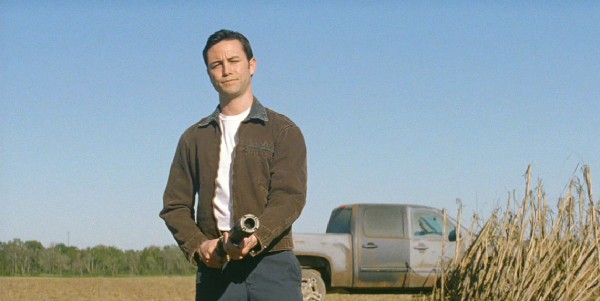
But corporate has a unique way of terminating a looper’s contract, or “closing the loop,” by sending their older versions to be killed by their younger versions (they get paid in gold). This is what leads to the main conflict of the story, in which the best of the loopers, Joe (Joseph Gordon-Levitt), doesn’t succeed in assassinating his older self (Bruce Willis).

With young Joe and old Joe now in the same time period and on the run from the mob, they meet in a small countryside diner, where they discuss terms of this truly bizarre situation. This is one of the best scenes in the movie, one of the joys of time-travel in a movie is you can have a scene in which younger and older versions of the same person can have a conversation together. But instead of playing it merely for intrigue, it plays with the reactions and metaphysics of their current position. The result is a deeply effective scene—it’s portrayed in a realistic manner, as is the rest of the movie.

The realistic style of the film’s execution is what makes “Looper” special. It brings about emotional depth, human relations, and a surprising amount of grittiness to the quieter moments. This isn’t one of those time-travel stories in which common twists and turns take place, leaving the plot to be bogged down into overuse of clichéd detail. There’s a genuine richness to the story here. It only gets better as young Joe is forced to hole up in the boondocks with the aid of a strong, independent woman named Sara (Emily Blunt, sporting a more-than-capable American accent), who wields a shotgun and does what she can to keep her five-year-old son safe. She doesn’t trust Joe at first and wants nothing to do with him, but she does help him as long as he helps her from any suspicious visitors…

The problems I have with “Looper” are slight, and no worries about the sci-fi “logic,” because these criticisms have nothing to do with them. It’s just that there are some little inconsistencies and pointless shots that get a little distracting—for example, what was the point of Sara having T.K. if she only uses it once for play? Also, I have trouble with the speech of that little kid Cid—he doesn’t come off as natural; he sounds like a young adult, at least, in a five-year-old body. And the supposed twist approaching the final half of the movie is a letdown because I saw it coming miles away. I won’t give it away, but you can probably guess it as well as I did. A little more development in that area would have created a great flow.

Many time-travel stories wear out by the time their climaxes approach—not “Looper,” however. Instead, “Looper” provides us with a conclusion that pays off from the introduced elements and gives us some real surprises. You care about the outcome, which is important of any sci-fi thriller.

Joseph Gordon-Levitt, continuing to show his reputation as one of the best actors of this generation, gives a strong performance as the antihero Joe; tough but likable enough for us to connect with him and root for him. Oh, and I forgot to mention—if Joseph Gordon-Levitt looks just the slightest unfamiliar to you, he was made up to appear as if he were the younger version of…let’s say Bruce Willis. Speaking of which, Willis makes a nice impression as old Joe, mixing humanity with elements of an action-hero. There are times when you may hate him for the things he winds up doing, but strangely enough, you can see why he does them and feel even more disturbed for having understanding. Emily Blunt is more than the “love interest” that her character Sara could easily have become. She brings a lot of weight to her role. Also strong are the performances by Jeff Daniels as the calm mob boss and Paul Dano as a looper who also breaks the main rules.

“Looper” takes the interesting concept of taking the younger and older versions of the same character and have them heading off against each other, and creates with it a powerfully-told tale of time-travel and its effects, while also delivering well-developed characters and plenty of human elements among the action and suspense. It’s energetic, well-told, and interesting from start to finish.

RoboCop (1987)

22 Feb

robocop_1987_6

Smith’s Verdict: ***1/2

Reviewed by Tanner Smith

“Robocop” sucks us in almost immediately with a scene that features a giant robot. This robot has been programmed to act immediately to an armed criminal—to shoot him if he doesn’t obey the robot’s orders to drop the gun. A young executive tests the big hunk of metal by aiming a gun at it, the robot acts right away, warns the young man that he has twenty seconds to drop his gun. The man drops his gun, but the robot still warns him, counts down to zero, and ultimately shoots him dead. Now, that scene may be unsettling, but honestly it’s also funny. And it lets us know that “Robocop” is not just going to be a serious thriller. There are many moments like that, but the film keeps us waiting to find out where it’s headed.

A lot of critics are criticizing the look of “Robocop,” which is set in the future. If you think about it, almost every “future” in the movies is bleak, isn’t it? And a lot of critics are pointing fingers at “Robocop” as something no different. But honestly, I don’t see why it should be different. And for the record, I didn’t see any kind of change in the world at all. So why should I complain? The technology looks better; why should the city of Detroit, in which this movie is set (or accordingly, the city of Detroit in the “future”)?

We’re introduced to a rookie cop named Murphy (Peter Weller), who is recruited to join the police force in Detroit. A woman cop named Lewis (Nancy Allen) shows him the ropes, but before long, they run into a band of criminals who mercilessly shoot Murphy dead.

But he’s not entirely dead. Something inside him is still alive and that brings the company that created the killer robot at the beginning of the film to rebuild him as a cyborg. They believe this is a better type of policeman to fight crime downtown. They call him a “robocop,” a half-man, half-machine with little to no memory of Murphy’s human life. Oh, and only his mouth and chin are visible under a heavy amount of metal armor. Robocop does become the next best thing on the force and goes around protecting the innocent and arresting criminals. (There’s one great moment that involves Robocop stopping a rapist, but I won’t give away the outcome.) Lewis, however, recognizes this half-man, half-machine as her old partner and tries to make Robocop remember her.

“Robocop” is a mixture of a thriller, a comedy, and a romance, each one hitting the right notes. There is slapstick and political satire involved, most of the laughs coming from the big robot again. The romance aspect works as well; the idea of having Weller and Allen play with this strange occurrence is cute, despite its silliness. But mostly, the movie wants to thrill us and it works as a thriller. The action scenes are compelling and well-directed by filmmaker Paul Verhoeven. And also, the movie’s bad guys are real bad guys; not just exaggerated morons with guns. They are ruthless, violent, and merciless. For example, when they kill Murphy, they don’t just shoot him and leave him. They do worse.

Through it all is Peter Weller as Robocop. He begins in human form as Murphy with little to no personality as the new man on the force. But once he is in all that circuitry and his voice is electronic monotone, most of his (as Robocop) personality comes from that voice. It’s the voice that computers have had in movies for years and with Robocop, it blends assurance with confusion in the character. This is where the character wins our sympathy and strangely enough, he’s more human as this Robocop than he was as an actual human. He has a heavy amount of appeal with this performance, despite having his face nearly hidden and his voice mechanically altered. Nancy Allen is effective as she tries to find out what really happened to her old partner and what she can do to help him.

Mostly, “Robocop” is entertaining. It’s an action-thriller with a heart but most importantly, with also a brain.

Signs (2002)

22 Feb

signs2

Smith’s Verdict: ****

Reviewed by Tanner Smith

“Signs” is an unusual piece of work. It goes into the “science fiction” genre yet it features a limited arrangement of special effects, does not show any signs of authority such as the US Government, strays away from unnecessary explanations for these unusual occurrences, and focuses only on one family during one big event that could mean the end of the world—usually we go back and forth through different characters, but not here. Because “Signs” never takes the easy way out, it becomes one of the most intriguing science-fiction films I’ve ever seen. Produced, written, and directed by M. Night Shyamalan, the filmmaker best known for the 1999 hit “The Sixth Sense” (which also strayed away from the easy way out, in the sense of being a psychological thriller), “Signs” is quite extraordinary.

Mel Gibson stars as Graham Hess, a former minister who has lost his faith in God ever since his wife died in an accident. He lives with his more faithful brother Merrill (Joaquin Phoenix) and his even more faithful two kids, 10-year-old Morgan (Rory Culkin, Macaulay and Kieran’s youngest brother) and 5-year-old Bo (Abigail Breslin), in Bucks County, Pennsylvania, surrounded by a cornfield. As the movie opens, the family awakens to discover a series of crop circles in the field behind their house. You know what crop circles are—those geometric shapes drawn into cornfields in the 1970s that created paranoid proof of extraterrestrials, dismissed as hoaxes in the early 1990s. But now, there are crop circles all over the world. This cannot be a hoax. There is absolutely no way that so many people around the world would create such an elaborate prank. It could be real.

The crop circles are shown on the film’s poster and may be just the interpretation of the title. But there is much more to the title of “Signs” than just the crop circles and where they come from. The movie progresses into deep, dark material as it seems like something from the beyond is going to kill us all. The signs in the title refer to signs that maybe there is someone out there watching over us. Graham, however, is skeptical because of his wife’s tragic death—“There is no one watching over us. We are all on our own.” Then again, he is skeptical about the alien theory as well. But soon, nothing really matters except for the safety of his family. That’s one of many important points within this movie—whether or not aliens actually appear in this movie doesn’t matter all that much.

M. Night Shyamalan treats this science fiction story like a horror movie, even using the main element that made Alfred Hitchcock’s “The Birds” effective. That element is silence. Shyamalan doesn’t rely on a heavy score to scare us. He frames shots exactly right, he lets his characters talk about dramatic subjects without even a subtle music score to keep the mood, and even the scariest moments are without music. Also borrowing from “Psycho,” the score from James Newton Howard that reminds us of the music in “Psycho” is there at the necessary points, such as the opening credits and moments of discovery and pain. But the best parts of the movie did not need that score and it isn’t used for those parts—it’s more frightening that way. Through the movie, we hear dogs barking, we jump at the sound of a phone ringing, and we fear during the moment when Graham encounters something (I will only say “something”). Also, an element from “Jaws” is used in the way that the family—these four central characters—is the only thing we care about during all this madness. We care and fear for them. And I also love how Shyamalan is able to use everyday objects for something more. A knife is used as a mirror, many glasses of water that Bo leaves behind because of her fear of water create an uneasy feeling, and then there’s a baseball bat.

In the second half, when everything supposedly pays off, nothing is predictable—you can’t tell what’s going to happen even for the slightest bit. What will become of Earth? What will happen with this family? Are there aliens? Are they friendly or hostile? On the night when “something” is supposed to happen, the bizarre alien theory is not the subject of fear because this family has been through enough already to be scared. “Signs” is thrilling, edgy, suspenseful, intelligent, attentive, and frightening with superb performances by Mel Gibson, Joaquin Phoenix, and those two talented child actors Rory Culkin and Abigail Breslin, a nice blend of science fiction and thriller elements, big ideas, and masterful filmmaking.

Star Trek (2009)

22 Feb

star-trek-2009-sample-003

Smith’s Verdict: ***1/2

Reviewed by Tanner Smith

“Star Trek” has generated many fans with its long-running TV series, originated from Gene Roddenberry, and numerous films. Now here is the prequel in which the characters, that fans have grown to know and love, meet each other for the first time. You’d think from seeing the cast list of this film that the actors seem be playing trick-or-treat with the “Star Trek” characters because they’re so young. But that’s the fun of “Star Trek”—this movie is a prequel to the show and other films. Every superhero story (or any other popular franchise) requires an origin story and here we have the origins of Capt. James T. Kirk, Mr. Spock, Uhura, Bones McCoy, Sulu, Chekov, and Scotty. So it makes perfect sense why the characters are younger this time around.

“Star Trek” is directed by J.J. Abrams who delivers slam-bang action sequences that are all great fun. And seeing as how special effects have improved long since the original show, all of the effects in the action scenes are extremely well done. More importantly, I wasn’t bored. The film looked great, the special effects were first-rate, and the characters were interesting, which made the action all the more exciting.

We have the younger versions of the well-known “Star Trek” characters here and the actors seem to be channeling their adult counterparts. We meet James T. Kirk as a rebellious, hotheaded young man (played by Chris Pine) who gets into all sorts of trouble, even when he believes he is right about how to take control when flying a spacecraft. This raises an issue with young Spock (Zachary Quinto) who created the flight-simulation test that James has taken three times now.

For fans of the “Star Trek” franchise, this is great fun. Seeing James and Spock as young adults (and at each other’s throats every now and then) will delight many viewers. Without giving much away, I have a feeling they’ll be even more delighted when the old Spock (reprised by Leonard Nimoy) arrives from the future and meets young James. Now see, young James does believe that this is Spock Prime, but he just can’t believe that he’ll be Spock’s dear friend, as Spock Prime calls him, because the young Spock that he already knows is an emotionless, somewhat-pompous guy.

Yes, time travel is part of the movie’s plot, which could explain the origin story itself.

The main villain in “Star Trek” is the evil Romulan Capt. Nero (Eric Bana) who, along with his forces, are destroying planets (including Spock’s home planet Vulcan) and going through (and creating) black holes that devour everything in sight. James and Spock are two of many space cadets chosen to do battle with Nero, so it’s onboard the U.S.S. Enterprise in its visual glory. Among the cadets are Communications Officer Uhura (Zoe Saldana), Doctor Leonard “Bones” McCoy (Karl Urban), and Navigators Sulu (John Cho) and Chekov (Anton Yelchin). Scotty (Simon Pegg) will join later, but I won’t go into it—I don’t want to go into heavy detail as to how everything comes to anything in this film, but then again, I already mentioned Spock Prime. One weakness with the film is that sometimes, the situations feel just a bit rushed.

Among the brilliant action scenes—the opening space battle, the scene in which James and Sulu use swords and fists to fight off a couple of Romulans after landing on a platform in the air from which the Romulans are drilling a hole into the core of Vulcan (…OK that’s cool with me), and the final climax. Each of these are thrilling and great entertainment.

The characters in this movie are well-developed. They have to be, since their characters will become the people that “Star Trek” fans know and love already. They are all given their moments and they all work fine. Spock, in particular, is half-human and half-Klingon, so he is constantly taunted by his peers as a child and by the Ministry of Vulcan. Klingons supposedly have no emotion and Spock is always trying to betray emotion, but being also half-human, it’s hard. You really want to see him lose it and shed a tear or even smile once in a while. And then you have Spock Prime, who seems more human. You get the two of them together and…what can I say? It’s satisfying. Also satisfying is the relationship between James and Spock—their beginning rivalry and their eventual teamwork in the final climax.

The actors are all solid here—Chris Pine is suitably cocky and charismatic as James T. Kirk, Zachary Quinto does a nice understated job as Spock, and Leonard Nimoy is excellent in reprising his role from the original show and films. Zoe Saldana and Karl Urban are spot-on in physique and personality of their older counterparts; and John Cho, Anton Yelchin, and Simon Pegg are also fun company. Eric Bana is quite effective as the villain.

I need to be honest—before I saw this movie, I had never seen a single “Star Trek” TV episode or movie. So this was my introduction to the “Star Trek” franchise. I knew a few things about the show and films—I just hadn’t seen either of them. This is a solid introduction for me and it deserves a solid recommendation from me. It’s a well-done space opera that packs the punches and delivers the goods. I look forward to checking out any other “Star Trek” film (or maybe an episode) sometime soon. Or maybe there will be a sequel to this one coming soon…can’t wait!

Harry Potter and the Half-Blood Prince (2009)

21 Feb

bilde

Smith’s Verdict: ***

Reviewed by Tanner Smith

After being somewhat disappointed by “Harry Potter and the Order of the Phoenix,” which was the fifth film in the popular “Harry Potter” series, I found myself pleased with the sixth film, “Harry Potter and the Half Blood Prince.” This film sets up the final act (“Harry Potter and the Deathly Hallows,” which is released in two parts—part 1 in November 2010 and part 2 in July 2011) and leaves us enchantment, terror, and a few laughs along the way.

Everyone in the Hogwarts world is now convinced that the evil Lord Voldemort has returned. We all know that there must be a huge climactic battle between Harry Potter and Lord Voldemort. But before that happens, we get “Harry Potter and the Half Blood Prince,” in which Harry and headmaster Dumbledore must receive information from the past in order to find a way to vanquish Voldemort. But it can be assured that the battle will not begin here—in fact, Voldemort doesn’t even appear in this film. Instead, he has his army of Death Eaters to make sure things are going according to plan. And there is a plan, mind you.

The whole movie is a foreboding of what may occur in the final entry (or entries, considering the seventh and final book in the series is going to be adapted into two films instead of one). But this is necessary—you have to pay attention to what is happening so what you’ll see in the final entries will make more sense.

The Death Eaters are on the move and are on the path of destruction. As the movie opens, we see that they are the cause of a bridge collapsing with many innocent Muggles walking along it. Then we cut to Harry Potter (Daniel Radcliffe) reading a newspaper in a subway diner—the headline reads, “Is Harry Potter the Chosen One?” “Who’s Harry Potter,” a cute waitress asks Harry. Harry has a crush on this girl and just says that Harry Potter is nobody. She tells him she’ll be off work at 11. But a possible date will have to wait because Dumbledore awaits Harry nearby.

Dumbledore (Michael Gambon) gives Harry an important assignment for Harry’s sixth year at Hogwarts—to retrieve any kind of information from Professor Horace Slughorn (Jim Broadbent) about what he has told Tom Riddle a long time ago. Tom Riddle, as you recall, was the young wizard who became Lord Voldemort. Dumbledore shows Harry a collection of memories from Voldemort’s past as a boy—when Dumbledore first met him and a distorted discussion of forbidden magic between the boy and Slughorn. Dumbledore leaves Harry to the task of befriending Slughorn and somehow getting him to reveal what Slughorn has told him. This information could be useful in the final entries. It contains a key as to how Voldemort can be defeated.

Meanwhile, Harry’s student enemy Draco Malfoy (Tom Felton) is being initiated into joining Voldemort’s army of Death Eaters. But that’s not all—Professor Snape (Alan Rickman) is making sure nothing bad happens to him. Snape has joined the army as well, but still, Dumbledore trusts him. This is a sign that Dumbledore is reaching his weak points. Also back is Bellatrix Lestrange (Helena Bonham Carter), who killed someone very important to Harry and is continuing to raise hell. But at school, while Harry is trying to persuade Slughorn, he and his friends are faced with teenage angst. Harry is attracted to Ron’s sister Ginny (Bonnie Wright); Ron Weasley (Rupert Grint) is in a relationship with the school vixen; and Hermione Granger (Emma Watson) is jealous because she has developed somewhat of a crush on Ron, though she won’t admit it. I love that Harry’s best friends are interesting again, seeing as how they were basic bystanders in the previous film.

The whole movie is a setup, but we’re interested because we have grown to love these characters after five movies and we just can’t wait to see what happens here before we can’t wait to see what happens in the final entries. Jim Broadbent is an absolute delight as Slughorn—he’s a brilliant character actor and somehow I had the feeling he’d show up in a Harry Potter film sooner or later. The stuff with the kids is interesting because it gives us more rooting interest and Dumbledore has become even more appealing than Harry in this film. Michael Gambon plays Dumbledore as a wizard of action (a la Gandalf in “Lord of the Rings”) and is given much more to do than before. Also given more to do than before is Alan Rickman as Snape—his character is more chilling this time around. The final half is amazing—it takes place in a dark cavern where danger awaits, and then it returns back to Hogwarts in a great conclusion that reaches the emotional impact of the tone. Also, the cinematography in that cave is truly amazing. “Harry Potter and the Half Blood Prince” ends with a bang, although a “To Be Continued” sign would have been appropriate.

And in the final entries—“Harry Potter and the Deathly Hallows Part 1” and “Part 2”—it will be Harry, Ron, and Hermione, the three engaging wizards we care about, in the mix of something bigger awaiting. But in the end, it will be Harry Potter alone, dead or alive. What will happen?

NOTE: Don’t let the PG rating fool you—the “Harry Potter” films get darker and darker. This is no exception.

The Avengers (2012)

21 Feb

The-Avengers-2012-Movie-Image

Smith’s Verdict: ***1/2

Reviewed by Tanner Smith

Hey, guys! Wanna see Iron Man, Thor, Captain America, and the Incredible Hulk banding together, in a summer blockbuster, to fight evil?

I do too! And this movie has been built up for about four years, since the original “Iron Man” was released to success in May 2008. It began simply with a credit cookie featuring the one-eyed Nick Fury (Samuel L. Jackson) telling billionaire/genius/hero Tony “Iron Man” Stark (Robert Downey, Jr.) that he plans to start the Avengers. And a month later, “The Incredible Hulk” was released, with a scene at the end that featured Tony Stark mentioning the Avengers. 2010’s “Iron Man 2” had a little more input to the idea (for those who don’t know the Avengers’ history in comic books), as 2011’s “Thor” and “Captain America” introduced two new candidates, as well as setting up certain plot elements for…2012’s “The Avengers!” And the verdict is that this inevitable summer-blockbuster lives up to its hype.

I’m not a comic book reader, per se, but I was still intrigued when hearing the basic storyline for “The Avengers”—Iron Man, Hulk, Thor, and Captain America band together. Having seen and liked all of these characters’ earlier movies (particularly the first “Iron Man”), I was hyped. There’s no way I wouldn’t be interested in seeing this movie.

Well, first, we get a introduction featuring the story’s McGuffin (a story’s catalyst)—a device that opens a tesseract (a portal through other dimensions)—and the arrival of our main villain, which turns out to be Thor’s adopted brother Loki (reprised from the earlier movie by Tom Hiddleston), who plans to use the tesseract to unleash an army of monstrous beings from his own world in order to conquer the Earth. This leads to Nick Fury (Samuel L. Jackson, of course) planning to assemble a team of superheroes in a race to stop him from carrying out his plan. Now, while I have to admit this introduction is somewhat tedious in the way it plays out (with certain “techno-babble,” exposition, and…well, the very idea of another villain planning to take over the world—of course), it is necessary to set up the rest of the movie.

We’re met again with those intriguing Marvel characters introduced in earlier film adaptations of their comic books. We have the rich, bright, and constantly wisecracking billionaire/hero Tony Stark (Robert Downey, Jr.) a.k.a. Iron Man, complete with flying iron suit. We have weakling-turned-superman Steve Rogers (Chris Evans) a.k.a. Captain America, who has a costume that is essentially a bulls-eye, but a shield that deflects bullets—now that’s cool. We have Norse god Thor (Chris Hemsworth) with his mighty hammer. And of course, we have Natasha (Scarlett Johansson), a feisty femme fatale introduced in “Iron Man 2” and also known as Black Widow, as she is told by S.H.I.E.L.D. Agent Coulson (Clark Gregg, reprising his character from earlier movies) to enlist the help of Bruce Banner (Mark Ruffalo, taking over for Edward Norton)—for those who don’t know, let’s just say Bruce Banner has a condition that comes with some serious anger issues.

As these heroes are teamed up together and planning out their next move, they also have to face each other. There’s a struggle between Iron Man and Thor when they first meet, Stark and Rogers banter a lot, and mostly, they don’t seem to want to rely on each other as much. But they realize that they’re all in this together and they’ll stand and fight Loki’s invading army on the battlegrounds of Manhattan, turning it into a disaster of epic proportions.

I’m just going to come out and say it—I wasn’t looking forward to seeing Loki as a villain in this movie. In “Thor,” I didn’t find him charismatic nor did I find him particularly interesting, and here, that feeling’s kind of the same. But there were a few scenes where I found myself laughing at his expense, rather than being menaced by his continuing plan. There’s a scene in which he gathers people in the city and orders them to “kneel” before him and I had to bite my lip to keep from laughing so hard because all I was thinking was, “He’s turned into General Zod!” Yeah, remember how “menacing” that villain was in “Superman II?” That’s Loki for “The Avengers” for you. And there’s another scene that got the biggest applause in the screening I attended—it involves a showdown between delusional-with-superiority Loki and damn-angry Hulk, and gives new meaning to the phrase “punch line.”

And speaking of which, “The Avengers” does indeed have a sense of humor. In fact, this movie maybe has the funniest moments I’ve heard in a movie so far this year. It’s self-aware, but that doesn’t mean it condescends to its iconic characters or its target audience. I wouldn’t dream of giving away the film’s best moments, so I won’t. Sure, there is a lot of humor in “The Avengers,” and that keeps “The Avengers” from getting too serious—that’s not a criticism, mind you, because it’s a masterstroke when it doesn’t descend itself into campiness.

There’s great action in this movie—it’s involving, features top-notch special effects, and showcases some pretty nifty fight sequences. Two sequences in particular stand out—one is an attack from Loki’s minions on S.H.I.E.L.D.’s flying, camouflaged ship, and the other is the battle in the streets (and rooftops and skies) of Manhattan, which takes the final half-hour of the movie. That final sequence is jaw-droppingly intense, and we’re involved because we like these characters and we admire the stages of action and special effects. But what’s also important is that each character has moments to shine in the midst of the action.

All the actors are game and their characters are still strong. Tony Stark, again played perfectly by Robert Downey, Jr., keeps his unique personality—constantly cracking one-liners even in the face of danger. (In a talk-down between Stark and Loki, it’s obviously who the cooler person is, even if you could take Loki seriously.) He’s great in this movie. Rogers, or Captain America, is a likable guy and is reasonably strong, though that costume still looks somewhat ridiculous. Thor is as awesome as ever, with his barbarian manner that contrasts heart of gold. Natasha, or Black Widow, is still sexy and shows some feisty moves. We’re also introduced to a new recruit midway through the movie, a sharp-shooter nicknamed Hawkeye (played well by Jeremy Renner), whose bow has laser scope for his arrows to never miss—awesome. As for Bruce Banner, with Mark Ruffalo’s vulnerable performance and upgraded CGI “Hulk” form, this is the best representation of the Incredible Hulk I’ve seen.

And like I said, it’s absolutely great that these heroes are all here, like the toughest kids on the block who learn to work well with others. It’s also great that Samuel L. Jackson’s Nick Fury has something better to do than spew ominous foresights (as he did in the earlier movies, to annoying effect).  

“The Avengers” has been built up for four years—it was worth the wait. It’s exciting, entertaining, and a lot of fun.

Testament (1983)

21 Feb

testament

Smith’s Verdict: ***1/2

Reviewed by Tanner Smith

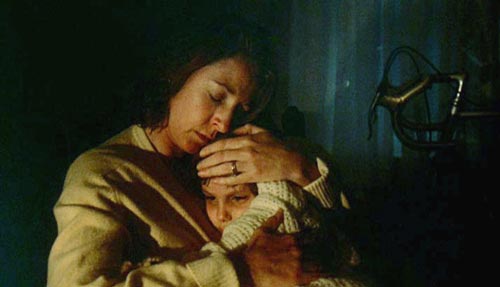
“Testament” is a heavy family drama about the aftereffects of a nuclear war, as experienced by a typical suburban American family. It’s not a science-fiction thriller and doesn’t resort to nonsensical action climaxes—there are no special effects in this movie at all; we don’t even see a mushroom cloud. It’s just a tragic tale about a small-town family trying to get by after a nuclear catastrophe has destructed outside civilization.

The film starts with routine scenes involving the family, letting us see what their lives are like before the disaster. We see the father Tom (William Devane) racing his middle child Brad (Ross Harris) down the street in the morning on bicycles, to get the kid into shape. We see the oldest child Mary Liz (Roxana Zal) practicing piano. We see the loving mother (Jane Alexander), making sure everything is under control in her household, that the kids get to school on time, and that her husband is home on time after work. And we see the youngest (and oddest) child Scottie (Lukas Haas), protecting “treasure” in his bottom drawer and wearing earmuffs to keep from hearing constant bickering. Everything seems fine and normal for this family. But the next day, while the father is out of town, the mother and the kids are watching TV (or trying to get a good reception with the antenna) on a sunny afternoon when suddenly, static appears on the screen and it’s followed by an emergency broadcast with the chilling line, “Ladies and gentlemen…this is real.” And then a bright light flashes, the terrified family huddles together, and when it’s over, everyone is wandering the street in confusion and fear.

The rest of the movie is about how this town, and particularly this family, deals with the effects of the disaster. Soon enough, gasoline is sold out, batteries are important necessities (not just for the kids’ electronic toys anymore), there’s some looting for food and supplies on occasion, town meetings are held at the church asking what they should all do, and life just keeps trying to go on, even when the grade-school play is decided to be held. However, death is constantly overshadowing this town—radiation poisoning is wiping out more than half of the population. The cemetery is filling up fast and pyres are even set up to burn the rest of the bodies. What it really comes down to is that the central characters—this family—are led by the mother to try to keep things positive, even in the most dire of situations.

If there’s a problem I have with “Testament,” it’s the lack of development with the supporting characters that come into the family’s lives and then are killed off by the radiation. In particular, there’s a kid who is left to the family and is so obviously doomed, and we hear that he has become part of the family, but we never see him really interact with them. One exception is a community leader (Leon Ames) who uses a ham-radio to make contact with places outside of town. I felt for this man right to his tragic end. And there’s also a mentally-challenged boy that, again, I didn’t want to see bad things happen to. But everyone else outside of the family is uninteresting.

Jane Alexander is great in this movie. Playing this mother as one of the more gentle, loving people in this fall from society, cherishing her children’s and her own life to the possibly bitter end, Alexander turns in a great performance and provides as the heart of the film. She shows graciousness even in the face of certain doom, making her the emotional center.

“Testament” is a film with a great deal of credibility that makes it all the more tense. There have been many movies about the very threat of nuclear war—this is about a nuclear war that has already occurred and how everybody deals with it. It’s the worst crisis in their lives, and yet there’s a certain sense of hope that things will turn out all right for everybody that’s left. What will become of the rest of these people? The movie doesn’t merely end with the answer to that question, but with a powerful scene expressing what some would consider small optimism.

Another Earth (2011)

21 Feb

images

Smith’s Verdict: ****

Reviewed by Tanner Smith

It’s a wonderful, thought-provoking image—another planet looking very much like Earth just visible up there in the sky. If you saw that, what would you feel? I’d be asking many questions—What is it like up there? Is something up there? If this is indeed another Earth (“Earth 2,” everybody calls it), does that mean there are mirrored identities of ourselves up there as well? We all imagine traveling to distant worlds “up there.” Only this one seems to be “another Earth.”

This image is seen through “Another Earth,” a low-budget indie drama with science fiction elements and a human emotion story. It gives us the premise of an essay contest that NASA is throwing, and whoever wins gets to travel to Earth 2, four years after it was first seen in the sky. What is truly up there? This is a big chance to find out, given that those chosen to travel up there don’t perish from the journey. But then something mysterious happens. On the TV news, “first contact” is attempted and accomplished…seemingly by an exact copy of the woman making radio contact with Earth 2. Whatever she went through, the other went through. What does this mean? Earth 2 is a mirror of us and our own planet?

Here’s a great dialogue exchange between the two central characters of “Another Earth”—she asks him, “If you met yourself, what would you say?” (pause) “’Hey, wanna play a video game?’…He’d probably beat me.”

OK, since the planet is right up there in the sky, you can go ahead and question the laws of physics—say that the planets would collide and we’d all be cosmic dust, instead of having us so close to each other that we could visit each other. But maybe there’s another possibility. Maybe this Earth 2 is parallel to our own. If you’ve seen “The Twilight Zone,” you’d know that science doesn’t always explain everything. Maybe this is a mysterious entity wrapped around a newly-formed planet that mirrors our own—thus a parallel dimension that could give us all second chances in our other selves up there. Physics wouldn’t matter anything then, if it doesn’t matter much itself.

“Another Earth” is also about the crossing paths of a bright young woman named Rhoda Williams (Brit Marling, who also co-wrote the screenplay with the director Mike Cahill) and accomplished composer John Burroughs (William Mapother, Ethan from “Lost”). This was the night when Earth 2 was discovered in the night sky, just as Rhoda was celebrating her acceptance into M.I.T. by getting drunk. When she looks up at the sky while driving to see the other Earth, she crashes into John Burroughs’ car, accidentally taking the lives of John’s wife and son, and placing him in a coma.

Four years later, Rhoda is released from prison and feels like an outcast. There doesn’t seem to be anything there for her anymore. She feels devastated by the deaths she has caused and wishes for a way to redeem herself. Then, she learns that John has awakened from his coma and decides to pay him a visit, posing as a cleaning lady. She wants to tell him that she’s the one responsible for the death of his loved ones, but she’s too afraid to say anything.

“Another Earth” is far from a typical sci-fi movie. It has sci-fi elements, but it keeps the human elements in focus. As Rhoda and John get more acquainted with each other (with John still not knowing who Rhoda really is—because she was a minor at the time of the accident, he was never told her real name), they really become good friends together. Rhoda is the only one of the two that is aware of their deep connection with each other and it’s because of her that John stops becoming a depressed recluse and starts becoming more open and friendly.

The relationship is brought upon by chance of Earth 2, and meanwhile, Rhoda has submitted her own essay into the contest to go into Earth 2 and see if there’s another Rhoda up there that deserves a second chance because of the original Rhoda’s first chance. Maybe John can get another chance as well. Just maybe.

I cared very much for the plot of “Another Earth” and found myself thinking more about the possibility of another world out there similar to ours. I was also interested by this relationship between Rhoda and John. Brit Marling and William Mapother do convincing jobs at showing us these characters and what they’re going through.

Now, without giving anything away, I’m not quite sure I understand the ending correctly. And this ending is split with people—they either hate it or tolerate it. I don’t hate it. In fact, writing this review just gets me thinking about it. If you want to know what I mean, seek out “Another Earth” and come up with a conclusion for yourself.

The Bad News Bears (1976)

21 Feb

4444485_orig

Smith’s Verdict: ***1/2

Reviewed by Tanner Smith

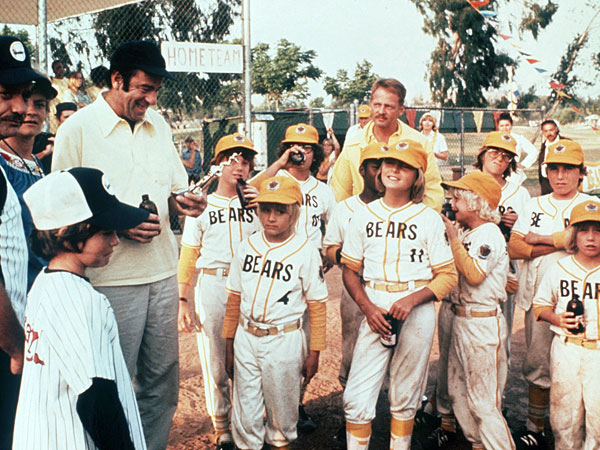
“The Bad News Bears” has been copied several times into deplorable children’s sports underdog stories. But really, only the gimmick is copied. The gimmick is this—a children’s sports team, made up of the usual loser stereotypes, starts off the season as the underdogs and slowly but surely make their way to the championship, leading to the Big Game. “The Bad News Bears” has something more than that. For one thing, this film has a ton of laughs, none of which have to do with bodily functions. But also, it’s more a story of the adults, acting as a social commentary. It’s mainly about the coaches of opposing Little League baseball teams (one of which is a boozehound) and how competition is a staple of their jobs. They want to prove to each other which is the easiest advantage, and with the Little Leaguers actually competing, that notion rubs off on them.

“The Bad News Bears” is an entertaining, funny movie about the worst Little League team in the state, if not the whole world. They’re unfocused, untalented, and uncoordinated. These kids wouldn’t have had a chance to play on a field if it weren’t for a lawsuit filed by the father of one of the kids, stating that every kid should get the chance to play baseball. The team includes: a fat kid who eats chocolate a lot, a little loudmouth always looking for a fight, a kid with glasses who knows more baseball statistics than anyone else, an African-American kid obsessed with being like Hank Aaron, a couple of Hispanics, and a shy kid whom the loudmouth describes as a “booger-eating spaz.”

Their coach is Buttermaker (Walter Matthau)—an alcoholic, loner, former minor league player who cleans pools for a living, and is being paid to coach this team, called the Bears. He brings booze to the dugout, gets one of the kids to mix him a cocktail at one point, and even passes out right there on the pitcher’s mound during practice. Even the kids can see he’s a real loser. The first game comes along and of course, the Bears get humiliated, and even more so when Buttermaker calls it quits in the middle. Starting to care, Buttermaker stays on the job and does what he can to improve the Bears’ playing.

Along the way, he finds two more kids to bring to the team. One is Amanda (Tatum O’Neal), the 11-year-old daughter of Buttermaker’s former girlfriend who has a mean curveball. She becomes the Bears’ pitcher. The other is a juvenile delinquent named Kelly Leak (Jackie Earle Haley), who always hangs around the field with his motorcycle and cigarettes. Turns out he’s a natural athlete. With these two new recruits, the Bears win their first game and continue an impressive streak, making their way to the championship, and of course, bringing Buttermaker to ask more from the other kids (like having one of the kids take a hit from a baseball just to get on base). And need I also mention that the opposing team is the same team from that disastrous first game, led by the heavily competitive coach Turner (Vic Morrow)? Buttermaker is now stooping to his level, but Turner has his more extreme levels, pushing his son—the star player—to the point of actually hitting him right there on the field.

I won’t give away the resolution of the Big Game, but let it be said that “The Bad News Bears” has an ending that is not about winning or losing, but how to play the game and how to deal with the outcome.

The baseball sequences, while telling this parable of competition, are pretty solid and entertaining. I can think of sports movies where I get tired after a while. But not here. I’m not just saying this because I’m an admirer of baseball, but because these scenes are well-shot and look like actual baseball games, only we’re put into the action.

The comedy of “The Bad News Bears” works well. Walter Matthau is an always-appealing performer and has a distinct personality that fits this role of the weary Buttermaker. There are great one-liners in the movie, some of which said by Joyce van Patten as the league manager, and most of which delivered by the kids. But the grand slam of “The Bad News Bears” is how the director Michael Ritchie portrays these kids. Their stereotypes are consistently funny, but they talk in a way that most kids that age talked. They yell, they shout, they complain, they spout profanities (everything except the F-word). These seem like real kids. They even say “no” to athletic supporters because they’re “uncomfortable.”

Most of the kids are very good actors—in particular, Jackie Earle Haley is winning as the local troublemaker and Chris Barnes steals many scenes as the little tough guy. But I have to admit, Tatum O’Neal, despite being a good young actress and playing a credible girl character in this movie, really annoyed me. It just seemed like she was trying too hard to make Amanda more sophisticated than she needed to be, or should be. She’s just sort of peculiar that way.

“The Bad News Bears” is a cynical look at competition in America, told through Little League baseball, but it’s shot and acted with a real positive attitude that it’s hard to hate it. It’s an entertaining movie and a true underdog story.